
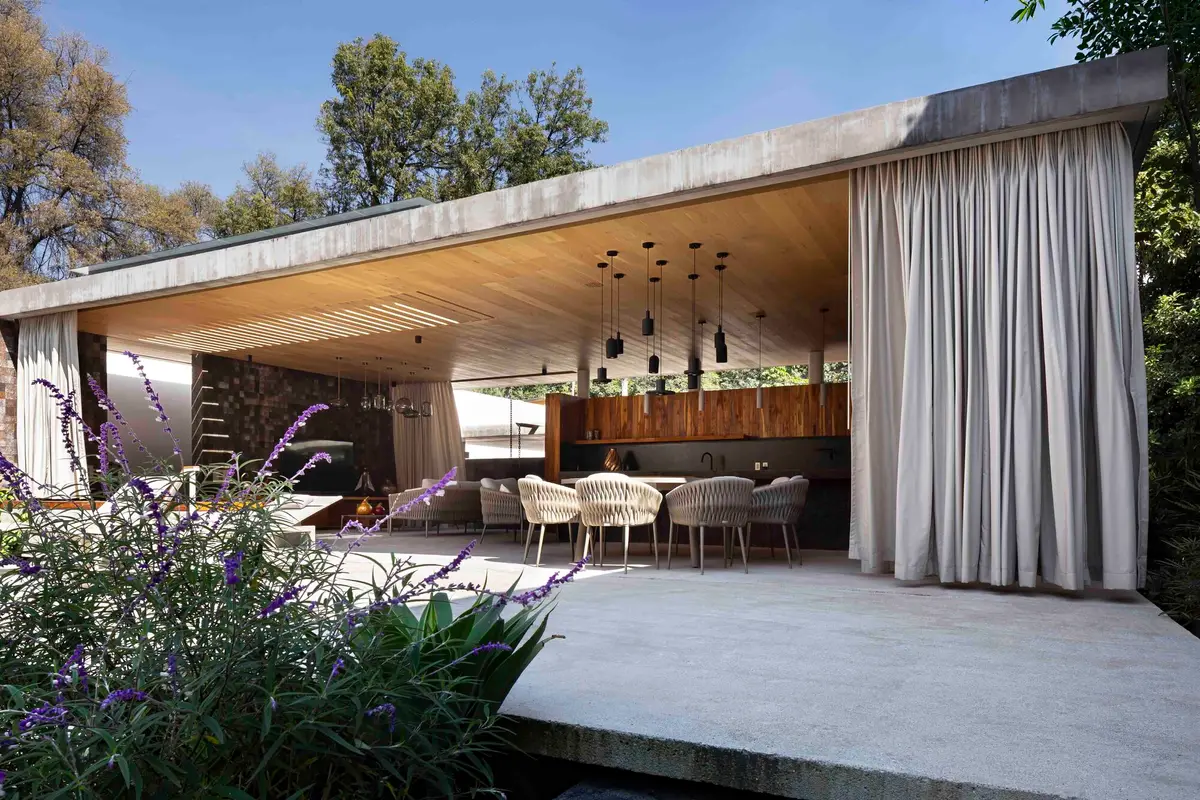
Hummingbird House: A Mexico City Garden Pavilion
Estudio Libre MX designed a 376 m² residence in southern Mexico City built around a swimming lane and an open pavilion for hosting.


Mexico City has more good single-family houses per square kilometre than almost any city in the world. The local material palette, the climate, the gardens, and a long line of architects who treat houses as serious work all contribute to this. Hummingbird House, a 376 square metre residence completed in 2025 by Estudio Libre MX in the south of Mexico City, is a small but confident addition to that lineage.
The brief was clear and unusual: design a house whose primary purpose is hosting. Family gatherings, events, recreation, the kind of programme that most residential architects treat as an afterthought once the bedrooms are sorted. Here the architects, Andrés Berjón and Diego Rodriguez, made hosting the structure of the project, with a swimming lane running through the centre of the plan as the main axis.
A House Around a Pool
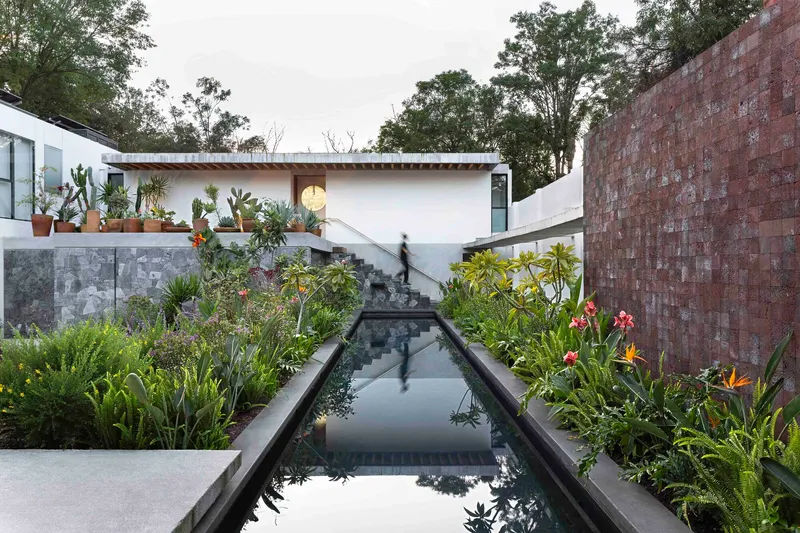
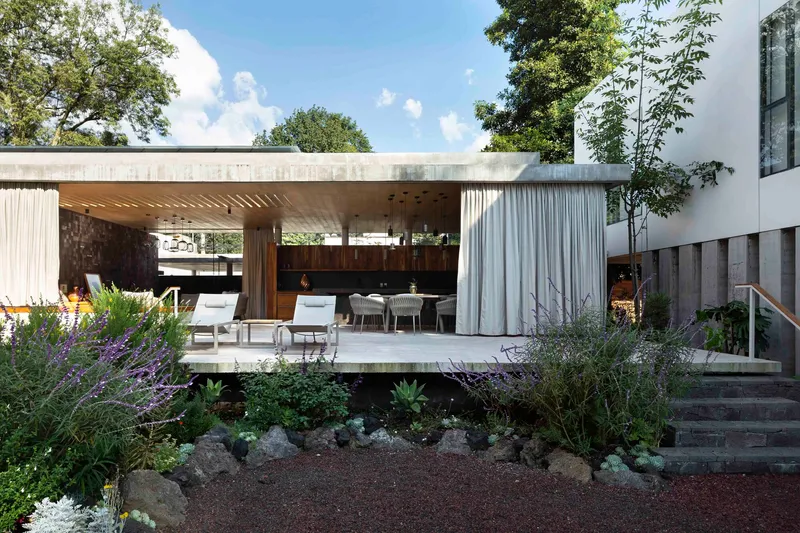
The lap pool is the spatial spine of the project. Everything else is organised around it. The main house sits at one end. A separate covered pavilion with the kitchen, dining, and lounge sits at the other. Between them, the pool runs the length of a planted garden filled with native species. You move through the property the way you would move through a small Mexican plaza, with the water as the centre and the rooms arranged around it.
This kind of plan is harder than it looks. The pool can easily become a feature object, photographed but not used. Here it is used. The geometry is tight, the proportions are correct for swimming rather than display, and the surrounding planting puts you at eye level with the water rather than above it.
The Pavilion as Living Room
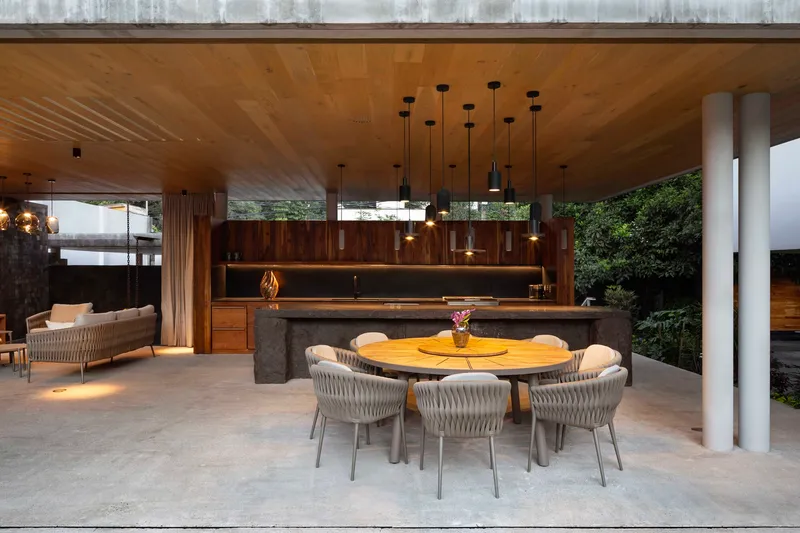
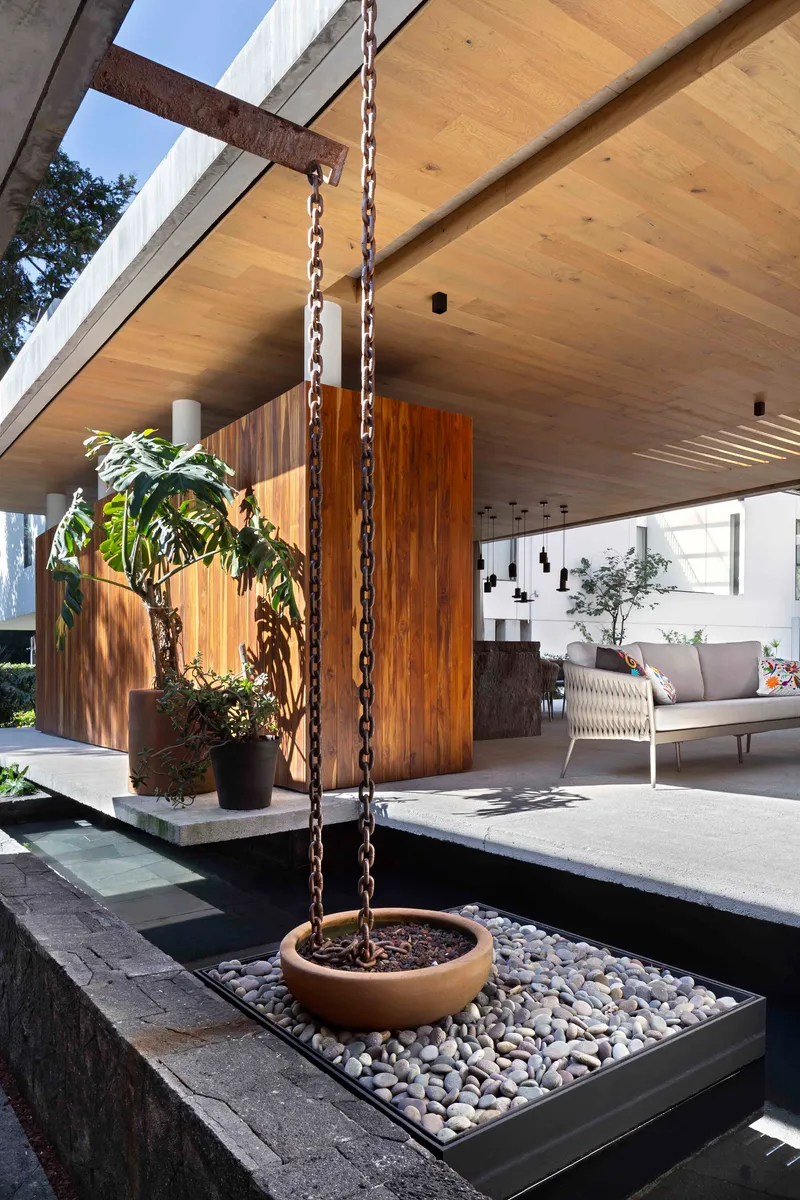
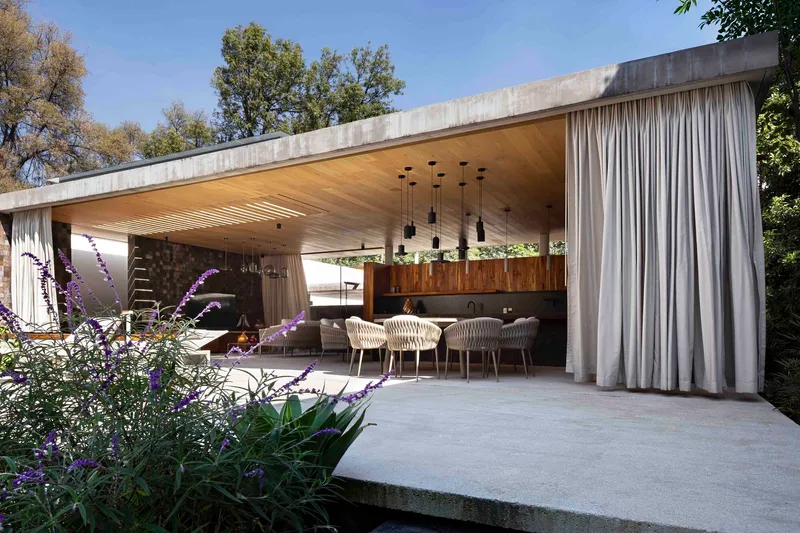
The covered pavilion that holds the kitchen, dining, and lounge is the project's most ambitious move. It is essentially an outdoor room with a concrete slab roof, a timber-lined ceiling, and full-height linen curtains that can be drawn or pulled back depending on the weather and the event. There is no wall on the garden side, just the curtains.
This is a Mexico City answer to the indoor-outdoor question. The climate is mild enough that an open pavilion is comfortable nearly all year. Adding curtains rather than glass means the pavilion never feels enclosed, even when the curtains are drawn. The interior, designed by Departamento de Interiores, is restrained: a round timber dining table, woven chairs, a long bar across the back, and pendant lights in clusters above the table.
The Material Palette: Stone, Wood, and Volcanic Tile
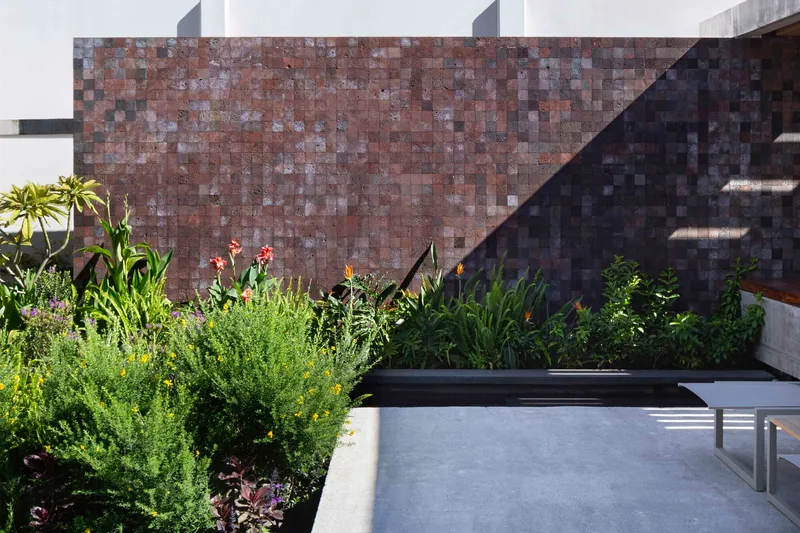
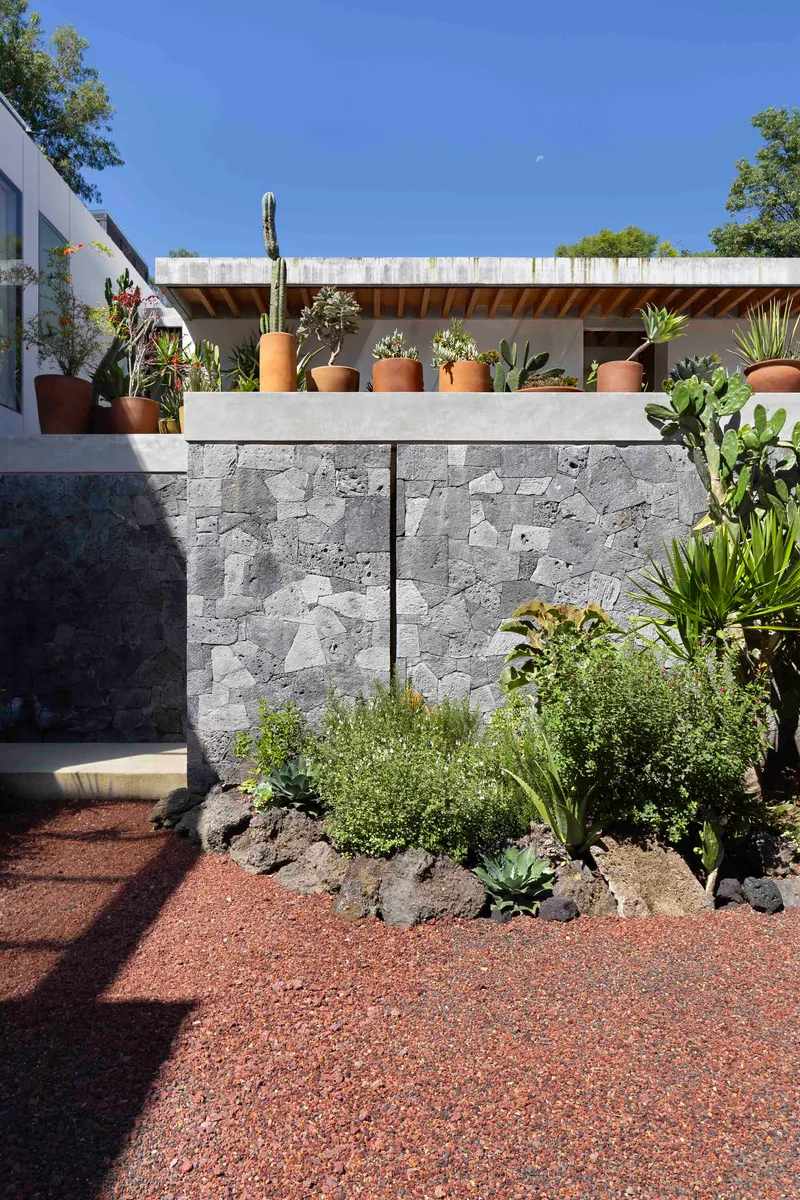
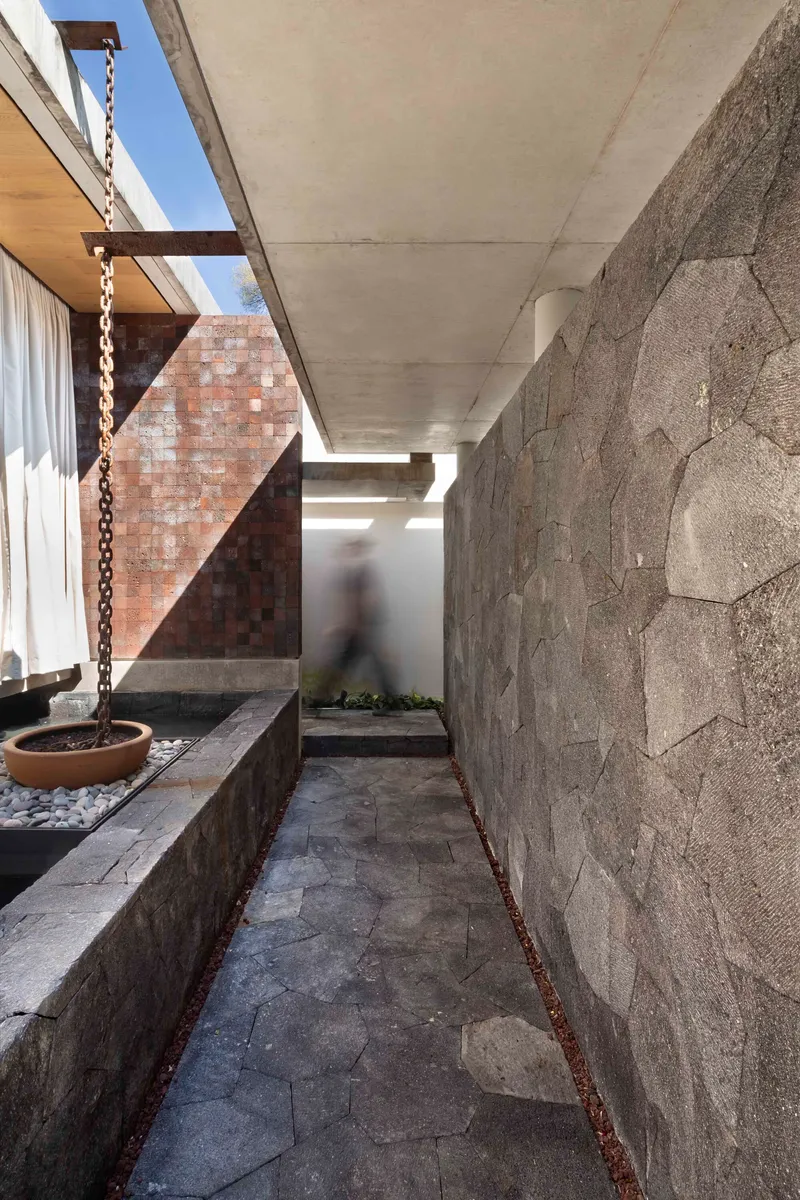
The material palette is the project's other distinctive feature. The walls combine three things: a dark grey volcanic stone laid in irregular pieces, a deep red volcanic tile in small mosaic squares, and warm timber boarding. Each material does a specific job. The stone is structural and grounding. The red tile is decorative but quietly so, used in panels rather than as a feature wall. The timber softens the transitions and dominates the pavilion ceiling.
This is a Mexican palette, and it is consistent with the work of many studios in the region. What makes it work here is the restraint. The architects use each material for one job and then stop. Nothing is repeated decoratively. Nothing tries to be more than it is.
Garden as Architecture
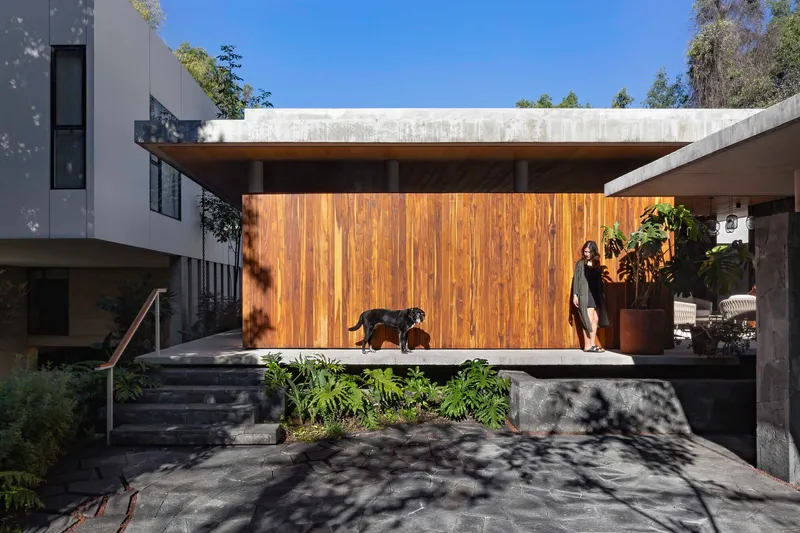
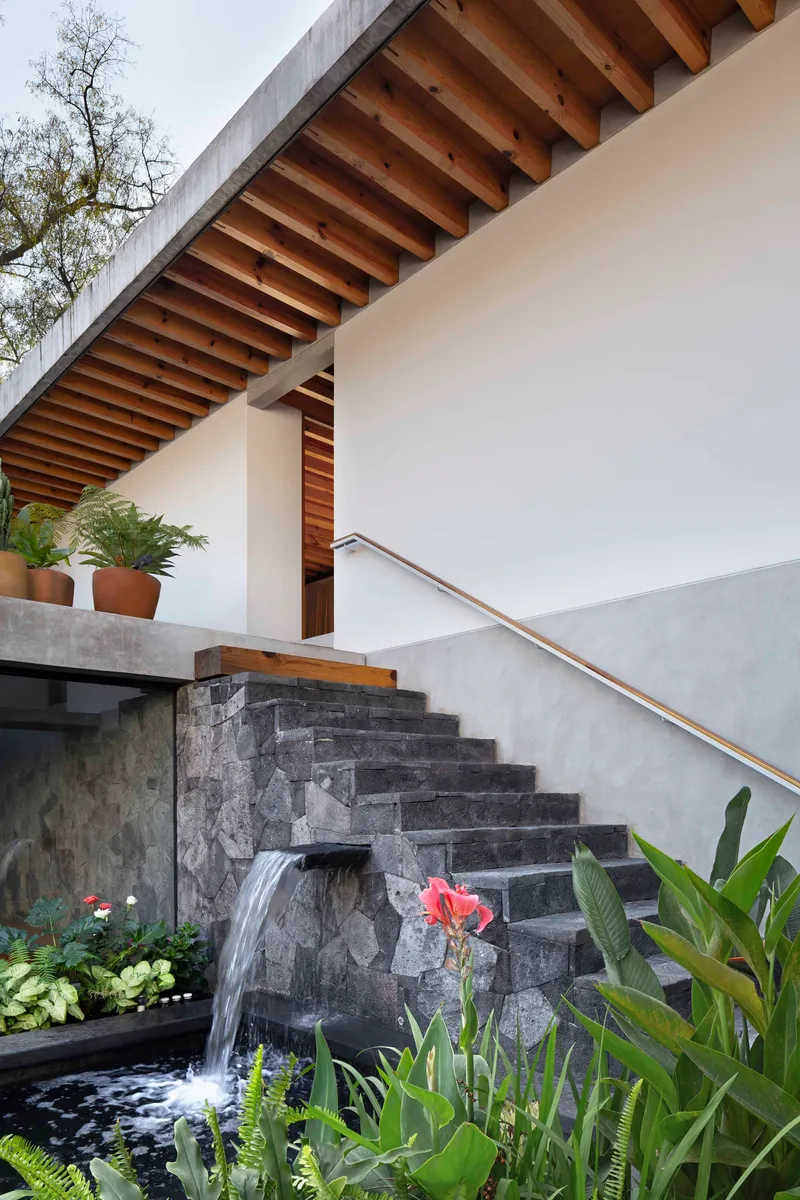
Landscape design by Tepetl treats the garden as a continuation of the building. The planting is dense, native, slightly wild, and full of species that flower and attract birds. The name of the house is not accidental: hummingbirds are common in this part of Mexico City, and the garden is designed to keep them around.
A small water cascade tucked next to the stone stair adds the kind of sound that masks city noise without being precious about it. Walking the photographs, you can almost hear the water and the birds. That is the atmosphere the architects designed for.
Plans and Sections
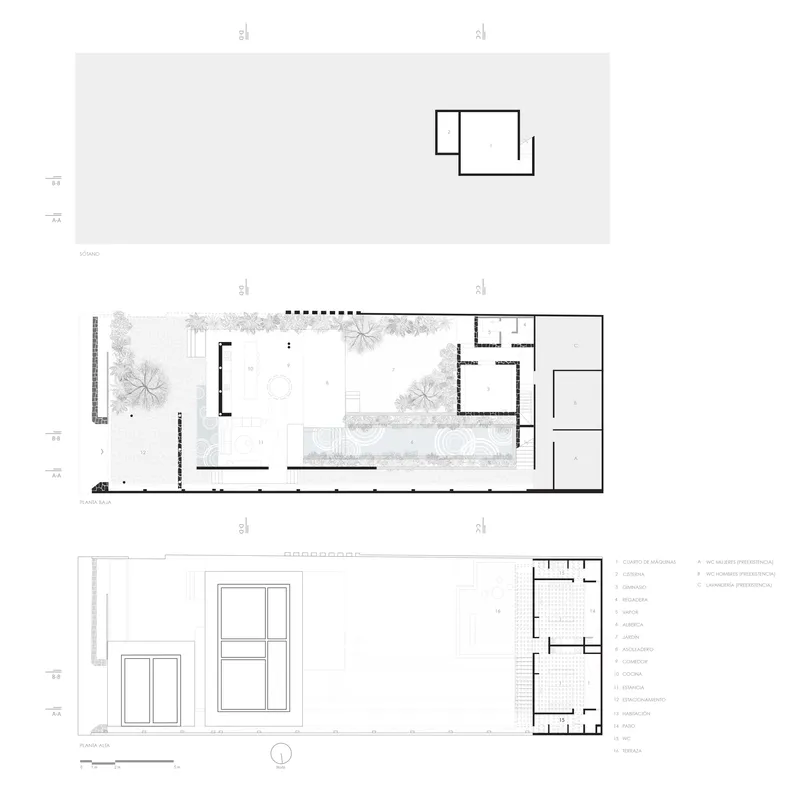
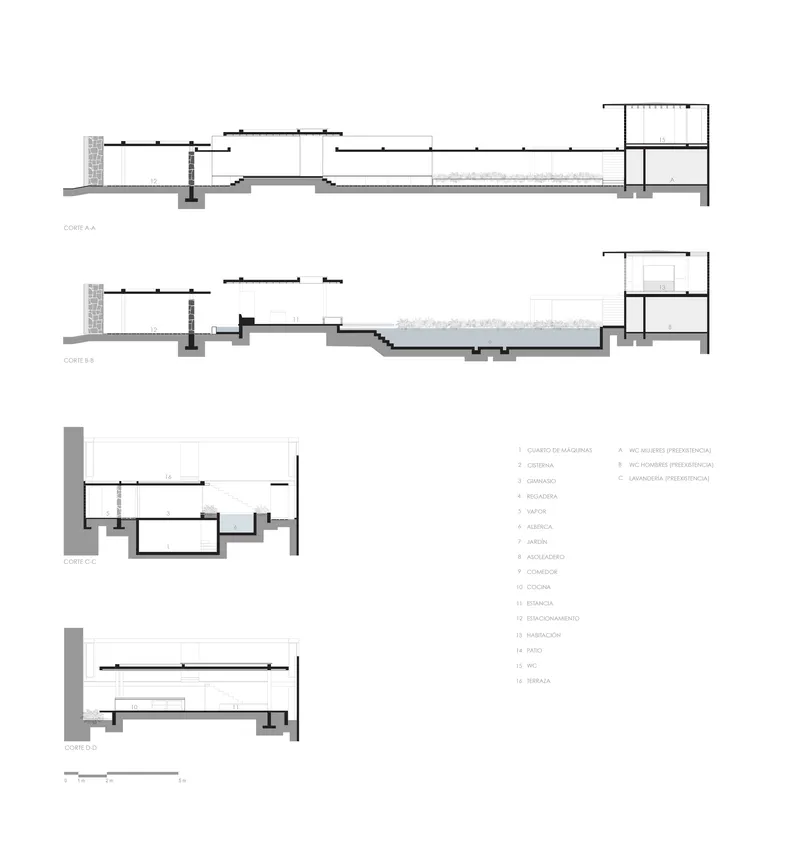
The plans show how the swimming lane organises everything. The pavilion sits at one end, the main house at the other, and the planted bands run along both sides of the pool. The sections clarify how the level changes are handled and how the open pavilion roof connects to the rest of the structure.
Why This Project Matters
Most large houses fail because they try to do too many things and end up doing none of them well. Hummingbird House works because it is honest about what it is: a place to gather, with a swimming lane and a covered pavilion that make gathering easy. Everything else (the bedrooms, the bathrooms, the service spaces) is designed to support that primary use rather than compete with it.
The lessons are transferable to anyone designing a house with a strong programmatic anchor. Decide what the house is really for. Build the plan around that. Use materials that age in the local climate. Treat the garden as part of the architecture, not as a finishing layer. Estudio Libre MX has put together a project that does all four things clearly, and the photographs by Luis Young show the result at its best.
About the Studio
Share Your Own Work on uni.xyz
If you are working on residential architecture, garden-led projects, or houses designed for hosting, uni.xyz is a place to publish your work, find collaborators, and enter design competitions.
Project credits: Hummingbird House by Estudio Libre MX. Mexico City, Mexico. 376 m². Completed 2025. Lead architects: Andrés Berjón, Diego Rodriguez. Interior design: Departamento de Interiores. Landscape: Tepetl. Photographs: Luis Young.


Popular Articles
Popular articles from the community


Cube Design Draws an Ecological Corridor Between Two Shenzhen Hills with the Nankai Building
Beside Shenzhen's container docks, the Nankai Building pairs stacked balconies with a climbing green screen to connect two hillsides across its height.


Aquadapt: An Underwater Habitat That Rewrites Its Rooms by the Hour
Curved modules ring the seabed while one shell shifts from breakfast room to cinema, farm and football pitch as residents' needs change.

ETEH Reworks the Shared Spaces of São Domingos School in Brazil Around Timber, Color and Hanging Plants
At São Domingos School in Brazil, 436 m² of hall, refectory and library are recast with timber joinery, a yellow and blue code and trailing greenery.

FCC Arquitectura Expands a Portuguese Granite House with a Board-Marked Concrete Wing
In Portugal, JV House pairs a cleaned-up whitewashed and granite dwelling with a timber-shuttered concrete extension, courtyards and a garden pool.

Similar Reads
You might also enjoy these articles

LAVA Architecten Gives Vocational Education a Sawtooth-Roofed Face on a Mechelen School Campus
In Mechelen, Belgium, a 2,053 m² STEM school on a 6×6 m grid turns workshops and classrooms into rooms that can be rearranged as teaching changes.

KEMA Studio Turns a Derelict Marvila Attic into a 60 m² Lighthouse Apartment Above Lisbon
In Lisbon's Marvila district, a rebuilt roof, four skylights and two plywood volumes turn an unlivable attic into a bright home facing the Tagus.

Pixel Gardens: One Repeated Module Stacked Into a Terraced Social Housing Tower for Famagusta
Salem Bader's shortlisted housing tower builds a vertical neighbourhood from one repeated module, offsetting units to carve terraces, light and air.

Bao Huynh Watercolor Atelier: A Serene Art Retreat in Hội An
Bao Huynh Watercolor Atelier in Hội An blends multifunctional art spaces, sustainable design, local materials, and family-friendly living in a serene environment.

Explore Mexican Design Competitions
Discover active competitions in this discipline

Challenge to design a portable theatre

Challenge to design a portable music platform

Challenge to design an open learning module for the elderly

Challenge to design mud housing for contemporary communities
Comments (0)
Please login or sign up to add comments
No comments yet. Be the first to comment!