
Hydro Vulcan Transmutation
At Sea Competition Journal

Within the vast unknown depths of the pacific ocean, submerged ecosystems, volcanic gas and thermal vents cohabit this aquatic world. Over the last century, humanity has ventured out with the ambition of exploring this vast uncharted aquatic territory. Unfortunately, the consequences of human interference within shallow and deeper regions of the sea landscape has caused significant damage to the ocean’s natural ecosystem. An overwhelming amount of plastic waste has emerged due to careless waste disposal, significant diminishment of algae levels have been revealed to be caused by rising global temperatures, and rich ecosystems such as coral reefs being damaged by maritime travel. These are just a few of the several most urgent issues the ocean faces today.
However, a hopeful solution to these challenges can be achieved through research that aims to discover new ways to adapt or operate around these malefactors in order to revitalize the ocean. Basic knowledge of the ocean’s conditions can be the beginning of discovering the causes of harmful phenomena and creating appropriate solutions. Therefore, architectural designers who are conscious of the ocean’s declining health have created a proposal for a subaquatic station, one that serves as a mobile dwelling vessel for scientific intellectuals committed to generating a positive environmental change. Although the main objective for this project would be to increase our understanding of the unknown aquatic world as well as address environmental damage, what if it could do more?
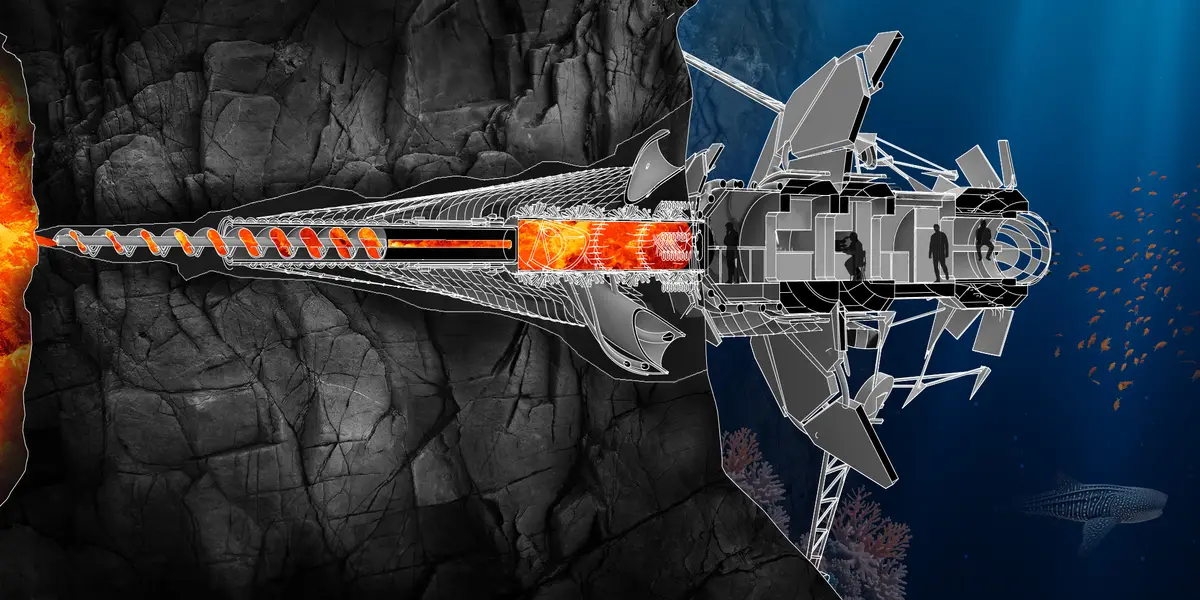
An innovative underwater complex can be used not only to filter out man-made pollution, but to assist with the discovery of new renewable energy alternatives that power our growing future cities. The Hydro Vulcan Transmutation aims to accomplish this by utilizing a research laboratory that operates as an underwater hub. This facility has the capacity to implant itself onto a hydrothermal undersea volcano, extract lava and then reconvert its internal properties into electrical power. Additionally, the complex would use this internal magma to incinerate microplastics and surrounding underwater pollutants.
This station can be used in multiple locations of submerged volcanoes and hydrothermal vents but an optimal location would be within the many volcanoes within the Ring of Fire. This project in particular, positions itself in the Philippines coasts which will allow for 3 Tertiary benefits: being within the Coral Triangle which houses thousands of aquatic species and organic life, easily accessible to various active volcanoes for thermal power (which then can be converted to electricity and then distributed to local cities of the Philippines) and finally close to proximity of the Western Garbage Patch which has had a devastating impact to aquatic environments for decades. These tertiary factors allow the lab to be flexible not only in its study, but allow it to be easily transferable to other sites within close proximity.
The Hydro Vulcan Transmutation is designed to accompany the programmatic spaces while also utilizing the additional space for energy conversion and disposal of harmful materials. The hub contains the appropriate dwelling conditions within a cylindrical pod that is designed to create an intimate private atmosphere for researchers. Located adjacent to the sleeping quarters is the multipurpose room which contains a wide variety of needs such as a kitchenette, eating space and an enclosed washing area and bathroom. Beyond the multipurpose room, an office space is embedded within the facility for functional use by the researchers. Lastly, a laboratory that contains various lab equipment, in accordance with an observational catwalk, is accessible to the main apparatus of the drill that has punctured itself into the volcano.
This research facility provides many functions that serve to assist with the local environment above and below the ocean surface. Attached to the station are algae collectors that extend from the unit with the ability to capture algae from a fibermesh net, as well as microscopic organisms and microplastics with the potential to be recycled. Depending on the location and environment, these multipurpose collector grabs have the ability to recycle, reuse, reintroduce and revitalize a damaged ecosystem. The collected biomasses and manufactured materials are then moved to the biomass recycler, which will separate microplastic and bio material into their own spaces, where any man made objects (or microplastic) are directed within parts of the inner mechanisms of the drill to be incinerated. The Drill that implants itself into the mountain is designed to create a minimal hole for lava extraction which then can be resealed whenever the lab needs to relocate. Once the drill has made the incision, it begins to collect lava from the mountain, destroy surrounding pollutants, and becomes a generating source of power to sustainably energize a city or local town using a watertight flotational cord that leads off of the sub. For the heat that is produced, a blast shield is placed on two parts of the station to block as much heat from entering the livable space where the 4 research members reside. Finally, with such active states of the lab, the leg supports attached to the station are designed to allow the station to grab onto the rocky surface and stabilize itself to the volcano.


Popular Articles
Popular articles from the community


Conexión: Biophilic Design Reimagines High-Rise Living in Hong Kong
Conexión reimagines high-rise living in Hong Kong through biophilic design, green facades, shared spaces, daylight, water and nature within.

Co-life: Sustainable Architecture for Age-Friendly Community Living
Co-life reimagines sustainable architecture for seniors through courtyards, rammed earth, shared gardens, and spaces designed for belonging.

The Ocean Hive: Sustainable Architecture for a Self-Sufficient Civilization at Sea
The Ocean Hive imagines sustainable architecture at sea, where modular habitats, algae, wave power and ocean waste sustain a growing colony.

Little Red Riding Hood: Architectural Design as a Journey Through Fear, Light, and Storytelling
Little Red Riding Hood reimagines the fairy tale through architectural design shaped by fear, light, scale, memory, uncertainty, and choice.

Similar Reads
You might also enjoy these articles

The Rhythm of Seasons
A Farmers' Market Connecting Nature and the City

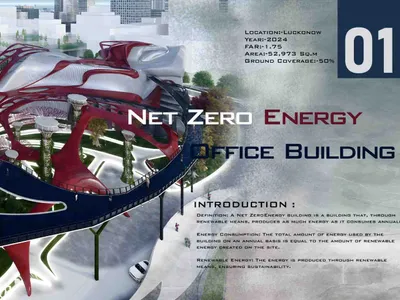
More Than a Building-Designing a Living System
More Than a Building-Designing a Living System
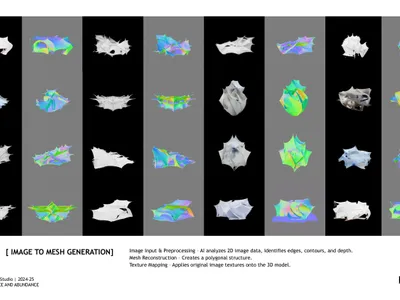
Base Beyond
DESERT COMPOUND ARID: TOURISM OF ABSENCE AND ABUNDANCE

Explore Ocean Architecture Competitions
Discover active competitions in this discipline


Challenge to design a shop stop sunk in the city

Challenge to reimagine the Iron Throne

Photograph architecture without architects

Illustrate the lost glory of Angkor Wat - Render Challenge
Comments (0)
Please login or sign up to add comments
No comments yet. Be the first to comment!