
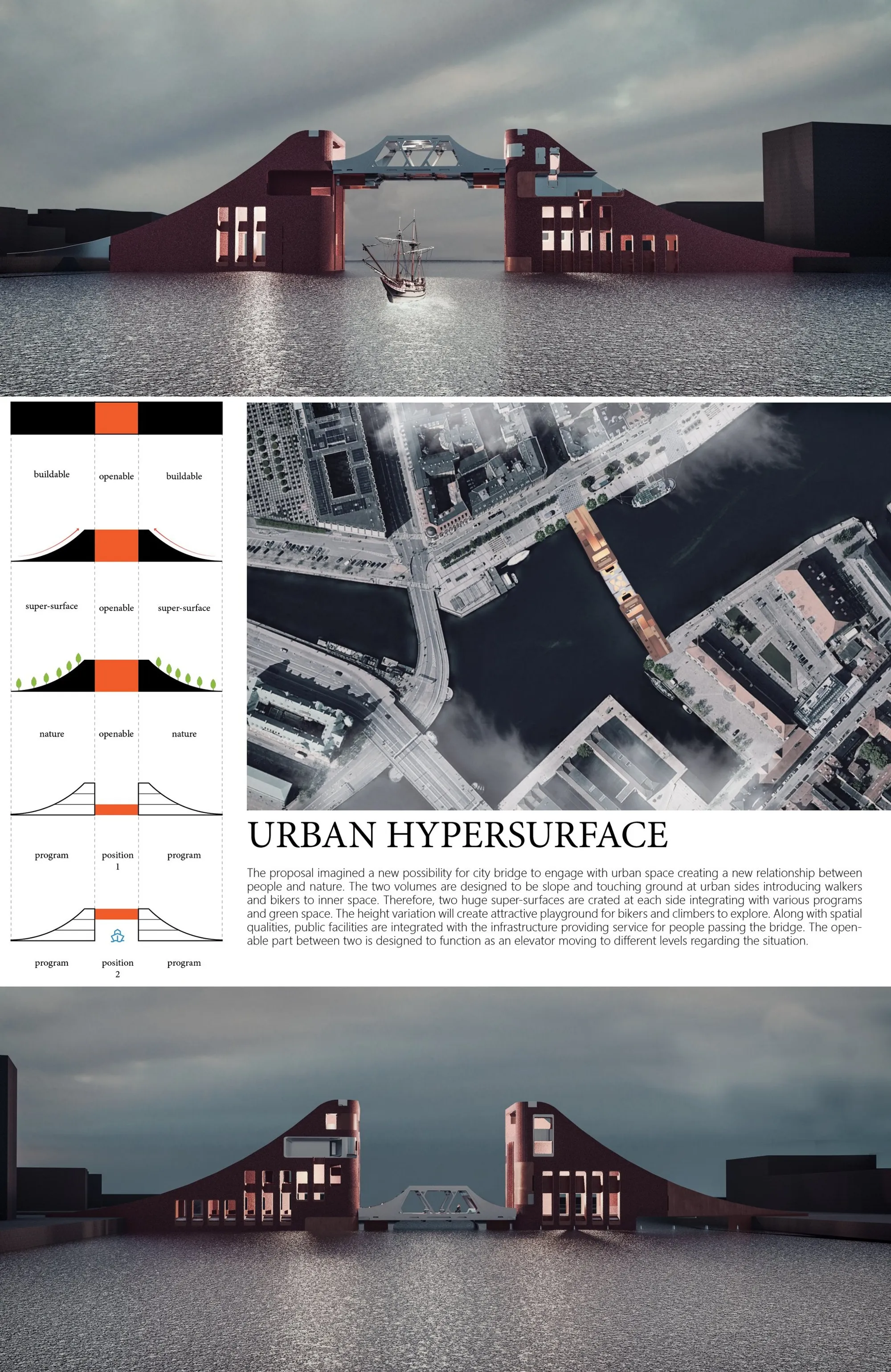
Hypersurface Bridge: Sustainable Urban Bridge Architecture
A visionary sustainable urban bridge architecture redefining mobility, nature, and public space through dynamic hypersurface design.


In contemporary cities, infrastructure is no longer limited to function alone. Bridges, once conceived purely as transitional structures, are increasingly becoming catalysts for urban life. The Hypersurface Bridge, a visionary proposal by yutianduxiu hendu, redefines the typology of the urban bridge by merging mobility, landscape, and public programming into a unified architectural experience.
Positioned within the discourse of sustainable urban bridge architecture, the project proposes a new relationship between people, movement, and nature. Rather than acting as a mere crossing, the bridge transforms into an inhabitable hypersurface: an architectural terrain that invites exploration, interaction, and engagement.
Sustainable Urban Design and the Future of Mobility
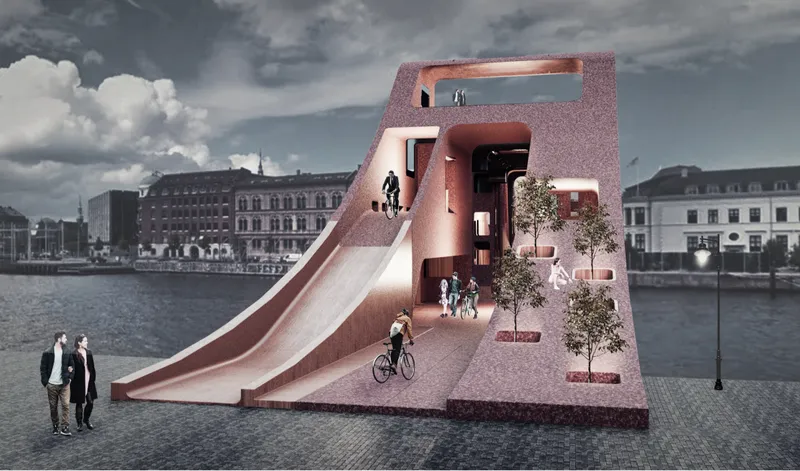
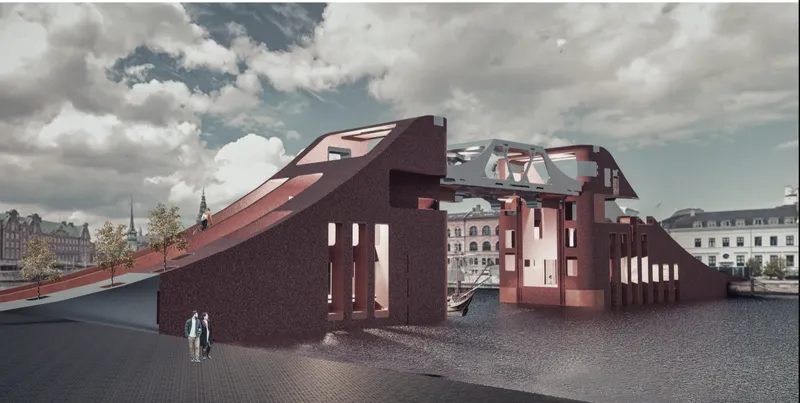
More than 100 years after the invention of the bicycle, cycling remains one of the most efficient and sustainable modes of transportation. In dense urban environments, however, the last-mile commute continues to present challenges. The Hypersurface Bridge addresses this gap by integrating cycling infrastructure directly into architectural form.
The proposal acknowledges cycling not just as transport, but as lifestyle. By creating engaging slopes and dynamic spatial sequences, the bridge encourages walkers and bikers to inhabit the structure rather than simply traverse it. The result is an infrastructure that promotes sustainable mobility through spatial delight.
This approach aligns with contemporary sustainable urban design principles:
- Human-scale spatial organization
- Active transportation prioritization
- Mixed-use integration within infrastructure
- Public space activation through architecture
The Hypersurface Concept: Architecture as Landscape
At the core of the proposal lies the idea of the hypersurface, two monumental sloped volumes touching the ground at either urban edge. These super-surfaces extend the city fabric upward, blurring the distinction between ground, building, and bridge.
Instead of treating infrastructure as an isolated engineering object, the design integrates:
- Green pockets embedded within architectural mass
- Multi-level circulation systems
- Public programs interwoven with movement corridors
- Height variations creating playful spatial experiences
The slopes become experiential terrains for cyclists and climbers, transforming everyday commuting into an interactive journey. The surfaces are not static forms but spatial landscapes that stimulate exploration.
Dynamic Infrastructure: The Openable Urban Mechanism
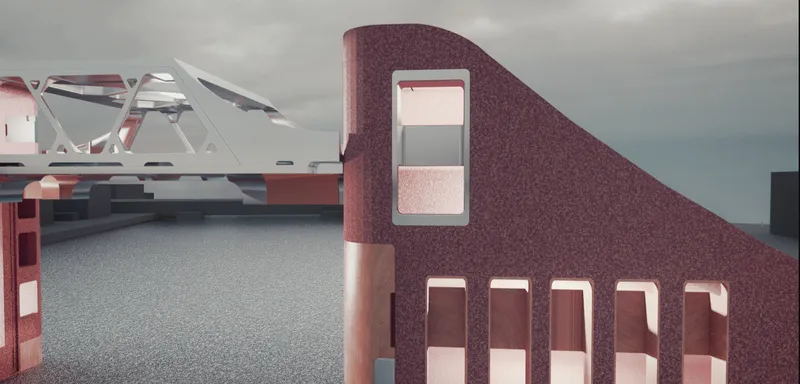
A defining feature of the Hypersurface Bridge is its openable central section. Unlike conventional drawbridges, this mechanism is conceived as a dynamic elevator-like system, capable of adjusting to different urban and navigational conditions.
This adaptive component performs multiple roles:
- Allows maritime passage
- Connects varying vertical levels
- Maintains continuous cycle movement
- Enhances the architectural identity of the bridge
The openable core transforms the bridge into a kinetic landmark: an infrastructure that moves, adapts, and responds to its context.
Mixed-Use Hypersurface: Public Space as Infrastructure
The project challenges the notion that infrastructure and public space are separate domains. Each hypersurface integrates mixed-use programs within its mass, enabling the bridge to function as:
- A recreational playground
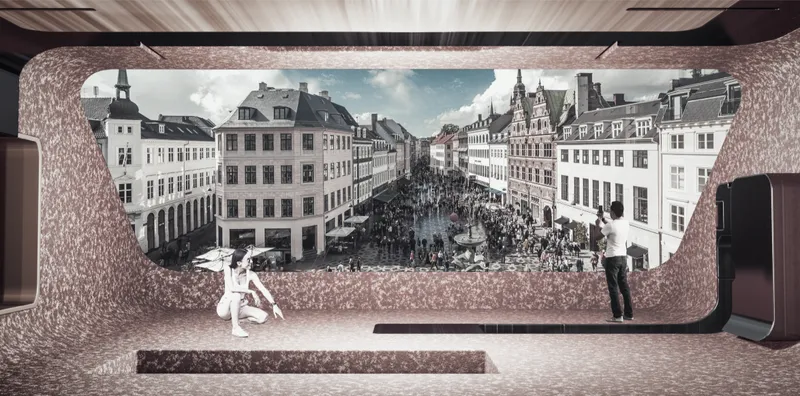
- An observation platform
- A cycling hub
- A social gathering space
Interior voids carve visual connections to the surrounding city, framing urban life as an immersive panorama. Windows become urban lenses, reinforcing the bridge’s role as both connector and observer.
By embedding public facilities directly into the structural volume, the design ensures that the bridge is active beyond peak commuting hours. It becomes a destination rather than a shortcut.
Materiality: Bridging Heritage and Modernity
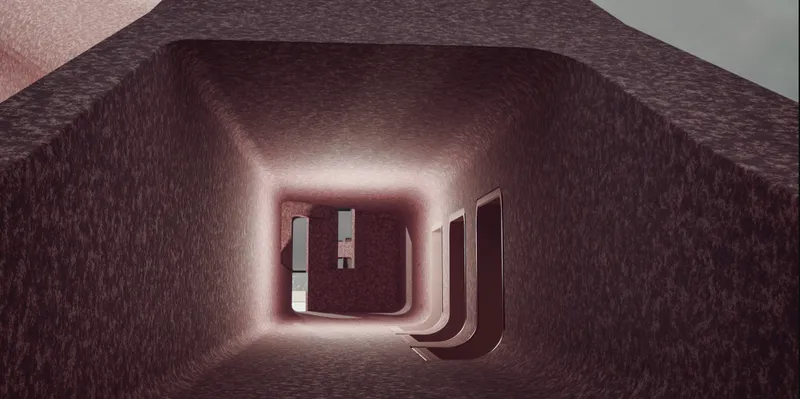
The material language references contextual history while embracing contemporary tectonics. The textured surfaces evoke solidity and permanence, anchoring the structure within its historic surroundings, while the lightweight central span expresses modern engineering clarity.
This dialogue between past and present reinforces the bridge’s landmark status. It is not an object imposed upon the city but an extension of its architectural memory.
Urban Landmark and Cultural Connector
What elevates the Hypersurface Bridge beyond infrastructure is its cultural ambition. The project positions the bridge as a symbolic connector between worlds: nature and city, movement and pause, engineering and landscape.
Its unique hypersurface geometry generates vigorous spatial experiences and unexpected urban events. The interplay of slopes, voids, and framed vistas produces a sequence of spatial moments that redefine how a bridge can be perceived.
In doing so, the project establishes itself as a future-oriented model of sustainable urban bridge architecture: one where infrastructure becomes habitat, terrain, and public forum simultaneously.
The Hypersurface Bridge by yutianduxiu hendu proposes a radical evolution in urban bridge design. By integrating sustainable mobility, mixed-use programming, adaptable mechanics, and landscape-inspired form, the project transforms infrastructure into a living architectural system.
Rather than separating movement from place-making, the bridge fuses them into a continuous hypersurface: an urban topography that connects, activates, and inspires.
In the future of sustainable cities, bridges will no longer be passive connectors. They will be dynamic public architectures shaping how we move, gather, and experience urban life.



Popular Articles
Popular articles from the community


Riyadh For All: Intergenerational Urban Design for Active Aging in Rabat
Riyadh For All reimagines urban design in Rabat with intergenerational co-living, adaptive courtyards, and Moroccan cultural exchange today.

Lunar Spiral: Space Architecture Shaped by the Mathematics of the Universe
Lunar Spiral reimagines space architecture through Fibonacci geometry, lunar regolith, levitating habitats, and self-sustaining Moon living.

The Ocean Hive: Sustainable Architecture for a Self-Sufficient Civilization at Sea
The Ocean Hive imagines sustainable architecture at sea, where modular habitats, algae, wave power and ocean waste sustain a growing colony.

The Earth Pod: 3D Printed Homes for Resilient Refugee Communities
The Earth Pod reimagines refugee housing through 3D printed homes made from clay, combining resilience, self-sufficiency, and rapid shelter.


Similar Reads
You might also enjoy these articles

Eco Chapel: A Green Architecture Pavilion Designed in Symbiosis with the Forest
Eco Chapel uses green architecture to weave prayer, learning and reuse into a forest pavilion shaped by modular hexagonal canopies for life.
Kaffeebühnen: Coffee Shop Architecture Designed as a Civic Stage Between Vienna’s City and Park
Kaffeebühnen turns coffee shop architecture into a civic stage, linking Vienna’s park edge, urban life, warm timber yards, and coffee craft.
Healing Façade: Sustainable Architecture for Reforestation, Community, and Sacred Ecology in Ethiopia
Healing Façade reimagines sustainable architecture as a living wall that restores soil, catches water and renews Ethiopia's forest churches.


Urban Forest: A Vertical Ecosystem for 5,000 Workers in Singapore's Changi Business Park
Radially stacked pods and layered green decks turn a 7-acre plot into 47 acres of ecological workspace projected for 2040.


Explore Architecture Competitions
Discover active competitions in this discipline



Challenge to reimagine the Iron Throne


Photograph architecture without architects


Illustrate the lost glory of Angkor Wat - Render Challenge


Design challenge to reuse E-waste
Comments (0)
Please login or sign up to add comments
No comments yet. Be the first to comment!