

i-Ap Apartment by Soeda and Associates Architects
i-Ap Apartment in Shinjuku City by Soeda and Associates Architects blends geometric precision, natural light, and greenery for tranquil urban living.


A Contemporary Residential Landmark in Shinjuku City
Located in the heart of Shinjuku City, Japan, the i-Ap Apartment by Soeda and Associates Architects redefines compact urban living through a poetic interplay of geometry, light, and materiality. Designed by Takayuki Soeda, the 405 m² building explores how contemporary architecture can harmonize with the layered urban fabric of Tokyo, transforming a complex, irregular site into an elegant residential structure.
Context and Urban Fabric
The site lies adjacent to a road that once followed the meandering path of the old Kanda River. This natural waterway, later straightened and converted into a culvert for flood control, left behind a network of fragmented alleyways and intimate streetscapes. These irregular urban conditions inspired the architects to design a building that captures the familiarity and rhythm of traditional Tokyo neighborhoods while integrating modern spatial logic.
Unlike standardized city blocks, the surroundings of i-Ap Apartment retain a human-scale informality, evoking a nostalgic connection between past and present urban conditions.
Design Concept: Geometry and Site Integration
The irregularly shaped site informed the architectural strategy. Instead of imposing a rigid grid, the architects derived the building’s form from the Chinese character “井” (well)—a symbol of intersection and community. This grid-like layout organizes the plan into nine squares, with the central square serving as a shared common area and the four corners functioning as private living spaces.
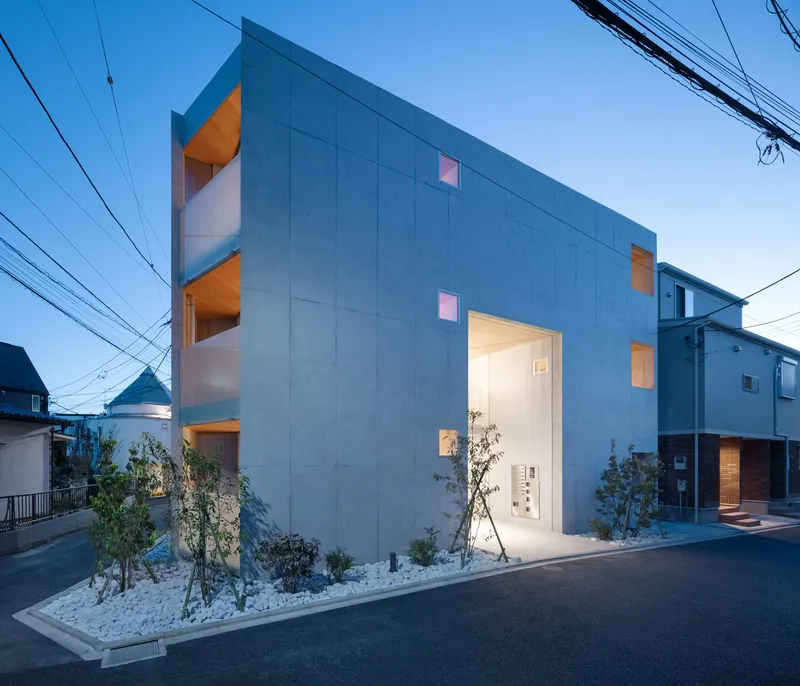
The building’s perimeter walls respond directly to the urban edges, subtly chamfered along the northeast and southeast corners to align with nearby streets. This strategic geometry not only maximizes usable space but also softens the building’s visual impact, blending it gracefully into the surrounding neighborhood.
Materiality and Light
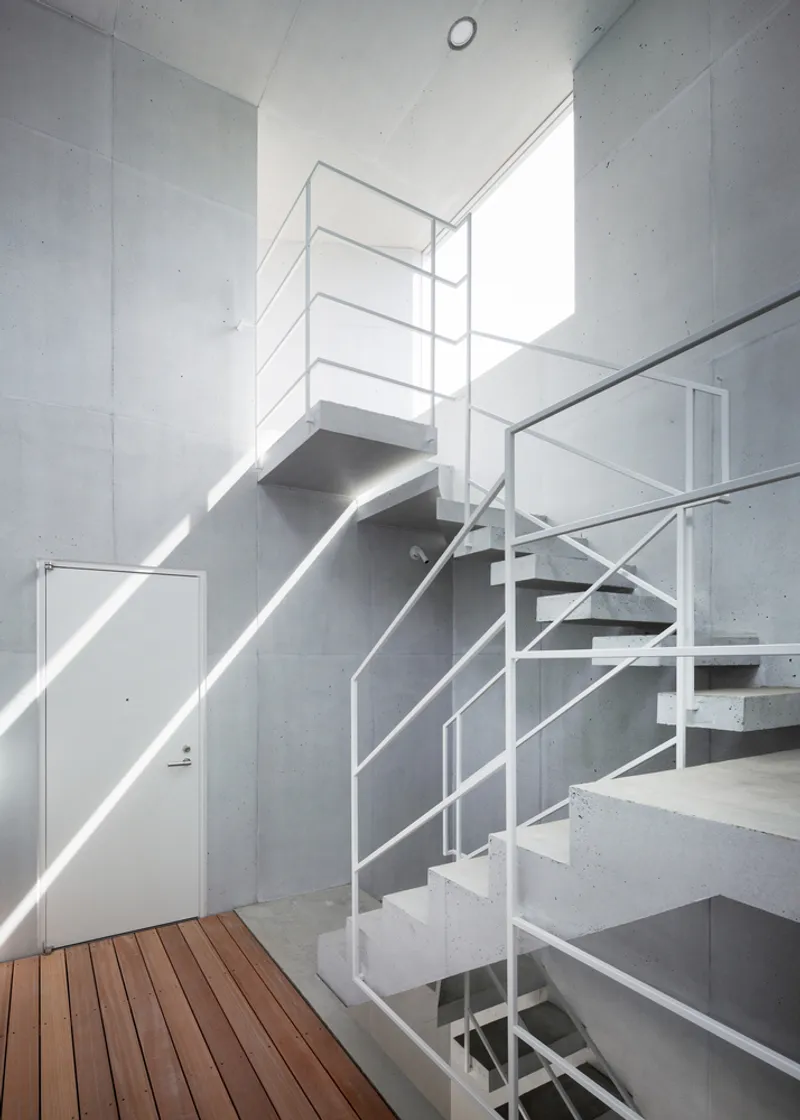
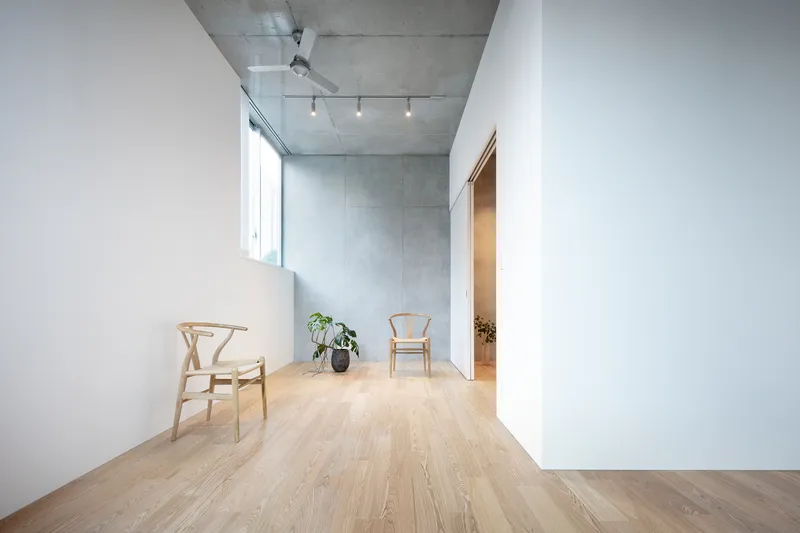
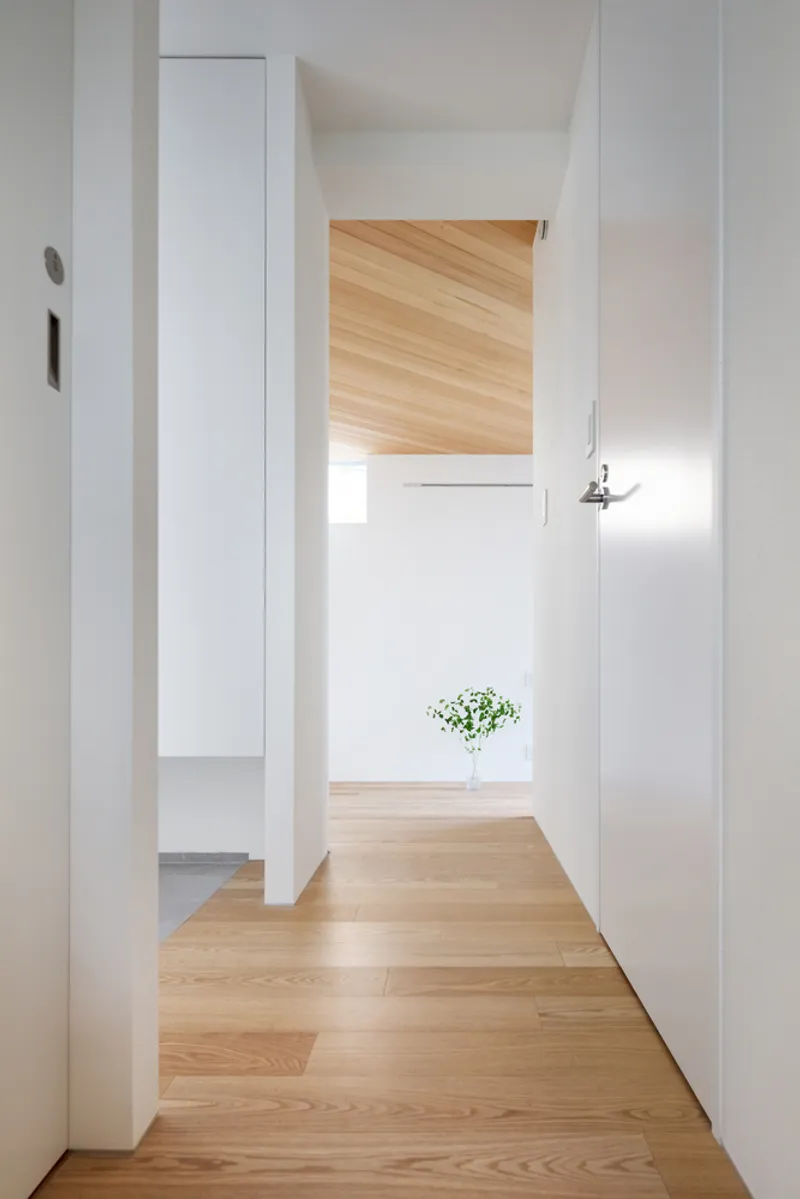
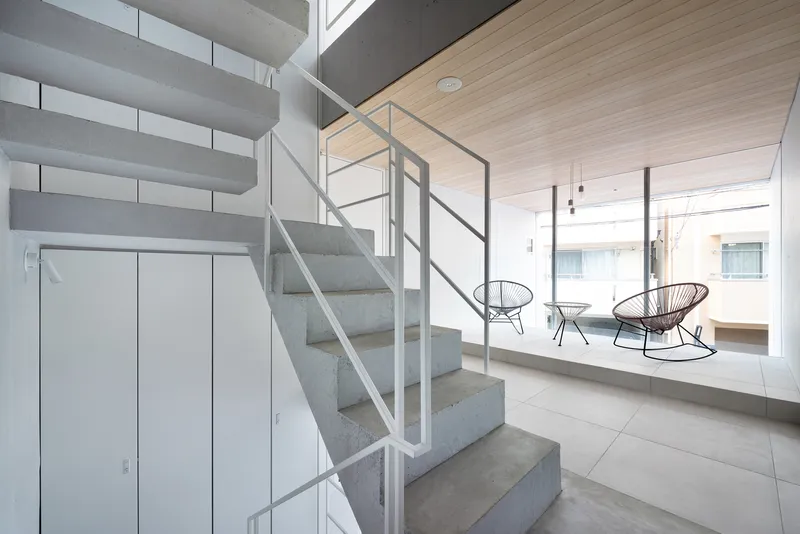
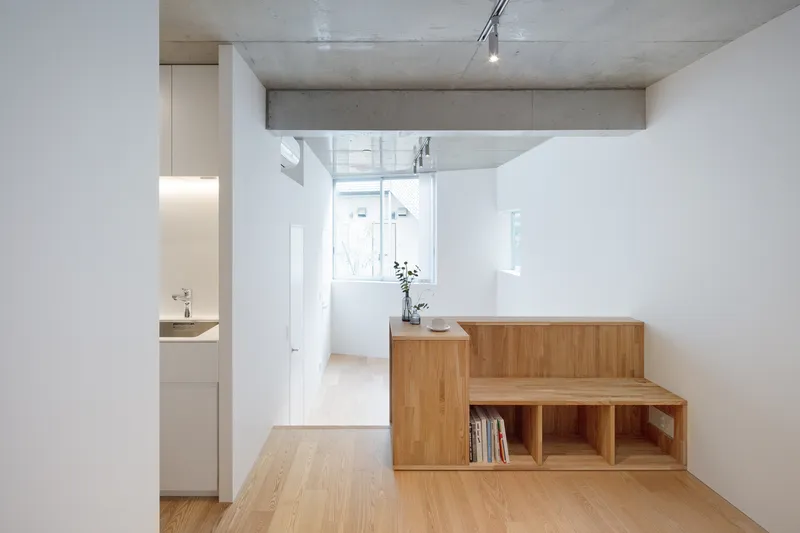
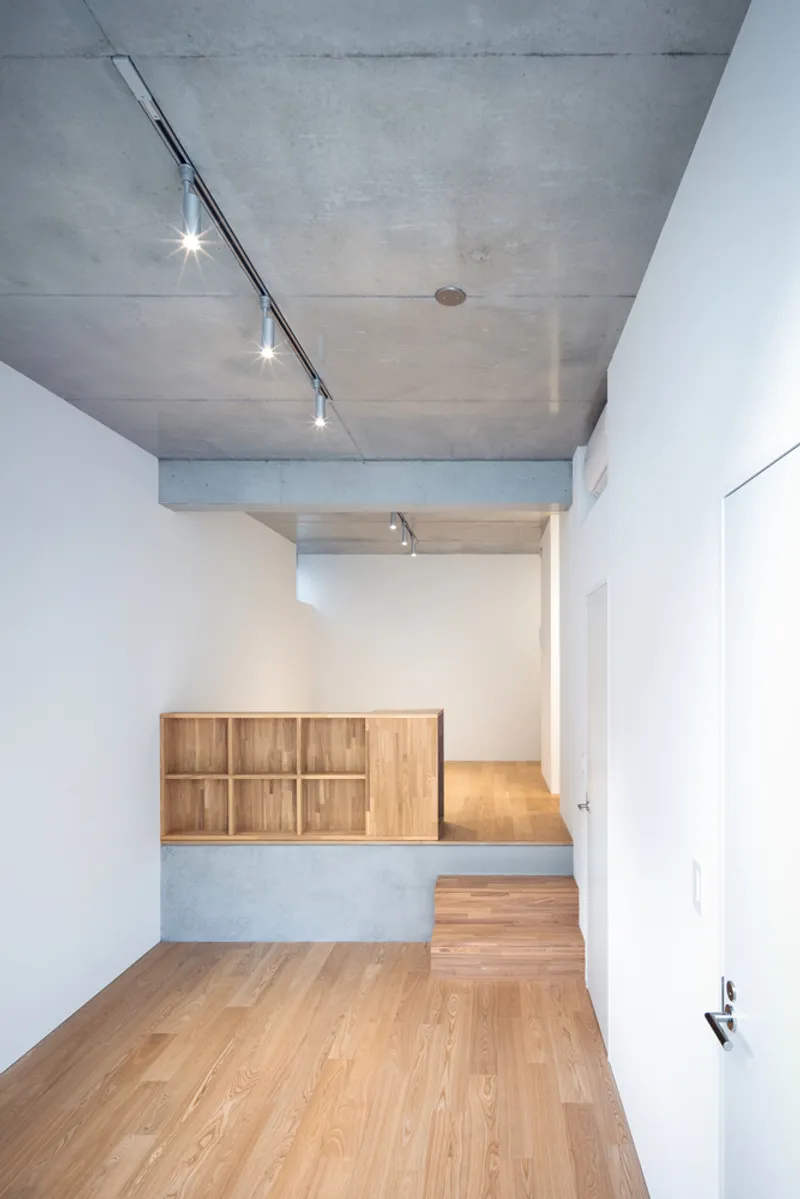
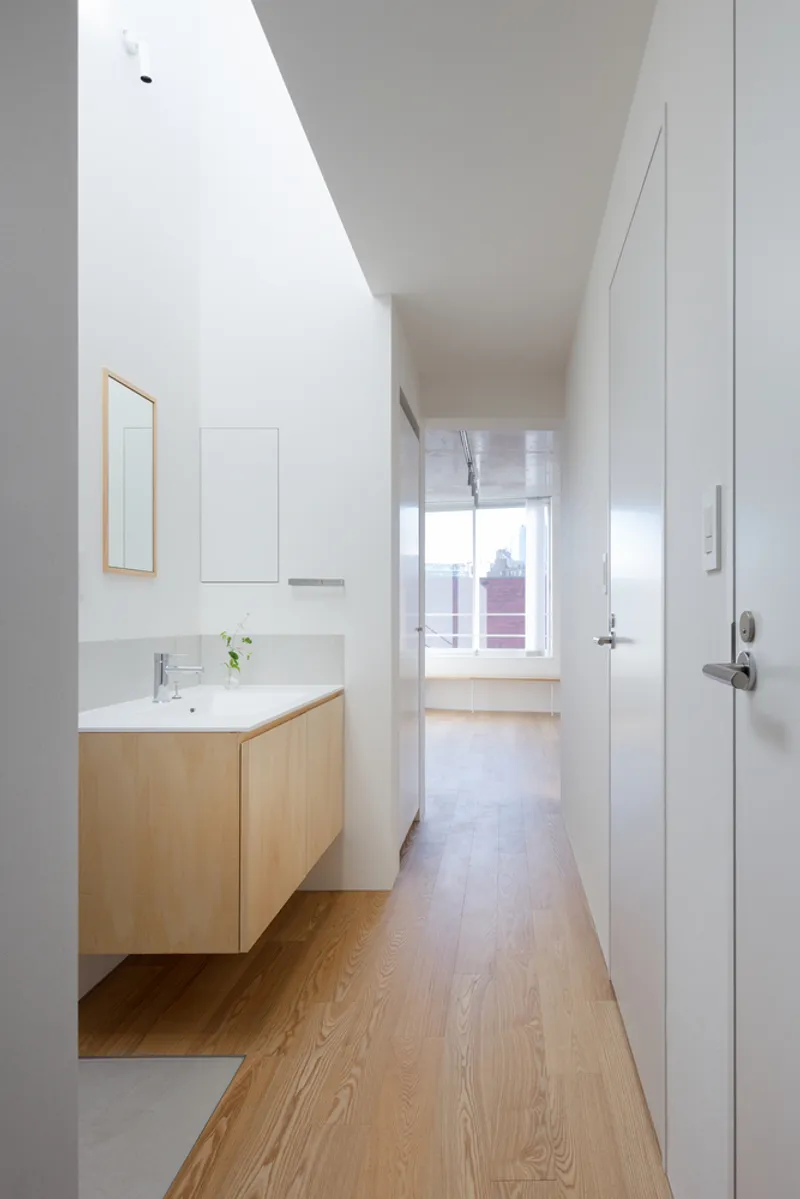
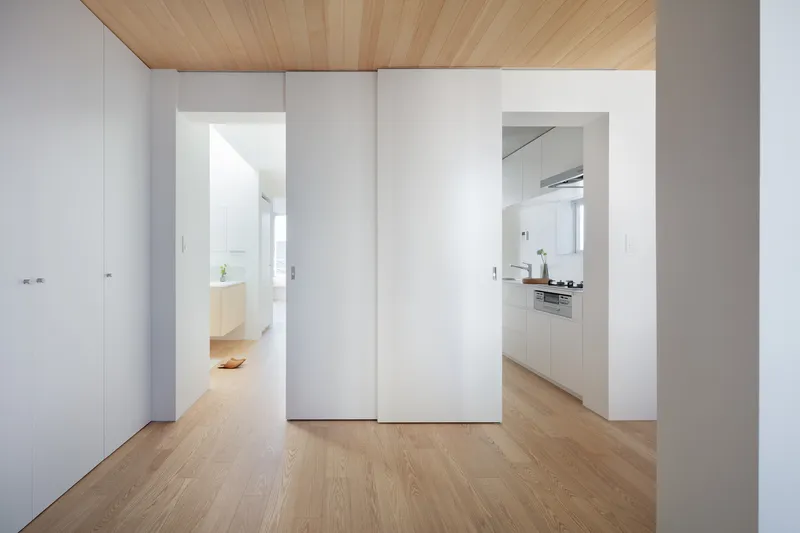
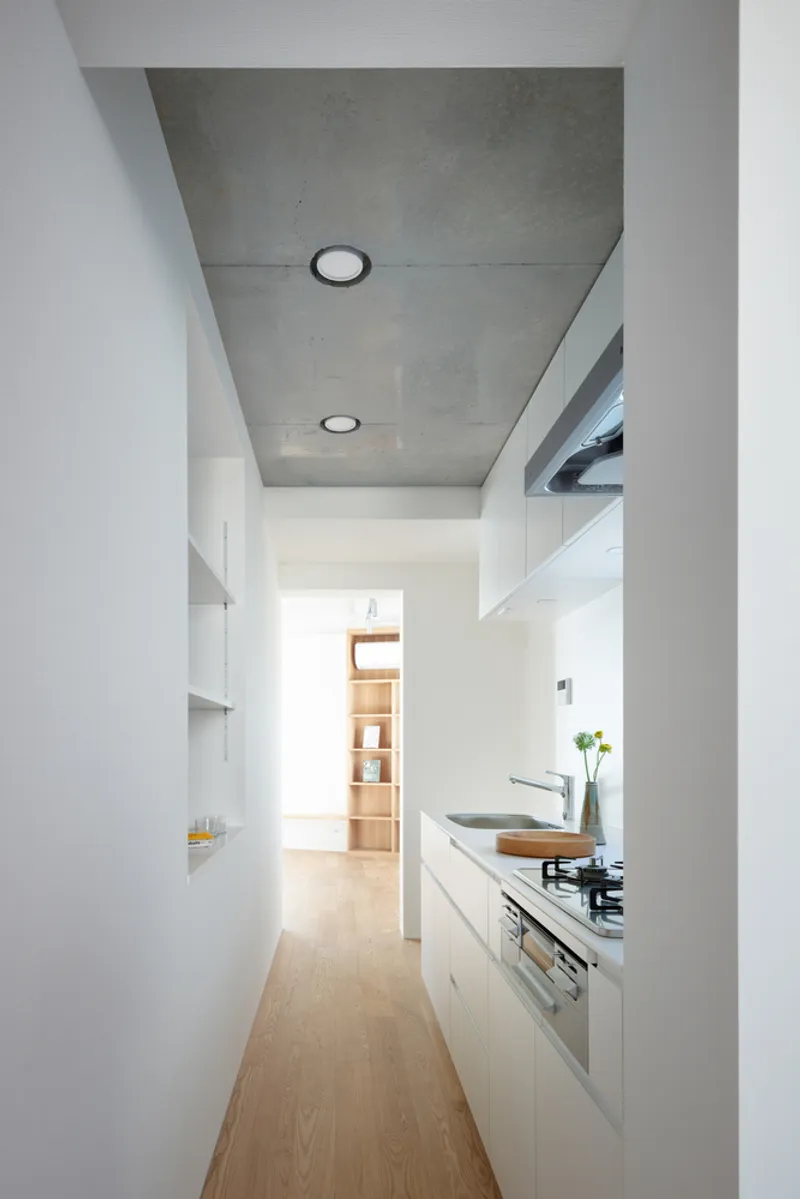
Material expression plays a central role in defining the ambiance of i-Ap Apartment. The architects employed six distinct shades of white throughout the shared spaces, creating a layered visual depth reminiscent of mist rising over the Kanda River. Natural light filters through carefully positioned openings, animating the interiors with gentle tonal variations across the day.
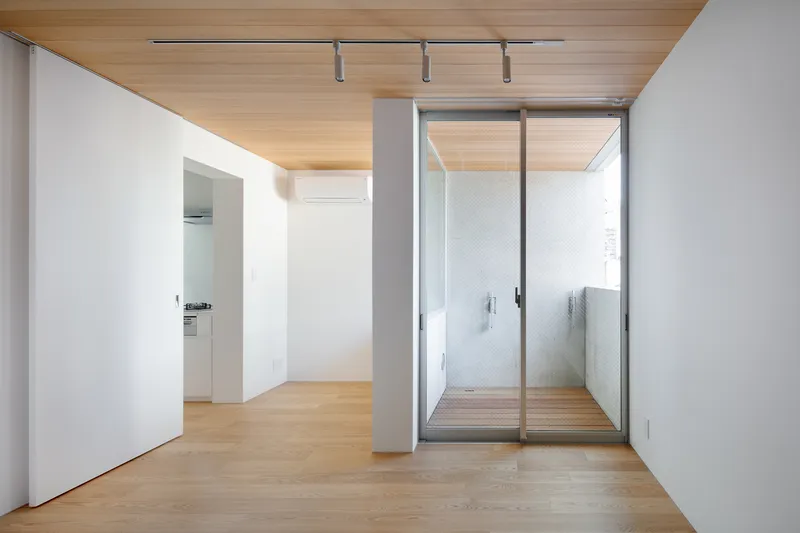
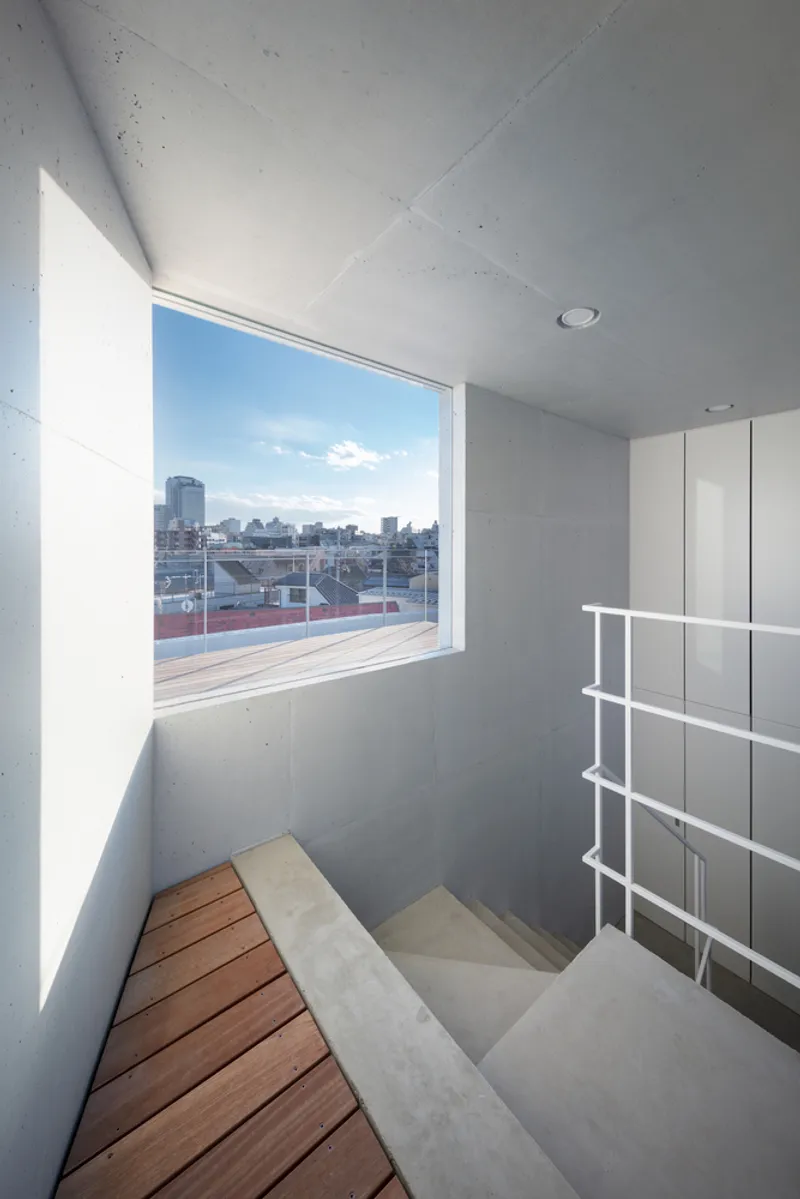
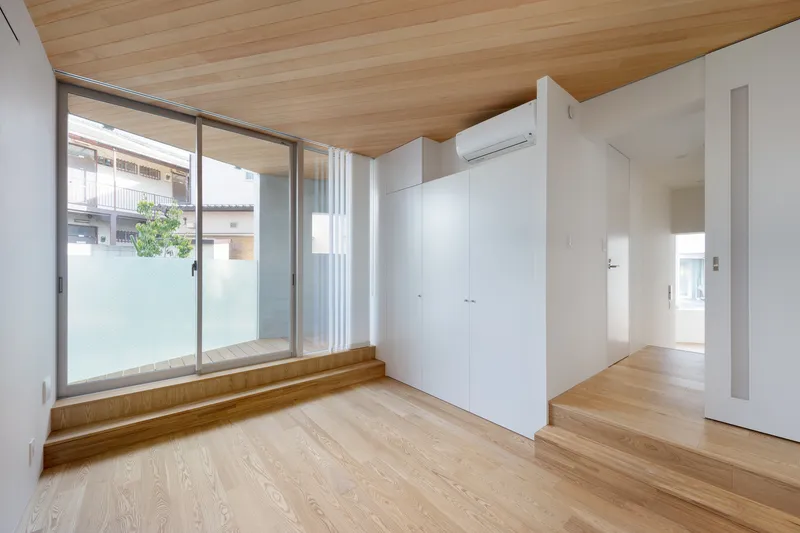
The use of wood and glass in the interiors enhances warmth and transparency, while subtle concrete finishes bring balance and solidity to the composition. Each apartment unit is designed with customized openings, adjusting their size and finish according to orientation and external conditions—offering privacy while maintaining connection with the surrounding greenery.
Green Buffer and Privacy Strategy
To ensure privacy within the dense urban context, narrow green spaces extend outward from the building envelope. These planted buffers soften the building’s presence from the street, framing natural views for the residents while filtering urban noise. The integration of greenery transforms the external façade into a living boundary, promoting a biophilic connection between residents and the environment.
Vertical Connectivity and Shared Spaces
The vertical organization of the apartment reinforces a sense of community while maintaining gradations of privacy:
- First Floor: A public entrance and communal space, open to the street and framed by greenery, invites both residents and visitors.
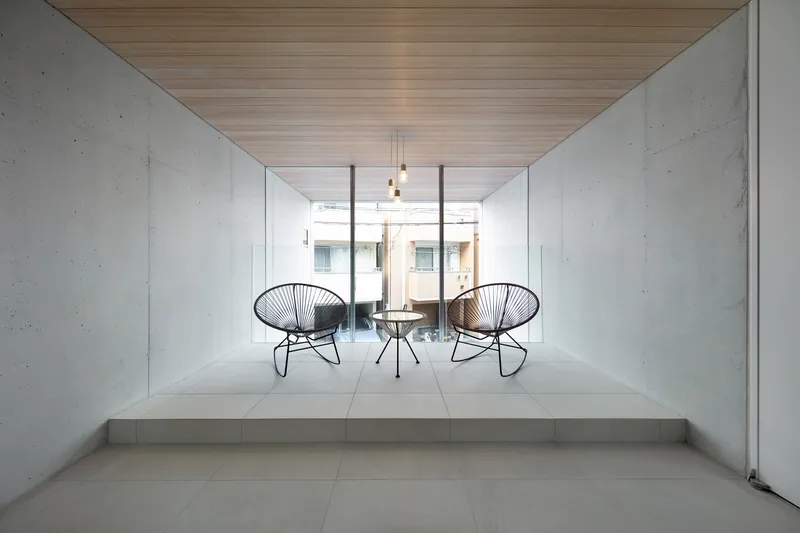
- Second Floor: A semi-private indoor lounge area furnished on a raised platform, fostering interaction among residents.
- Third Floor: A double-height common space exceeding 5 meters in ceiling height, leading to a roof balcony that opens to the Tokyo skyline—an architectural gesture connecting the interior to the city beyond.
Architectural Expression and Atmosphere
Through the interplay of light, texture, and void, Soeda and Associates Architects have crafted an architecture that transcends functionality. The i-Ap Apartment embodies a quiet dialogue between tradition and modernity, privacy and openness, and urban density and natural calm. Its layered white palette, dynamic sectional spaces, and vegetated peripheries form a contemporary oasis that celebrates collective urban living.
All Photographs are works of Takumi Ota


Popular Articles
Popular articles from the community


longwave studio Reorganizes a 112 m² Tainan Apartment Around the Daily Routines of a Family and Two Cats
In Tainan, Taiwan, birch plywood, rust-red furniture and a freestanding plaster wall link arrival, storage, work and family life in one apartment.

Architekt Andreas Gruber Scatters 23 Dark Timber Chalets Across a South Tyrolean Forest Edge
In Molini di Tures, Amonti Chalets breaks a resort into a hamlet of gabled timber houses, with parking, storage and services pushed into the slope.

LT2A and OPEN Architectes Thread a Brick and Glass High School Through a Wooded Belgian Campus
In Braine-l'Alleud, a 3,000 m² wing for Collège Cardinal Mercier pairs pale brick with a glazed colonnade, deferring to a small chapel and a dense wood.

Cube Design Draws an Ecological Corridor Between Two Shenzhen Hills with the Nankai Building
Beside Shenzhen's container docks, the Nankai Building pairs stacked balconies with a climbing green screen to connect two hillsides across its height.

Similar Reads
You might also enjoy these articles


Hodi-Mandai Geram
Project Function: Preservation and revitalization of the Intangible heritage and socio-spatial identity of the Hodi by Housing, Cultural Memory Center, Sacred Grove, landscape, local tourism economy


Olio Towers: A Mid-Rise for Performers That Fuses Housing, Rehearsal, and Stage
Located blocks from Houston's Theater District, this modular tower stacks living units around a central performance atrium.

Oasis: Modular Green Housing Carved into Dhaka's Urban Fabric
A shortlisted Plugin Housing entry reclaims unauthorized settlements in Dhaka with stepped concrete volumes, green roofs, and ventilation-driven design.

Black Hole: A Floating Megastructure for the Post-Physical Era
Emiliano Mazzarotto envisions a spherical, self-scaling arena where e-sports, digital hotels, and holographic stadiums replace traditional public space.

Explore Residential Building Competitions
Discover active competitions in this discipline

Challenge to design mud housing for contemporary communities

Challenge to reimagine the Iron Throne

Photograph architecture without architects

Illustrate the lost glory of Angkor Wat - Render Challenge
Comments (0)
Please login or sign up to add comments
No comments yet. Be the first to comment!