
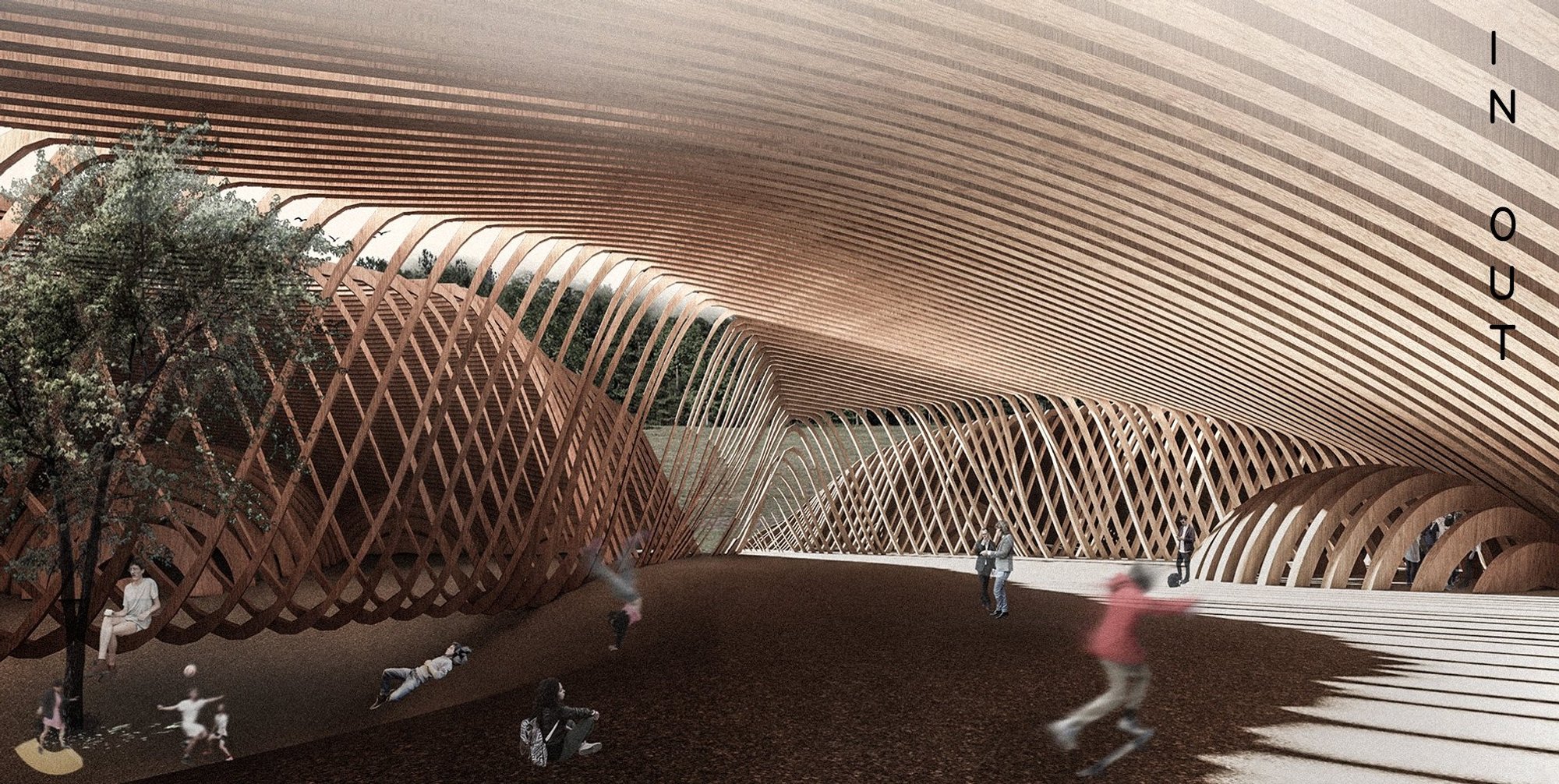
IN OUT: Rethinking Learning Through Parametric School Architecture
A parametric school architecture redefining learning through fluid spaces, student-centric design, and seamless integration of nature and movement.

The project IN OUT, designed by İldem Çınar, challenges the conventional boundaries of educational design through an experimental approach rooted in parametric school architecture. As a shortlisted entry for School Of Thought 2020, the proposal moves beyond rigid classroom typologies and instead introduces a fluid, student-centric spatial system where learning is not confined but continuously evolving.
At its core, the project questions the long-standing structure of education systems that place the teacher at the center. Instead, it proposes a radical inversion. The student becomes the focal point, and space becomes an active participant in learning rather than a passive container.
Breaking the Stereotype of Educational Spaces
Traditional school architecture often reinforces hierarchy through spatial organization. Classrooms are static, corridors are transitional, and courtyards are secondary. IN OUT disrupts this model by dissolving the distinction between these elements.
The project eliminates the singular focal point of instruction and replaces it with a distributed learning environment. Here, students learn from each other, engage with space dynamically, and experience education as a participatory process. The teacher transitions into a guide rather than an authority figure.
This shift is not merely conceptual but deeply embedded in the spatial logic of the design.
Spatial Strategy: Inside Becomes Outside
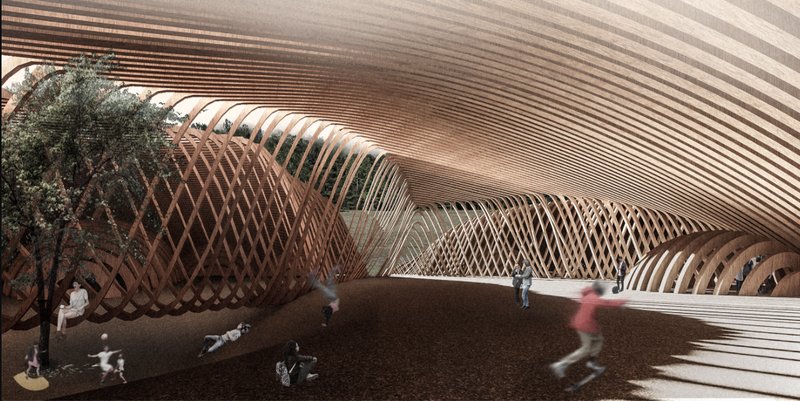
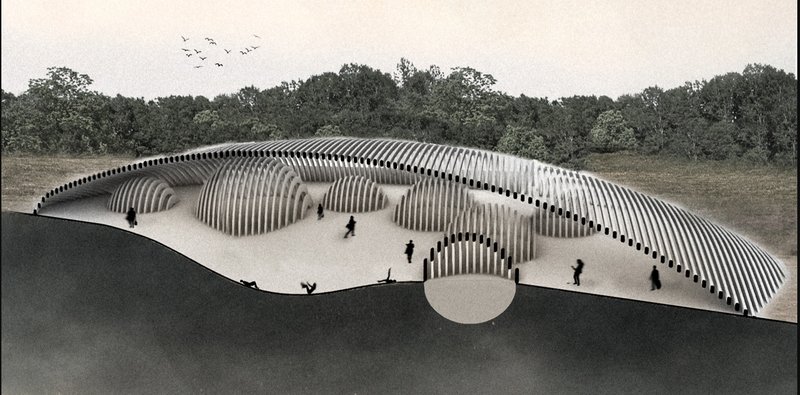
One of the defining ideas of this parametric school architecture is the reversal of conventional spatial roles. Elements such as floors, walls, and roofs are reinterpreted and often interchangeable. In certain conditions, the floor rises to become a wall, while the roof descends to define enclosure.
This inversion produces a series of spatial gaps. These gaps are not residual spaces but intentional learning environments. They create unconventional zones where students can gather, move, reflect, and interact.
The architecture operates as a continuous shell that folds and flows across the site, generating both enclosure and openness simultaneously.
Mobility and Movement as Learning Tools
Movement is treated as a fundamental component of education in IN OUT. Unlike conventional schools that restrict circulation, this design encourages exploration through varied movement paths.
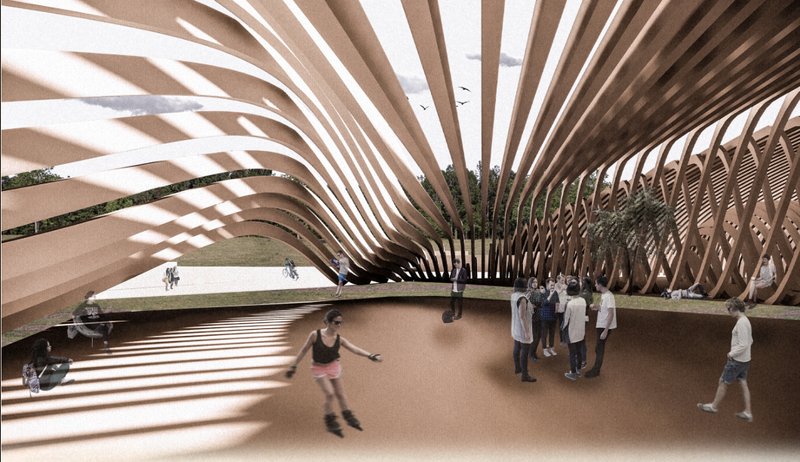
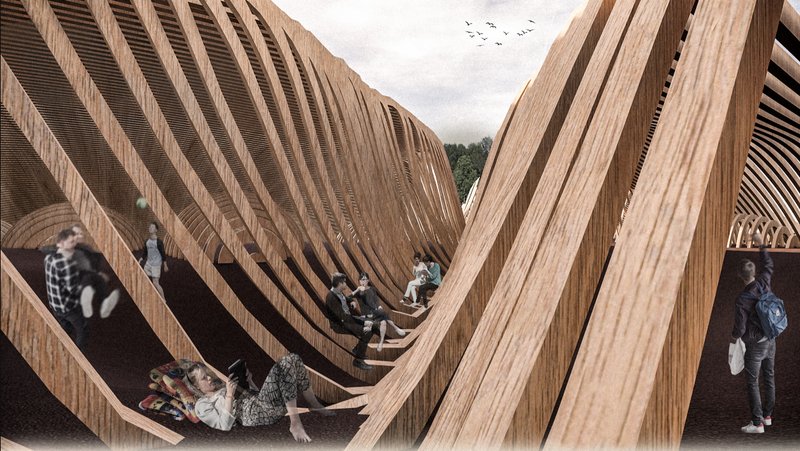
Sloping surfaces, changing elevations, and fluid transitions between spaces allow students to navigate freely. The absence of rigid boundaries ensures that movement is not linear but experiential.
Entrance and exit points are deliberately softened and inclined, reinforcing the continuity between interior and exterior. As a result, the distinction between inside and outside begins to dissolve.
This approach enhances spatial awareness and encourages students to engage physically with their environment.
Formal and Informal Learning Landscapes
A critical innovation in this project is the coexistence of formal and informal learning environments. Rather than separating these functions, the design integrates them through topographical variation.
Flat surfaces are designated for structured, academic learning. These areas support traditional teaching methods involving desks, boards, and focused instruction.
In contrast, sloped and open terrains facilitate informal learning. These spaces are adaptable and can host activities such as group discussions, physical education, creative practices, and spontaneous interaction.
By embedding both systems within a single spatial framework, the project enables a holistic educational experience.
Materiality and Environmental Integration
The project employs wood as its primary material, emphasizing sustainability, warmth, and tactility. The repetitive structural ribs form a porous shell that allows light, shadow, and air to permeate the space.
Natural daylight plays a crucial role in shaping the atmosphere. The interplay of light and shadow creates dynamic environments that evolve throughout the day, reinforcing the connection between architecture and nature.
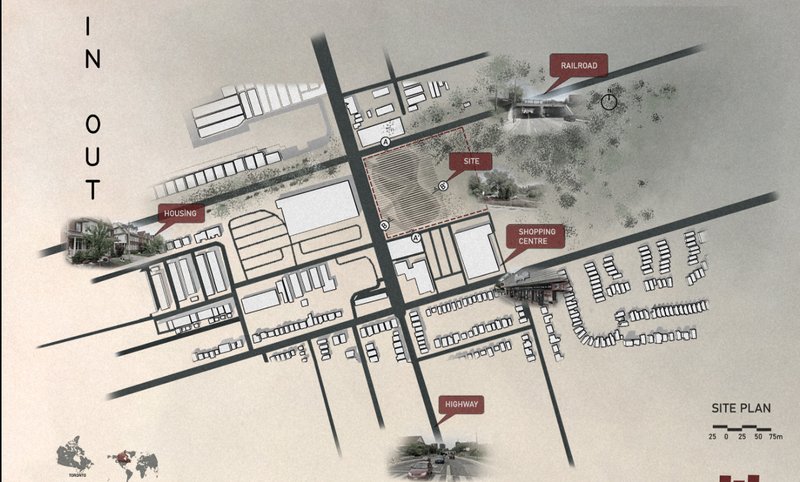
This integration extends to the broader context. The school is not isolated but embedded within its surroundings, allowing users to remain connected to the landscape at all times.
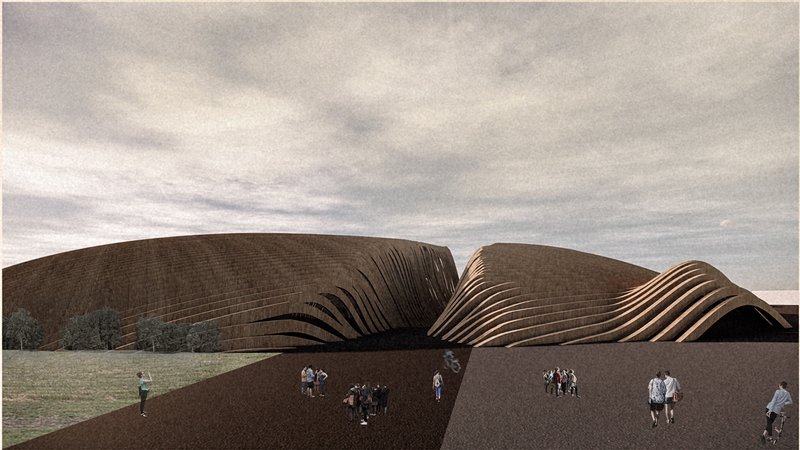
The Zigzag Road: Connecting City and School
A distinctive urban gesture in the project is the introduction of a zigzag road that passes through the site. This element strengthens the relationship between the school and its environment without compromising the internal spatial logic.
While the school maintains a degree of formal identity, the road acts as an informal connector. Passersby can visually engage with the architecture, creating a subtle dialogue between the institution and the public.
This duality ensures that the school remains both a defined educational space and an open, accessible environment.
Programmatic Flexibility and Spatial Freedom
The programmatic structure of IN OUT moves away from rigid zoning. Instead of assigning fixed functions to specific areas, the design allows spaces to adapt based on need.
Courtyards become classrooms, circulation paths become gathering zones, and open areas transform into activity spaces. This flexibility enables a more responsive educational system where space evolves with its users.
The design also incorporates subsurface spaces created through elevation differences. These areas provide additional zones for learning, further expanding the spatial possibilities.
Human-Centered Design and Personal Awareness
Beyond its architectural innovation, the project emphasizes personal growth and self-awareness. By reversing spatial expectations and encouraging exploration, it creates an environment where students can better understand themselves and their surroundings.
The absence of rigid boundaries fosters freedom of expression. Students are not confined to predefined roles or spaces but are encouraged to define their own experiences.
This approach aligns architecture with pedagogy, making space an active contributor to learning and development.
Juror’s Perspective
Gabriel Askenazi, juror of the competition, noted the strength of the concept succinctly:
“Interesting concept.”
While brief, this observation highlights the project’s ability to provoke thought and challenge conventional norms within educational architecture.
IN OUT represents a forward-thinking exploration of parametric school architecture. By dissolving boundaries, redefining spatial roles, and prioritizing student experience, the project offers a compelling alternative to traditional educational environments.
It is not merely a school design but a reimagining of how architecture can shape learning. Through fluid forms, adaptive spaces, and a strong connection to nature, IN OUT establishes a new paradigm where education is dynamic, participatory, and deeply integrated with its environment.




Popular Articles
Popular articles from the community

GGR Architectes Anchors a New Neighborhood in Frouzins with a Brick and Timber School Complex
A cruciform plan of terracotta brick and exposed wood frames four courtyards for 140 students outside Toulouse, France.

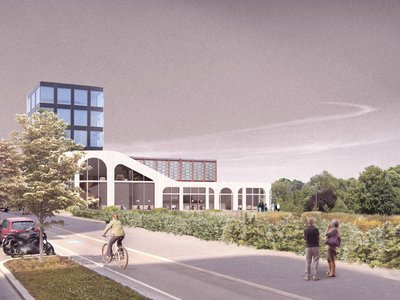
The Flow: Coffee Shop Interior Design Where Time, People, and Process Intertwine
The Flow reimagines Viennese coffee culture through arched forms, warm interiors, music, reading, work, and social gathering.
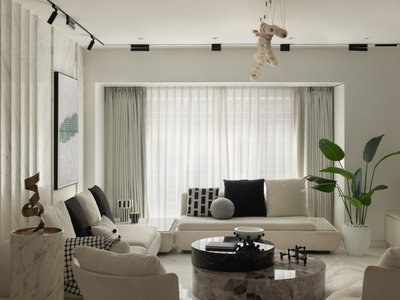
Inside a Timeless Mumbai Residence by Aether Studio
Aether Studio's 2,250 sq ft apartment in Malad, Mumbai uses marble, brass, boucle, and disciplined restraint to build a quiet retreat from the city.
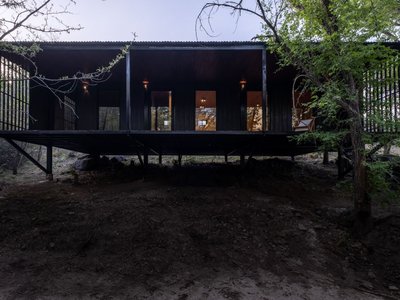
Pablo Senmartin Suspends a Steel-and-Timber Refuge Above a River Forest in Córdoba
An 80-square-meter dwelling on pilotis camouflages itself among the trees of Mayu Sumaj, designed to be dismantled without waste.


Similar Reads
You might also enjoy these articles


Urban Forest: A Vertical Ecosystem for 5,000 Workers in Singapore's Changi Business Park
Radially stacked pods and layered green decks turn a 7-acre plot into 47 acres of ecological workspace projected for 2040.
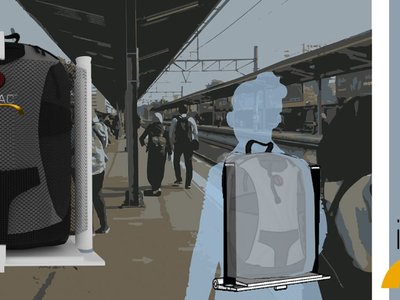
interACT: A Wearable Transit Object That Turns Commuting Into Social Infrastructure
A backpack-mounted foldable device transforms walking, waiting, and riding into moments of shared comfort across Jakarta's transit network.
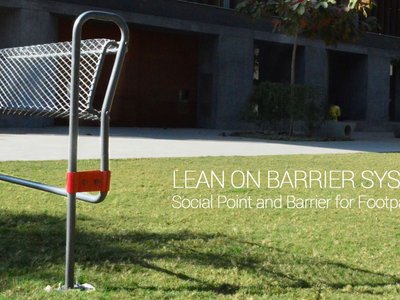
Lean On Barrier System: Where Traffic Safety Meets Chai Culture in Ahmedabad
A modular steel barrier doubles as informal seating and lean-on furniture at one of Ahmedabad's busiest intersections, keeping vendors in place.

The Black Bagh: A Living Monument Built from Water, Light, and Memory
On the banks of the Yamuna, two designers replace the myth of a marble mausoleum with a regenerative landscape of reflection and ritual.

Explore Educational Building Competitions
Discover active competitions in this discipline




The International Standard for Design Portfolios


The Global Benchmark for Architecture Dissertation Awards


The Global Benchmark for Graduation Excellence


Challenge to design public laboratory
Comments (0)
Please login or sign up to add comments
No comments yet. Be the first to comment!