

Incremental Housing Design with Urban Farm approach
This design emphasizes the residents' use of urban farm spaces combined with their living space.

Considering the increase in housing poverty and the ever-increasing decrease in the income of the people of Tehran and on a smaller scale in the neighborhood of the brick kilns in the 19th district of Tehran, conditions and requirements were needed so that the residents could settle quickly, for this purpose, the idea and plan of step-by-step housing was proposed. So that houses with lower square footage and structurally fast construction, along with empty spaces around the houses for horizontal or vertical development in the future, will be provided to the residents so that people can own houses faster and in the future according to their income Expand their homes at any time. In addition, another solution should have been considered as a source of income in this site, where most of the people had lost their jobs due to the inactivation of the furnaces. In this site, due to the presence of fertile and rich soil and underground water, urban agriculture was proposed as an idea for income generation according to the purpose of the competition. Other advantages of urban agriculture can also be increased social interactions, economic growth and increased income. Creating a safe and healthy environment, especially for the growth of children, followed by an increase in the attendance of residents, the possibility of educating the next generation and building culture, reducing the level of depression, creating new agricultural techniques and positive environmental effects, including reducing carbon emissions and fossil fuel consumption.


Popular Articles
Popular articles from the community

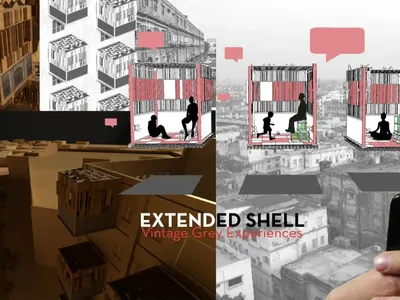
Extended Shell: Retrofitting Kolkata's Balconies as Living Urban Thresholds
A modular retrofit system recovers the social and environmental intelligence of Kolkata's historic verandas for contemporary Park Street residents.
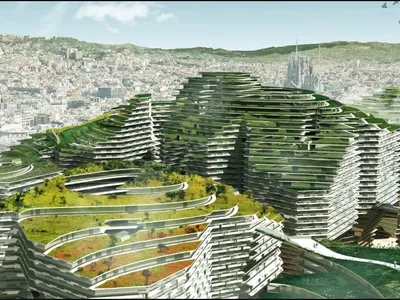
Manzana Morphosis: Stretching Barcelona's Grid into a Living Landscape for 2050
A radical reworking of the Eixample manzana turns density into a tool for generous public space, vertical ecology, and environmental performance.

Singing Woman: Contemporary Architecture Inspired by Estonia’s Voice and the Sea
Singing Woman turns Estonia’s song culture into flowing opera house architecture, blending public life, landscape, sea, and national memory.

The Amber Palace Opera: A Geological Fiction Surfaces on Tallinn's Baltic Waterfront
Pierre Brillard reimagines a Baltic legend as a public landscape, opera house, and waterfront promenade rooted in Tallinn's coastal identity.

Similar Reads
You might also enjoy these articles

Day and Night Park: A Time-Based Urban Newsstand in Beijing
A temporary urban newsstand in Beijing blending travel, light, and reading through poetic colors, compact form, and community-focused design.

Modernist Patio Renovation in El Masnou, Barcelona by Oliver Segura Arquitectura + Cebrià Arquitectura
Modernist patio renovation blending tradition and innovation with a movable pool, leveled floors, and Catalan materials in El Masnou.
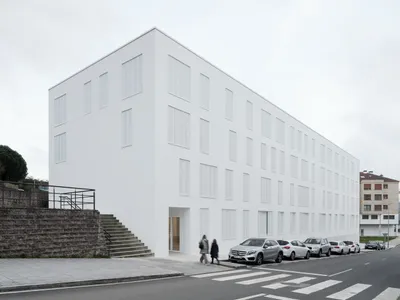
Alto Residencial Coop: Cooperative Housing Development in Santiago de Compostela by Carbajo Barrios Arquitectos
A linear cooperative housing complex blending white volumes and perforated metal façades, enhancing community living, natural light, privacy, and urban integration.
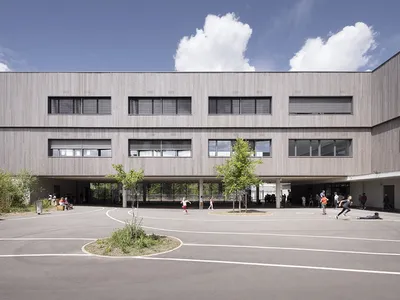
Vil Genis School by BPA ARCHITECTURE – Massy, France
Vil Genis School in Massy, France, features sustainable design, south-facing classrooms, community integration, accessible spaces, and modern educational architecture.

Explore Urban Farm Competitions
Discover active competitions in this discipline


Challenge to reimagine the Iron Throne

Photograph architecture without architects

Illustrate the lost glory of Angkor Wat - Render Challenge

Design challenge to reuse E-waste
Comments (0)
Please login or sign up to add comments
No comments yet. Be the first to comment!