
Information-Free Library: A New Paradigm in Digital Detox Architecture
A sanctuary from information overload—a library designed to disconnect, detox, and reimagine human connection in the digital age.

In an age where "Smart" dominates every aspect of our built environment, the idea of an information-free library presents a radical departure from the norms of contemporary architecture. Designed by Rose Madrazo, the project titled Information-Free Library earned the Editor's Choice recognition in the Libgen 2019 competition, challenging the very foundation of what a library represents in the 21st century.
The modern era has redefined the library. Once a place to gather, share, and store physical knowledge, it is now a digitized experience—one increasingly detached from the tactile, communal nature that once characterized it. Information is now omnipresent: newsfeeds, social media, endless notifications. The architecture of knowledge has transformed into something intangible and overwhelming. This project reclaims the physical, quiet, and mindful spatial experience by flipping the traditional library model into an information-free space.
Digital Detox Architecture: Design as Resistance
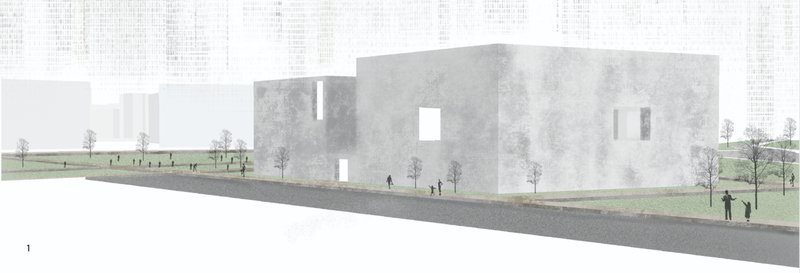
The Information-Free Library offers a visionary response to the mental fatigue caused by constant digital stimulation. At its core, the building is designed as a place to withdraw from information. Rather than providing access to digital content, it emphasizes stillness, reflection, and human connection. The library becomes a vessel not for data, but for peace.
Each architectural element is strategically planned to promote sensory relief:
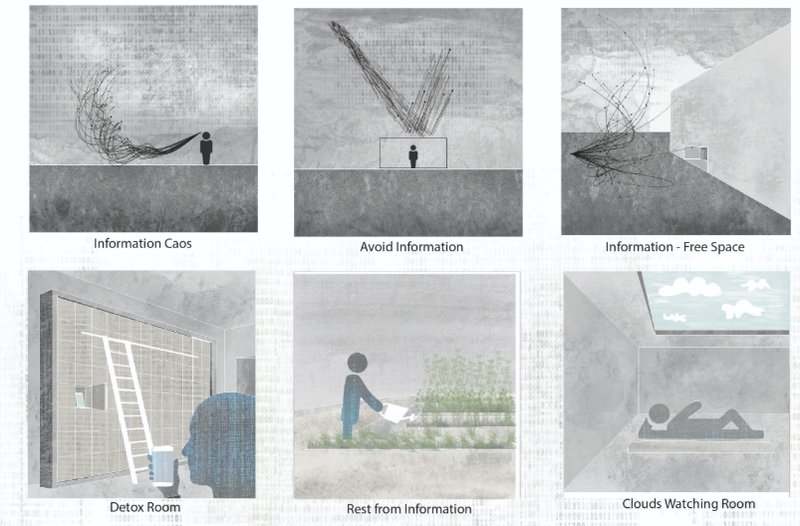
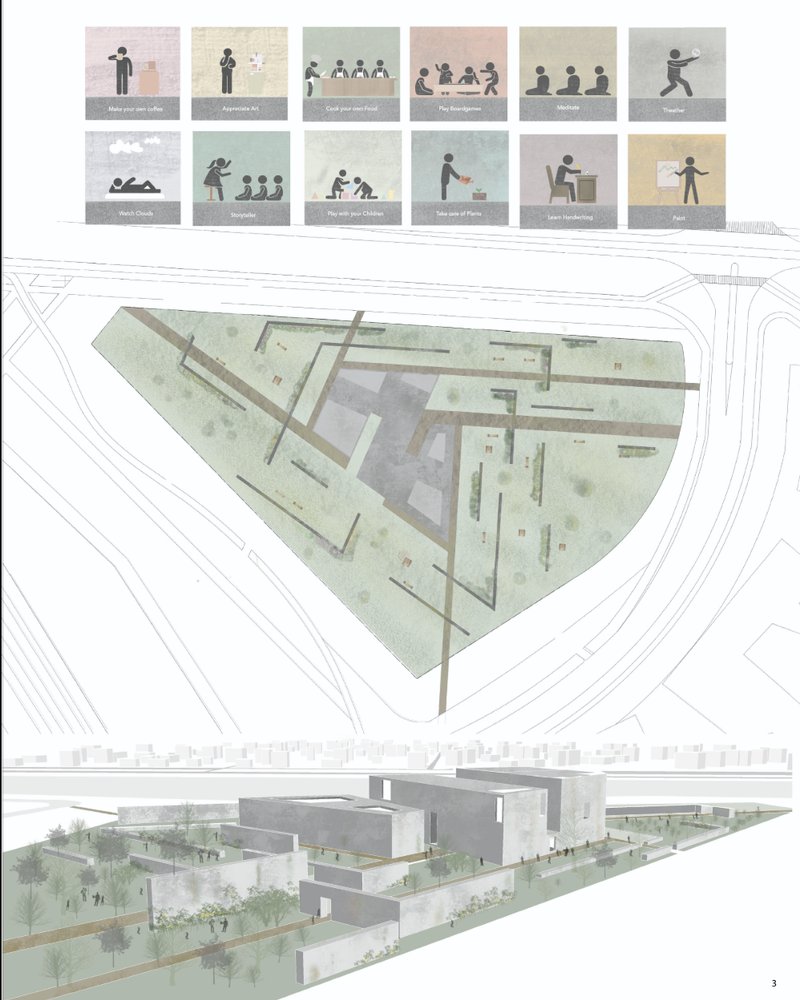
- Information Chaos & Avoidance Zones: These are conceptual spaces highlighting the stress of data saturation. Visitors transition from overstimulation to detox.
- Detox Room: A dedicated zone for disconnecting from technology, free from electronic interference.
- Cloud Watching Room: A contemplative space encouraging introspection and visual connection to the sky.
- Rest from Information Courtyard: A garden-like area that fosters reconnection with nature.
The overall spatial narrative is one of mental decluttering. Instead of layering information, the design peels it away.
A Human-Centered Library for the Future
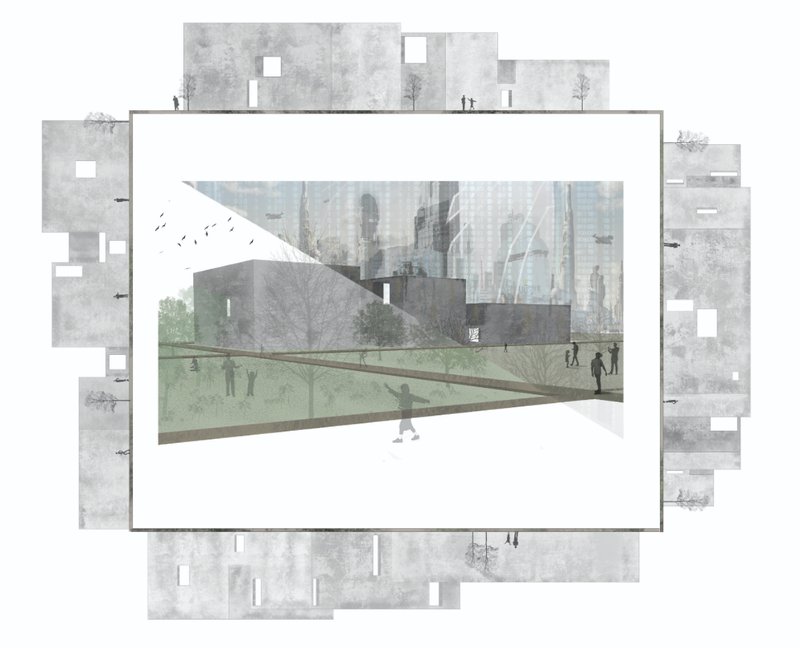
What if the future of libraries is not about gaining access to more information, but escaping it? Madrazo's proposal suggests that architecture can serve as a psychological counterbalance to the digital world. The layout strategically separates noise from silence, the public from the personal, and data from emotion.
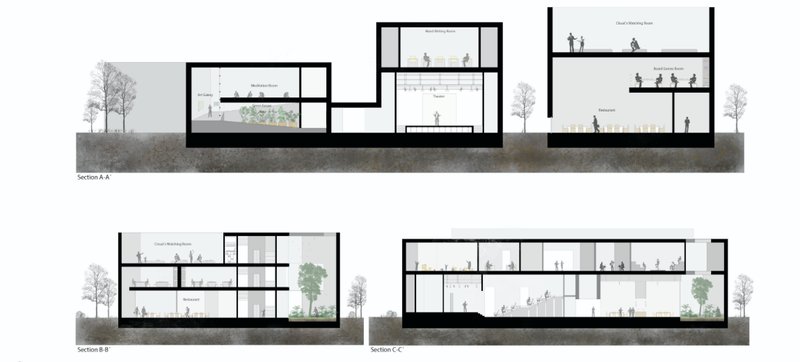
In the library's sections and plans, one can observe:
- Open areas for movement without screens or digital engagement.
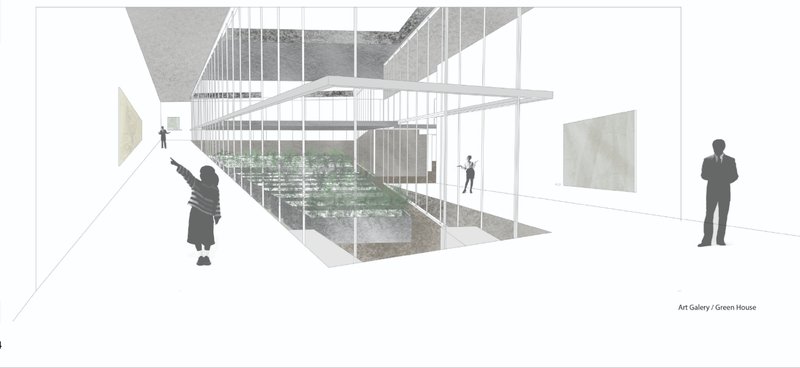
- Soft lighting and natural materials that reduce visual fatigue.
- Controlled acoustics to isolate exterior noise and create meditative ambiance.
Rewriting the Role of Libraries
As we face an increasingly high-tech society, the Information-Free Library argues for the preservation of humanity within architecture. It becomes a space to reclaim imagination, emotion, and community interaction—all without the interference of screens.
In this detox architecture approach, the library is no longer an archive but a sanctuary. It doesn’t collect data—it preserves wellbeing.
Project Credits
- Information-Free Library by Rose Madrazo
- Editor's Choice entry of Libgen 2019




Popular Articles
Popular articles from the community

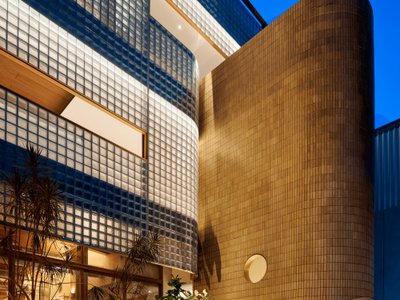
Gunawarman 35: Jakarta's Corner of Quiet Complexity
WOFF's mixed-use building in Jakarta pairs translucent glass block walls with a buff brick cylinder to hold coffee, wellness, and work under one roof.
Bood Design Bureau Splits a Gilan Residence in Two to Let the Forest In
Double Side House negotiates privacy and openness through interlocking concrete volumes and planted courtyards in northern Iran's humid Caspian lowlands.
Cafe MADA: A Chiang Rai Pavilion in a Mango Orchard
BodinChapa Architects threaded a 254 m² black-roofed cafe through an existing mango orchard in Chiang Rai, Thailand, built around mature trees.
Residence BB 214: Quiet Precision in Ludhiana
Minimalist Architecture & Design Studio composes a residence of white volumes, filtered light, and deliberate restraint in Punjab's urban fabric.


Similar Reads
You might also enjoy these articles

Filtering Space: A Gradual Spatial Experience
From urban intensity to spatial calm.

The Ken Roberts Memorial Delineation Competition (Krob)
As the most senior architectural drawing competition currently in operation anywhere in the world, it draws hundreds of entries each year, awarding the very best submissions in a series of medium-based categories.

Waterfront Redevelopment and Urban Revitalization in Mumbai: Forging a New Dawn for Darukhana
A transformative waterfront redevelopment project reimagining Darukhana’s shipbreaking heritage into an inclusive urban future.
OUT-OF-MAP: A Call for Postcards on Feminist Narratives of Public Space
Rhizoma Design and Research Lab invites artists, designers, architects, researchers, and students to reflect on how feminist perspectives can reshape public space. Selected works will be exhibited in Barcelona, October 2026. Submissions open until 15 April 2026.


Explore Educational Building Competitions
Discover active competitions in this discipline




The Global Benchmark for Architecture Dissertation Awards


Challenge to design locus for the upliftment of human rights


Challenge to design a learning and healing center


Challenge to design public laboratory
Comments (0)
Please login or sign up to add comments
No comments yet. Be the first to comment!