
Integrating Nature and Sport: The Eco-Friendly Design of La Feclaz Nordic Center
The Nordic Educational and Sports Center in La Feclaz showcases sustainable architecture with local materials, energy efficiency, and a harmonious environmental design.


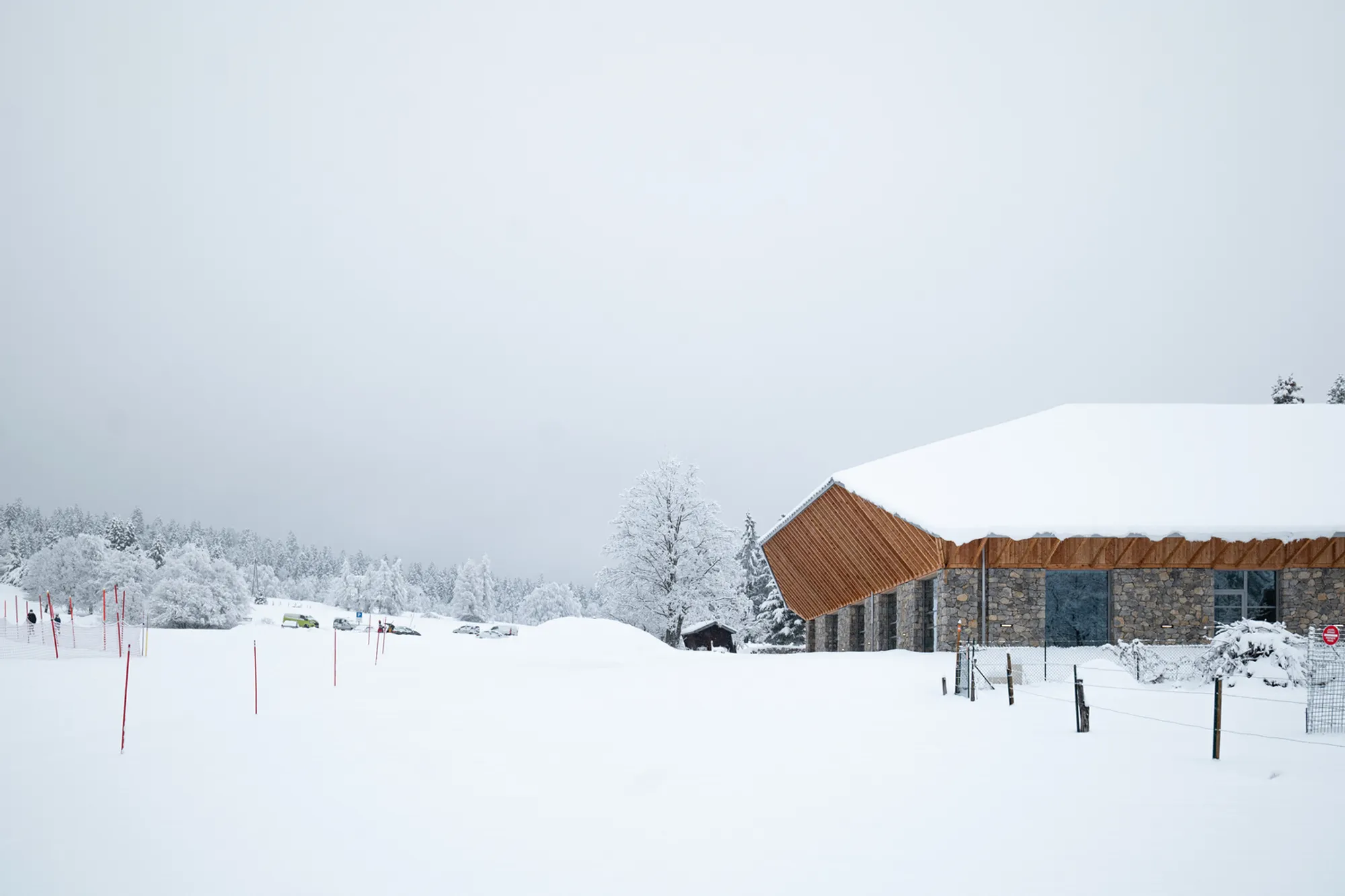
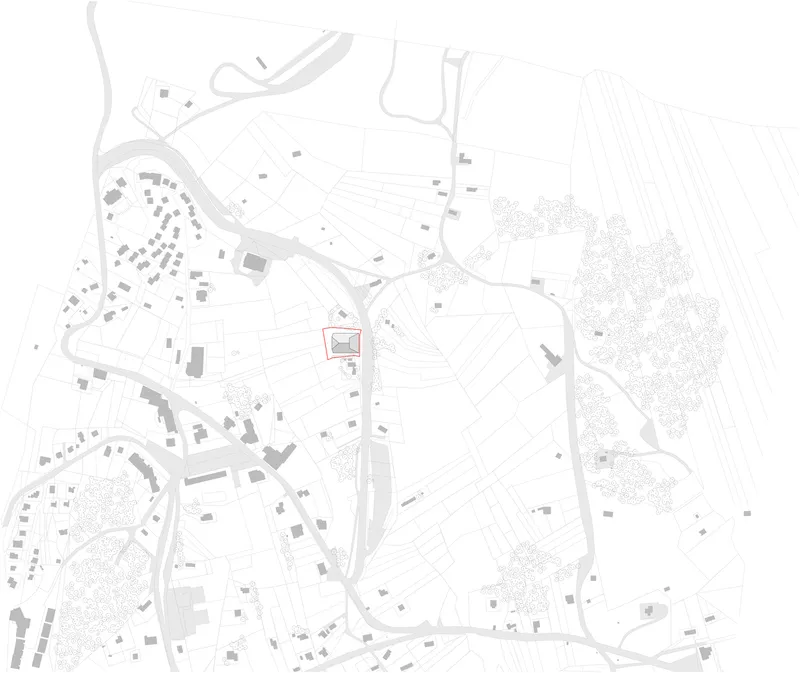
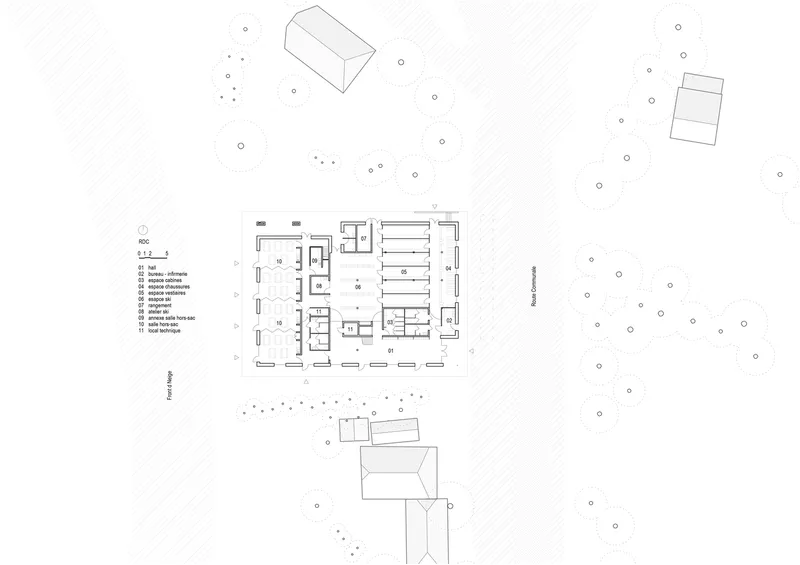
Tucked away on the serene plateau of Revard, the Nordic Educational and Sports Center of la Feclaz, designed by Brenas Doucerain Architectes, emerges as a beacon of eco-friendly sports center design. With a footprint of 1044 m² and unveiled in 2023, this facility stands as a testament to sustainable architectural practices harmonized with athletic and educational ambitions.
Design Philosophy: A Symbiosis with the Alpine Landscape
Harmonizing with the Environment
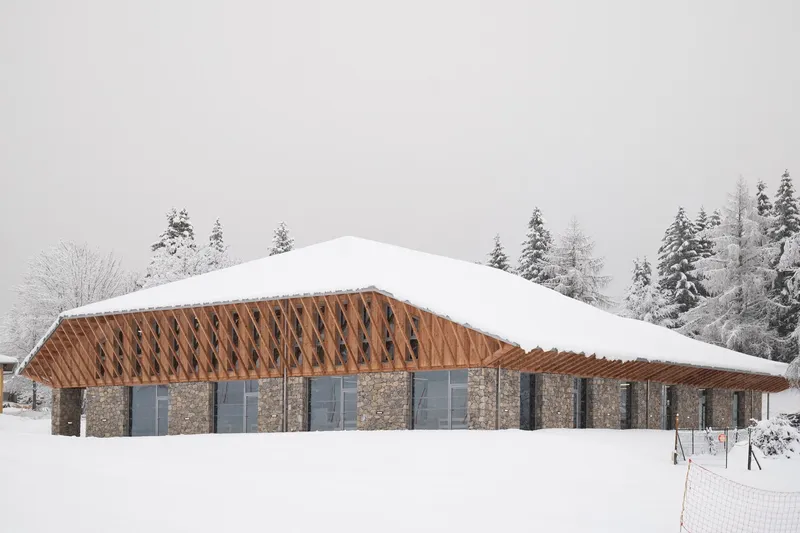
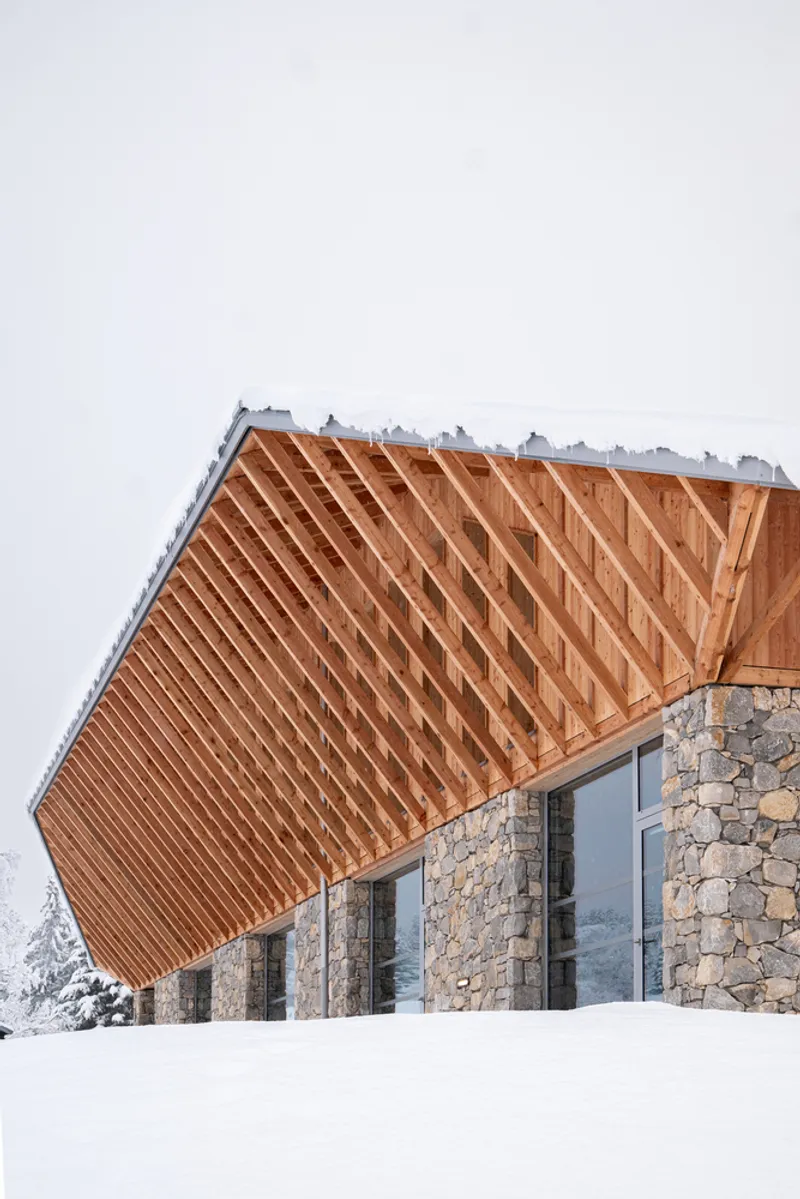
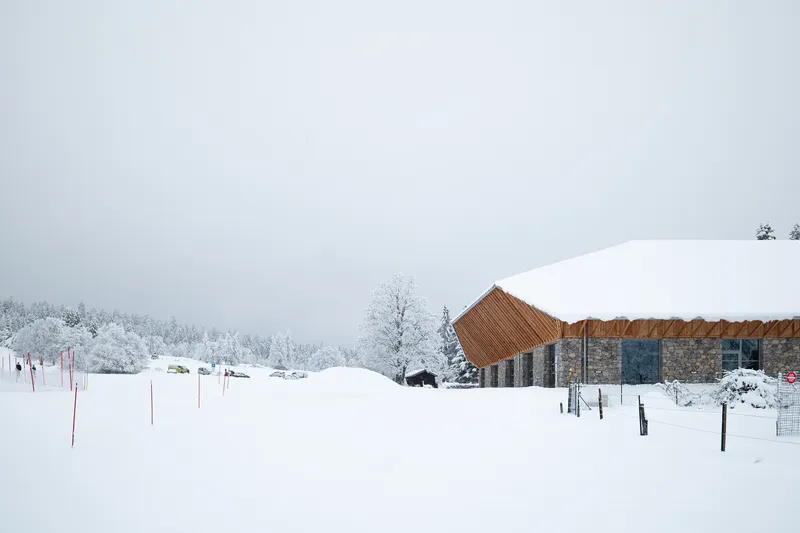
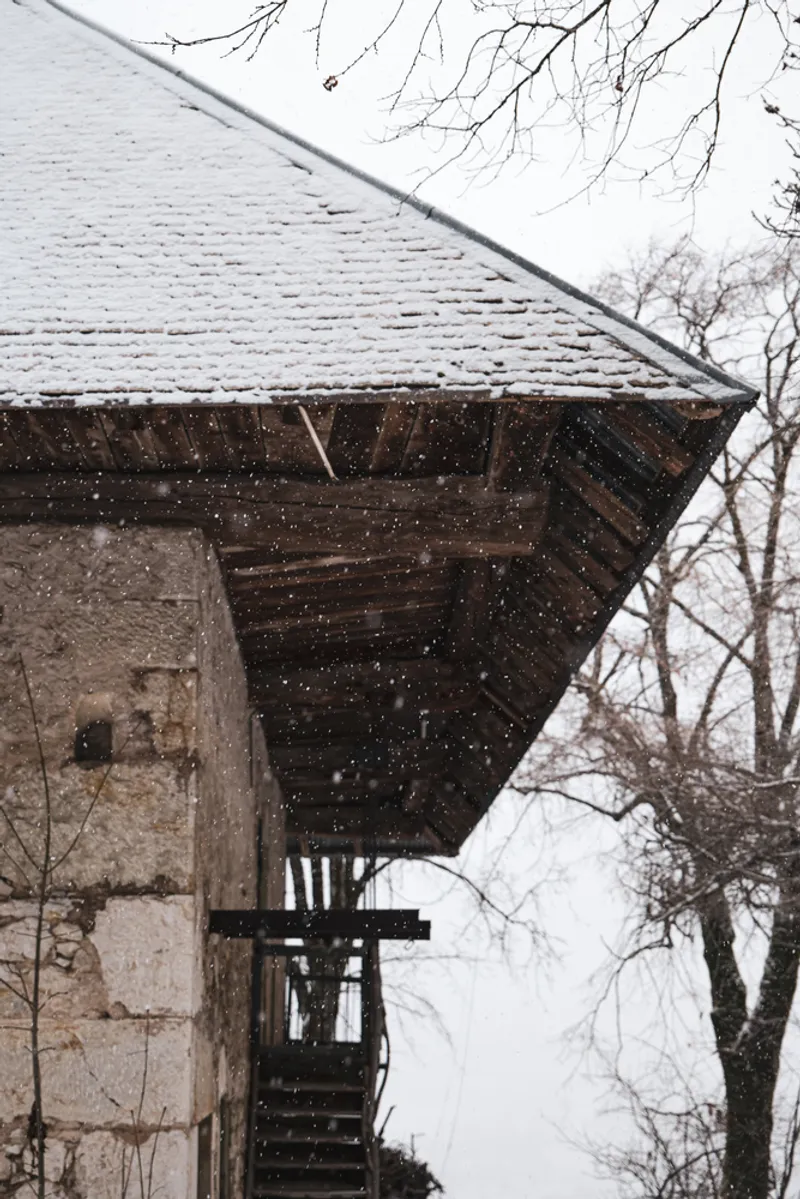
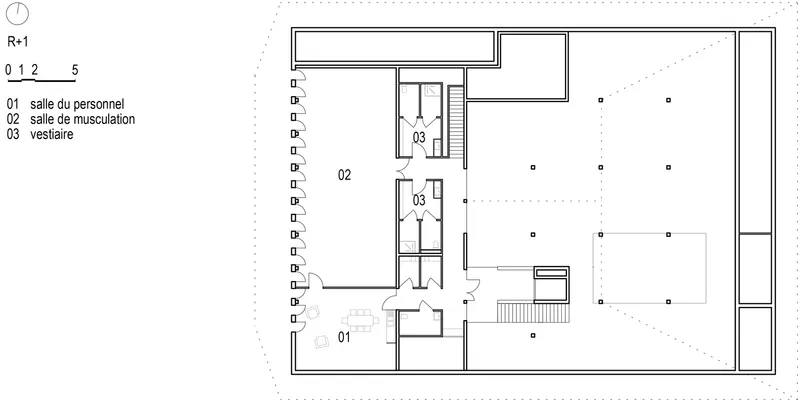
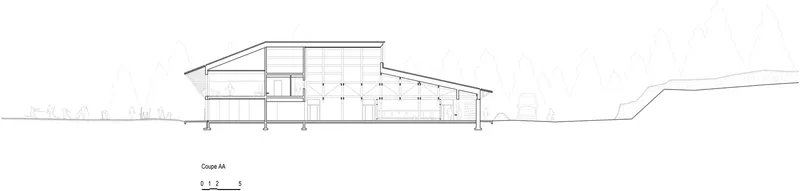
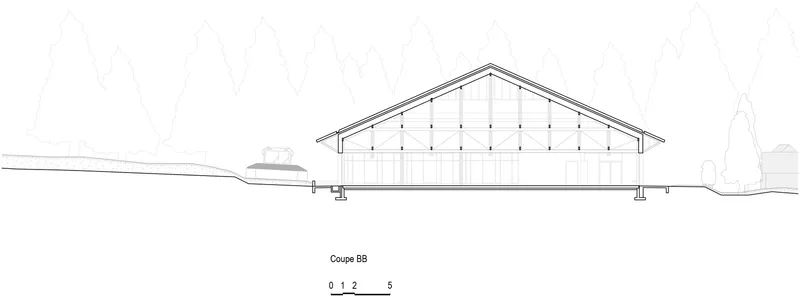
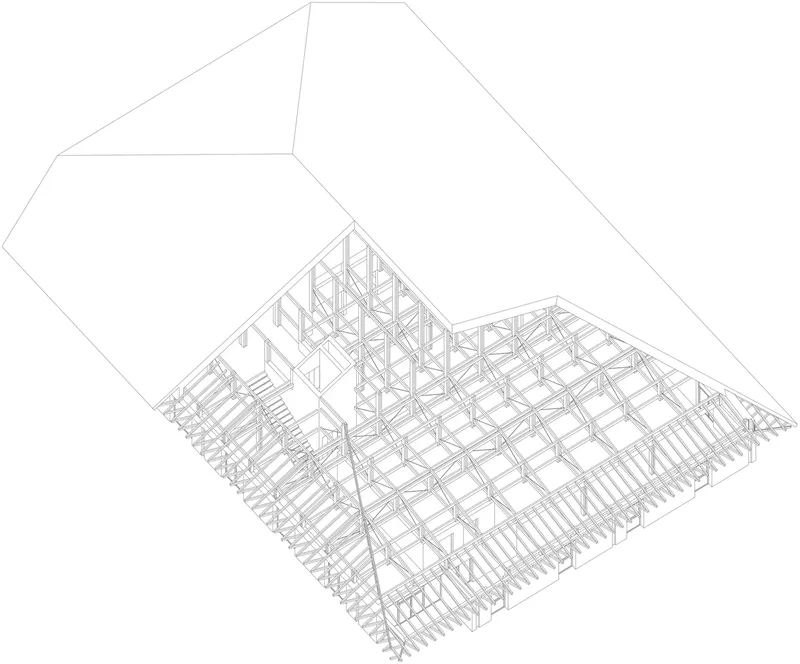
Nestled at an altitude of 1400 meters, the center occupies a unique position between the seasonal realms of cross-country skiing and pastoral tranquility. Its design, rooted in simplicity and monolithic grace, draws from the traditional alpine barns, embracing compact volumes and a large three-pitched roof. This approach not only ensures protection against the harsh weather but also minimizes its visual impact, preserving the natural majesty of the Bauges landscapes.
Sustainable Materials and Construction
Local and Bio-Sourced Building Practices
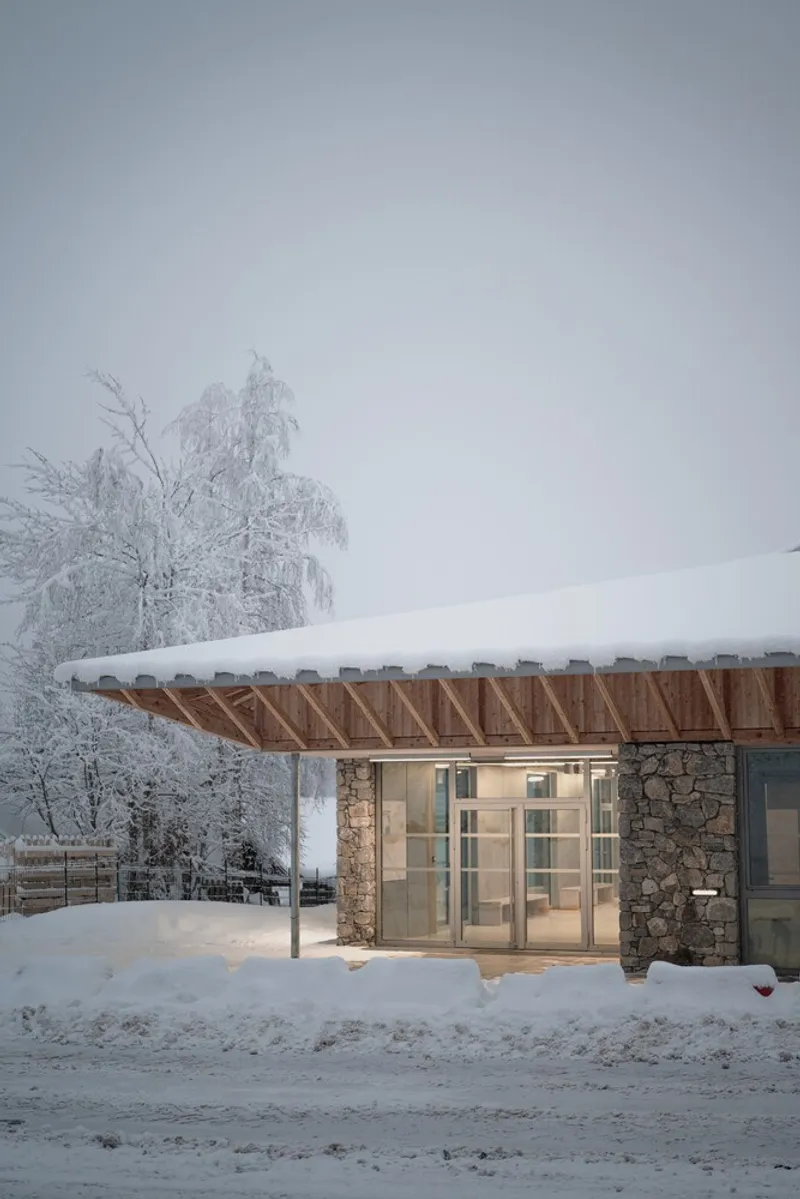
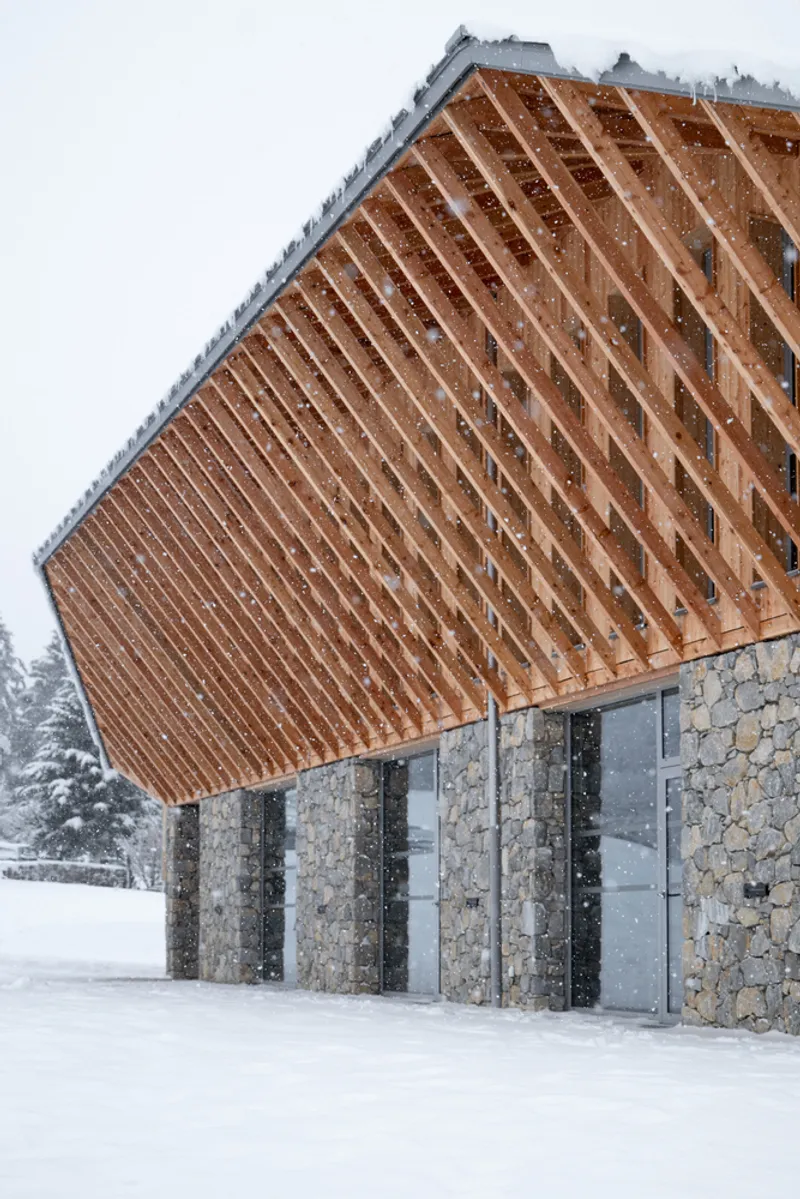
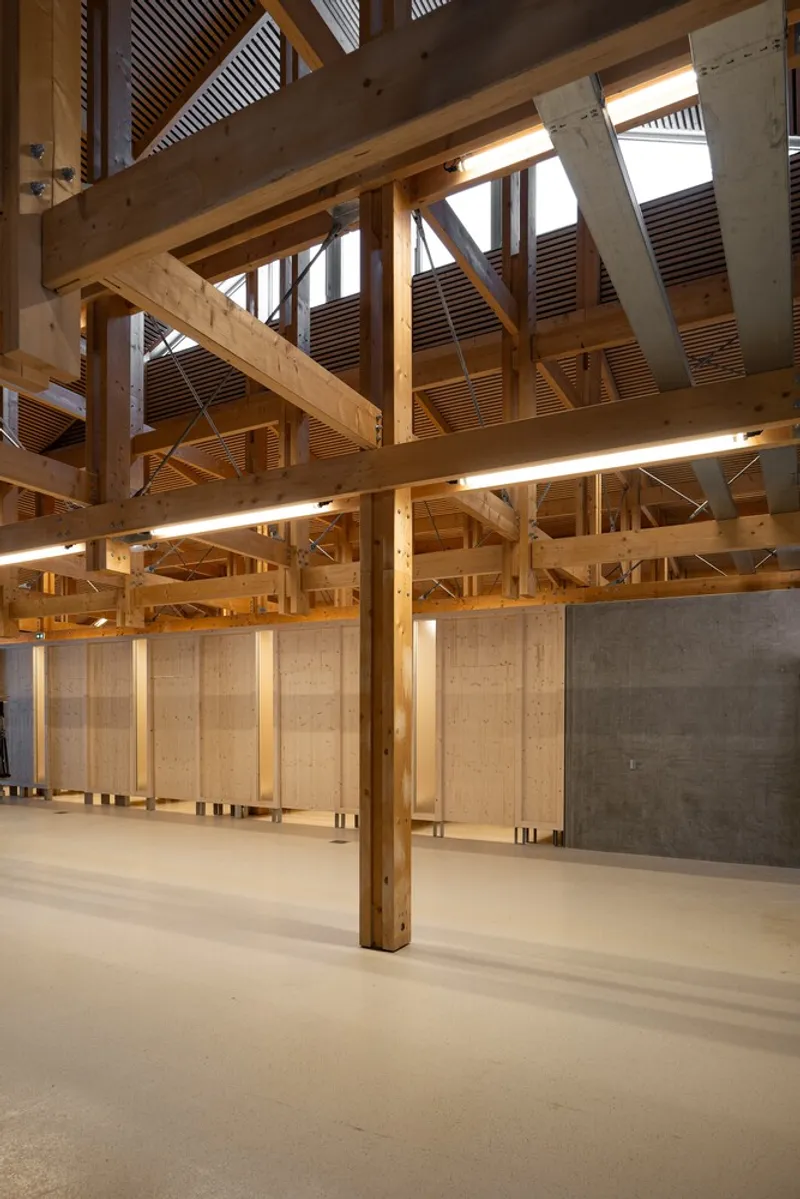
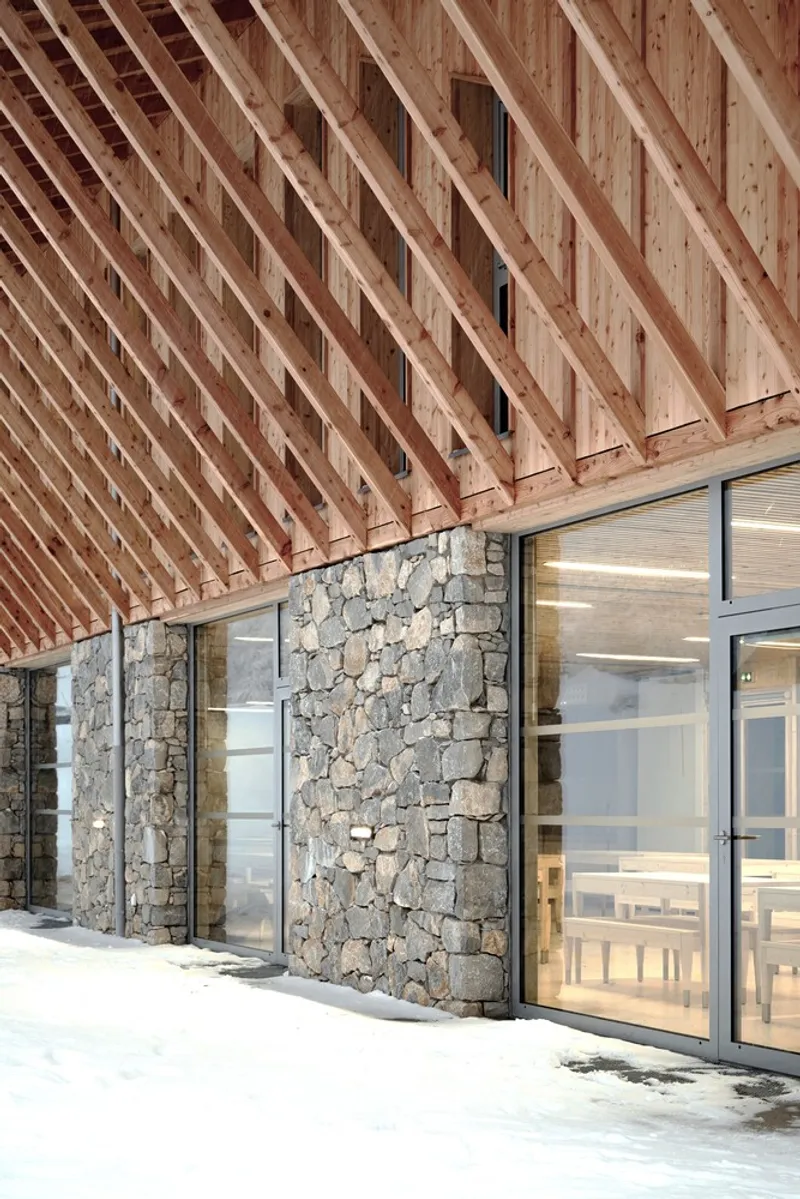
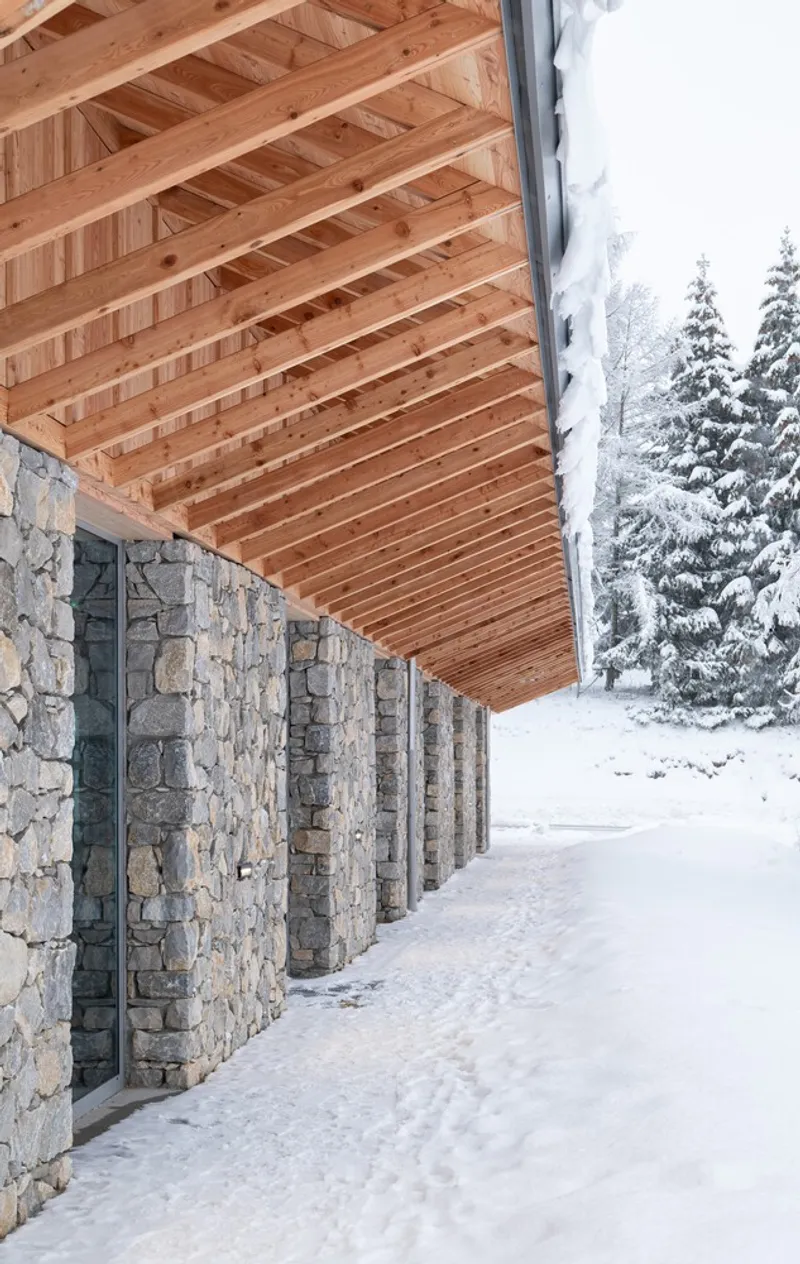
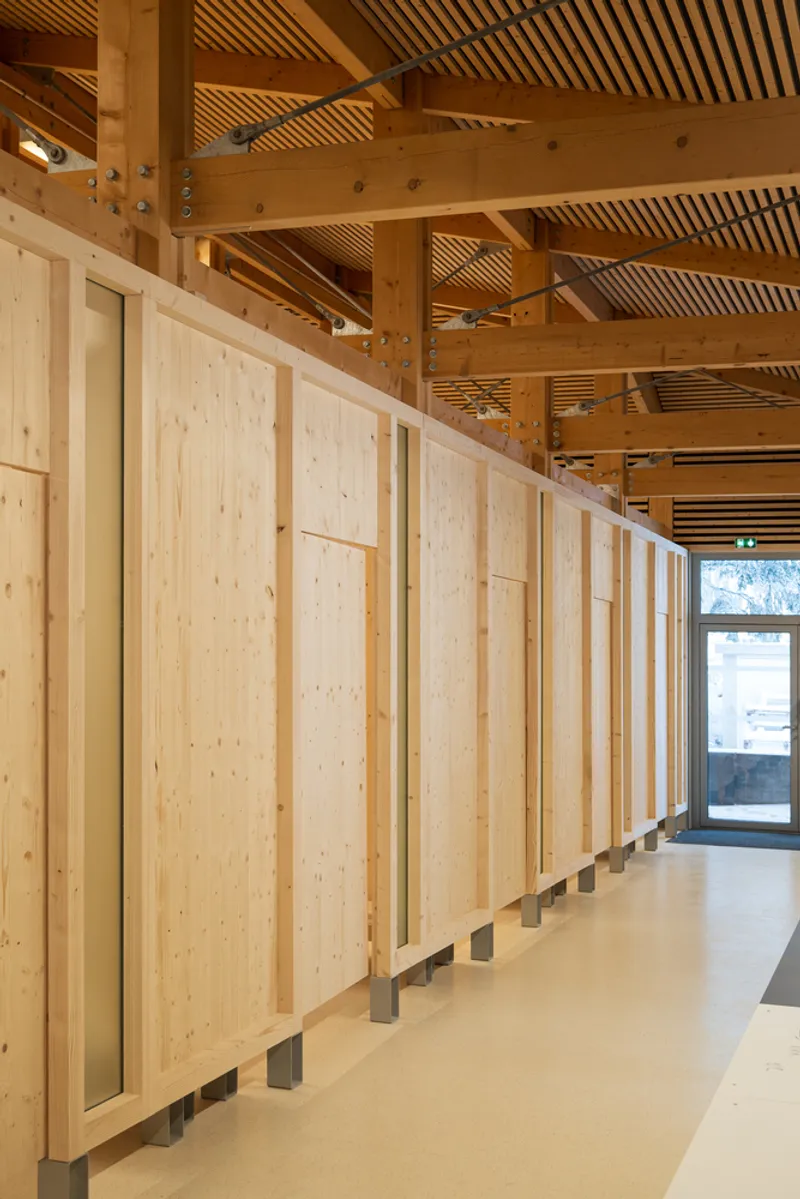
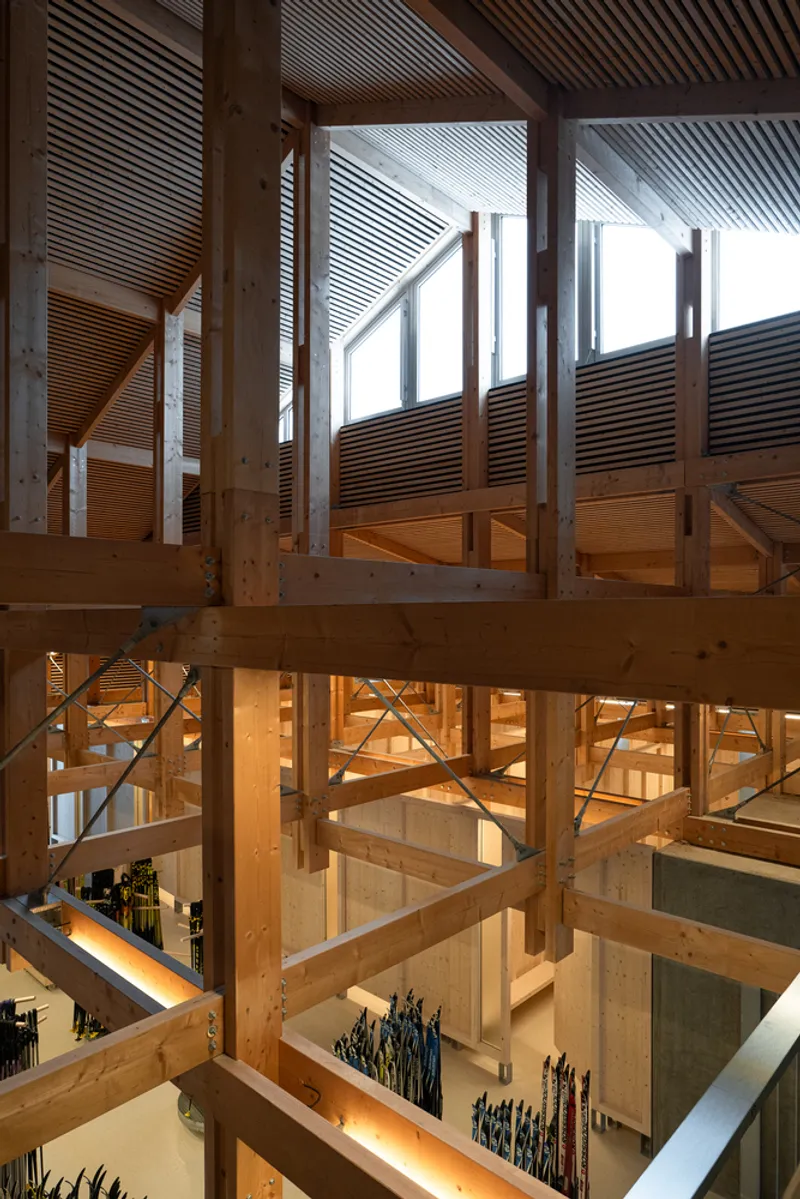
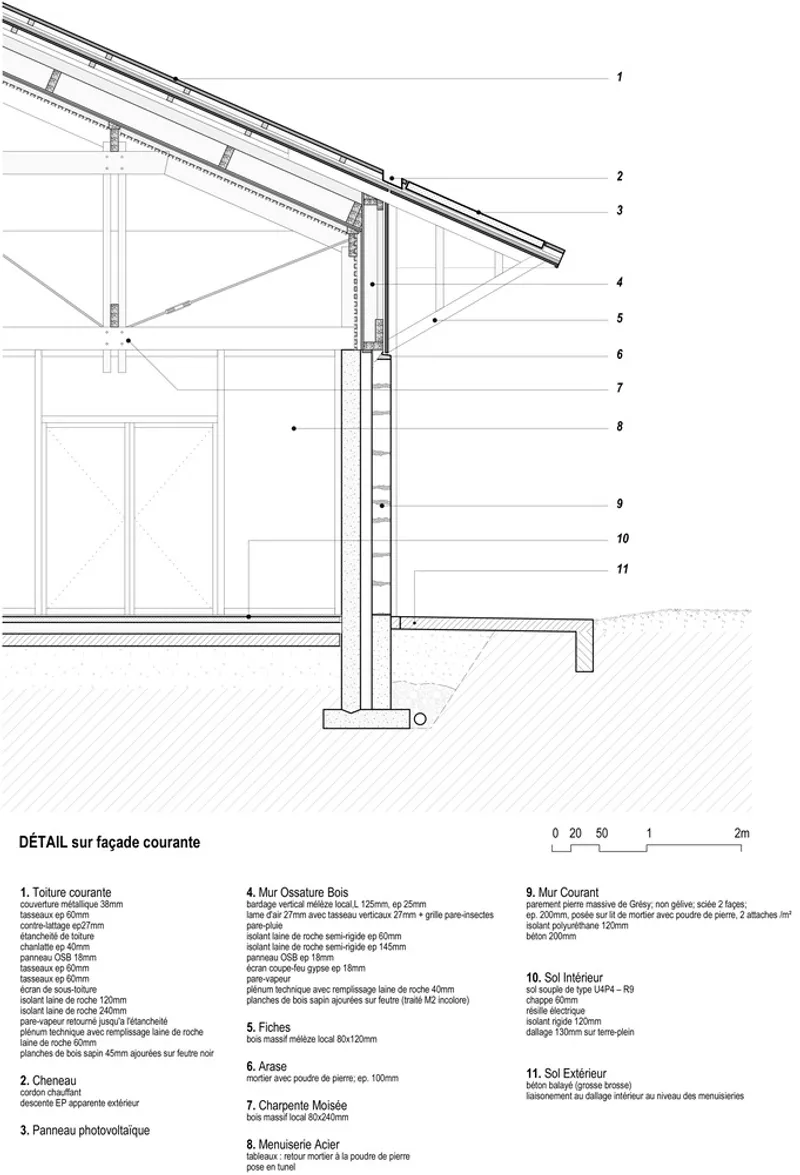
At the heart of the Nordic Center's architectural ethos is the commitment to environmental stewardship. From the solid wood framework designed to leverage local forest resources labeled "Bois des Alpes," to the larch boards cladding and local Grésy stone used for the exterior walls, every element underscores a dedication to geo- and bio-sourced materials. This frugal yet thoughtful selection of materials supports local ecosystems and reduces the carbon footprint of the building process.
Technical Innovations for Energy Efficiency
Maximizing Energy Efficiency and Comfort
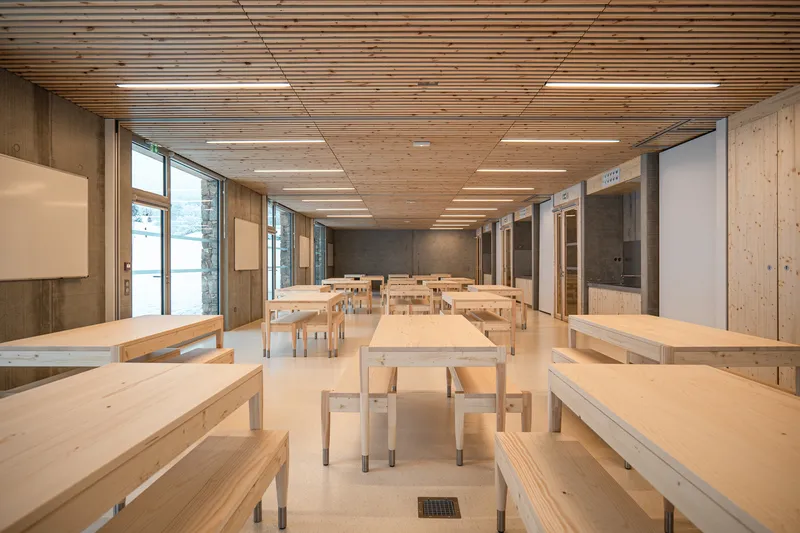
The technical design of the Nordic Center speaks volumes about its eco-friendly sports center design credentials. The use of an inner concrete double wall, coupled with local sandstone and solid spruce wood, not only provides robust insulation but also forms a striking aesthetic that blends seamlessly with the alpine setting. Floor radiant heating systems work to efficiently manage the moisture and temperature levels within the facility, creating a comfortable environment for athletes and visitors alike.
Renewable Energy and Sustainable Heating
A Self-Sufficient Energy Model
Heating solutions within the center prioritize sustainability and efficiency. The introduction of radiant floor heating addresses the challenges posed by snow and cold, while buffer spaces set to a maximum of 17°C conserve energy. The facility's commitment to green energy is further exemplified by its photovoltaic power station, ensuring a significant portion of its energy needs are met through renewable sources. Additionally, the air handling unit incorporates thermodynamic production and heat recovery, highlighting the center's holistic approach to eco-friendly operations.
Leading the Way in Sustainable Sports Architecture
The Nordic Educational and Sports Center of la Feclaz stands as a pioneering example of eco-friendly sports center design. By integrating cutting-edge sustainable practices with a deep respect for the natural environment, Brenas Doucerain Architectes have crafted a facility that not only serves the athletic and educational needs of the community but also sets a new benchmark for sustainable architecture in sports facilities. As we move towards a more environmentally conscious future, the Nordic Center offers a blueprint for how sports and education can thrive in harmony with nature.
All photographs are work of Clément Molinier



Popular Articles
Popular articles from the community


Lunar Spiral: Space Architecture Shaped by the Mathematics of the Universe
Lunar Spiral reimagines space architecture through Fibonacci geometry, lunar regolith, levitating habitats, and self-sustaining Moon living.

Co-Life: Senior Housing Design That Reconnects Older Adults With the City
Co-Life reimagines senior housing design through healing gardens, shared streets, workshops, and a sustainable community across generations.

The Earth Pod: 3D Printed Homes for Resilient Refugee Communities
The Earth Pod reimagines refugee housing through 3D printed homes made from clay, combining resilience, self-sufficiency, and rapid shelter.

The Ocean Hive: Sustainable Architecture for a Self-Sufficient Civilization at Sea
The Ocean Hive imagines sustainable architecture at sea, where modular habitats, algae, wave power and ocean waste sustain a growing colony.


Similar Reads
You might also enjoy these articles


Hodi-Mandai Geram
Project Function: Preservation and revitalization of the Intangible heritage and socio-spatial identity of the Hodi by Housing, Cultural Memory Center, Sacred Grove, landscape, local tourism economy


Olio Towers: A Mid-Rise for Performers That Fuses Housing, Rehearsal, and Stage
Located blocks from Houston's Theater District, this modular tower stacks living units around a central performance atrium.

Oasis: Modular Green Housing Carved into Dhaka's Urban Fabric
A shortlisted Plugin Housing entry reclaims unauthorized settlements in Dhaka with stepped concrete volumes, green roofs, and ventilation-driven design.

Black Hole: A Floating Megastructure for the Post-Physical Era
Emiliano Mazzarotto envisions a spherical, self-scaling arena where e-sports, digital hotels, and holographic stadiums replace traditional public space.

Explore Nordic Sustainable Architecture Competitions
Discover active competitions in this discipline



Challenge to reimagine the Iron Throne


Photograph architecture without architects


Illustrate the lost glory of Angkor Wat - Render Challenge


Design challenge to reuse E-waste
Comments (0)
Please login or sign up to add comments
No comments yet. Be the first to comment!