

Ishavas House: A Benchmark in Sustainable Residential Architecture
Ishavas House redefines sustainable residential architecture by seamlessly integrating passive design, local materials, and nature into a self-sufficient retreat.


Introduction to Sustainable Residential Architecture
Sustainable residential architecture has become a defining approach in modern design, focusing on minimizing environmental impact while creating harmonious living spaces. Ishavas House, designed by HabitArt Architecture Studio, exemplifies this philosophy by seamlessly integrating architecture with the natural landscape of Denkanikotai, Tamil Nadu. This weekend retreat is a testament to climate-responsive, sustainability-driven design, embracing local materials and passive strategies to create a self-sufficient living environment.
Embracing the Landscape: Site-Sensitive Architecture
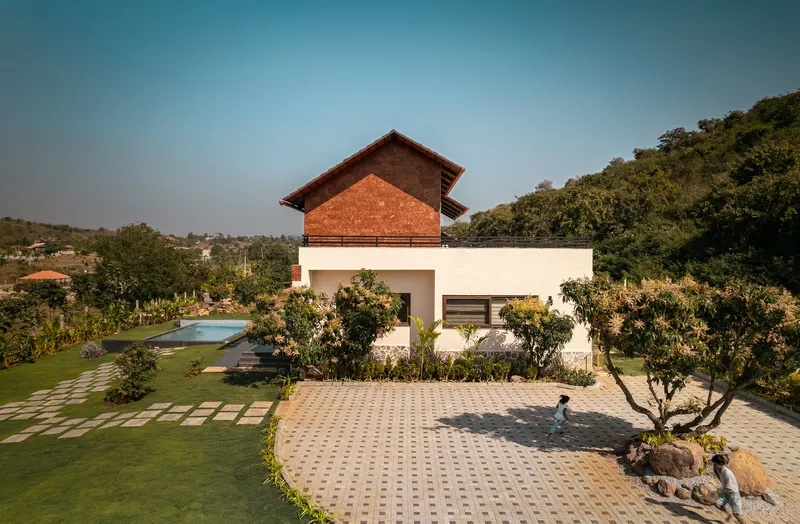
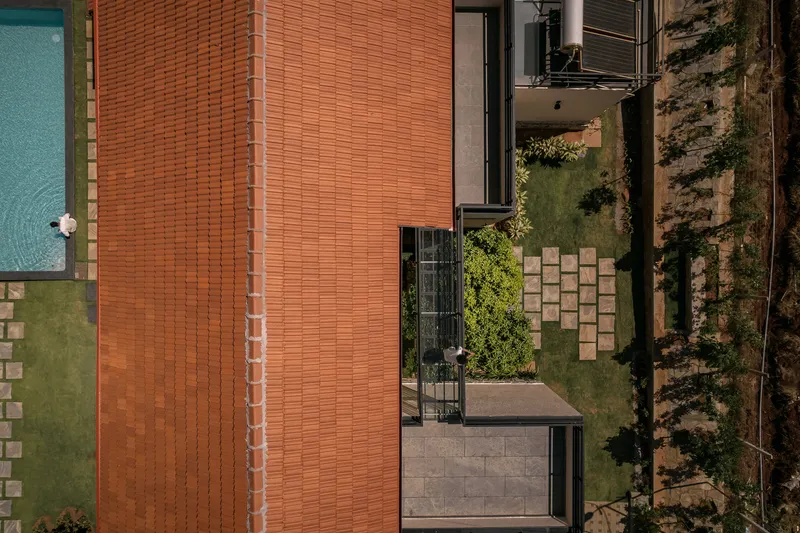
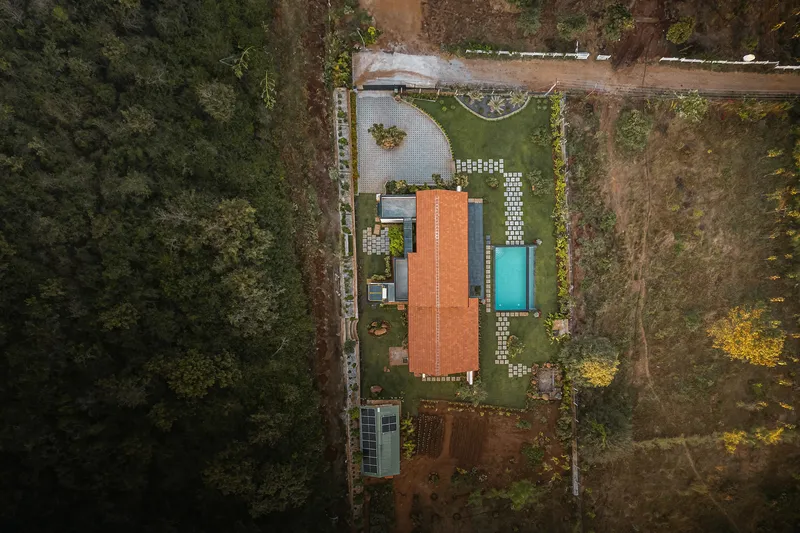
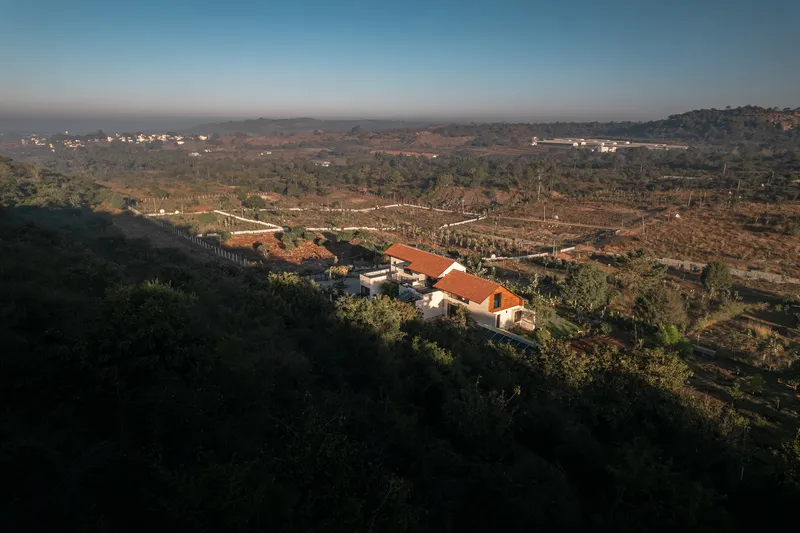
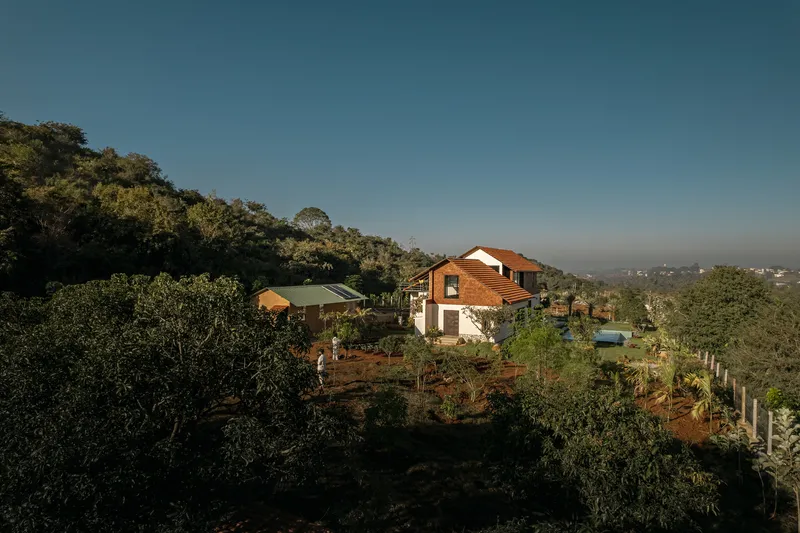
Nestled within a one-acre farmland development, Ishavas House is positioned at the highest point of the site, providing breathtaking views of the surrounding hills. The design follows a site-sensitive approach, blurring the boundaries between built and unbuilt spaces. The structure embraces the contours of the land, minimizing disruption to the natural topography and ensuring a seamless transition between the house and its surroundings.
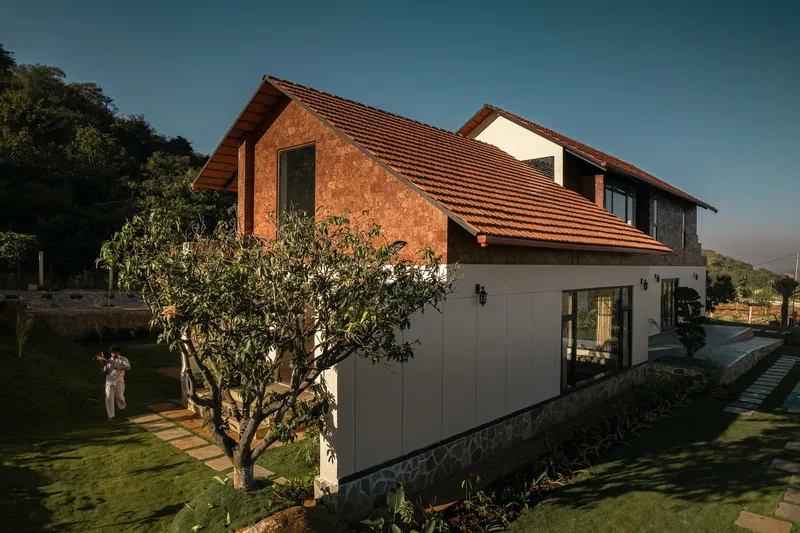
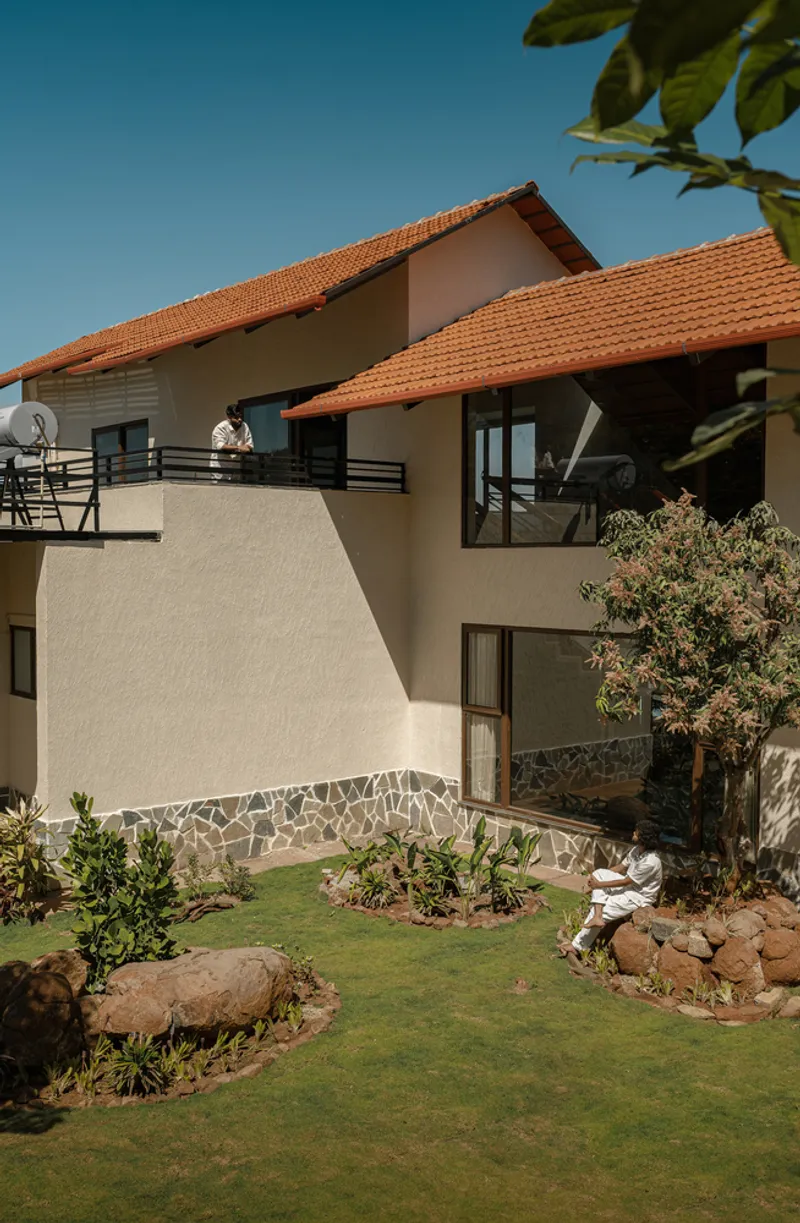
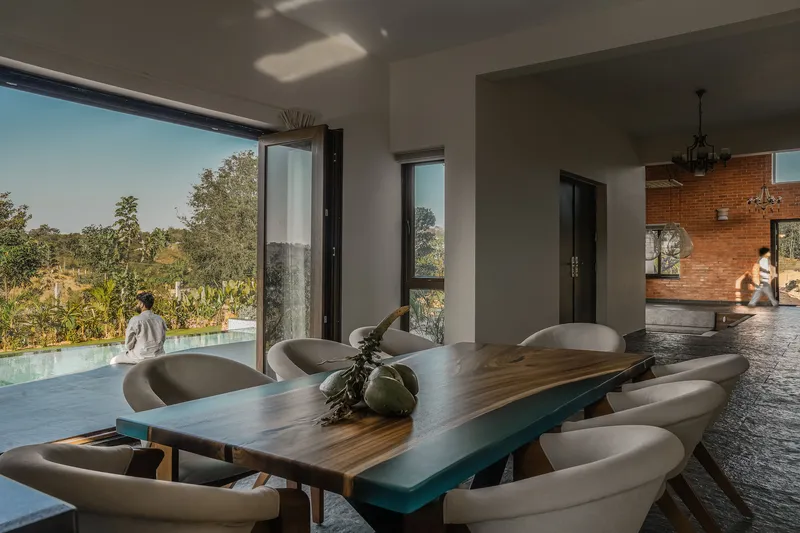
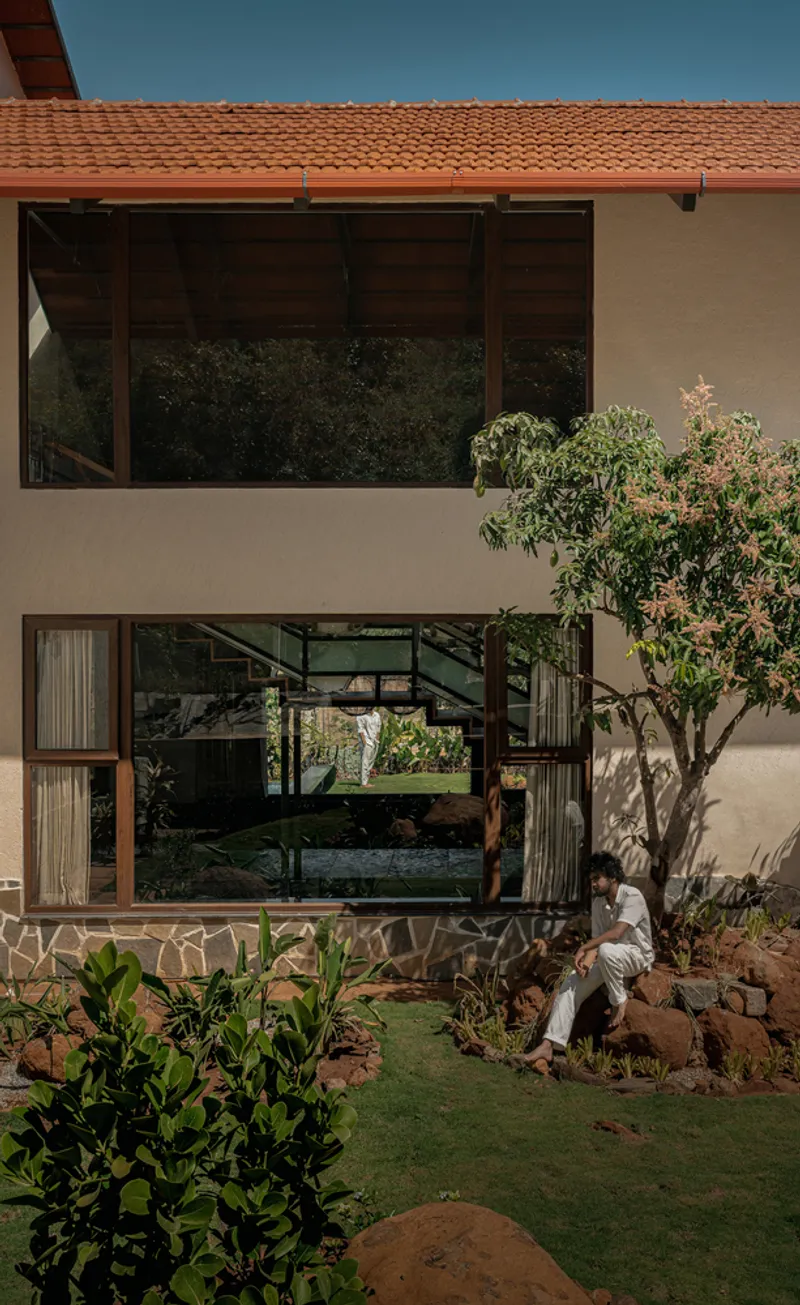
Spatially, the home is designed to remain open to the landscape. Large openings, shaded courtyards, and carefully framed views establish a strong connection between indoor and outdoor spaces, allowing residents to experience the dynamic beauty of nature throughout the day. This approach is fundamental to sustainable residential architecture, where the goal is to enhance the user experience while preserving the integrity of the site.
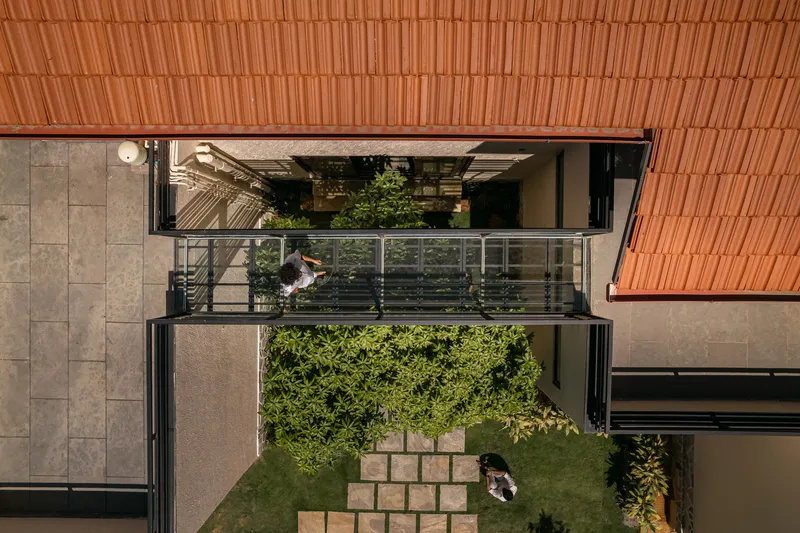
Thoughtful Spatial Organization and Design
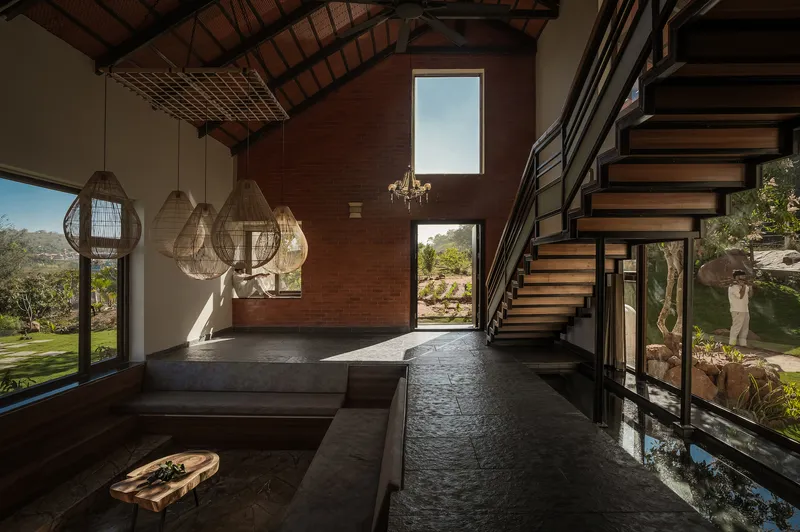
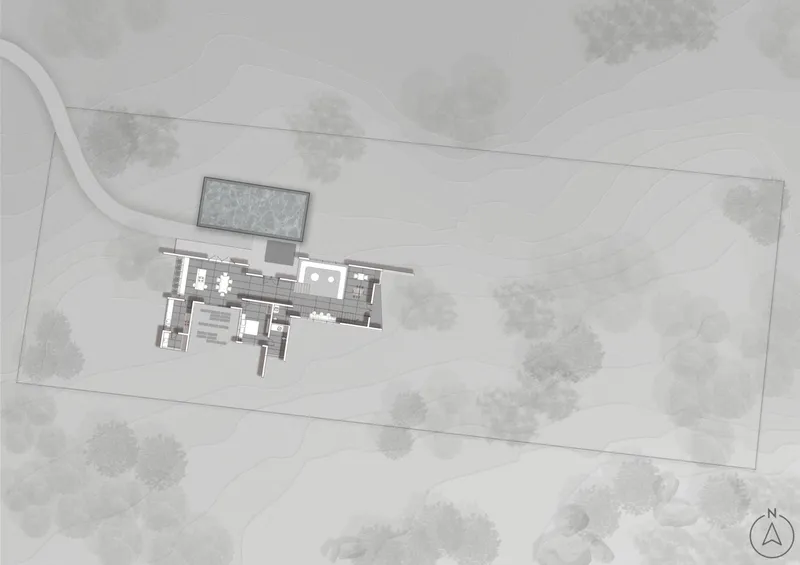
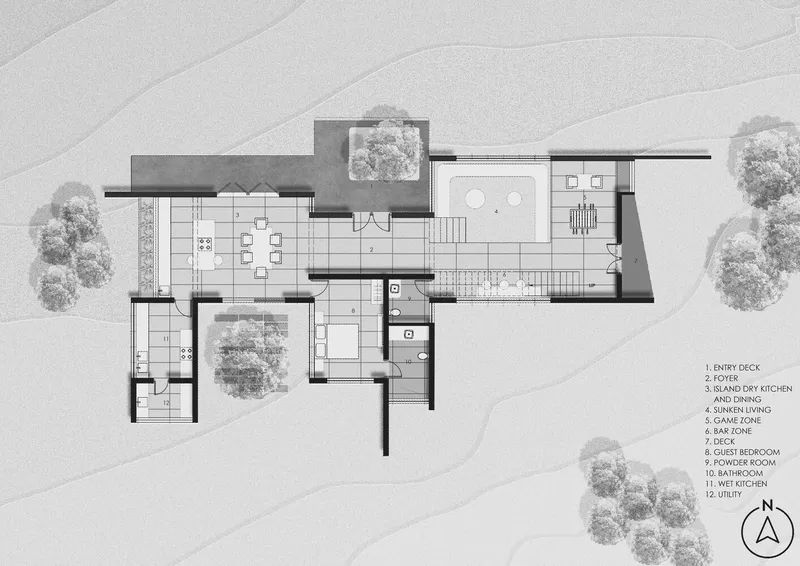
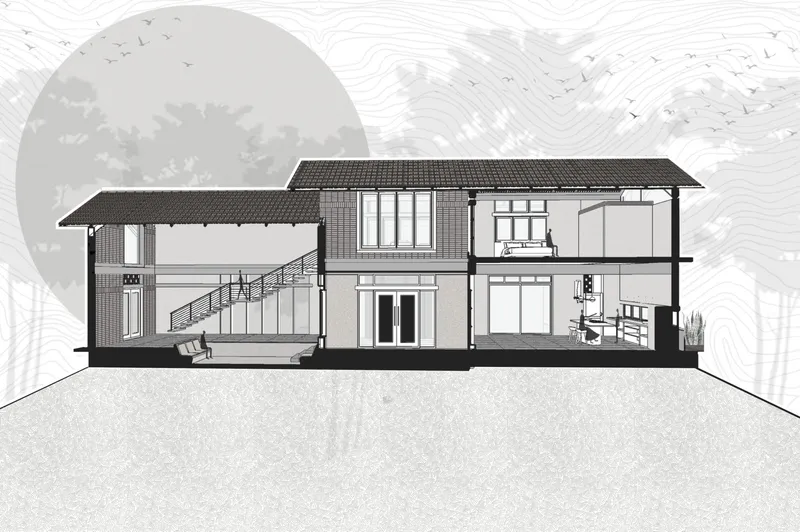
Ishavas House is oriented along an East-West axis, unfolding towards the North to maximize natural ventilation and daylighting. The spatial arrangement follows an open-plan concept, with the foyer serving as a transition between the living, dining, and kitchen areas. These common spaces flow into one another without rigid separations, creating a sense of expansiveness.
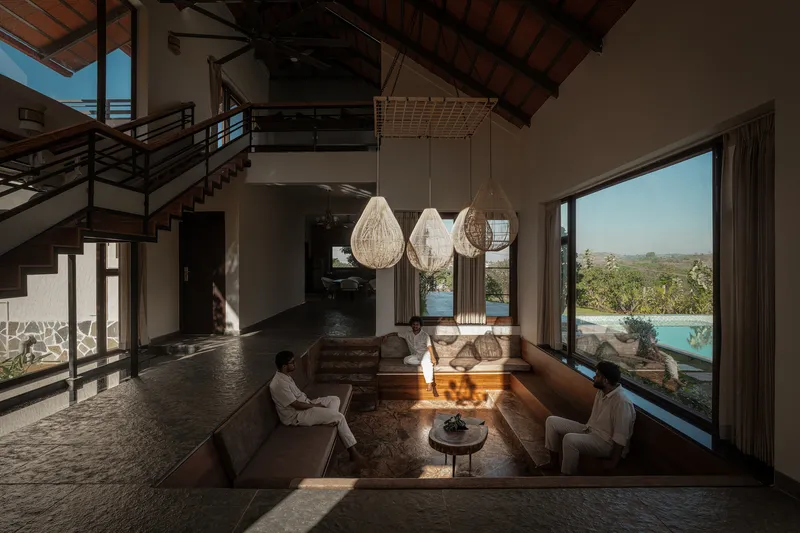
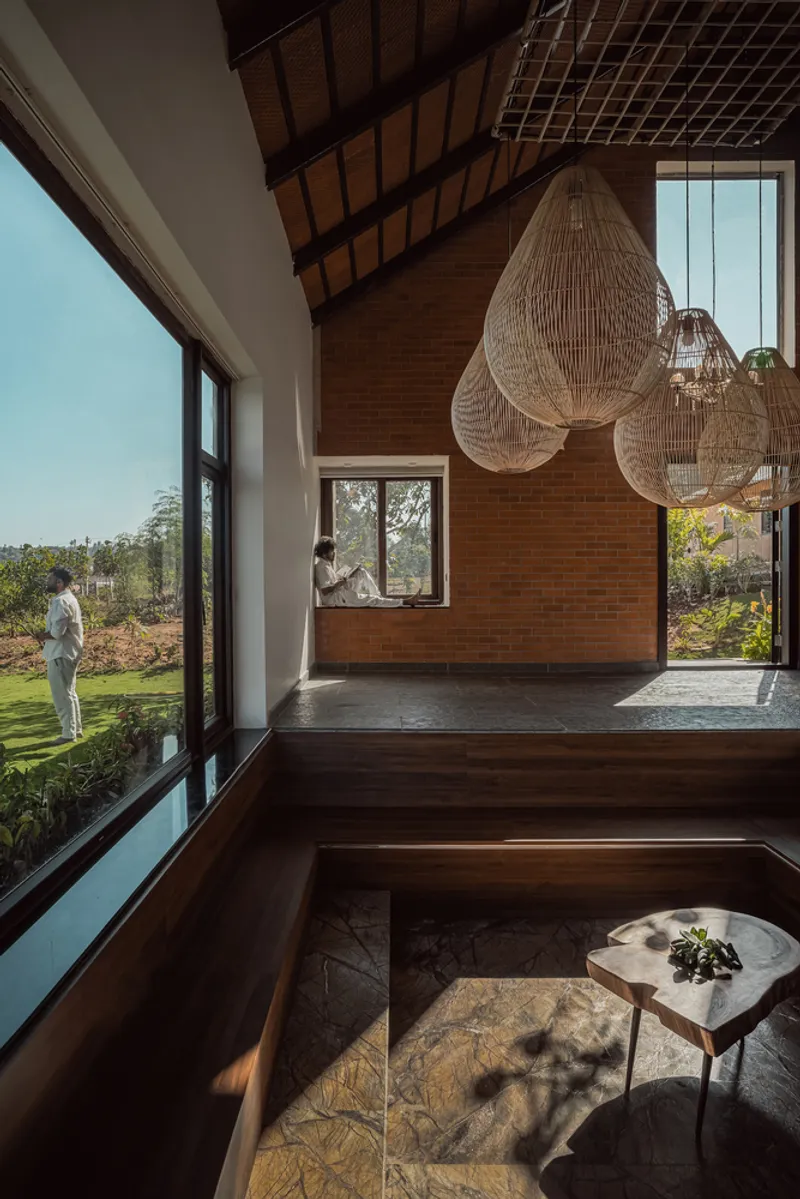
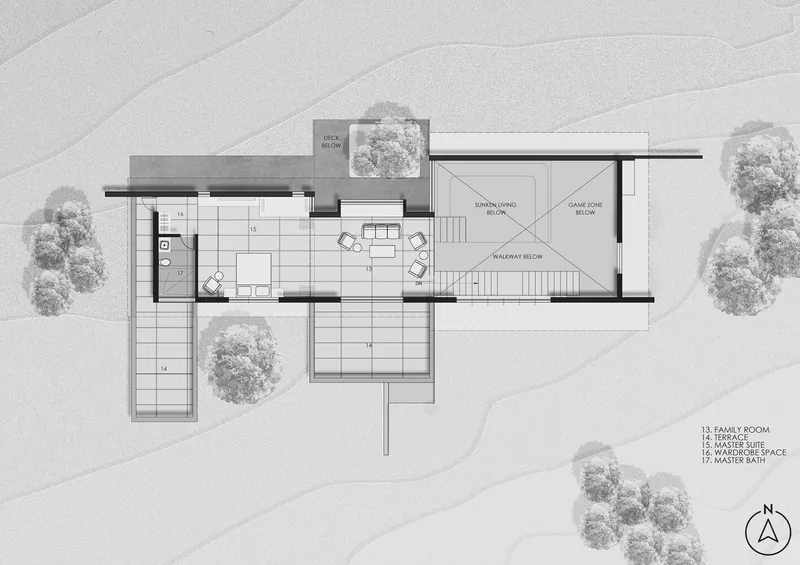
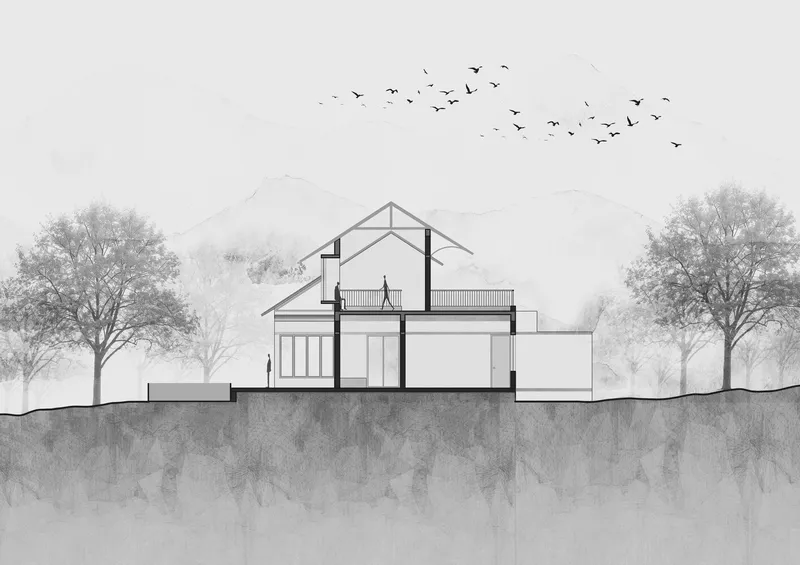
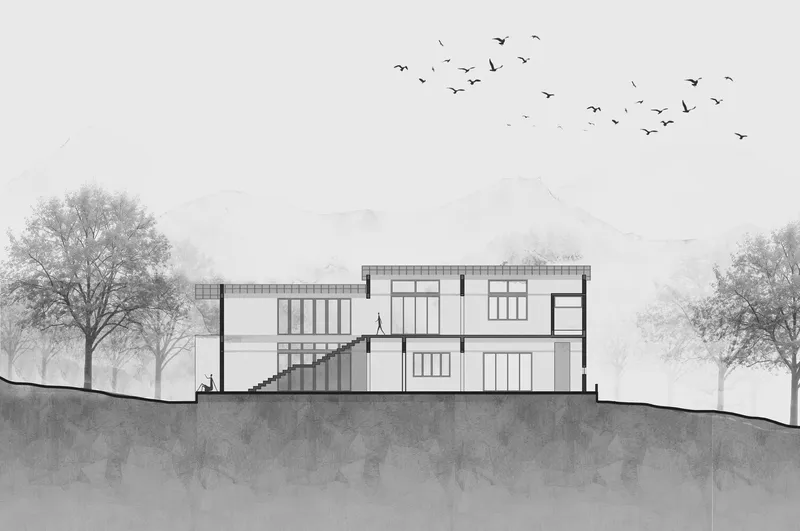
The living area is strategically sunken between an outdoor pool and an indoor koi pond, enhancing the spatial experience. A single-flight staircase runs the length of the living space, emphasizing the double-height volume and introducing a vertical dynamic to the design. The upper floor houses a master suite and a family lounge that overlooks the living area below, reinforcing visual connectivity between spaces.
Locally Sourced Materials and Sustainable Construction
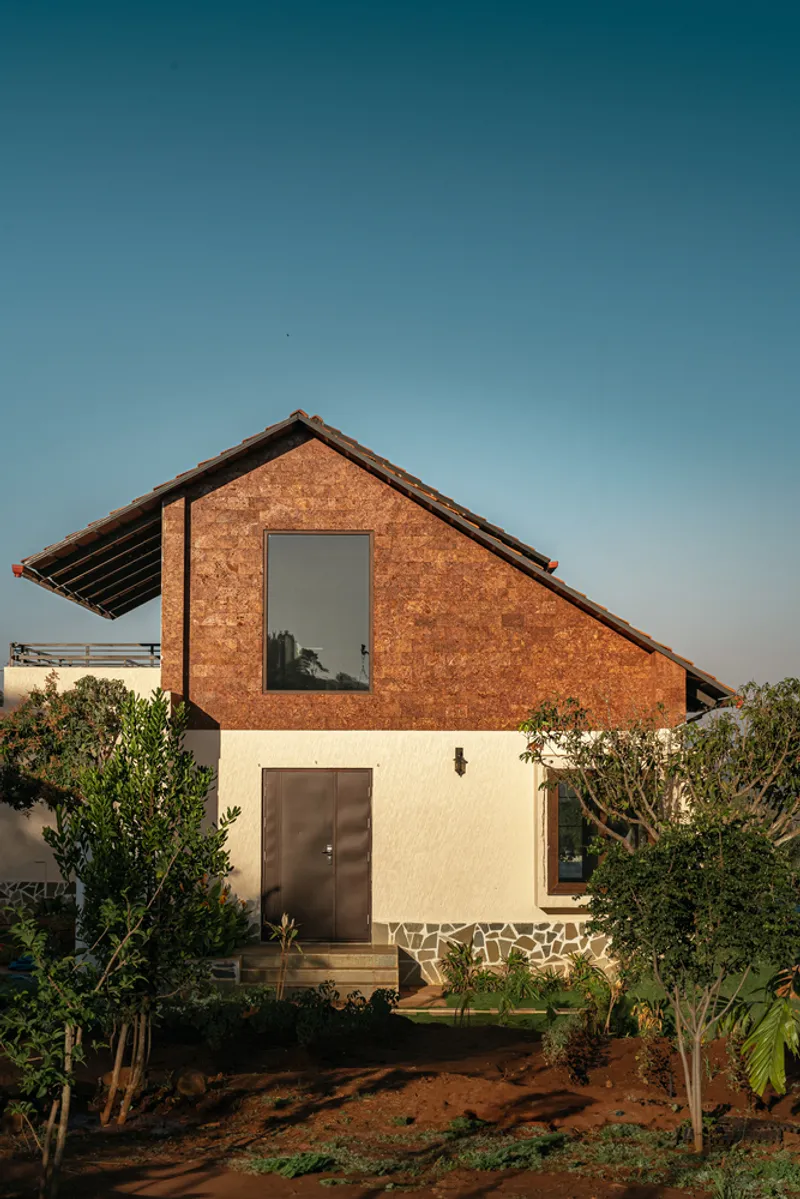
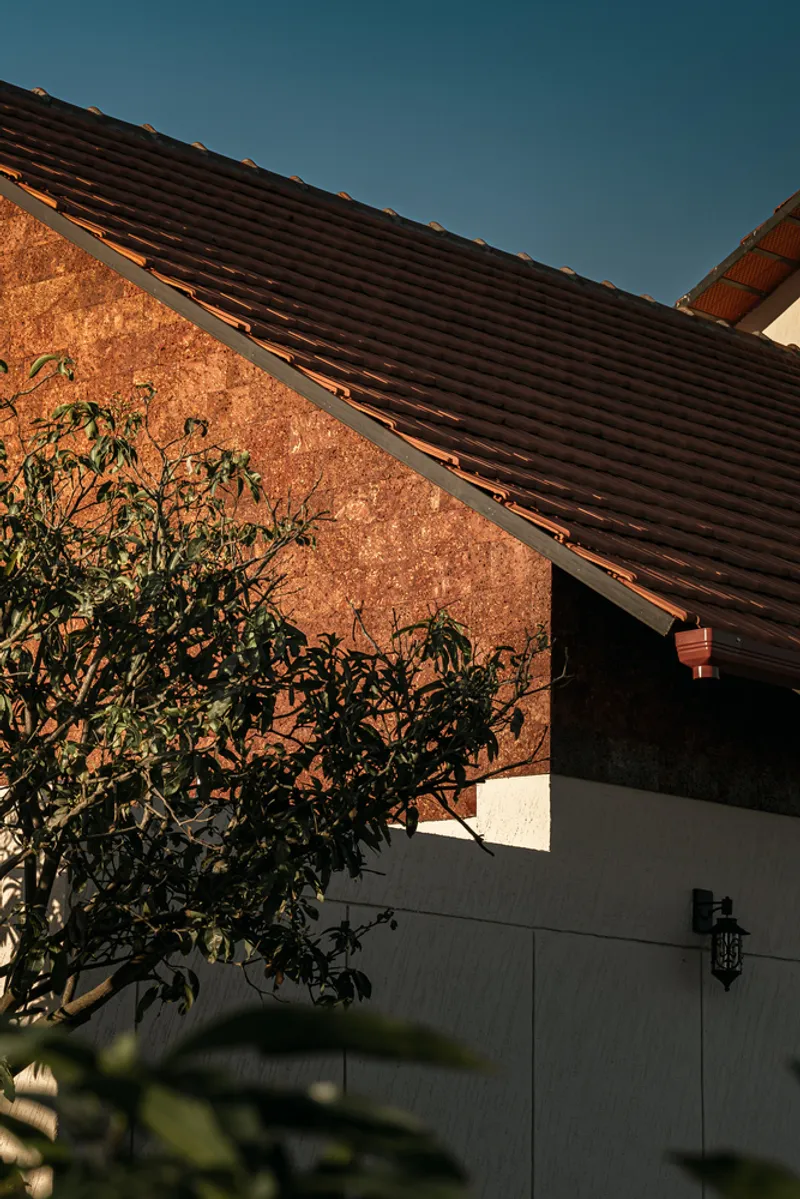
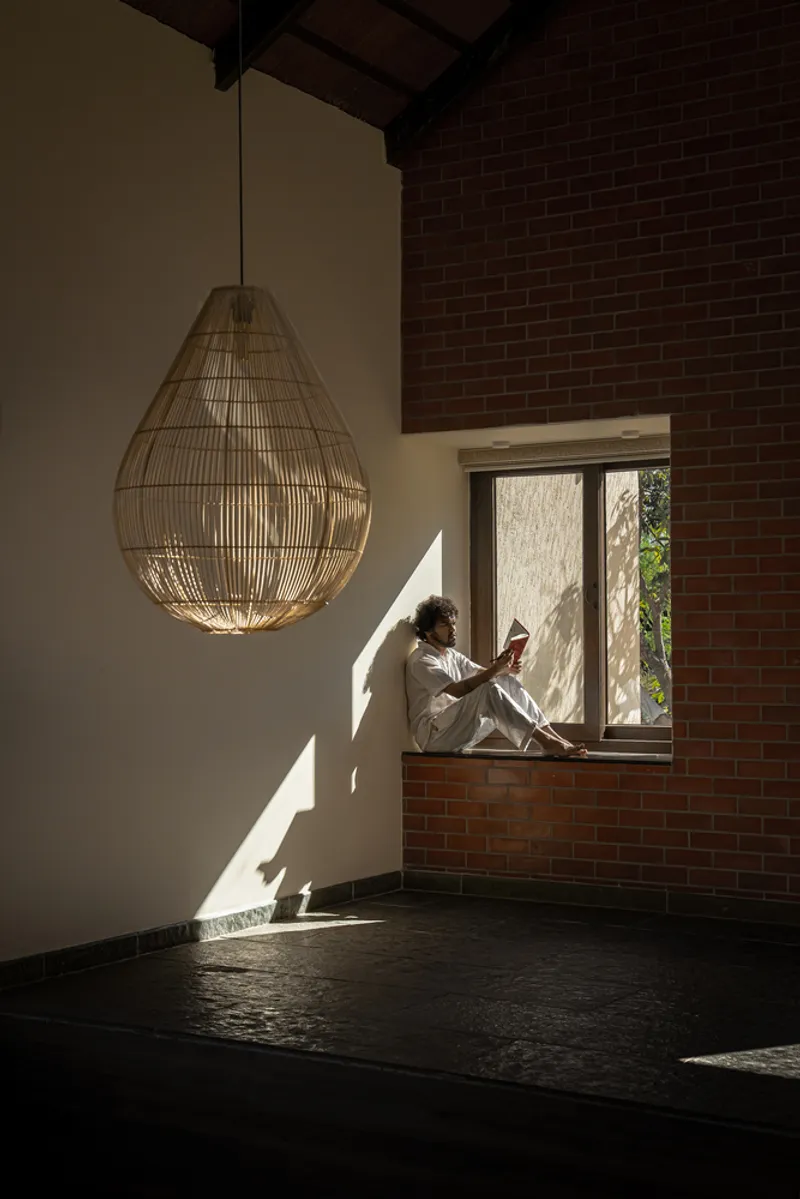
A core principle of sustainable residential architecture is the use of locally sourced materials, reducing carbon footprints and embracing regional construction techniques. Ishavas House exemplifies this approach through its material palette, which includes:
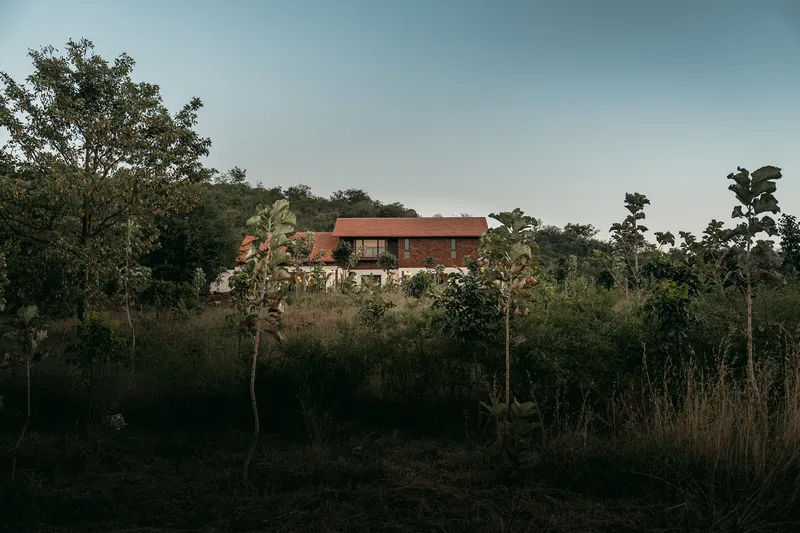
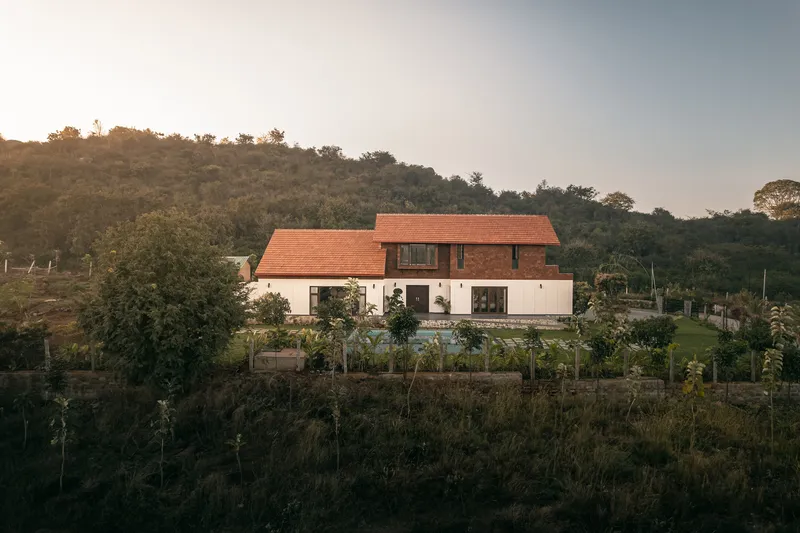
- Laterite stone for walls, providing excellent thermal insulation and durability
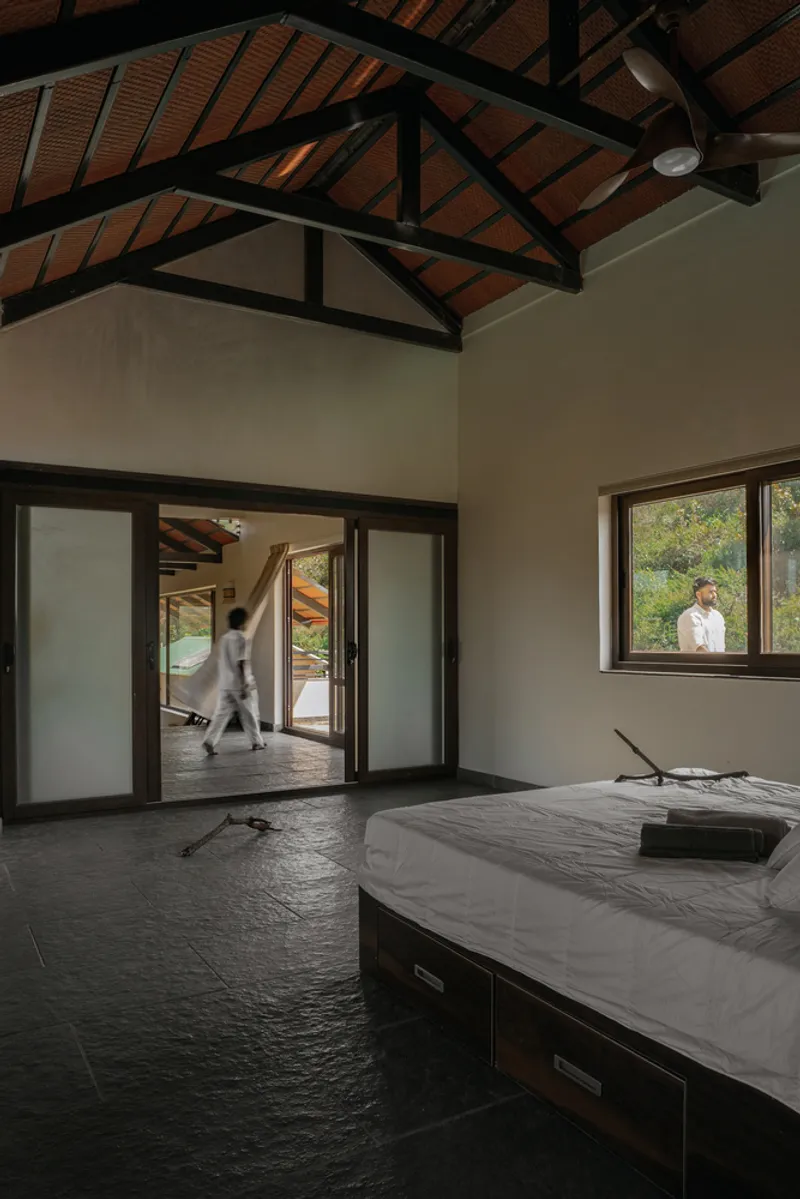
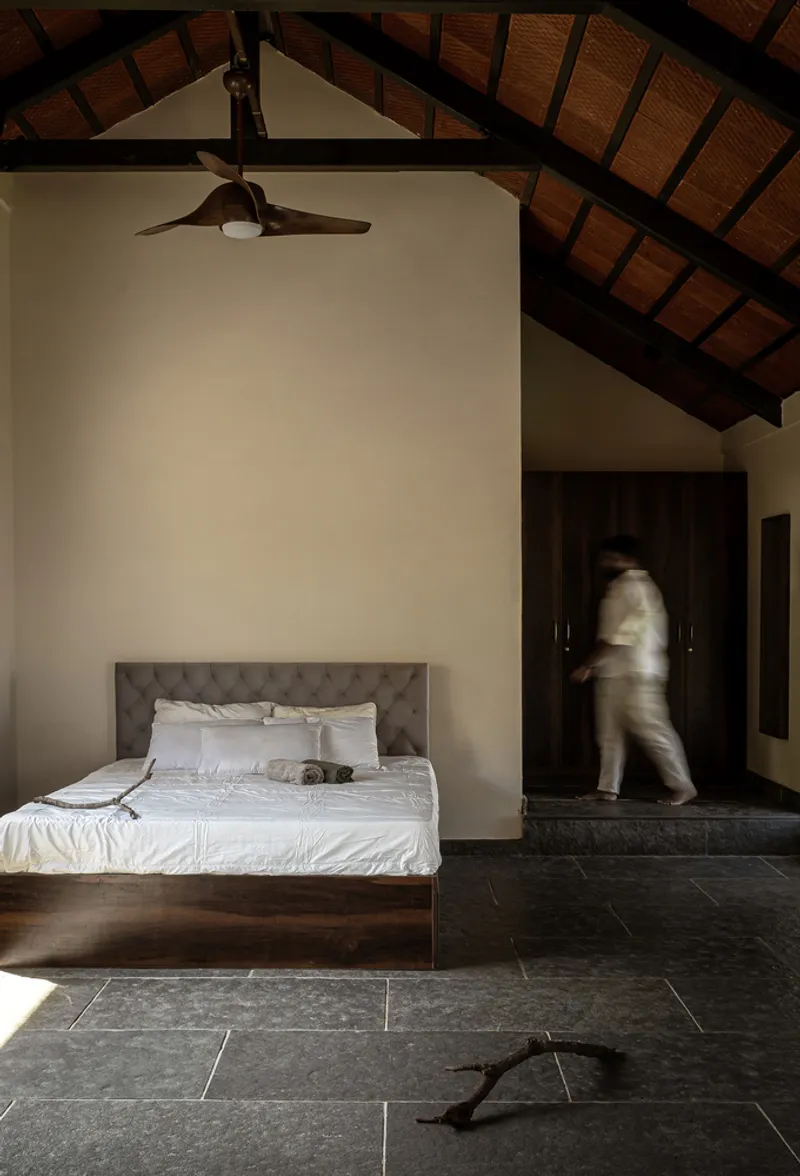
- Kota stone flooring, offering a natural cooling effect suitable for the hot climate
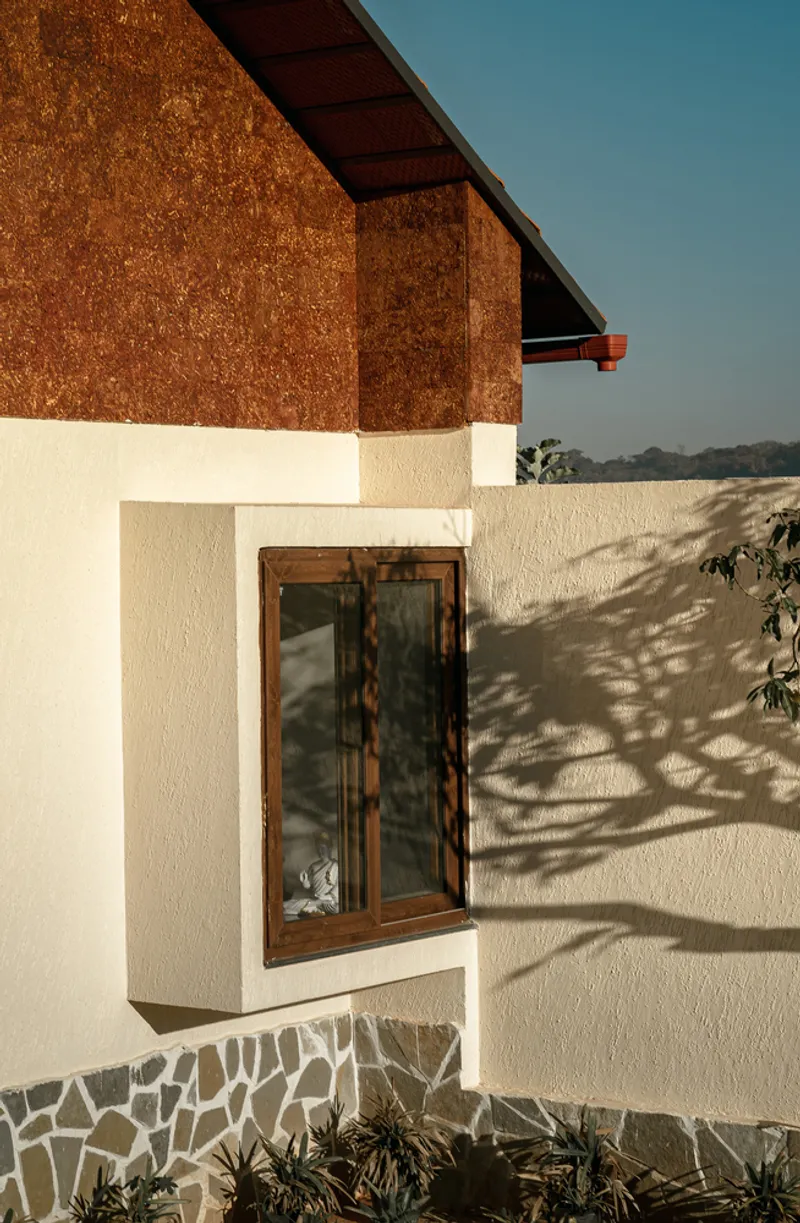
- Mud-plastered walls with a soft lime wash, creating an organic and breathable interior finish
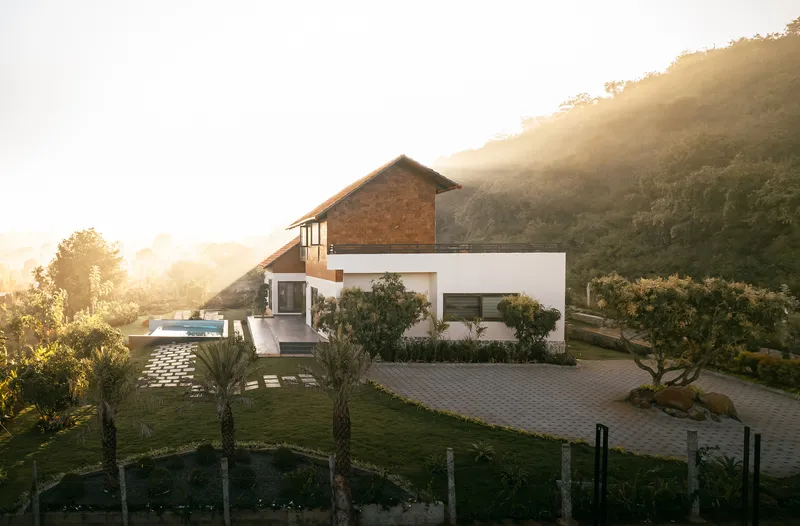
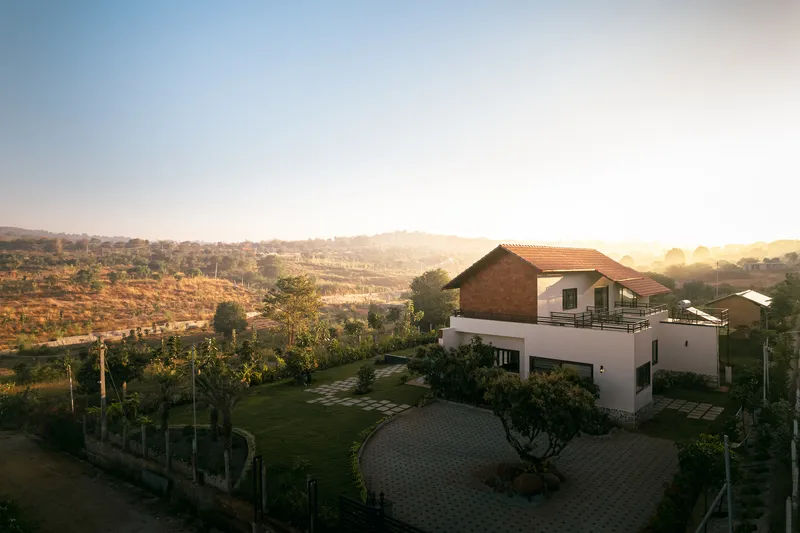
The commitment to sustainability extends to the construction process itself. Due to the site's remote location, sourcing materials and assembling a workforce became a collaborative effort, integrating local artisans and reducing transportation dependencies. This approach not only supported the local economy but also ensured that the home remained deeply rooted in its cultural and environmental context.
Passive Design Strategies for Energy Efficiency
Sustainable residential architecture prioritizes passive design strategies to enhance energy efficiency and occupant comfort. Ishavas House incorporates several key techniques to achieve thermal balance and reduce reliance on mechanical systems:
- Cross-ventilation is achieved through carefully placed openings, allowing fresh air to circulate naturally
- Shaded courtyards reduce heat gain, providing comfortable outdoor living spaces even in warm weather
- The house's orientation optimizes daylighting, minimizing the need for artificial lighting during the day
- A 5KW solar power system ensures energy self-sufficiency, reducing dependence on external power sources
Additionally, rainwater harvesting points are integrated throughout the site, supporting a closed-loop water management system that enhances the home’s resilience against water scarcity.
Redefining Luxury Through Sustainability
Ishavas House challenges conventional notions of luxury by prioritizing environmental consciousness over opulence. The design fosters a meaningful connection between inhabitants and their surroundings, inviting residents to engage with nature rather than isolating themselves from it. By redefining luxury as a deep sense of place and belonging, Ishavas House sets a new benchmark for sustainable residential architecture.
A Model for Future Sustainable Homes
HabitArt Architecture Studio’s Ishavas House serves as a model for sustainable residential architecture, demonstrating how climate-responsive design and locally driven construction practices can create meaningful living environments. By integrating nature, passive design strategies, and regional materials, this retreat embodies the future of sustainable living. As the demand for eco-friendly housing continues to grow, projects like Ishavas House pave the way for a new architectural paradigm—one that prioritizes sustainability, context, and the well-being of both people and the planet.
All photographs are works of Ram Naresh and Nayan Krishna


Popular Articles
Popular articles from the community


Cube Design Draws an Ecological Corridor Between Two Shenzhen Hills with the Nankai Building
Beside Shenzhen's container docks, the Nankai Building pairs stacked balconies with a climbing green screen to connect two hillsides across its height.


Aquadapt: An Underwater Habitat That Rewrites Its Rooms by the Hour
Curved modules ring the seabed while one shell shifts from breakfast room to cinema, farm and football pitch as residents' needs change.

Singing Woman: An Opera House That Performs Before the Curtain Rises
Ovidiu Cristian Pavel's conceptual opera house translates Estonia's choral identity into a sculpted waterfront landmark facing the Baltic Sea.

David Ortega Stacks a Two-Story Mexico City Penthouse Around a Steel Stair and a Pergola-Shaded Roof Terrace
In Colonia Roma, a 300 m² penthouse uses oak joinery, a planted steel stair and a slatted roof pergola to make a new-build apartment feel like a house.

Similar Reads
You might also enjoy these articles


Hodi-Mandai Geram
Project Function: Preservation and revitalization of the Intangible heritage and socio-spatial identity of the Hodi by Housing, Cultural Memory Center, Sacred Grove, landscape, local tourism economy


Olio Towers: A Mid-Rise for Performers That Fuses Housing, Rehearsal, and Stage
Located blocks from Houston's Theater District, this modular tower stacks living units around a central performance atrium.

Oasis: Modular Green Housing Carved into Dhaka's Urban Fabric
A shortlisted Plugin Housing entry reclaims unauthorized settlements in Dhaka with stepped concrete volumes, green roofs, and ventilation-driven design.

Black Hole: A Floating Megastructure for the Post-Physical Era
Emiliano Mazzarotto envisions a spherical, self-scaling arena where e-sports, digital hotels, and holographic stadiums replace traditional public space.

Explore Passive Architecture Competitions
Discover active competitions in this discipline

Challenge to reimagine the Iron Throne

Photograph architecture without architects

Illustrate the lost glory of Angkor Wat - Render Challenge

Design challenge to reuse E-waste
Comments (0)
Please login or sign up to add comments
No comments yet. Be the first to comment!