

JACÓ Restaurant: A Contemporary Fine Dining Experience in São Paulo
JACÓ Restaurant in São Paulo transforms a 1970s house with modular metal walls, open veranda, and plaza, blending historic and contemporary architecture.


Located in the vibrant Vila Madalena neighborhood of São Paulo, Brazil, JACÓ Restaurant is a transformative fine dining and cocktail destination designed by Clube + AGENCIA TPBA. This innovative project reimagines a conventional residential house from the 1970s, merging historic architecture with contemporary design interventions. Covering 2,152 ft², the restaurant was completed in 2024 and photographed by Javier Agustin Rojas and the architects’ internal archive.


Preserving History Amid Urban Transformation
The original house had undergone multiple modifications over the decades, with the latest significant renovation incorporating five oversized metal beams. These structural elements allowed the removal of all existing partition and load-bearing walls, creating a spacious, unobstructed interior of approximately 120 m². Despite this radical intervention, the architects prioritized maintaining the house’s original character, highlighting its architectural form amidst a rapidly evolving urban neighborhood.
The design strategy intentionally contrasts historical and contemporary elements. By preserving the existing structure while introducing autonomous tectonic interventions, JACÓ Restaurant celebrates the juxtaposition of different architectural eras, allowing guests to experience a dialogue between past and present.


Innovative Spatial Design
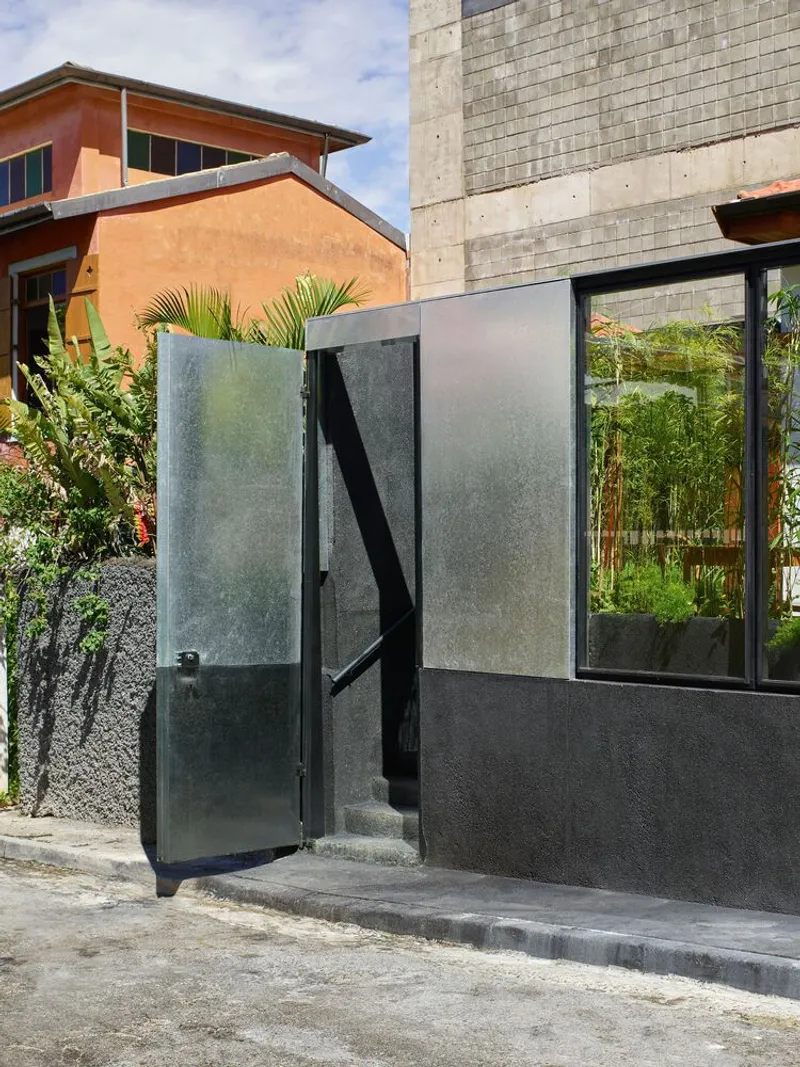
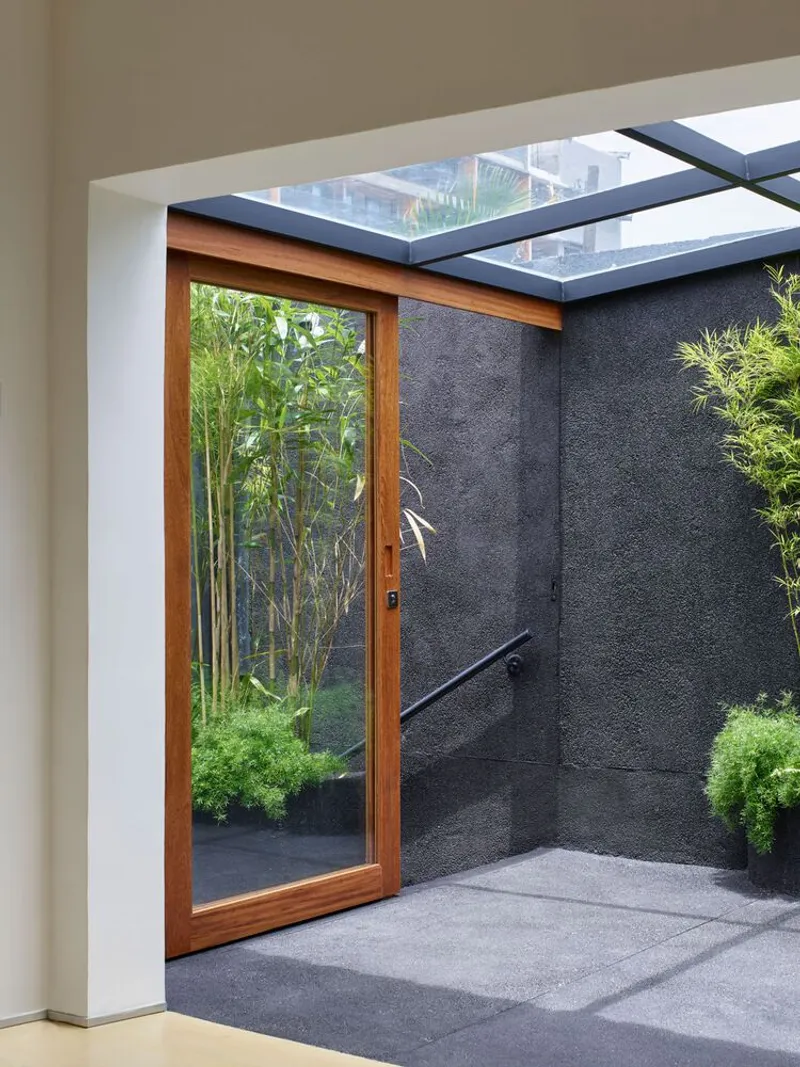
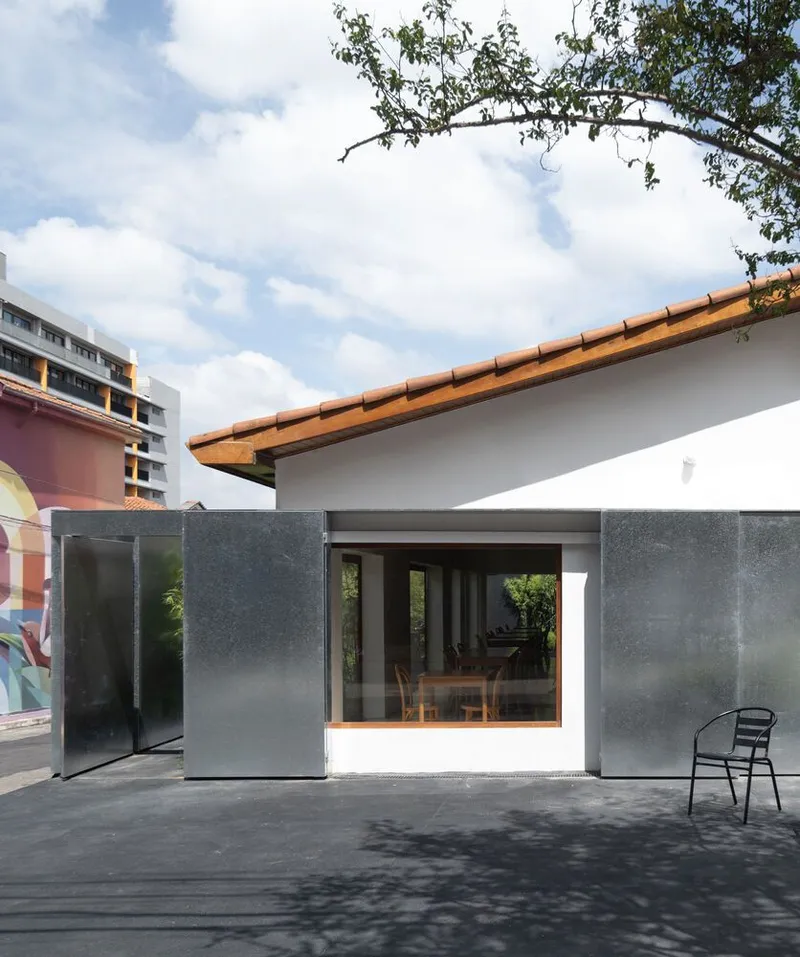
Central to the renovation is an L-shaped folded metal wall that redefines the plot’s perimeter and divides it into two distinct zones. The first zone extends the main room into a gardened, semi-covered veranda, offering a tranquil indoor-outdoor dining experience. The second zone opens to the city, functioning as a small public plaza, integrating the restaurant with its urban context.
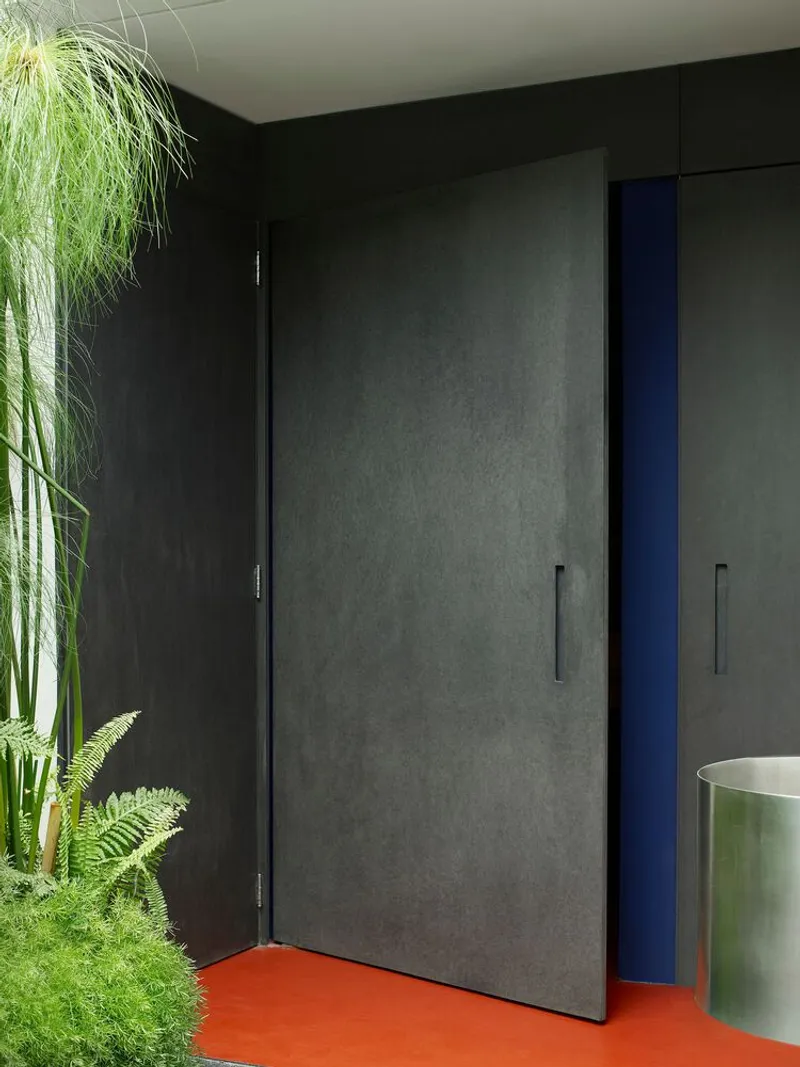
Both the veranda and plaza act as intermediate transitional spaces. The architects used a dark unified floor to visually connect the entire plot, creating a continuous platform that defines the building’s presence in the cityscape.
Architectural Features and Materials
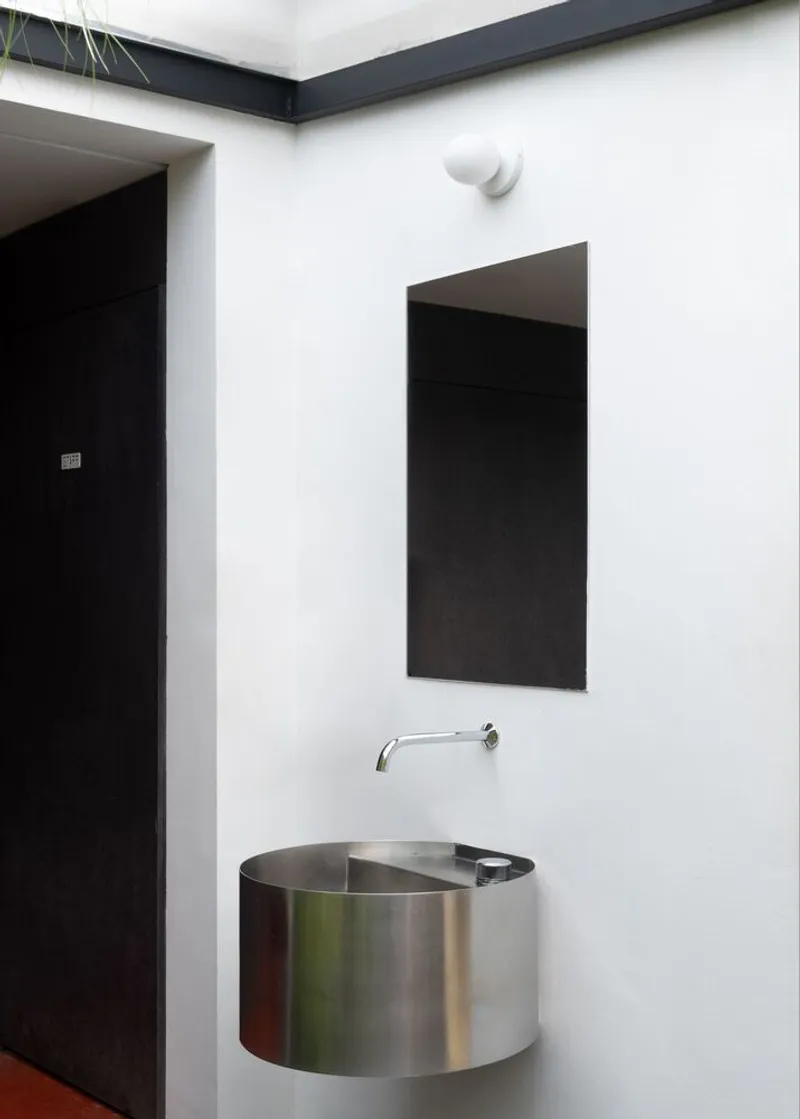
The modular metal wall, composed of steel profiles and galvanized steel panels, organizes multiple openings while providing full closure when needed. Its interaction with the original roof creates a distinctive urban character, blending industrial aesthetics with the traditional residential form. This relationship between old and new structures establishes a dynamic architectural tension, reinforcing the restaurant’s identity as a contemporary yet contextually aware space.
Through these interventions, JACÓ Restaurant achieves a balance between historic preservation, modern design, and urban integration, offering visitors a unique sensory and visual experience in São Paulo’s gastronomic scene.



All photographs are works of
Javier Agustin Rojas, Acervo Interno dos Autores


Popular Articles
Popular articles from the community


David Ortega Stacks a Two-Story Mexico City Penthouse Around a Steel Stair and a Pergola-Shaded Roof Terrace
In Colonia Roma, a 300 m² penthouse uses oak joinery, a planted steel stair and a slatted roof pergola to make a new-build apartment feel like a house.


Aquadapt: An Underwater Habitat That Rewrites Its Rooms by the Hour
Curved modules ring the seabed while one shell shifts from breakfast room to cinema, farm and football pitch as residents' needs change.

ETEH Reworks the Shared Spaces of São Domingos School in Brazil Around Timber, Color and Hanging Plants
At São Domingos School in Brazil, 436 m² of hall, refectory and library are recast with timber joinery, a yellow and blue code and trailing greenery.

graciastudio Turns a Viewless Tijuana Lot Inward Around a Courtyard of Concrete, Timber and Trees
In Tijuana, Jorge Gracia's GA2 House stacks a timber-clad private floor over exposed concrete and replaces a missing view with a planted interior patio.

Similar Reads
You might also enjoy these articles

Cube Design Draws an Ecological Corridor Between Two Shenzhen Hills with the Nankai Building
Beside Shenzhen's container docks, the Nankai Building pairs stacked balconies with a climbing green screen to connect two hillsides across its height.

Praksis A and Studio Sted Bend a Red Timber Cabin Across the Granite of Norway's Southern Coast
On the southern Norwegian coast, a 105 m² cabin follows the rock on slender posts, pairing red cladding outside with pine, brick and plywood within.
David Ortega Stacks a Two-Story Mexico City Penthouse Around a Steel Stair and a Pergola-Shaded Roof Terrace
In Colonia Roma, a 300 m² penthouse uses oak joinery, a planted steel stair and a slatted roof pergola to make a new-build apartment feel like a house.

PARALELA and LB2 Thread a Public Walkway Through the Base of a Las Condes Residential Tower
In Las Condes, Santiago, the Hamlet Building gives its fenceless ground floor to a 70-metre wooded passage linking two streets and the metro.

Explore Sao Paulo Competitions
Discover active competitions in this discipline

Challenge to reimagine the Iron Throne

Photograph architecture without architects

Illustrate the lost glory of Angkor Wat - Render Challenge

Design challenge to reuse E-waste
Comments (0)
Please login or sign up to add comments
No comments yet. Be the first to comment!