
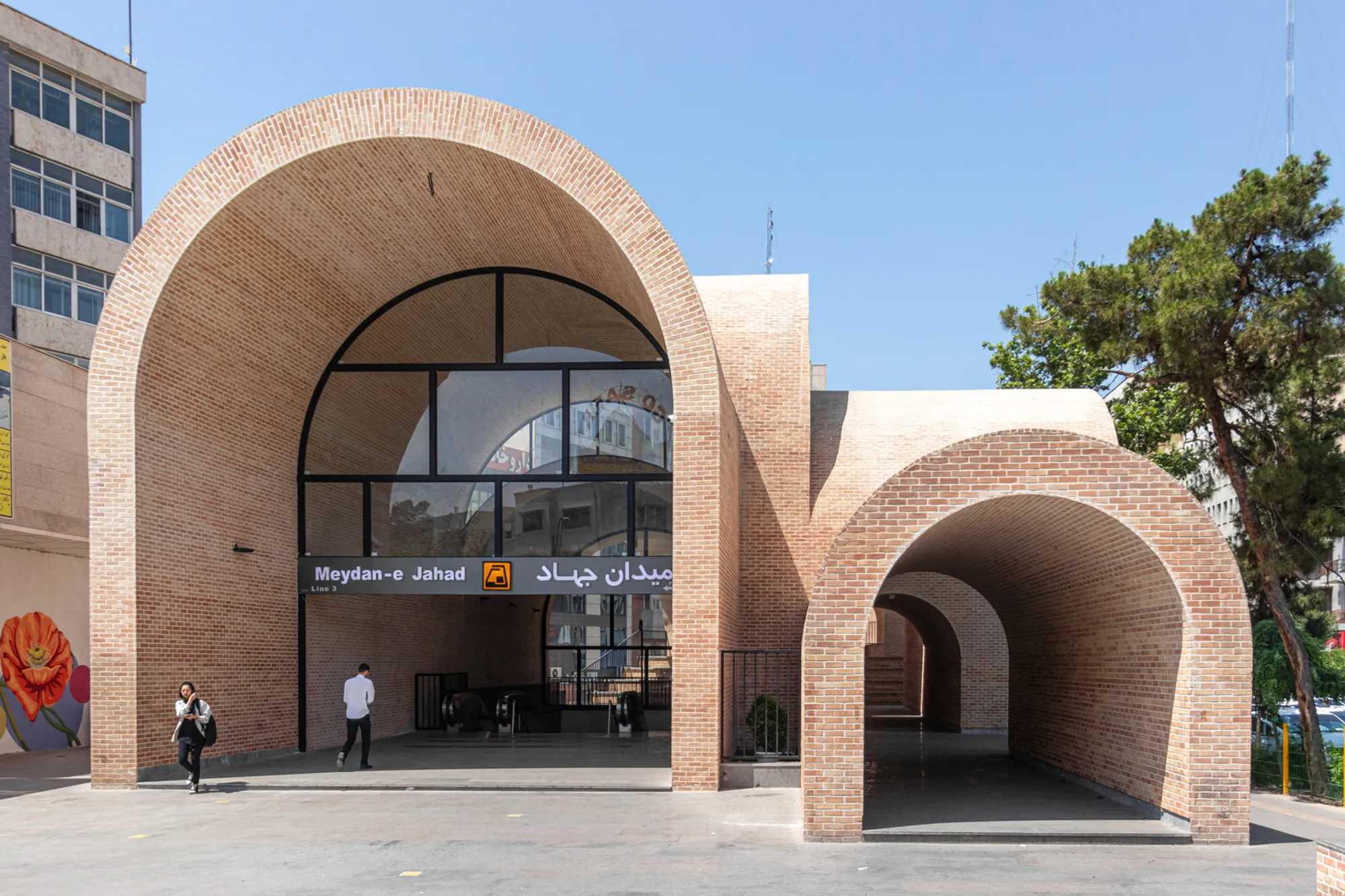
Jahad Metro Plaza by KA Architecture Studio (Mohammad Khavarian)
Jahad Metro Plaza revitalizes a neglected Tehran metro entrance into a vibrant, pedestrian-oriented public plaza defined by concrete arches and community activity.


Reclaiming Public Space in a Car-Oriented Metropolis
Tehran, once known for its livable and low-density urban core, underwent rapid and unbalanced expansion following the Iranian Revolution. Driven by centralized policies and population growth, the city adopted a car-centric development model—expanding highways, dense street networks, and vast urban blocks. Over time, this infrastructure-first approach eroded the pedestrian experience, reduced public space availability, and compromised the overall quality of urban life.
Jahad Metro Plaza emerges as a symbolic intervention in this urban narrative—an effort to reclaim public space for pedestrians and transform neglected transit zones into vibrant, human-centered urban landmarks.
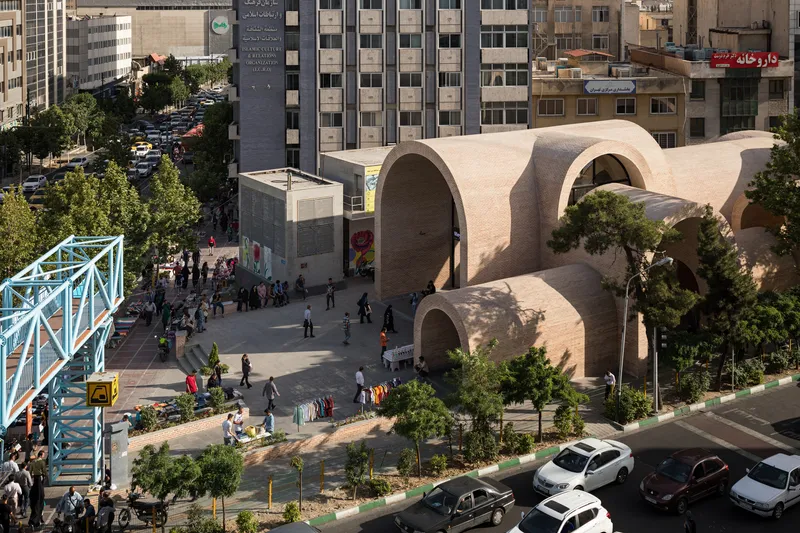
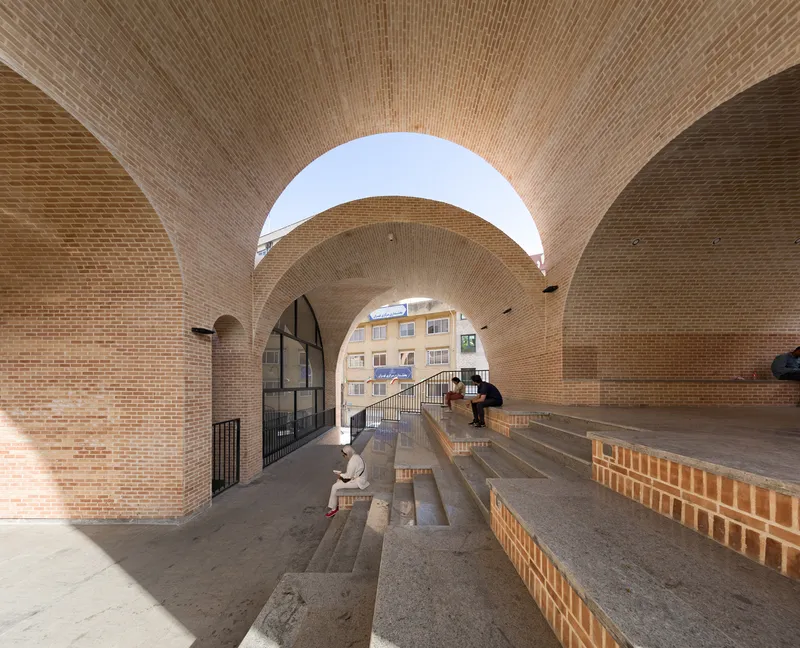
The “Meydangah” Initiative: Turning Transit Points into Urban Destinations
The project forms part of Tehran’s visionary “Meydangah” initiative—a citywide strategy led by urban specialists and the municipal government to identify and revitalize underutilized public areas. Over 100 neglected urban nodes across Tehran, including parks, sidewalks, and metro entrances, were mapped as potential catalysts for urban regeneration.
Jahad Metro Plaza, located at the intersection of Vali Asr Street, one of Tehran’s most historic and active corridors, was selected as a pilot site. Metro station entrances in Tehran had historically been treated as isolated infrastructural voids, lacking design consideration for community engagement or pedestrian comfort. The challenge was to transform this neglected transit node into a socially active and architecturally cohesive public plaza—an urban “pause point” where movement, interaction, and identity intersect.
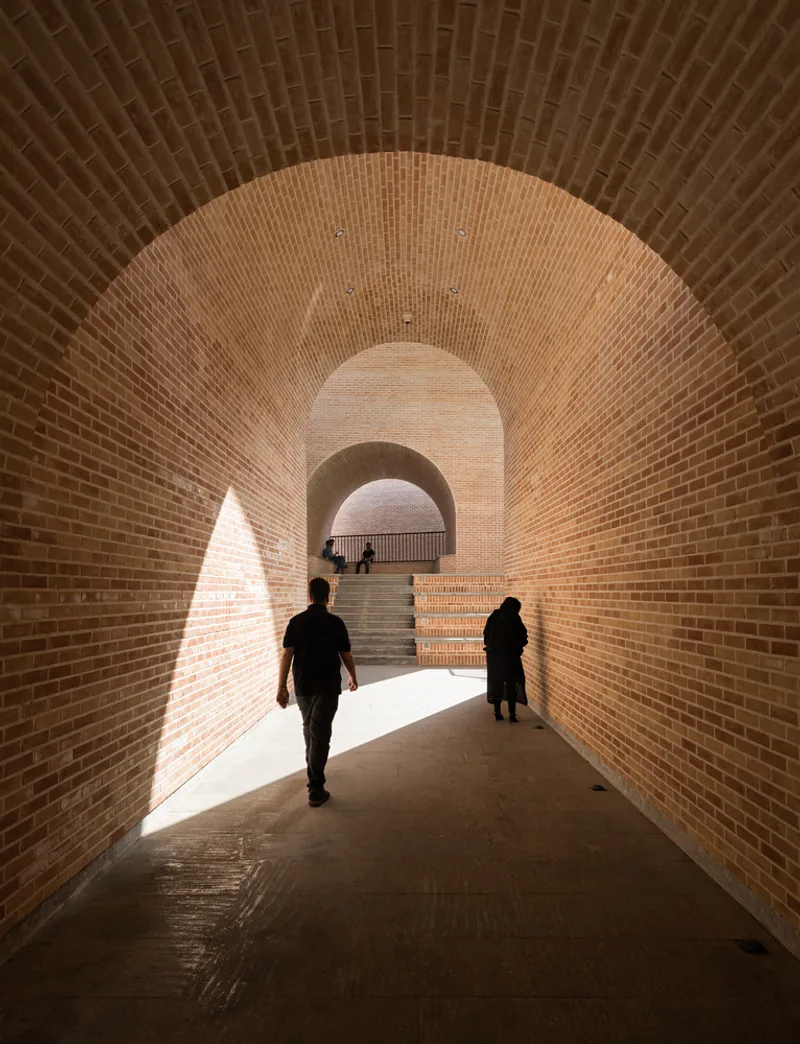
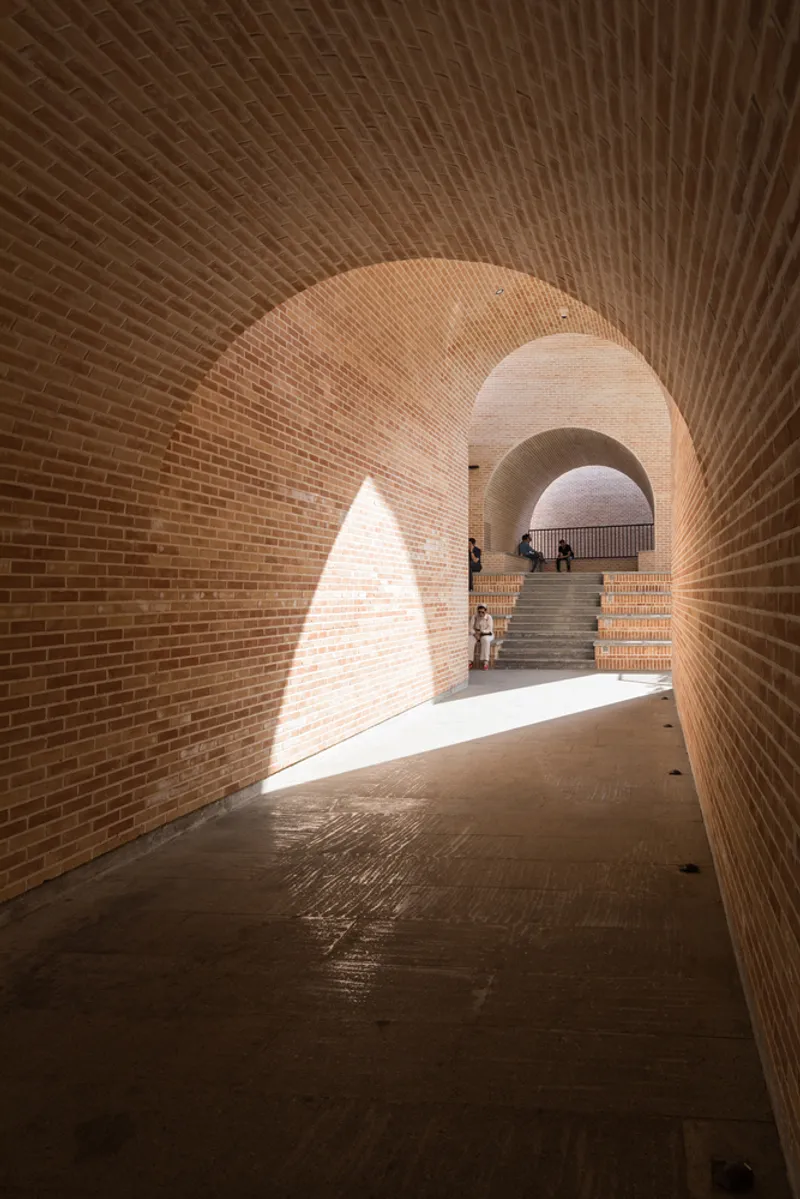
Redefining the Metro Entrance: From Transit to Public Life
Originally, the client envisioned a modest sidewalk improvement due to economic constraints. Through strategic dialogue and urban visioning, KA Architecture Studio successfully expanded the project’s ambition to align with the master plan for a pedestrian-oriented Tehran.
The site, a triangular 1,500 m² parcel within a dense traffic corridor, presented unique challenges: high noise levels, fragmented urban infrastructure, and a lack of spatial hierarchy. The existing metro entrance—a simple glass enclosure—failed to engage the public realm or enhance user experience. Dispersed utilities, poorly placed restrooms, and abandoned spaces further underscored the need for a unified architectural response.
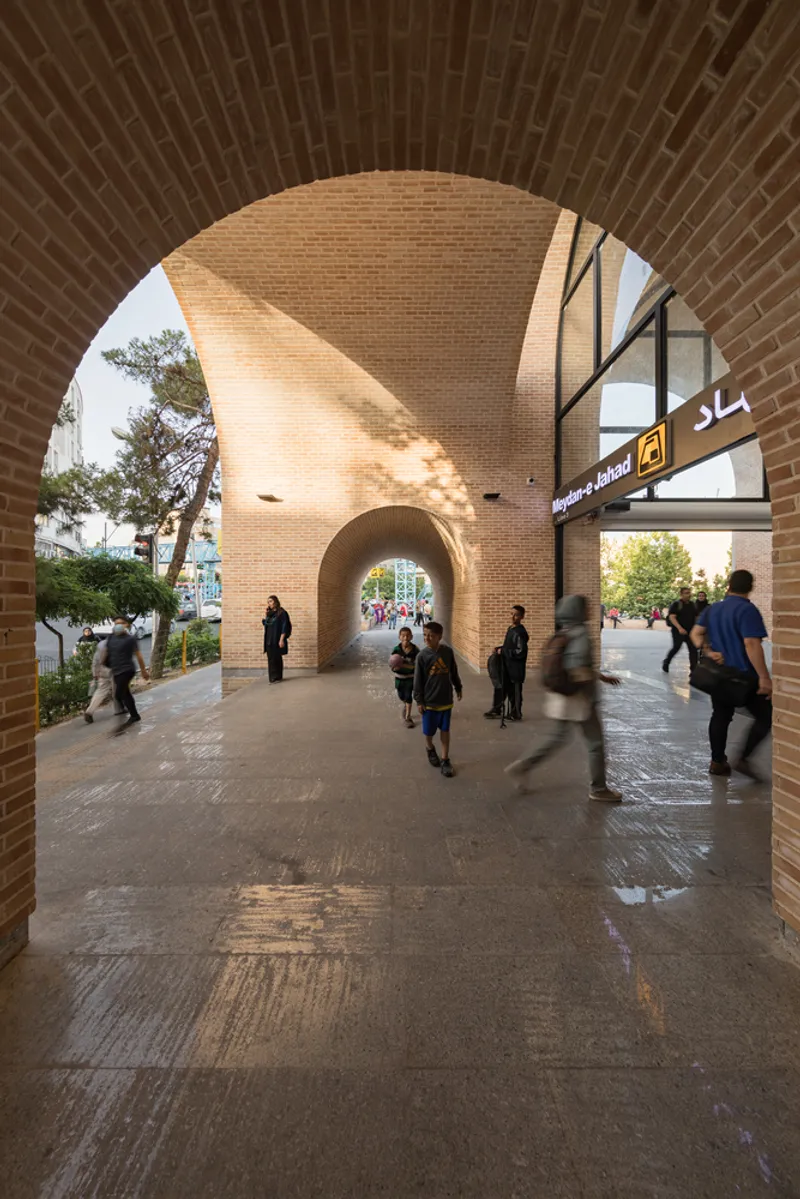
Architectural Concept: The Power of the Arch and the Unity of Form
To reconcile the vertical gap between the subterranean metro and the surface-level city, the design employs a series of geometric concrete arches. These forms symbolically and functionally bridge the underground transit realm and the public plaza above. Executed using locally available construction methods, the arches act as a cohesive structural and aesthetic framework, organizing circulation and defining the space with rhythmic clarity.
The result is an “urban labyrinth”—a dynamic, semi-covered space that mediates between movement and rest. The permeable roof allows light and air to filter through, while offering shade in summer and shelter in winter. This design strategy not only enhances microclimatic comfort but also reduces the visual and acoustic impact of surrounding traffic, creating a tranquil urban oasis within the city’s busiest intersection.
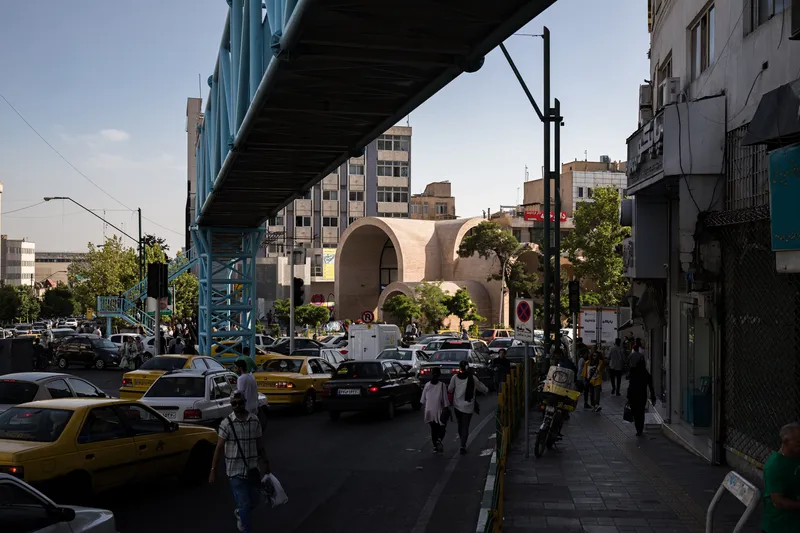
Social Activation and Urban Identity
The transformation of Jahad Metro Plaza goes beyond architectural form—it redefines the role of public infrastructure in contemporary Tehran. The redesigned plaza now accommodates local vendors, street musicians, and informal gatherings, fostering a renewed sense of community ownership. What was once a neglected metro entrance has evolved into a civic platform—a democratic space where everyday urban life unfolds.
By integrating passive environmental strategies, contextual geometry, and participatory design, the project reasserts the importance of human-scale urbanism in a city long dominated by vehicles.
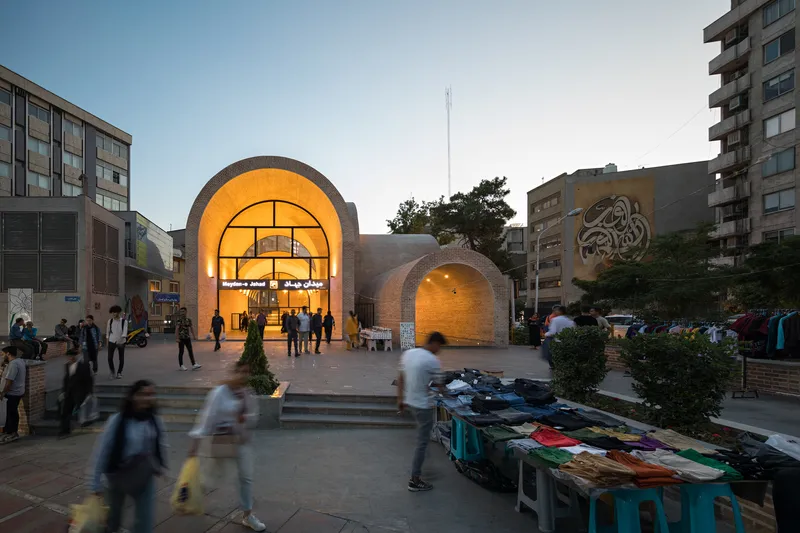
Towards a Pedestrian-Oriented Future
Jahad Metro Plaza stands as a prototype for Tehran’s pedestrian-oriented transformation, demonstrating how small-scale architectural interventions can trigger broader urban regeneration. It illustrates that even under economic constraints and political challenges, adaptive design thinking can create meaningful spatial change.
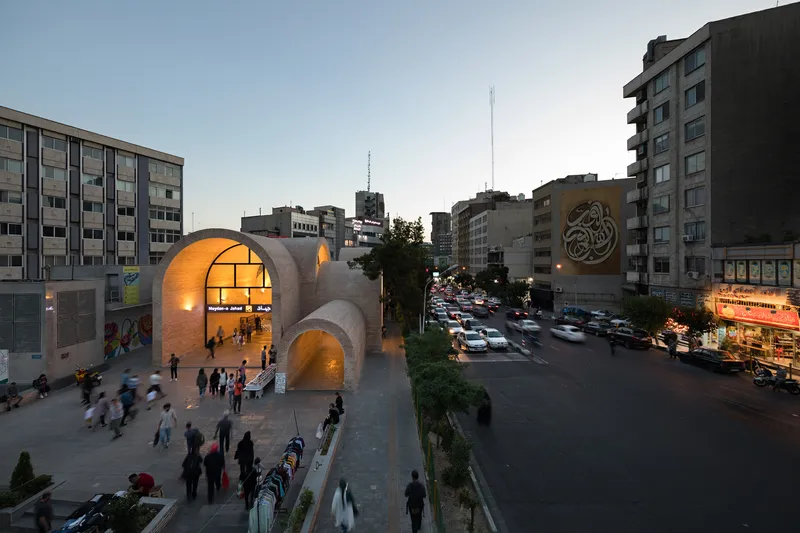
This project by KA Architecture Studio encapsulates a vision for inclusive, adaptable, and resilient public spaces—where infrastructure is reimagined not as a boundary, but as a connector of people, places, and identities.



Popular Articles
Popular articles from the community


Co-life: Sustainable Architecture for Age-Friendly Community Living
Co-life reimagines sustainable architecture for seniors through courtyards, rammed earth, shared gardens, and spaces designed for belonging.

The Musturak Paradise: Senior Living Architecture for a Connected Future in Temara, Morocco
The Musturak Paradise reimagines senior living architecture in Temara via private homes, social spaces, culture, community, and shared care.

Hill & Cross Opera: Sculptural Opera House Architecture Shaped by Tallinn’s Landscape and Identity
Hill & Cross Opera reimagines opera house architecture in Tallinn through its sculptural hill, civic plaza, glass wave and a luminous cross.

Co-Life: Senior Housing Design That Reconnects Older Adults With the City
Co-Life reimagines senior housing design through healing gardens, shared streets, workshops, and a sustainable community across generations.


Similar Reads
You might also enjoy these articles


Hodi-Mandai Geram
Project Function: Preservation and revitalization of the Intangible heritage and socio-spatial identity of the Hodi by Housing, Cultural Memory Center, Sacred Grove, landscape, local tourism economy


Olio Towers: A Mid-Rise for Performers That Fuses Housing, Rehearsal, and Stage
Located blocks from Houston's Theater District, this modular tower stacks living units around a central performance atrium.

Oasis: Modular Green Housing Carved into Dhaka's Urban Fabric
A shortlisted Plugin Housing entry reclaims unauthorized settlements in Dhaka with stepped concrete volumes, green roofs, and ventilation-driven design.

Black Hole: A Floating Megastructure for the Post-Physical Era
Emiliano Mazzarotto envisions a spherical, self-scaling arena where e-sports, digital hotels, and holographic stadiums replace traditional public space.

Explore Vertical Streets Competitions
Discover active competitions in this discipline


Challenge to design locus for the upliftment of human rights


Challenge to reimagine the Iron Throne


Photograph architecture without architects


Illustrate the lost glory of Angkor Wat - Render Challenge
Comments (0)
Please login or sign up to add comments
No comments yet. Be the first to comment!