
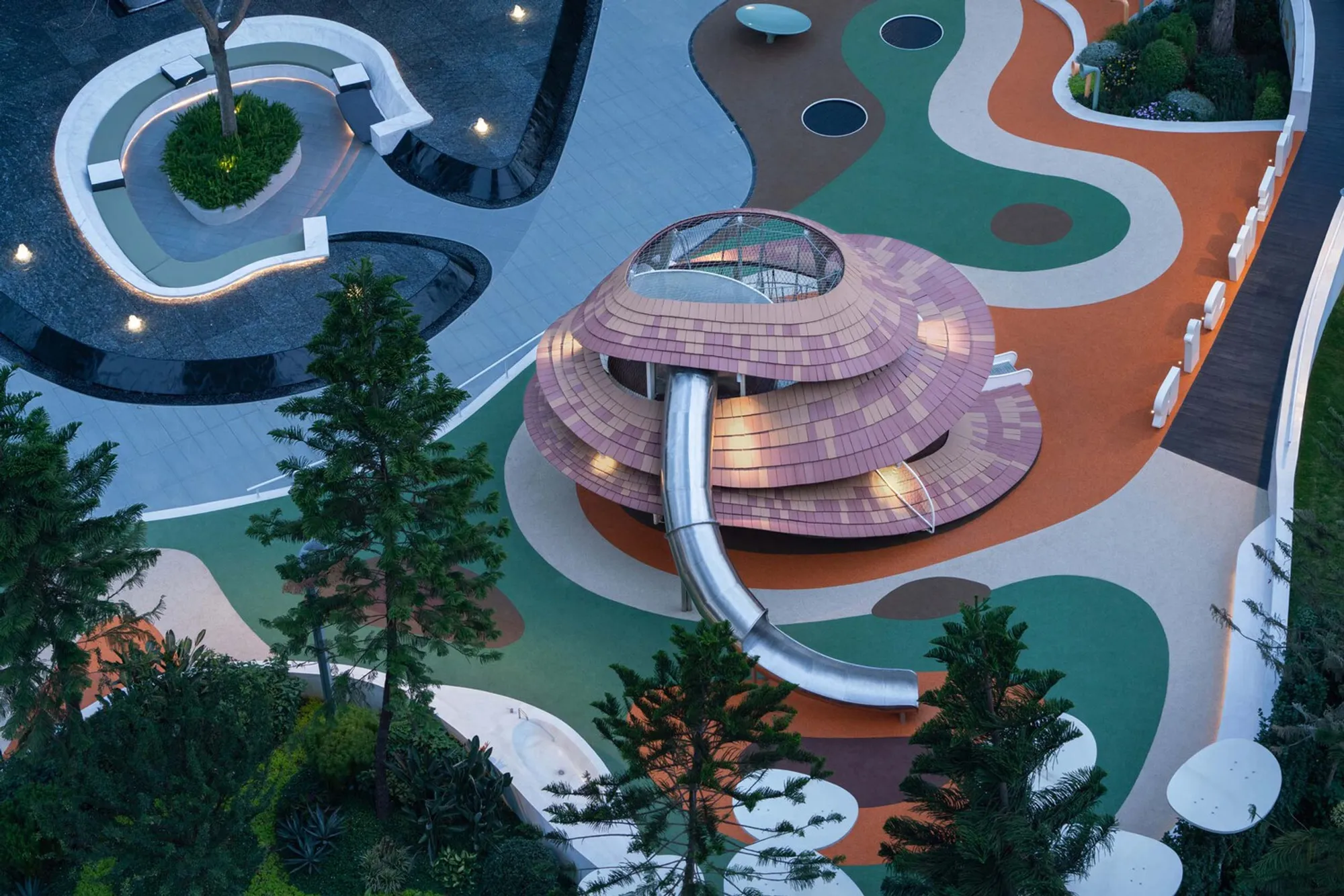
Jungle Tribe Recreational Space by Xisui Design: Nature-Integrated Play in Chengdu
Nature-inspired Chengdu playground blends bamboo architecture, undulating terrain, and innovative design, fostering playful, safe, and family-friendly urban recreation.


Located in the heart of Chengdu’s bustling Jinjiang District, the Jungle Tribe Recreational Space by Xisui Design (2022) transforms urban childcare into a nature-inspired adventure. Covering 1,150 m² within the Newhope Tianfu • D10 development, this innovative project blends landscape architecture principles with playful design strategies, creating a safe, engaging, and aesthetically compelling environment for children and families.
Nature-Inspired Design Philosophy
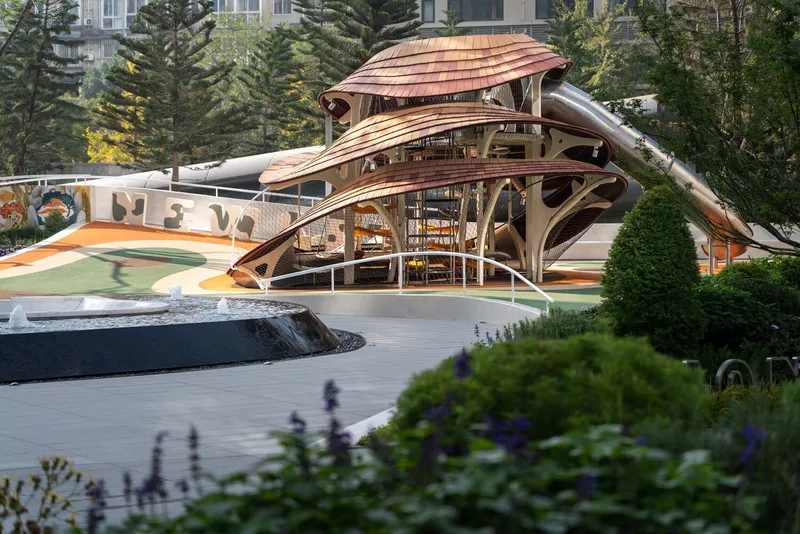
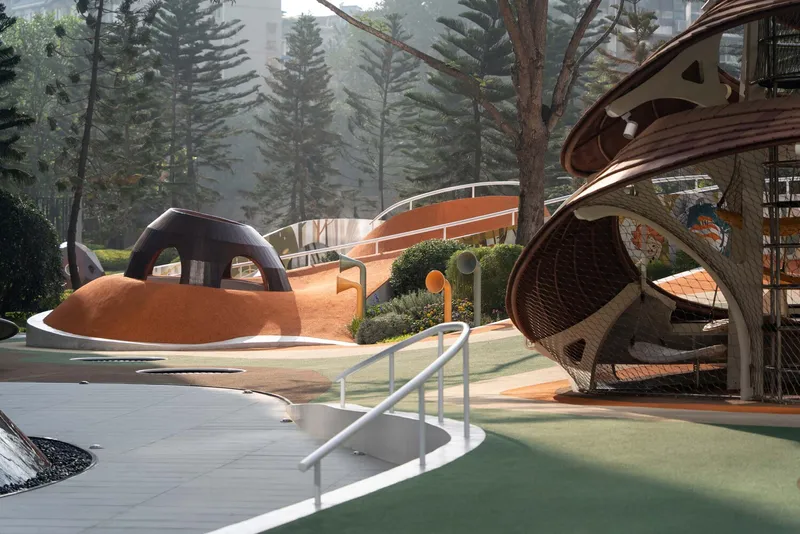
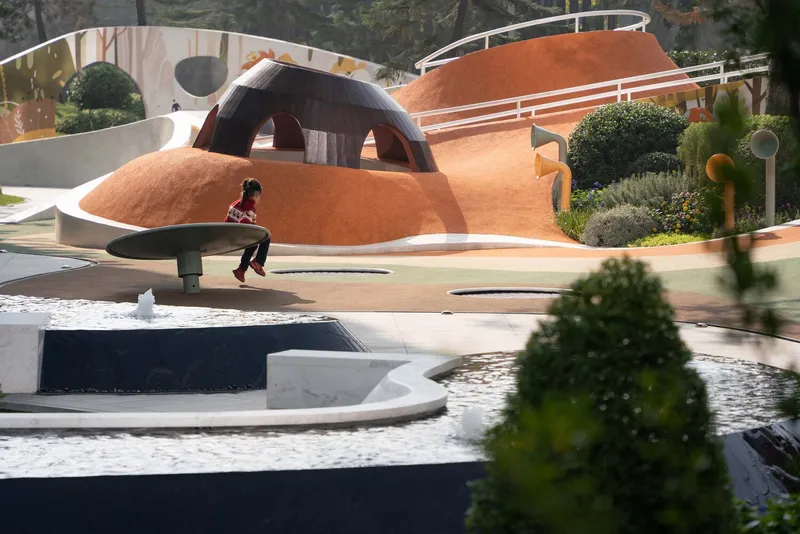
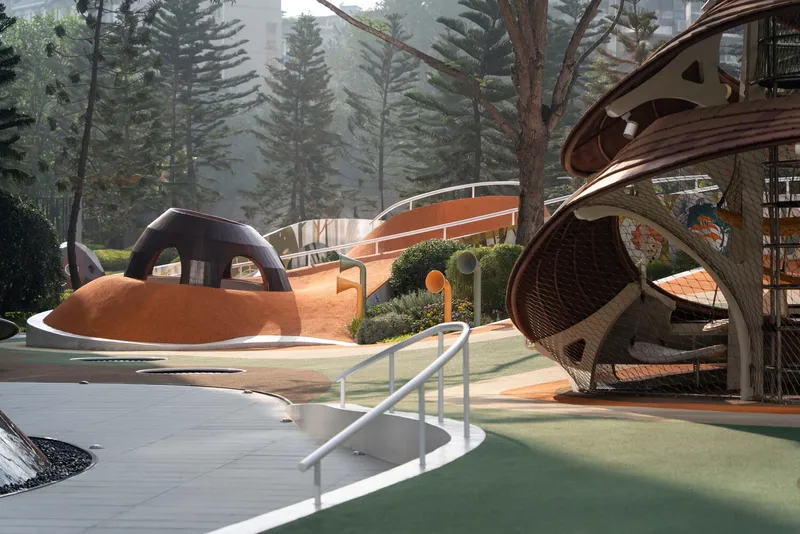
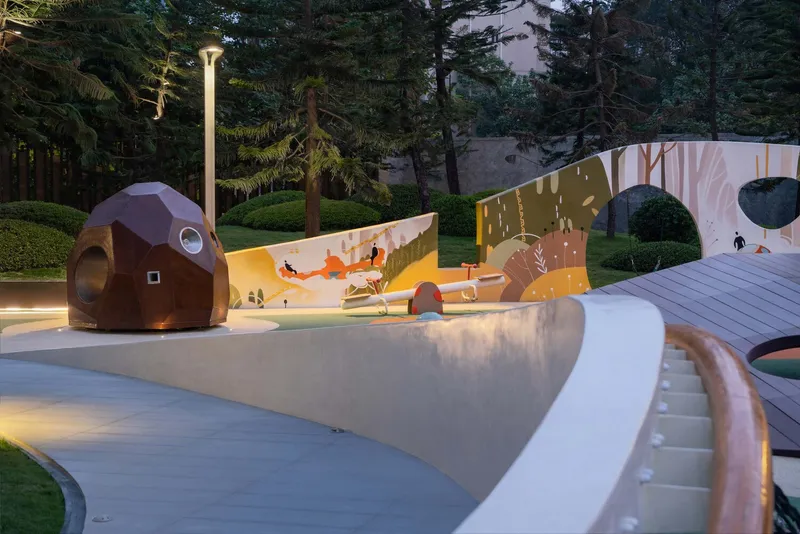
Dubbed “Undulating Paradise”, the design draws inspiration from the region’s natural undulating cave terrain. By embedding children’s play facilities seamlessly into the landscape, the design reduces the presence of artificial structures, fostering a sense of natural belonging and exploration. Children enjoy diverse, stimulating environments that encourage creativity and physical activity, while adults benefit from leisurely walking paths and communal spaces that promote family interaction.
Architectural Integration in an Urban Context
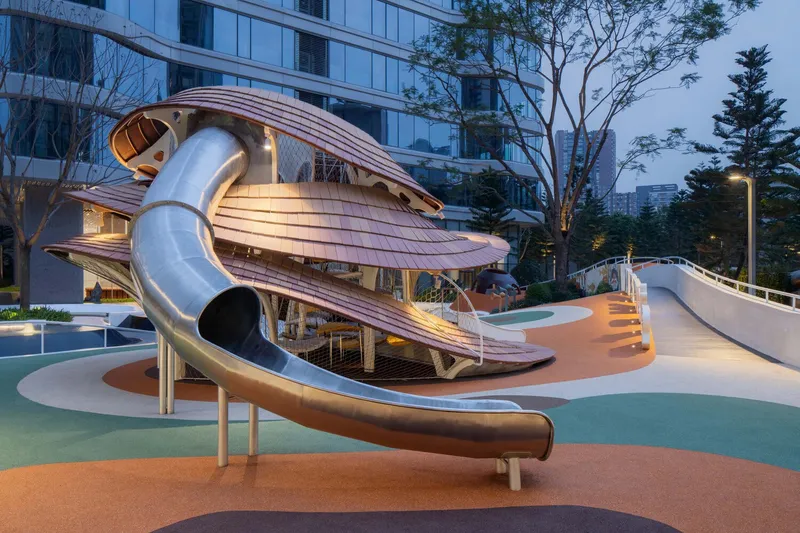
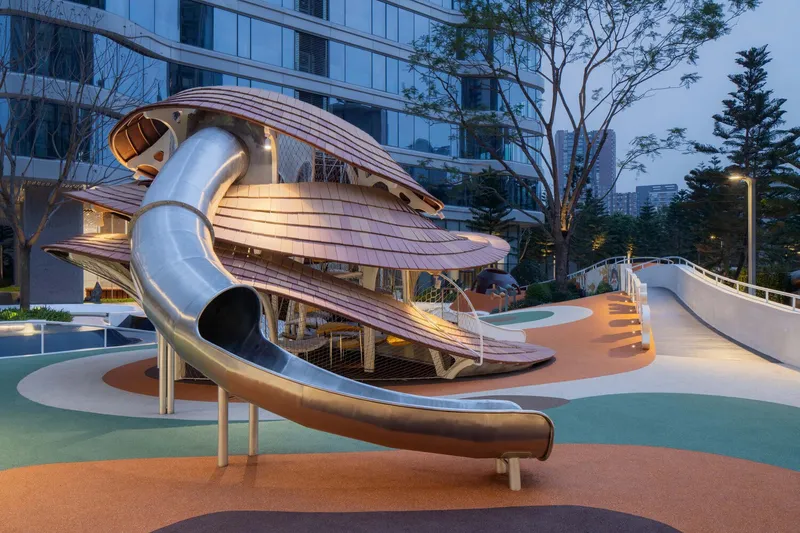
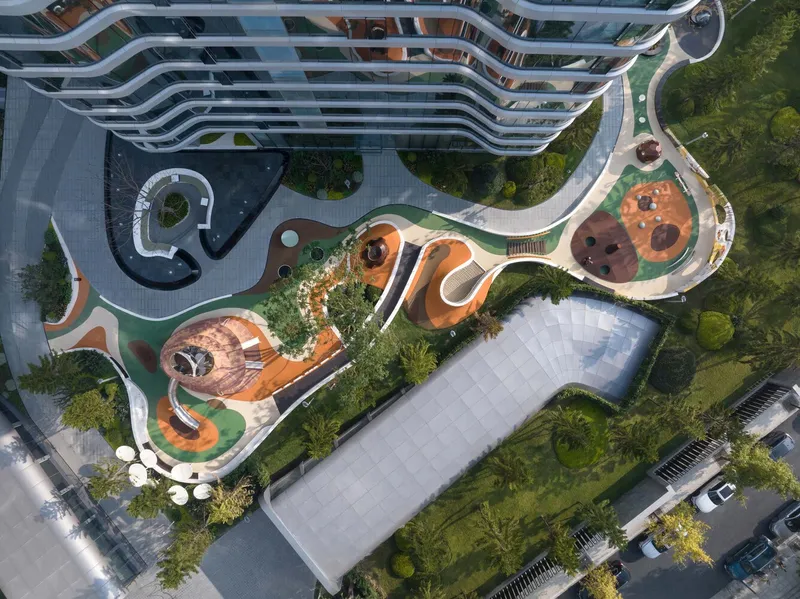
Situated near the Taikoo Li business district and surrounded by high-rise buildings, the project demanded a delicate balance between functional performance and visual appeal. The rhythmic, wave-like facade conceals a garage entrance while maintaining resident privacy, demonstrating a thoughtful integration of urban constraints with high-quality design standards.
Innovative Structural Solutions
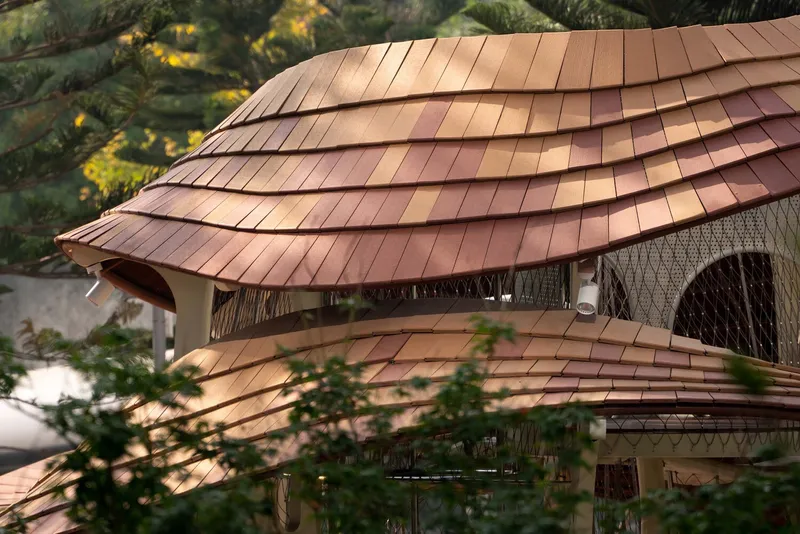
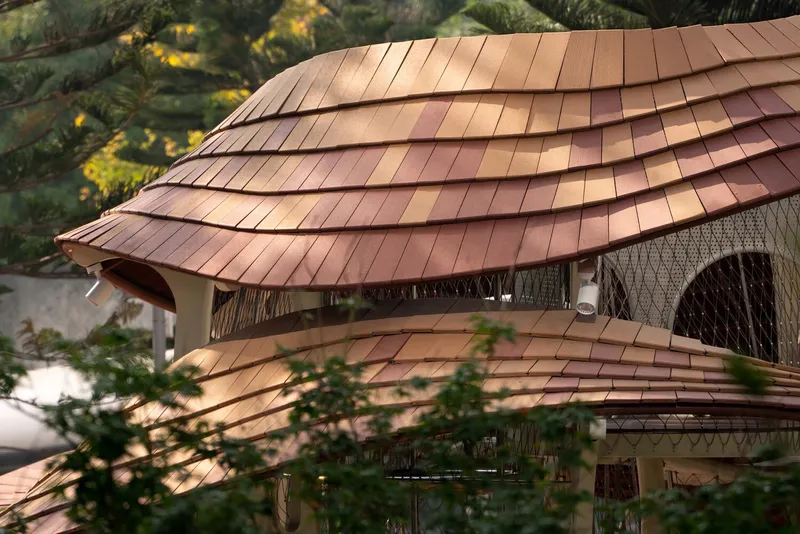
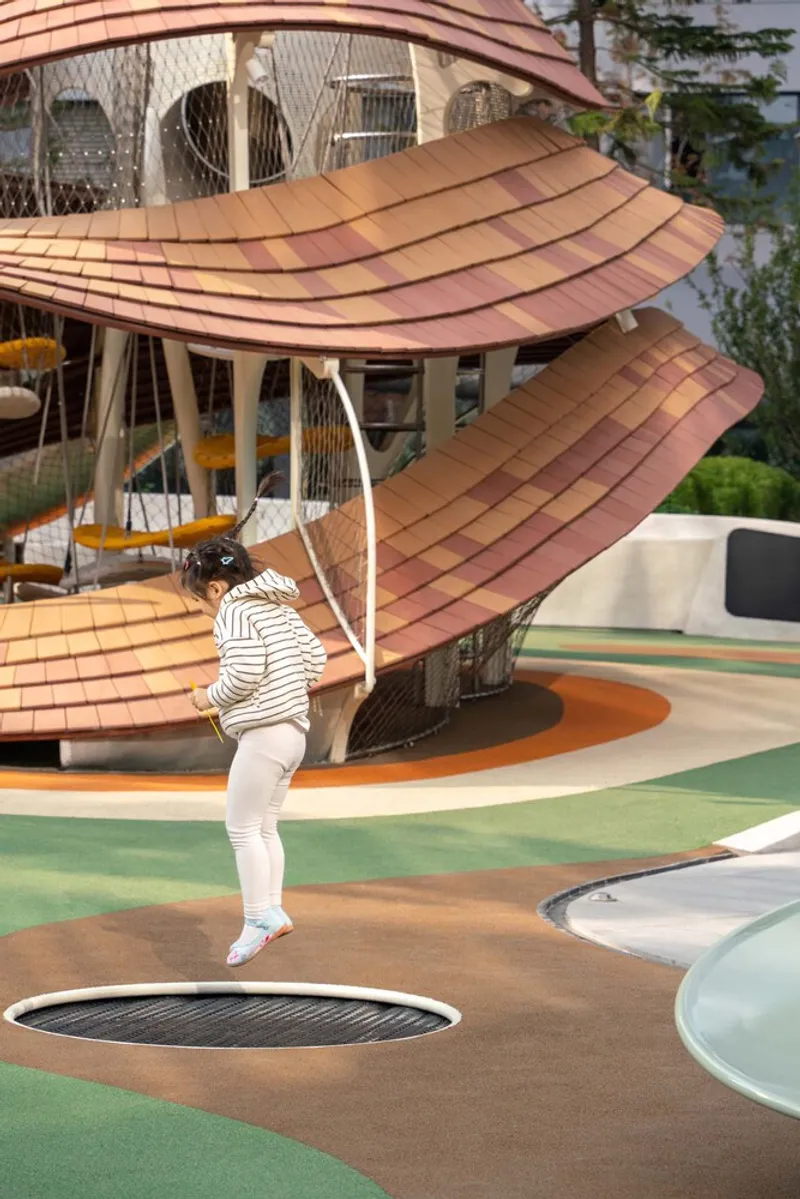
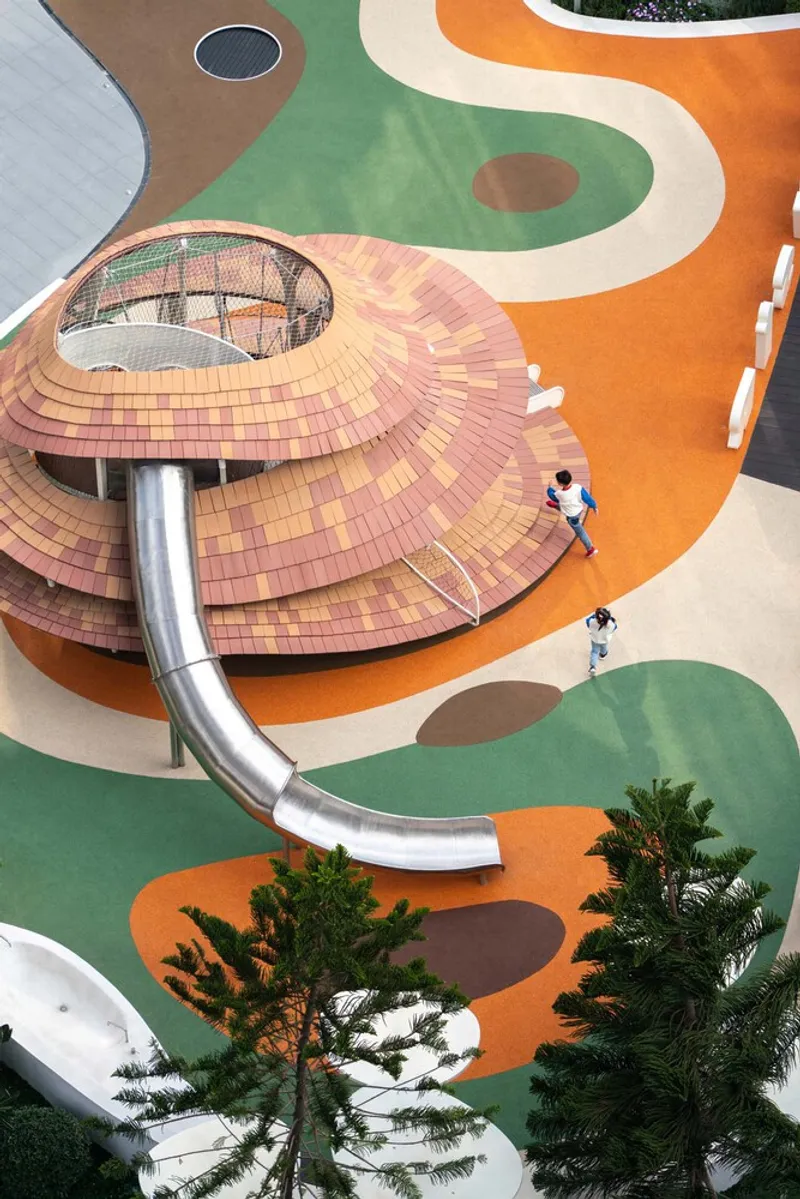
The three-layer wooden tile roof was engineered using Ameba’s progressive optimization algorithm, achieving optimal load distribution while minimizing space consumption. The structural system was simplified to enhance efficiency without compromising material strength, demonstrating a careful balance between cost, durability, and spatial freedom.
Materiality and Craftsmanship
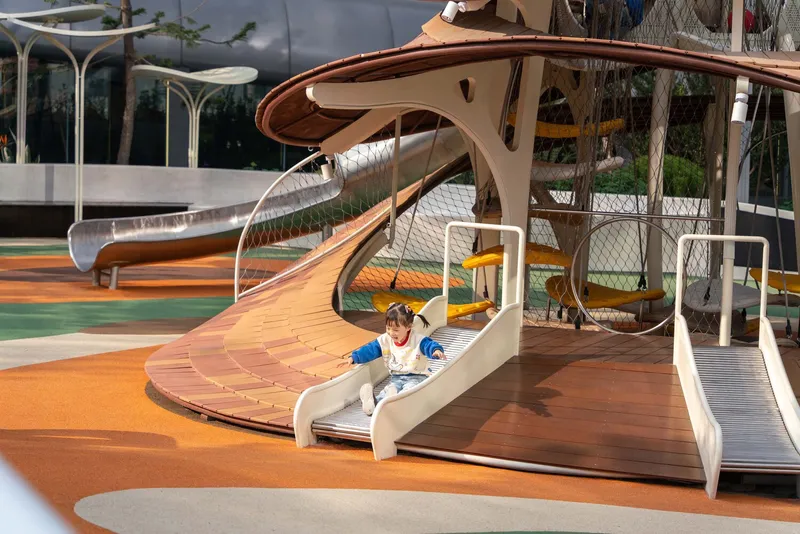
Outdoor materials prioritize safety, durability, and tactile engagement. High-resistant bamboo boards were used for all surfaces in contact with children, providing natural texture and longevity. Complex curves were realized by dividing hyperbolic surfaces into constructible segments, allowing precise fabrication while maintaining the visual elegance of the design.
Spatial Experience and Play Diversity
The layout features bubble-shaped micro-spaces that echo surrounding terrain arcs, creating semi-open, sheltered play areas. This design encourages children to explore at their own pace, fostering physical, cognitive, and social development. Parents enjoy spaces that support comfort and observation, enhancing family bonding and interactive experiences.
Coexistence with Nature and Urban Life
By merging terrain, vegetation, and play structures, the D10 Jungle Planet-themed site reduces the visual dominance of urban infrastructure. The project accommodates all ages, offering nature-connected leisure areas for adults while supporting stimulating, safe environments for children. This integration of natural landscapes within a dense cityscape reflects Xisui Design’s commitment to ecological sensitivity, playful innovation, and community wellbeing.
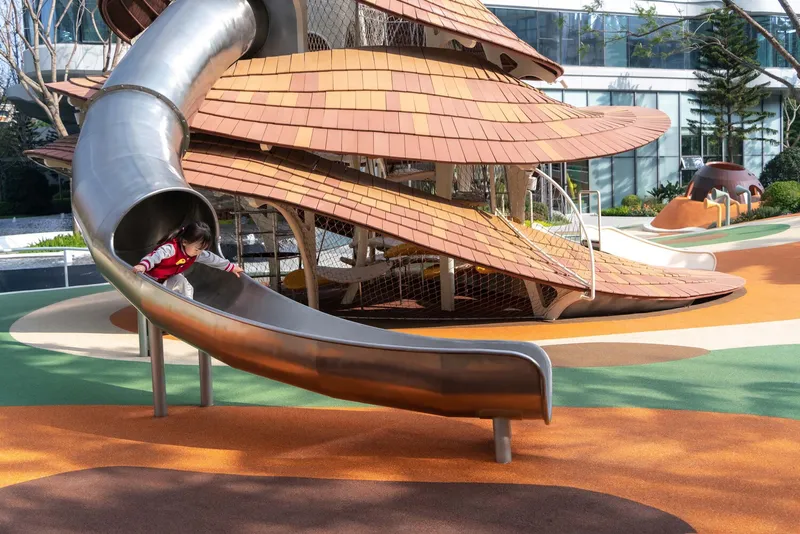
Conclusion Jungle Tribe Recreational Space demonstrates how urban recreational design can harmonize nature, architecture, and social engagement. Through innovative materials, thoughtful spatial planning, and child-centered design, it creates a holistic, multi-generational environment where play, relaxation, and family interaction coexist seamlessly.
All photographs are works of
Guochang Liu



Popular Articles
Popular articles from the community


Riyadh For All: Intergenerational Urban Design for Active Aging in Rabat
Riyadh For All reimagines urban design in Rabat with intergenerational co-living, adaptive courtyards, and Moroccan cultural exchange today.

Co-life: Sustainable Architecture for Age-Friendly Community Living
Co-life reimagines sustainable architecture for seniors through courtyards, rammed earth, shared gardens, and spaces designed for belonging.

Play: Fragments of Their World
Familiar architecture becomes modular playground design, creating safe spaces where displaced children can learn, connect, imagine and play.

Hill & Cross Opera: Sculptural Opera House Architecture Shaped by Tallinn’s Landscape and Identity
Hill & Cross Opera reimagines opera house architecture in Tallinn through its sculptural hill, civic plaza, glass wave and a luminous cross.


Similar Reads
You might also enjoy these articles

FAMM Arquitectura Organizes Ten Villas Around Courtyards and Jungle in Nosara, Costa Rica
El Molino pairs two elongated volumes with deep overhangs and timber louvers to build a compact coastal community five minutes from the beach.
Oscar Niemeyer's Ibirapuera Park Pavilions Define São Paulo's Cultural Identity in Concrete and Curve
A constellation of modernist volumes set within São Paulo's most important urban park, conceived for the city's 400th anniversary in 1954.
How Henri Picq's 1889 Paris Pavilion Traveled 11,000 Kilometers to Become Santiago's Artequín Museum
A prefabricated iron and glass pavilion built for the Paris Universal Exposition found a second life as a children's art museum in Chile.
Sanjay Puri Architects Wraps a Jaipur Office Tower in Capsule-Shaped Green Buffers
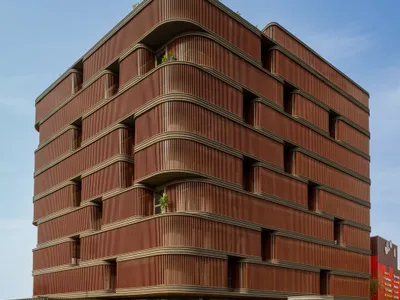
A nine-level climate-responsive workplace near Jaipur Airport uses stacked planter terraces and aluminium screens to fight 40°C heat.


Explore Architecture Competitions
Discover active competitions in this discipline



Challenge to reimagine the Iron Throne


Photograph architecture without architects


Illustrate the lost glory of Angkor Wat - Render Challenge


Design challenge to reuse E-waste
Comments (0)
Please login or sign up to add comments
No comments yet. Be the first to comment!