

Kaattu Veedu Guesthouse by studioXS: A Sustainable Haven in Hosur, India
Kaattu Veedu Guesthouse by studioXS in Hosur blends earth-centric design, heritage elements, natural materials, courtyards, and sustainable architecture seamlessly.


Nestled in the serene landscapes of Hosur, Karnataka, Kaattu Veedu Guesthouse by studioXS is a testament to architecture that harmoniously blends sustainability, heritage, and modern living. Completed in 2023, this 9,500 ft² guesthouse emerges organically from its surroundings, forming a seamless dialogue between built form and nature. Designed by lead architects Shivani Kumar and Sucheth Palat, with photography by Vivek Eadara, the project exemplifies a thoughtful, site-responsive approach to contemporary residential design.

Contextual Design and Site Integration
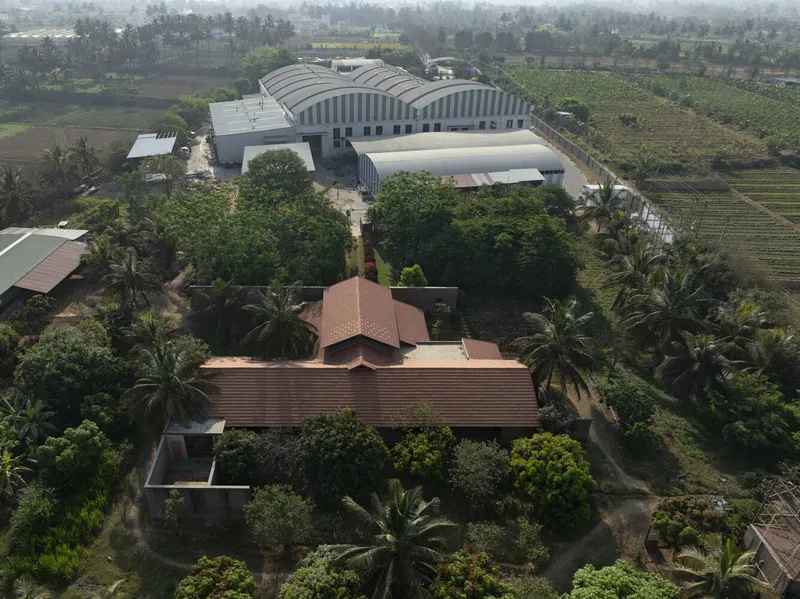
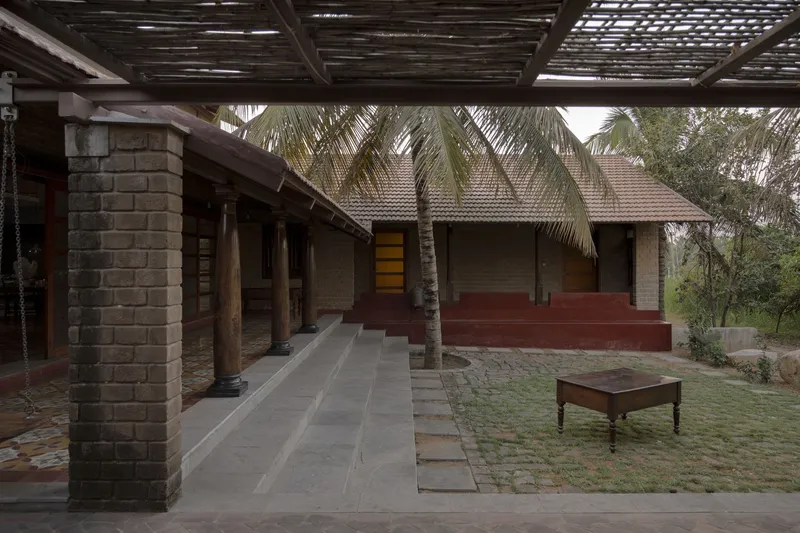
The guesthouse is part of a larger master plan that includes a factory, an orchard of coconut and fruit trees, and open landscape. The design process was deeply influenced by the existing site features. The linear arrangement of coconut trees informed the structure’s layout, inspiring long, flowing walls that extend naturally from the site’s grid. By preserving these trees, the house rises gently from the ground, akin to an anthill, creating an organic presence that respects its environment.
The orientation and spatial configuration allow the guesthouse to exist in quiet harmony with its surroundings while maintaining privacy from the adjacent industrial space. This integration of architecture and landscape is a hallmark of sustainable design in India, where natural context guides construction.

Earth-Centric Architecture and Materiality
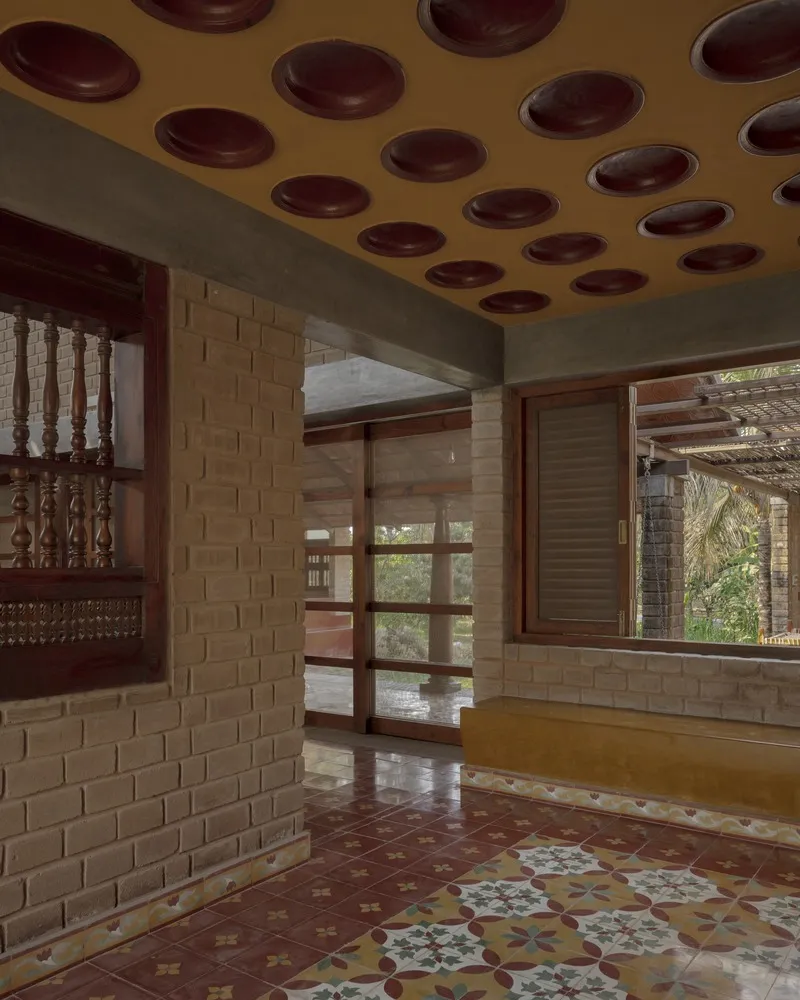
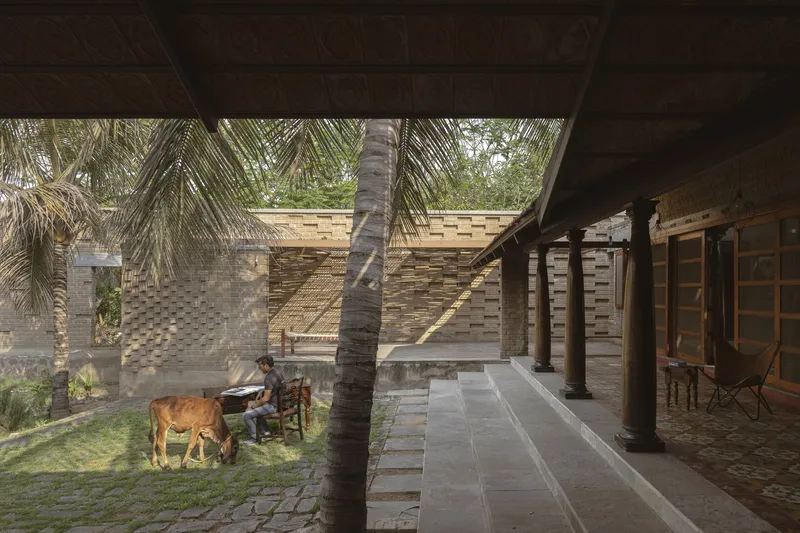
Sustainability is at the heart of Kaattu Veedu Guesthouse. The walls, constructed from earth blocks made from the site’s soil, appear to grow directly from the earth, blending seamlessly into the landscape. Their staggered arrangement adds rhythm to the façade, creating visual texture while maintaining privacy. These walls not only define internal spaces but also ensure a smooth circulation through the home, offering protection from noise and activity from the nearby factory.

Inside, natural materials dominate. Handmade Athangudi tiles, Kotah stone, and granite flooring provide tactile richness while reinforcing a connection to the local context. The living area, flanked by courtyards, can open fully to merge with the outdoor spaces, echoing traditional South Indian home designs and emphasizing a strong relationship with the earth.

Heritage and Craftsmanship
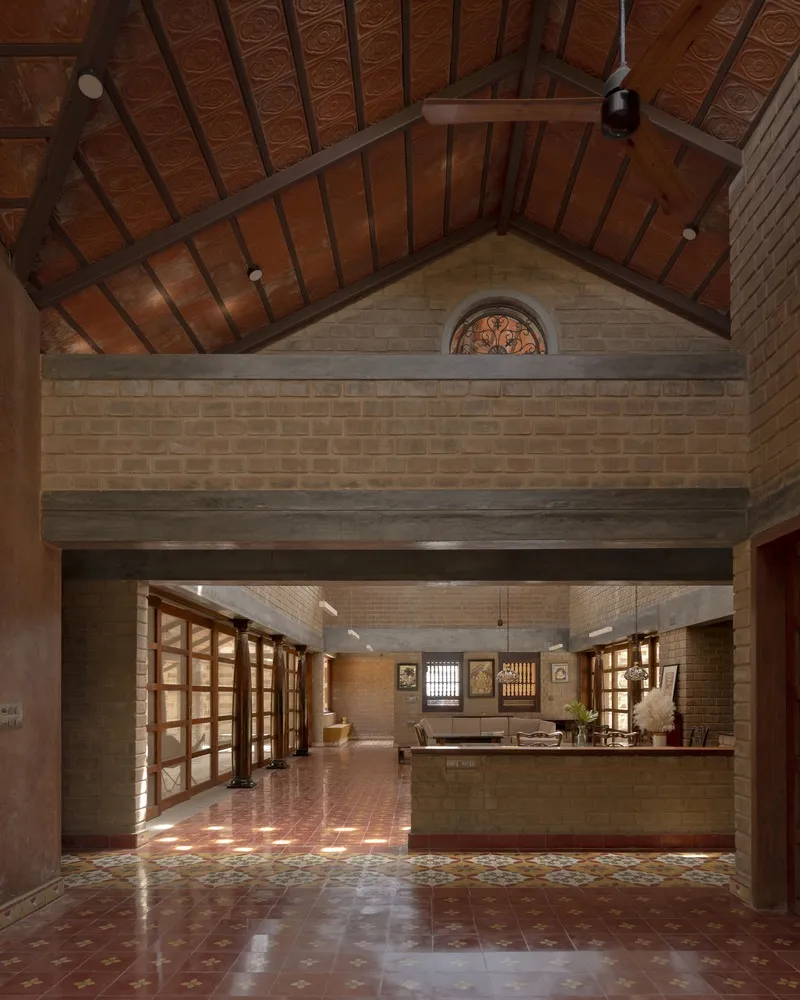
Kaattu Veedu Guesthouse celebrates heritage through the incorporation of restored architectural elements. The verandahs are supported by wooden columns salvaged from historic houses in Karaikudi, Tamil Nadu. Similarly, the main doors and fixed windows carry a sense of continuity and craftsmanship, blending historical authenticity with modern functionality. The double Mangalore tiled roof enhances insulation, while flat roofs with terracotta pot infills reduce concrete usage and further contribute to sustainable construction.

Light, Ventilation, and Climate Responsiveness
Natural ventilation and climate-responsive design are central to the guesthouse’s architecture. Double-height spaces in living, dining, and bedroom areas ensure cooling through natural air circulation, while lower-ceiling areas benefit from terracotta-infused flat roofs. The deliberate avoidance of plaster preserves the earthy texture of the mud blocks, with lime plaster applied selectively.
Light plays an artistic role throughout the home, filtering through open spaces to create dynamic interplay between shadows and sunlit areas. This approach not only enhances the aesthetic appeal but also ensures comfort and warmth, reinforcing the sense of tranquility and well-being for the occupants.
A Timeless Architectural Narrative
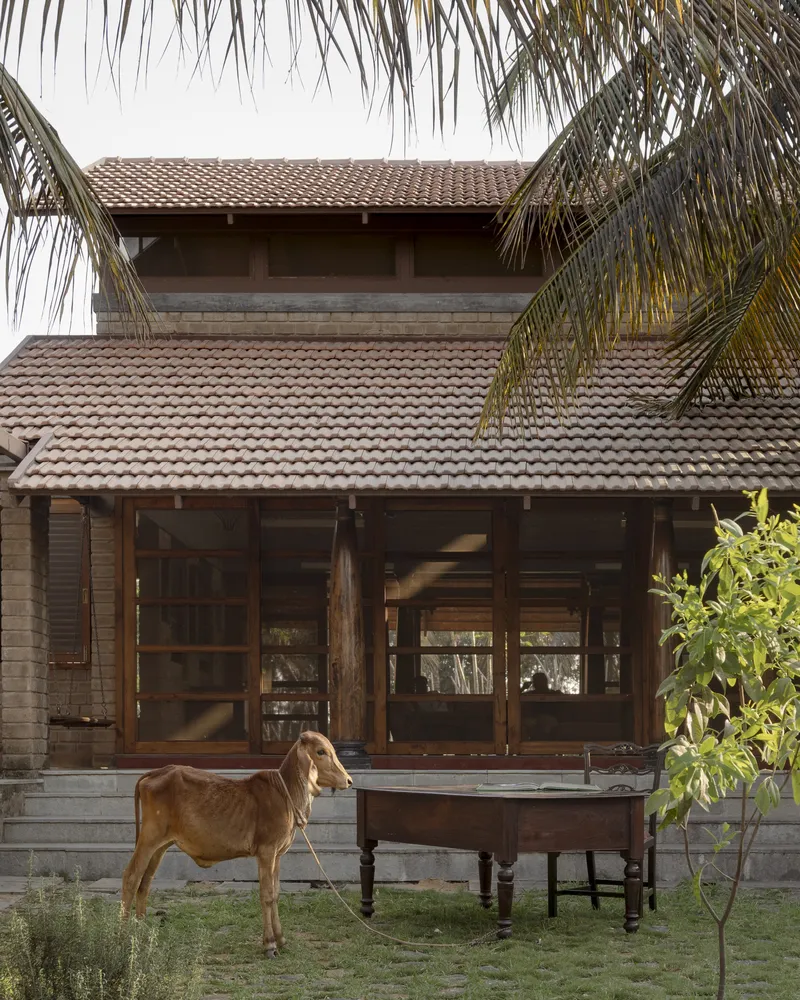
Kaattu Veedu Guesthouse is a profound example of architecture that transcends time. It responds to its context, respects heritage, embraces sustainability, and creates a serene, inviting environment. The careful orchestration of natural materials, light, ventilation, and historical elements makes this guesthouse more than a building: it is a living, breathing narrative of place, craft, and nature.

All photographs are works of
Vivek Eadara


Popular Articles
Popular articles from the community


Gonçalo Grácio Refurbishes a 104 m² House Inside the Medieval Walls of Castelo de Vide
In Castelo de Vide, Portugal, a compact whitewashed house is reworked with rough lime and clay plaster, deep window niches and a small rooftop terrace.

Peris and Toral.arquitectes Wrap 54 Social Rental Homes in Besòs Around a Brick-Screened Atrium
In Barcelona's Besòs district, a perforated brick block turns its shared walkways into a light-filtering atrium for 54 social rental homes.

Charlene Koetz Arquitetura Lifts a Glass House on Piers Above a Mossy Forest Slope in Gramado
In Vila Prinstrop, Brazil, a 455 m² house pairs black-framed glazing with board-formed concrete, rough stone and a forest it barely disturbs.

Madras Spaces Turns a Tight Rural Plot near Tiruchirappalli into an Inward-Looking Courtyard House
A 92 m² farmhouse in V. Thuraiyur, Tamil Nadu, built from load-bearing brick and reclaimed tile, that hides its openness behind a perforated wall.

Similar Reads
You might also enjoy these articles

Hodi-Mandai Geram
Project Function: Preservation and revitalization of the Intangible heritage and socio-spatial identity of the Hodi by Housing, Cultural Memory Center, Sacred Grove, landscape, local tourism economy

Olio Towers: A Mid-Rise for Performers That Fuses Housing, Rehearsal, and Stage
Located blocks from Houston's Theater District, this modular tower stacks living units around a central performance atrium.
Oasis: Modular Green Housing Carved into Dhaka's Urban Fabric
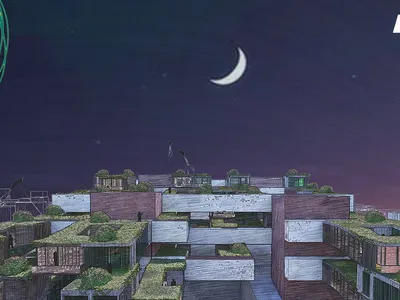
A shortlisted Plugin Housing entry reclaims unauthorized settlements in Dhaka with stepped concrete volumes, green roofs, and ventilation-driven design.

Black Hole: A Floating Megastructure for the Post-Physical Era
Emiliano Mazzarotto envisions a spherical, self-scaling arena where e-sports, digital hotels, and holographic stadiums replace traditional public space.

Explore Uttarakhand Architecture Competitions
Discover active competitions in this discipline

Submit a world, not a render

Studio work deserves a jury

The International Standard for Design Portfolios

The Global Benchmark for Architecture Dissertation Awards
Comments (0)
Please login or sign up to add comments
No comments yet. Be the first to comment!