
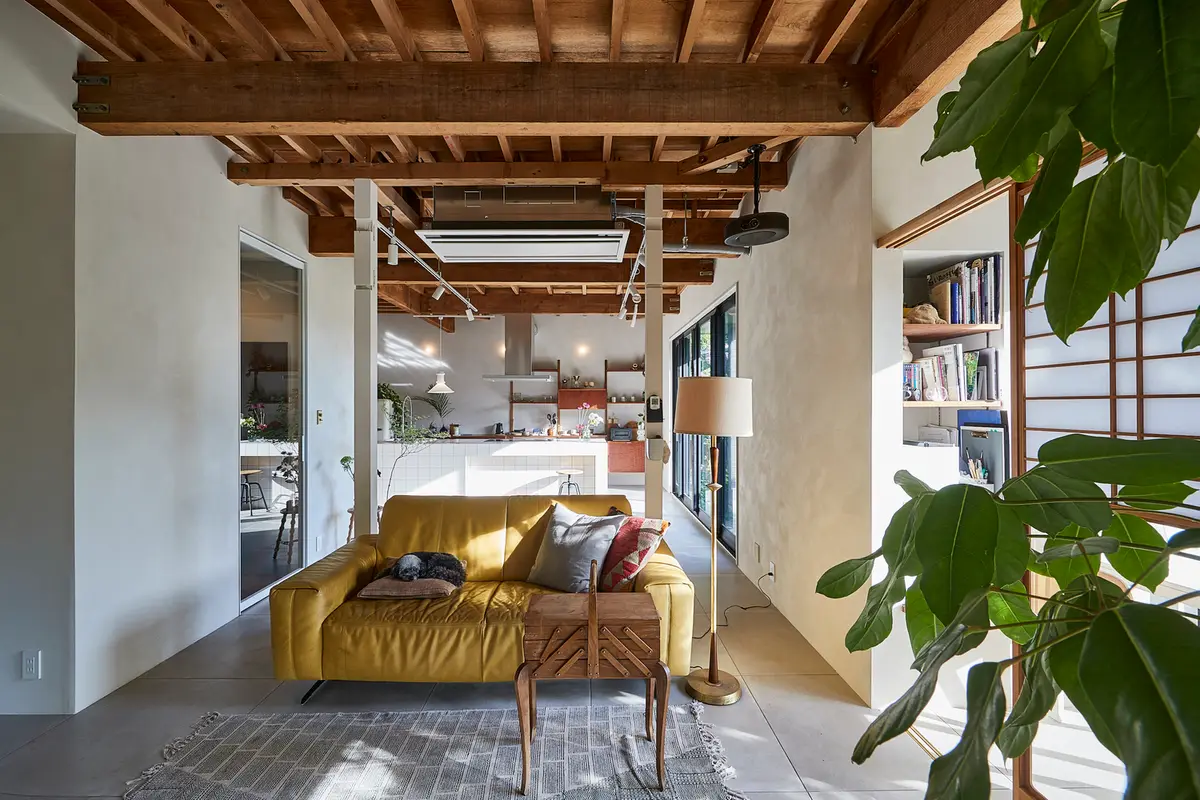
Kamakura House by ROOVICE: A Harmonious Renovation Rooted in Nature and Nostalgia
Kamakura House by ROOVICE is a serene renovation blending traditional Japanese design with modern functionality, light, and open living spaces.


Revitalizing a 1991 Hillside Home in Historic Kamakura
Set amidst the scenic hills of Kamakura’s Ōmachi district, Kamakura House by ROOVICE is a thoughtfully renovated residence that merges traditional Japanese aesthetics with contemporary spatial logic. Originally constructed in 1991, the house suffered from a fragmented layout that separated the kitchen, living, and tatami rooms, creating inefficient circulation and underutilized spaces.
The architectural renovation redefined the spatial experience by eliminating unnecessary partitions, emphasizing fluidity, natural light, and multifunctional design. Surrounded by lush landscapes on a hillside plot, the updated residence now captures the harmony between built form and environment — a hallmark of modern Japanese residential architecture.
Opening the Floor Plan: From Compartmentalized to Connected
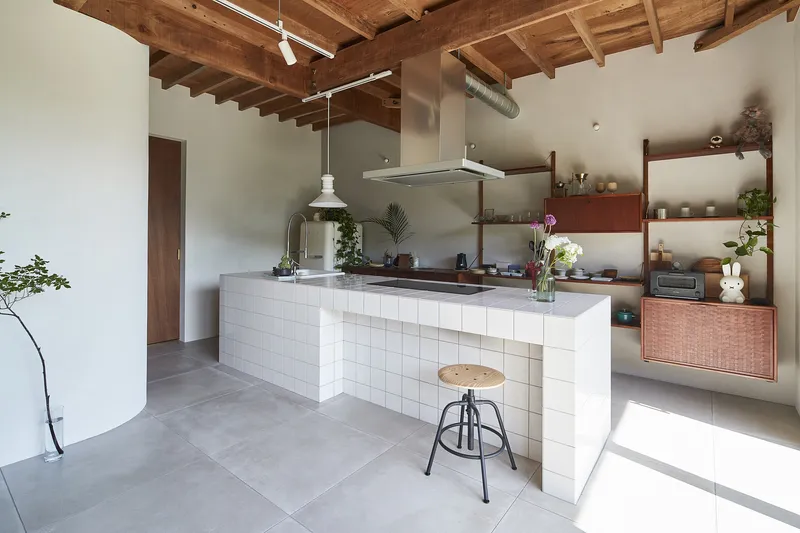
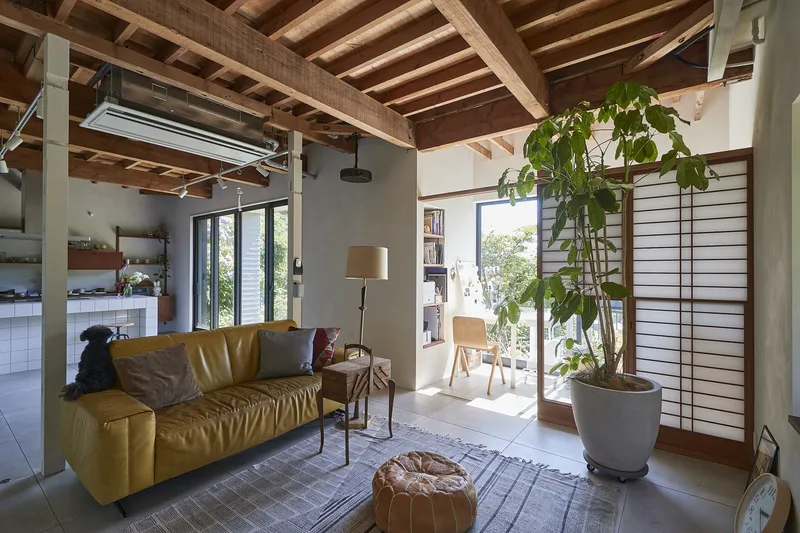
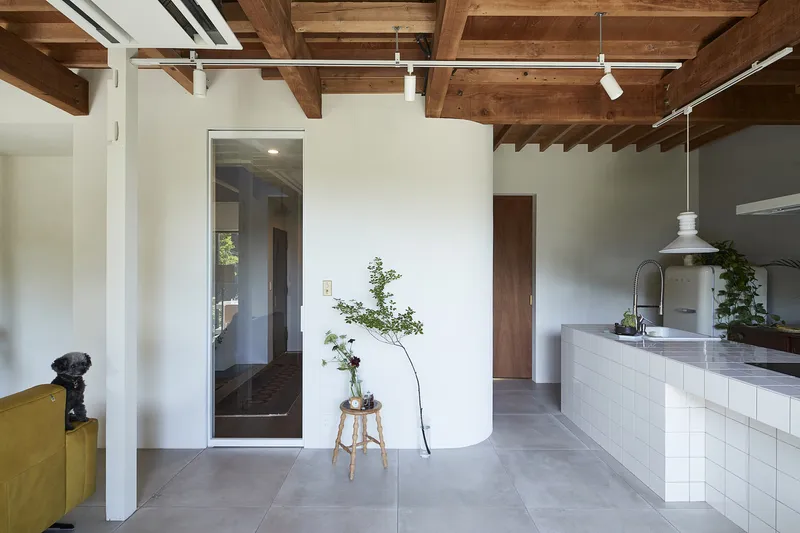
The core of the renovation lies in the transformation of the first floor, where ROOVICE removed dividing walls to unify the living and Japanese-style rooms. This strategic intervention resulted in a generous, open-plan living space that stretches north to south, enhancing visual connectivity and natural light distribution.
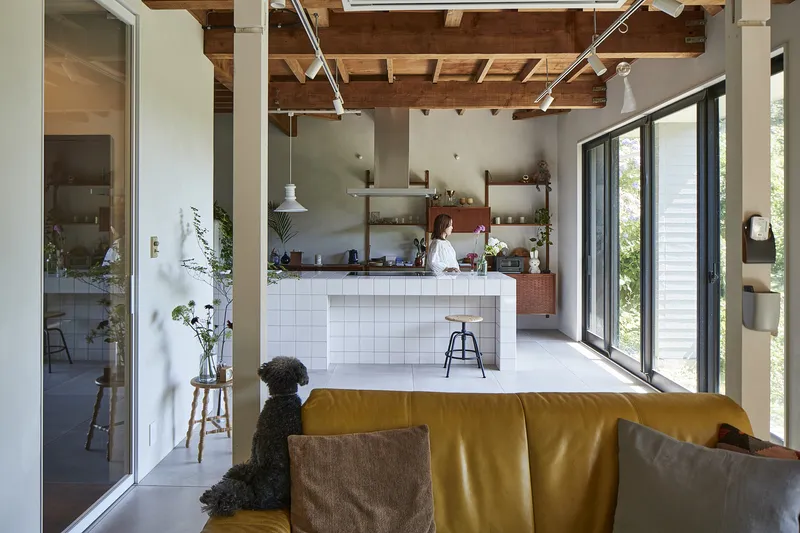
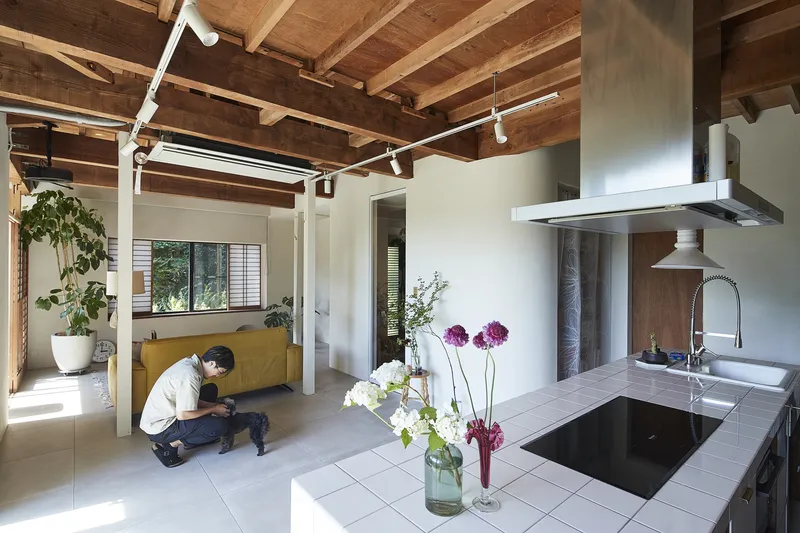
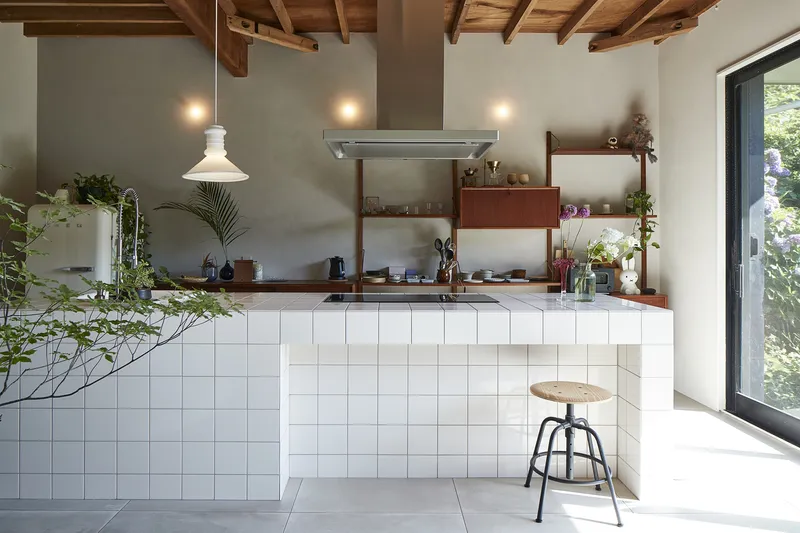
A new kitchen island was installed at the south end of the home, and the original kitchen was cleverly repurposed as a hobby confectionery area. The island now serves as a central gathering point for the family, doubling as a secondary dining area and offering tactile interaction with traditional design cues.
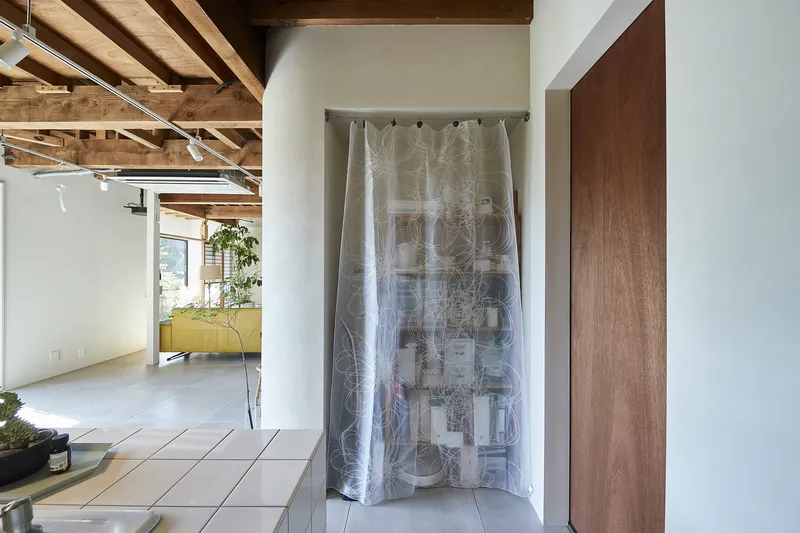
Rounded plasterboard edges soften circulation paths, while wide west-facing openings fill the interior with sunlight — allowing the architects to close off two redundant south-facing windows in favor of additional shelving space.
Material Warmth and Architectural Memory
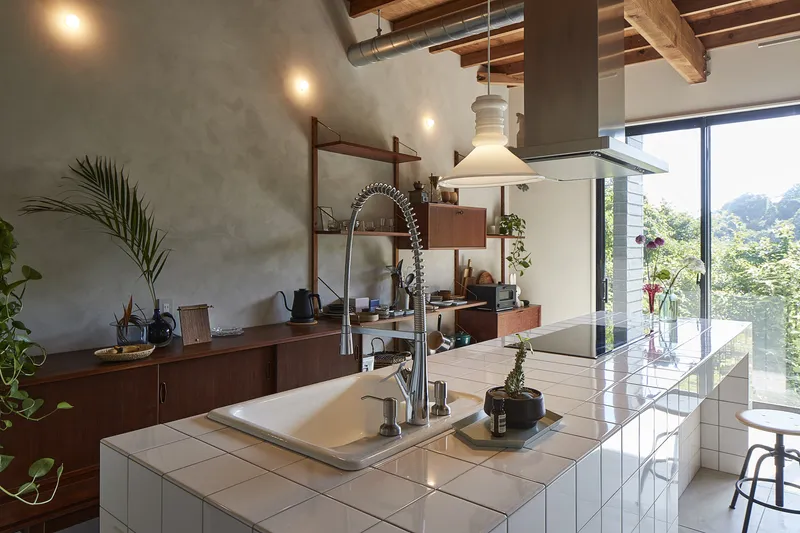
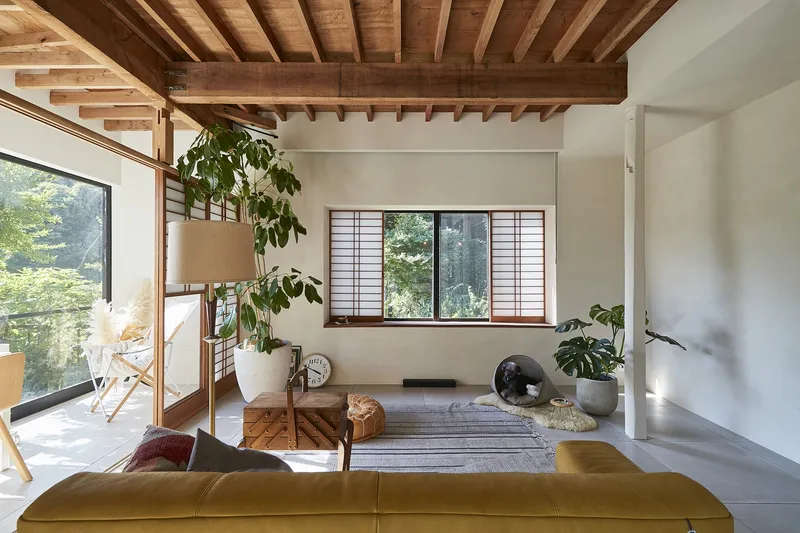
Preserving the memory of the original structure was essential to the renovation’s philosophy. The design celebrates the house’s age through intentional exposure of the wooden beam structure, revealing craftsmanship that had long been concealed. To complement this authenticity, large-format ceramic tiles with a reflective surface—evocative of water—were chosen for the flooring, echoing the timber’s tone and engaging the interplay of light.
A key design highlight is the kitchen counter, which features nostalgic 10x10 cm white tiles reminiscent of the Japanese modern era. This tactile detail brings a subtle vintage charm to the otherwise modernized space.
Revamping the Tatami Room and Engawa for Modern Living
The former Japanese-style tatami room underwent one of the most dramatic changes. By integrating the storage space into the room and harmonizing material finishes with the adjacent living space, the area now feels significantly more expansive and versatile.
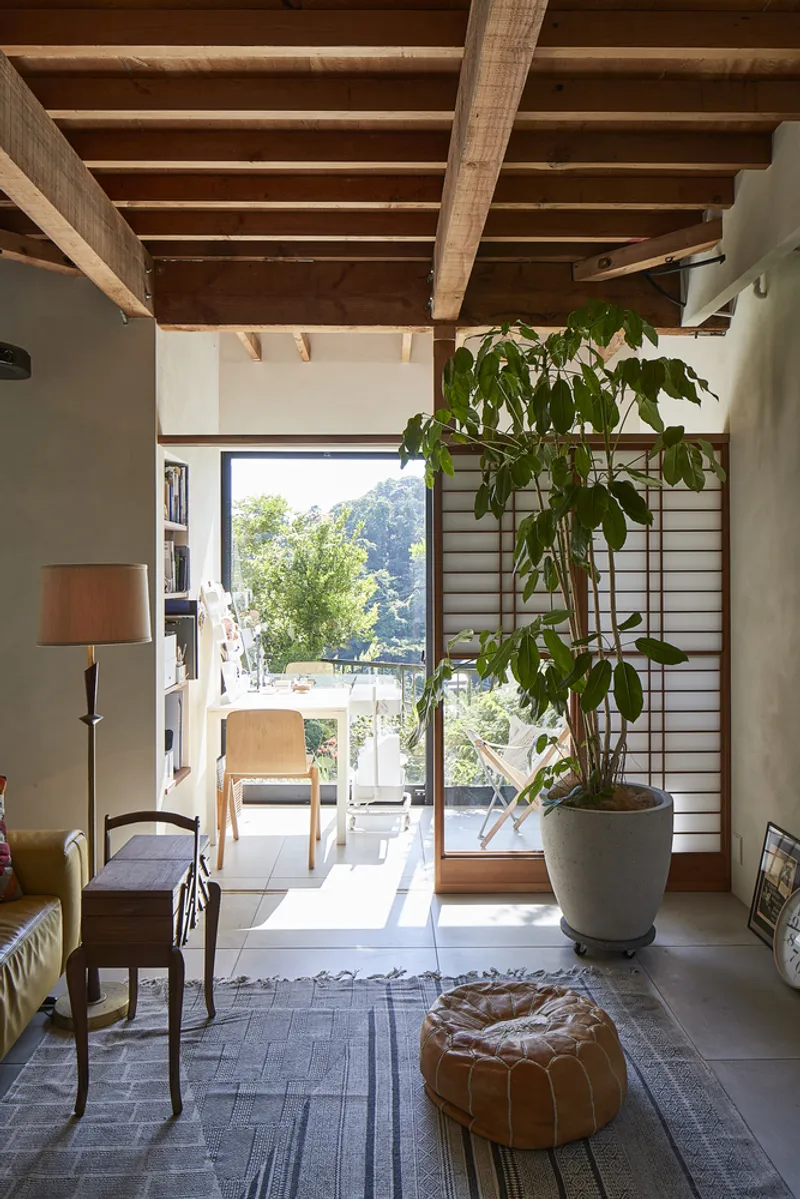
The engawa (内縁, Uchien) — traditionally a narrow veranda-like sunroom — was reimagined as a creative reading nook with a newly installed bookshelf. Separated by original Yukimi Shoji (snow-viewing paper screens), the space can be closed off to create a serene, light-filled hideaway.
A Modest, Minimalist Approach to the Upper Level
While the first floor saw substantial transformations, the second-floor renovation embraced a light-touch strategy due to budget limitations and the relatively good condition of the existing structure. Minimal yet thoughtful changes include:
- Wooden flooring in the toilet area, matching the hallway and bedroom finishes
- A DIY-woven texture floor in the southwest studio, completed by the homeowners
- New darker sliding doors in the Japanese-style bedroom to align better with the overall material palette
These interventions reinforce the home’s cohesive materiality while honoring its layered history.
A Sensitive Dialogue Between Old and New
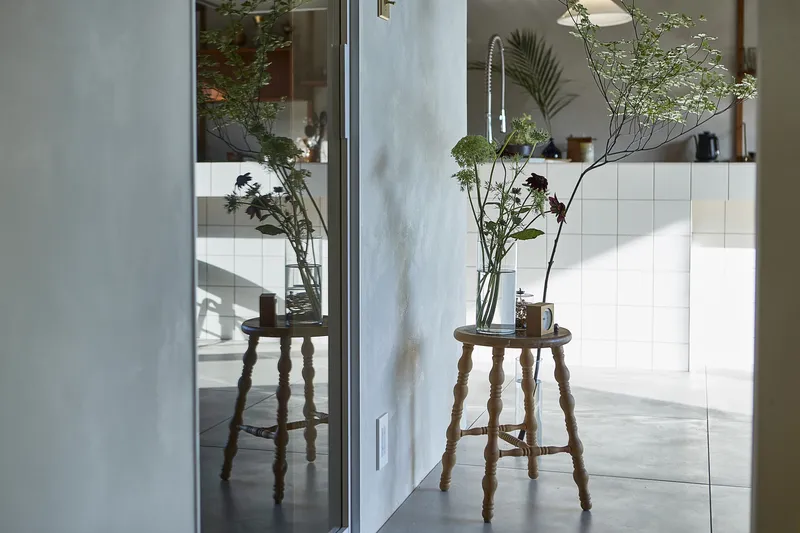
Kamakura House by ROOVICE exemplifies a sensitive approach to residential renovation in Japan, where modern living needs are thoughtfully integrated with traditional architectural elements. By embracing exposed structure, tactile materials, and contextual minimalism, the project offers a warm, adaptable, and character-rich home — firmly rooted in its natural and historical surroundings.
All Photographs are works of Akira Nakamura


Popular Articles
Popular articles from the community


Conexión: Biophilic Design Reimagines High-Rise Living in Hong Kong
Conexión reimagines high-rise living in Hong Kong through biophilic design, green facades, shared spaces, daylight, water and nature within.

ALGAL REALM: A Bio-Integrated Lunar Habitat Design for Life Beyond Earth
ALGAL REALM reimagines lunar habitat design with algae-powered life support, 3D-printed regolith, and vertical living for a lunar future.

The Musturak Paradise: Senior Living Architecture for a Connected Future in Temara, Morocco
The Musturak Paradise reimagines senior living architecture in Temara via private homes, social spaces, culture, community, and shared care.

The Ocean Hive: Sustainable Architecture for a Self-Sufficient Civilization at Sea
The Ocean Hive imagines sustainable architecture at sea, where modular habitats, algae, wave power and ocean waste sustain a growing colony.

Similar Reads
You might also enjoy these articles


Hodi-Mandai Geram
Project Function: Preservation and revitalization of the Intangible heritage and socio-spatial identity of the Hodi by Housing, Cultural Memory Center, Sacred Grove, landscape, local tourism economy


Olio Towers: A Mid-Rise for Performers That Fuses Housing, Rehearsal, and Stage
Located blocks from Houston's Theater District, this modular tower stacks living units around a central performance atrium.

Oasis: Modular Green Housing Carved into Dhaka's Urban Fabric
A shortlisted Plugin Housing entry reclaims unauthorized settlements in Dhaka with stepped concrete volumes, green roofs, and ventilation-driven design.

Black Hole: A Floating Megastructure for the Post-Physical Era
Emiliano Mazzarotto envisions a spherical, self-scaling arena where e-sports, digital hotels, and holographic stadiums replace traditional public space.

Explore Housing Competitions
Discover active competitions in this discipline

Challenge to reimagine the Iron Throne

Photograph architecture without architects

Illustrate the lost glory of Angkor Wat - Render Challenge

Design challenge to reuse E-waste
Comments (0)
Please login or sign up to add comments
No comments yet. Be the first to comment!