
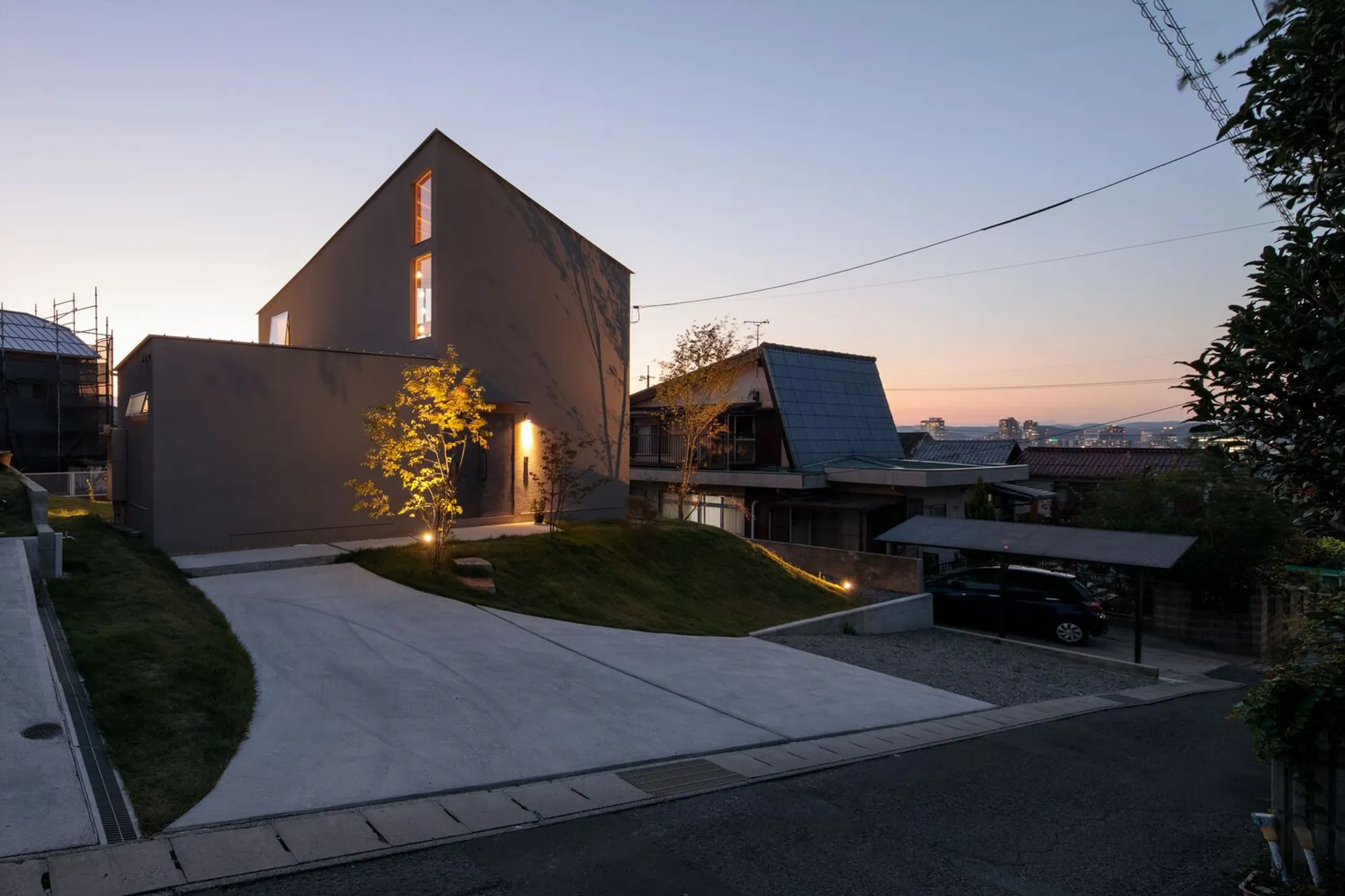
KDH2 House by Noesis Architecture & Design: A Harmonious Blend of Space, Light, and Family Living
KDH2 House in Okayama blends Japanese “Ma” philosophy, open-plan living, natural light, and wood materials for seamless family and community connection.


Located on the serene outskirts of Okayama, Japan, the KDH2 House by Noesis Architecture & Design is a masterful exploration of spatial connectivity, light, and human experience. Designed in 2020 by lead architect Kazuaki Ogawa, this compact two-story residence spans 60 m², tailored for an architect and his family. Through its thoughtful design, the house emphasizes the Japanese concept of “Ma”, which celebrates the seamless interplay between moments and spaces, creating a dwelling that is both intimate and expansively connected to its surroundings.
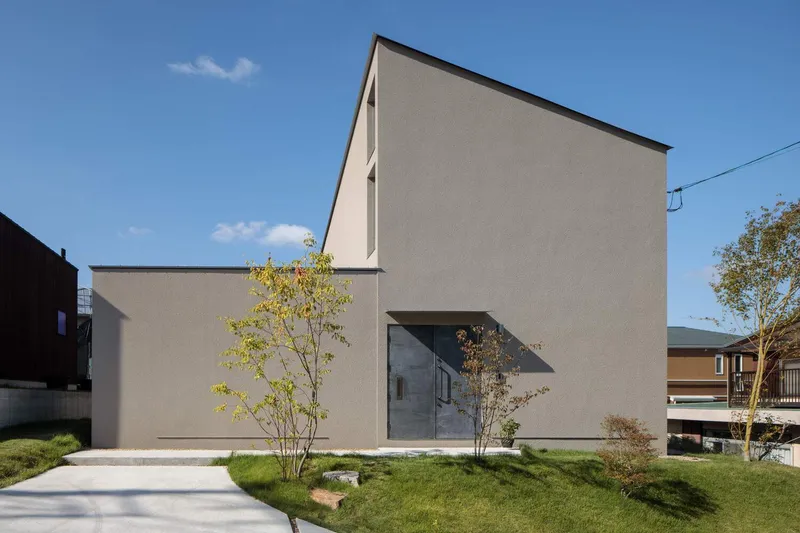
Spatial Flow and Connectivity
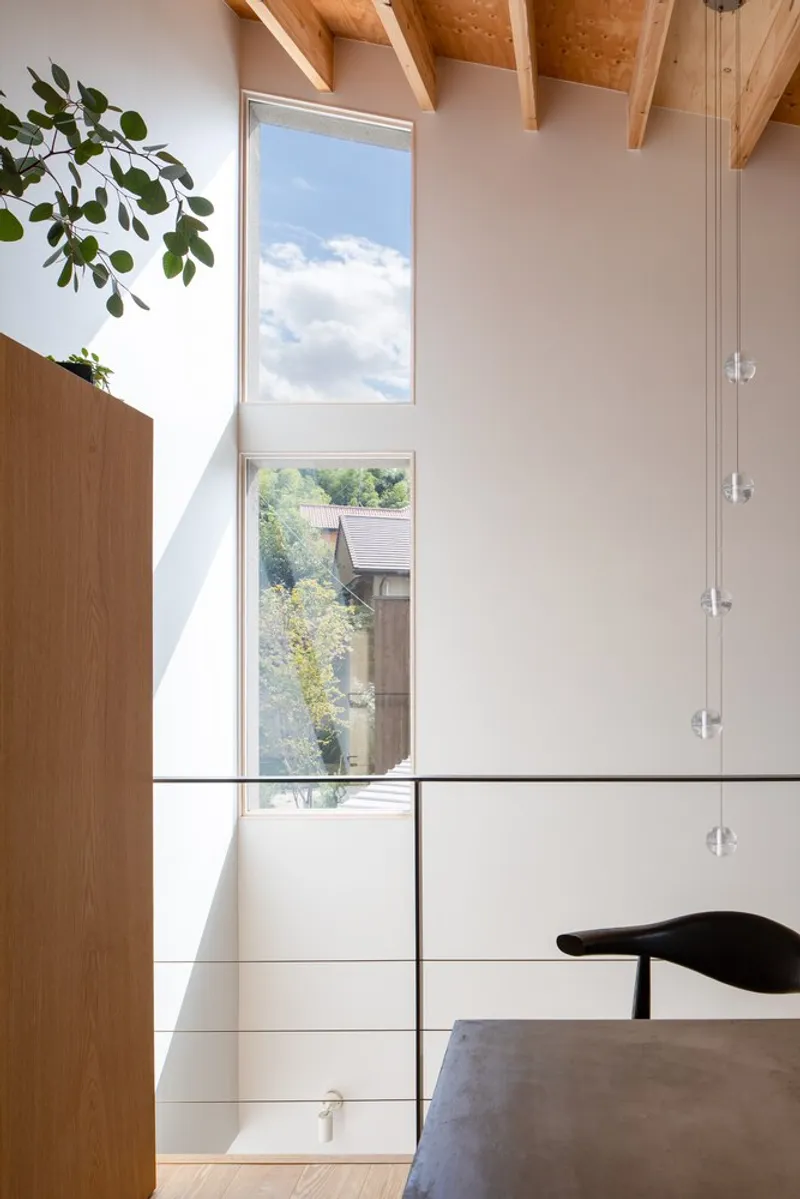
In contrast to conventional homes that often prioritize privacy through solid walls, the KDH2 House focuses on a fluid connection between interior spaces and the external environment. Its layout encourages visual and perceptual continuity, where the transition between private and public realms is experienced gradually. Carefully positioned apertures create a sequence of views, initially indirect and subtle, that guide the occupants to gradually engage with the city and neighborhood beyond. This subtle choreography of light and sight enhances both visual comfort and perceptual awareness, fostering a richer spatial experience.
The design also works reciprocally: the openings of the house allow glimpses of family life to the outside world, fostering a sense of community connectivity and inviting human interaction between the home and its neighbors. This thoughtful balance between openness and privacy cultivates an environment where family life and urban context coexist harmoniously.
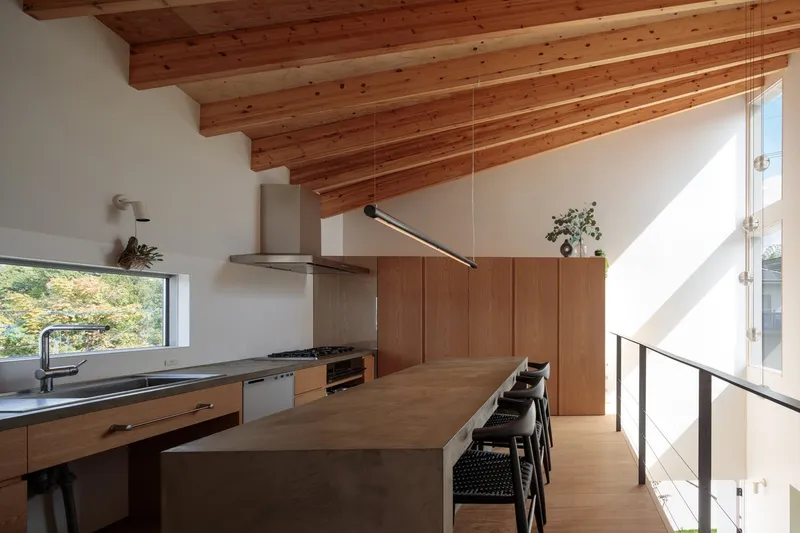
Open Plan Living and Interior Design
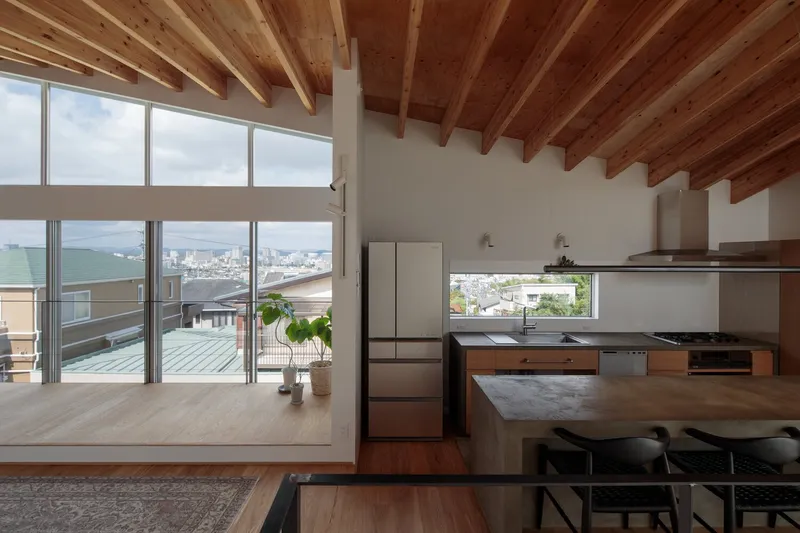
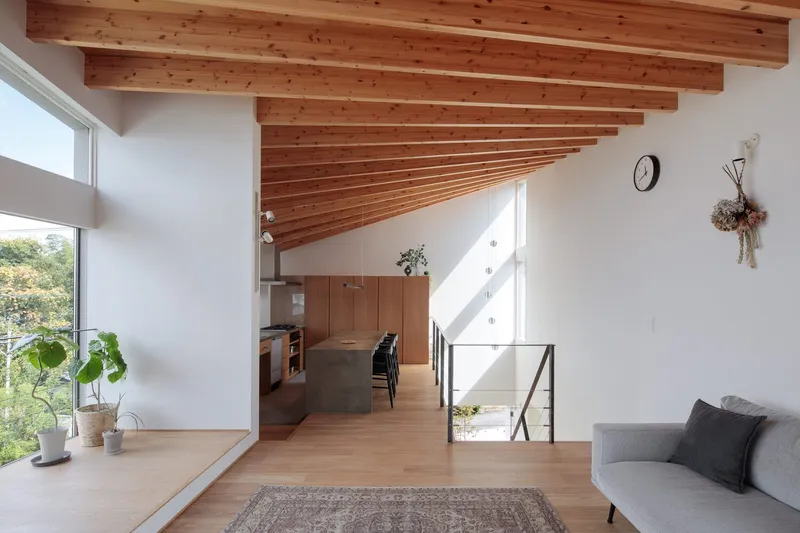
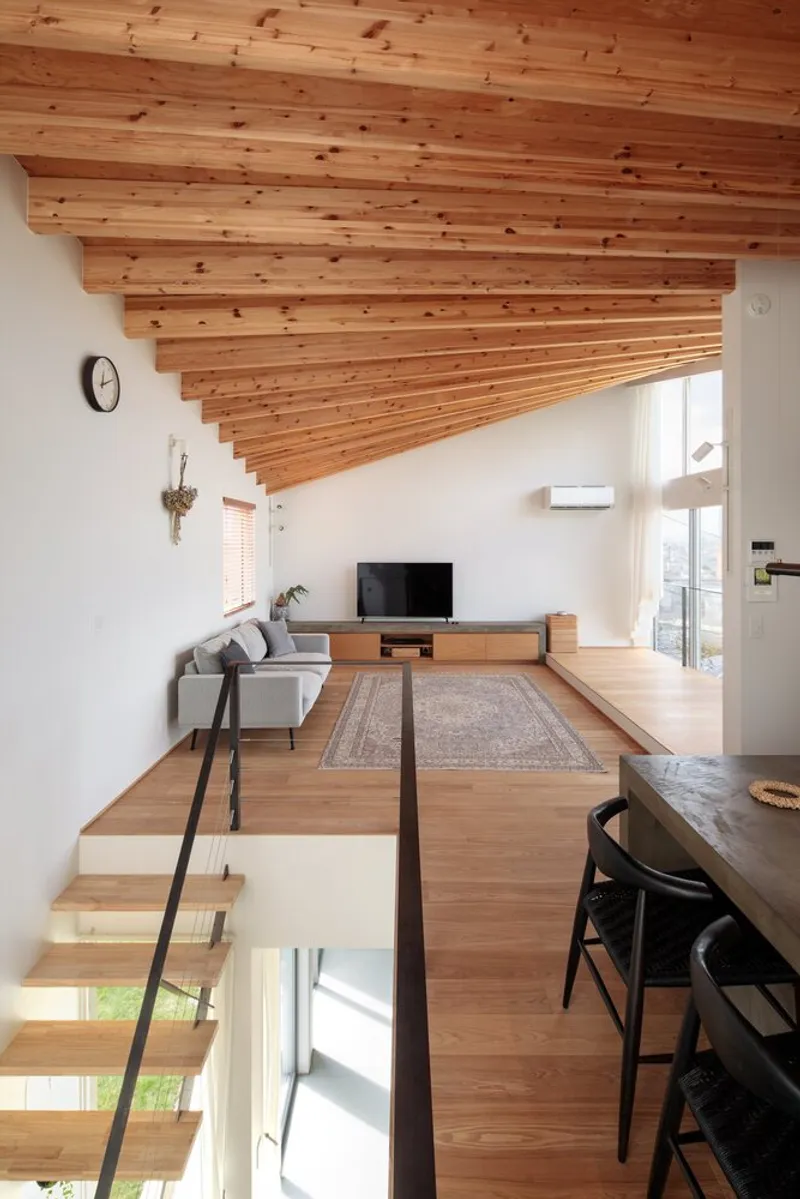
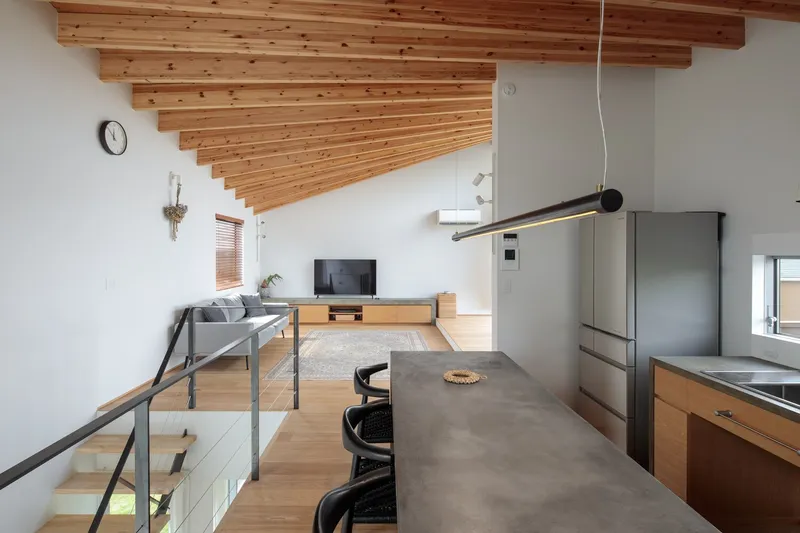
The interior of KDH2 House is conceived as a continuous open space that links the ground and upper floors. The second-floor ceiling undulates gently, directing attention toward the panoramic city views while simultaneously anchoring the family activity areas. Instead of traditional doors, subtle gestures and spatial cues delineate areas within the home, allowing sounds, movement, and presence to flow freely between rooms.
The house’s L-shaped footprint ensures that each room maintains a strong connection to the garden, reinforcing a biophilic design approach where indoor and outdoor spaces merge seamlessly. This careful orchestration of space, light, and materials results in a home that feels expansive, yet personal and intimate.
Materiality: Timeless and Sustainable
The material palette of the KDH2 House embraces simplicity and longevity. Wood and stucco form the backbone of the design, selected not only for their aesthetic warmth but also for the way they gracefully age over time. These materials embody the passage of family life, acquiring character and patina as the household grows, creating a home that evolves alongside its inhabitants.
Architectural Significance
By integrating spatial connectivity, community interaction, and natural light, the KDH2 House transcends traditional residential design. It is a testament to Japanese residential architecture, blending cultural concepts like Ma with modern living needs. The residence is compact yet highly functional, demonstrating how thoughtful design can enhance everyday experiences and create a living environment that is simultaneously private, social, and connected to nature.
All photographs are works of Taiyo Watanabe



Popular Articles
Popular articles from the community


The Earth Pod: 3D Printed Homes for Resilient Refugee Communities
The Earth Pod reimagines refugee housing through 3D printed homes made from clay, combining resilience, self-sufficiency, and rapid shelter.

Co-Life: Senior Housing Design That Reconnects Older Adults With the City
Co-Life reimagines senior housing design through healing gardens, shared streets, workshops, and a sustainable community across generations.

Hill & Cross Opera: Sculptural Opera House Architecture Shaped by Tallinn’s Landscape and Identity
Hill & Cross Opera reimagines opera house architecture in Tallinn through its sculptural hill, civic plaza, glass wave and a luminous cross.

The Musturak Paradise: Senior Living Architecture for a Connected Future in Temara, Morocco
The Musturak Paradise reimagines senior living architecture in Temara via private homes, social spaces, culture, community, and shared care.


Similar Reads
You might also enjoy these articles

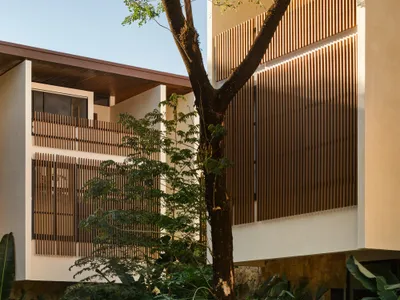
FAMM Arquitectura Organizes Ten Villas Around Courtyards and Jungle in Nosara, Costa Rica
El Molino pairs two elongated volumes with deep overhangs and timber louvers to build a compact coastal community five minutes from the beach.
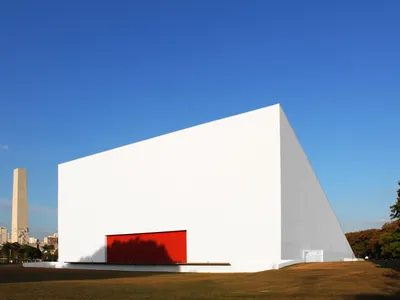
Oscar Niemeyer's Ibirapuera Park Pavilions Define São Paulo's Cultural Identity in Concrete and Curve
A constellation of modernist volumes set within São Paulo's most important urban park, conceived for the city's 400th anniversary in 1954.
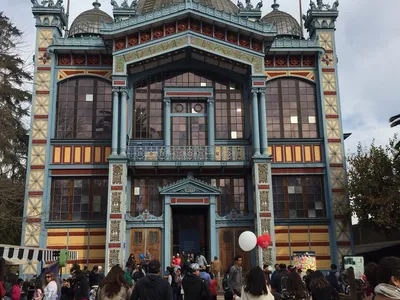
How Henri Picq's 1889 Paris Pavilion Traveled 11,000 Kilometers to Become Santiago's Artequín Museum
A prefabricated iron and glass pavilion built for the Paris Universal Exposition found a second life as a children's art museum in Chile.
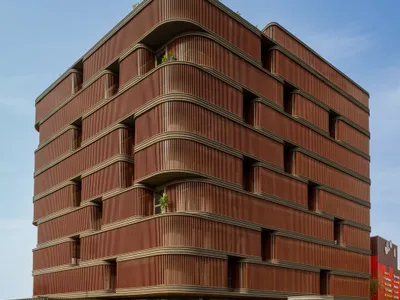
Sanjay Puri Architects Wraps a Jaipur Office Tower in Capsule-Shaped Green Buffers
A nine-level climate-responsive workplace near Jaipur Airport uses stacked planter terraces and aluminium screens to fight 40°C heat.

Explore Housing Competitions
Discover active competitions in this discipline



Challenge to reimagine the Iron Throne


Photograph architecture without architects


Illustrate the lost glory of Angkor Wat - Render Challenge


Design challenge to reuse E-waste
Comments (0)
Please login or sign up to add comments
No comments yet. Be the first to comment!