

Kildrummie House: A Sustainable Timber Retreat in High Range, Australia
Kildrummie House by Ink Architects Sydney is a sustainable timber pavilion in High Range, featuring passive solar design, hydronic heating, and indoor-outdoor living.


Nestled in the serene landscapes of High Range, approximately 100 km south-west of Sydney, Kildrummie House by Ink Architects Sydney exemplifies contemporary sustainable residential design. Completed in 2024, this 65 m² pavilion is a perfect retreat for an Australian couple passionate about hosting and entertaining family and friends, blending modern architectural elegance with advanced sustainable technologies.
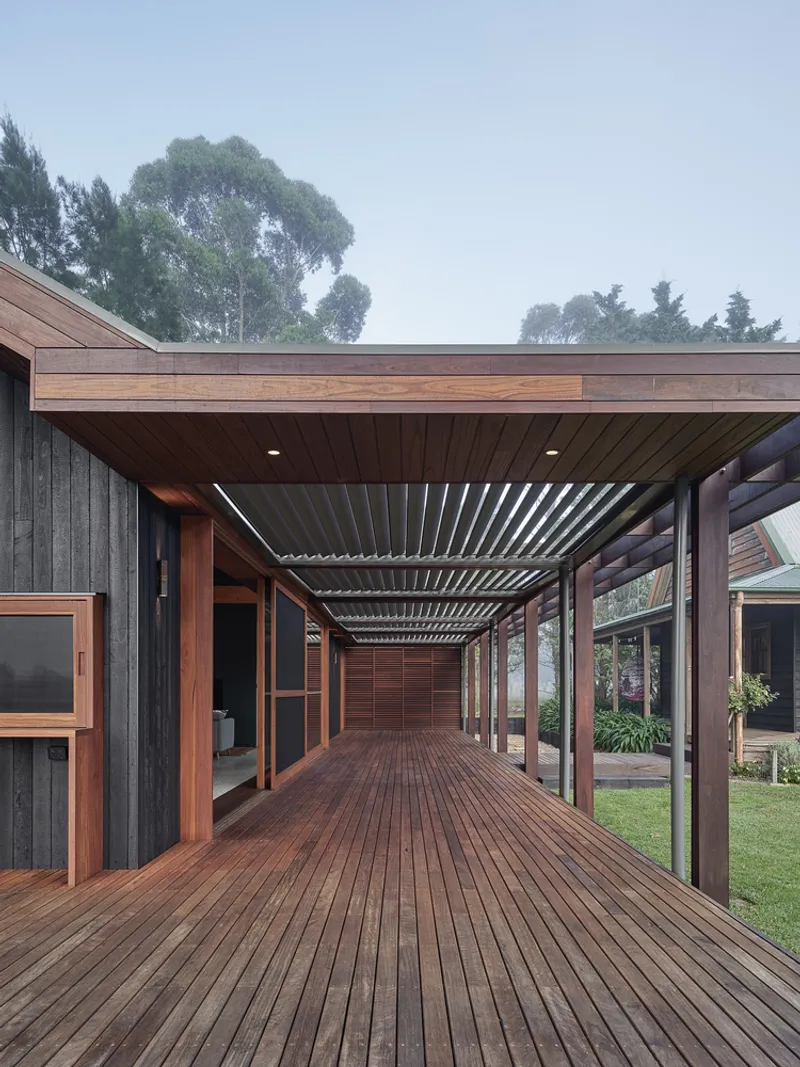
Sustainable Design and Materials
From the outset, the project emphasized environmentally conscious construction. The clients requested a home built primarily from recycled timber, avoiding aluminum and steel to reduce its carbon footprint. The architects integrated the most advanced sustainable technologies of 2024, reflecting a commitment to eco-friendly living. Prefabrication by Greensmith@co minimized on-site construction time while ensuring superior quality control.
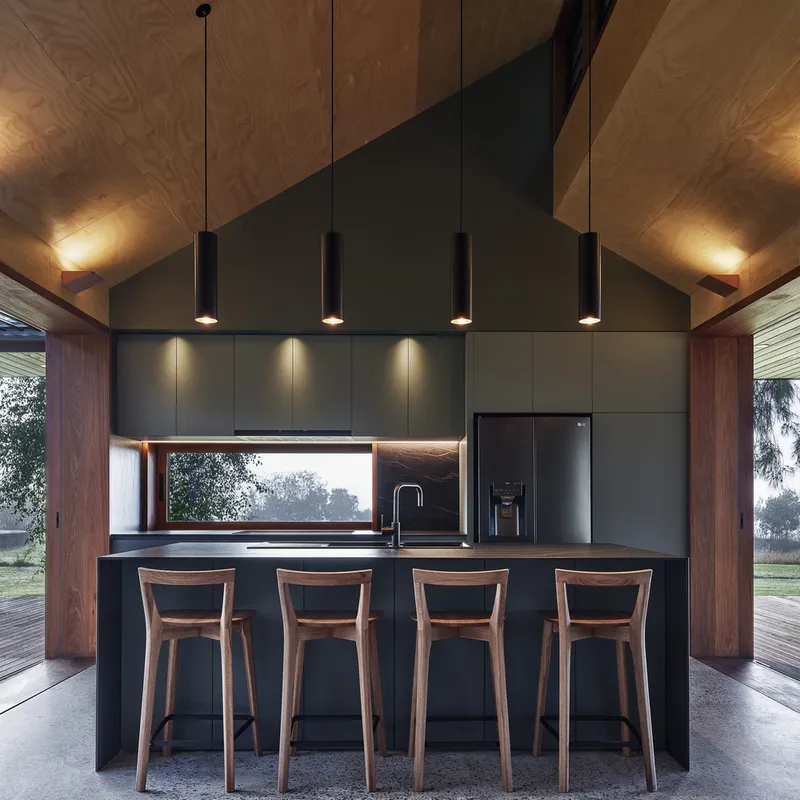
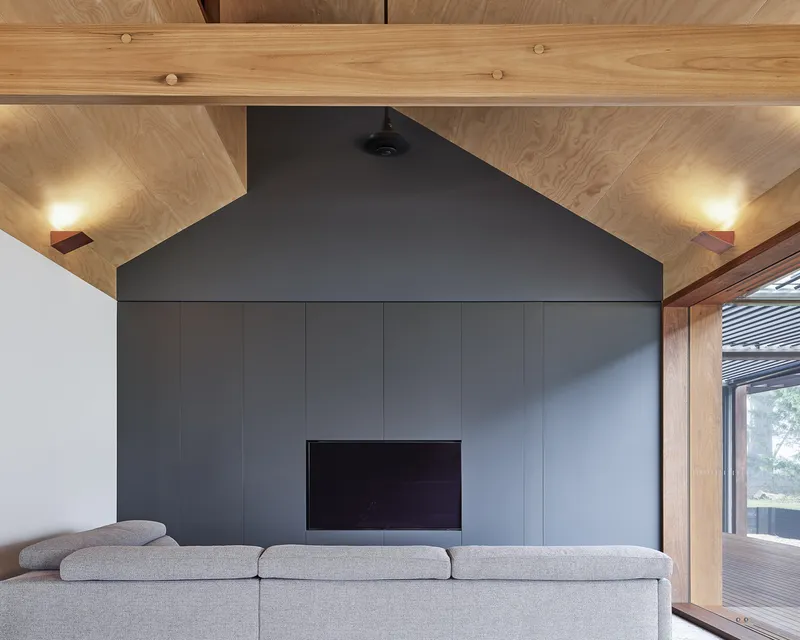
Spatial Layout and Functional Design
The pavilion includes a bedroom, bathroom, and an open-plan living, dining, and kitchen area, seamlessly connected to expansive covered outdoor spaces. These versatile zones are designed to be functional throughout all four seasons, enabling indoor-outdoor living and entertaining year-round.


Passive Solar and Energy Independence
Kildrummie House is thoughtfully oriented to optimize passive solar energy. Thermopanel windows and high-level louvers facilitate natural ventilation, ensuring comfortable interior temperatures during the summer without the need for air conditioning. The home incorporates solar panels linked to battery storage, allowing complete independence from the urban electricity grid. Additionally, rainwater harvesting systems feed into ponds for potable water use, exemplifying self-sufficiency.


Innovative Heating Solutions
Winter comfort is achieved through hydronic heating embedded in the slab, providing consistent and energy-efficient temperature control throughout the home. This method ensures a cozy interior environment while maintaining the project’s sustainable ethos.
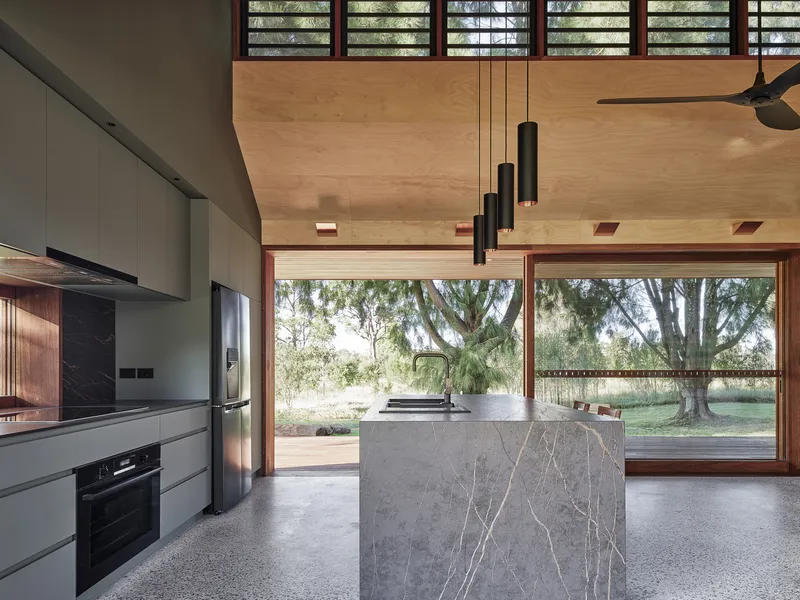
Craftsmanship and Prefabrication
The builders, who operate a wood frame and window fabrication workshop, prefabricated significant portions of the house. This approach enhanced construction precision and reduced environmental impact, reflecting a commitment to both quality and sustainability.
Kildrummie House is a striking example of modern, sustainable residential architecture in Australia. Through careful attention to material selection, passive design strategies, and energy independence, Ink Architects Sydney has created a home that harmonizes with its natural surroundings while providing functional elegance and comfort for year-round living.

Kildrummie House is a striking example of modern, sustainable residential architecture in Australia. Through careful attention to material selection, passive design strategies, and energy independence, Ink Architects Sydney has created a home that harmonizes with its natural surroundings while providing functional elegance and comfort for year-round living.
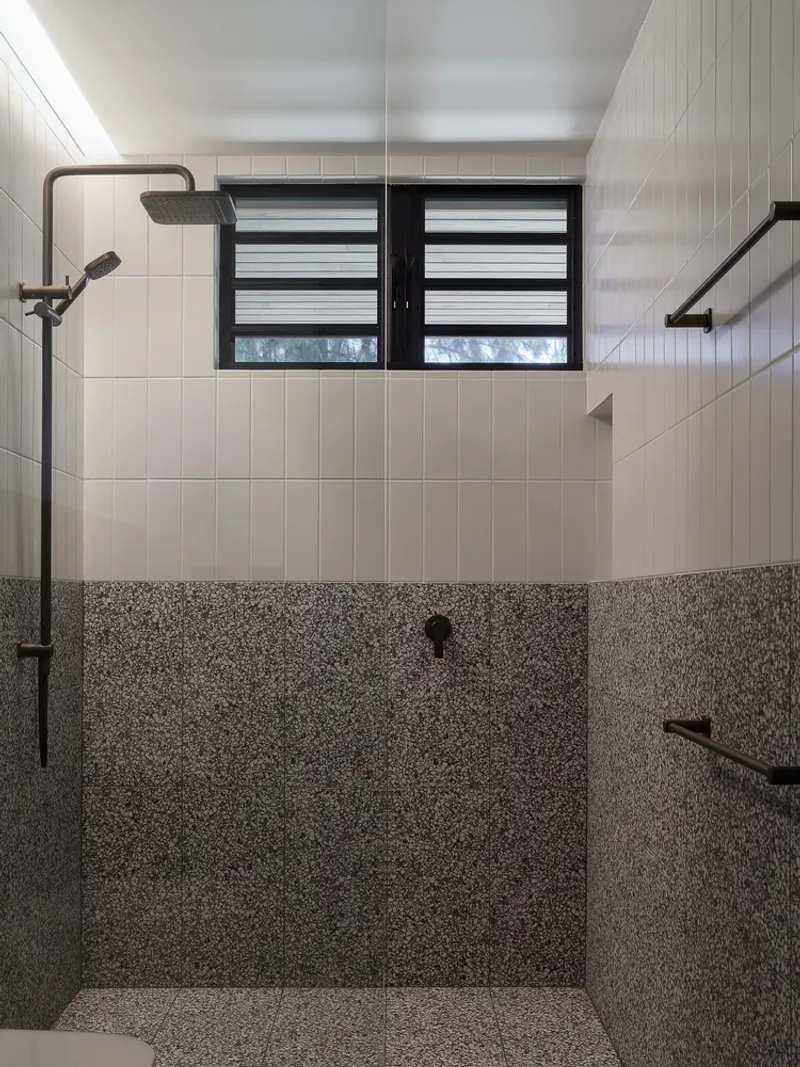
All photographs are works of
Mark Syke


Popular Articles
Popular articles from the community

Manzana Morphosis: Stretching Barcelona's Grid into a Living Landscape for 2050
A radical reworking of the Eixample manzana turns density into a tool for generous public space, vertical ecology, and environmental performance.
Faces of the Soviet Avant-Garde: Turning Moscow's Street Names into an Open-Air Museum
A network of sculptural installations across a Moscow residential district transforms forgotten architect names into spatial encounters with cultural memor
Extended Shell: Retrofitting Kolkata's Balconies as Living Urban Thresholds
A modular retrofit system recovers the social and environmental intelligence of Kolkata's historic verandas for contemporary Park Street residents.
Temporary Home for Dogs: A Reversed Zoo Rethinks Animal Shelter Architecture
In Bucharest, a sinuous corridor and freed landscape flip the logic of containment, designing a shelter that works to make itself unnecessary.

Similar Reads
You might also enjoy these articles

Hodi-Mandai Geram
Project Function: Preservation and revitalization of the Intangible heritage and socio-spatial identity of the Hodi by Housing, Cultural Memory Center, Sacred Grove, landscape, local tourism economy

Olio Towers: A Mid-Rise for Performers That Fuses Housing, Rehearsal, and Stage
Located blocks from Houston's Theater District, this modular tower stacks living units around a central performance atrium.
Oasis: Modular Green Housing Carved into Dhaka's Urban Fabric
A shortlisted Plugin Housing entry reclaims unauthorized settlements in Dhaka with stepped concrete volumes, green roofs, and ventilation-driven design.

Black Hole: A Floating Megastructure for the Post-Physical Era
Emiliano Mazzarotto envisions a spherical, self-scaling arena where e-sports, digital hotels, and holographic stadiums replace traditional public space.

Explore Architecture Competitions
Discover active competitions in this discipline

Challenge to reimagine the Iron Throne

Photograph architecture without architects

Illustrate the lost glory of Angkor Wat - Render Challenge

Design challenge to reuse E-waste
Comments (0)
Please login or sign up to add comments
No comments yet. Be the first to comment!