

Kithara Music Kiosk in Mexico City: A Community-Driven Architecture for Music, Culture, and Social Impact
Community-built music kiosk in Mexico City uses recycled materials, supports education, cultural events, and strengthens social connections through participatory architecture.


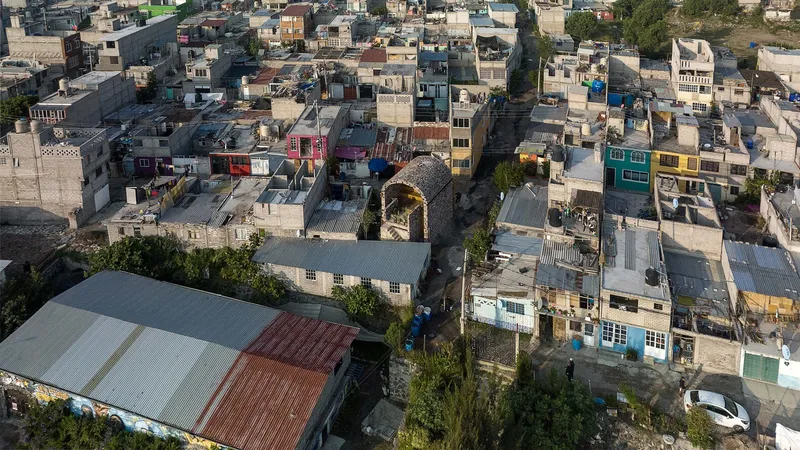
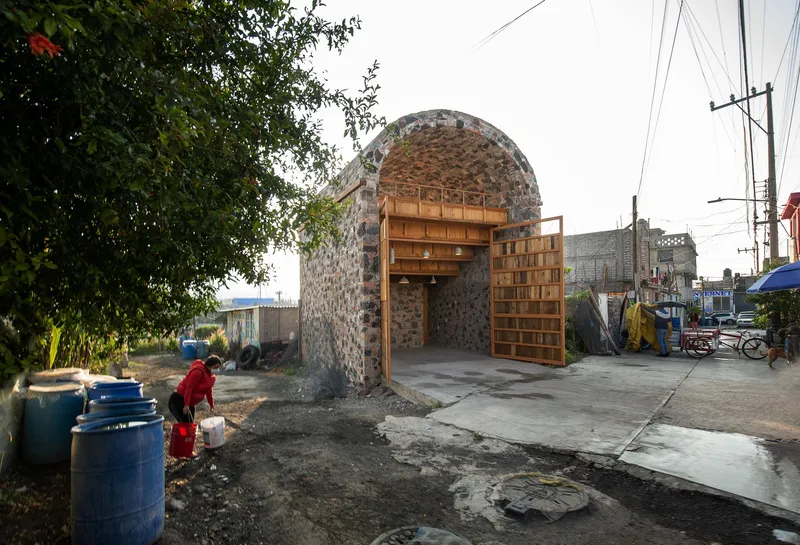
The Kithara Music Kiosk, designed by TO (Carlos Facio | José Amozurrutia), stands as a powerful example of community architecture, small-scale design, and socially responsive urban intervention in Mexico City. Located in the marginal neighborhood of Yuguelito in Iztapalapa, this 646-square-foot project redefines how architecture can foster cultural inclusion, education, and collective identity through music.
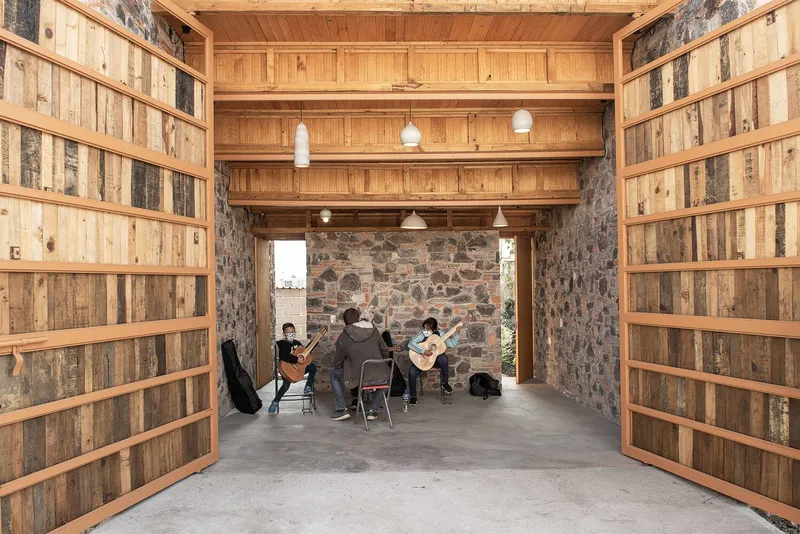
Community-Centered Architecture in a Challenging Urban Context
Built on land once used as rubble dumping after the 1985 earthquake, Yuguelito represents resilience and grassroots urban development. Despite facing issues like water scarcity, unstable soil, and social challenges, the community has continuously worked toward improving living conditions. The Kithara Music Kiosk emerges from this context as a symbol of transformation and empowerment through design.
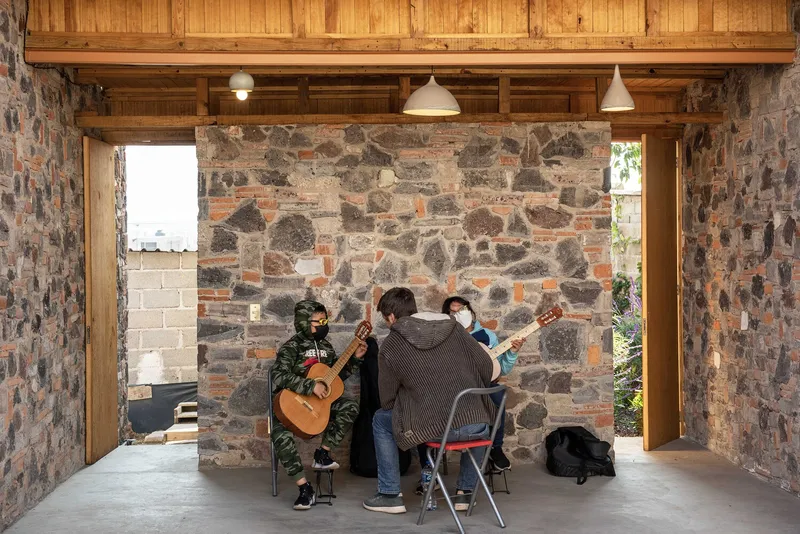
The project began as a grassroots initiative in 2015, when volunteer guitar teachers started offering free music lessons. As participation grew across age groups, from children to the elderly, the need for a dedicated music education space became evident. In response, the community collectively donated land adjacent to a local library, paving the way for this collaborative architectural project.
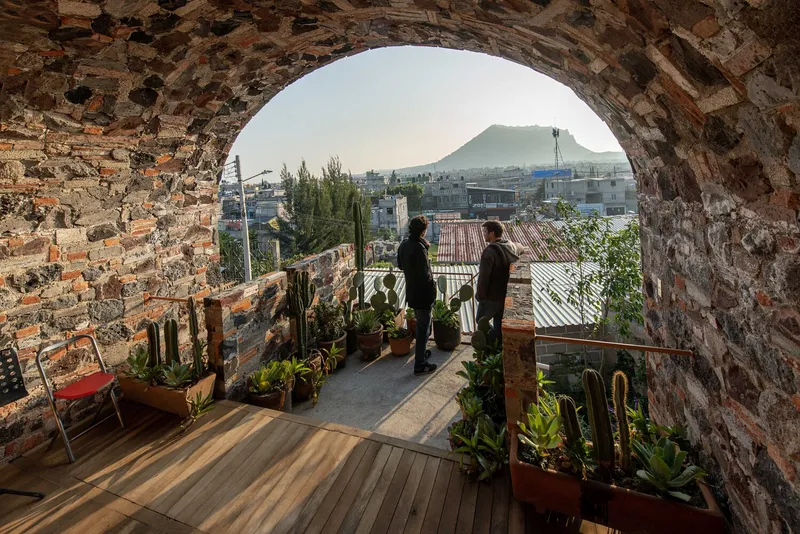
Design Concept: Acoustic Balance and Cultural Expression
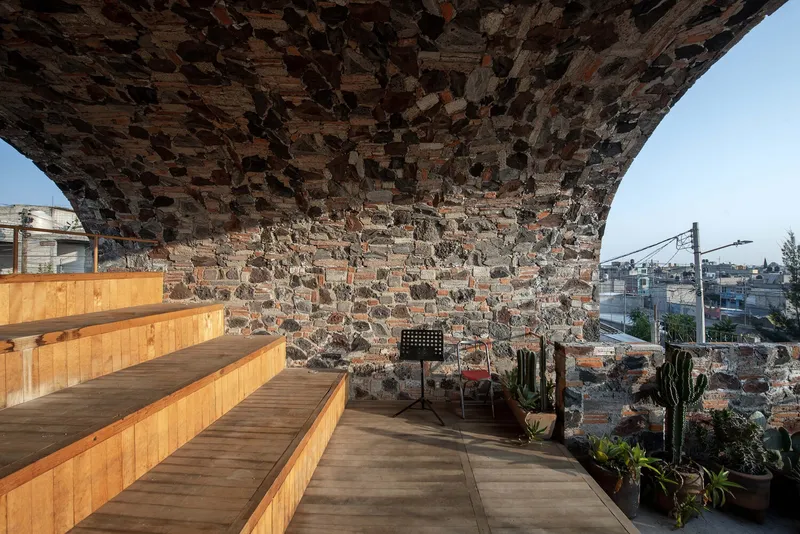
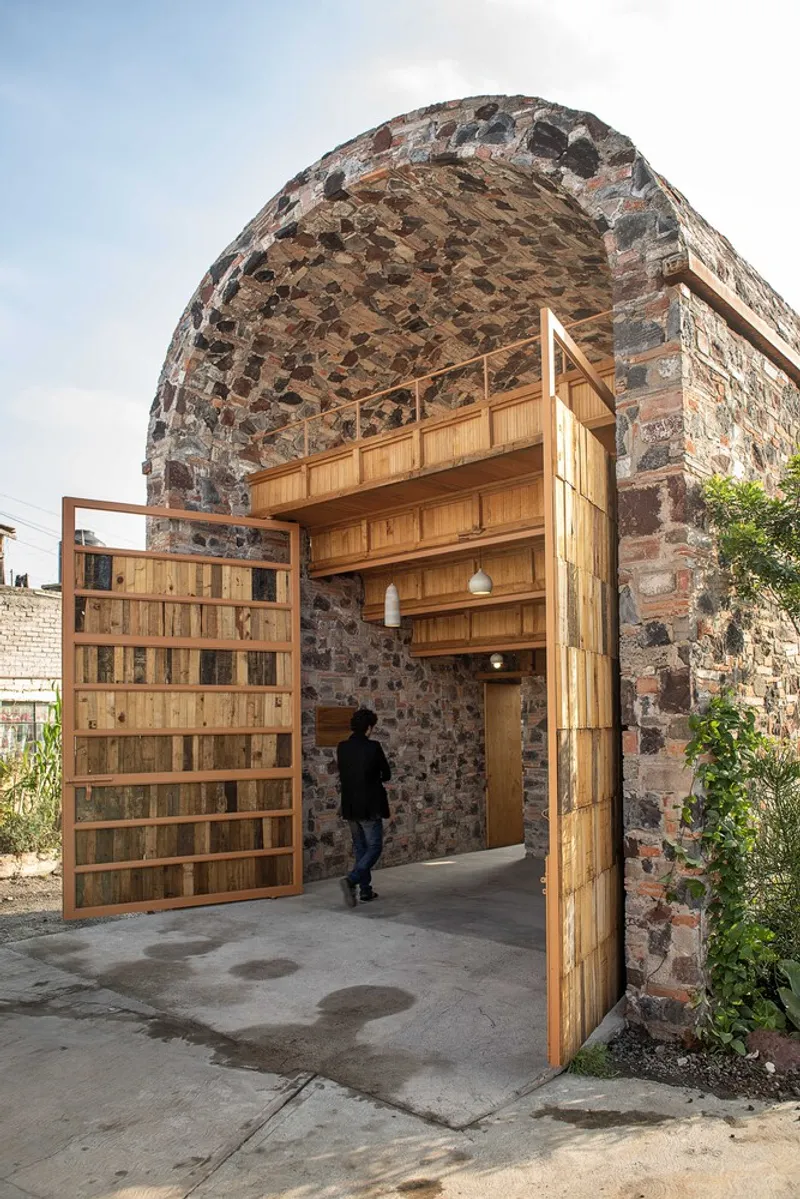
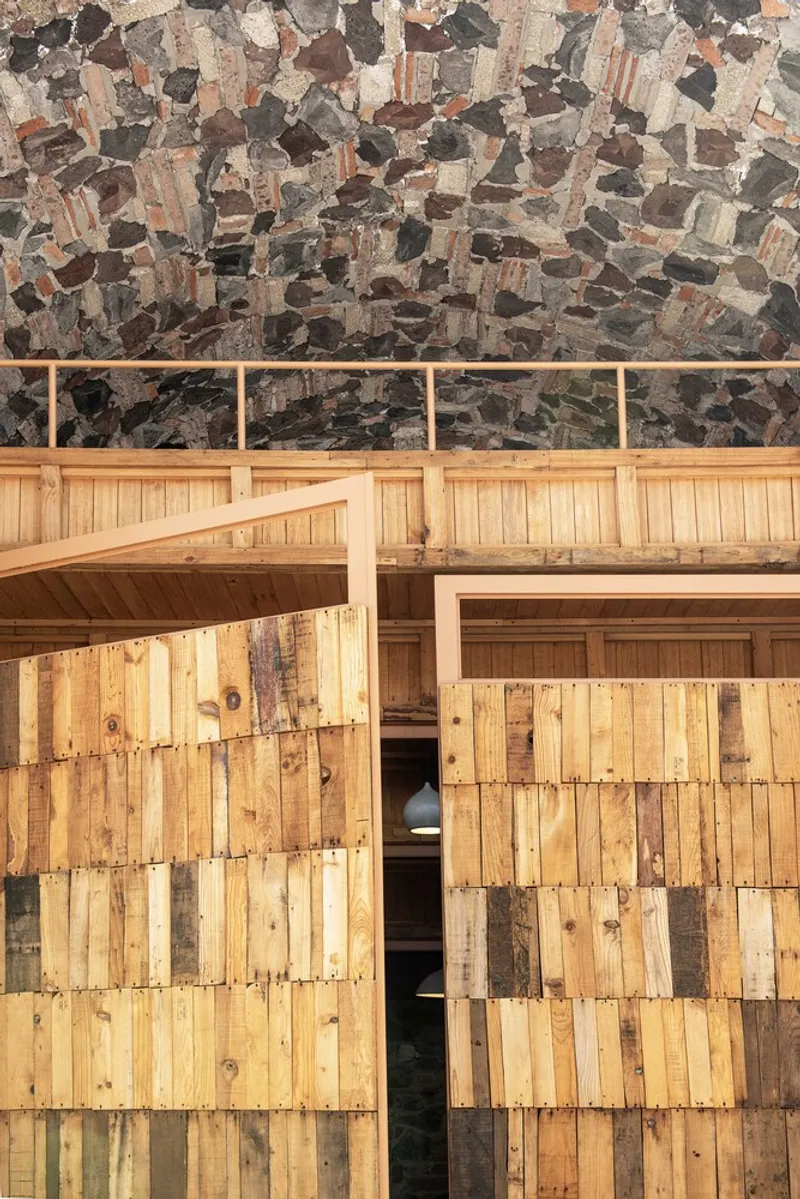
The architectural concept centers around creating a multi-functional music kiosk and classroom that responds to both acoustic and social needs. The structure features a rain-harvesting masonry vault, paired with a reused wood framework, carefully designed to achieve an optimal balance between sound absorption and reverberation, essential for musical performances and teaching.
The building is spatially dynamic: The upper classroom is oriented toward the Xaltocan Volcano, establishing a visual and cultural connection with the surrounding landscape. Meanwhile, the ground floor is angled toward the intersection of two streets, opening the structure to the public realm and enabling community events, performances, and gatherings.
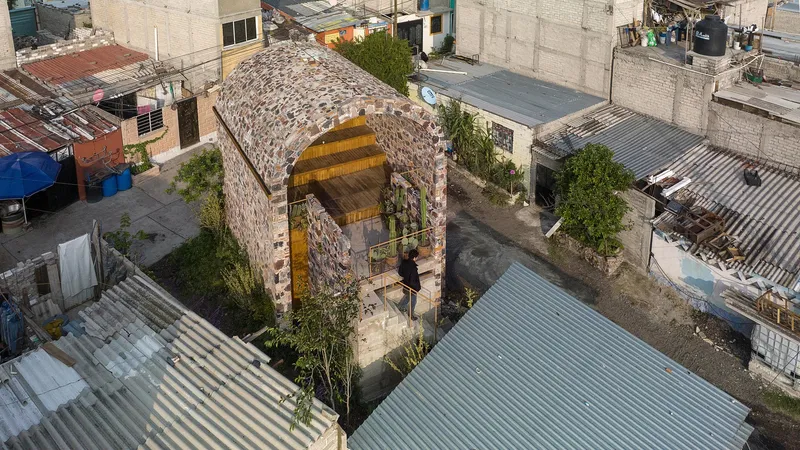
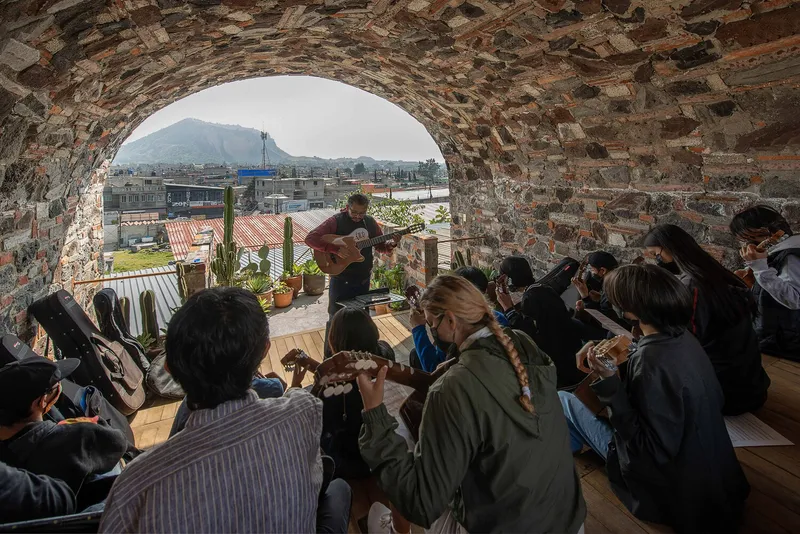
Materiality and Local Construction Practices
One of the defining aspects of the Kithara Music Kiosk is its use of locally sourced and donated materials, including red brick, cement blocks, volcanic stone, and tezontle. This approach not only reduces construction costs but also reinforces a circular design strategy rooted in sustainability and community participation.
The construction process itself reflects the project’s ethos. Local builders from Yuguelito were directly involved, ensuring that the knowledge, labor, and identity of the community were embedded into the architecture. This participatory process strengthens the sense of ownership and belonging among residents.
Participatory Design and Collective Vision
Before construction, the architects organized workshops where community members and students were invited to draw their vision of an ideal music school. These insights directly informed the architectural program, making the final design a true reflection of collective aspirations.
The project took over five years to complete, relying on community funding, donations, and shared efforts. This long-term engagement highlights how participatory design processes can lead to meaningful and sustainable architectural outcomes.
A Flexible Cultural Hub Beyond Its Original Purpose
Today, the Kithara Music Kiosk has evolved beyond a simple classroom. It functions as a vibrant cultural hub, hosting theatre performances, choir concerts, and social events. Despite its compact scale, the building resonates as a collective space that amplifies cultural expression and social cohesion.
Its success demonstrates how small-scale architecture can create large-scale social impact, especially when rooted in collaboration, sustainability, and cultural relevance.
All photographs are works of
Jaime Navarro


Popular Articles
Popular articles from the community


ETEH Reworks the Shared Spaces of São Domingos School in Brazil Around Timber, Color and Hanging Plants
At São Domingos School in Brazil, 436 m² of hall, refectory and library are recast with timber joinery, a yellow and blue code and trailing greenery.


Singing Woman: An Opera House That Performs Before the Curtain Rises
Ovidiu Cristian Pavel's conceptual opera house translates Estonia's choral identity into a sculpted waterfront landmark facing the Baltic Sea.

Opera on the Sea: Driftwood Logic Shapes a Timber Opera House on Estonia's Coast
Trevor Orgill's opera house translates the entangled drift of floating timber into a civic building where wood, water, and music converge.

FCC Arquitectura Expands a Portuguese Granite House with a Board-Marked Concrete Wing
In Portugal, JV House pairs a cleaned-up whitewashed and granite dwelling with a timber-shuttered concrete extension, courtyards and a garden pool.

Similar Reads
You might also enjoy these articles

Cube Design Draws an Ecological Corridor Between Two Shenzhen Hills with the Nankai Building
Beside Shenzhen's container docks, the Nankai Building pairs stacked balconies with a climbing green screen to connect two hillsides across its height.

Praksis A and Studio Sted Bend a Red Timber Cabin Across the Granite of Norway's Southern Coast
On the southern Norwegian coast, a 105 m² cabin follows the rock on slender posts, pairing red cladding outside with pine, brick and plywood within.

David Ortega Stacks a Two-Story Mexico City Penthouse Around a Steel Stair and a Pergola-Shaded Roof Terrace
In Colonia Roma, a 300 m² penthouse uses oak joinery, a planted steel stair and a slatted roof pergola to make a new-build apartment feel like a house.

PARALELA and LB2 Thread a Public Walkway Through the Base of a Las Condes Residential Tower
In Las Condes, Santiago, the Hamlet Building gives its fenceless ground floor to a 70-metre wooded passage linking two streets and the metro.

Explore Community-Driven Architecture Competitions
Discover active competitions in this discipline

Challenge to reimagine the Iron Throne

Photograph architecture without architects

Illustrate the lost glory of Angkor Wat - Render Challenge

Design challenge to reuse E-waste
Comments (0)
Please login or sign up to add comments
No comments yet. Be the first to comment!