

Koala Village: A Wildlife Rehabilitation Architecture Project Designed for Koala Conservation
A forest-inspired wildlife rehabilitation architecture project creating a safe, sustainable habitat for koalas and ecological recovery.


As biodiversity loss and habitat destruction continue to threaten wildlife populations worldwide, architecture is increasingly being called upon to provide solutions that extend beyond human needs. Koala Village, a People's Choice Award entry in Haven 2020 by Maria Datculescu, presents an innovative vision for wildlife rehabilitation architecture that prioritizes ecological restoration, animal welfare, and sustainable design.
Built around the forest ecosystem that sustains koalas and countless other species, the project creates a carefully balanced environment where rehabilitation, conservation, education, and community engagement coexist. More than a rehabilitation center, Koala Village is a model for how architecture can support vulnerable wildlife while preserving the integrity of natural landscapes.
Reimagining Architecture for Wildlife Conservation
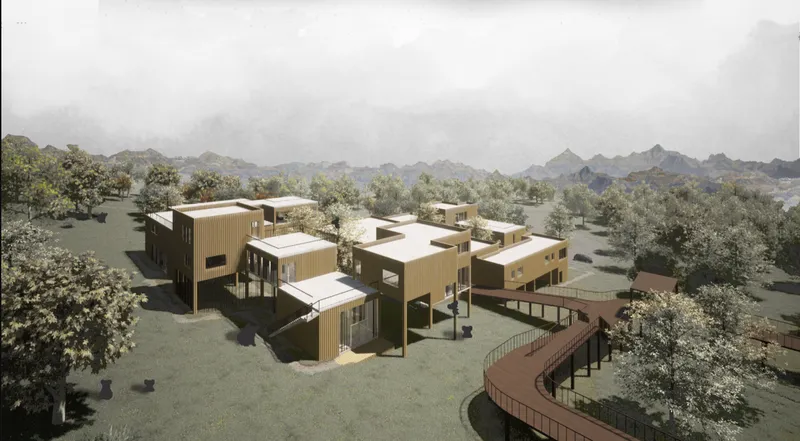
The foundation of Koala Village lies in a simple yet powerful idea: the forest is the essential ecosystem that provides food, shelter, security, and survival for koalas. Following devastating habitat loss caused by environmental pressures and wildfires, the project seeks to recreate the atmosphere and spatial qualities of a natural forest within an architectural framework.
Rather than imposing itself on the landscape, the design works in harmony with nature. The architecture creates a safe environment where koalas can recover under professional care while maintaining freedom of movement and minimizing disruptions to their natural behaviors.
This approach transforms the project into a living ecosystem where humans and animals coexist through carefully designed interactions and spatial boundaries.
Wildlife Rehabilitation Architecture Inspired by Forest Ecosystems
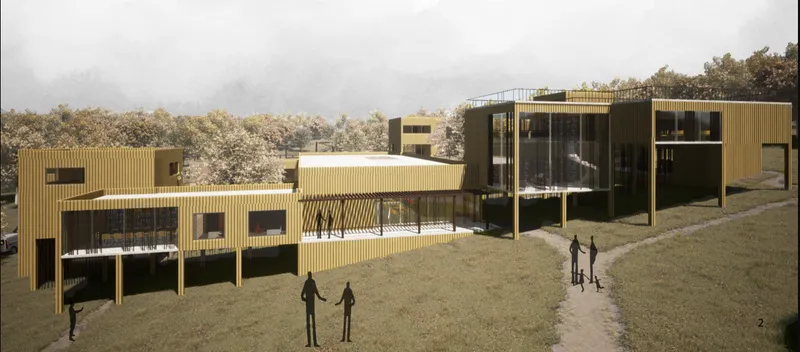
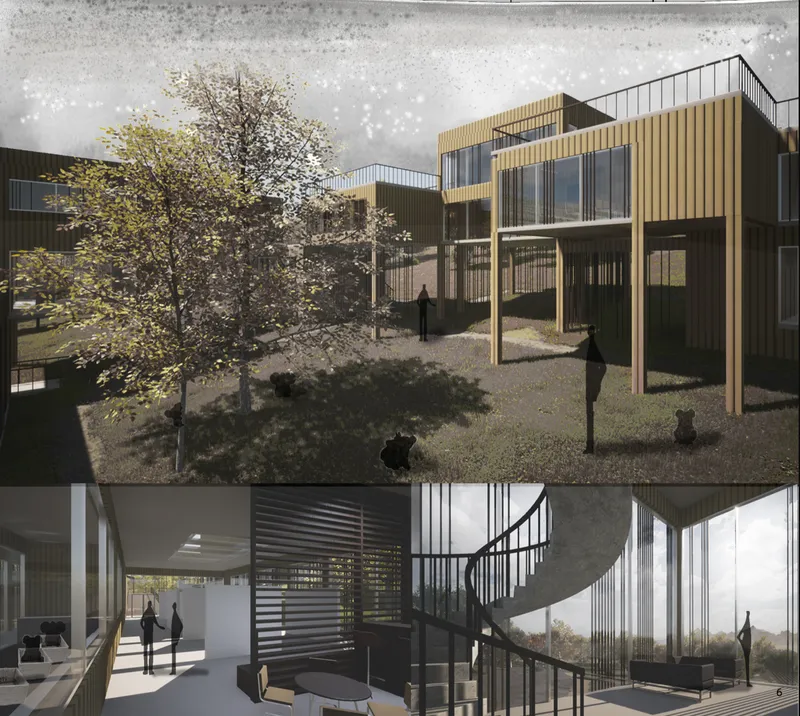
The concept of Koala Village is directly inspired by the structure and experience of a forest. Trees become architectural elements, while pathways and elevated volumes mimic the layered complexity of natural habitats.
The design focuses on two critical principles:
- Freedom of movement for wildlife
- Balanced interaction between humans and animals
By recreating these environmental qualities, the project offers a familiar and low-stress habitat for recovering koalas. The architecture becomes an extension of the landscape rather than a separate intervention.
The modular composition of the buildings reflects the scattered organization found in natural ecosystems, creating a village-like arrangement that blends into the surrounding terrain.
Responding to Topography Through Sustainable Architecture
One of the most distinctive features of Koala Village is its sensitive response to the site's natural topography.
The architecture follows the contours of the land instead of reshaping it through extensive excavation. Individual volumes are carefully positioned along the slope, allowing the buildings to integrate naturally into the environment.
This strategy produces several benefits:
- Reduced environmental impact
- Preservation of existing vegetation
- Improved natural drainage
- Enhanced views and natural lighting
- Reduced construction disturbance
The resulting architecture appears to emerge organically from the landscape, strengthening the relationship between built form and ecological context.
Modular Design for Efficient Rehabilitation Facilities
Koala Village adopts a modular planning strategy that separates functions while maintaining operational efficiency.
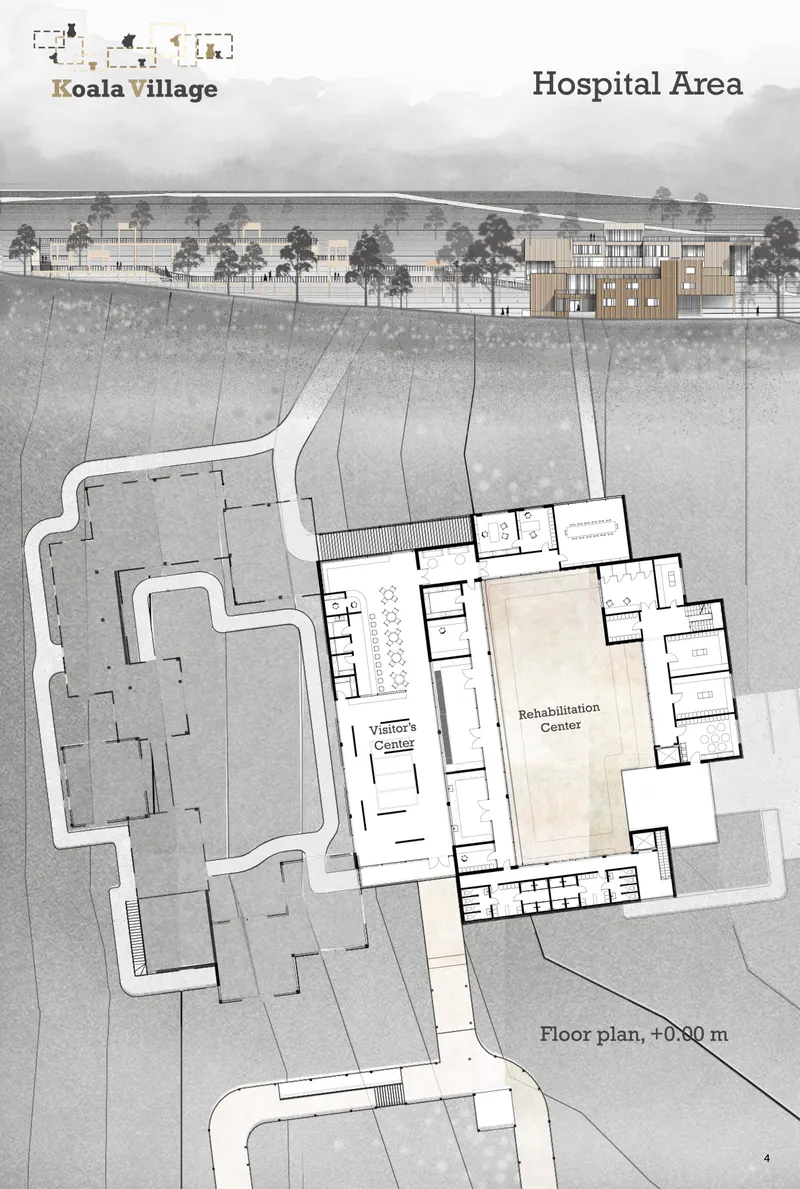
The facility is organized into three primary zones:
Rehabilitation Center
The rehabilitation center serves as the heart of the project. Here, injured and recovering koalas receive medical treatment, observation, and care in spaces specifically designed to support healing and recovery.
Large internal courtyards and carefully controlled environments create safe conditions while maintaining strong visual and physical connections to nature.
Visitor Center
Education plays an important role in conservation efforts. The visitor center introduces guests to the challenges facing koalas and the importance of habitat preservation.
Exhibition spaces, educational displays, and observation areas allow visitors to learn about wildlife conservation without interfering with the rehabilitation process.
Staff and Research Facilities
Dedicated staff spaces support veterinary operations, research activities, administration, and daily facility management. Their placement ensures efficient workflows while maintaining privacy and functionality.
This clear zoning strategy creates an organized and highly effective rehabilitation environment.
Floating Volumes and Forest-Like Spatial Experiences
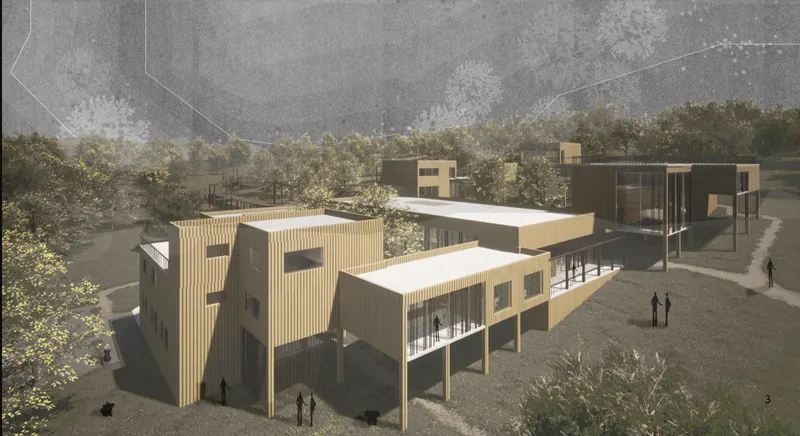
A defining architectural gesture within the project is the use of elevated and seemingly floating volumes.
Supported by slender structural elements, the buildings rise above the landscape in a way that recalls the vertical structure of a forest. These elevated forms reduce ground disturbance while creating shaded outdoor spaces beneath.
The arrangement offers several environmental advantages:
- Increased natural ventilation
- Reduced site impact
- Improved daylight penetration
- Enhanced visual transparency
- Stronger integration with surrounding vegetation
The resulting atmosphere feels light, open, and immersed within nature.
Sustainable Materials for Ecological Recovery
Material selection plays a central role in the project's sustainability strategy.
Wood and locally sourced timber are extensively used throughout the development due to their environmental performance, aesthetic warmth, and compatibility with the forest setting. Timber also provides a familiar sensory environment that helps reinforce the project's natural character.
The structural system combines reinforced concrete with timber, glass, and brick components to balance durability, sustainability, and functionality.
This material palette supports:
- Reduced embodied carbon
- Local economic development
- Improved thermal performance
- Long-term durability
- Strong visual connection to nature
Preserving Existing Vegetation and Expanding Habitat
Unlike many development projects that remove vegetation to make way for construction, Koala Village is designed around the preservation of existing trees.
The project protects mature vegetation while introducing additional eucalyptus planting programs that expand habitat opportunities for koalas.
This strategy contributes to broader ecological restoration efforts by:
- Increasing biodiversity
- Expanding food sources
- Strengthening wildlife corridors
- Improving environmental resilience
- Supporting long-term habitat regeneration
The architecture therefore functions not only as a building but also as a tool for ecological recovery.
Creating Meaningful Visitor Experiences
Public engagement is essential for successful conservation initiatives.
Koala Village introduces a carefully planned visitor route that allows people to experience the project while maintaining appropriate separation from rehabilitation areas.
A long timber bridge winds through the landscape, guiding visitors through exhibition spaces and observation points. This elevated journey encourages awareness of the surrounding ecosystem while providing educational opportunities.
The route transforms a simple visit into an immersive learning experience, strengthening public understanding of wildlife conservation and environmental stewardship.
A New Model for Wildlife Rehabilitation Architecture
Koala Village demonstrates how architecture can actively contribute to ecological restoration and species protection. Through its forest-inspired design, modular planning, sustainable material palette, and sensitive integration with the landscape, the project establishes a compelling model for future wildlife rehabilitation facilities.
By prioritizing habitat preservation, animal welfare, and environmental education, Maria Datculescu's vision extends beyond conventional architecture. It offers a holistic approach where conservation and design work together to create healthier futures for both wildlife and people.
As a People's Choice Award entry in Haven 2020, Koala Village highlights the transformative potential of wildlife rehabilitation architecture in addressing some of the most pressing environmental challenges of our time.




Popular Articles
Popular articles from the community

AL-JANNAH: Sustainable Architecture and Permaculture for Afghan Widows
AL-JANNAH uses sustainable architecture and permaculture to create resilient oasis of housing, learning, work and renewal for Afghan widows.

The Musturak Paradise: Senior Living Architecture for a Connected Future in Temara, Morocco
The Musturak Paradise reimagines senior living architecture in Temara via private homes, social spaces, culture, community, and shared care.

The Earth Pod: 3D Printed Homes for Resilient Refugee Communities
The Earth Pod reimagines refugee housing through 3D printed homes made from clay, combining resilience, self-sufficiency, and rapid shelter.

Conexión: Biophilic Design Reimagines High-Rise Living in Hong Kong
Conexión reimagines high-rise living in Hong Kong through biophilic design, green facades, shared spaces, daylight, water and nature within.

Similar Reads
You might also enjoy these articles

Eco Chapel: A Green Architecture Pavilion Designed in Symbiosis with the Forest
Eco Chapel uses green architecture to weave prayer, learning and reuse into a forest pavilion shaped by modular hexagonal canopies for life.
Kaffeebühnen: Coffee Shop Architecture Designed as a Civic Stage Between Vienna’s City and Park
Kaffeebühnen turns coffee shop architecture into a civic stage, linking Vienna’s park edge, urban life, warm timber yards, and coffee craft.
Healing Façade: Sustainable Architecture for Reforestation, Community, and Sacred Ecology in Ethiopia
Healing Façade reimagines sustainable architecture as a living wall that restores soil, catches water and renews Ethiopia's forest churches.


Urban Forest: A Vertical Ecosystem for 5,000 Workers in Singapore's Changi Business Park
Radially stacked pods and layered green decks turn a 7-acre plot into 47 acres of ecological workspace projected for 2040.




Comments (0)
Please login or sign up to add comments
No comments yet. Be the first to comment!