
Koalas Heaven: Biophilic Architecture for Wildlife Rehabilitation and Ecological Conservation
A biophilic architecture proposal in Queensland that transforms koala rehabilitation into an immersive ecological conservation experience.


Koalas Heaven: Architecture Designed for Ecological Healing
As Australia continues to experience devastating bushfires, biodiversity loss, and environmental degradation, architecture is increasingly being challenged to rethink its relationship with wildlife and natural ecosystems. Koalas Heaven, a shortlisted entry of Haven 2020 by XR L, proposes a new architectural vision where healing spaces for endangered animals are integrated directly into the landscape.
The project is conceived as more than a medical facility. It is an ecological sanctuary that combines wildlife rehabilitation, environmental education, research, tourism, and conservation into a unified architectural environment. Located in Mount Tamborine, Queensland, the proposal responds specifically to the growing vulnerability of koalas whose habitats have been severely damaged by climate-related disasters.
Through circular spatial planning, forest integration, immersive exhibition systems, and habitat-sensitive design strategies, the project demonstrates how biophilic architecture can create spaces that support both ecological recovery and human awareness.
A Sanctuary Inspired by Nature and Koala Behavior
The conceptual foundation of Koalas Heaven is rooted in the harmony between koalas, human beings, and construction. Rather than creating isolated veterinary buildings detached from nature, the project embeds its functions directly into a eucalyptus forest landscape.
The architectural language is formed through organic geometries inspired by ecological systems and natural movement patterns. Circular volumes intersect with open courtyards, elevated viewing platforms, and planted roof systems, generating a spatial composition that feels fluid and environmentally responsive.
This approach minimizes the psychological stress placed on injured koalas while creating calm and immersive experiences for visitors. The architecture avoids rigid boundaries between indoor and outdoor environments. Instead, vegetation, pathways, water-sensitive zones, and open-air spaces become part of the healing process.
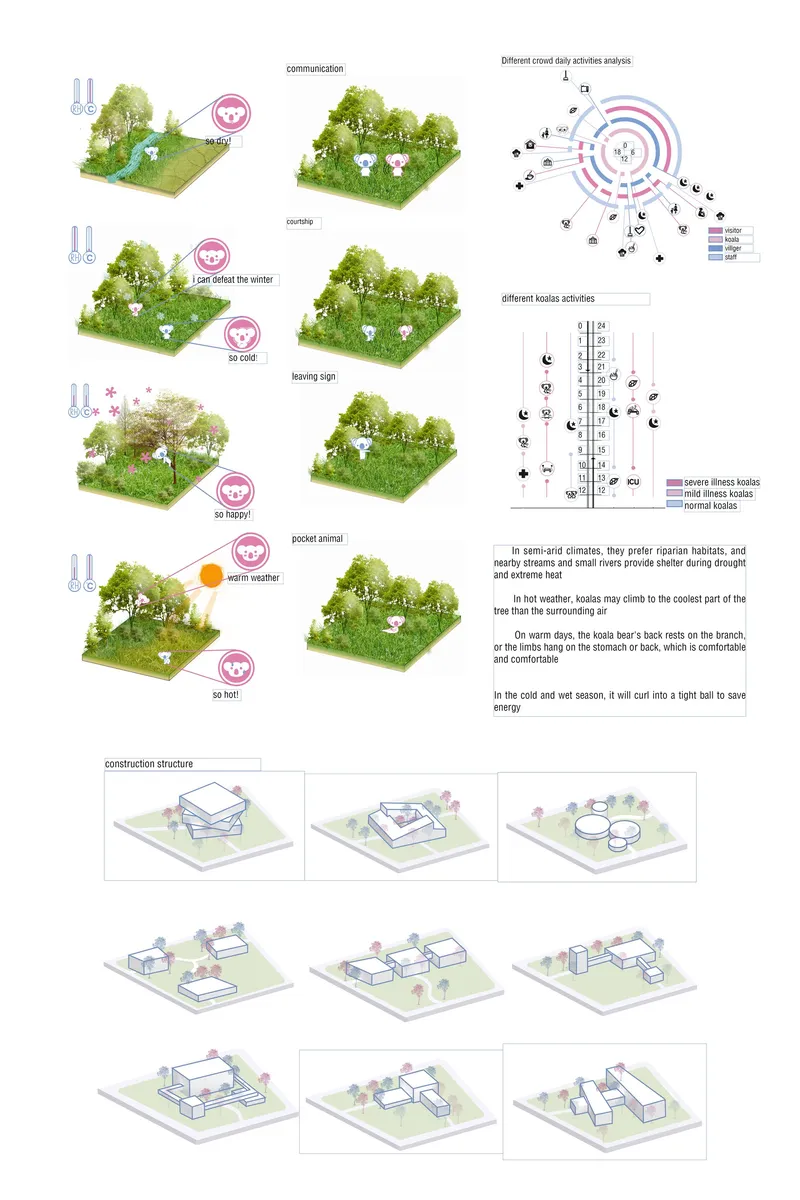
The proposal studies koala behavioral patterns in detail, including their responses to temperature, sunlight, rainfall, and habitat conditions. These observations influence the positioning of shaded resting zones, elevated forest platforms, and protected rehabilitation spaces.
By allowing architecture to evolve from ecological understanding rather than pure formal aesthetics, the project creates a deeper relationship between built space and wildlife.
Site Analysis and Environmental Response
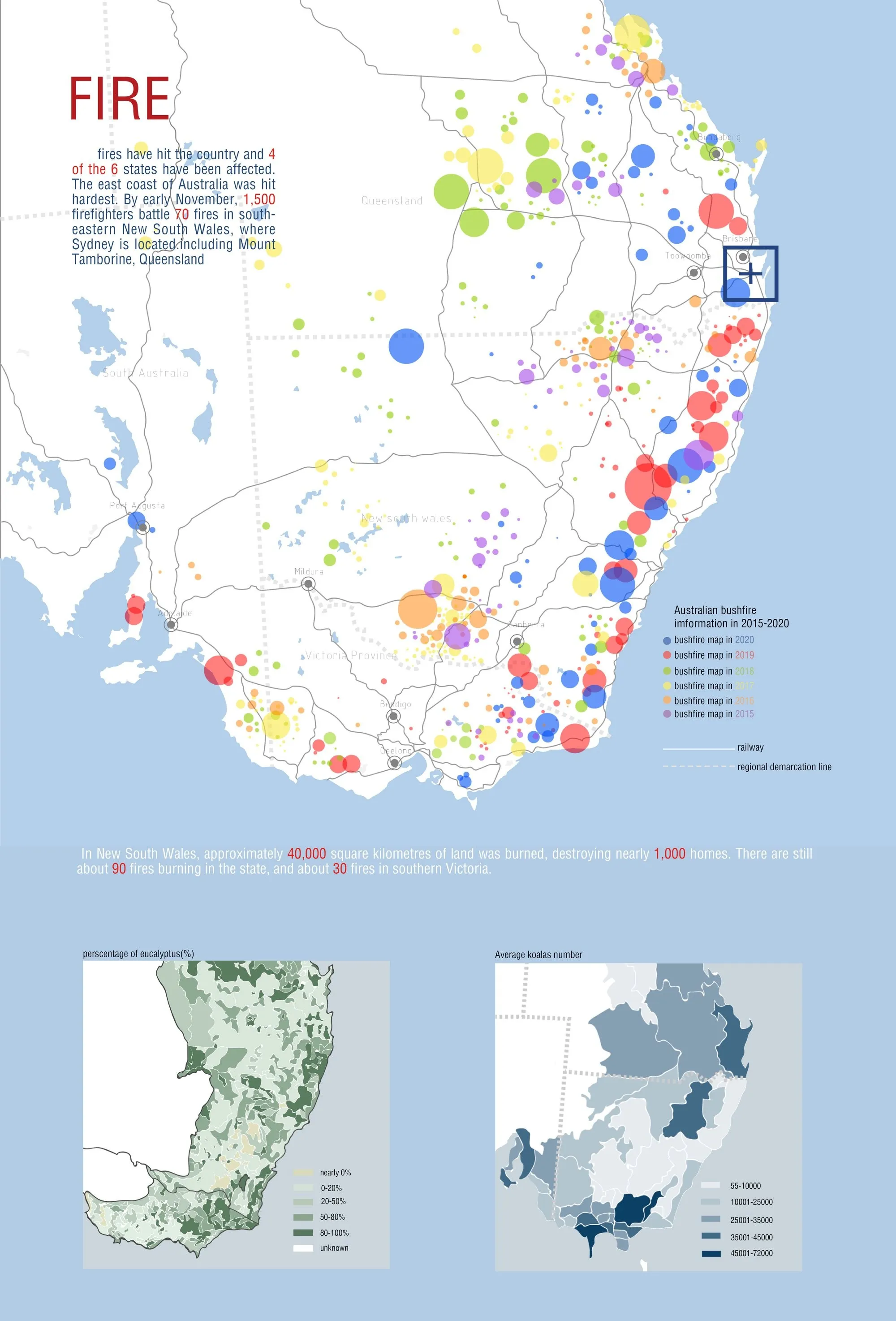
The project begins with an extensive environmental analysis of Queensland and Mount Tamborine. The diagrams explore rainfall patterns, temperature conditions, ecological risks, bushfire impacts, vegetation systems, and wildlife vulnerability.
The bushfire studies are particularly important to the architectural narrative. The proposal recognizes that bushfires not only destroy forests but also disrupt ecological balance, reduce biodiversity, contaminate air quality, and threaten the survival of koala populations.
In response, the design creates a resilient environmental framework where rehabilitation spaces are integrated into safer and controlled ecological zones. Existing landscape features are preserved wherever possible, and the project adapts itself to the terrain rather than reshaping the site aggressively.
Curved circulation systems allow movement across the complex while minimizing disruption to natural habitats. Open green courtyards and planted roofs help regulate microclimates and reinforce the project’s environmental identity.
The relationship between architecture and landscape becomes central to the proposal. Buildings no longer sit independently on the site. Instead, they operate as extensions of the surrounding ecosystem.
Programmatic Organization and Spatial Experience
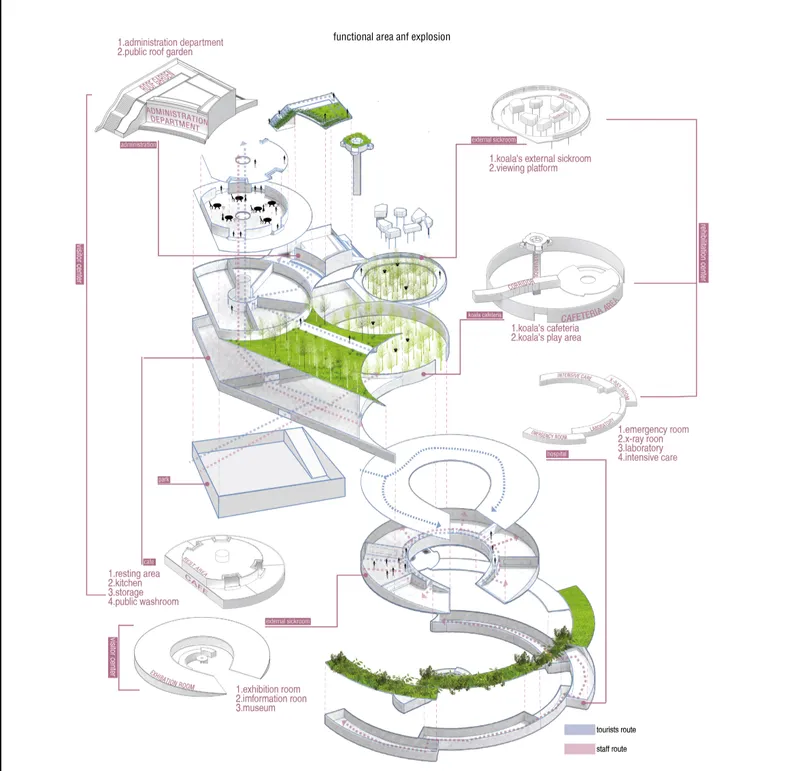
The spatial organization of Koalas Heaven is carefully divided into interconnected functional zones that support rehabilitation, public education, tourism, and administration.
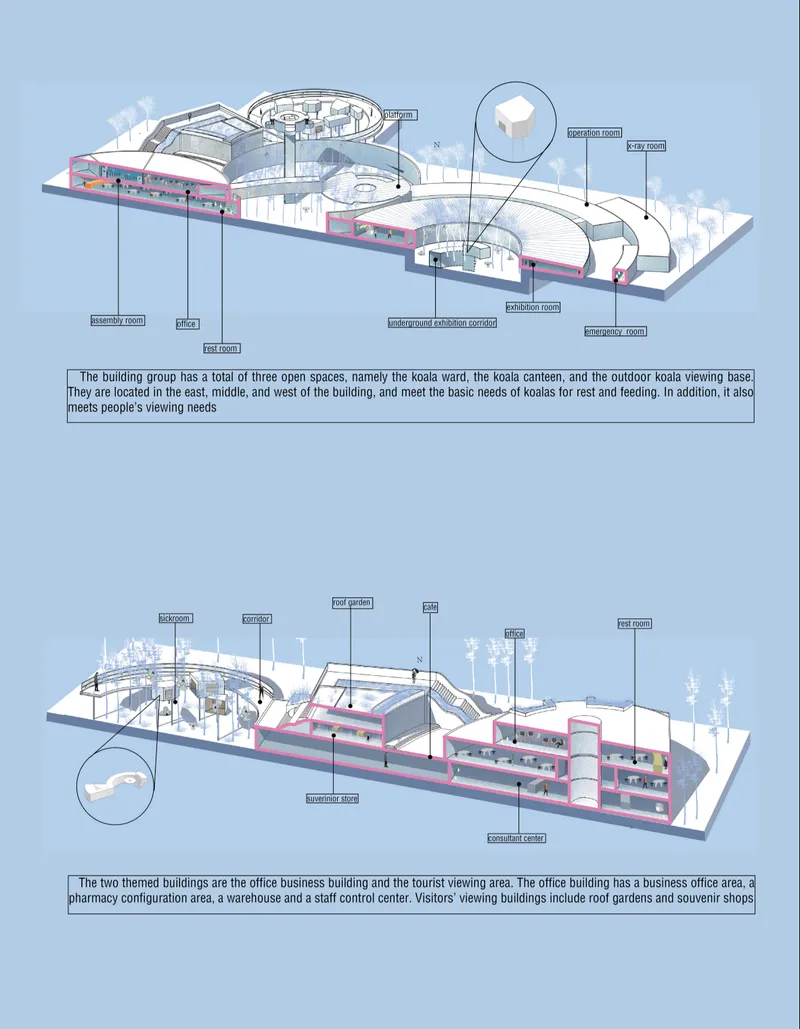
The medical facilities include emergency rooms, operation rooms, X-ray laboratories, intensive care areas, and recovery wards specifically designed for koalas. These treatment spaces are positioned in quieter forested areas to create calm healing environments.
The rehabilitation strategy extends beyond medical care. Dedicated outdoor koala forests, feeding areas, and rest zones allow animals to reconnect gradually with natural environmental conditions.
Adjacent to these healthcare facilities are visitor-oriented programs such as exhibition halls, museums, observation platforms, cafés, roof gardens, and interactive learning spaces. The project uses architecture as an educational tool that encourages visitors to understand ecological conservation through direct experience.
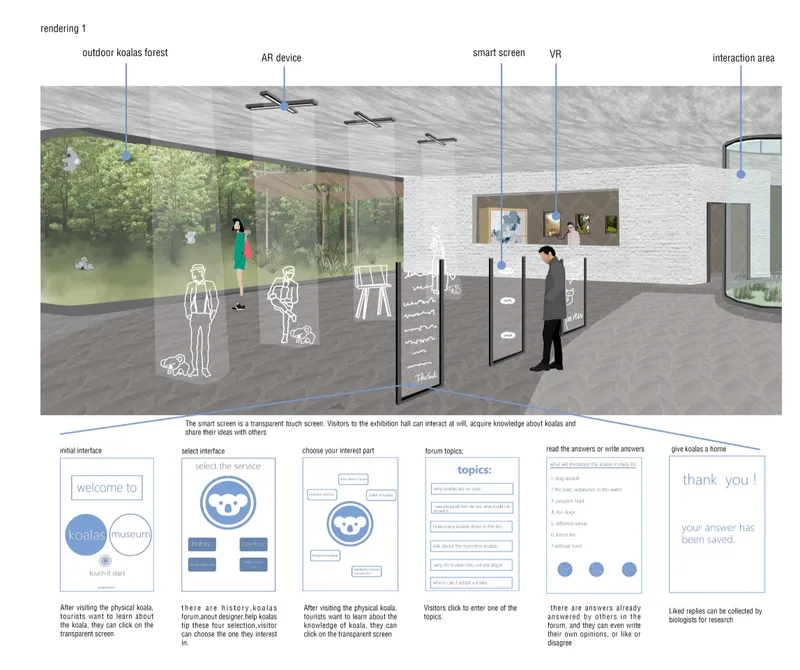
One of the most innovative components of the proposal is its immersive digital exhibition system. Visitors interact with transparent smart screens, VR environments, and educational interfaces that explain koala habitats, rescue operations, bushfire impacts, and environmental preservation.
The VR experiences recreate forest conditions, wildlife encounters, and ecological scenarios, allowing visitors to engage emotionally with the realities of wildlife conservation.
The circulation system separates visitor routes from staff and rehabilitation areas, ensuring operational efficiency while maintaining safe environments for wildlife.
Biophilic Architecture and Human-Nature Interaction
A defining aspect of the project is its strong biophilic design approach. The architecture actively reconnects humans with nature through sensory experiences, visual openness, and environmental immersion.
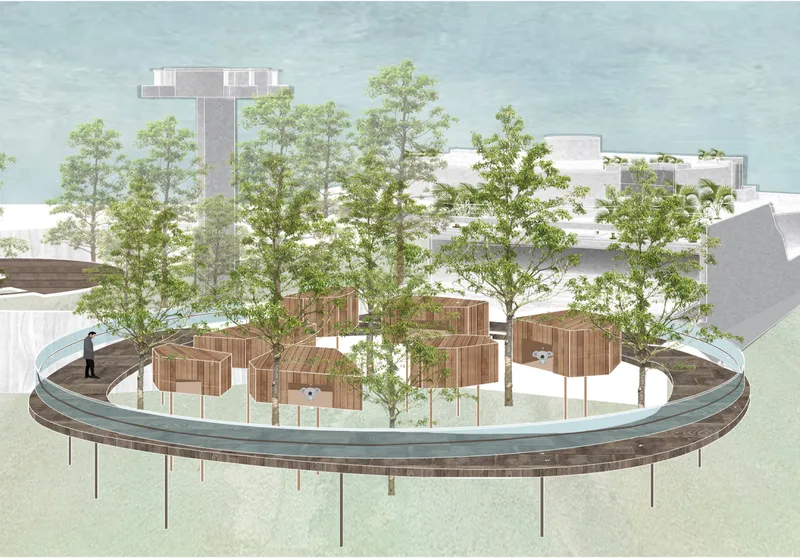
Large transparent surfaces frame forest views while open courtyards introduce daylight and natural ventilation deep into the building interiors. Elevated pathways and observation decks allow visitors to experience koala habitats respectfully without disturbing the animals.
The proposal also introduces interactive communication landscapes where visitors can learn about koala emotions, social behavior, and habitat needs through visual and digital storytelling systems.
The architecture transforms conservation into a participatory experience rather than a passive exhibition. Visitors are encouraged to understand ecological systems emotionally and intellectually.
This educational layer is critical because the project recognizes that environmental protection depends not only on scientific intervention but also on public awareness and cultural engagement.
Structural Strategy and Architectural Form
The structural organization of the project evolves through layered circular geometries that create interconnected spatial clusters across the site.
The diagrams reveal how the design develops from simple circular forms into a more complex ecological network composed of courtyards, bridges, terraces, and planted roofs. These forms establish fluid circulation while maintaining visual continuity with the surrounding landscape.
The architecture avoids monumental scale and instead adopts a low-rise horizontal character that blends into the forest environment. This strategy reduces visual impact and reinforces the project’s ecological sensitivity.
Different programmatic volumes are connected through transitional spaces that allow gradual movement between enclosed functions and outdoor habitats.
The resulting architecture feels less like a conventional institutional building and more like an environmental landscape designed for coexistence.
Materiality and Sustainability
Sustainability is deeply embedded into the proposal through material selection, environmental planning, and ecological integration.
The project emphasizes eucalyptus wood as a primary material, reinforcing its connection to koala habitats while supporting a warm and natural architectural atmosphere.
Passive environmental strategies such as natural ventilation, daylight optimization, shaded circulation, planted roofs, and open-air spaces reduce reliance on mechanical systems. The extensive integration of vegetation also contributes to thermal comfort and ecological restoration.
Roof gardens and landscape systems improve biodiversity while helping regulate rainwater and environmental performance across the site.
By combining ecological materials with environmentally responsive planning, Koalas Heaven demonstrates how architecture can support both sustainability and wildlife rehabilitation simultaneously.
Reframing Wildlife Conservation Through Architecture
Koalas Heaven presents a compelling argument for the future of wildlife-centered design. The project expands the role of architecture beyond shelter and infrastructure by positioning it as a tool for ecological healing, education, and coexistence.
The proposal by XR L reflects a broader architectural shift toward regenerative and environmentally conscious design practices that prioritize biodiversity and ecological resilience.
Rather than separating humans from nature, the project encourages interaction, understanding, and empathy through carefully designed spatial experiences. The integration of rehabilitation facilities, immersive educational systems, and natural habitats creates a new typology that merges architecture, ecology, and conservation.
As climate-related disasters continue to threaten ecosystems worldwide, projects like Koalas Heaven demonstrate the urgent need for architecture that actively contributes to environmental recovery.
Through biophilic planning, wildlife-sensitive design, and immersive conservation strategies, the project establishes an inspiring vision for how architecture can protect endangered species while reconnecting society with the natural world.
Project Name: Koalas Heaven
Designer: XR L
Competition: Haven 2020
Recognition: Shortlisted Entry


Popular Articles
Popular articles from the community


Riyadh For All: Intergenerational Urban Design for Active Aging in Rabat
Riyadh For All reimagines urban design in Rabat with intergenerational co-living, adaptive courtyards, and Moroccan cultural exchange today.

The Earth Pod: 3D Printed Homes for Resilient Refugee Communities
The Earth Pod reimagines refugee housing through 3D printed homes made from clay, combining resilience, self-sufficiency, and rapid shelter.

Conexión: Biophilic Design Reimagines High-Rise Living in Hong Kong
Conexión reimagines high-rise living in Hong Kong through biophilic design, green facades, shared spaces, daylight, water and nature within.

The Ocean Hive: Sustainable Architecture for a Self-Sufficient Civilization at Sea
The Ocean Hive imagines sustainable architecture at sea, where modular habitats, algae, wave power and ocean waste sustain a growing colony.

Similar Reads
You might also enjoy these articles

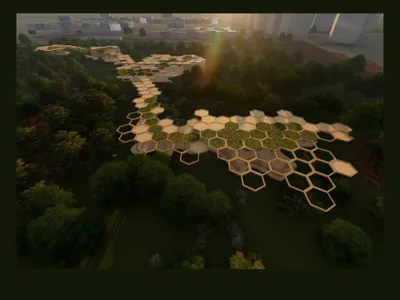
Eco Chapel: A Green Architecture Pavilion Designed in Symbiosis with the Forest
Eco Chapel uses green architecture to weave prayer, learning and reuse into a forest pavilion shaped by modular hexagonal canopies for life.
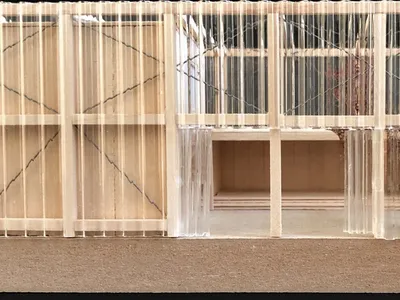
Kaffeebühnen: Coffee Shop Architecture Designed as a Civic Stage Between Vienna’s City and Park
Kaffeebühnen turns coffee shop architecture into a civic stage, linking Vienna’s park edge, urban life, warm timber yards, and coffee craft.
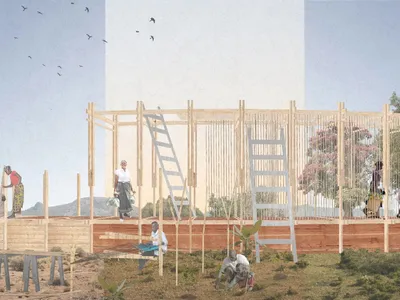
Healing Façade: Sustainable Architecture for Reforestation, Community, and Sacred Ecology in Ethiopia
Healing Façade reimagines sustainable architecture as a living wall that restores soil, catches water and renews Ethiopia's forest churches.


Urban Forest: A Vertical Ecosystem for 5,000 Workers in Singapore's Changi Business Park
Radially stacked pods and layered green decks turn a 7-acre plot into 47 acres of ecological workspace projected for 2040.
Explore Conceptual Architecture Competitions
Discover active competitions in this discipline


Challenge to design a portable theatre

Challenge to design a portable music platform

Challenge to design an open learning module for the elderly
Comments (0)
Please login or sign up to add comments
No comments yet. Be the first to comment!