

Kunshan City Square: Reclaiming Civic Space Through Human-Scaled Urban Landscape
Kunshan City Square transforms a monumental civic plaza into a lively, human-scaled public landscape through corridors, courtyards, and everyday urban activity.


At the heart of Kunshan, directly in front of the Municipal Government building, Kunshan City Square has long stood as a symbol of civic identity. Like many central squares across China, however, its monumental scale and abstract openness rendered it underused—impressive in appearance yet detached from everyday urban life. Completed in 2025, the comprehensive transformation of Kunshan City Square by Dazhou And Associates, led by architect Dazhou Tang, reimagines this civic landmark as a vibrant, human-centered public realm.
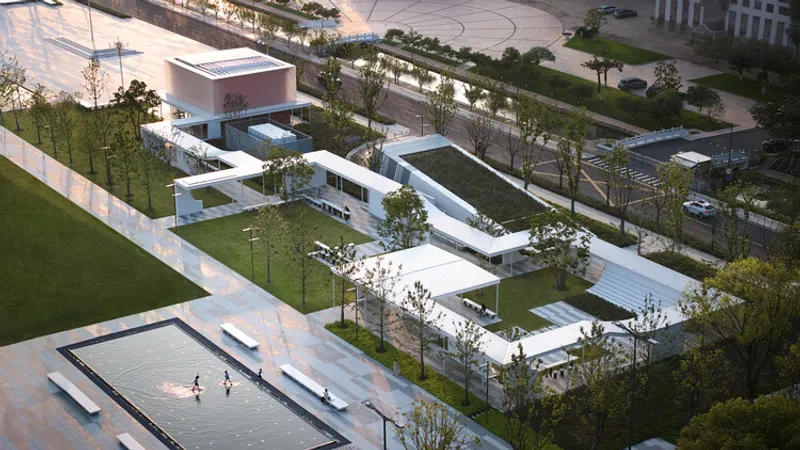
Rather than relying on symbolic form or aerial composition, the project embraces urbanity as its core design principle. Through a careful recalibration of scale, program, and movement, the renewed square has evolved into a lively space for gathering, play, rest, and spontaneous social activity—restoring its relevance as a true civic commons.
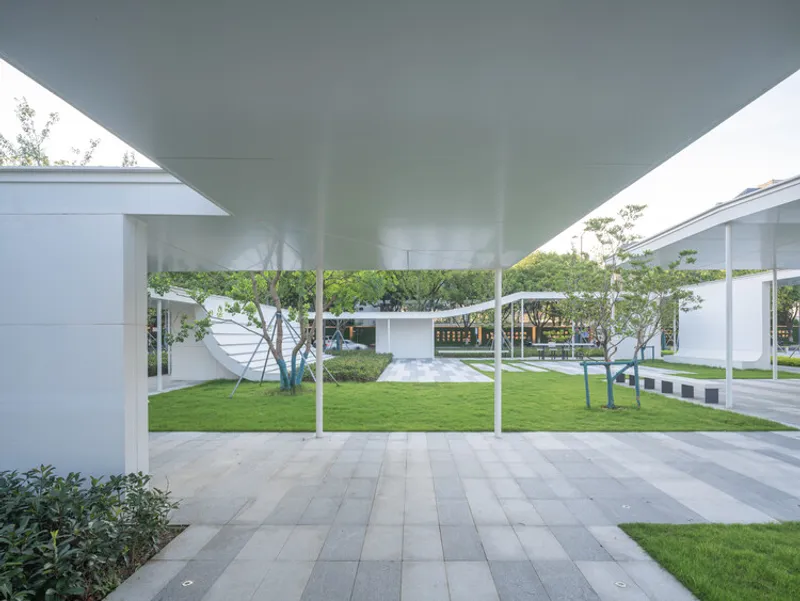
A Layered Transformation Above and Below Ground
The redesign of Kunshan City Square began in 2022 as part of a larger urban upgrade that included the introduction of underground retail, parking, and a subway station. While these new facilities significantly enhanced infrastructure capacity, they also posed challenges to the landscape above ground. Ventilation shafts, elevator cores, and mechanical systems emerged across the site, threatening to fragment the public realm.
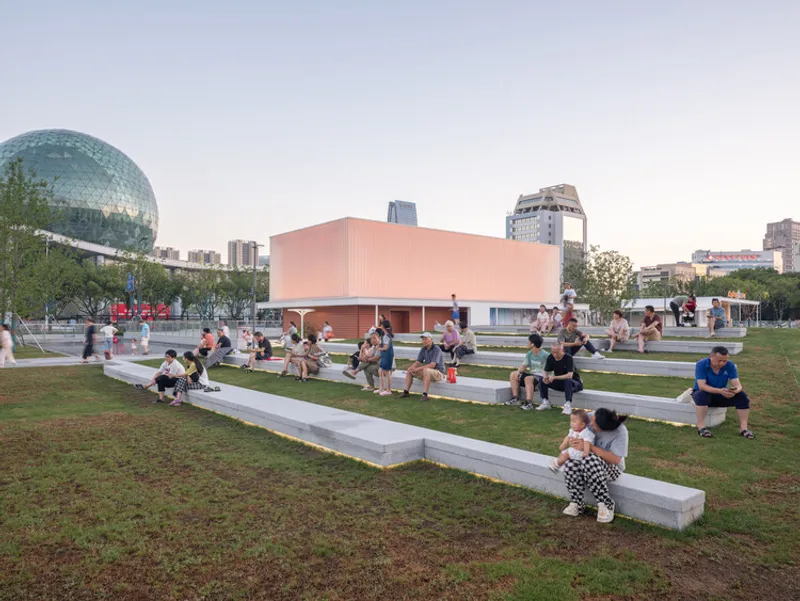
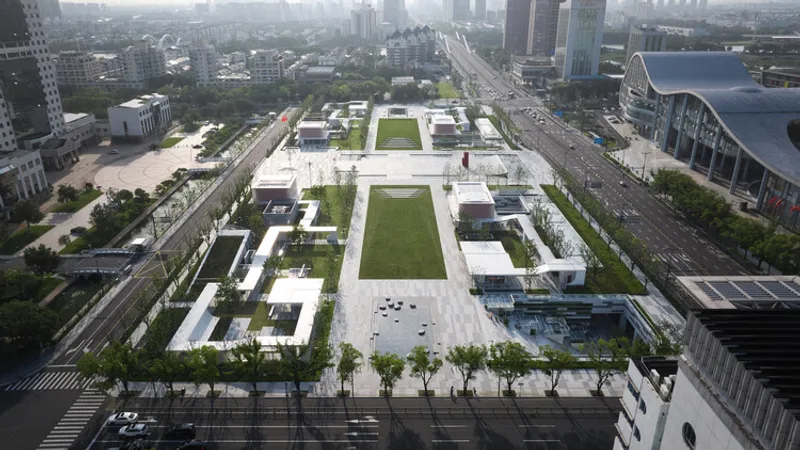
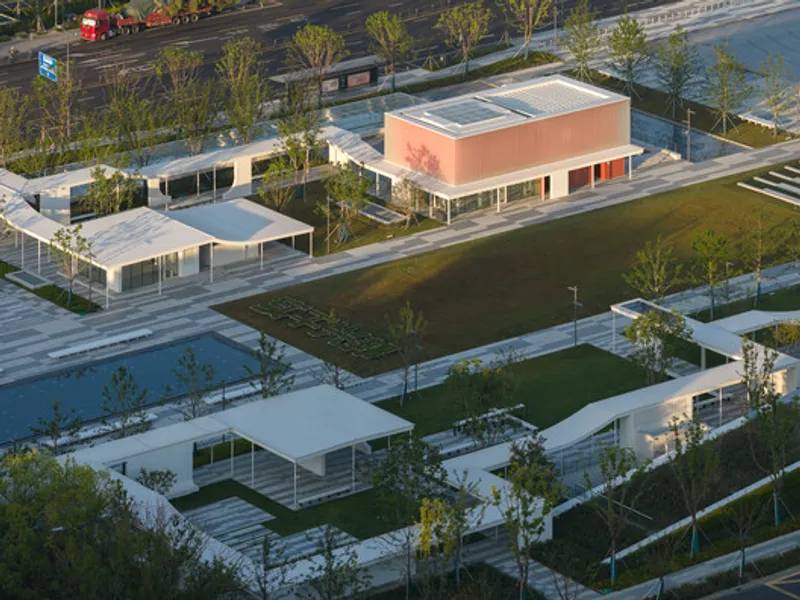
Dazhou And Associates were commissioned to design the above-ground landscape architecture, responding to these constraints while respecting the square’s original cross-axis urban structure. The central axis—long a defining element of the square—was preserved and reinforced through the placement of a linear water feature and a large grass slope, dividing the site into four quadrants.
Rather than allowing infrastructure to dominate the surface, the design integrates these functional elements seamlessly into a new spatial narrative, ensuring continuity, accessibility, and visual clarity.
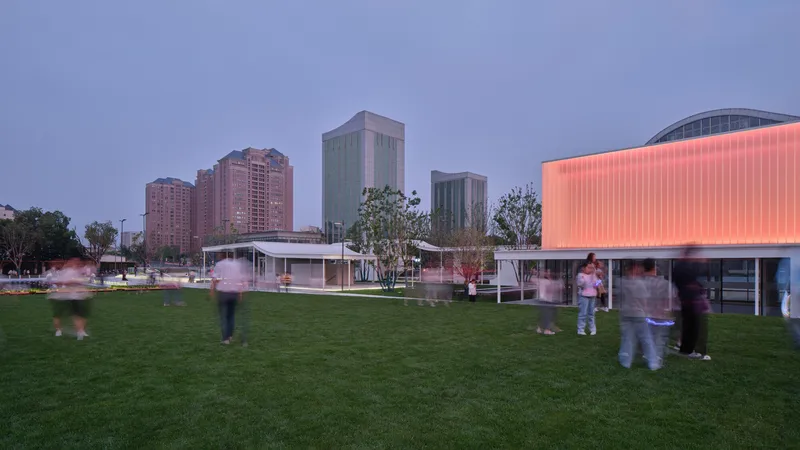
Rethinking Monumentality Through Human Scale
Standing on the original site, the architects were struck by a sense of emptiness and desolation. Although expansive, the square lacked spaces that invited people to linger or interact. This realization shaped the project’s primary design response: introducing meandering, undulating corridors that operate at a human scale.
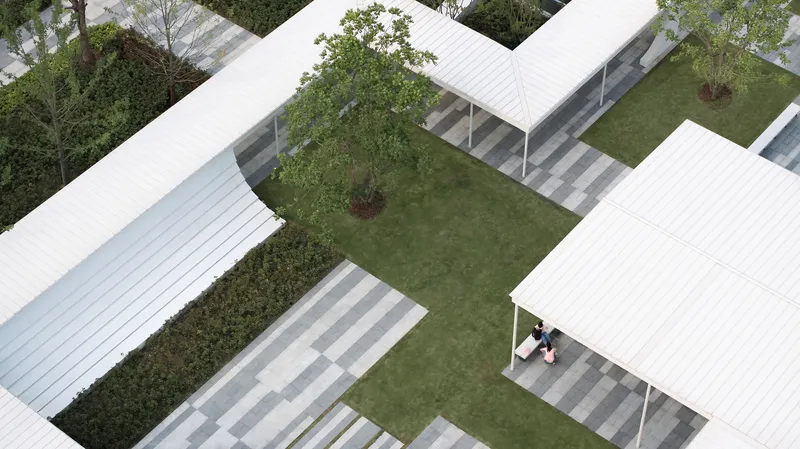
While the square’s overall dimensions continue to belong to the city, the corridors create a sequence of approachable spaces that encourage everyday use. These gently curving paths soften the rigidity of the original layout, offering moments of intimacy and enclosure within the vast open field.
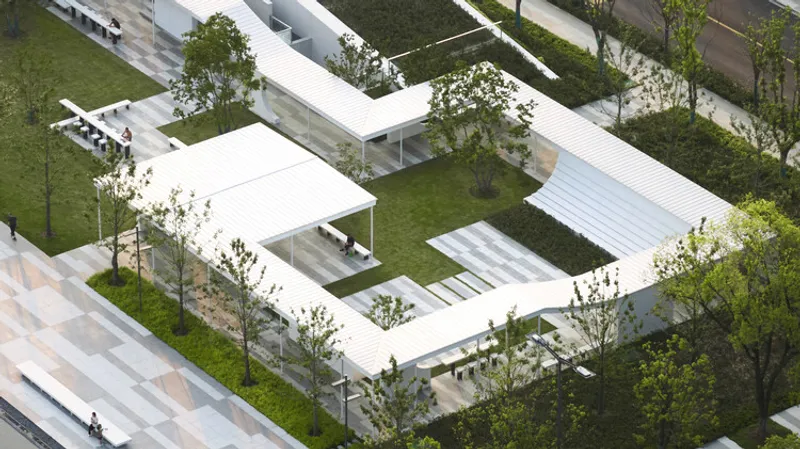
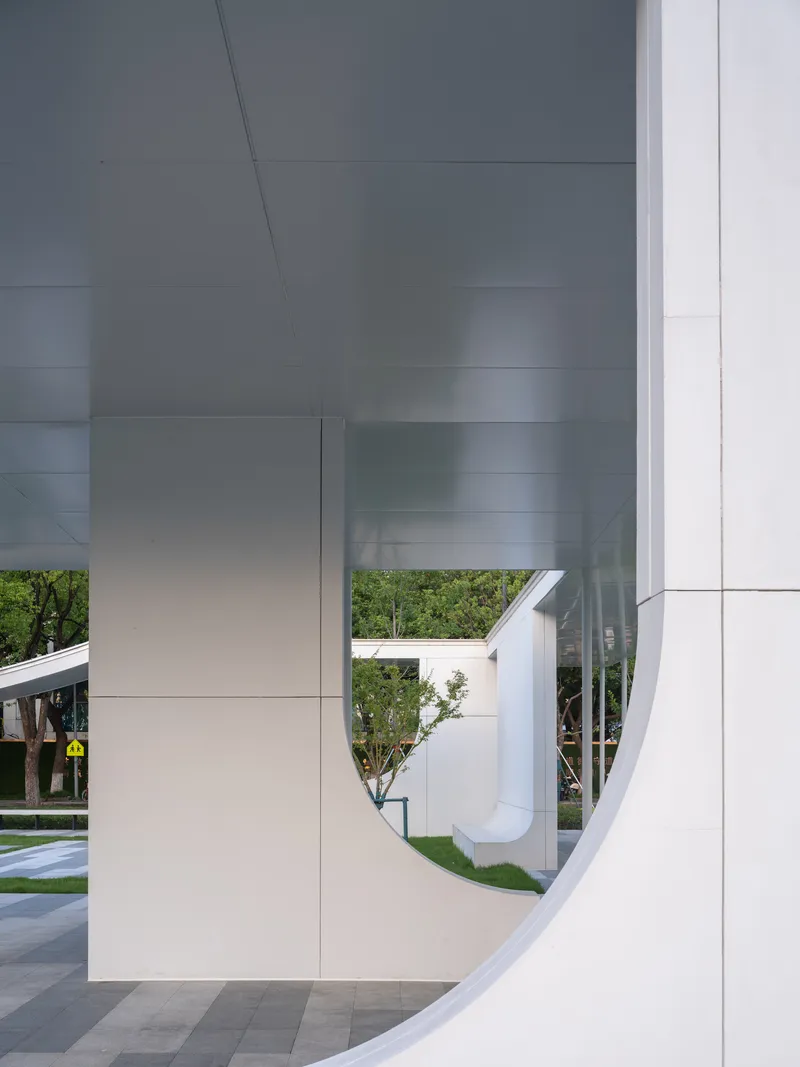
The corridors function as spatial mediators—bridging monumental civic scale and individual experience—making the square legible, welcoming, and alive.
Courtyards and Movement: A Landscape of Everyday Life
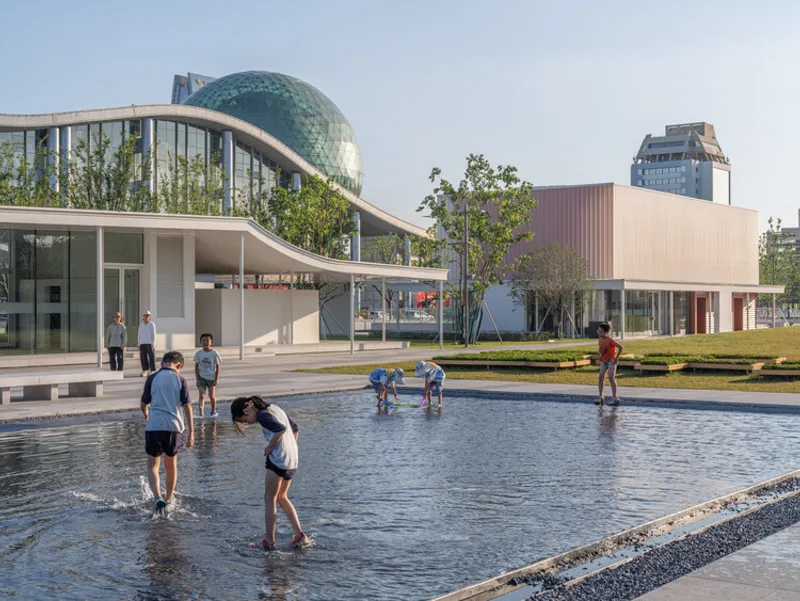
As the corridors weave across the site, they define a series of courtyards that accommodate diverse activities. These spaces support play, rest, gathering, and circulation, responding to the varied rhythms of urban life.
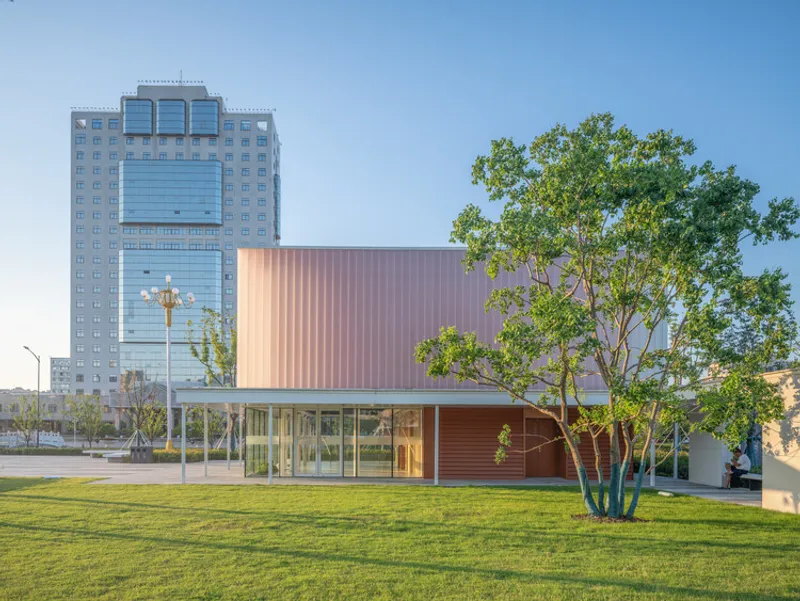
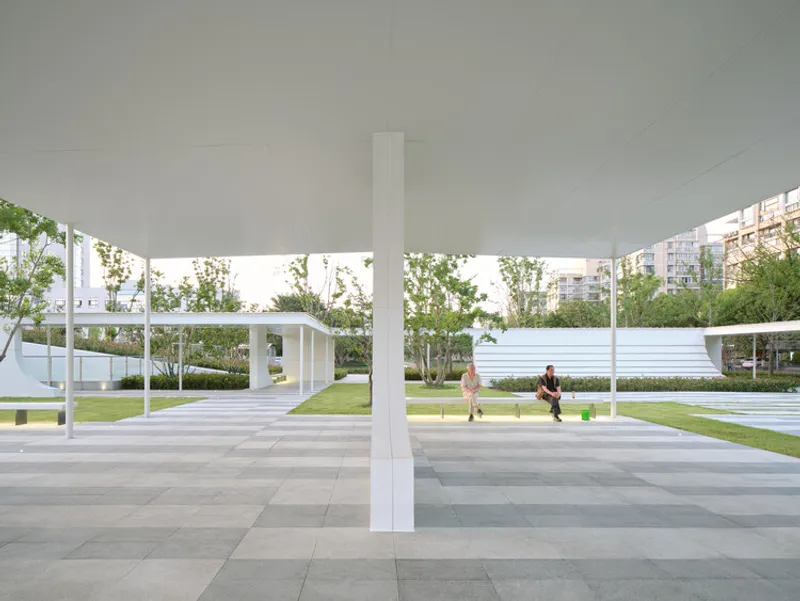
Children run and play near water features, elderly residents rest in shaded areas, and groups gather spontaneously for conversation, singing, or dancing. Movement through the square becomes an experience rather than a mere passage, with each courtyard offering a distinct atmosphere.
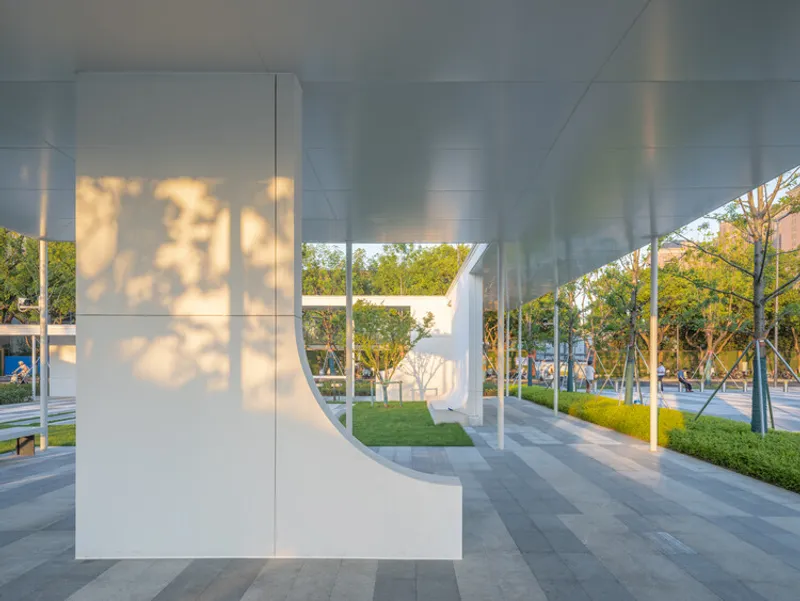
Importantly, the design carefully conceals and integrates ventilation shafts, stairways, and elevators emerging from underground. By embedding these elements within the corridor system, their visual and functional impact is minimized, allowing infrastructure to serve the square without disrupting its spatial continuity.
Program as Catalyst: Red Boxes and the Grand Roof
One of the key reasons many civic squares fail is a lack of functional programming. Kunshan City Square directly addresses this issue through strategic architectural interventions that introduce activity and identity without overwhelming the landscape.
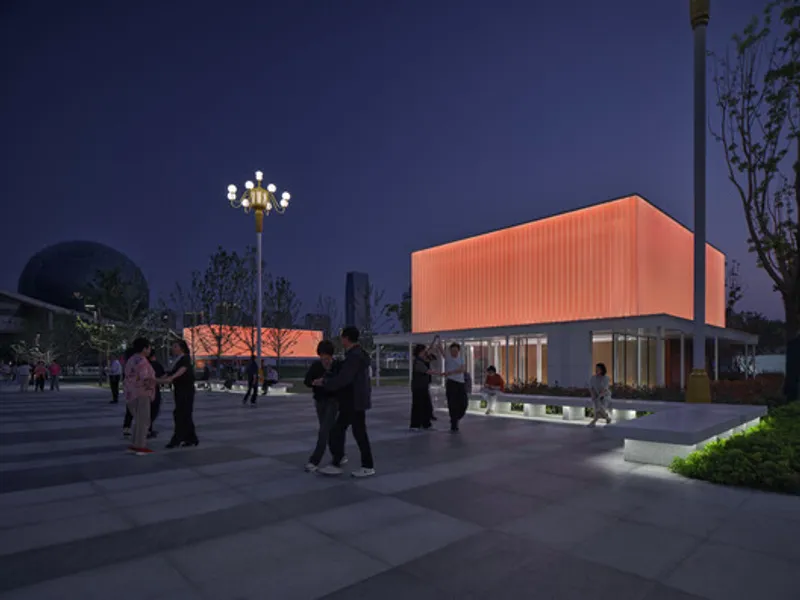
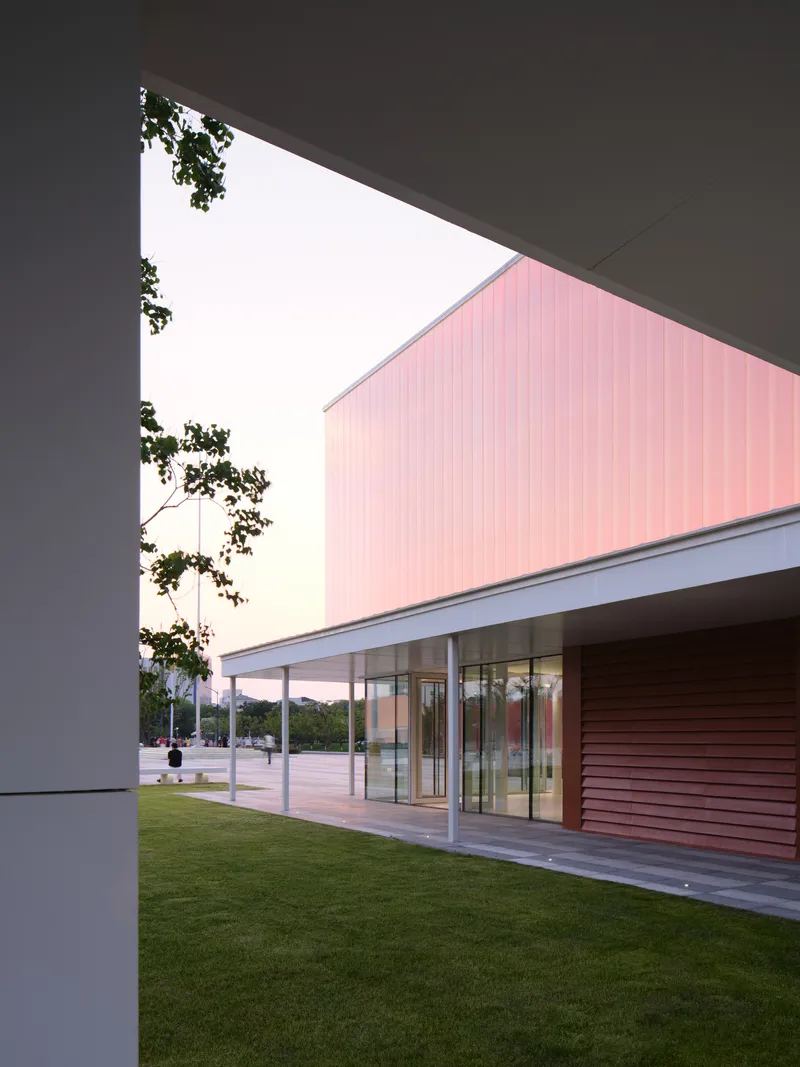
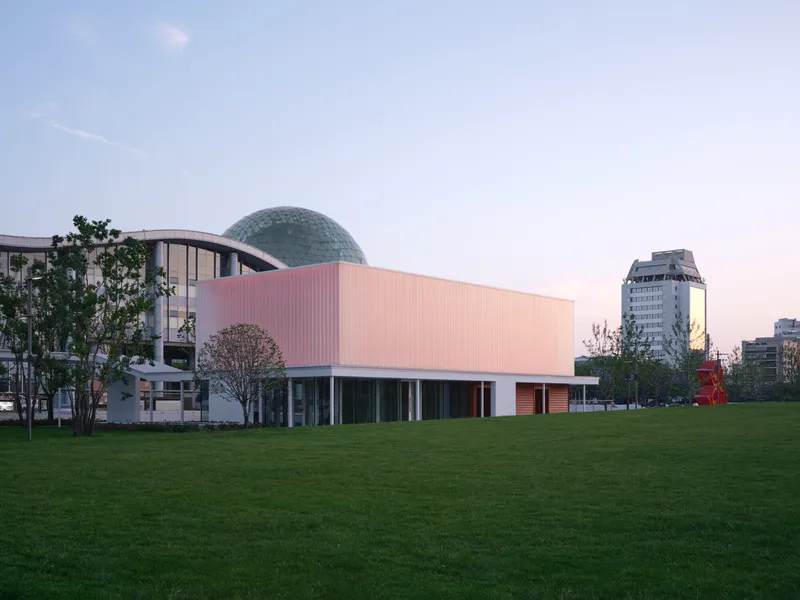
Along both sides of the central axis, mechanical equipment is concentrated underground. Above these zones, elevator halls have been transformed into four glass “red boxes” that house small retail programs. These structures feature double-layered façades, appearing white with subtle red undertones during the day and glowing softly at night.
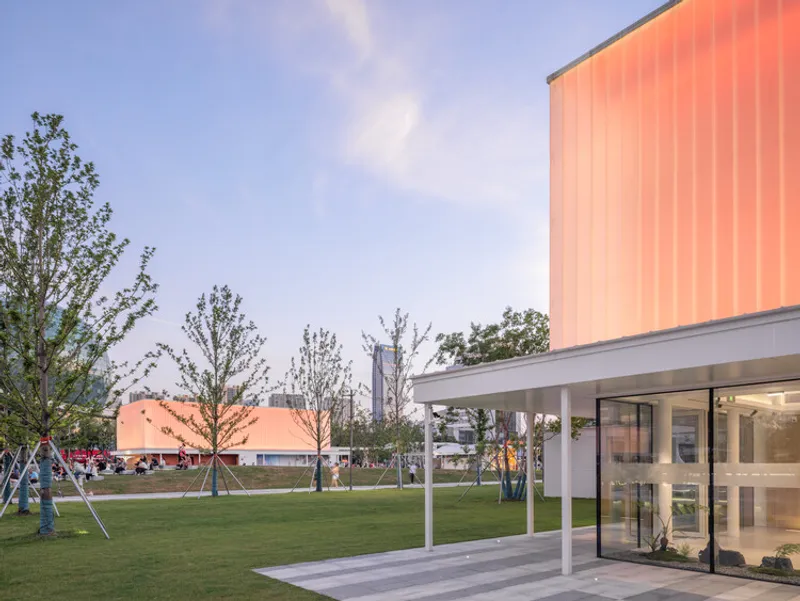
These luminous boxes serve as visual landmarks and social anchors, drawing people into the square and activating it beyond ceremonial use.
At the ends of the corridors, visitors encounter the grand roofs—large, flexible, unprogrammed spaces that expand the corridor system. These sheltered areas accommodate a wide range of activities, from informal gatherings to performances, dancing, and community events. By offering protection from sun and rain, the grand roofs ensure the square remains usable throughout the year.
Structural Lightness: The Floating Roof Concept
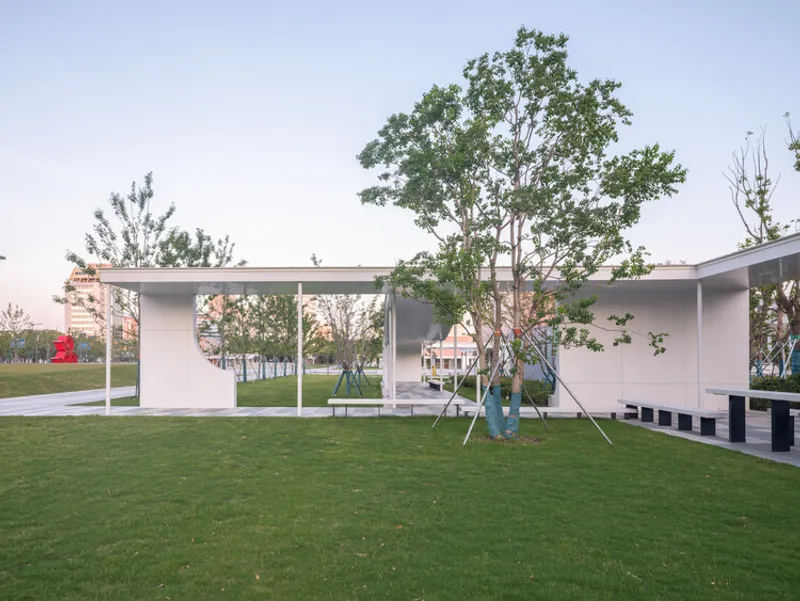
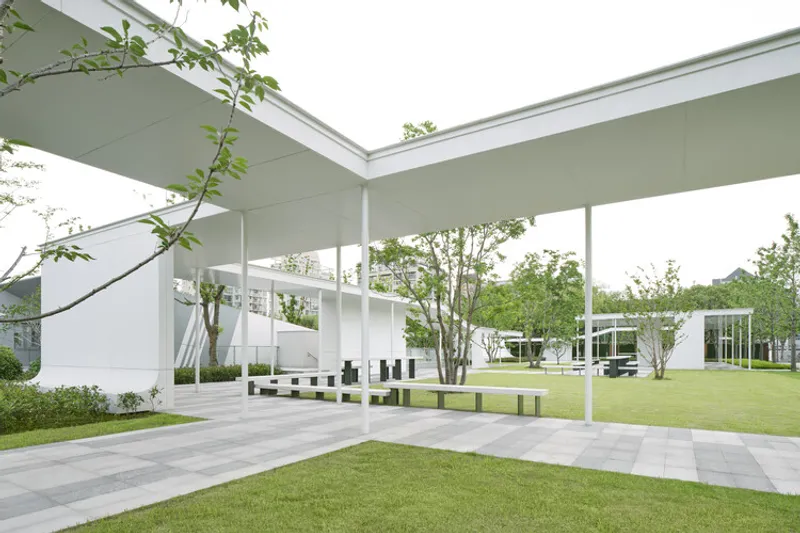
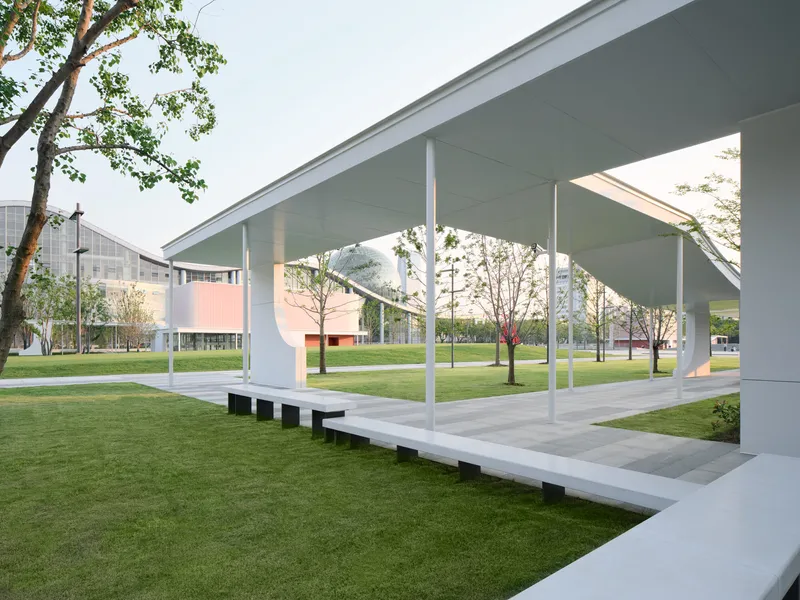
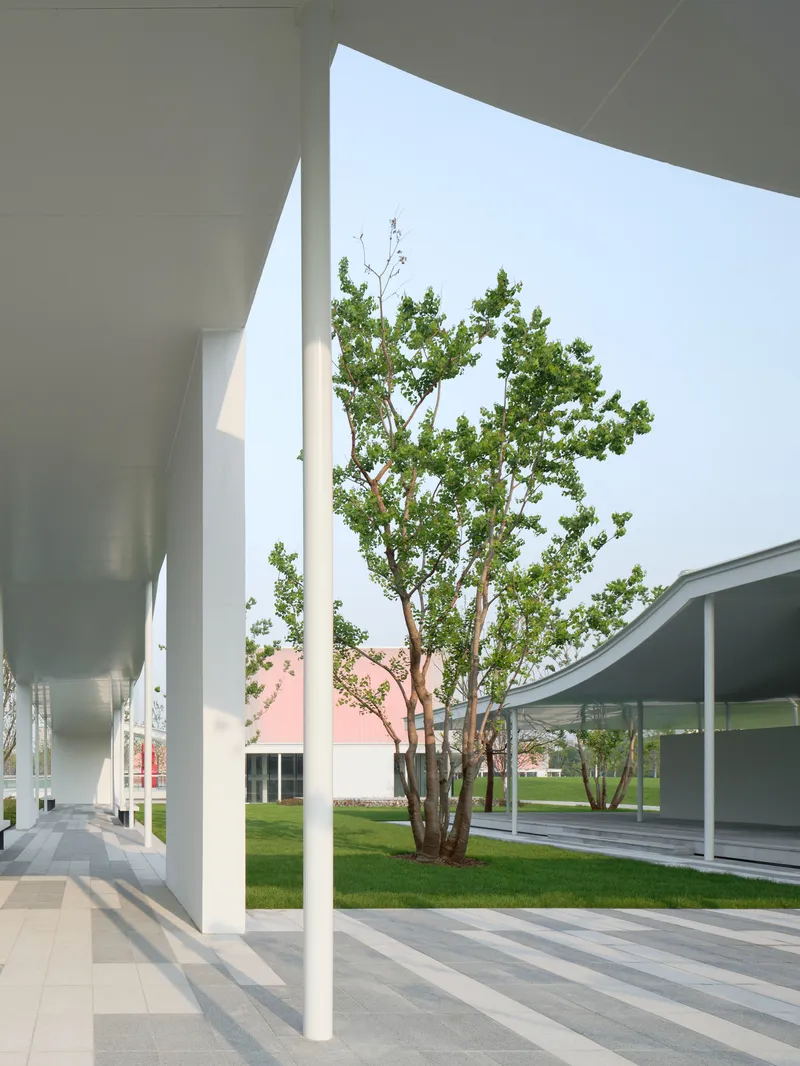
The architectural identity of Kunshan City Square is defined by its floating roof structures, which appear to hover lightly above the ground like ribbons woven through the landscape. This visual effect is achieved through a swaying-column structural system, where slender columns carry vertical loads while shear walls provide lateral and seismic stability.
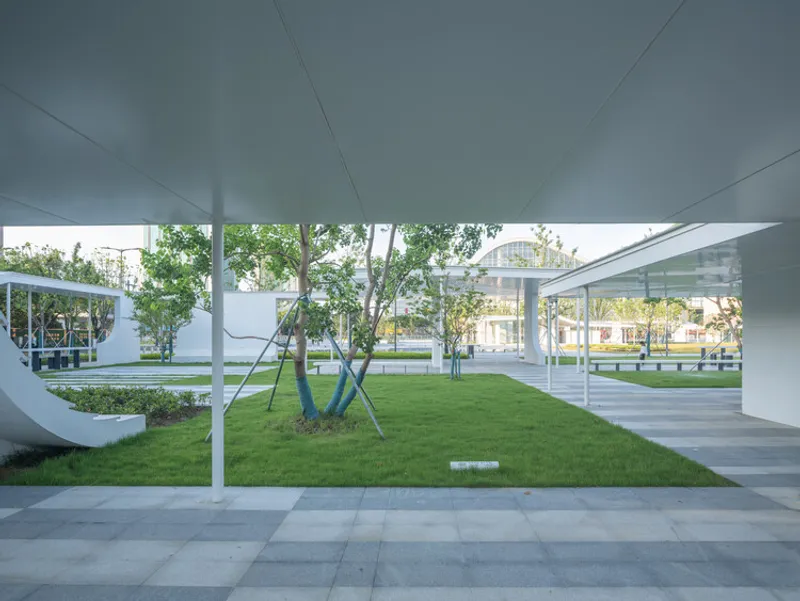
By separating these structural functions, the design minimizes visual obstruction and creates a sense of openness and fluidity. The result is a corridor system that feels light, dynamic, and permeable—offering unobstructed views across the square.
As trees mature over time, the architects envision the corridors weaving through denser foliage, alternately revealing and concealing themselves. This evolving relationship between architecture and nature reinforces the project’s long-term adaptability and poetic quality.
Rejecting Symbolism, Embracing Urbanity
At the core of the project lies a clear philosophical stance. For Dazhou And Associates, urbanity means designing spaces that genuinely belong to people—not landscapes driven by symbolic gestures or diagrammatic aerial compositions.
The architects explicitly reject approaches that prioritize abstract graphics over lived experience. Instead, Kunshan City Square was designed from the ground up, focusing on how people move, gather, rest, and interact within the space.
Through close collaboration with the client, the design team developed programs that respond to real public needs, ensuring that the square functions not just as a civic symbol, but as an active urban landscape embedded in daily life.
A Civic Space Reclaimed by Its Citizens
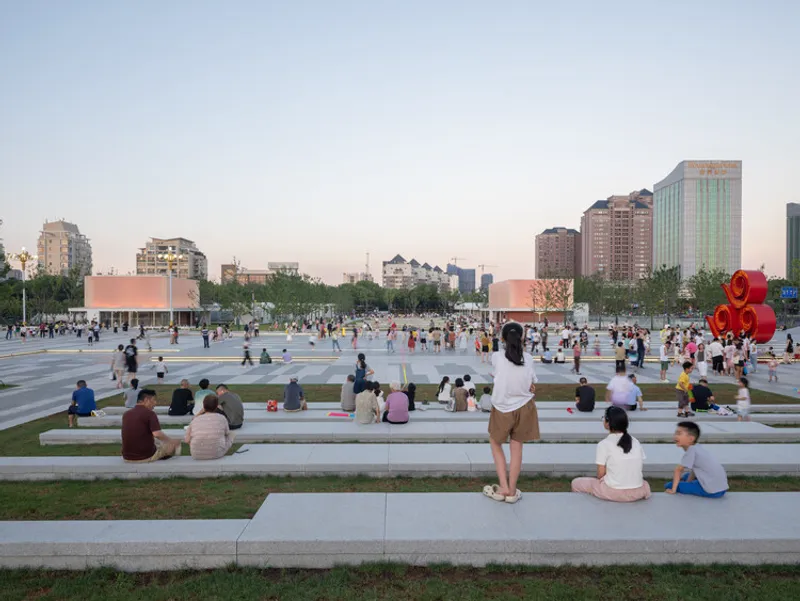
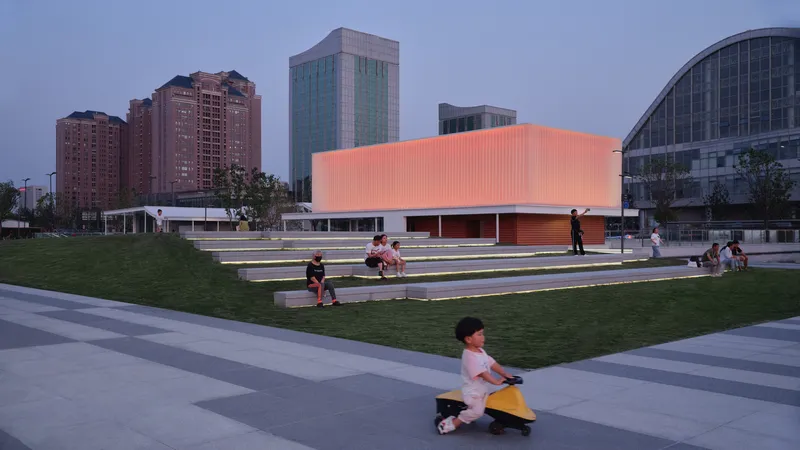
Since its completion, Kunshan City Square has experienced a dramatic transformation in public engagement. Once underused and ceremonial, the square is now constantly animated.
People gather spontaneously to play in fountains, sing, dance, stroll, and relax. The square supports both organized events and informal daily activities, fostering a sense of collective ownership among citizens.
This shift marks the project’s greatest success: the evolution of Kunshan City Square from a symbolic showcase into a living civic space that truly serves its community. By prioritizing human scale, functional programming, and urban connectivity, the project demonstrates how thoughtful landscape architecture can redefine the role of public space in contemporary cities.
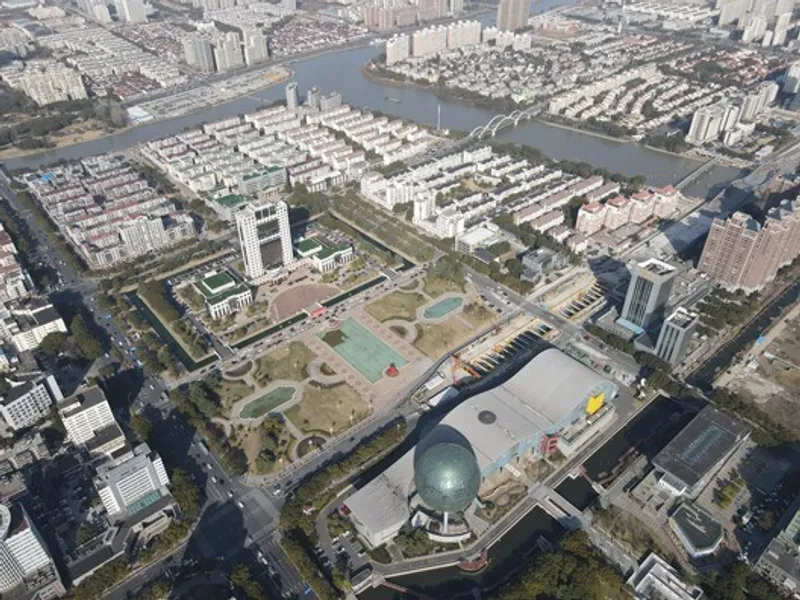
All the Photographs are works of Zhangyue Liu, Fangfang Tian


Popular Articles
Popular articles from the community

Faces of the Soviet Avant-Garde: Turning Moscow's Street Names into an Open-Air Museum
A network of sculptural installations across a Moscow residential district transforms forgotten architect names into spatial encounters with cultural memor

Cloaked Colonization: A Mobile Underwater Habitat That Moves Like a Fish
Micah Abaya's shortlisted EHC Pacific entry reimagines ocean settlement as a dispersed network of self-sustaining architectural organisms.

Singing Woman: Contemporary Architecture Inspired by Estonia’s Voice and the Sea
Singing Woman turns Estonia’s song culture into flowing opera house architecture, blending public life, landscape, sea, and national memory.

Opera on the Sea: Driftwood Logic Shapes a Timber Opera House on Estonia's Coast
Trevor Orgill's opera house translates the entangled drift of floating timber into a civic building where wood, water, and music converge.

Similar Reads
You might also enjoy these articles


Hodi-Mandai Geram
Project Function: Preservation and revitalization of the Intangible heritage and socio-spatial identity of the Hodi by Housing, Cultural Memory Center, Sacred Grove, landscape, local tourism economy


Olio Towers: A Mid-Rise for Performers That Fuses Housing, Rehearsal, and Stage
Located blocks from Houston's Theater District, this modular tower stacks living units around a central performance atrium.

Oasis: Modular Green Housing Carved into Dhaka's Urban Fabric
A shortlisted Plugin Housing entry reclaims unauthorized settlements in Dhaka with stepped concrete volumes, green roofs, and ventilation-driven design.

Black Hole: A Floating Megastructure for the Post-Physical Era
Emiliano Mazzarotto envisions a spherical, self-scaling arena where e-sports, digital hotels, and holographic stadiums replace traditional public space.

Explore Public Square Competitions
Discover active competitions in this discipline

Challenge to design locus for the upliftment of human rights

Challenge to reimagine the Iron Throne

Photograph architecture without architects

Illustrate the lost glory of Angkor Wat - Render Challenge
Comments (0)
Please login or sign up to add comments
No comments yet. Be the first to comment!