
Lagunita House: A Masterpiece of Hillside Architecture by Croxatto y Opazo Arquitectos
This article explores the innovative design of Lagunita House, a modern hillside architecture project blending functionality, sustainability, and aesthetics.


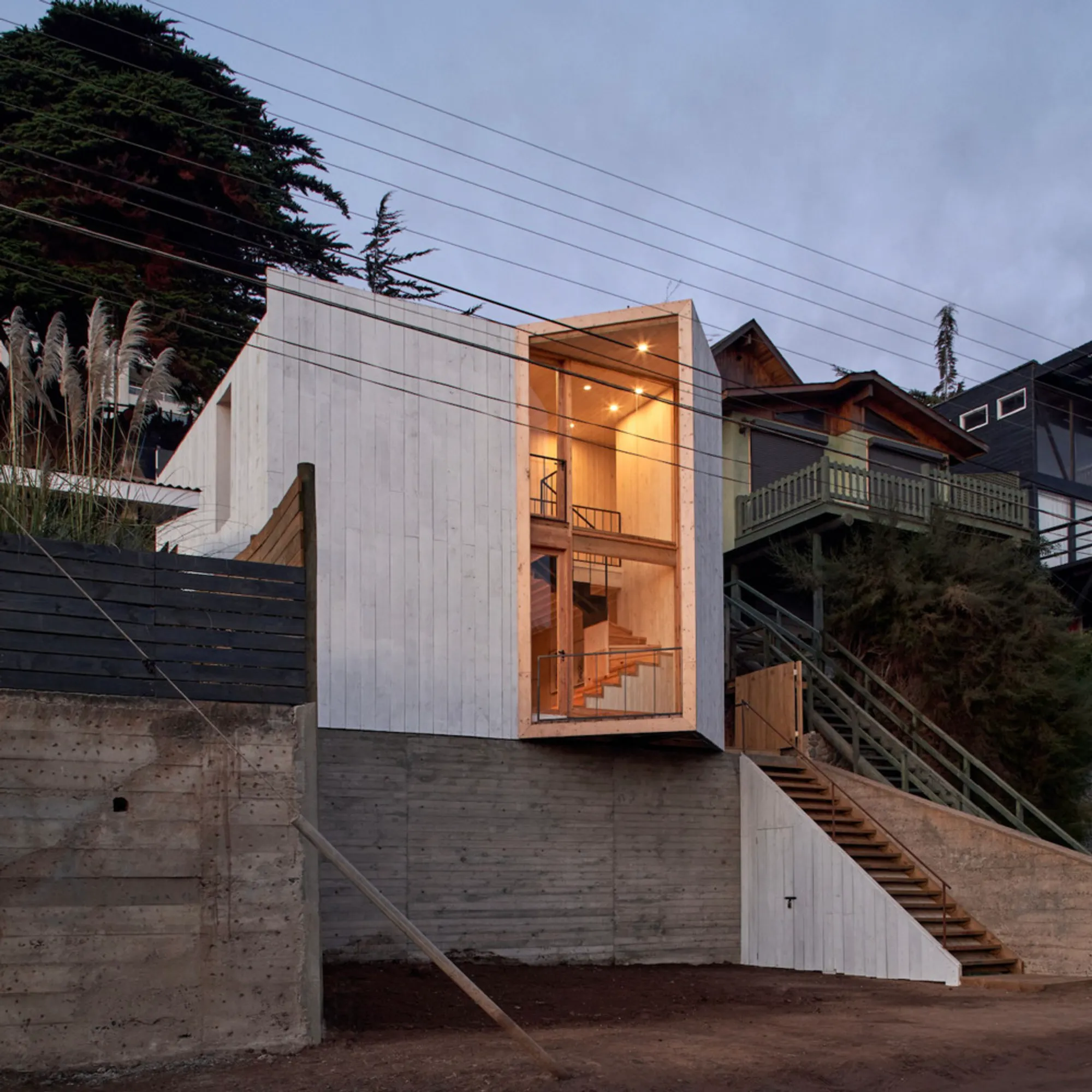
Hillside architecture is a unique design challenge, requiring a deep understanding of terrain, structure, and environment. The Lagunita House, designed by Croxatto y Opazo Arquitectos, is a prime example of how to harmonize architecture with its hillside setting. Located in Laguna Zapallar, Chile, this compact yet innovative second home beautifully integrates into its sloped landscape. Completed in 2023, it showcases both aesthetic appeal and functional design, making it an exemplary model for hillside architecture.
The Essence of Hillside Architecture
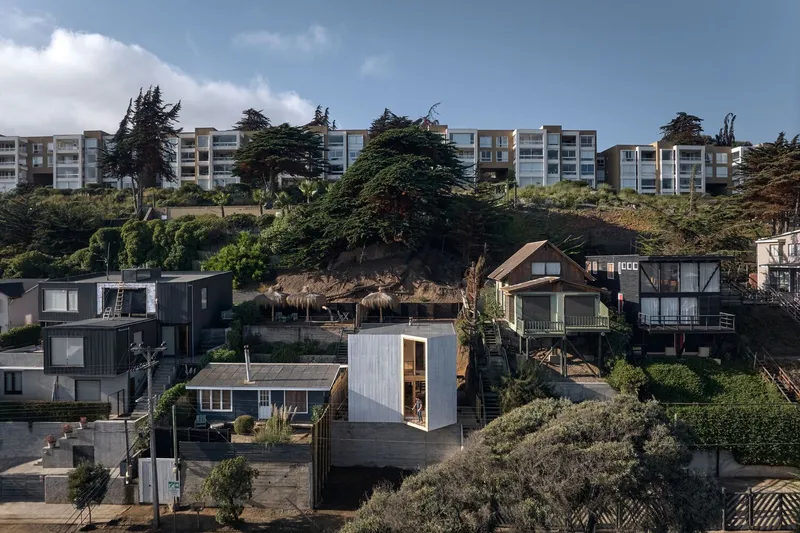
Hillside architecture presents several design challenges, including steep slopes, limited space, and the need for structural stability. In contrast to traditional flatland designs, hillside homes must blend with their natural surroundings while maintaining safety, comfort, and aesthetic value. The Lagunita House rises to these challenges, offering a refined solution that balances the harsh slope with elegant simplicity.
Site and Structural Design: Mastering the Slope
Embracing the Natural Landscape
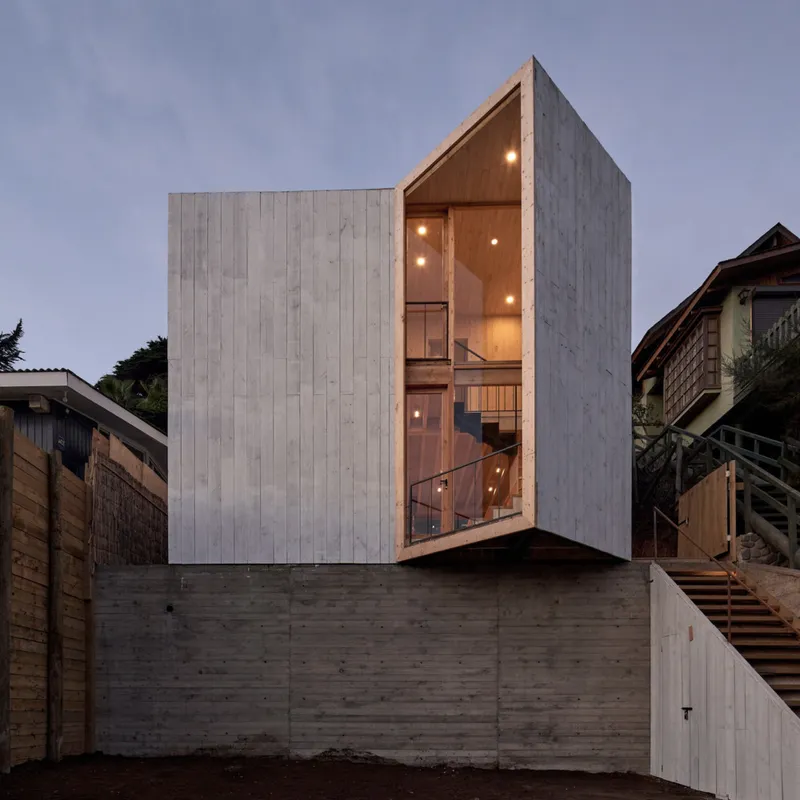
The Lagunita House sits on a 300m² plot with a 25° slope, rising from the street level to the higher northern edge of the plot. This challenging terrain required an architectural strategy that utilized the land's natural topography rather than imposing a conventional flat structure. By dividing the plot into three levels, the architects made efficient use of the land, creating a sense of flow that aligns with the natural environment.
The first level houses the parking spaces and serves as the foundation, providing a stable platform for the upper structures. Above this, the second level contains the main living areas, elevated 3 meters above the street for privacy and panoramic views. The third level serves as a terrace, offering sweeping views of the Pacific coast and the nearby town of Laguna, perfectly exemplifying how hillside architecture can capitalize on natural vistas.
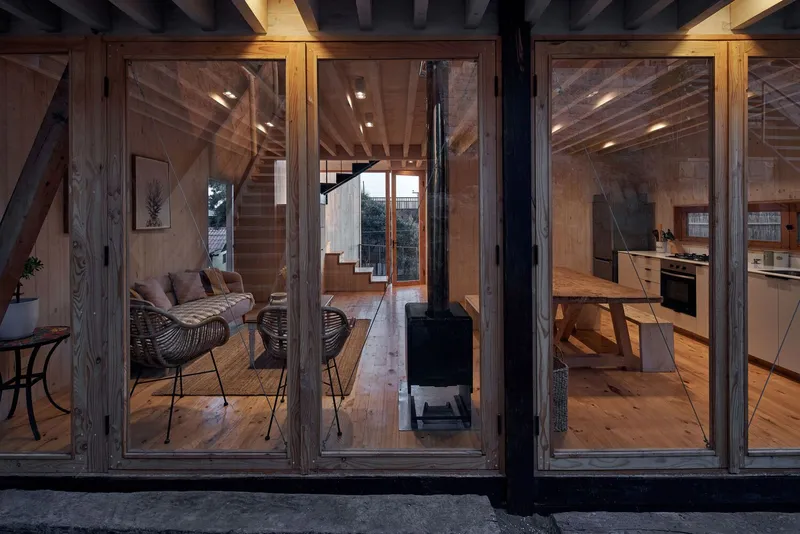
Concrete Walls and Wooden Cube Structure
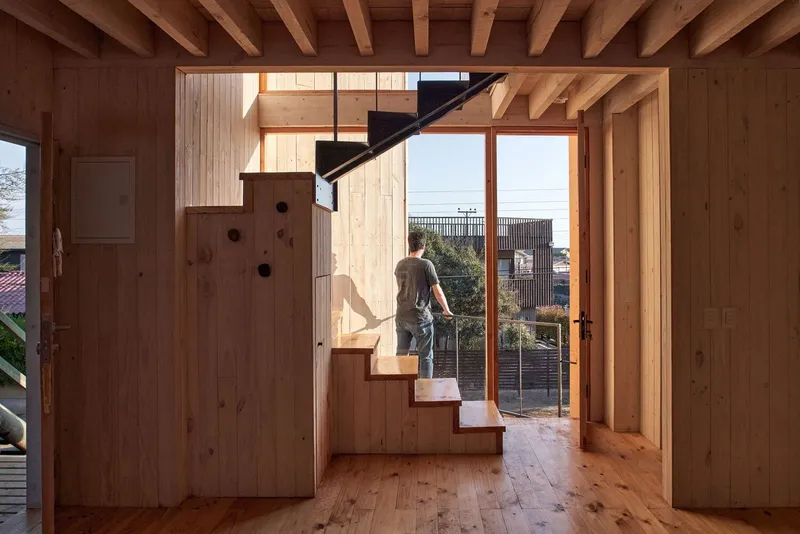
The use of concrete retaining walls is central to the house's structural integrity. These walls support the hillside and create distinct levels on the plot, allowing for stable construction. The main living area is housed within a simple white wooden cube, 7 meters on each side and 5.5 meters high. This minimalist approach not only simplifies the structural process but also reduces costs, demonstrating that sophisticated hillside architecture doesn’t always require complexit
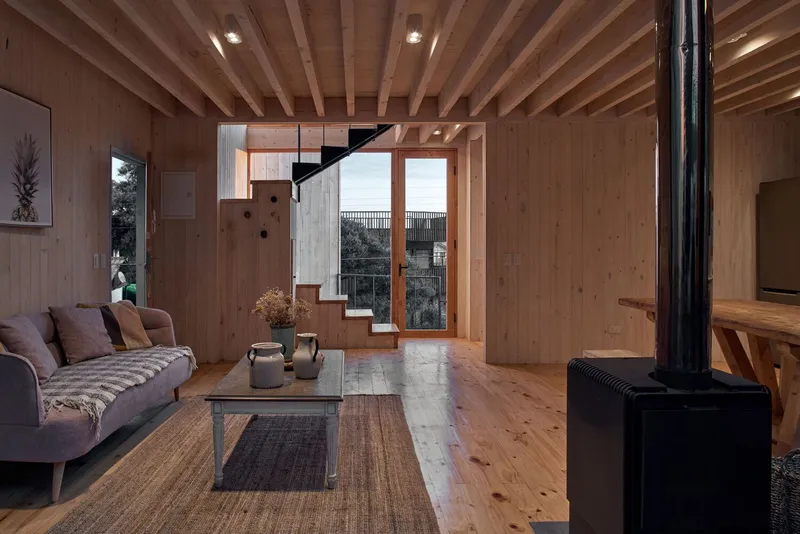
Expansive Views and Connection to Nature
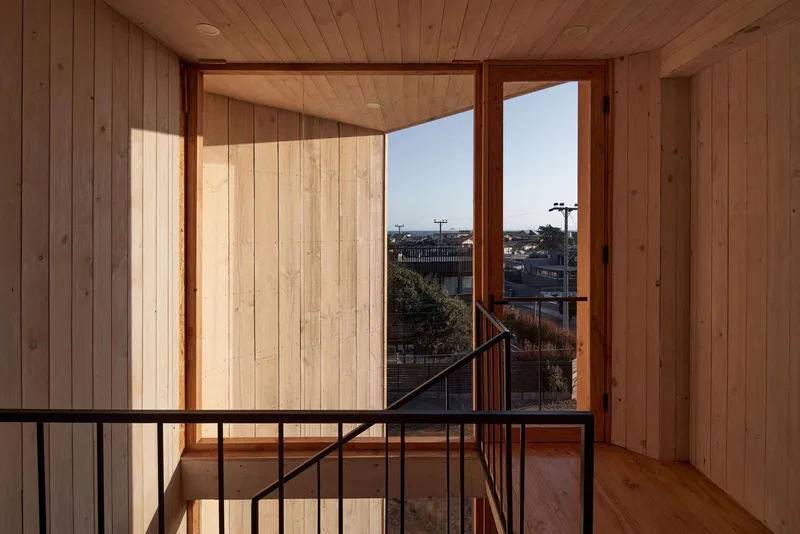
The house’s design also prioritizes north-facing windows, which offer expansive views of the natural surroundings. Six large Oregon pine windows frame the picturesque hillside and garden, connecting the interior with the outside world. Additionally, a small decorative patio further enhances the sense of openness and expands the spatial experience.
The south-facing side of the house is more enclosed, offering privacy from the street. However, the windows on this side are strategically placed to ensure natural light enters the home, gently warming the wooden walls and creating a cozy atmosphere. This balance between openness and privacy is a key element of hillside architecture, ensuring both comfort and intimacy.
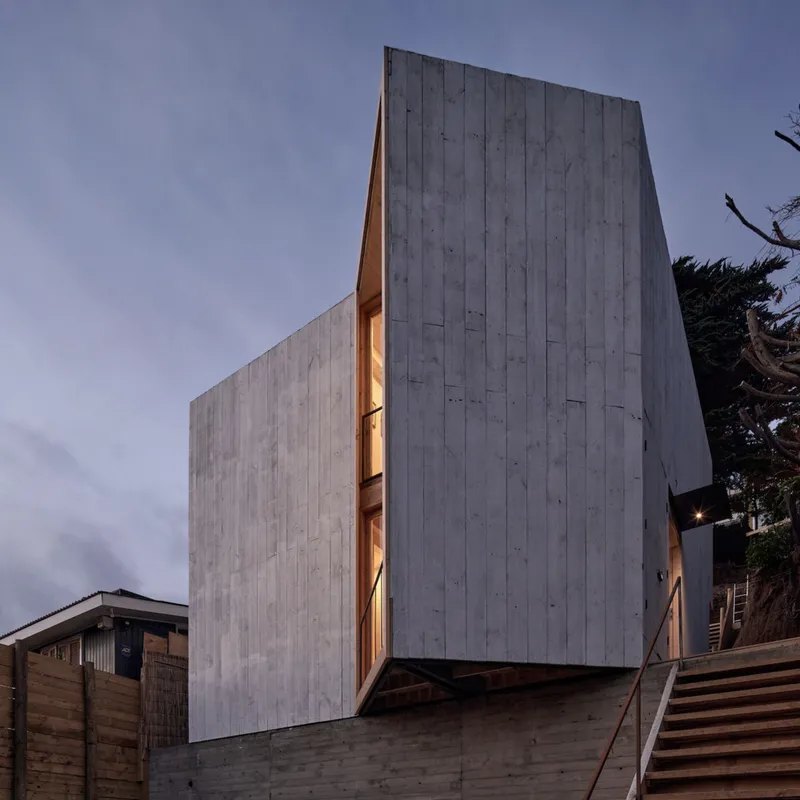
The Role of Outdoor Spaces in Hillside Architecture
Creating a Seamless Indoor-Outdoor Connection
One of the standout features of hillside homes is their ability to integrate outdoor living spaces. In the Lagunita House, the elevated terrace on the third level serves as an extension of the interior, creating a seamless flow between indoor and outdoor spaces. The terrace offers panoramic views of the surrounding area, with faceted walls designed to capture the afternoon light, transforming the space into a glowing lighthouse as the sun sets.
This connection to nature is essential in hillside architecture, where the views and natural elements are just as important as the structure itself. By incorporating such spaces, the architects have ensured that the home feels both expansive and integrated into its environment.
A Model of Modern Hillside Architecture
The Lagunita House by Croxatto y Opazo Arquitectos is an excellent example of modern hillside architecture that successfully combines innovation, functionality, and environmental harmony. By embracing the natural slope of the land and utilizing simple yet effective materials, the house fits seamlessly into its hillside setting, offering both beauty and comfort. As urban and rural spaces become more integrated, hillside homes like Lagunita House will continue to inspire architects to create thoughtful, sustainable designs that enhance the relationship between people and nature.
All Photographs are work of Cristobal Palma / Estudio Palma




Popular Articles
Popular articles from the community


Co-Life: Senior Housing Design That Reconnects Older Adults With the City
Co-Life reimagines senior housing design through healing gardens, shared streets, workshops, and a sustainable community across generations.

Co-life: Sustainable Architecture for Age-Friendly Community Living
Co-life reimagines sustainable architecture for seniors through courtyards, rammed earth, shared gardens, and spaces designed for belonging.

The Ocean Hive: Sustainable Architecture for a Self-Sufficient Civilization at Sea
The Ocean Hive imagines sustainable architecture at sea, where modular habitats, algae, wave power and ocean waste sustain a growing colony.

Hill & Cross Opera: Sculptural Opera House Architecture Shaped by Tallinn’s Landscape and Identity
Hill & Cross Opera reimagines opera house architecture in Tallinn through its sculptural hill, civic plaza, glass wave and a luminous cross.


Similar Reads
You might also enjoy these articles


Hodi-Mandai Geram
Project Function: Preservation and revitalization of the Intangible heritage and socio-spatial identity of the Hodi by Housing, Cultural Memory Center, Sacred Grove, landscape, local tourism economy


Olio Towers: A Mid-Rise for Performers That Fuses Housing, Rehearsal, and Stage
Located blocks from Houston's Theater District, this modular tower stacks living units around a central performance atrium.

Oasis: Modular Green Housing Carved into Dhaka's Urban Fabric
A shortlisted Plugin Housing entry reclaims unauthorized settlements in Dhaka with stepped concrete volumes, green roofs, and ventilation-driven design.

Black Hole: A Floating Megastructure for the Post-Physical Era
Emiliano Mazzarotto envisions a spherical, self-scaling arena where e-sports, digital hotels, and holographic stadiums replace traditional public space.


Explore Architecture Competitions
Discover active competitions in this discipline



Challenge to reimagine the Iron Throne


Photograph architecture without architects


Illustrate the lost glory of Angkor Wat - Render Challenge


Design challenge to reuse E-waste
Comments (0)
Please login or sign up to add comments
No comments yet. Be the first to comment!