
Lamarilla Reforestation House: A Pioneering Reforestation House Architecture in Colombia
A small forest‑edge cabin built to enable reforestation, blending lightweight timber architecture with ecosystem restoration in Colombia.


Architecture as Ecological Intervention
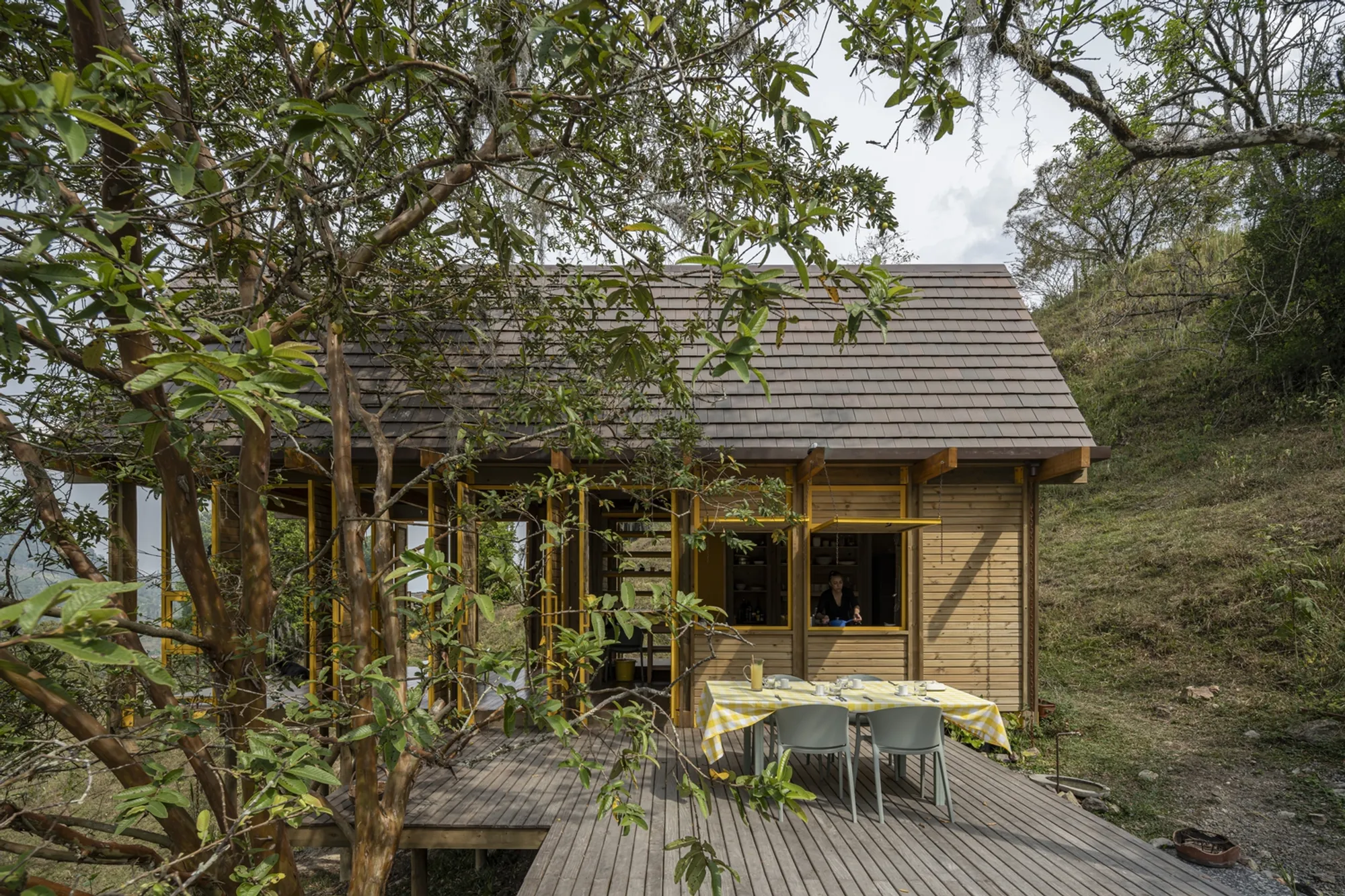
Situated in Fredonia, Colombia, the Lamarilla Reforestation House by Quena Margarita Gonzalez Escobar and Juan David Hoyos Taborda is not just a dwelling—it is a living strategy for reforestation house architecture. Envisioned as a compact and flexible habitat, this 67 m² cabin enables reforestation and ecosystem restoration while minimizing ecological impact and elevating habitat regeneration.

Design Rooted in Landscape and Function
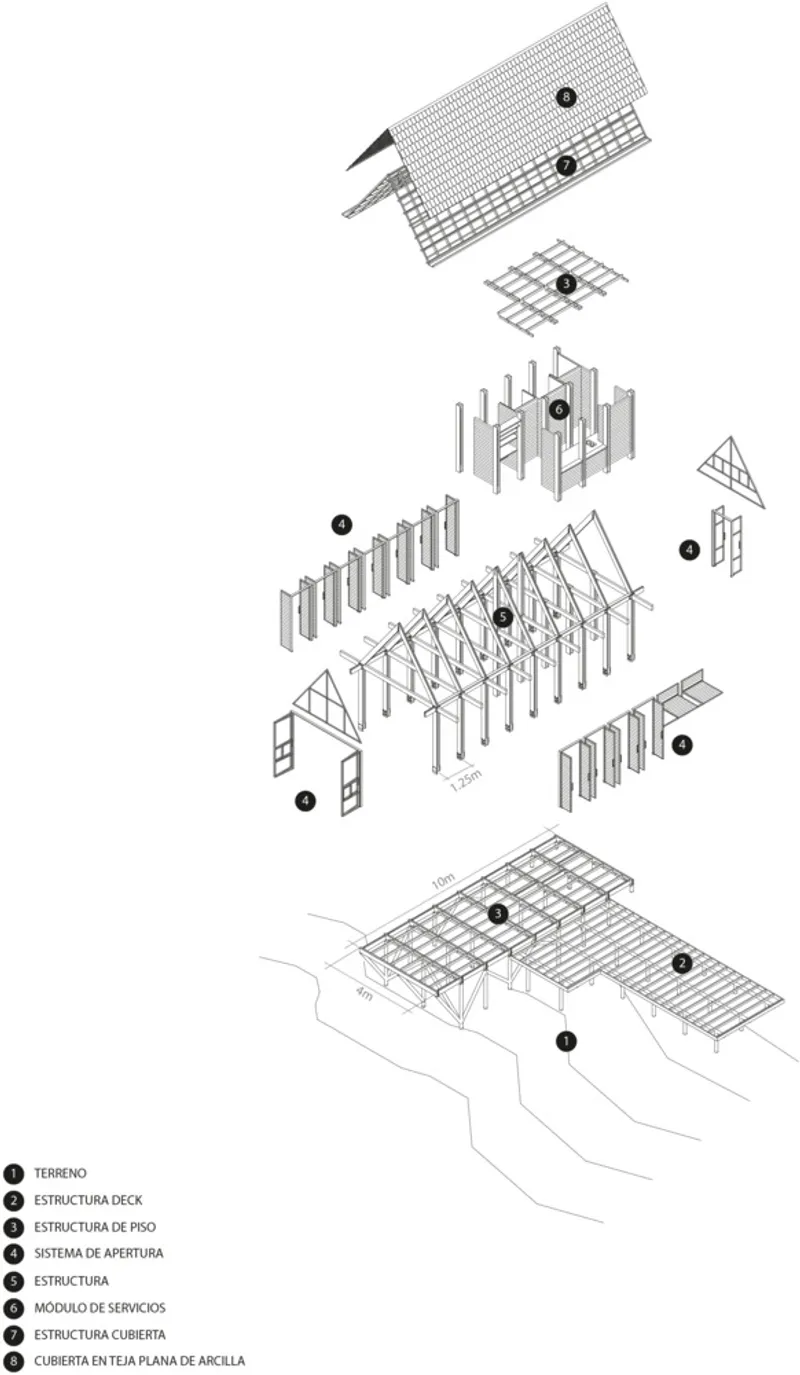
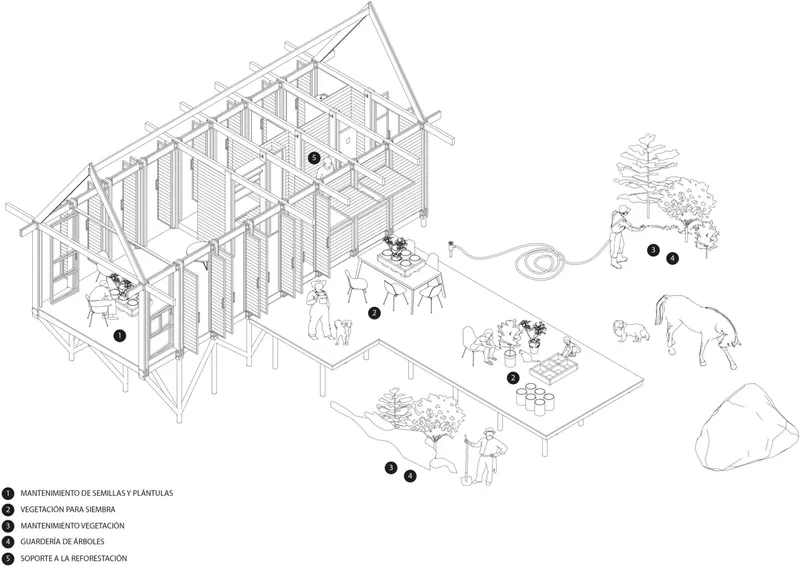
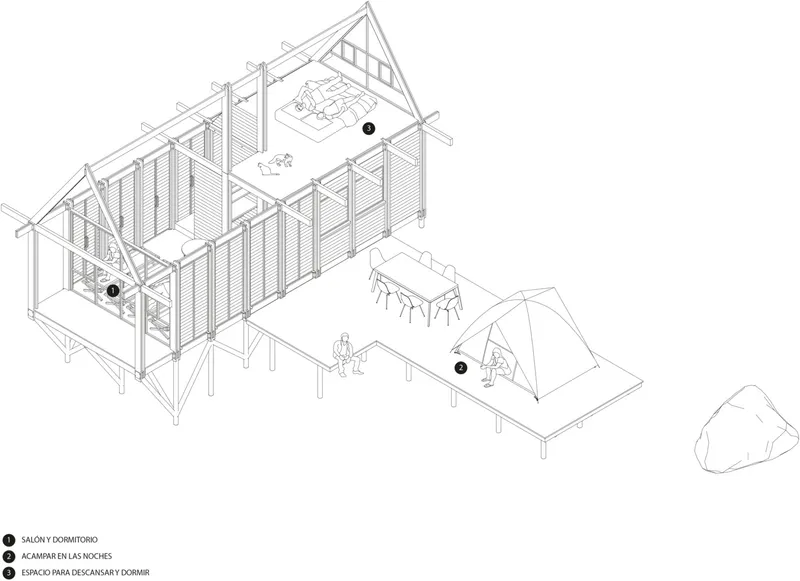
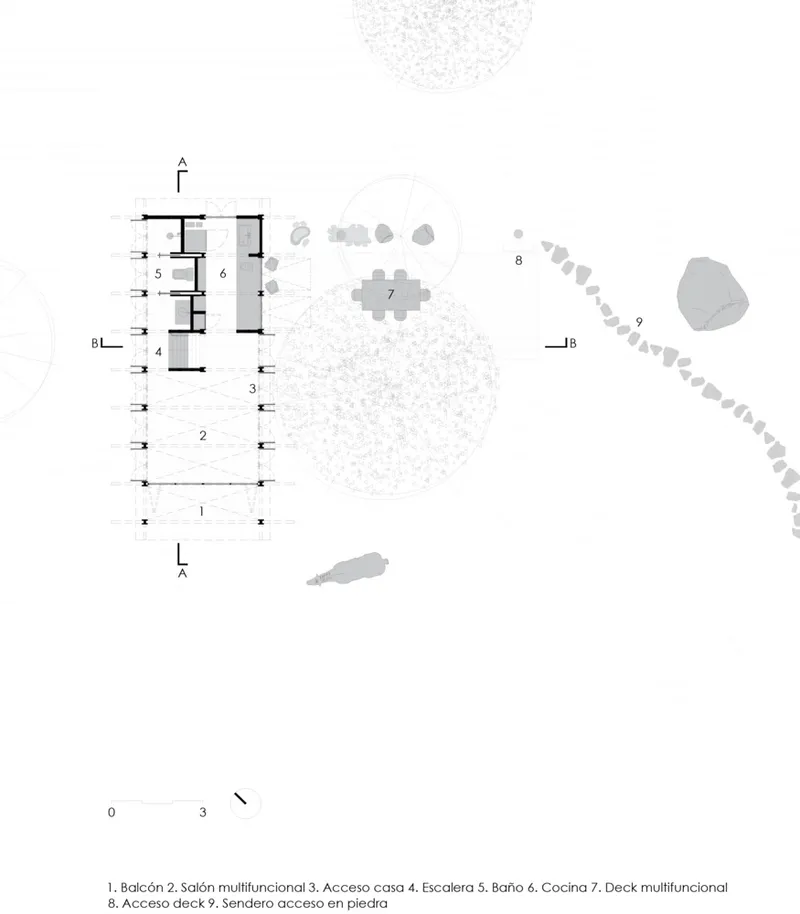
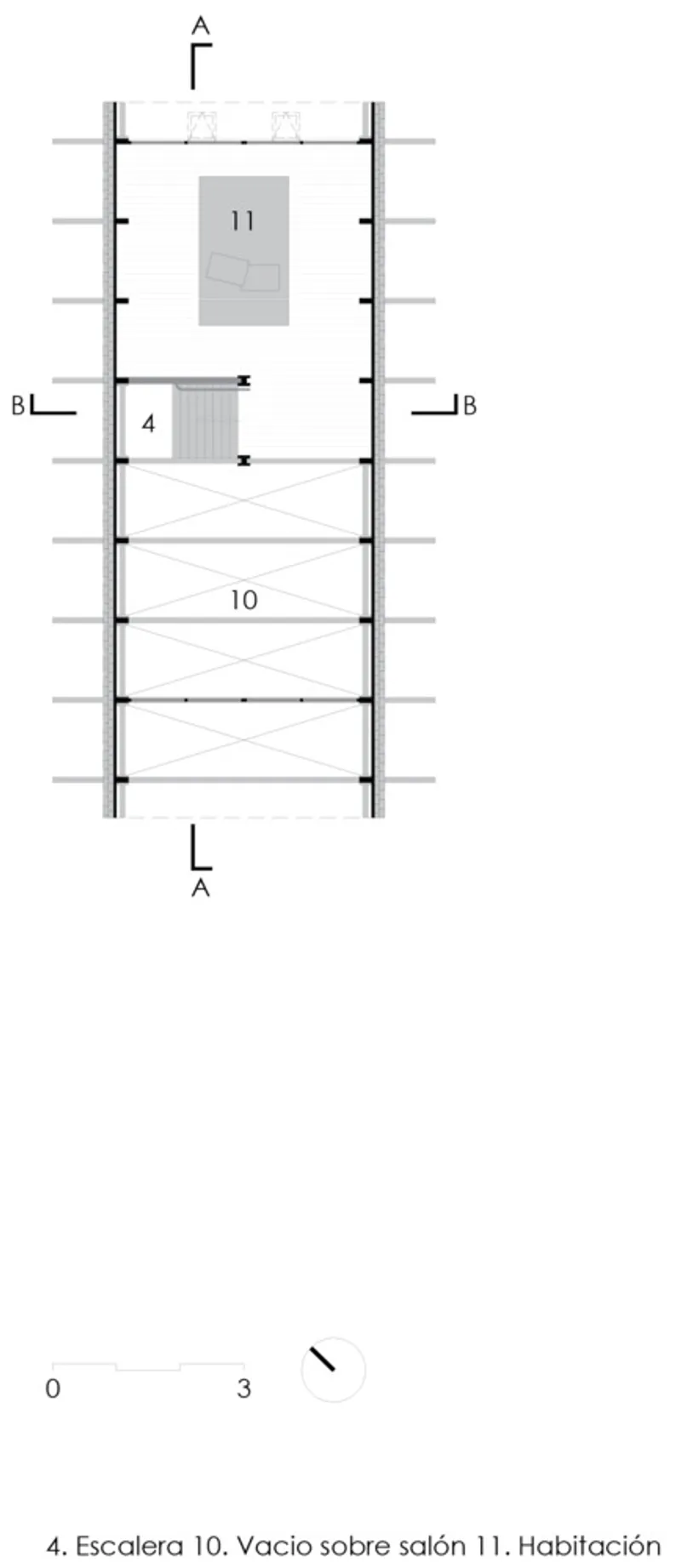
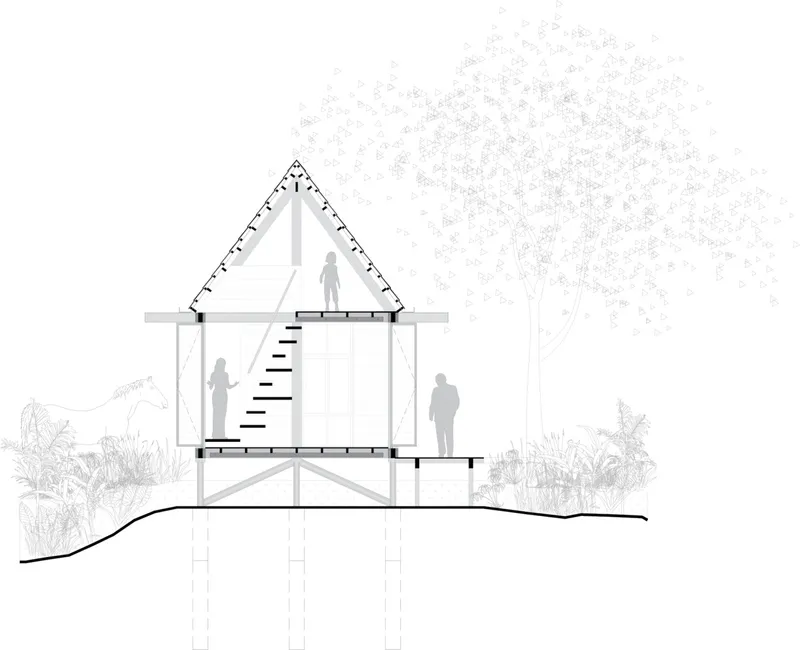
The house is raised on stilts to respect the land, water, and fauna below, making it suitable for undulating terrain prone to geological shifts. Its compact layout includes a multifunctional ground floor for living, dining, and sleeping, an open kitchen leading to a deck, and a private outdoor-access bathroom. A loft serves as the sleeping area. The exterior deck becomes an active reforestation workspace for planting native species.

Material Integrity and Low-Impact Structuring
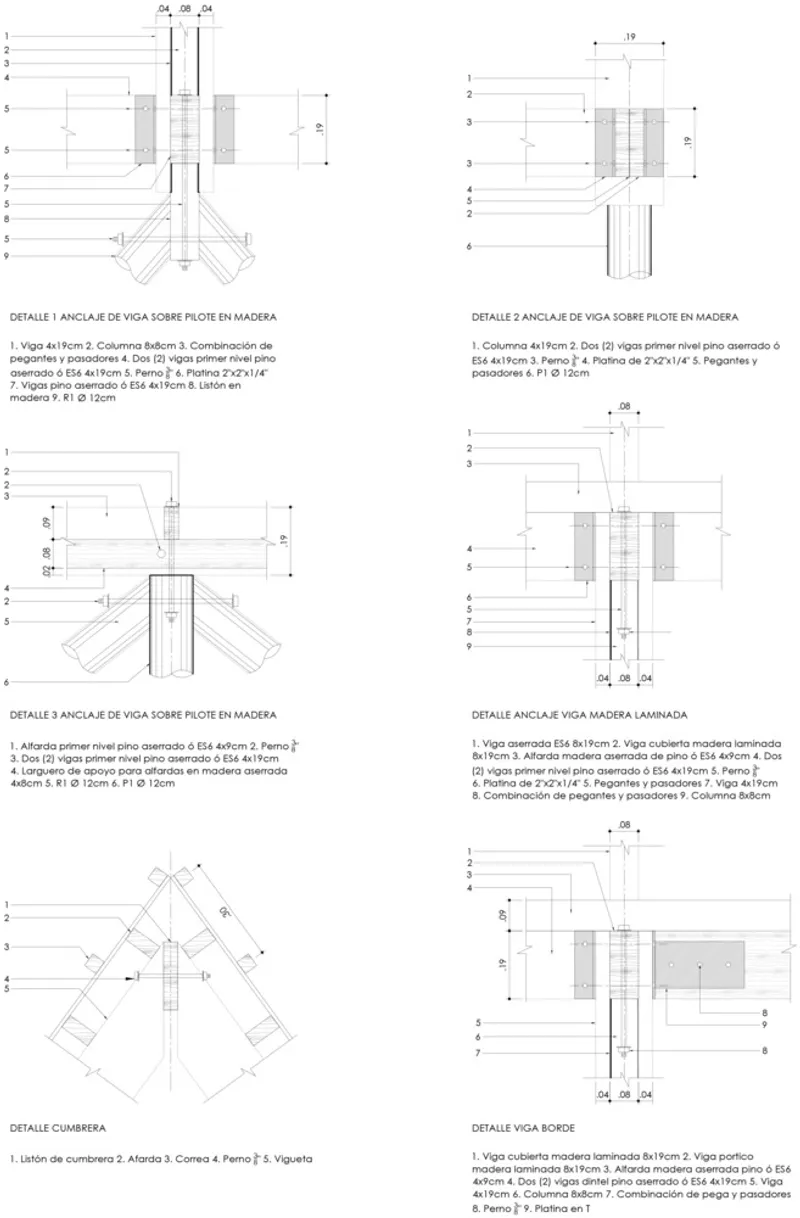
Constructed primarily with sustainably sourced wood, the house embraces low embodied carbon and responsible resource use. The design integrates local timber harvested in alignment with ongoing reforestation, thereby closing an ecological loop. This lightweight wooden structure merges quietly with its forested surroundings, reinforcing the concept of architecture as ecological actor.
Prototype for Regenerative Living
By offering a replicable template, the project activates not only environmental renewal but also social awareness. Lamarilla can be erected on other restoration sites, supporting inhabitants working on ecosystem care. It thus serves as both a home and a center of ecological stewardship—a built-in tool for ecological education and regeneration.
Alignment with Global Ecological Goals
The Lamarilla house advances multiple Sustainable Development Goals: by promoting SDG 15: Life on Land through active reforestation; supporting SDG 13: Climate Action via carbon sequestration and low‑carbon construction; contributing to SDG 11: Sustainable Communities by embedding resilience into rural settlement; and reflecting SDG 12: Responsible Consumption and Production through locally sourced, renewable materials.

Spatial Clarity and Earth‑Rooted Experience
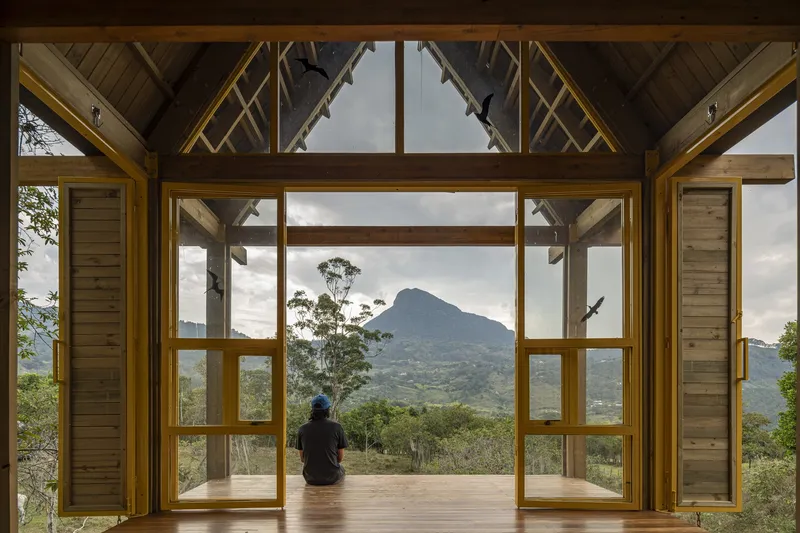
Despite its modest size, the house creates a rhythm of life attuned to seasonality, planting cycles, and ambient nature. It opens to light, air, and forest, and serves as a quiet observatory for an ecosystem in recovery. In its minimalism, it evokes presence—not absence—in the landscape.

All Photographs are works of Alejandro Arango




Popular Articles
Popular articles from the community


AL-JANNAH: Sustainable Architecture and Permaculture for Afghan Widows
AL-JANNAH uses sustainable architecture and permaculture to create resilient oasis of housing, learning, work and renewal for Afghan widows.

Co-life: Sustainable Architecture for Age-Friendly Community Living
Co-life reimagines sustainable architecture for seniors through courtyards, rammed earth, shared gardens, and spaces designed for belonging.

Co-Life: Senior Housing Design That Reconnects Older Adults With the City
Co-Life reimagines senior housing design through healing gardens, shared streets, workshops, and a sustainable community across generations.

EW PARK: Sustainable Architecture Reimagines the Future of Urban Parking
EW PARK reimagines city parking as a modular wooden tower combining automation, solar energy, electric mobility, and adaptable urban design.


Similar Reads
You might also enjoy these articles


Hodi-Mandai Geram
Project Function: Preservation and revitalization of the Intangible heritage and socio-spatial identity of the Hodi by Housing, Cultural Memory Center, Sacred Grove, landscape, local tourism economy


Olio Towers: A Mid-Rise for Performers That Fuses Housing, Rehearsal, and Stage
Located blocks from Houston's Theater District, this modular tower stacks living units around a central performance atrium.

Oasis: Modular Green Housing Carved into Dhaka's Urban Fabric
A shortlisted Plugin Housing entry reclaims unauthorized settlements in Dhaka with stepped concrete volumes, green roofs, and ventilation-driven design.

Black Hole: A Floating Megastructure for the Post-Physical Era
Emiliano Mazzarotto envisions a spherical, self-scaling arena where e-sports, digital hotels, and holographic stadiums replace traditional public space.


Explore Architecture Competitions
Discover active competitions in this discipline



Challenge to reimagine the Iron Throne


Photograph architecture without architects


Illustrate the lost glory of Angkor Wat - Render Challenge


Design challenge to reuse E-waste
Comments (0)
Please login or sign up to add comments
No comments yet. Be the first to comment!