

Landschlacht Primary School Extension by Lukas Imhof Architektur
A sustainable school extension creating new learning spaces, a unified entrance,


The Landschlacht Primary School in Switzerland has been thoughtfully expanded by Lukas Imhof Architektur, introducing a contemporary extension that strengthens the identity, functionality, and sustainability of the existing educational complex. Completed in 2022 and spanning 3,500 m², the project enhances the partially listed school ensemble while creating an updated learning environment rooted in spatial clarity, material honesty, and ecological responsibility.
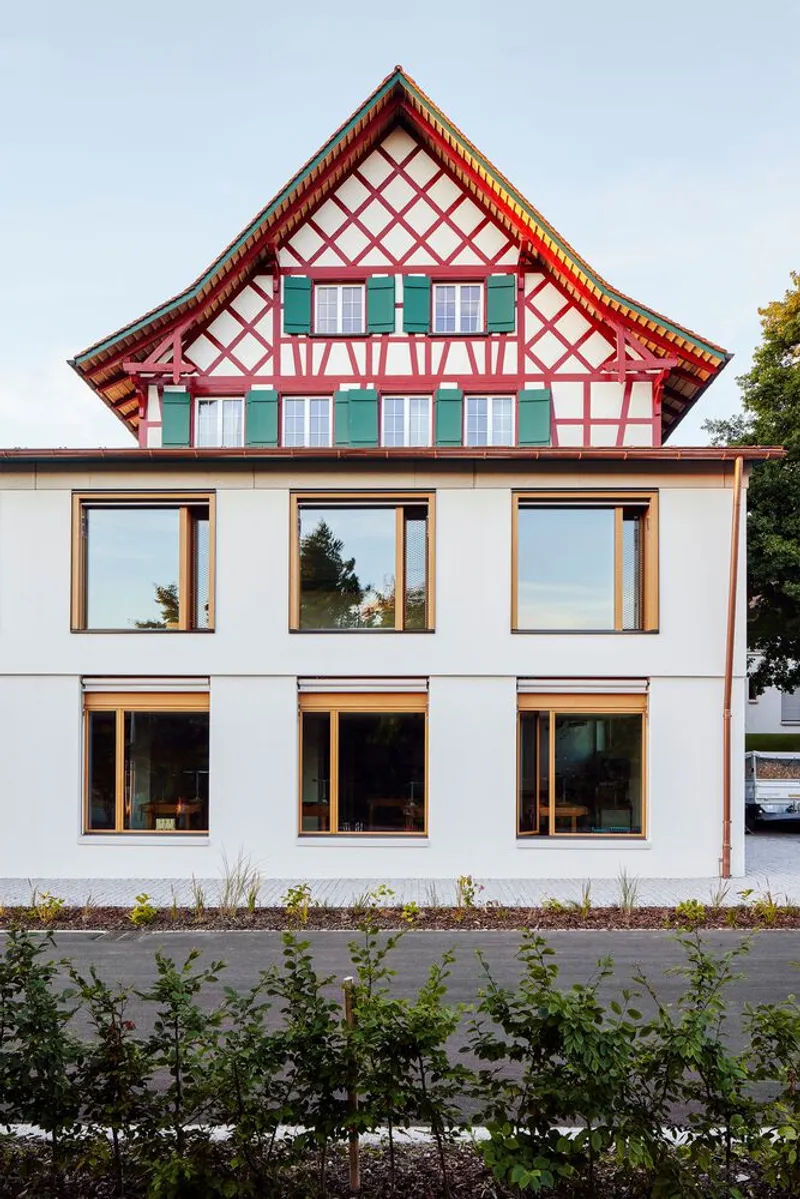
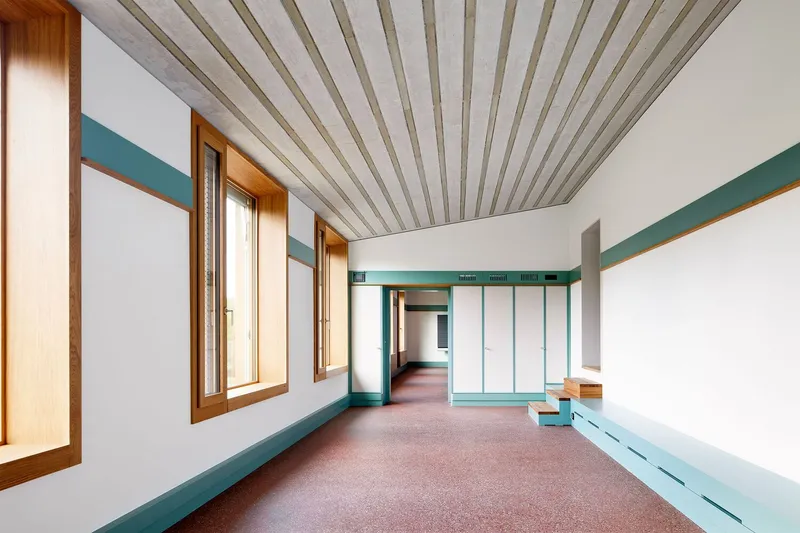
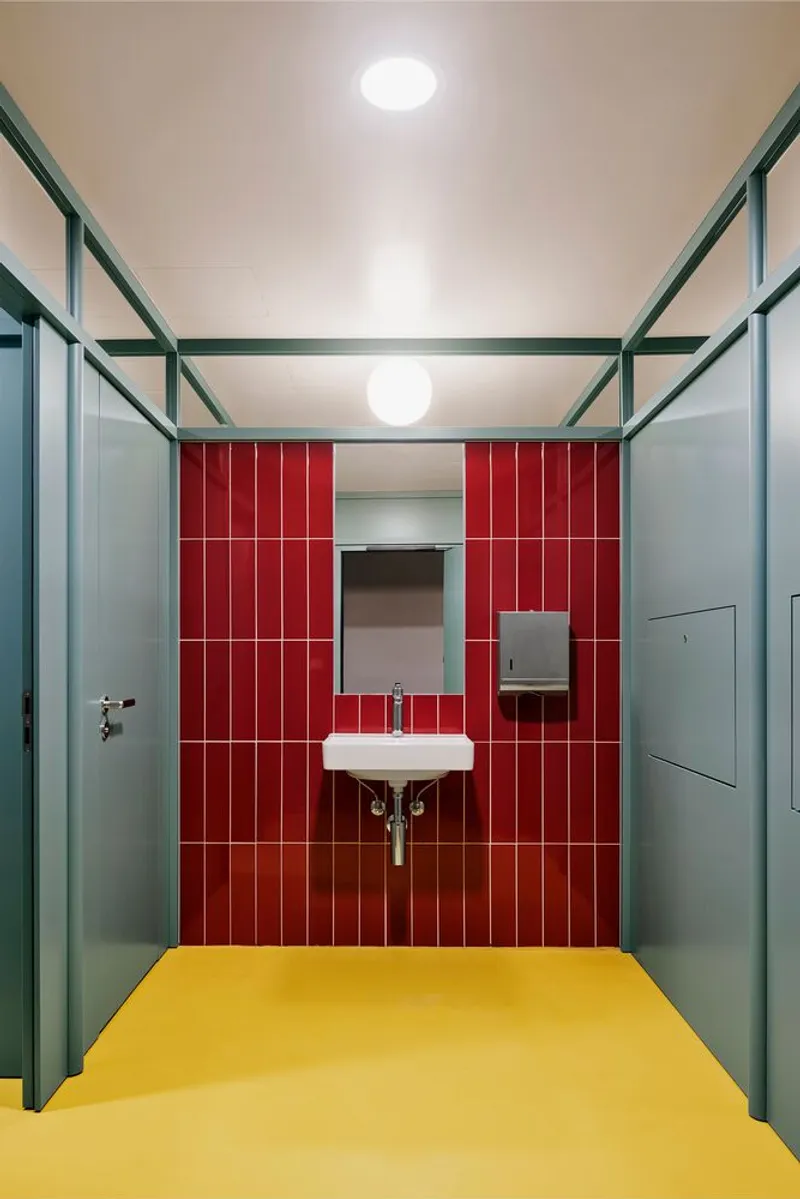
The design builds on the character of the site, which includes a historic core school building, a multipurpose hall from the 1980s and an existing kindergarten. Rather than simply adding to the existing volumes, the architects reinterpreted the brief to create a cohesive campus vision that reconfigures circulation, defines new outdoor spaces and improves the daily school experience for students and educators.
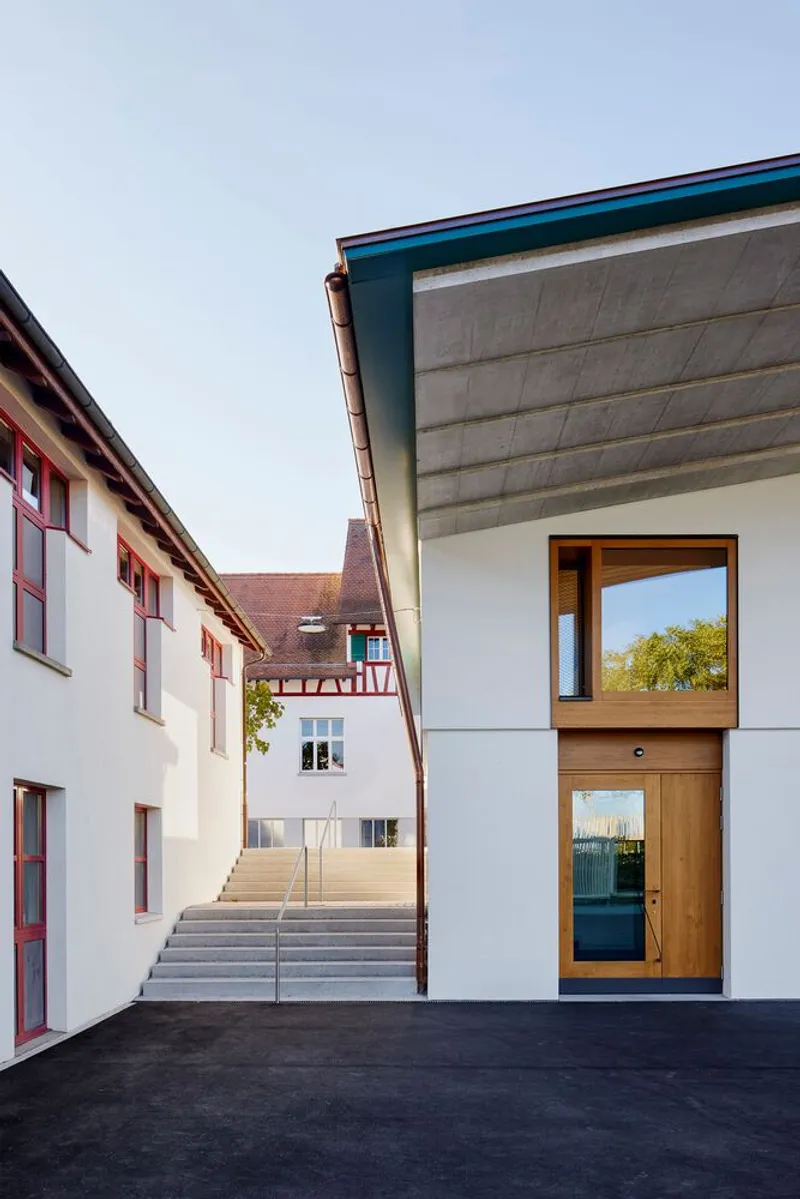
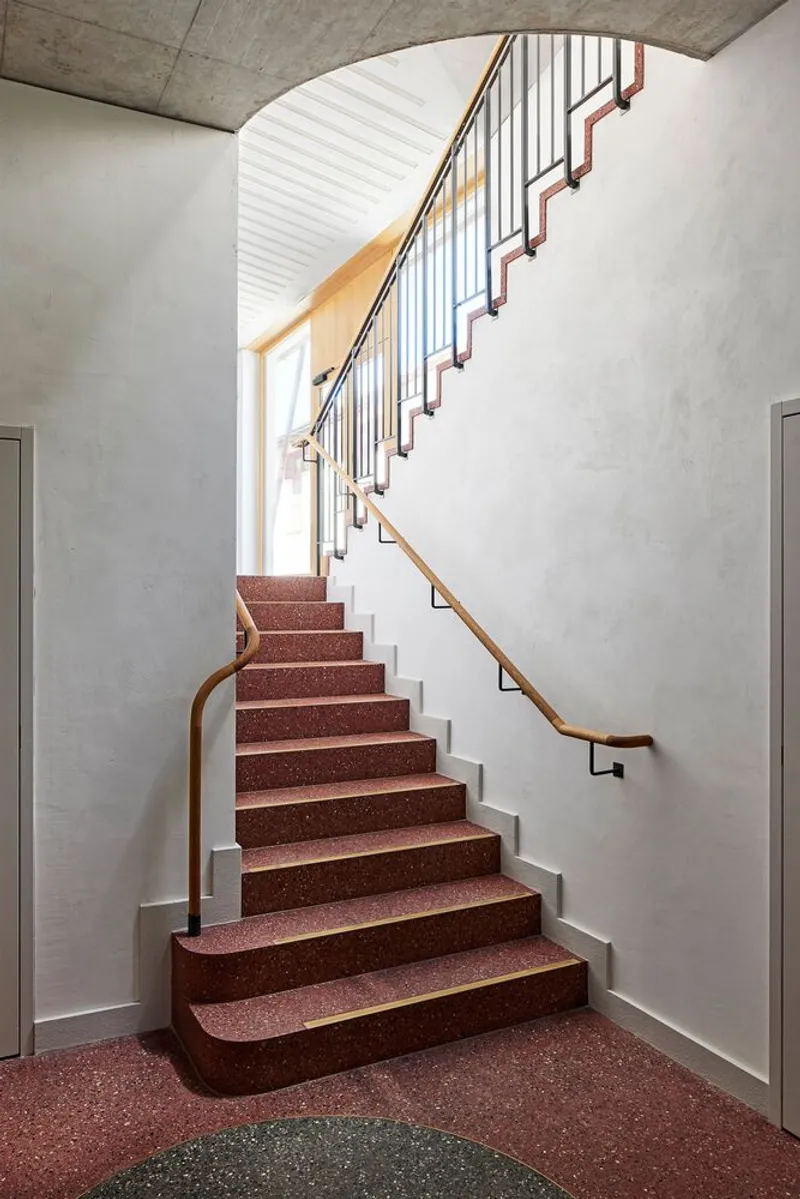
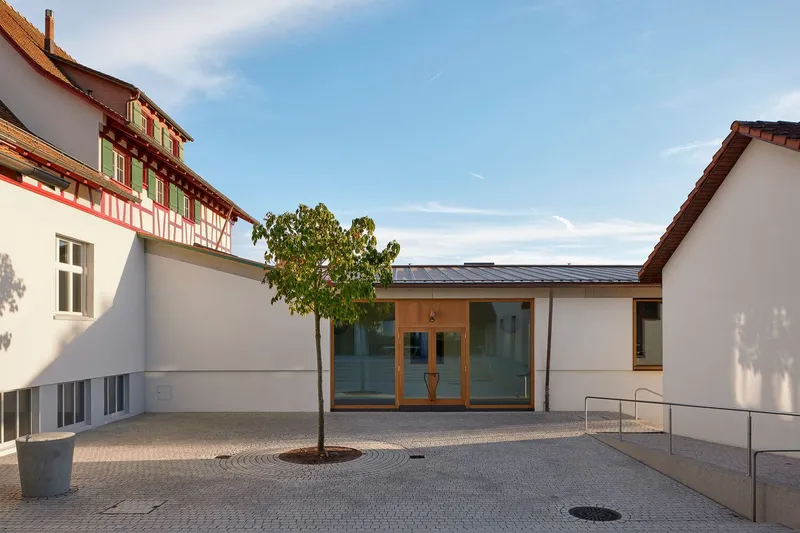
At the heart of the extension is a new main entrance that unifies the entire complex. This redesigned arrival sequence introduces a generous public forecourt that strengthens the school's identity within the town. Inside the campus, the architects shaped an intimate play and learning courtyard, offering a protected outdoor setting for younger students. A third exterior zone, conceived as a “green schoolroom”, sits beneath a majestic oak tree and supports outdoor education through nature-immersive learning.
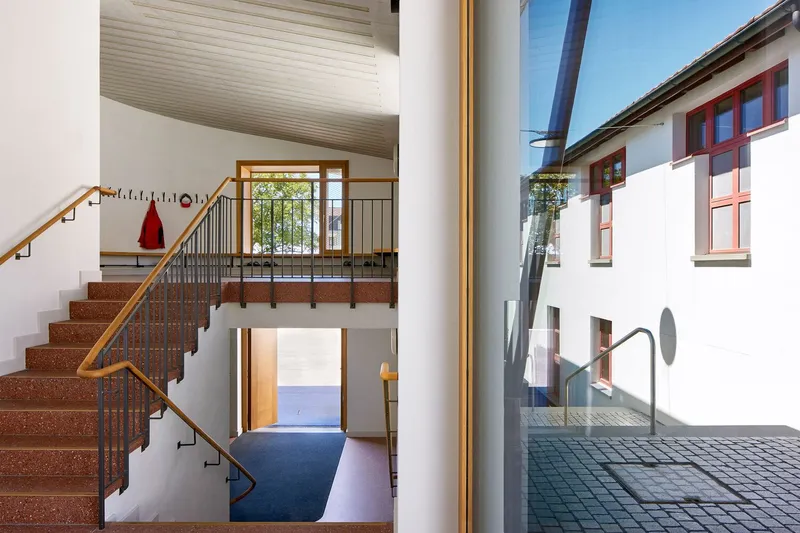
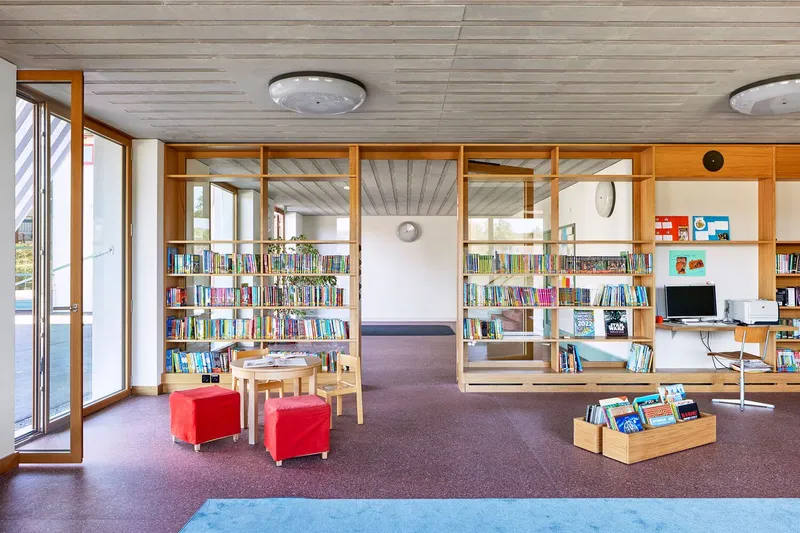
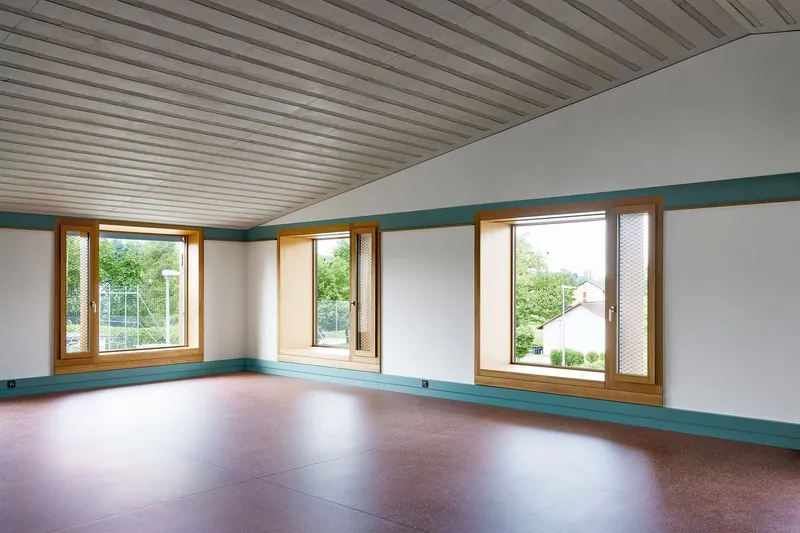
The new building accommodates modern educational facilities including classrooms, group spaces, a library and a workroom. These interiors are designed for flexibility, improved daylight quality and functional adaptability. Large glazing areas were replaced with sensibly scaled windows that maintain abundant natural light while reducing solar gain. This deliberate approach reduces reliance on mechanical systems and supports the project's low-tech sustainable strategy.
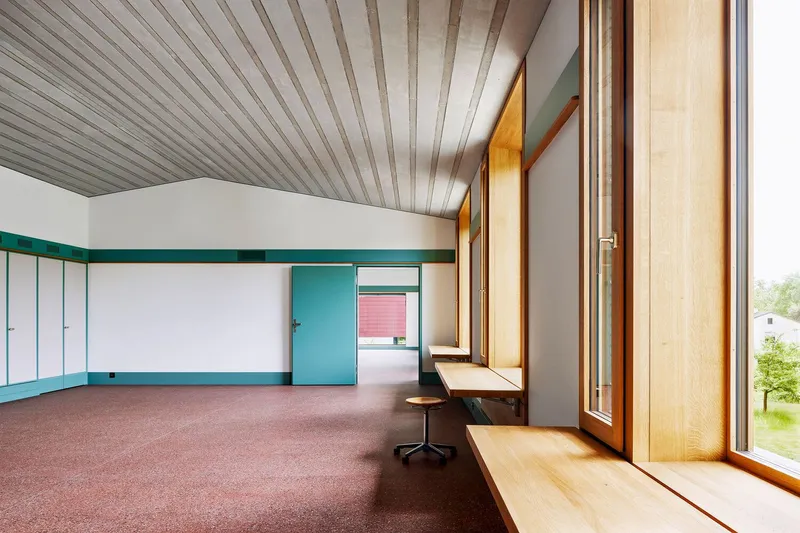
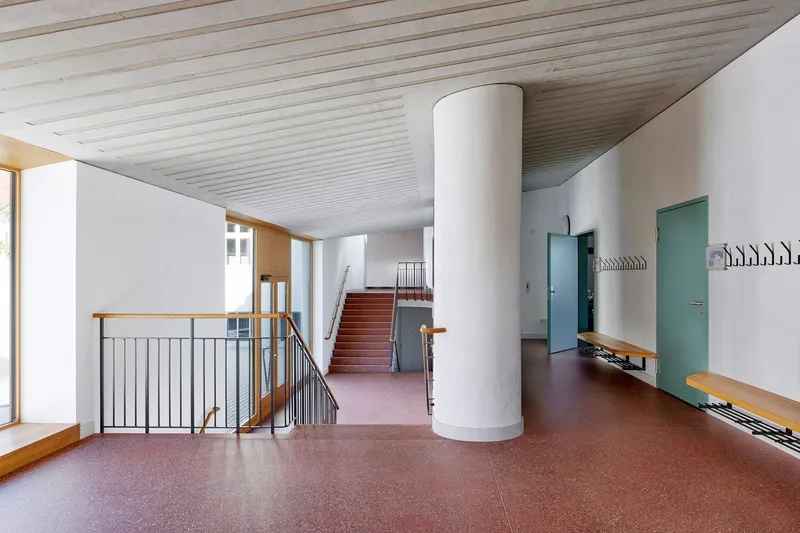
Sustainability is integrated through passive and durable construction methods. A substantial thermal storage mass supports passive heat regulation, while night cooling and geothermal probe heating with geo-cooling ensure an energy-efficient indoor climate year-round. The extension avoids unnecessary system complexity by prioritizing material simplicity and easy-to-maintain detailing. Suspended ceilings, glued flooring and multilayered constructions were removed in favor of separable, long-lasting components. Electrical cabling is kept accessible in crawl spaces and integrated into carpentry, while ventilation ducts are cleverly incorporated within built-in furniture such as benches.
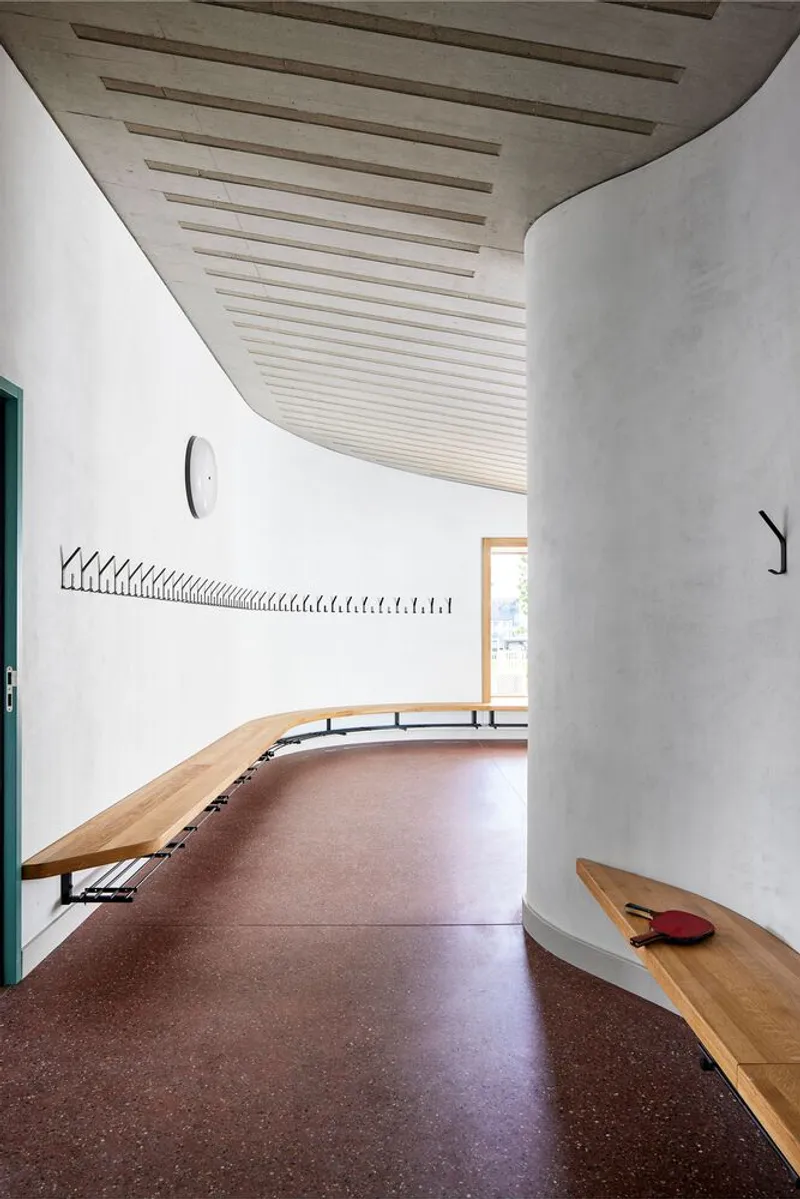
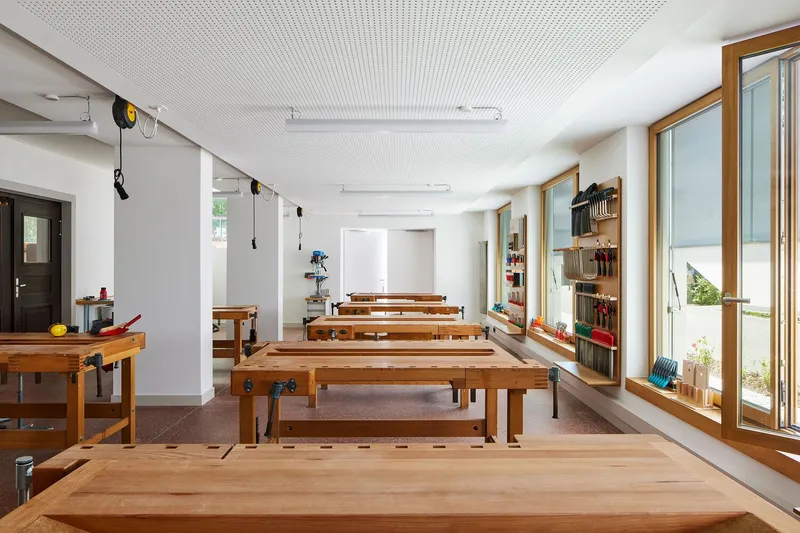
Material authenticity remains a guiding principle. The exterior walls are built using single-stone masonry with only interior and exterior render, eliminating the need for additional structural layers. This approach emphasizes permanence, minimizes embodied carbon and supports the school’s long-term adaptability.
All photographs are works of Hannes Heinzer


Popular Articles
Popular articles from the community


Architekt Andreas Gruber Scatters 23 Dark Timber Chalets Across a South Tyrolean Forest Edge
In Molini di Tures, Amonti Chalets breaks a resort into a hamlet of gabled timber houses, with parking, storage and services pushed into the slope.

David Ortega Stacks a Two-Story Mexico City Penthouse Around a Steel Stair and a Pergola-Shaded Roof Terrace
In Colonia Roma, a 300 m² penthouse uses oak joinery, a planted steel stair and a slatted roof pergola to make a new-build apartment feel like a house.

longwave studio Reorganizes a 112 m² Tainan Apartment Around the Daily Routines of a Family and Two Cats
In Tainan, Taiwan, birch plywood, rust-red furniture and a freestanding plaster wall link arrival, storage, work and family life in one apartment.

U.GA Architects Wraps an Oval Rooftop Pool in Curved Board-Formed Concrete on Busan's Jeollidan-gil
In Busan's Jeonpo-dong, a 454 m² mixed-use block stacks a neighborhood facility, guest rooms and an oval rooftop pool inside spiraling concrete walls.

Similar Reads
You might also enjoy these articles


Hodi-Mandai Geram
Project Function: Preservation and revitalization of the Intangible heritage and socio-spatial identity of the Hodi by Housing, Cultural Memory Center, Sacred Grove, landscape, local tourism economy


Olio Towers: A Mid-Rise for Performers That Fuses Housing, Rehearsal, and Stage
Located blocks from Houston's Theater District, this modular tower stacks living units around a central performance atrium.

Oasis: Modular Green Housing Carved into Dhaka's Urban Fabric
A shortlisted Plugin Housing entry reclaims unauthorized settlements in Dhaka with stepped concrete volumes, green roofs, and ventilation-driven design.

Black Hole: A Floating Megastructure for the Post-Physical Era
Emiliano Mazzarotto envisions a spherical, self-scaling arena where e-sports, digital hotels, and holographic stadiums replace traditional public space.

Explore Educational Building Competitions
Discover active competitions in this discipline

Challenge to design public laboratory

Challenge to reimagine the Iron Throne

Photograph architecture without architects

Illustrate the lost glory of Angkor Wat - Render Challenge
Comments (0)
Please login or sign up to add comments
No comments yet. Be the first to comment!