
Laval Courtyard Houses: Modern Living within a Historic Estate
Two contemporary courtyard houses by A.TM harmoniously integrate with a historic manor in Laval, blending heritage, landscape, and sustainable materials.

A Contemporary Dialogue with Heritage in Laval, France
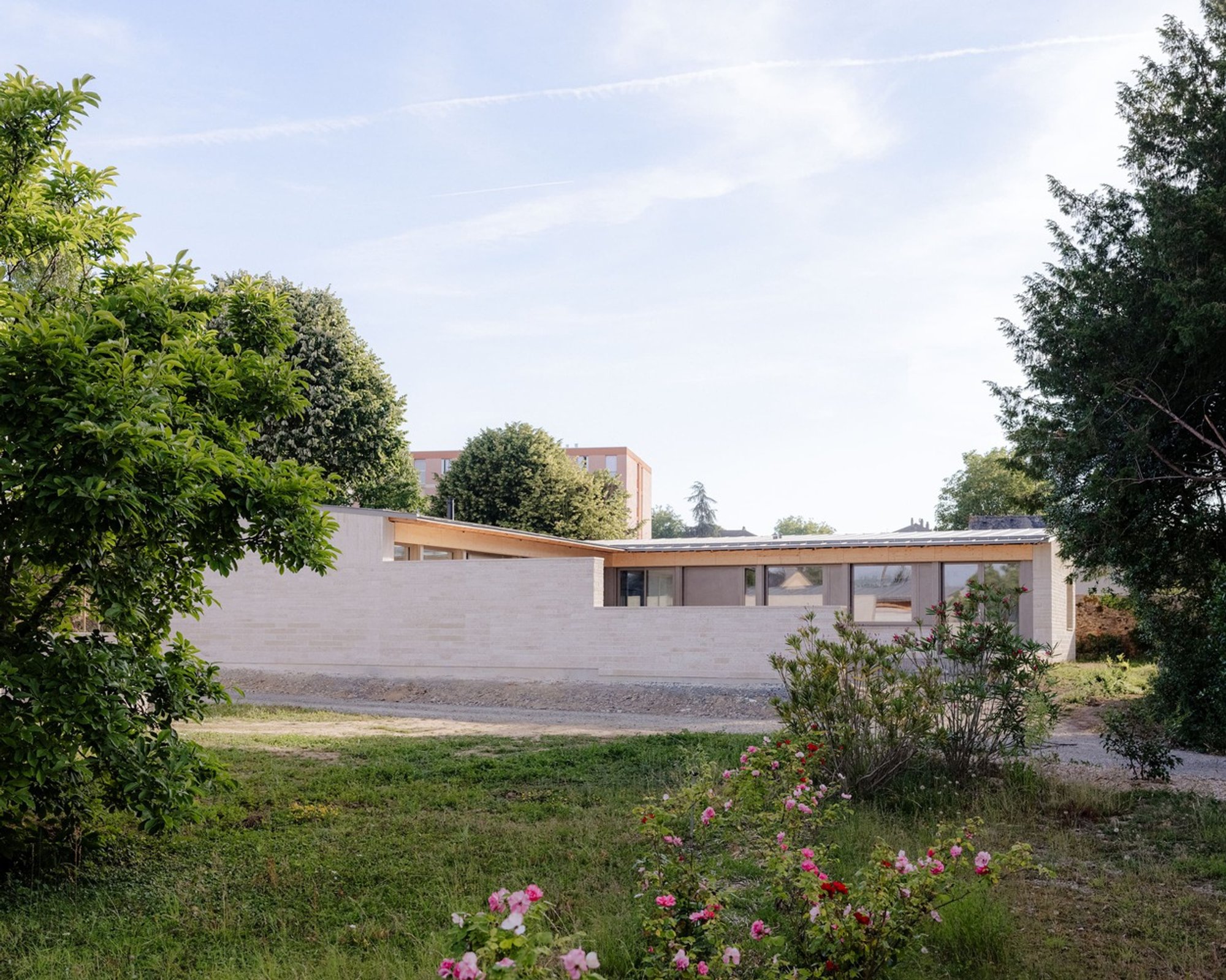
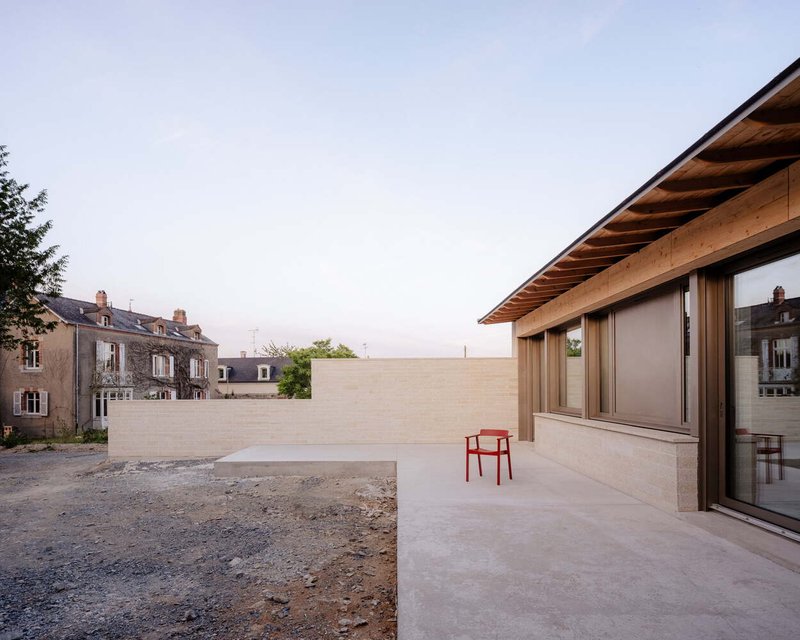
Located on the historic Rue de Clermont in Laval, France, the Houses on Rue de Clermont by A.TM Architects reinterpret traditional residential typologies within a protected heritage setting. Designed in 2025, the project introduces two contemporary patio houses that coexist harmoniously within a landscaped 4,600 m² park, once belonging to a 17th-century manor. The intervention balances modern architecture with contextual sensitivity, preserving the site’s spatial hierarchy and natural heritage.
Context and Design Intent
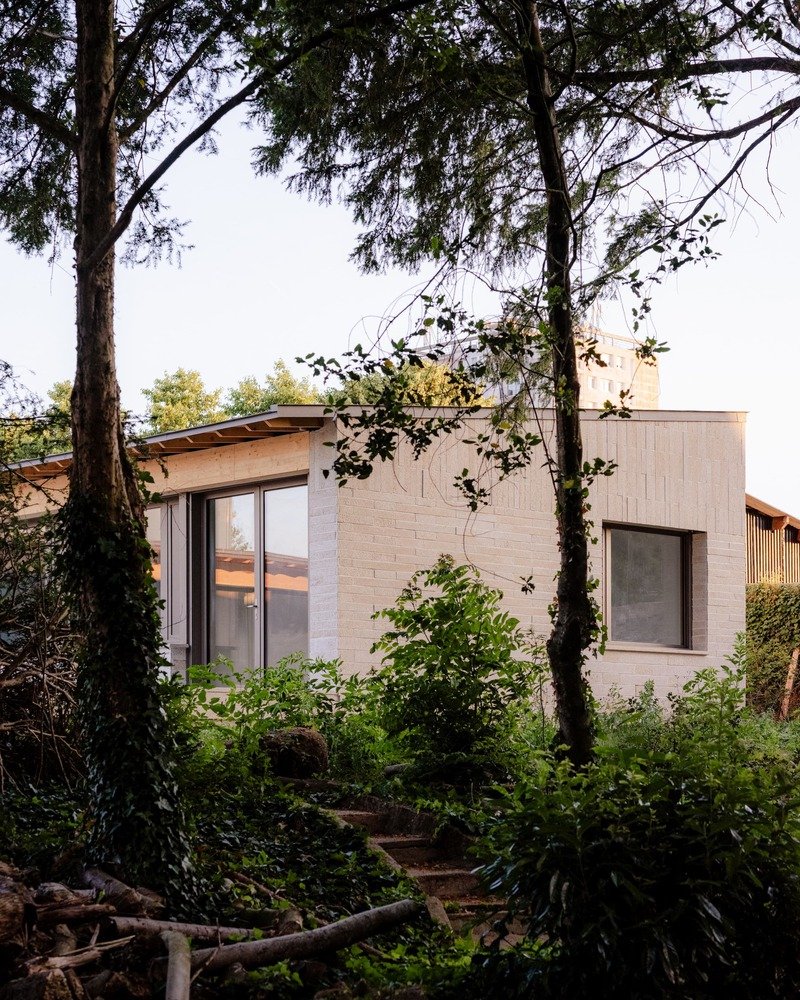
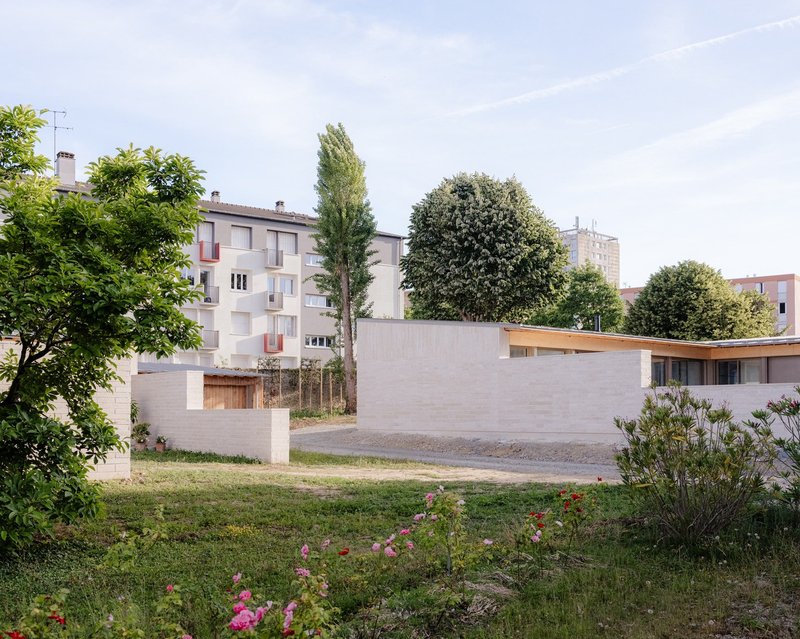
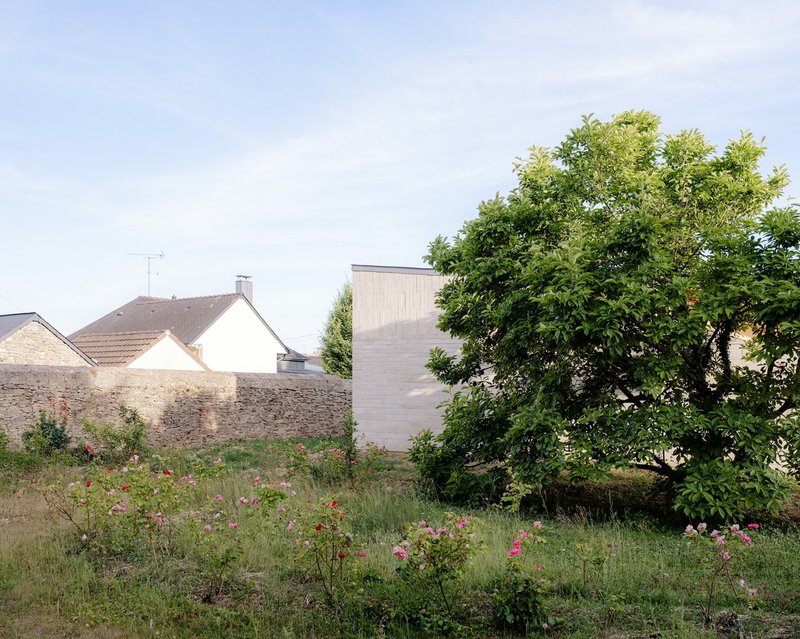
The site, enclosed by a traditional stone masonry wall, contains a historic manor house surrounded by mature trees and garden spaces. A.TM approached the challenge of inserting new architecture within a heritage park with restraint and precision. The goal was to design two single-storey houses that respect the prominence of the manor while enriching the overall spatial composition.
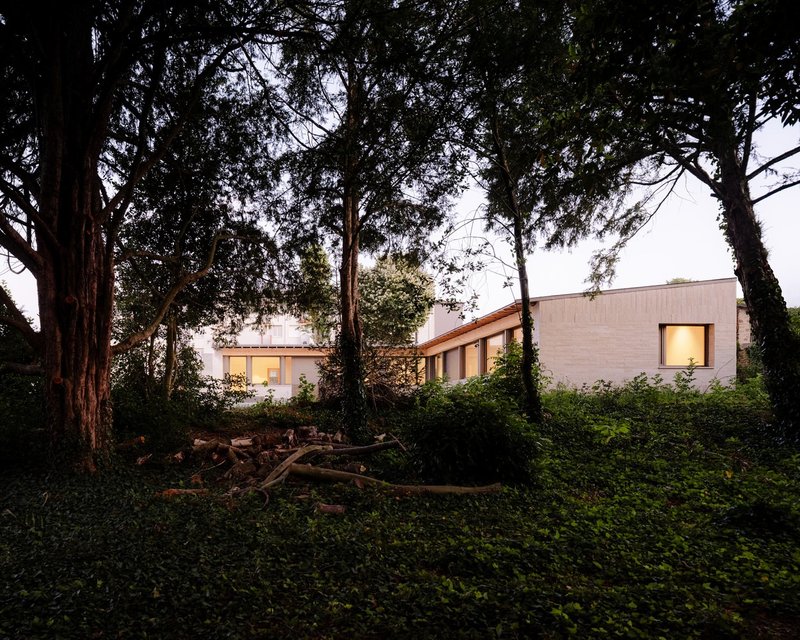
Positioned in the southern section of the park, the new houses occupy symmetrical plots—each defined by L-shaped floor plans inscribed within squares measuring 19.5 meters and 17.5 meters respectively. These enclosed geometries create intimate courtyards that open toward the wooded landscape, maintaining privacy while ensuring visual connection with nature.
Architectural Dialogue with the Manor
Rather than competing with the historic manor, the new dwellings are conceived as architectural appendages, echoing the traditional role of ancillary buildings—such as artist studios or garden pavilions—found within French estates. This subordinate relationship fosters an architectural dialogue between old and new, reinforcing the continuity of the site’s cultural memory.
The architects describe the project as being built “within the manor’s orchard.” Its understated volumes and minimalist architectural language express humility and respect for the patrimonial and natural value of the location. The composition encourages shared spatial experiences, where residents of both the new homes and the manor can circulate freely through a collective hortus conclusus, or enclosed garden.
Spatial Composition and Material Expression
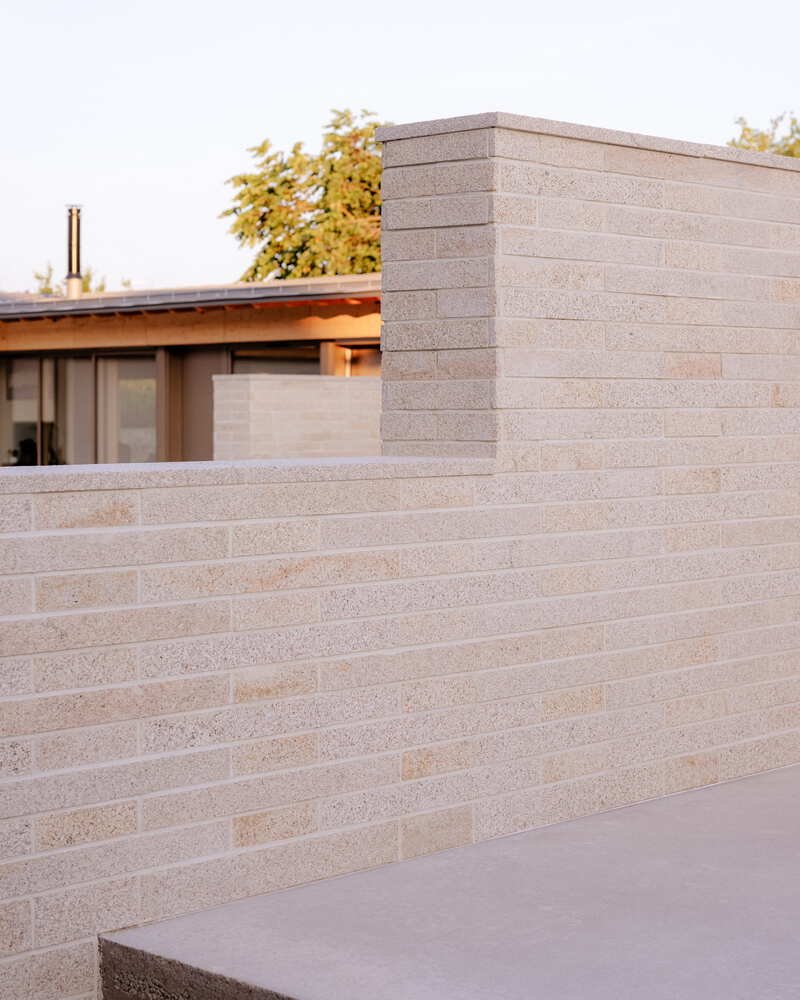
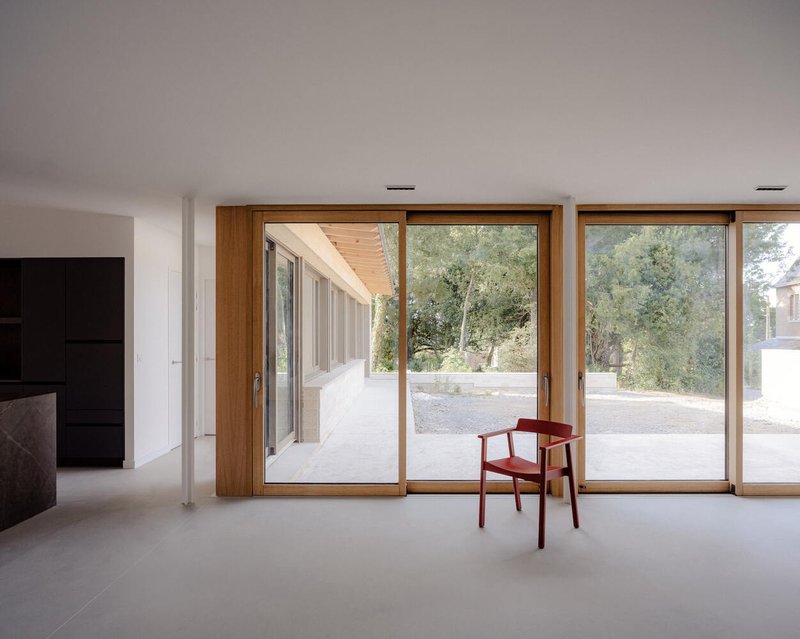
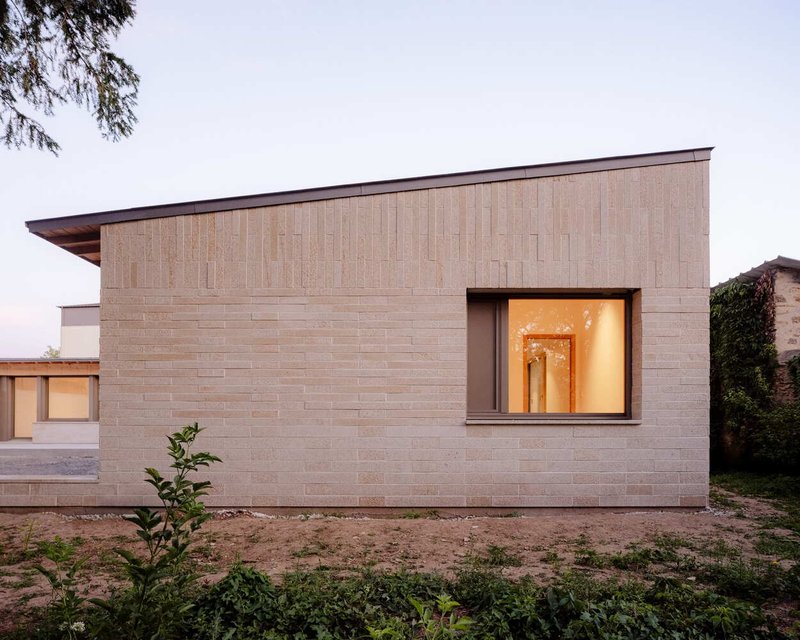
Each house combines enclosed stone walls and open courtyards, mediating between protection and openness. The walls extend beyond the interior spaces, subtly breaching the boundaries to admit daylight while maintaining privacy. The result is a sequence of sheltered interiors and framed landscape views that reinforce the calm domestic atmosphere.
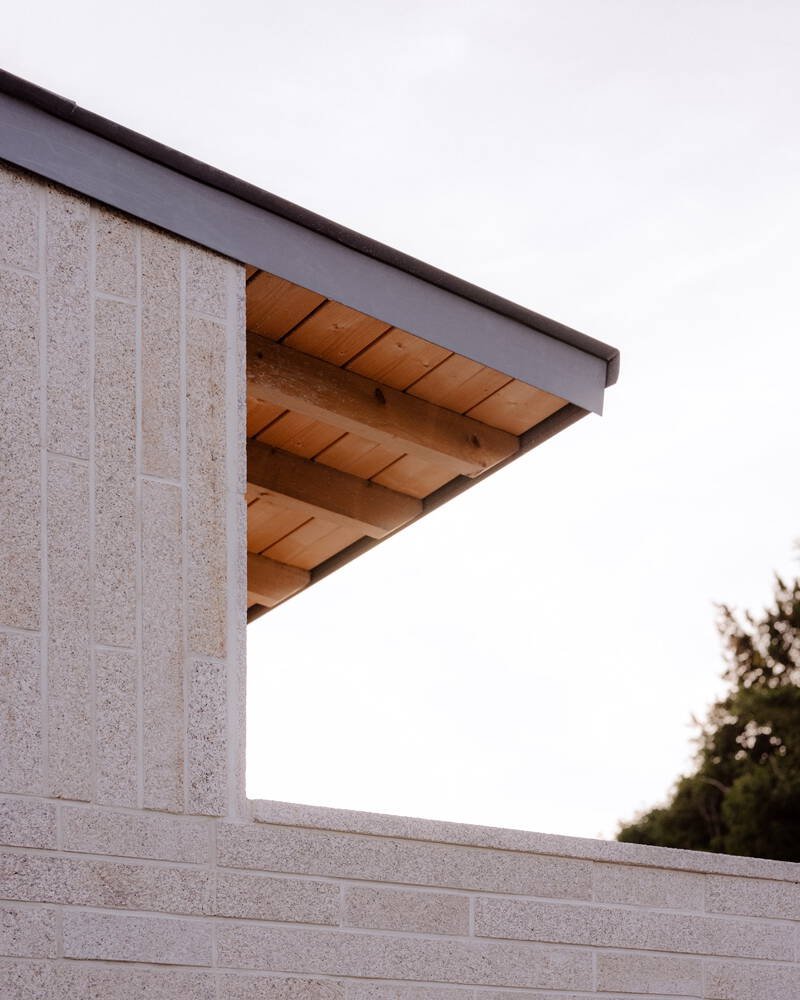
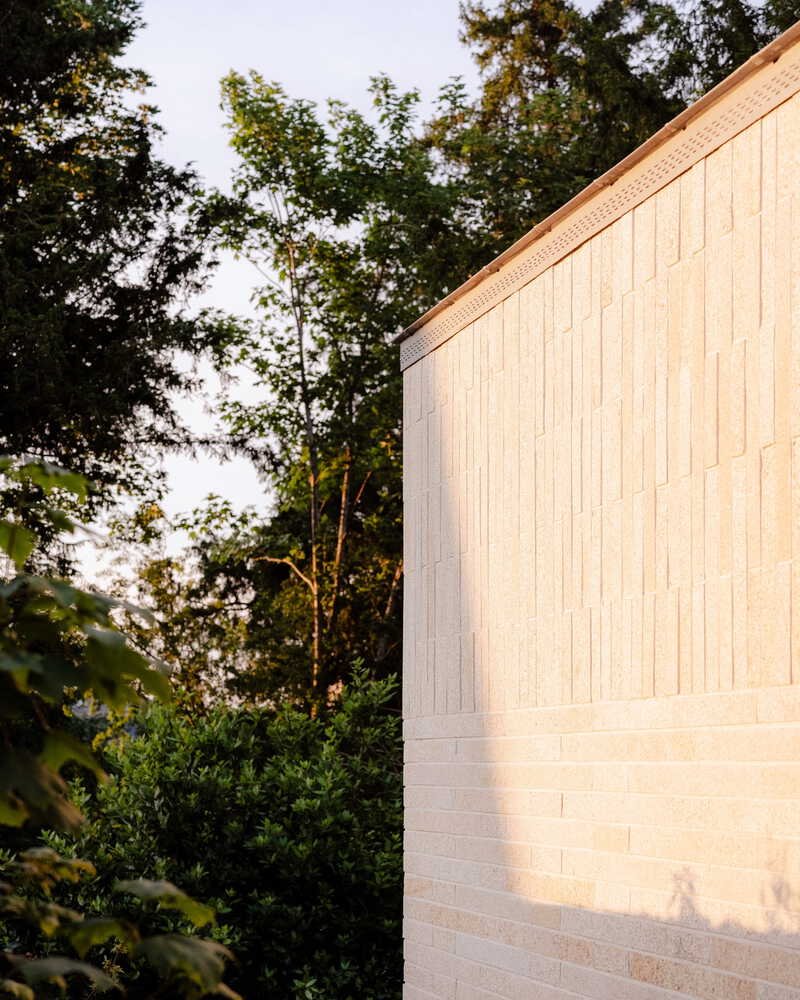
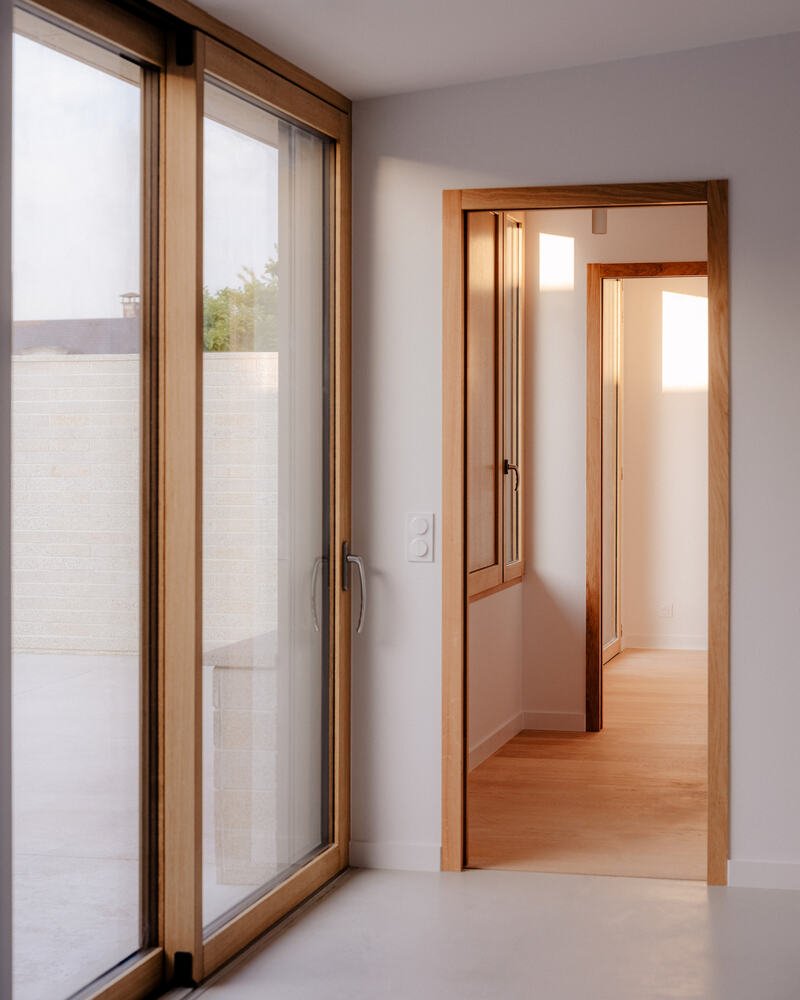
The material palette draws from bio-based and geo-sourced materials, prioritizing sustainability and regional authenticity. The façades are clad in beige Armorican granite, carefully laid in a coursed pattern that recalls the small lintels characteristic of Laval’s vernacular architecture. Above, a lightweight standing seam zinc roof with traditional Lavallois-style gutters refines the roofline and accentuates the horizontal rhythm of the design. Courtyard-facing façades feature hybrid oak and aluminum joinery, creating a tactile transition between solidity and transparency.
Landscape Integration and Environmental Sensitivity
In addition to the architectural design, the project includes comprehensive landscape restoration of the existing park. Pathways and garden structures were redesigned to connect seamlessly with the wrought-iron entrance gate on the northern boundary, reinstating the estate’s original circulation logic.
By employing sustainable materials, low-impact construction methods, and contextual landscaping, A.TM achieves a project that is both environmentally responsible and deeply rooted in its cultural and geographical context. The Houses on Rue de Clermont demonstrate how contemporary architecture can quietly inhabit historic settings—enhancing their legacy rather than diminishing it.
All photographs are works of François Baudry




Popular Articles
Popular articles from the community

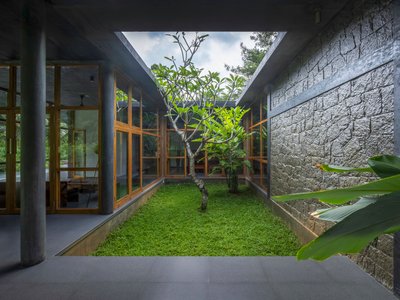
3dor Concepts Wraps a Kerala Home in Mirrored Concrete Arcs Around a Courtyard Tree
In the Western Ghats foothills of Thamarassery, a 270 m² single-story house uses two curved volumes to frame nature as its center.
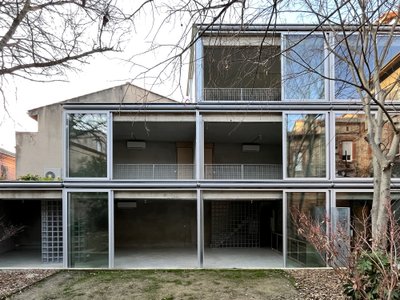
BAST Slots a Four-Story Glass House into a Narrow Gap Between Toulouse Townhouses
In the dense Bonnefoy district, a stepped infill building merges home and office while preserving a majestic hackberry tree.
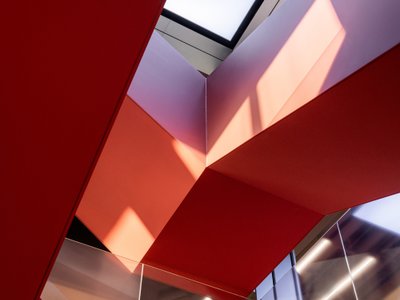
Ippolito Fleitz Group Identity Architects Turn Eight Floors in Shanghai into a Vertical Creative City
Publicis Groupe's new headquarters in Xintiandi reimagines the office as a courtyard-driven urban landscape stacked across eight floors.
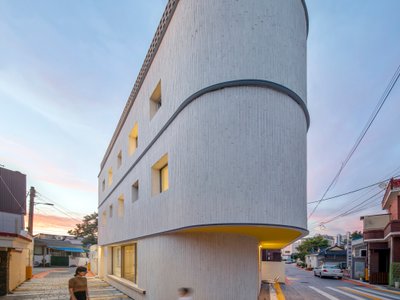
YOAP Architects Round a Corner in Yeongcheon with a Cylindrical Community Hub
A 197-square-meter brick and ribbed-clad tower turns a forgotten alley corner in South Korea into a public garden with a low threshold.

Similar Reads
You might also enjoy these articles

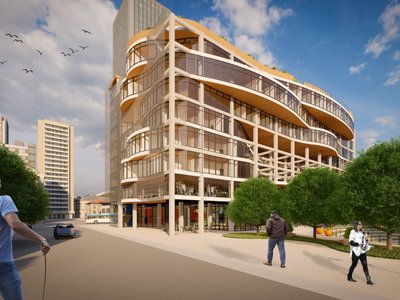
Olio Towers: A Mid-Rise for Performers That Fuses Housing, Rehearsal, and Stage
Located blocks from Houston's Theater District, this modular tower stacks living units around a central performance atrium.

Oasis: Modular Green Housing Carved into Dhaka's Urban Fabric
A shortlisted Plugin Housing entry reclaims unauthorized settlements in Dhaka with stepped concrete volumes, green roofs, and ventilation-driven design.

Black Hole: A Floating Megastructure for the Post-Physical Era
Emiliano Mazzarotto envisions a spherical, self-scaling arena where e-sports, digital hotels, and holographic stadiums replace traditional public space.
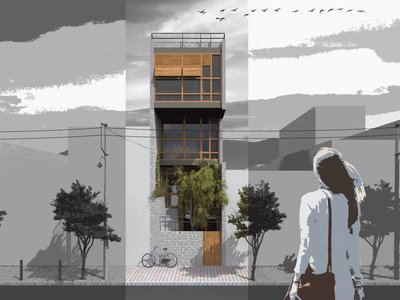
Compact & Sustainable Living in Piraeus: A Four-Level Family Home Built Around Light and Air
A narrow townhouse in one of Greece's densest port cities uses a central atrium and passive strategies to house three generations under one roof.
Explore Architecture Competitions
Discover active competitions in this discipline




The International Standard for Design Portfolios


The Global Benchmark for Architecture Dissertation Awards


The Global Benchmark for Graduation Excellence


Challenge to reimagine the Iron Throne
Comments (0)
Please login or sign up to add comments
No comments yet. Be the first to comment!