
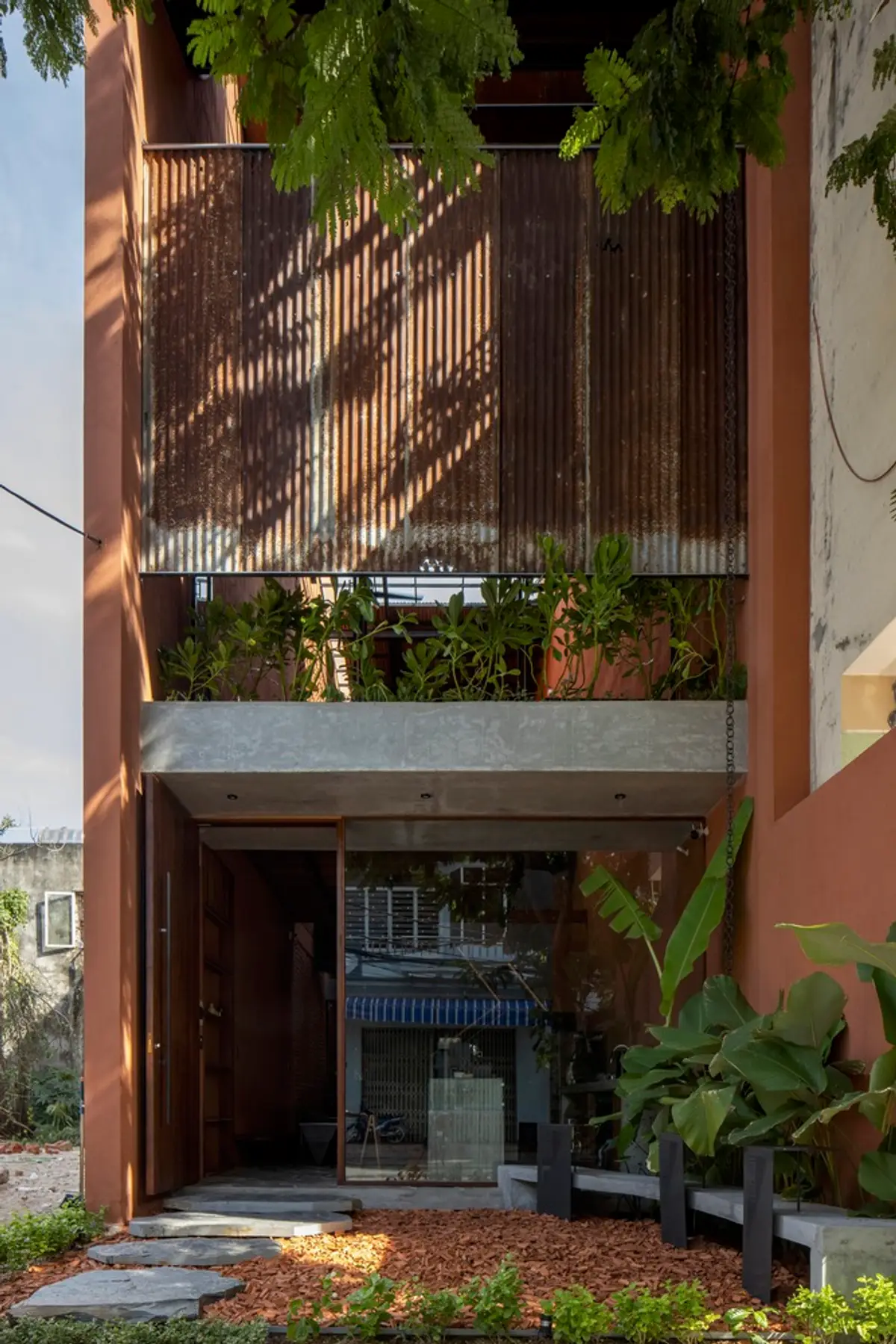
Lei Ơi Cà Phê by TRAN TRUNG Architects: Sustainable Urban Coffee Oasis in Da Nang
Lei Ơi Cà Phê in Da Nang blends open, light-filled spaces, recycled materials, passive cooling, greenery, and sensory coffee experiences sustainably.


Nestled in the bustling residential neighborhoods of southeastern Da Nang City, Lei Ơi Cà Phê emerges as a serene urban retreat. Designed by TRAN TRUNG Architects, this 96 m² café responds to the challenges of dense urban living while creating an immersive space where nature, light, and community converge. Surrounded by tightly packed narrow houses, the project transforms an ordinary plot of land into a sanctuary that slows the city’s fast-paced rhythm and invites visitors to reconnect with natural elements.


Maximizing Openness and Sensory Experience
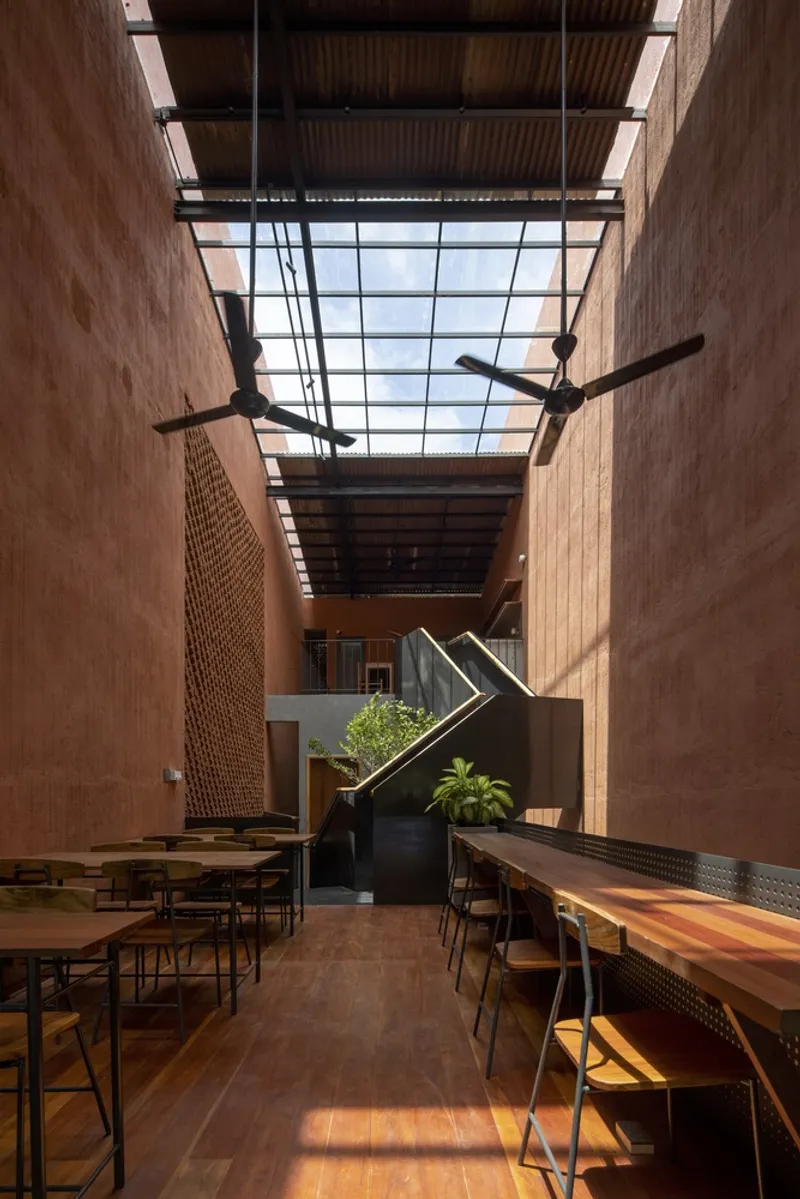
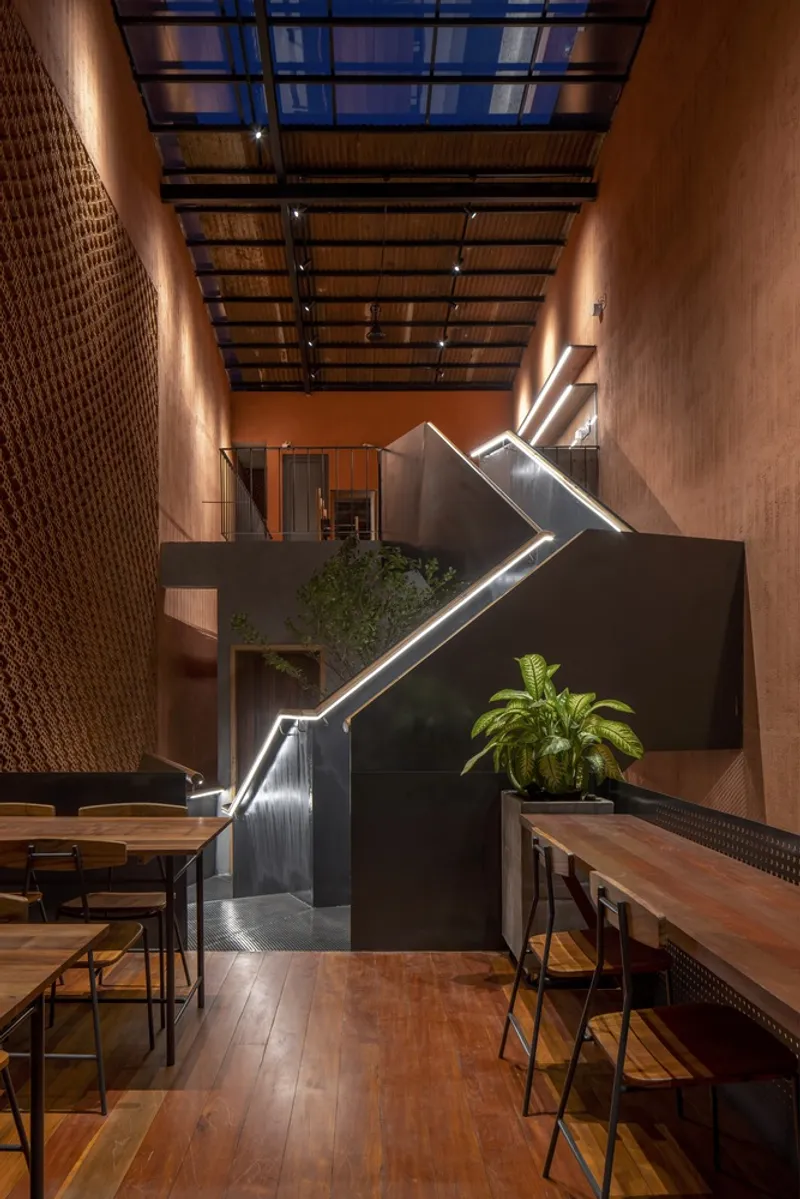
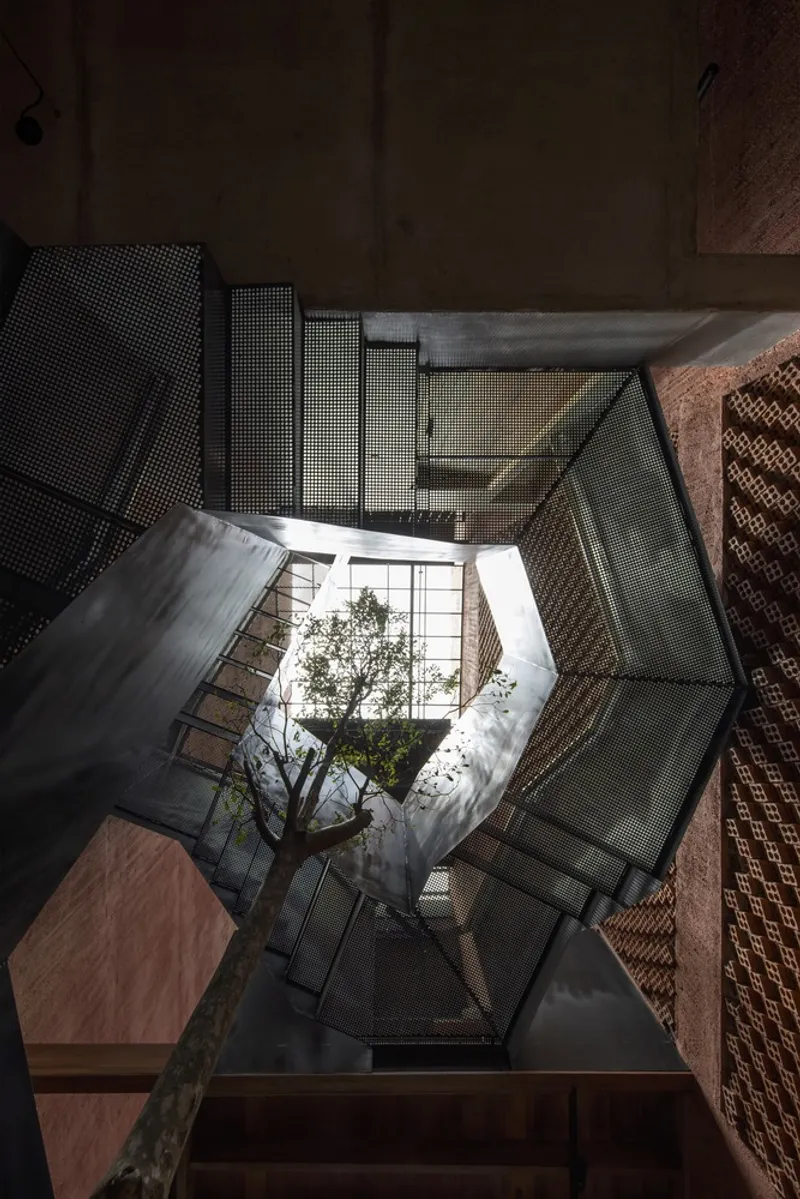
The café’s design concept revolves around the idea of maximally open architecture. A central translucent staircase guides circulation throughout the interior, creating an internal journey infused with natural light, ventilation, and greenery. Every architectural element: sunlight streaming through perforated walls, the movement of air, the aroma of freshly brewed coffee, plays a role in crafting a multisensory experience that blurs the boundaries between inside and outside.

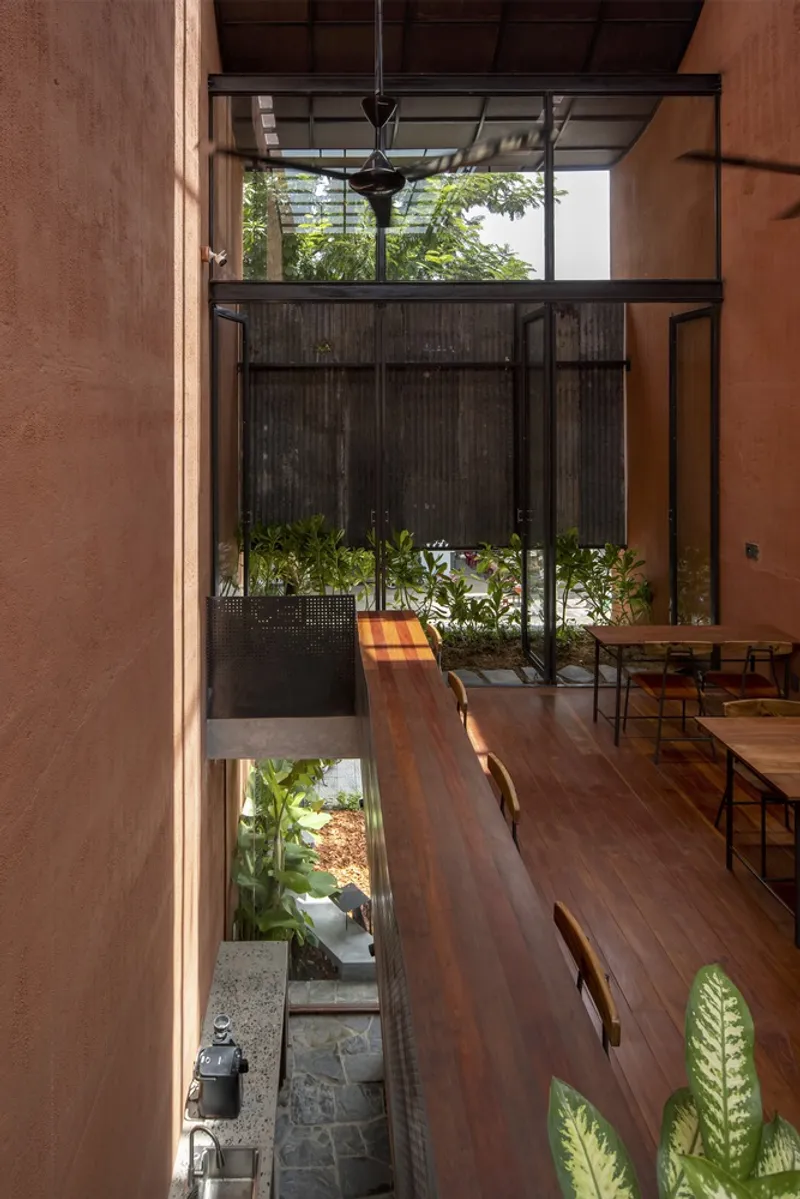
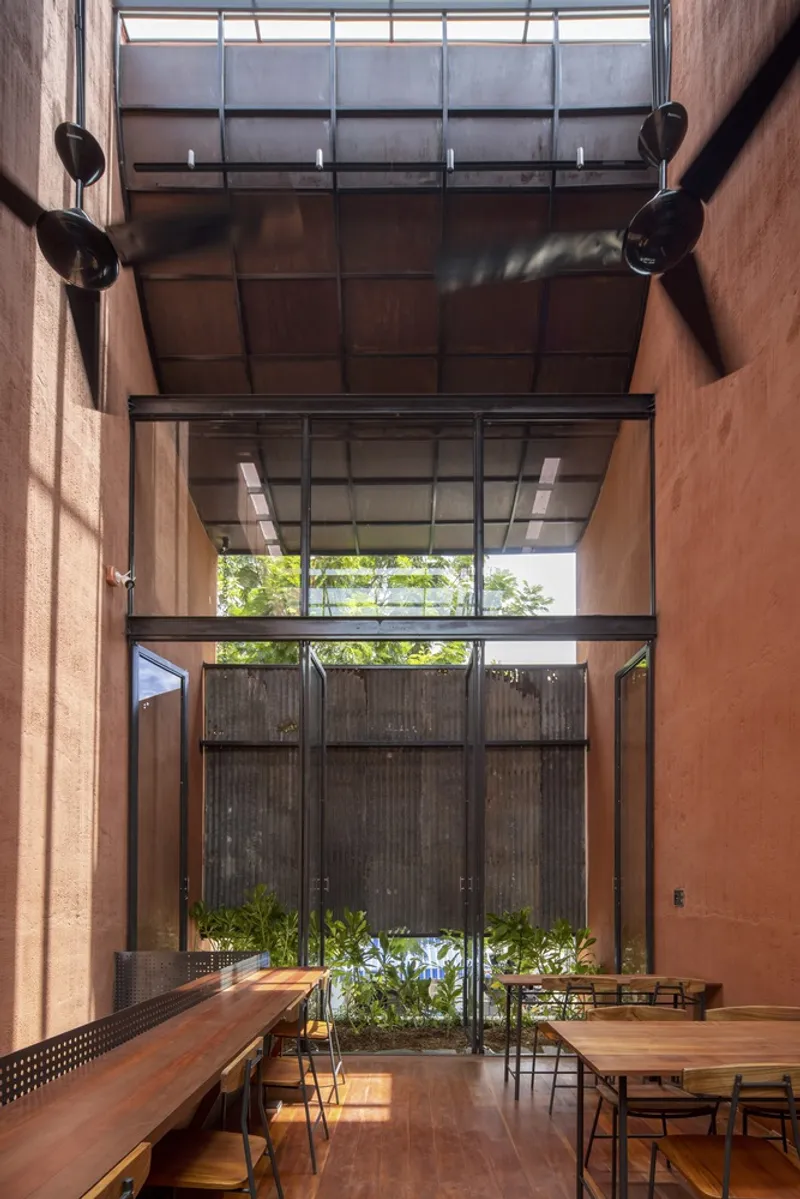
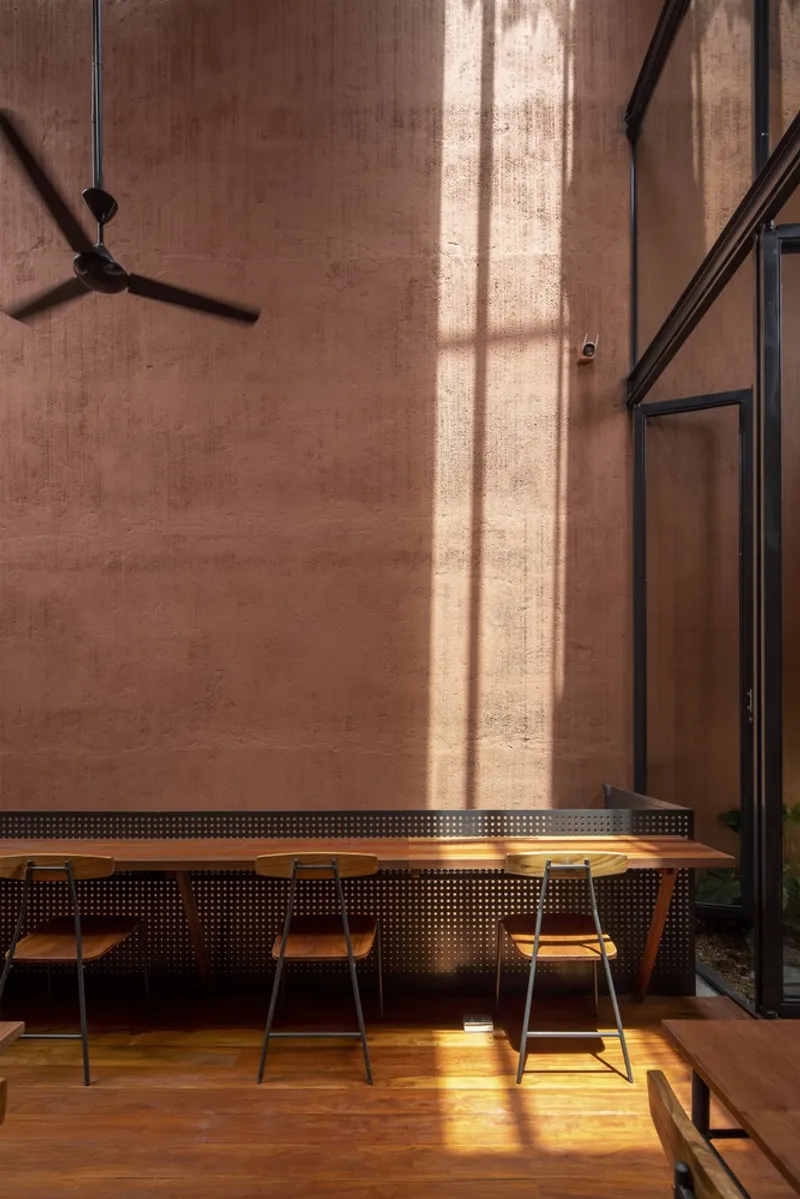
The interior is designed as a liberated open box, allowing continuous daylight to penetrate deep into the space, creating dynamic patterns of shadow and light throughout the day. This design strategy transforms simple light into a living artwork, fostering a calming yet vibrant environment for visitors.
Sustainable Materials and Circular Construction
From the exterior shell to the interior finishes, the project embraces a philosophy of “reviving the life cycle” by reusing discarded and salvaged materials. Corrugated metal roofing sheets, façade panels, broken tiles, and interior decorations were carefully collected from scrap yards and repurposed. This approach not only minimizes waste but also adds textural richness and authenticity to the space, reflecting a deep respect for sustainable architecture and environmentally conscious design.

Passive Cooling and Climate-Responsive Design
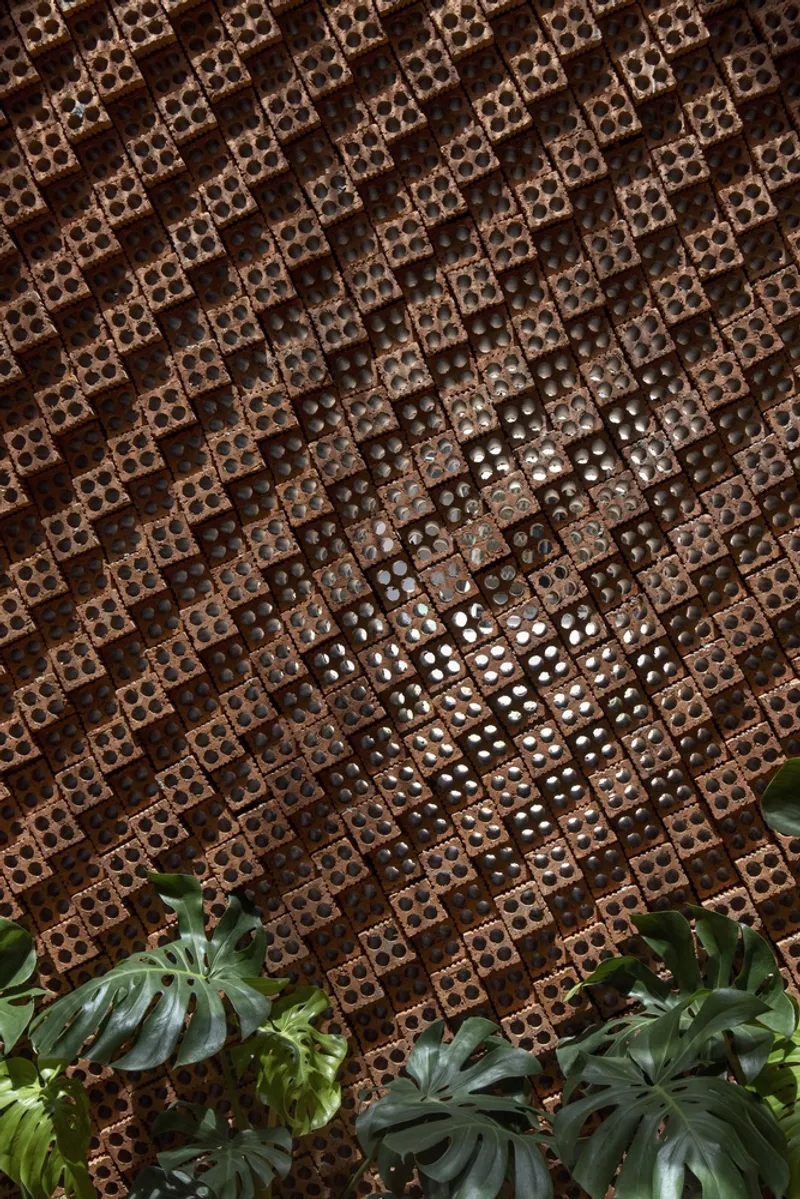
To address Central Vietnam’s hot climate, the café integrates passive cooling techniques through perforated clay brick walls on the east and south façades. These walls create natural “breathing spaces”, facilitating airflow and improving microclimate regulation inside. Hot air is cooled naturally before entering the interior, aided by the moisture-retentive properties of traditional clay bricks and a misting system installed above the walls. This clever combination reduces the need for mechanical cooling, enhancing energy efficiency while maintaining comfort.

Integration of Nature and Community
The project also emphasizes landscape integration, with Bap’s Garden contributing greenery that softens the urban context and complements the café’s sensory experience. The open-plan layout encourages social interaction and community engagement, aligning with modern café culture where spaces are not just for coffee consumption but also for relaxation, contemplation, and gathering.

All photographs are works of Hoang Le


Popular Articles
Popular articles from the community


Co-life: Sustainable Architecture for Age-Friendly Community Living
Co-life reimagines sustainable architecture for seniors through courtyards, rammed earth, shared gardens, and spaces designed for belonging.

Lunar Spiral: Space Architecture Shaped by the Mathematics of the Universe
Lunar Spiral reimagines space architecture through Fibonacci geometry, lunar regolith, levitating habitats, and self-sustaining Moon living.

Play: Fragments of Their World
Familiar architecture becomes modular playground design, creating safe spaces where displaced children can learn, connect, imagine and play.

Conexión: Biophilic Design Reimagines High-Rise Living in Hong Kong
Conexión reimagines high-rise living in Hong Kong through biophilic design, green facades, shared spaces, daylight, water and nature within.

Similar Reads
You might also enjoy these articles


Hodi-Mandai Geram
Project Function: Preservation and revitalization of the Intangible heritage and socio-spatial identity of the Hodi by Housing, Cultural Memory Center, Sacred Grove, landscape, local tourism economy


Olio Towers: A Mid-Rise for Performers That Fuses Housing, Rehearsal, and Stage
Located blocks from Houston's Theater District, this modular tower stacks living units around a central performance atrium.

Oasis: Modular Green Housing Carved into Dhaka's Urban Fabric
A shortlisted Plugin Housing entry reclaims unauthorized settlements in Dhaka with stepped concrete volumes, green roofs, and ventilation-driven design.

Black Hole: A Floating Megastructure for the Post-Physical Era
Emiliano Mazzarotto envisions a spherical, self-scaling arena where e-sports, digital hotels, and holographic stadiums replace traditional public space.

Explore Sustainable Design Competitions
Discover active competitions in this discipline

Challenge to reimagine the Iron Throne

Photograph architecture without architects

Illustrate the lost glory of Angkor Wat - Render Challenge

Design challenge to reuse E-waste
Comments (0)
Please login or sign up to add comments
No comments yet. Be the first to comment!