
LEIVA Arquitetura Plants a Stone and Timber Retreat into the Hills of São Paulo State
A 100-square-meter cottage in Bom Jesus dos Perdões uses raw stone and warm timber to dissolve the line between shelter and landscape.

There is a specific kind of architecture that emerges when a project has no neighbors, no urban grid, and no obligation to perform for the street. Monet's Cottage, designed by LEIVA arquitetura and led by architects Nathana Serena and Larissa Vrielink, sits in the rolling pastureland outside Bom Jesus dos Perdões, roughly 80 kilometers north of São Paulo. At 100 square meters, it is compact enough to read as a single object on the hillside, yet dense enough in program to function as a full domestic retreat: bedroom suite, open kitchen-living area, heated plunge pool, immersion bathtub, and a double-sided fireplace that anchors the plan.
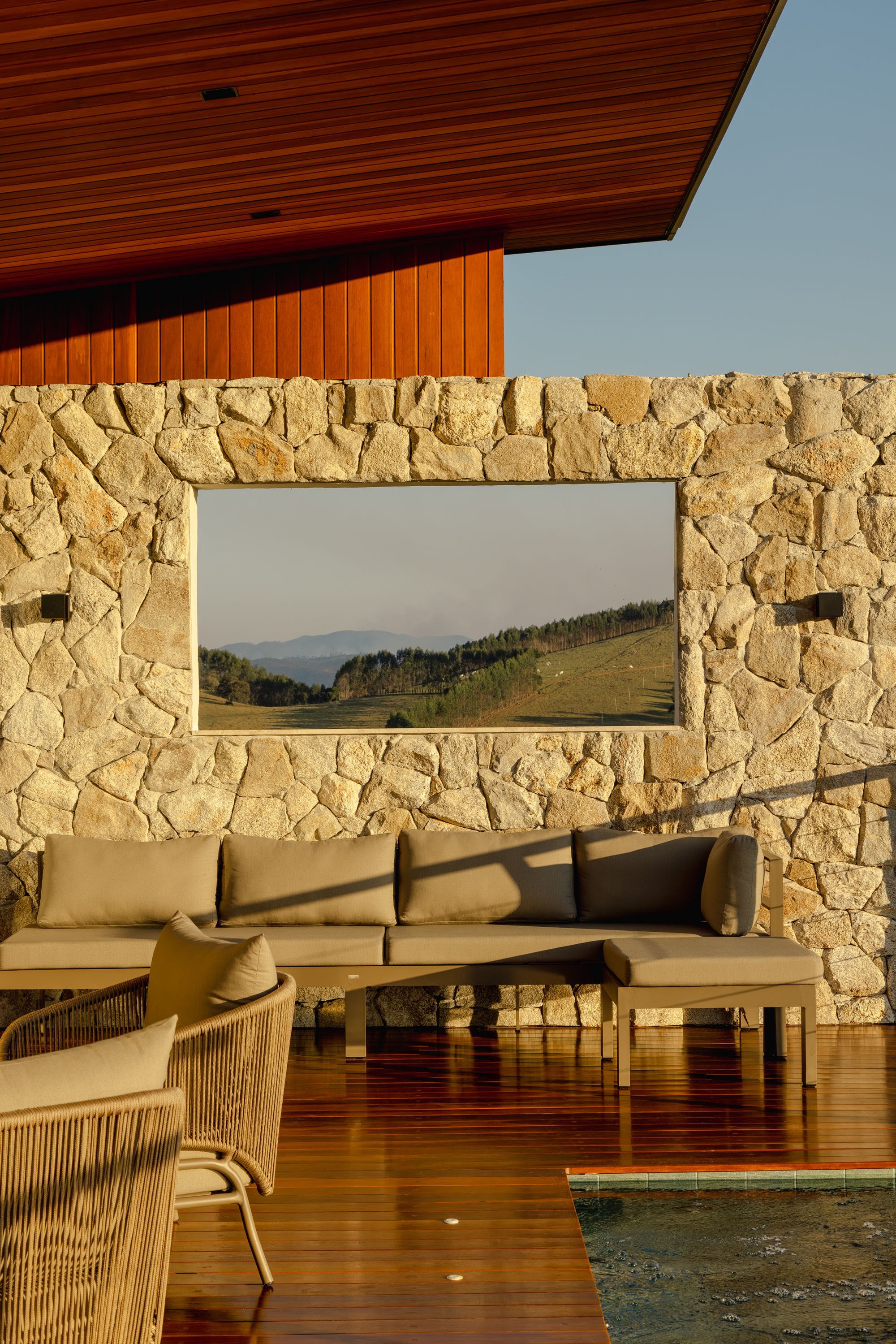
What makes the project worth studying is not its amenity list but the way it negotiates material and terrain. The architects split the building's identity between two registers: rough stacked stone that ties the walls to the geology underfoot, and a warm timber ceiling plane that floats above the interior like a continuous canopy. The result is a cottage that feels heavier at the base and lighter as your eye travels upward, a quality amplified by the corrugated metal roof that barely registers against the sky in aerial views. Every room opens to the valley through generous glazing, yet the stone masses act as privacy anchors, framing views rather than simply exposing them.
Rooted in the Hillside
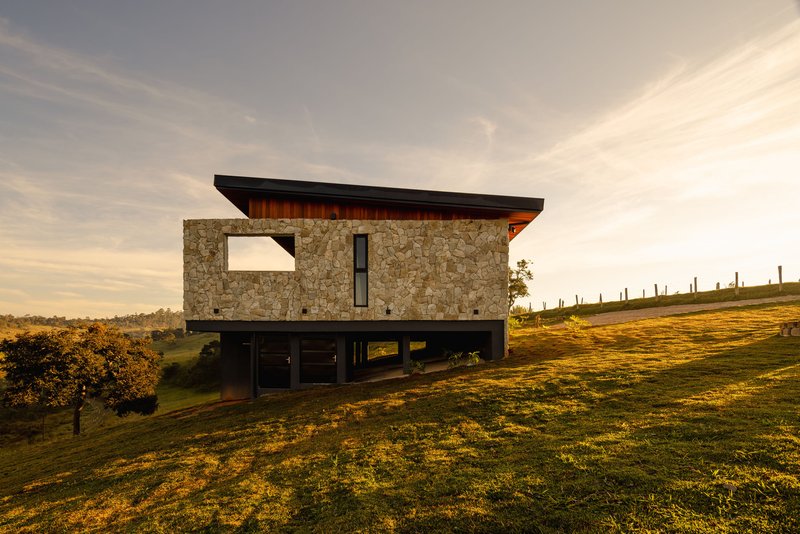
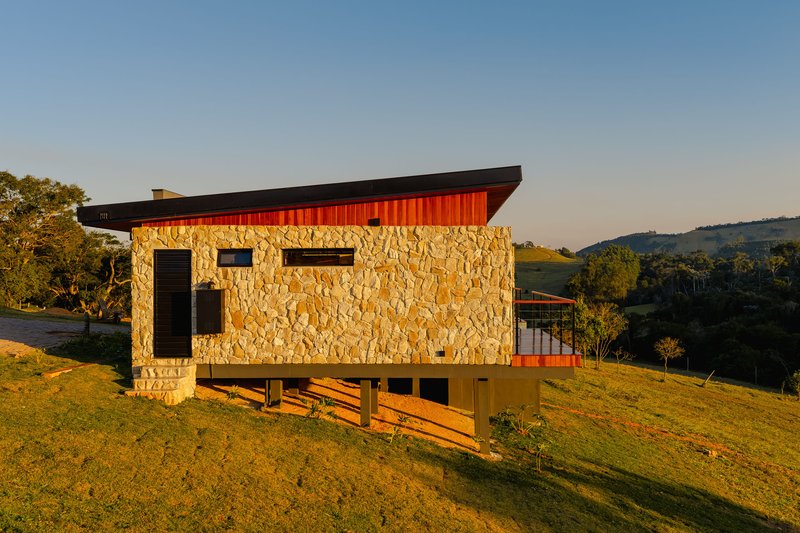
The cottage is carved into a gentle slope, which allows the entrance facade to sit almost flush with the grade while the rear elevation opens up to expose the full height of the living spaces. Stacked stone walls rise directly from the terrain as if quarried on site, giving the building an appearance of geological permanence that belies its modest footprint. A corrugated metal base tucks beneath on the downhill side, creating a shadow line that detaches the stone mass from the ground just enough to remind you this is architecture, not outcrop.
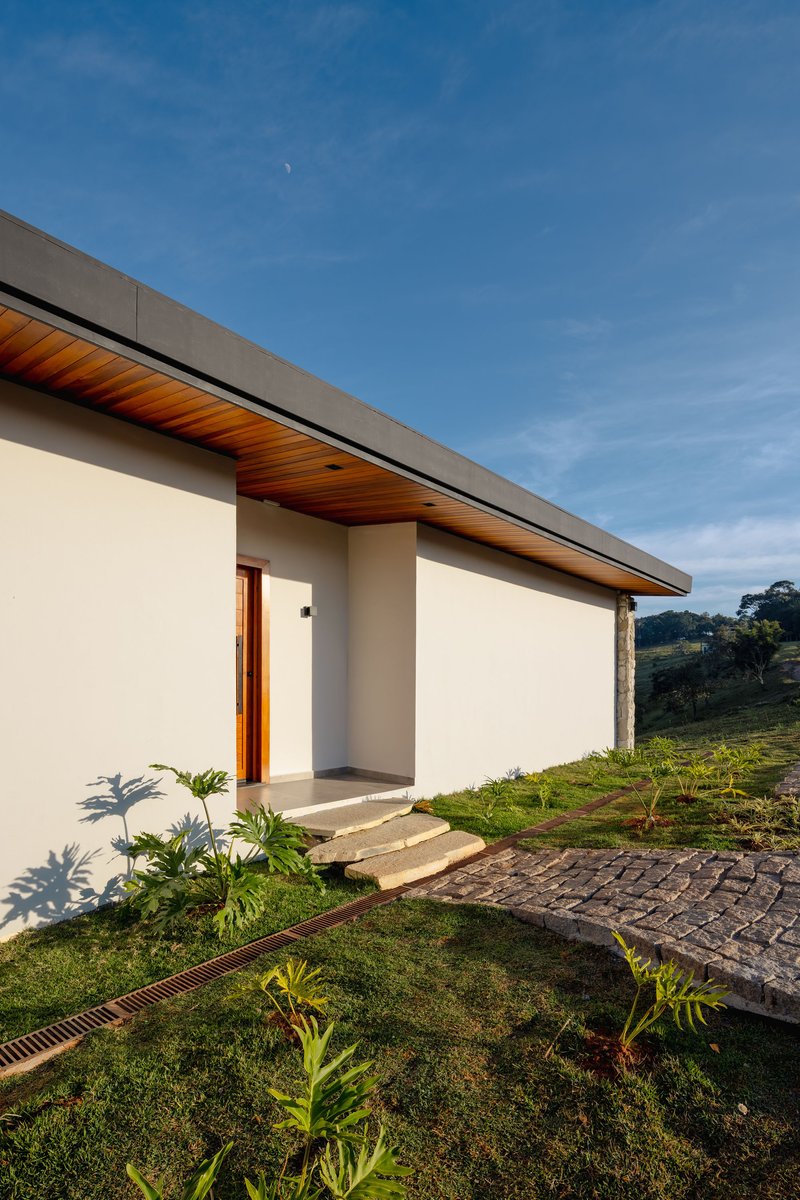
From the gravel access road, the entry is deliberately understated: white-rendered plaster and a timber-lined soffit channel you toward a stone accent wall before revealing the interior. LEIVA arquitetura clearly understands that a retreat in open landscape should not shout; arrival should feel like a gradual descent into intimacy.
A Landscape Without Borders
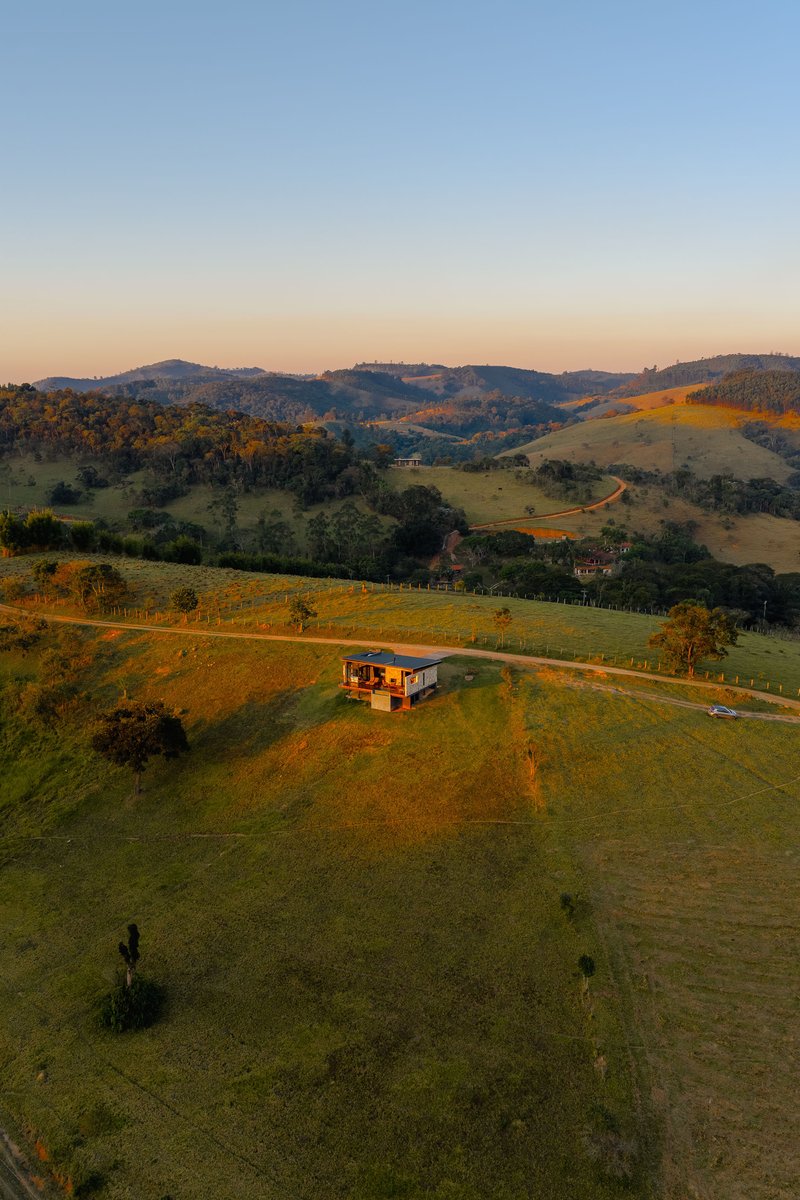
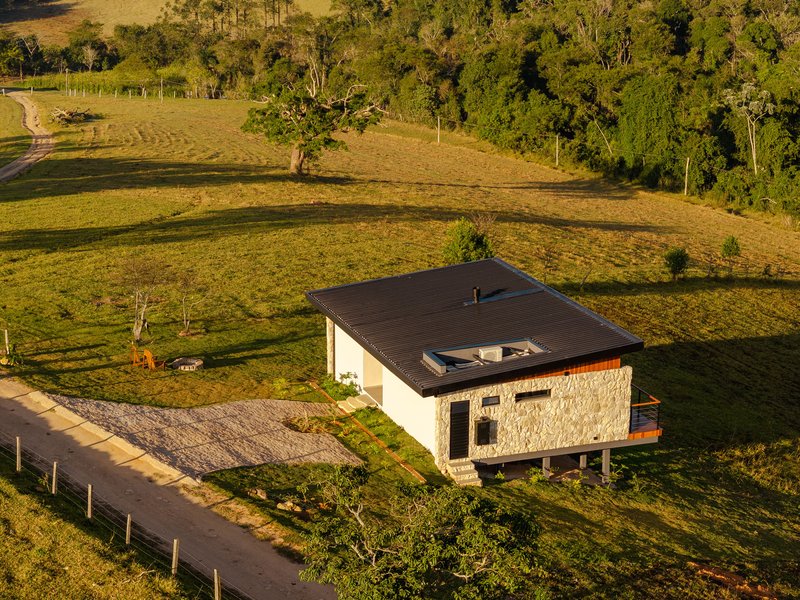
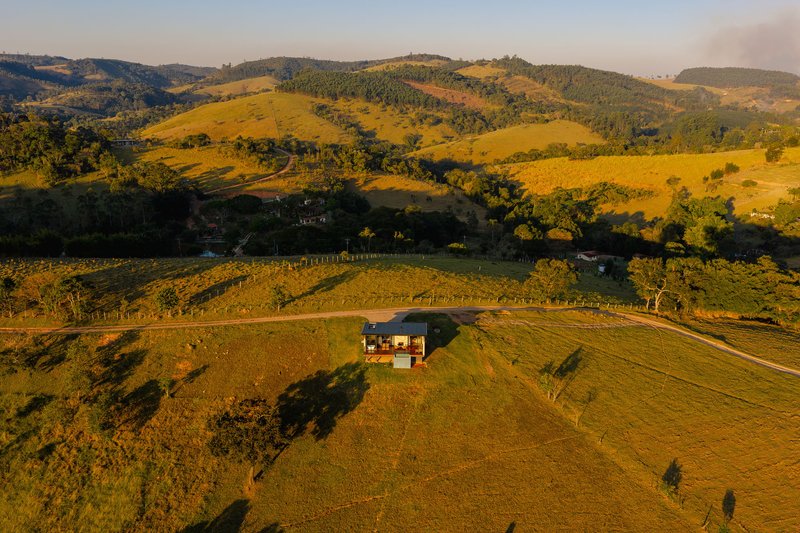
Seen from the air, the dwelling is a dark rectangle dropped into golden pasture, ringed by nothing but grass, a few scattered trees, and the distant line of Atlantic Forest. The isolation is the point. Bom Jesus dos Perdões sits at about 770 meters elevation, and the rolling terrain gives every prospect a layered depth. LEIVA's decision to leave the surrounding land essentially untouched, no formal garden, no paving beyond the access path, lets the building operate as the sole artifact in a found landscape.
A winding dirt trail connects the property to the forested valley below, and from that trail the cottage appears as a bright sliver against the meadow. The architects seem to have calibrated the building's position carefully: far enough from the tree line to receive full sun and unobstructed views, close enough for the forest to serve as a green backdrop rather than a distant abstraction.
Stone as Spine
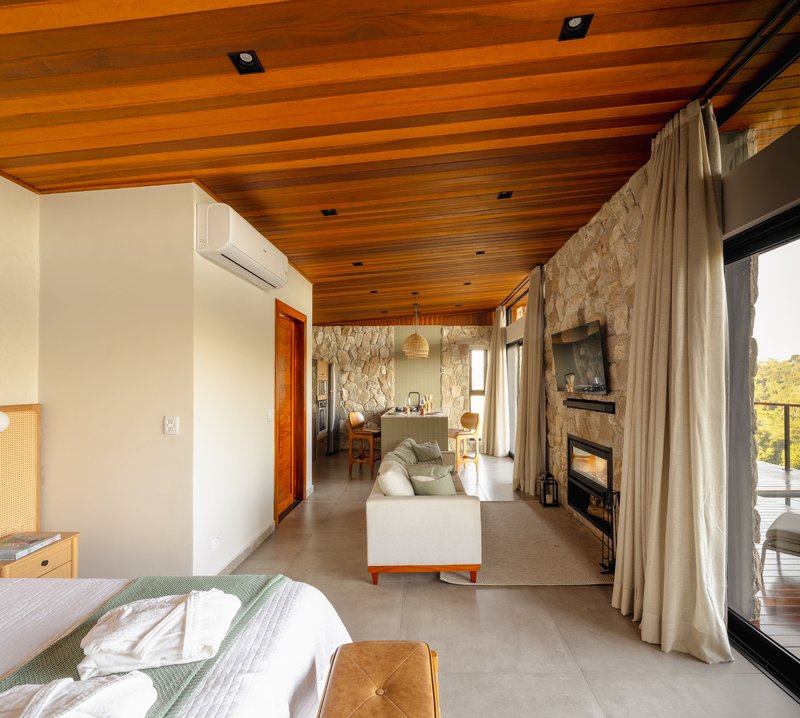
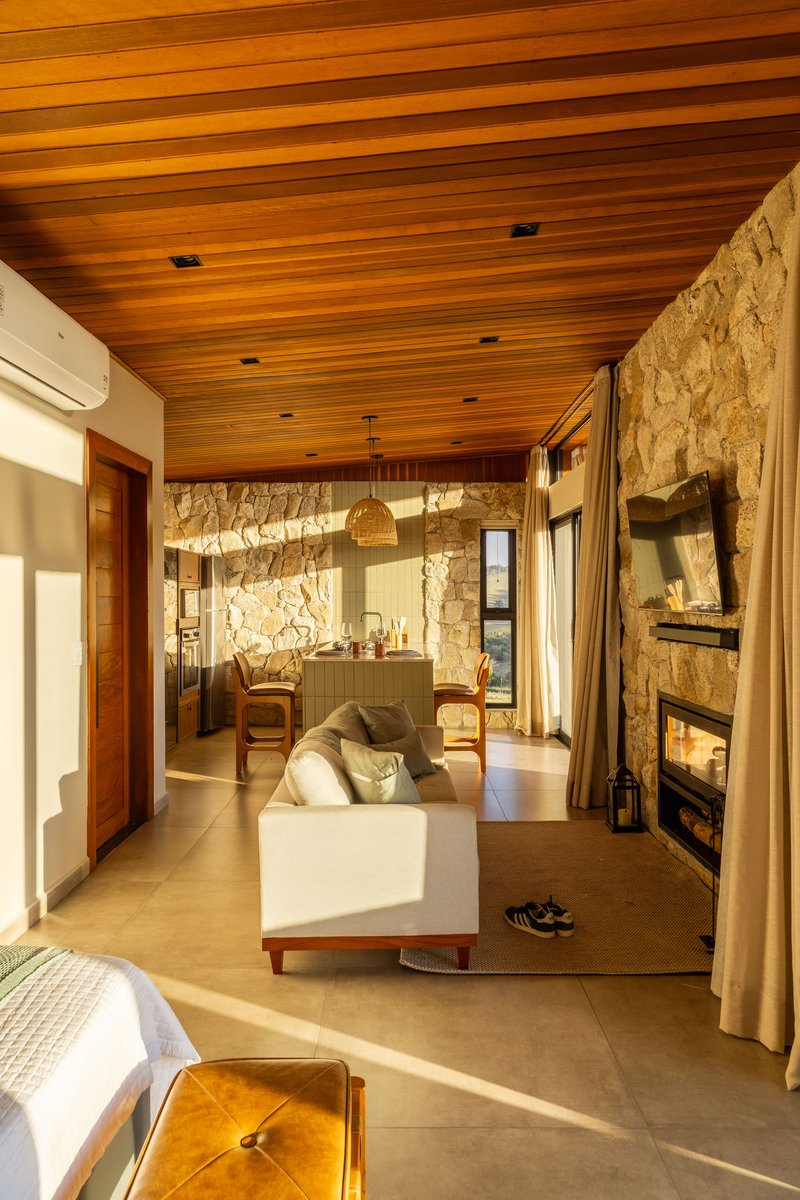
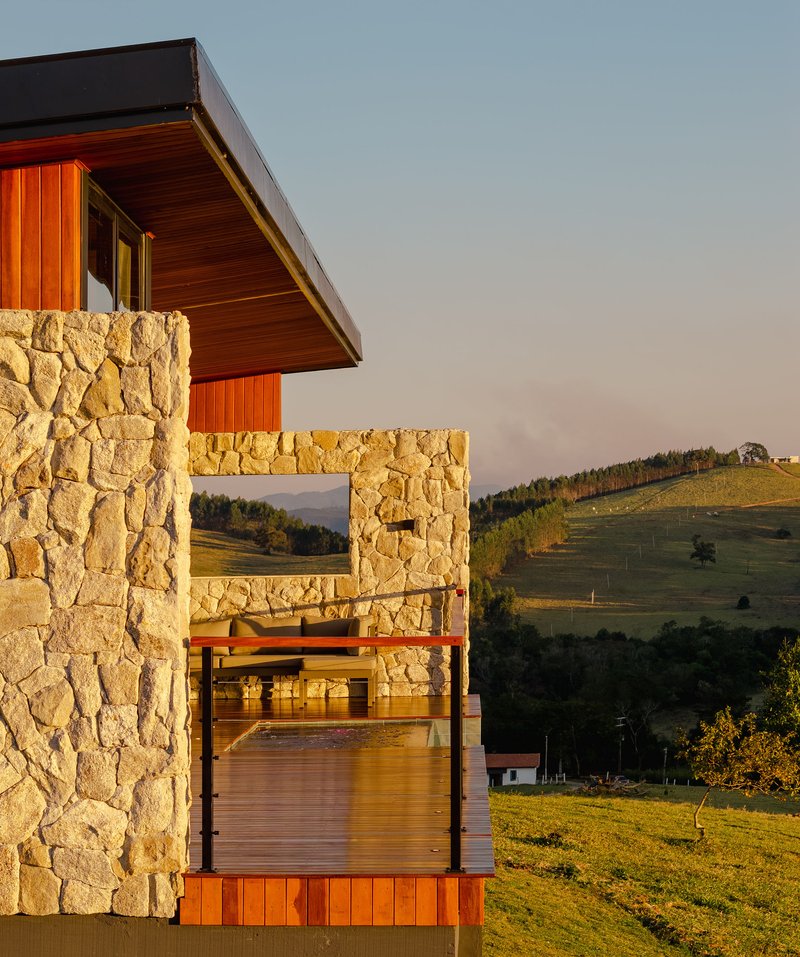
The stacked stone wall is not decoration; it is the organizational spine of the plan. Running roughly through the center of the building, it houses the double-sided fireplace, divides the social zone from the bedroom suite, and extends outward to frame the terrace. Its texture, rough and uncoursed, contrasts sharply with the precise geometry of the timber ceiling slats above, setting up a dialectic between the geological and the crafted.
In the dining area, warm afternoon light rakes across the stone surface and picks up every irregular joint and shadow. The effect is cinematic without trying to be. The architects also use the stone wall in the bathroom, where illuminated niches cut into the mass introduce a controlled glow that softens what could otherwise be an oppressively heavy enclosure.
The Timber Canopy
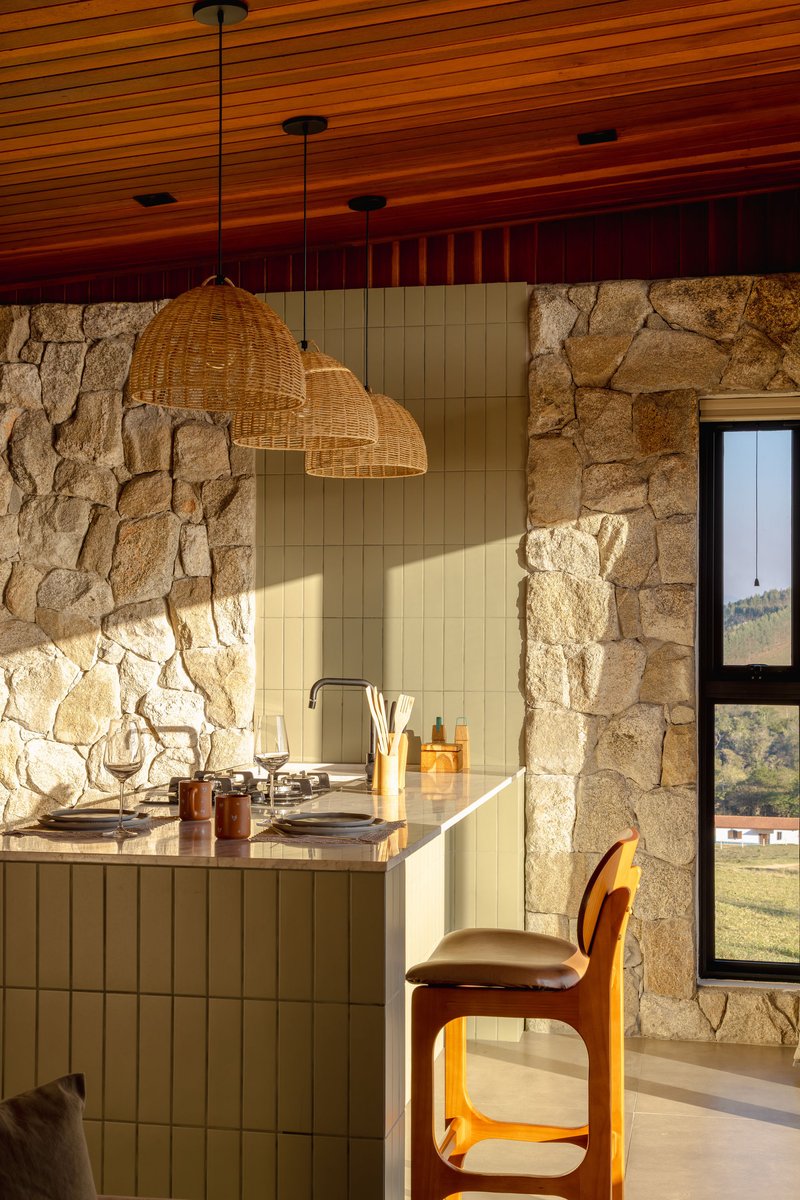
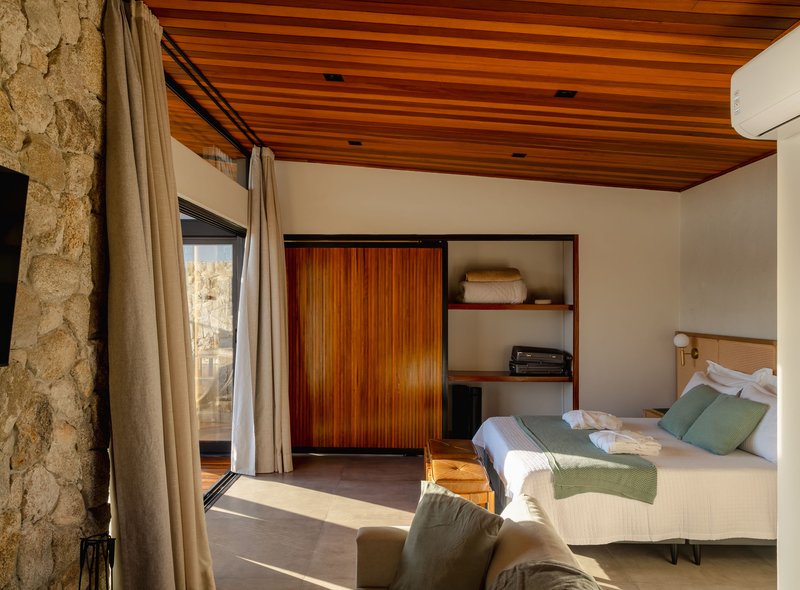
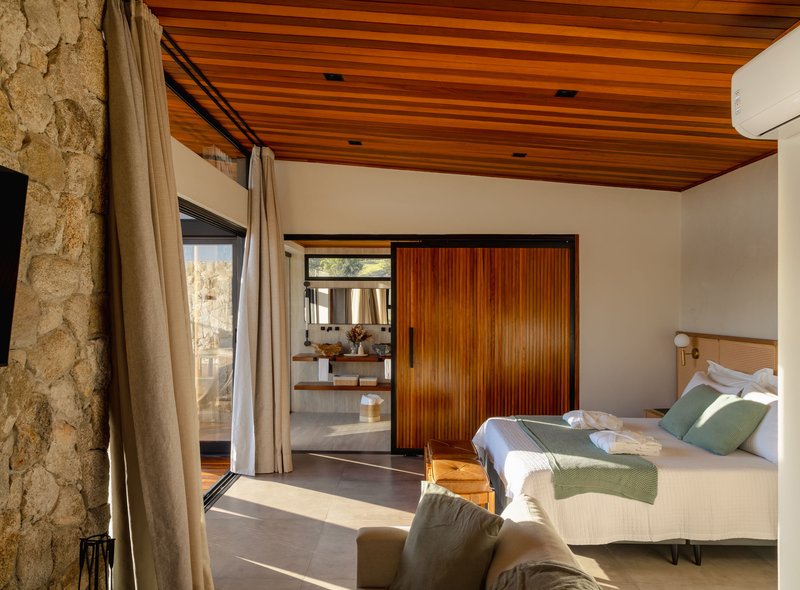
If stone provides gravity, the timber-slatted ceiling provides levity. It runs continuously from the kitchen through the bedroom and out to the covered terrace, unifying all zones under a single warm plane. The slats are spaced tightly enough to read as a solid surface from a distance but openly enough to catch directional light, creating a subtle rhythm of bright lines and thin shadows across the interior throughout the day.
In the bedroom, this ceiling meets floor-to-ceiling curtains and a sliding timber door that reveals the ensuite bathroom beyond. The material consistency is deliberate: by keeping the overhead plane the same everywhere, LEIVA flattens the hierarchy between sleeping, cooking, and bathing, reinforcing the idea that this is a single continuous experience rather than a collection of rooms.
Terrace, Pool, and the Threshold of Outside
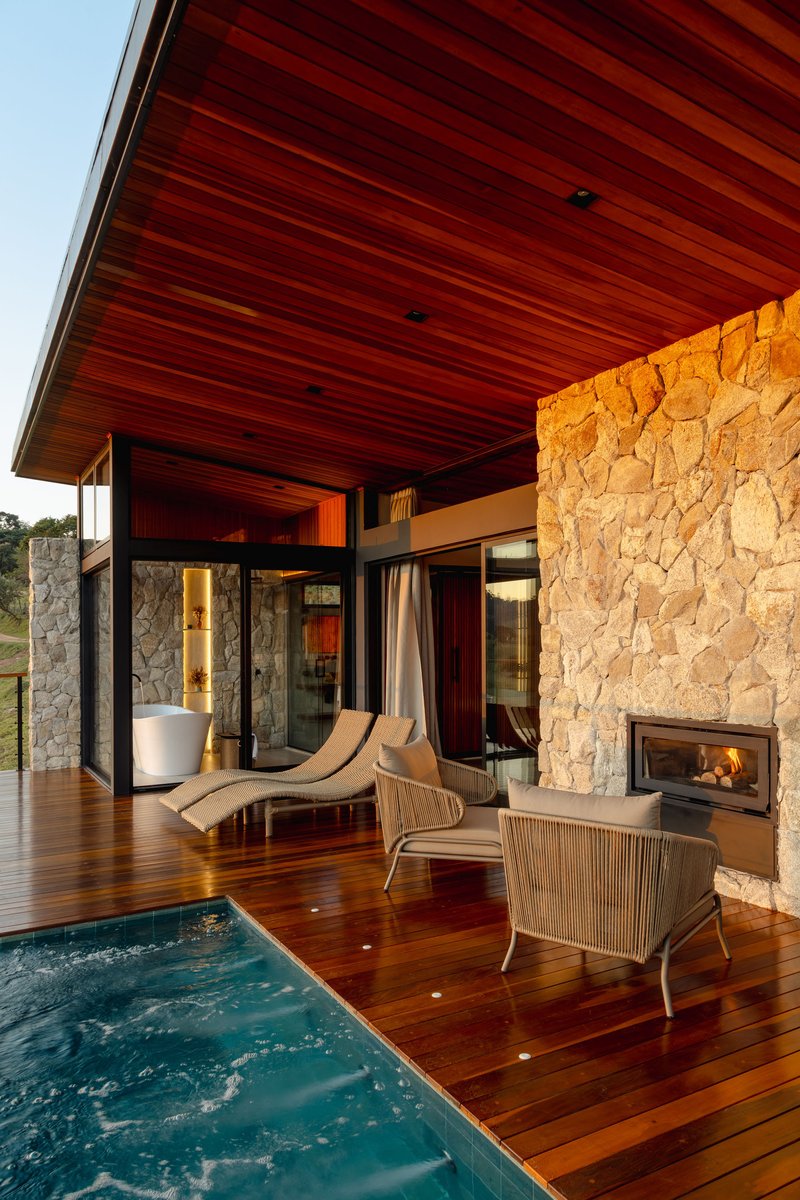
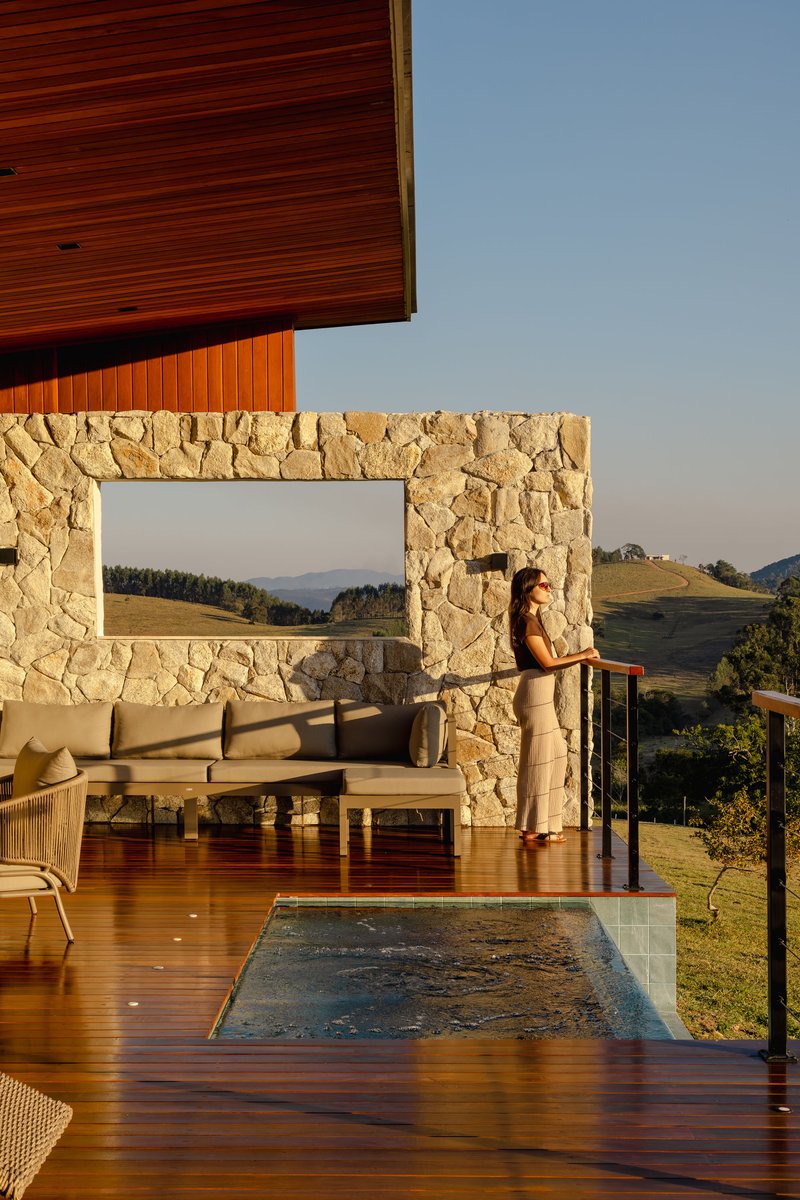
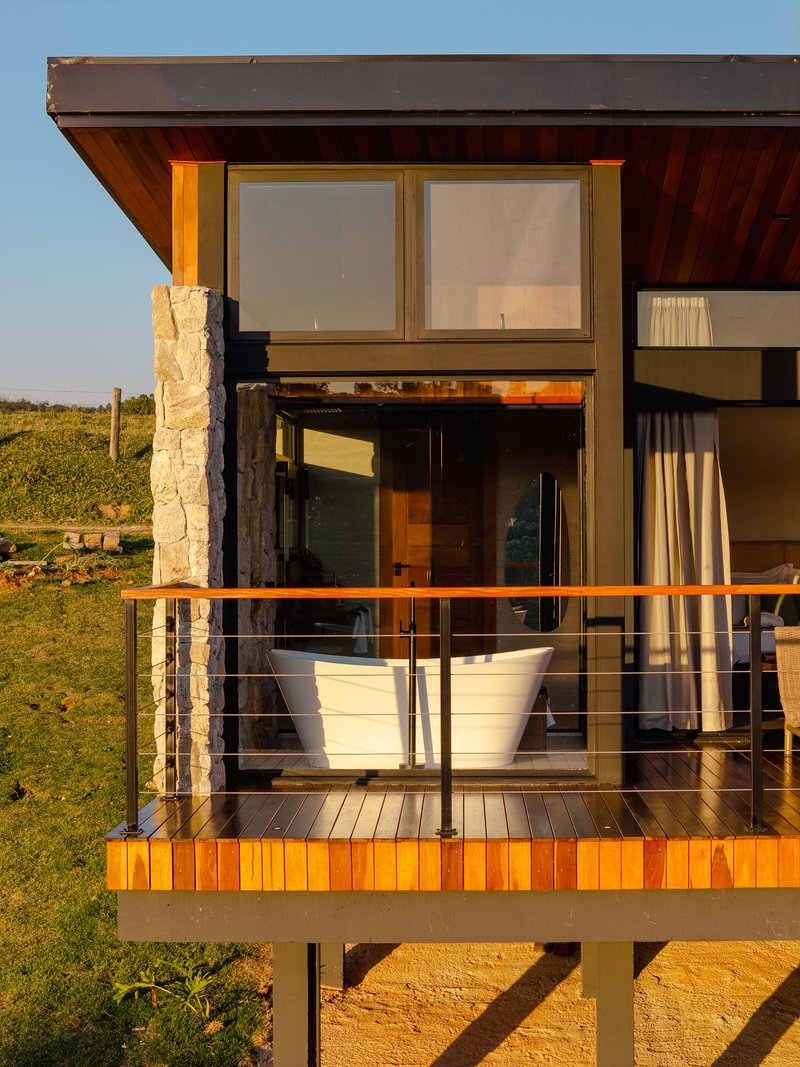
The covered timber deck is arguably the most important room in the house, even though it has no walls. Stretching along the downhill edge of the plan, it accommodates the heated plunge pool, a stone fireplace wall visible from both inside and out, and a glass railing that is thin enough to disappear against the valley panorama. The cantilevered overhang protects the deck from rain without blocking the sky, creating a threshold zone where you are simultaneously sheltered and exposed.
At sunset the stone chimney catches the last light and turns orange against the cooling sky, a moment that the photographs by Manuel Sá capture with restraint. The deck works because it is generous in proportion to the cottage's total area: a meaningful percentage of the 100 square meters is given over to this semi-exterior space, which tells you exactly where the architects believe life in this house actually happens.
Bathing with the Valley
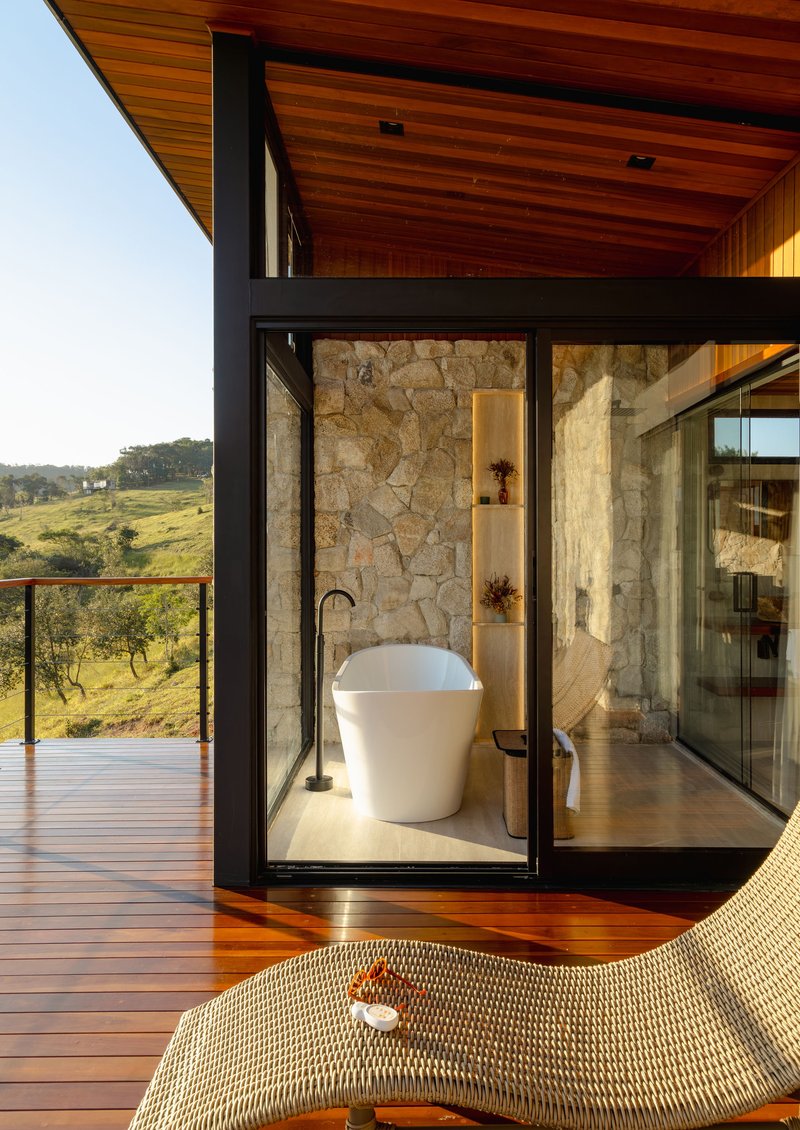
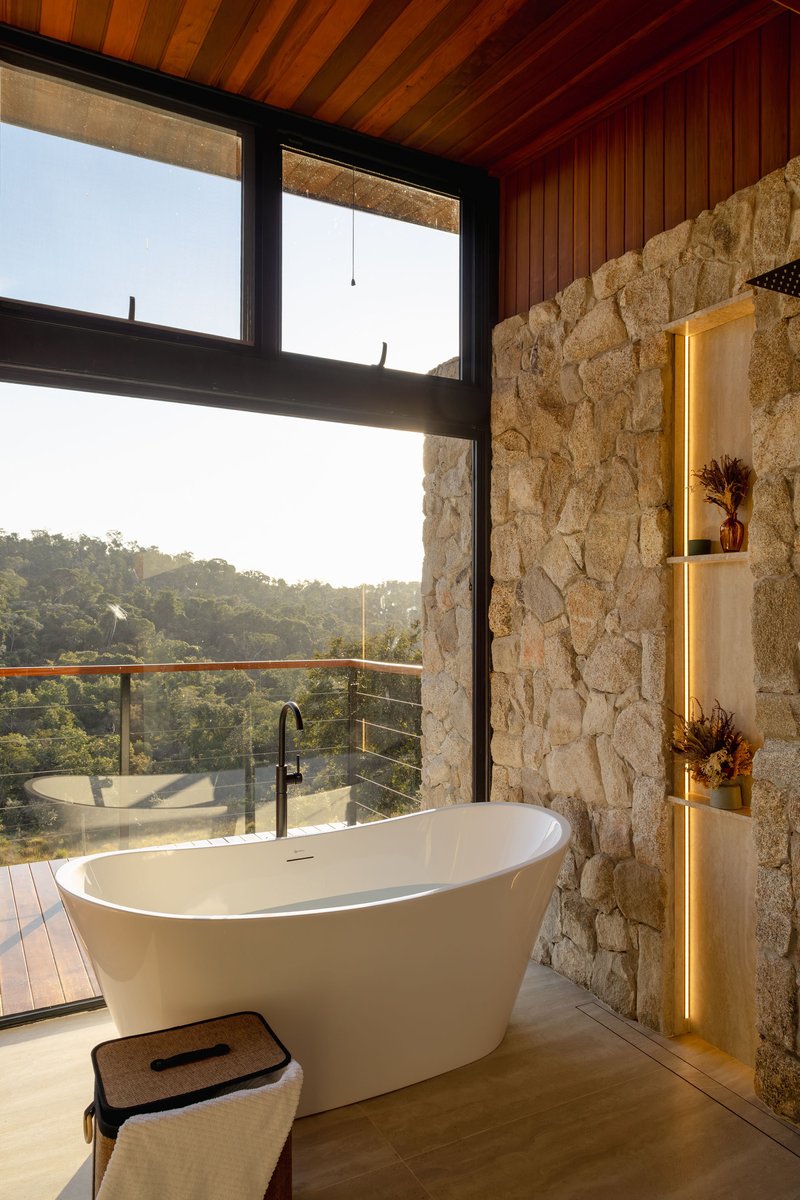
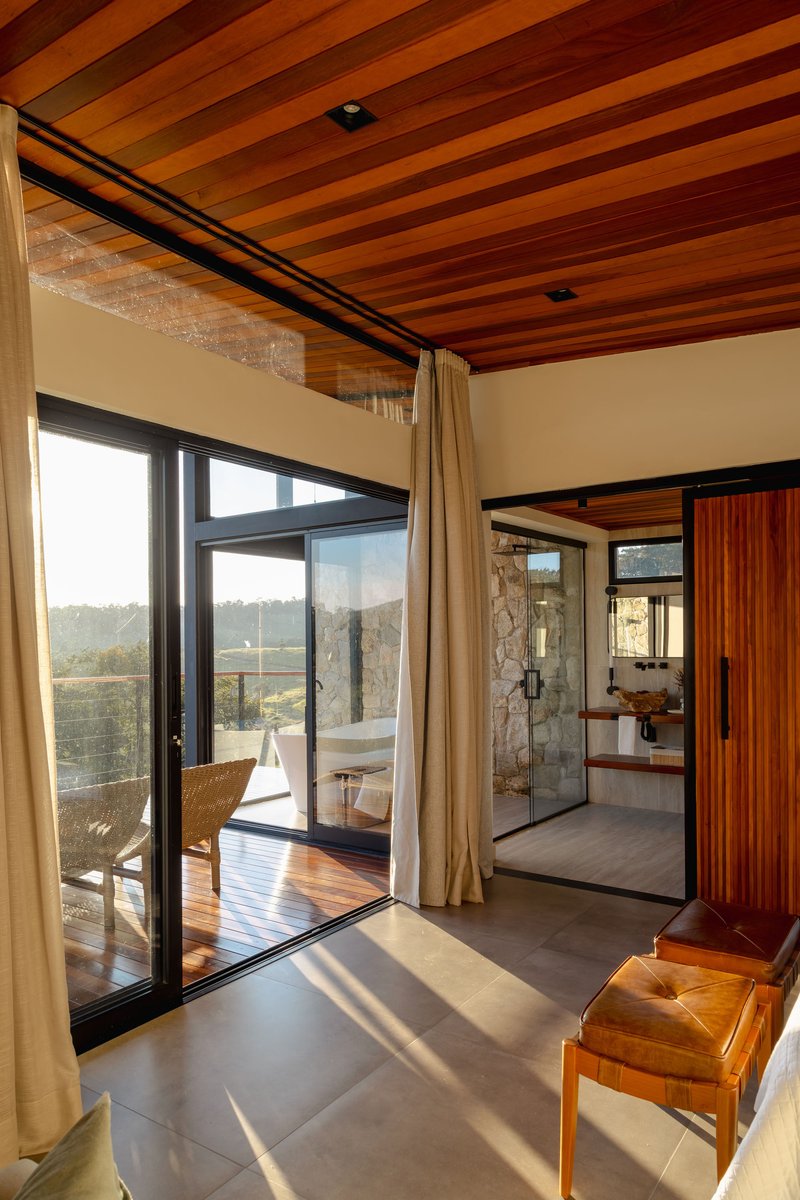
Two bathing experiences define the private wing. The freestanding tub sits beside a rough stone wall with illuminated niches, positioned to frame the forested hills through a generous opening. Then there is the glass-enclosed alcove, where a second tub is set low against the stone enclosure and looks out through the timber deck to the valley beyond. Both are exercises in selective framing: the architects use the mass of the stone to compress your peripheral vision, then release it toward a single panoramic direction.
The immersion bathtub and the floor fire mentioned in the program are not luxury clichés here; they are calibrated to the site's climate. At 770 meters elevation, evenings in Bom Jesus dos Perdões can be genuinely cool, and the combination of thermal mass from the stone walls, radiant heat from the fireplace, and warm water creates a microclimate that extends the hours of comfortable outdoor habitation well past sunset.
Plans and Drawings
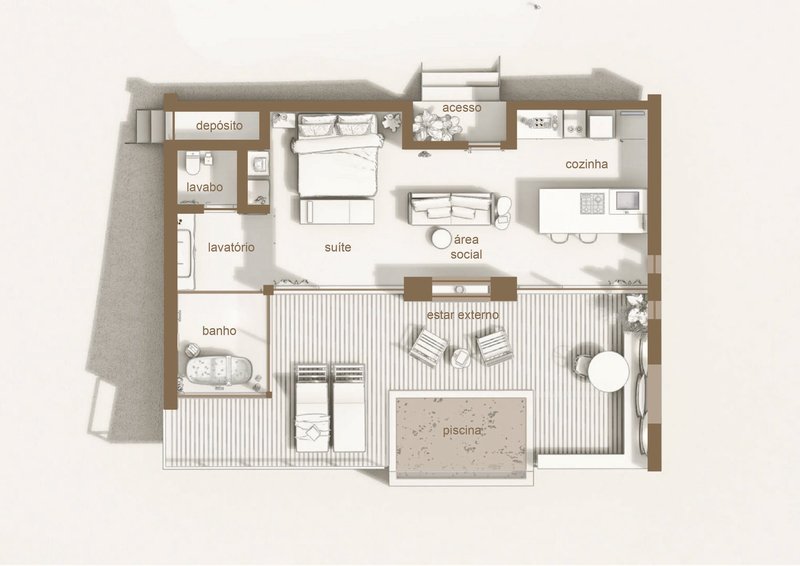
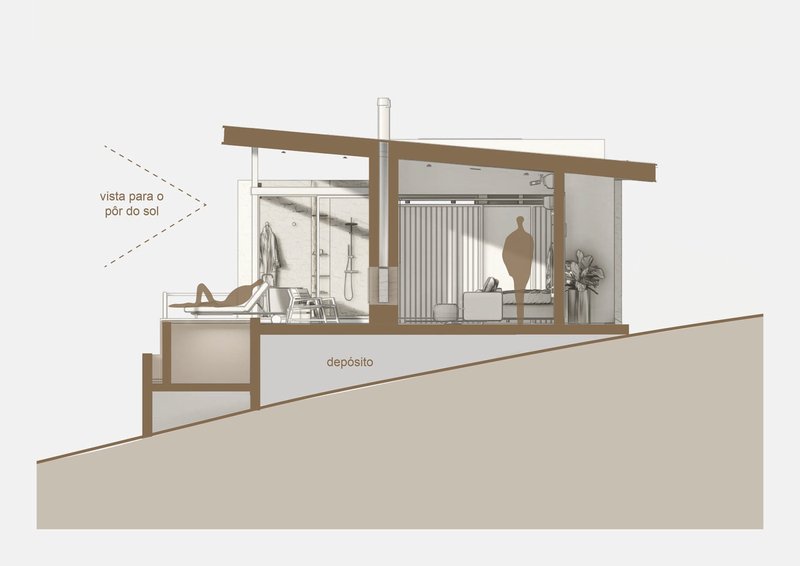
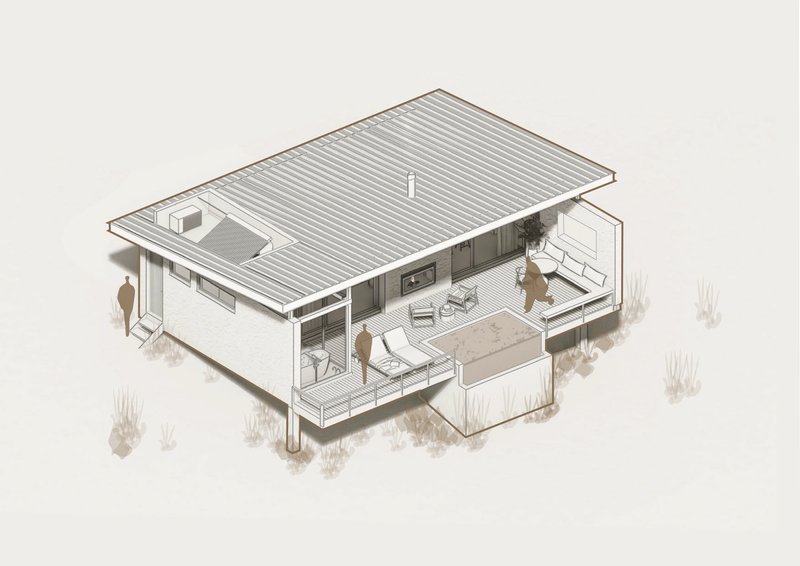
The floor plan confirms what the photographs suggest: the cottage is organized as a linear bar divided by the central stone wall. Social spaces (kitchen, dining, living) occupy one side of the fireplace; the bedroom suite and bathroom occupy the other. The pool terrace runs the full length of the bar on the downhill edge, accessed through sliding glass panels that effectively double the living area in good weather.
The section drawing is revealing. It shows how the building is tucked into the slope, with the entrance arriving at grade while the terrace side opens to the full height of the interior. Glass walls on the valley-facing elevation run floor to ceiling, and the roof oversails the deck as a single plane. The axonometric drawing clarifies the corrugated metal roof geometry and the relationship between the planted surroundings and the compact rectangular footprint, confirming that the cottage reads as a single clean volume despite its material complexity at close range.
Why This Project Matters
Monet's Cottage belongs to a growing category of post-pandemic retreats designed for people who discovered, during lockdowns, that rest is not a luxury but a precondition for functioning. What separates this project from the generic cabin-in-the-woods genre is its material seriousness. LEIVA arquitetura did not resort to all-glass minimalism or nostalgic rusticity. Instead, they built with stone that belongs to the terrain and timber that warms the air, producing an interior atmosphere that feels specific to this hillside and no other.
At 100 square meters, the cottage also makes an argument for disciplined editing. Every square meter has a clear purpose, and the generous terrace proves that compact does not mean cramped when the landscape is allowed to do the work of expansion. For architects working on rural hospitality or second-home commissions, this project is a useful case study in how a small building, carefully placed and honestly made, can hold its own against a very large landscape.
Monet's Cottage by LEIVA arquitetura (lead architects Nathana Serena and Larissa Vrielink), Bom Jesus dos Perdões, São Paulo, Brazil. 100 m², completed 2025. Photography by Manuel Sá.
About the Studio
Share Your Own Work on uni.xyz
If projects like this are the kind of work you want to make, uni.xyz is a place to publish your own, find collaborators, and enter design competitions.




Popular Articles
Popular articles from the community

PLATAFORMArq Folds a Concrete Roof Over the Portuguese Mountains in House #474
A 220-square-meter residence in Teixoso, Portugal, wraps board-formed concrete into an angular canopy that frames the Serra da Estrela foothills.

The Faith: Modular Architecture for Play, Learning, and Hope in Kutupalong Refugee Camp
A modular playground architecture project in Bangladesh where play, learning, safety, and hope rebuild childhood inside a refugee camp anew.
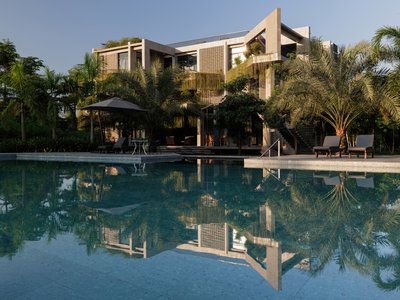
Reincarnation Weaves a Three-Story Retreat into the Green Landscape of Rural Bangladesh
Ara Manor in Narsingdi dissolves the line between domestic architecture and its lush surroundings through screens, courtyards, and planted rooftops.
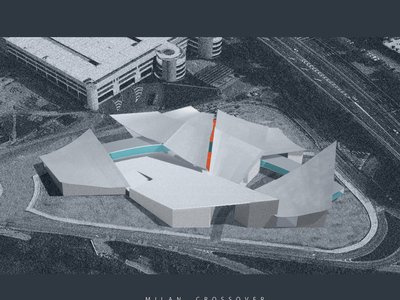
Milan Crossover: Sustainable Architecture for a New Fashion Culture in Milan
Milan Crossover transforms fashion culture through sustainable architecture, linking material libraries, remake studios, and public runways.

Similar Reads
You might also enjoy these articles
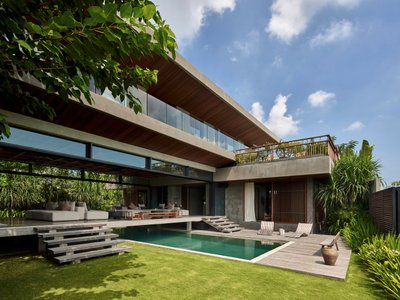
Freebird Residence by Alexis Dornier: A Tropical Modernist Sanctuary in Bali
Floating living pavilion above pool anchors H-shaped tropical villa, blending Japanese minimalism, sustainable strategies, lush landscape, and sculptural interiors.
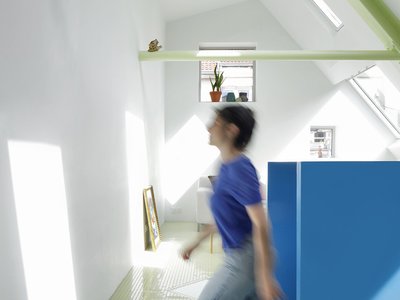
127af Flips a Tiny Bagnolet Rowhouse Upside Down with a Handcrafted Roof Extension
A 55-square-meter terraced house on the edge of Paris gains a luminous upper living floor through lightweight timber and steel.
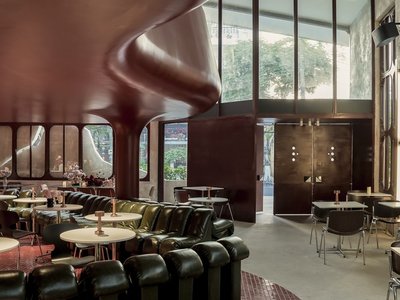
1.61 Design Workshop Wraps a 600-Square-Meter Café in Vietnam in Sculptural Burgundy Drama
Reden Café & Bistro pairs a helical staircase, mosaic floors, and deep red interiors to rethink Vietnamese hospitality space.

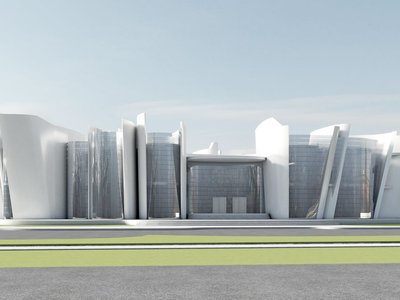
The Unbound Brain: A School Shaped by Cognitive Architecture
Cylindrical learning pods radiate like neurons from a central cortex, turning the floor plan into a spatial model of human thought.


Explore Residential Building Competitions
Discover active competitions in this discipline




The International Standard for Design Portfolios


The Global Benchmark for Architecture Dissertation Awards


The Global Benchmark for Graduation Excellence

Challenge to design mud housing for contemporary communities
Comments (0)
Please login or sign up to add comments
No comments yet. Be the first to comment!