
Les Pinyes del Cabanyal: Heritage Apartment Renovation by Piano Piano Studio in Valencia
Sensitive renovation of a historic 1924 Valencia home into bright, characterful apartments blending original details with modern spatial interventions.


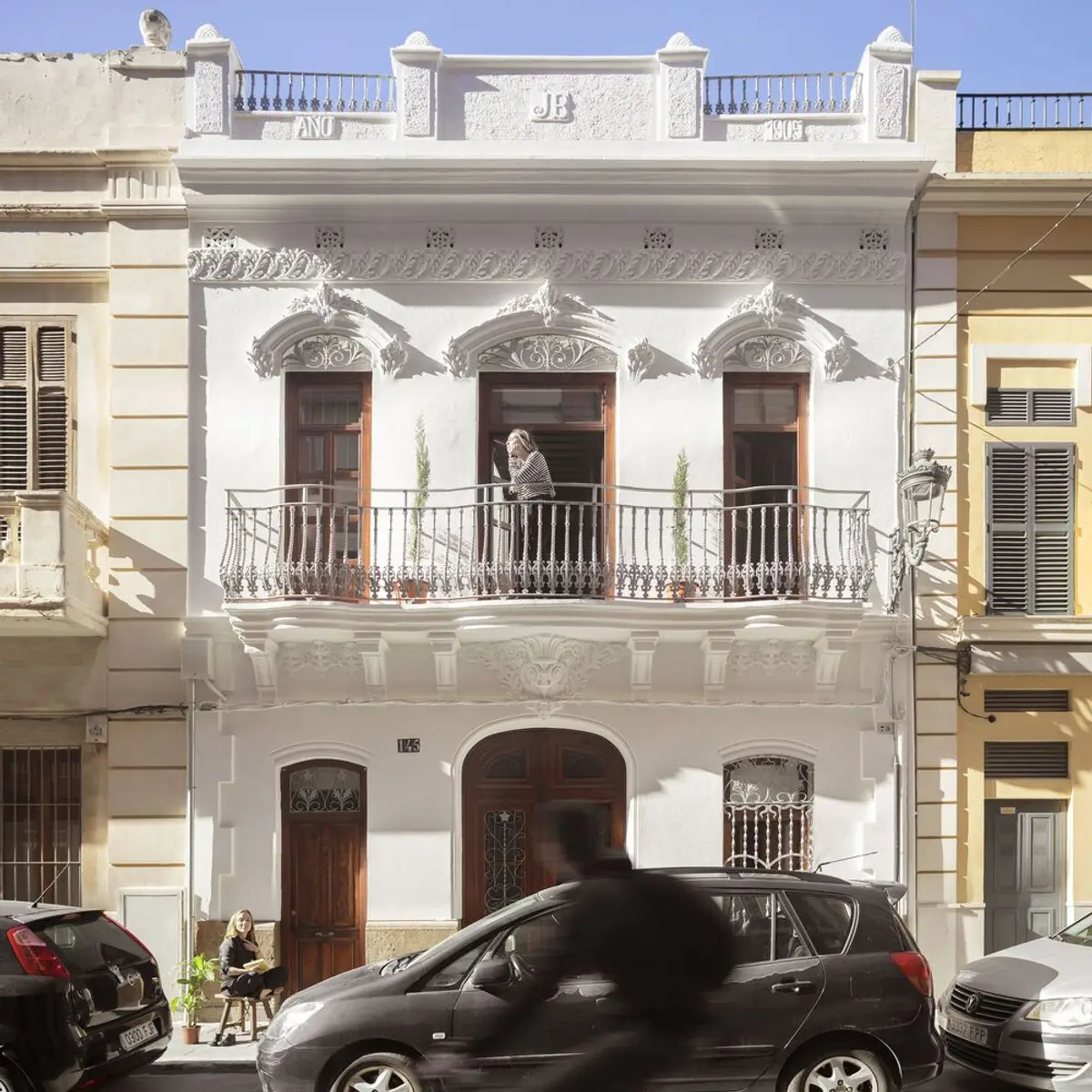
Located in the heart of the historic Cabanyal neighborhood of Valencia, Spain, Les Pinyes del Cabanyal is a sensitive and intelligent architectural intervention by Piano Piano Studio. This renovation transforms a decaying 1920s single-family home into a set of two independent residential apartments and a technical attic level, all within the constraints of the building’s original 141-square-meter footprint.
A Protected Façade, a Forgotten Interior
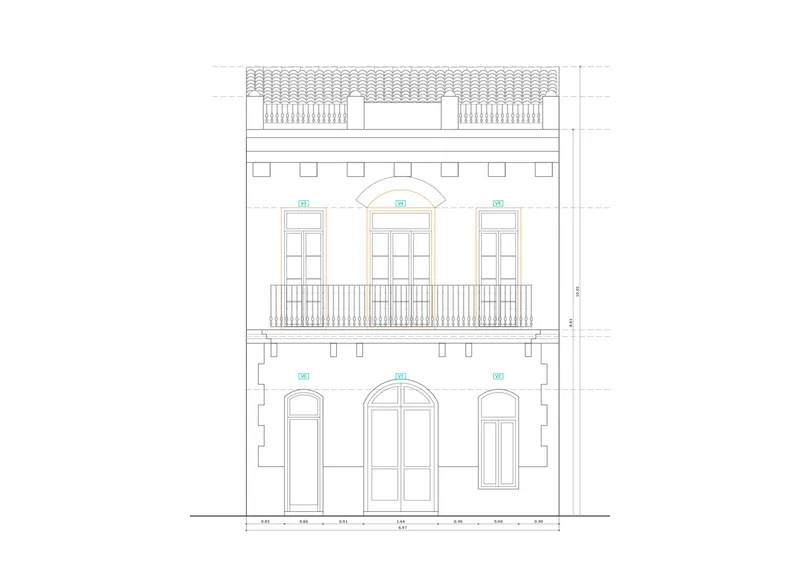
Originally constructed in 1924, the building presented an ornate façade protected under heritage regulations. Despite its rich decorative exterior, the house concealed a compact 50-square-meter floor area and suffered from poor ventilation—dependent solely on air flow between façade openings and a rear chimney. Over the years, makeshift repairs were made, but by the time Piano Piano Studio took on the project, the interior had been abandoned and neglected.
Transforming Volume Without Expansion
The project’s main challenge was clear: to revitalize the structure without altering its volume. Within this compact layout, architects Maria Donnini and Maria Grifo inserted two self-contained apartments and added a third level for technical services, all while adhering to conservation requirements.
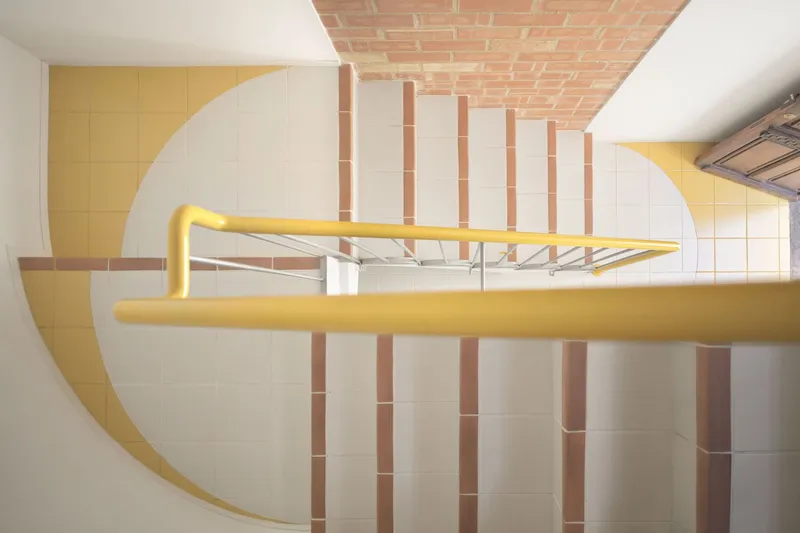
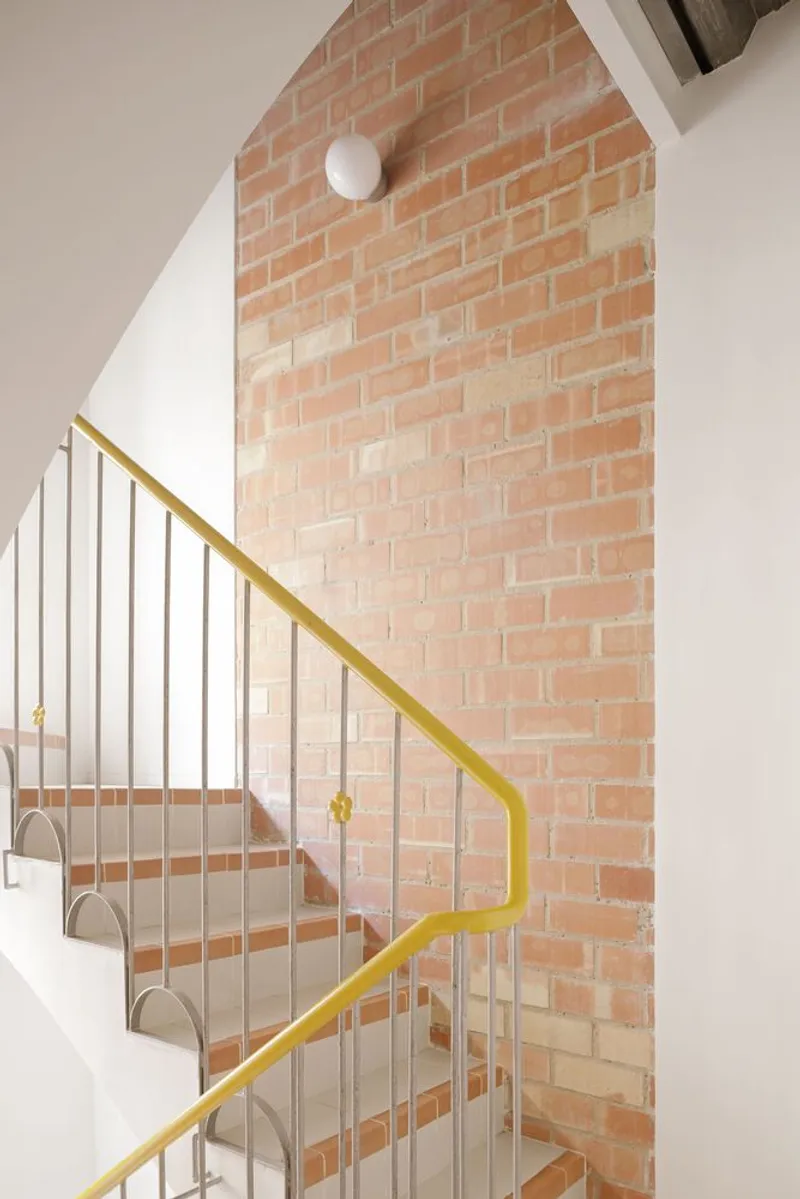
The key to unlocking the building’s potential was the reorganization of its vertical circulation. The previous steep, vaulted staircase was dismantled, and a new, comfortable staircase was designed to provide access to all three floors. Not only a circulation element, this staircase also functions as a social and sensory space, connecting the levels in a fluid and inviting sequence.
Daylight, Detail, and Duality
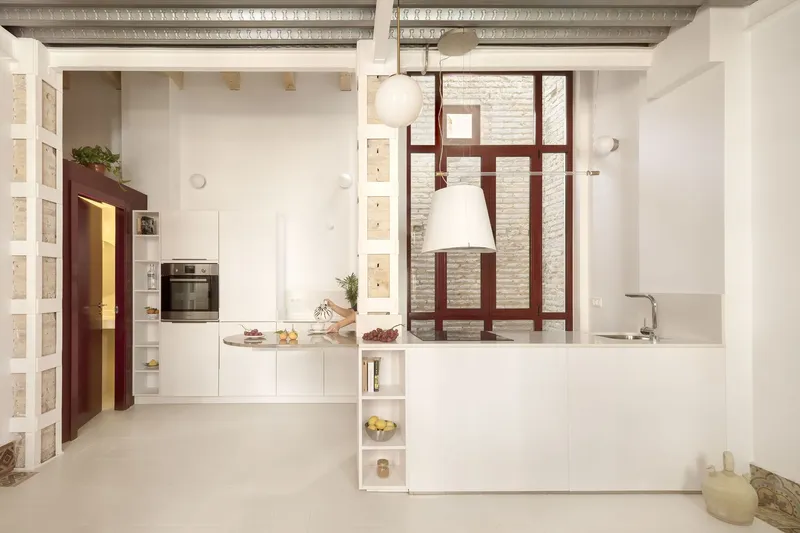
A crucial design goal was to maximize natural light in an interior that initially had very little—just a single skylight at the rear. By partially emptying the core and exposing the attic roof, the architects brought daylight deeper into the plan. The new floor structure sits within the space previously hidden by a cane ceiling, opening up views and creating a visual connection to the sky.
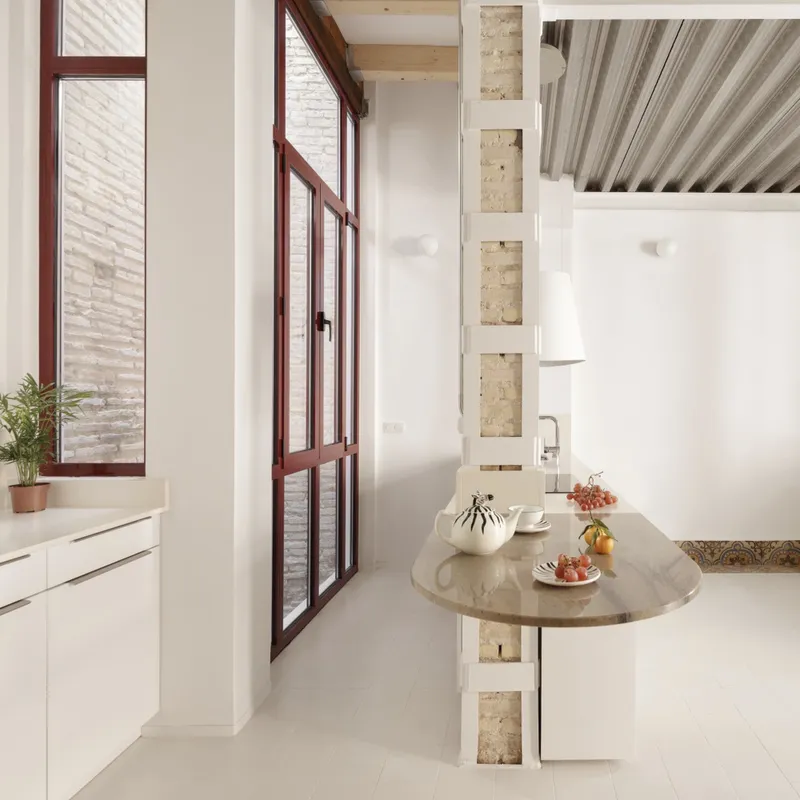
Though both apartments are identical in layout—centered around an open-plan scheme with a self-contained bathroom “box” not extending to the ceiling—each was subtly differentiated through materials and spatial articulation. These design decisions ensure each unit maintains its own distinct character while preserving unity across the building.
Material Strategy: Juxtaposing the Old and the New
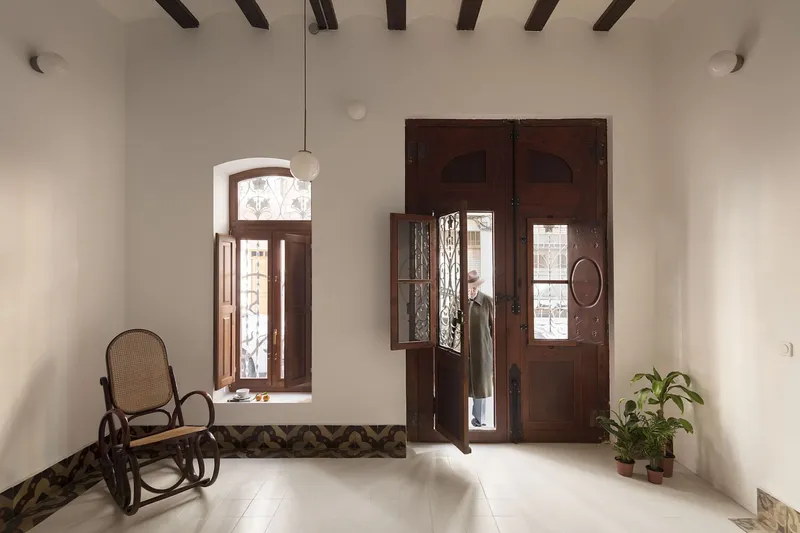
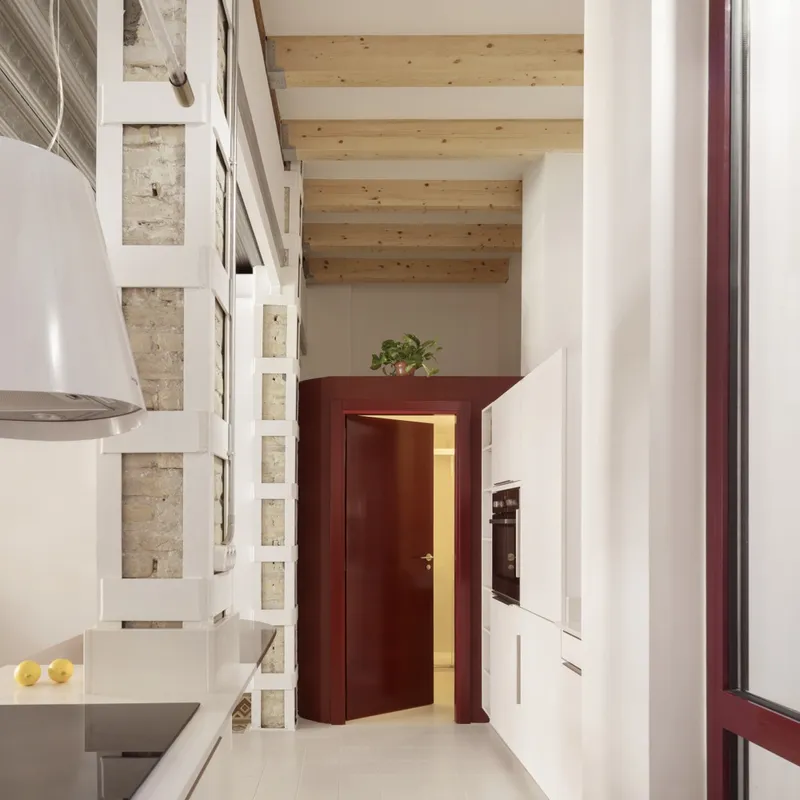
Material and structural contrasts define the sensory experience. On the ground floor, existing wooden beams and ceramic tiles were retained and restored, preserving the historic identity of the space. In contrast, the first floor introduces a steel-concrete hybrid structure, exposing metal sheets and beams to articulate a clearly contemporary intervention.
Above the kitchen and bathroom areas, a wooden mezzanine was elevated to create a sense of vertical generosity and openness. The attic reveals the previously concealed sloped roof, reinforcing the project’s core idea: to harmonize historical authenticity with modern reinterpretation.
Heritage Preservation with a Contemporary Language
The renovation carefully balanced conservation with contemporary design. Exterior work involved restoring original wooden joinery, cabinetmaker-crafted shutters, and balcony railings—repainted in the distinctive silver hue characteristic of Cabanyal. Ornamental moldings were cleaned and celebrated, not erased.
Inside, reclaimed hydraulic tiles were repurposed creatively. Rather than reassembling them in their original configuration, they were repositioned along the perimeter of rooms to visually lighten the space. The remaining flooring was finished in light-colored ceramics, enhancing brightness and spaciousness. Color cues from the tiles informed the interior palette: the burgundy bathroom enclosures, mustard staircase highlights, and rounded forms recall the undulating facade, echoing through interior curves and soft transitions.
A Quiet Revolution in Urban Regeneration
Rather than mimicry, this project thrives on respectful contrast. Piano Piano Studio’s intervention celebrates preexistence without imitation, using each architectural gesture to dialogue with the past while expressing contemporary values. The project serves as a model for urban regeneration in heritage contexts, where creativity meets conservation and modest means yield meaningful transformation.
All Photographs are works of Milena Villalba


Popular Articles
Popular articles from the community


Play: Fragments of Their World
Familiar architecture becomes modular playground design, creating safe spaces where displaced children can learn, connect, imagine and play.

Co-life: Sustainable Architecture for Age-Friendly Community Living
Co-life reimagines sustainable architecture for seniors through courtyards, rammed earth, shared gardens, and spaces designed for belonging.

Little Red Riding Hood: Architectural Design as a Journey Through Fear, Light, and Storytelling
Little Red Riding Hood reimagines the fairy tale through architectural design shaped by fear, light, scale, memory, uncertainty, and choice.

Hill & Cross Opera: Sculptural Opera House Architecture Shaped by Tallinn’s Landscape and Identity
Hill & Cross Opera reimagines opera house architecture in Tallinn through its sculptural hill, civic plaza, glass wave and a luminous cross.

Similar Reads
You might also enjoy these articles


Hodi-Mandai Geram
Project Function: Preservation and revitalization of the Intangible heritage and socio-spatial identity of the Hodi by Housing, Cultural Memory Center, Sacred Grove, landscape, local tourism economy


Olio Towers: A Mid-Rise for Performers That Fuses Housing, Rehearsal, and Stage
Located blocks from Houston's Theater District, this modular tower stacks living units around a central performance atrium.

Oasis: Modular Green Housing Carved into Dhaka's Urban Fabric
A shortlisted Plugin Housing entry reclaims unauthorized settlements in Dhaka with stepped concrete volumes, green roofs, and ventilation-driven design.

Black Hole: A Floating Megastructure for the Post-Physical Era
Emiliano Mazzarotto envisions a spherical, self-scaling arena where e-sports, digital hotels, and holographic stadiums replace traditional public space.

Explore Architecture Competitions
Discover active competitions in this discipline

Challenge to reimagine the Iron Throne

Photograph architecture without architects

Illustrate the lost glory of Angkor Wat - Render Challenge

Design challenge to reuse E-waste
Comments (0)
Please login or sign up to add comments
No comments yet. Be the first to comment!