
Lindenhof Multi-Family House: A Contemporary Communal Living Model Rooted in Heritage
A reconstructed barn-inspired multi-family house offering affordable communal living, split-level apartments, shared courtyard spaces, and heritage-integrated design in rural Switzerland.


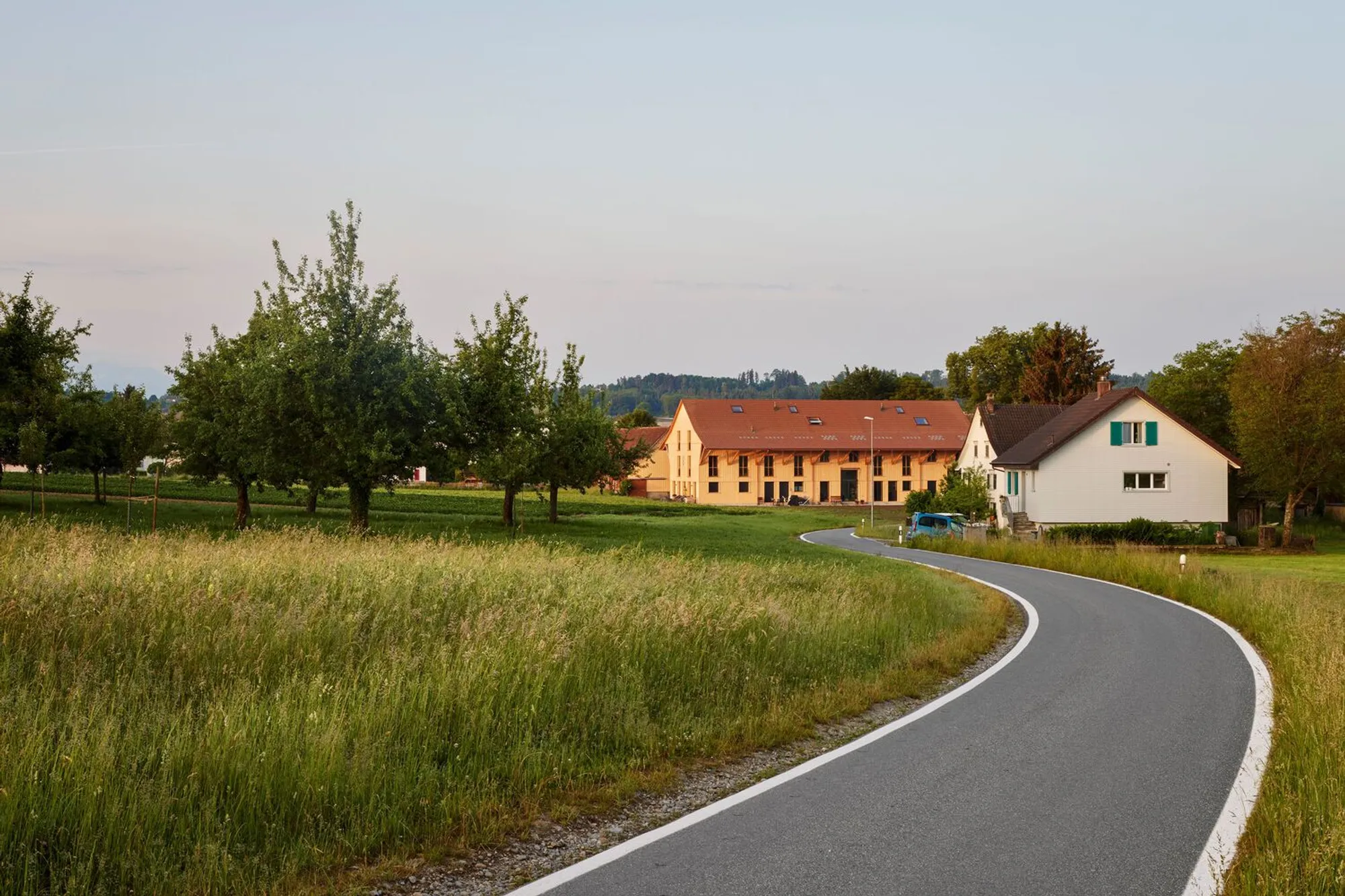
The Lindenhof Multi-Family House by Lukas Imhof Architektur redefines residential living in Oberaach, Switzerland through a distinctive approach that merges heritage reconstruction, communal living, and contemporary spatial innovation. Rebuilt after a devastating fire that destroyed the original barn structure down to its foundations, the new 1,320 m² development restores the volumetry and architectural identity of the historic 1829 barn while transforming it into an affordable multi-family housing model for today’s residents.
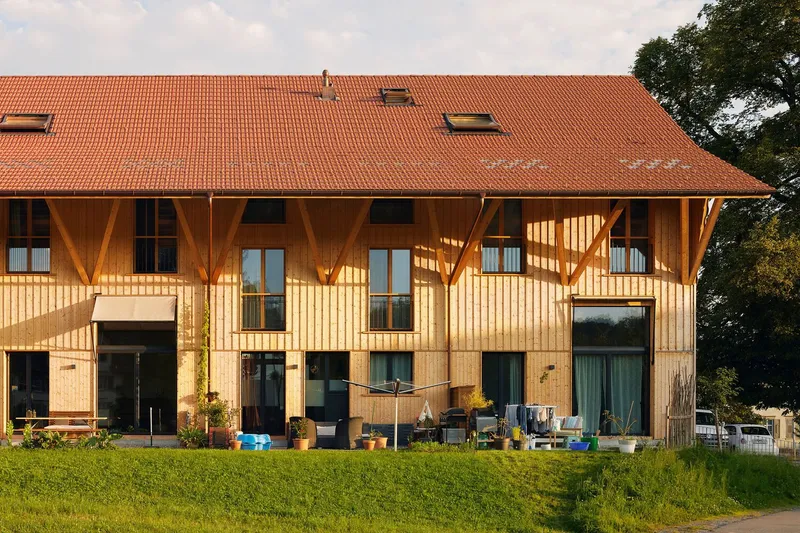
Conceived as a thoughtful alternative to traditional single-family homes, the project introduces rental apartments that preserve the spatial qualities of independent living while embracing the social benefits of communal life. The result is a living environment accessible to families and shared households with modest incomes, offering generous 5.5-room units of 165 m² at an affordable rate of CHF 2,100 per month.
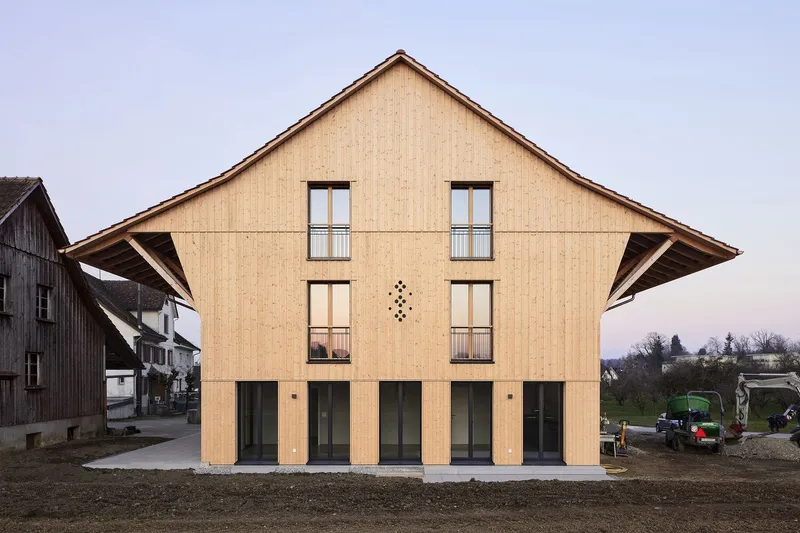
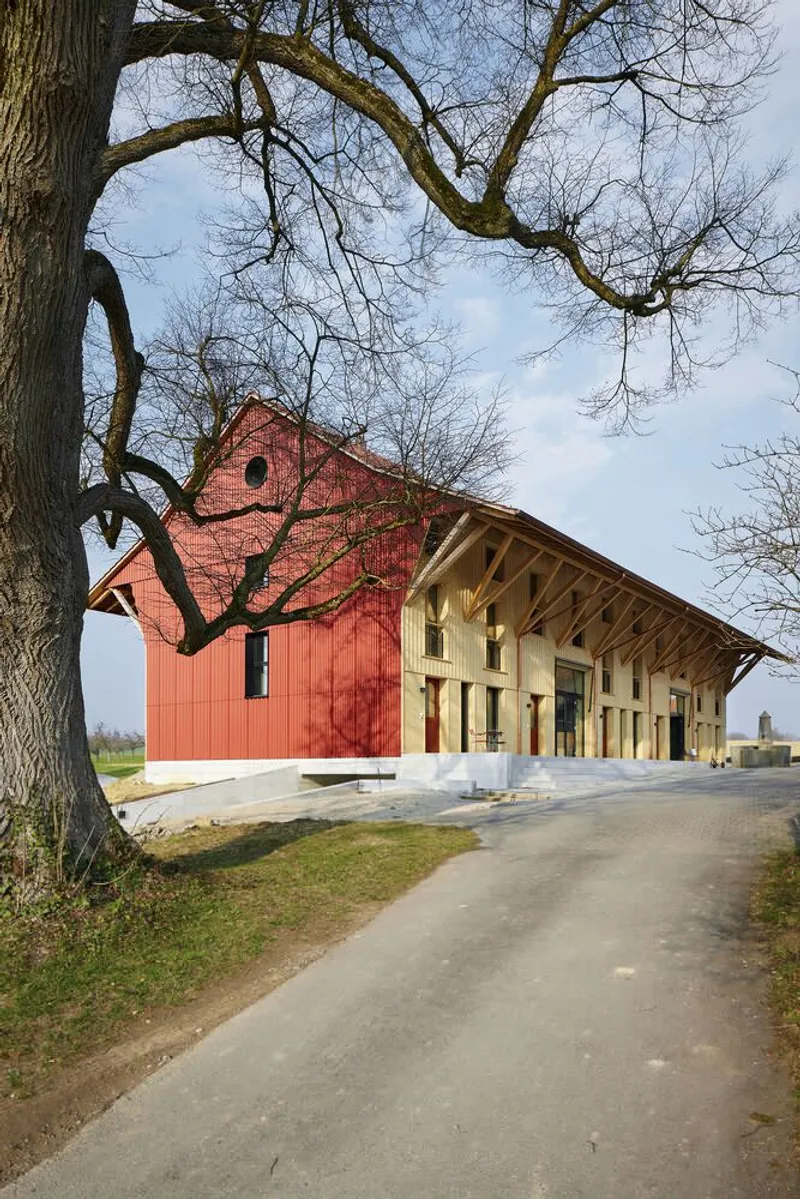
At the heart of the Lindenhof ensemble is a shared courtyard that becomes the central social and spatial anchor for residents. This open communal space is bordered by the new residential structure, the preserved coach house used for various community activities, and the meticulously restored historic residential building. All apartment entrances and private outdoor spaces face this courtyard, reinforcing daily social interaction and ensuring that movement through the site remains shared and community-oriented. The historic fountain, set to be rebuilt at the courtyard’s center, further strengthens the connection to the property's past while providing a symbolic gathering point.
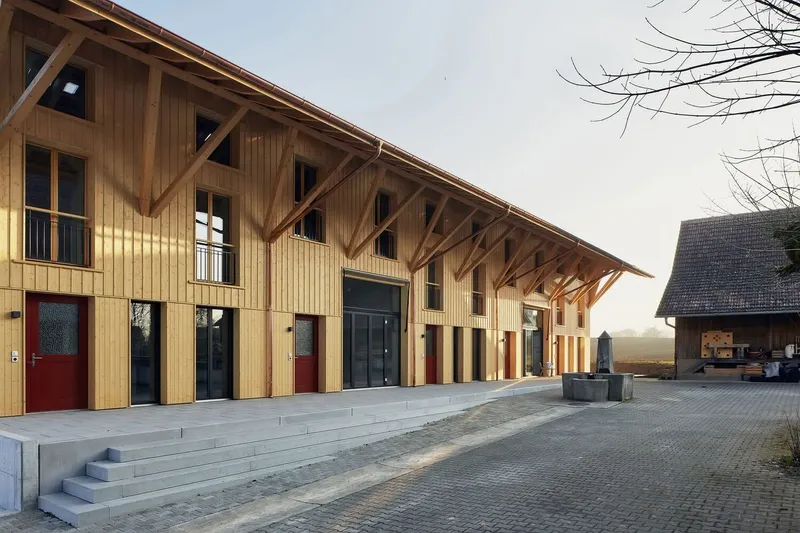
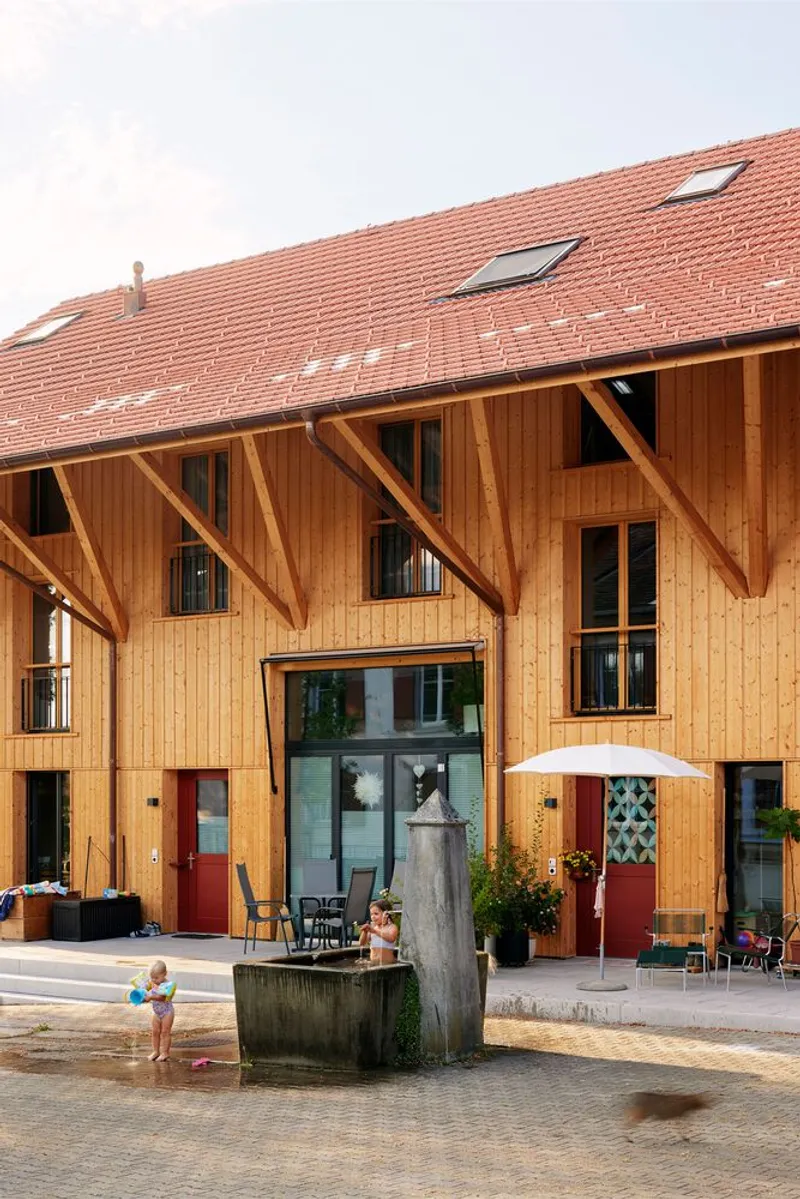
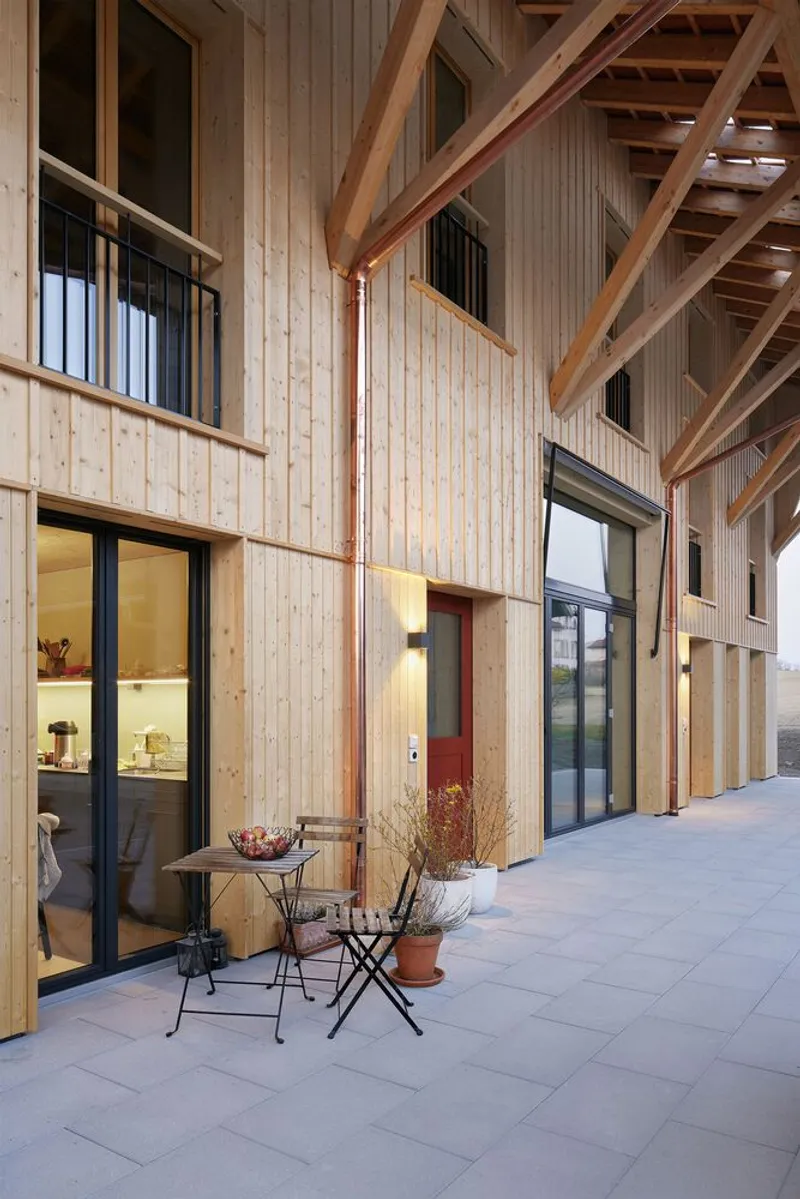
The original barn’s documentation, including its unique timber-framed construction and stone plinth, guided the reconstruction. Built in 1829 by Georg Schadegg, the barn had undergone several alterations over time. While the fire left only the brick plinth, key components such as the two large threshing floor gateways and distinctive brickwork remained intact. These elements were carefully reintegrated into the new design, grounding the contemporary architecture in the authentic language of the site’s agricultural history.
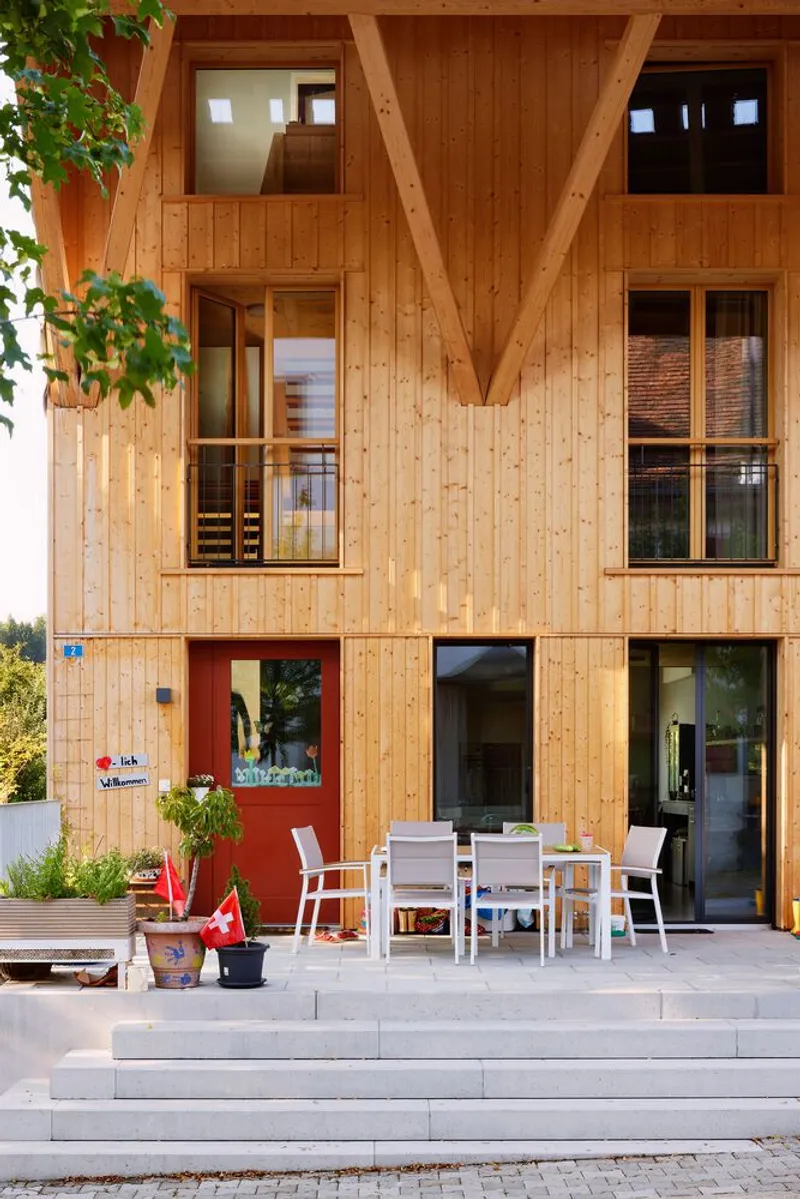
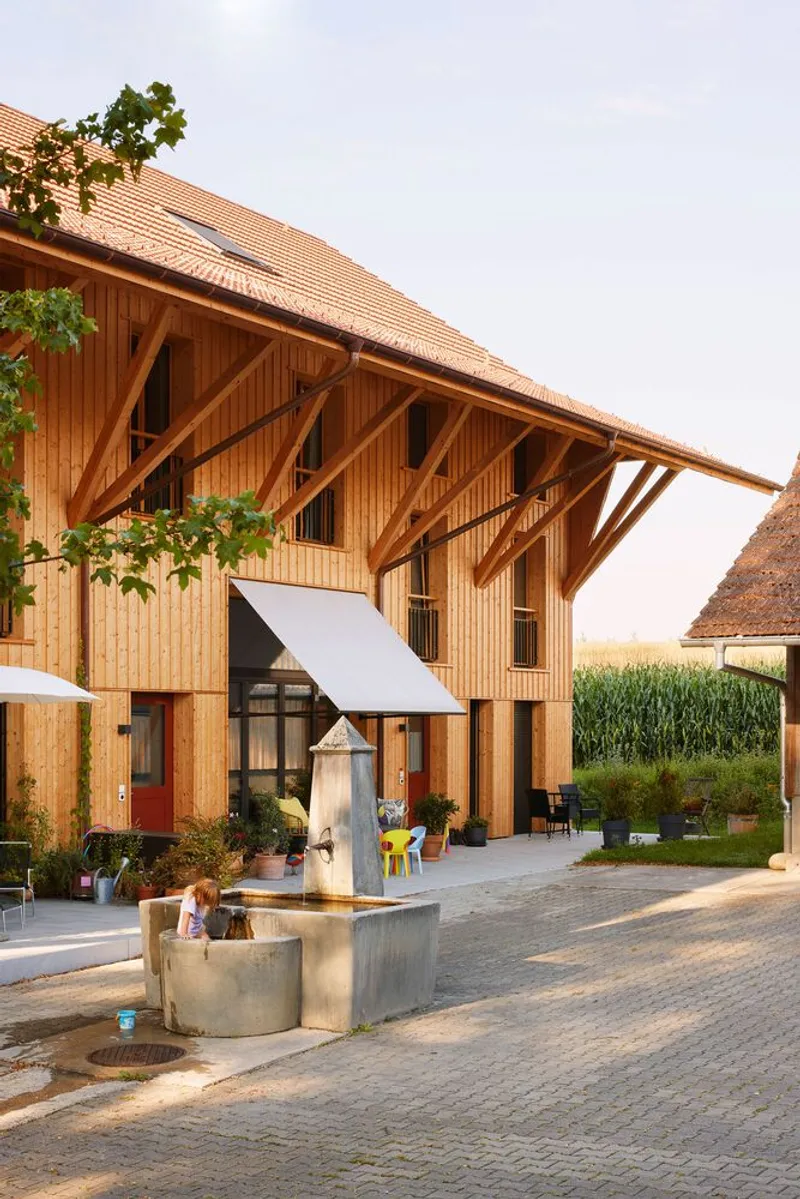
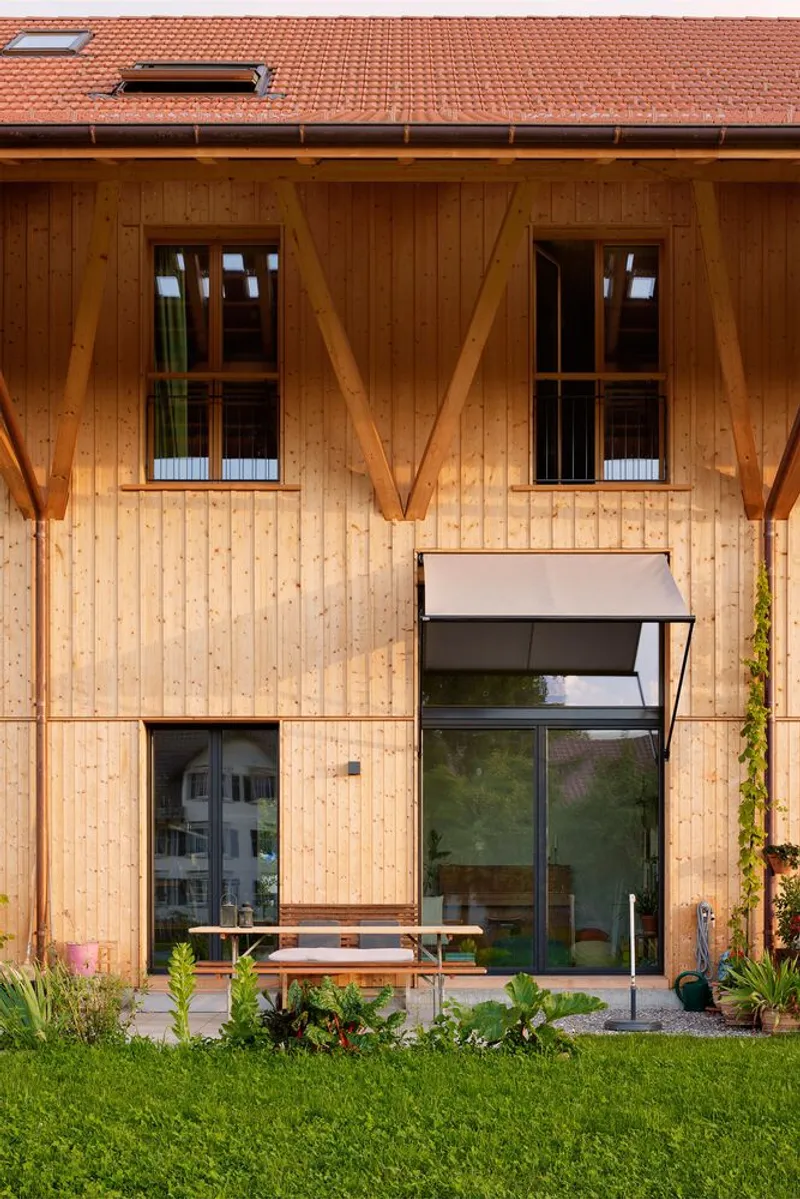
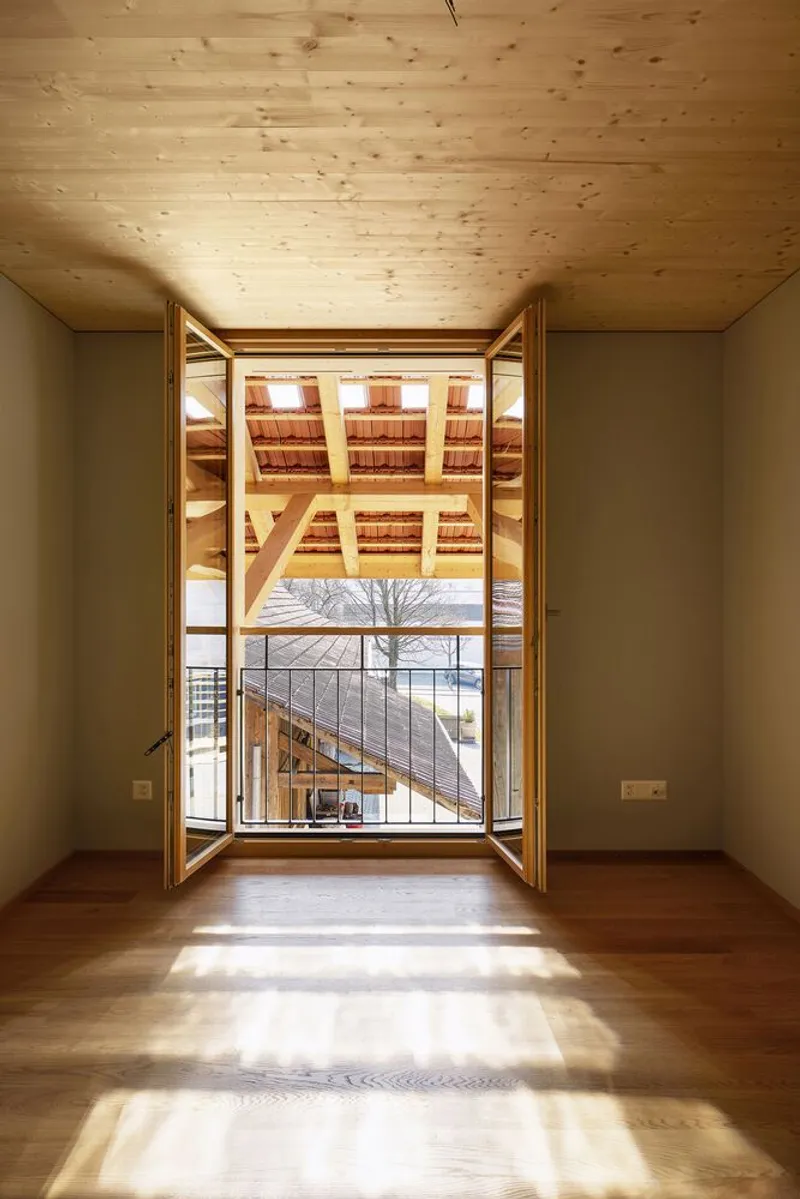
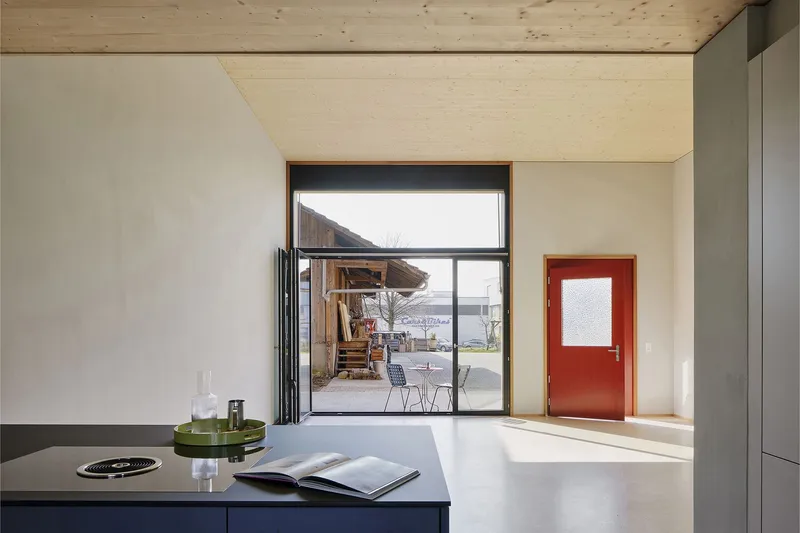
Retaining the previous volume presented challenges for residential use, particularly due to limited story heights. To overcome this, the architects introduced a split-level configuration that generates dynamic spatial sequences and allows for three fully functional levels. This strategy results in two alternating apartment types. One type features a tall, extroverted living hall facing the courtyard, directly echoing the scale and openness of the original barn gateways. The second type offers a more introverted configuration with the living hall oriented toward the surrounding landscape and the kitchen toward the courtyard. A third, site-specific apartment type concludes the building on the western façade, adapting to the narrow edge of the plot and ensuring the structure integrates seamlessly with its surroundings.
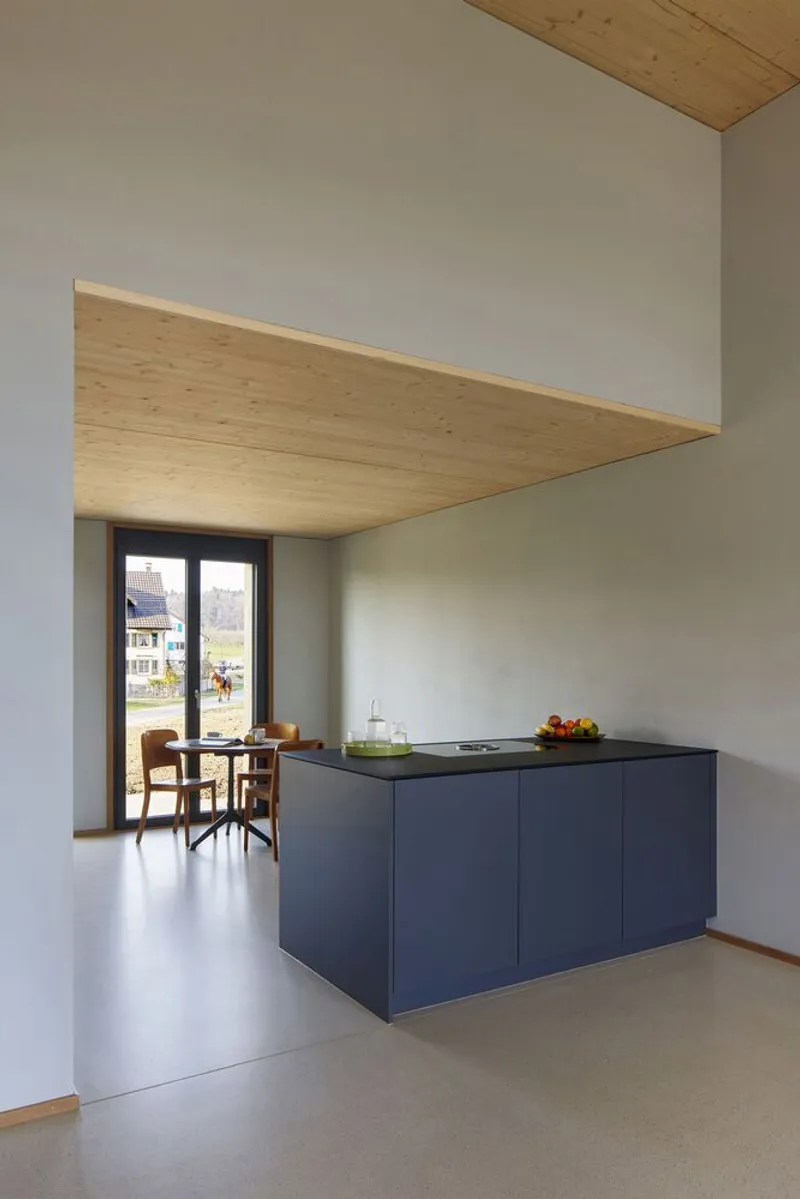
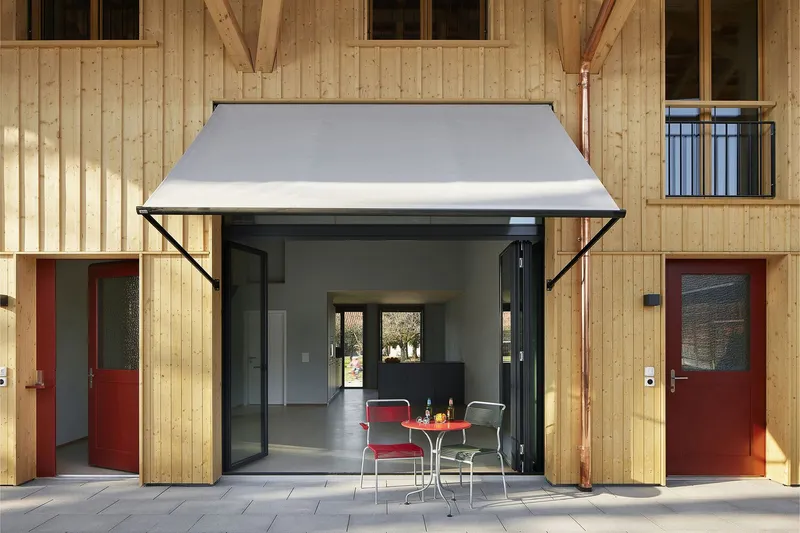
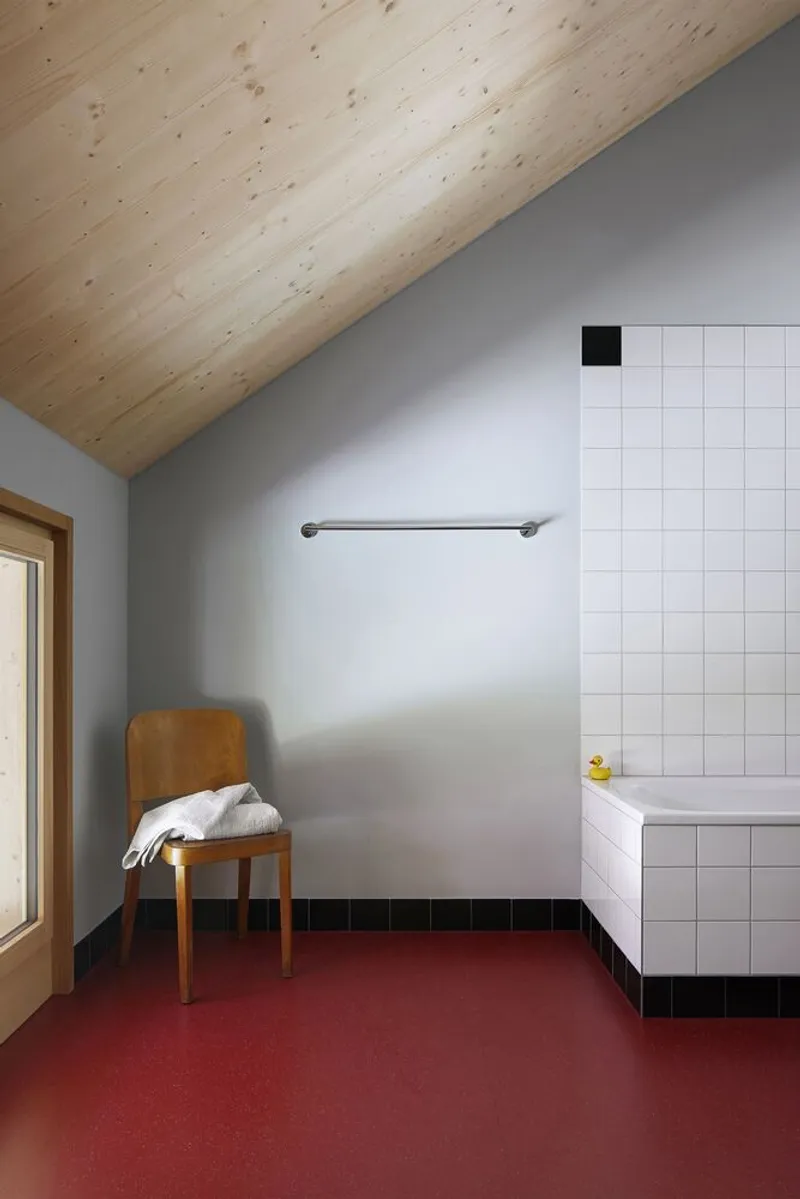
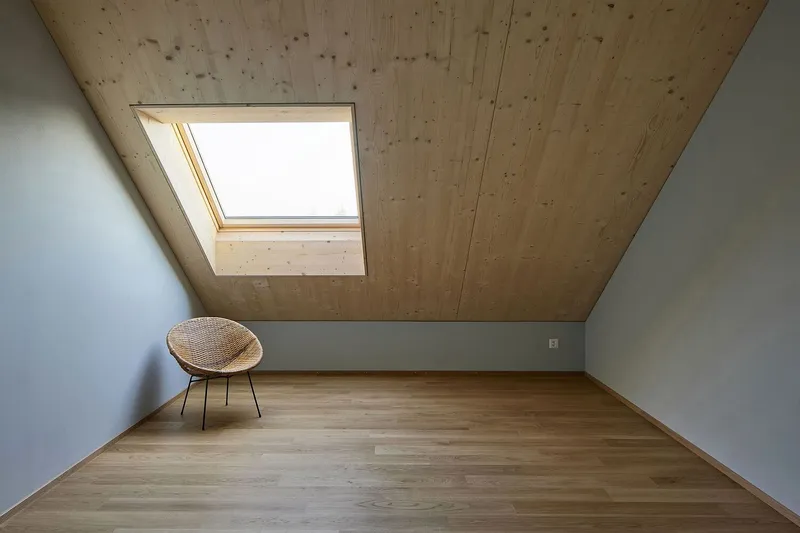
The façade composition, material palette, and spatial motifs recreate the sensibility of a traditional barn while incorporating contemporary residential standards. Brick, timber, and generous windows establish a dialogue between old and new, allowing residents to inhabit a space that feels familiar, rooted, and future-ready. Inside, the large volumes, carefully framed views, and layered levels create an airy and fluid living experience that respects the past while embracing modern needs.
All photographs are works of
Hannes Heinzer




Popular Articles
Popular articles from the community


The Earth Pod: 3D Printed Homes for Resilient Refugee Communities
The Earth Pod reimagines refugee housing through 3D printed homes made from clay, combining resilience, self-sufficiency, and rapid shelter.

Lunar Spiral: Space Architecture Shaped by the Mathematics of the Universe
Lunar Spiral reimagines space architecture through Fibonacci geometry, lunar regolith, levitating habitats, and self-sustaining Moon living.

Co-life: Sustainable Architecture for Age-Friendly Community Living
Co-life reimagines sustainable architecture for seniors through courtyards, rammed earth, shared gardens, and spaces designed for belonging.

Conexión: Biophilic Design Reimagines High-Rise Living in Hong Kong
Conexión reimagines high-rise living in Hong Kong through biophilic design, green facades, shared spaces, daylight, water and nature within.

Similar Reads
You might also enjoy these articles


Hodi-Mandai Geram
Project Function: Preservation and revitalization of the Intangible heritage and socio-spatial identity of the Hodi by Housing, Cultural Memory Center, Sacred Grove, landscape, local tourism economy


Olio Towers: A Mid-Rise for Performers That Fuses Housing, Rehearsal, and Stage
Located blocks from Houston's Theater District, this modular tower stacks living units around a central performance atrium.

Oasis: Modular Green Housing Carved into Dhaka's Urban Fabric
A shortlisted Plugin Housing entry reclaims unauthorized settlements in Dhaka with stepped concrete volumes, green roofs, and ventilation-driven design.

Black Hole: A Floating Megastructure for the Post-Physical Era
Emiliano Mazzarotto envisions a spherical, self-scaling arena where e-sports, digital hotels, and holographic stadiums replace traditional public space.

Explore Residential Building Competitions
Discover active competitions in this discipline


Challenge to design mud housing for contemporary communities


Challenge to reimagine the Iron Throne


Photograph architecture without architects


Illustrate the lost glory of Angkor Wat - Render Challenge
Comments (0)
Please login or sign up to add comments
No comments yet. Be the first to comment!