
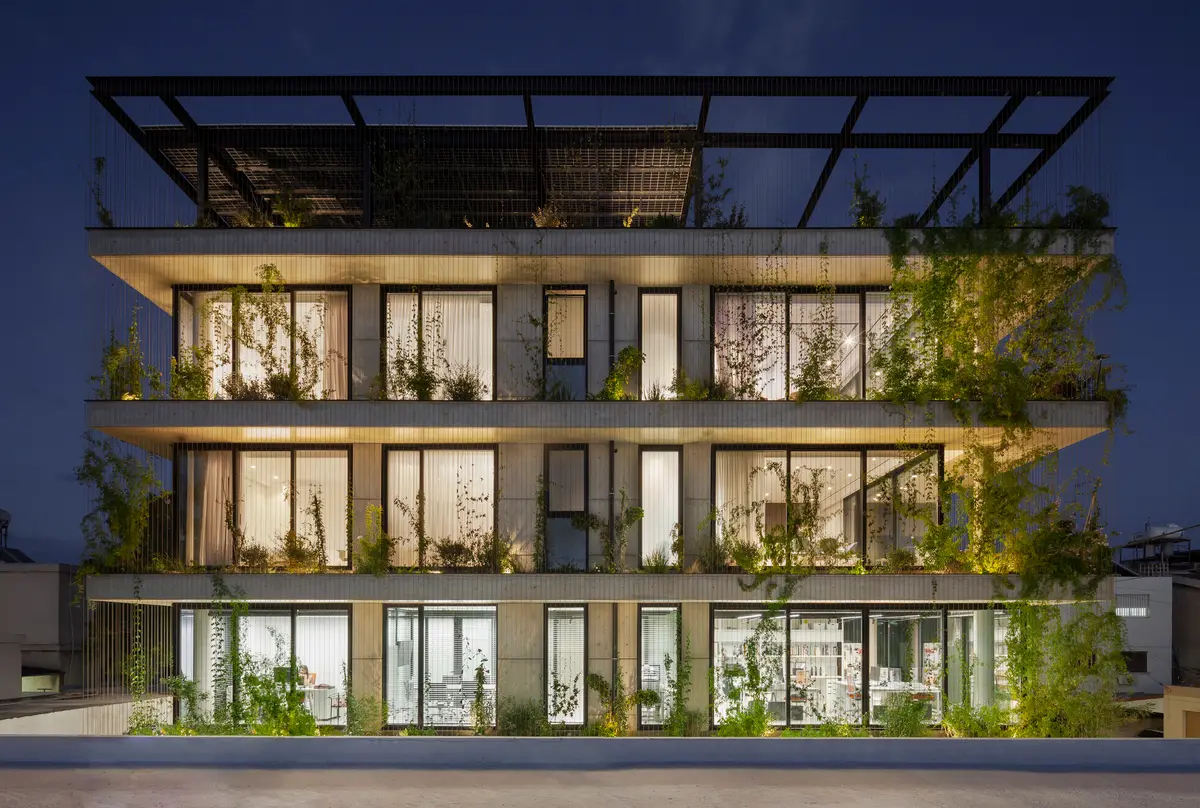
Loizou Architects and Associates Replace the Facade with a Living Green Shell in Limassol
A 360-square-meter mixed-use building in a dense Cypriot neighborhood trades its outer wall for a vertical garden of climbing vines and local plants.


In the Ayios Nikolaos district east of central Limassol, single-family houses from the 1960s and 70s are giving way to denser, taller construction. It is precisely the kind of neighborhood where a new apartment building could either contribute to or accelerate the erasure of livable streetscapes. Loizou Architects and Associates chose to do something more subversive: they replaced the conventional architectural facade entirely with a living green shell, turning private balconies into a cascading vertical garden that reads as public amenity from the sidewalk.
Urban Garden, completed in 2022, is a 360-square-meter mixed-use building containing apartments and office space. Its premise is disarmingly simple. Plants grow both vertically and horizontally around the full perimeter, supported by cable trellises and perimeter flowerbeds at every level. The result is a building that breathes, shades itself, and blurs the line between the interior life of its residents and the streetscape they inhabit. The architects describe the tree as a "roommate" that "pays its rent with oxygen." It is a charming line, but the project backs it up with genuine passive design intelligence.
A Facade That Grows

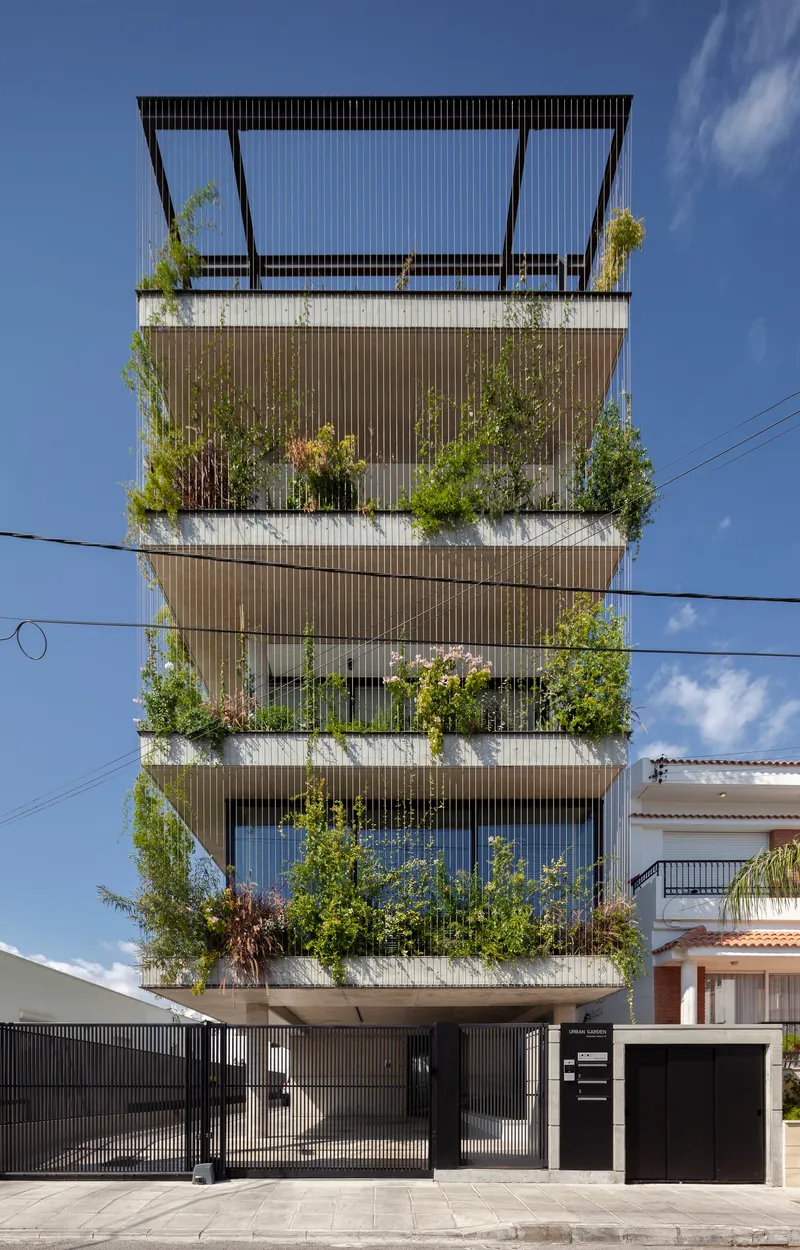
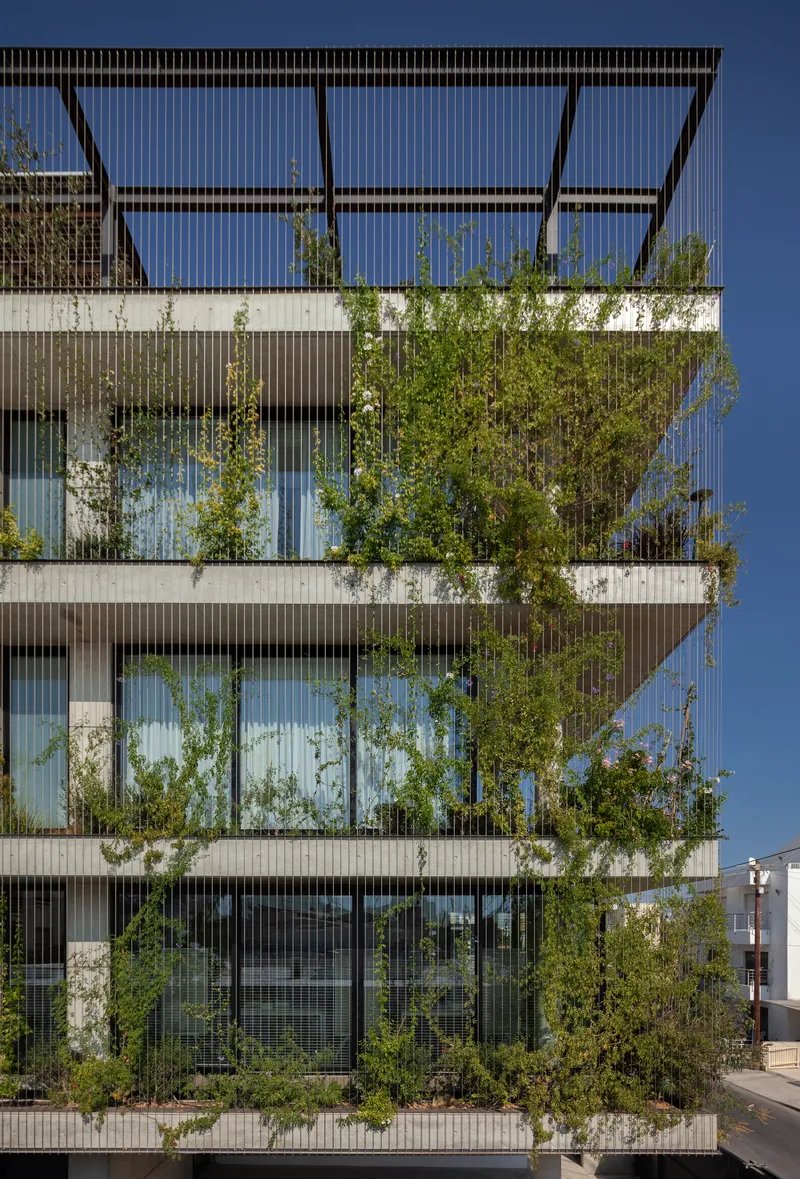
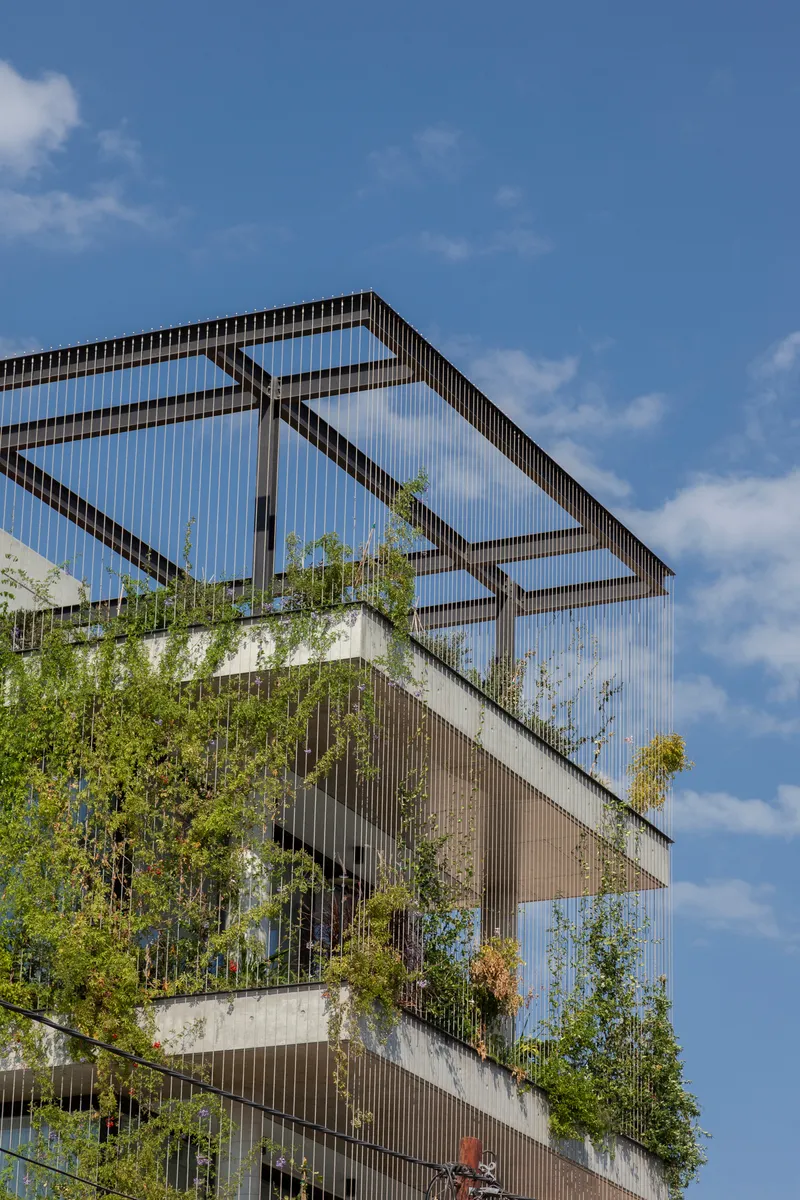
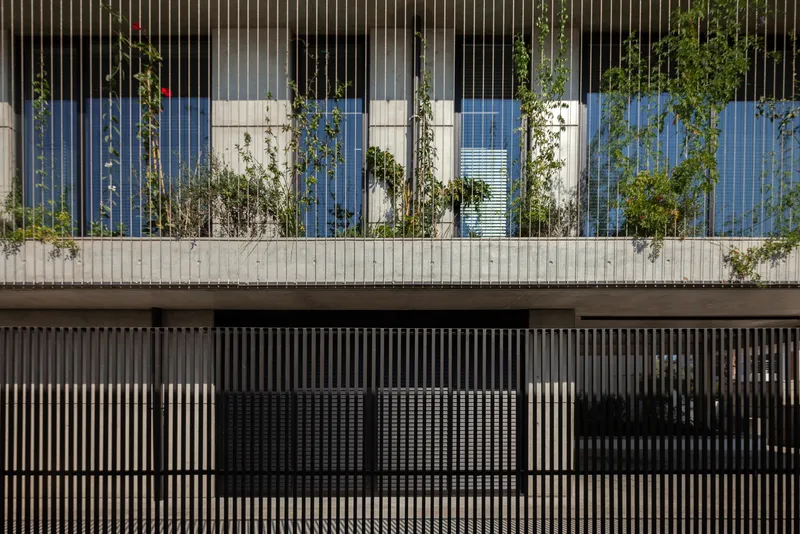
The most striking decision here is what was removed rather than added. Where you would expect a rendered or clad surface, you find instead a layered system of vertical metal louvers, cable-mounted climbing vines, and planted beds. The greenery spills from each balcony level, creating a living screen that thickens over time. The vertical steel fins provide privacy and structural rhythm, but they are deliberately porous, allowing air, light, and visual connection through the plant mass.
The choice of both local and foreign plant species suited to Cypriot conditions is a practical one. Limassol's intense summer sun demands shading strategies that go beyond operable blinds, and a vertical garden generates cooling through evapotranspiration while reducing direct solar gain on the glazing behind it. The building will only improve with age as the planting matures, an unusual quality for contemporary architecture.
Daylight and Dusk

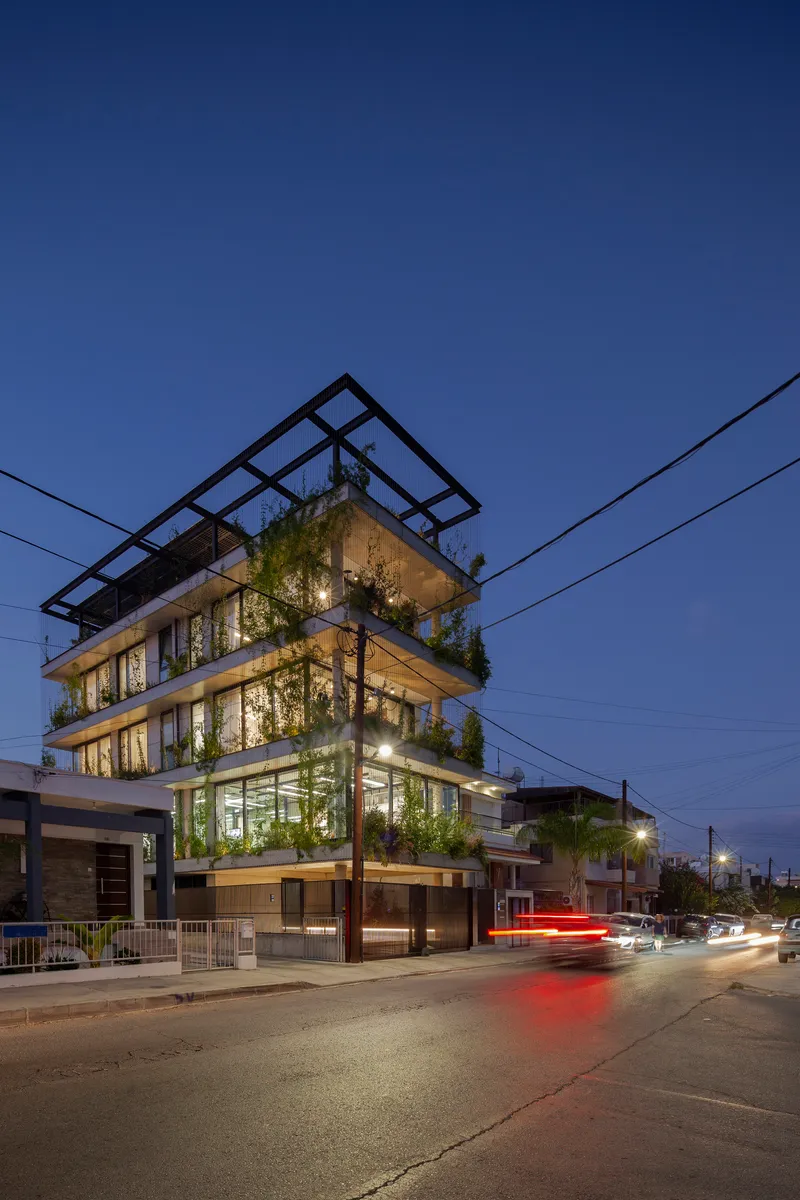
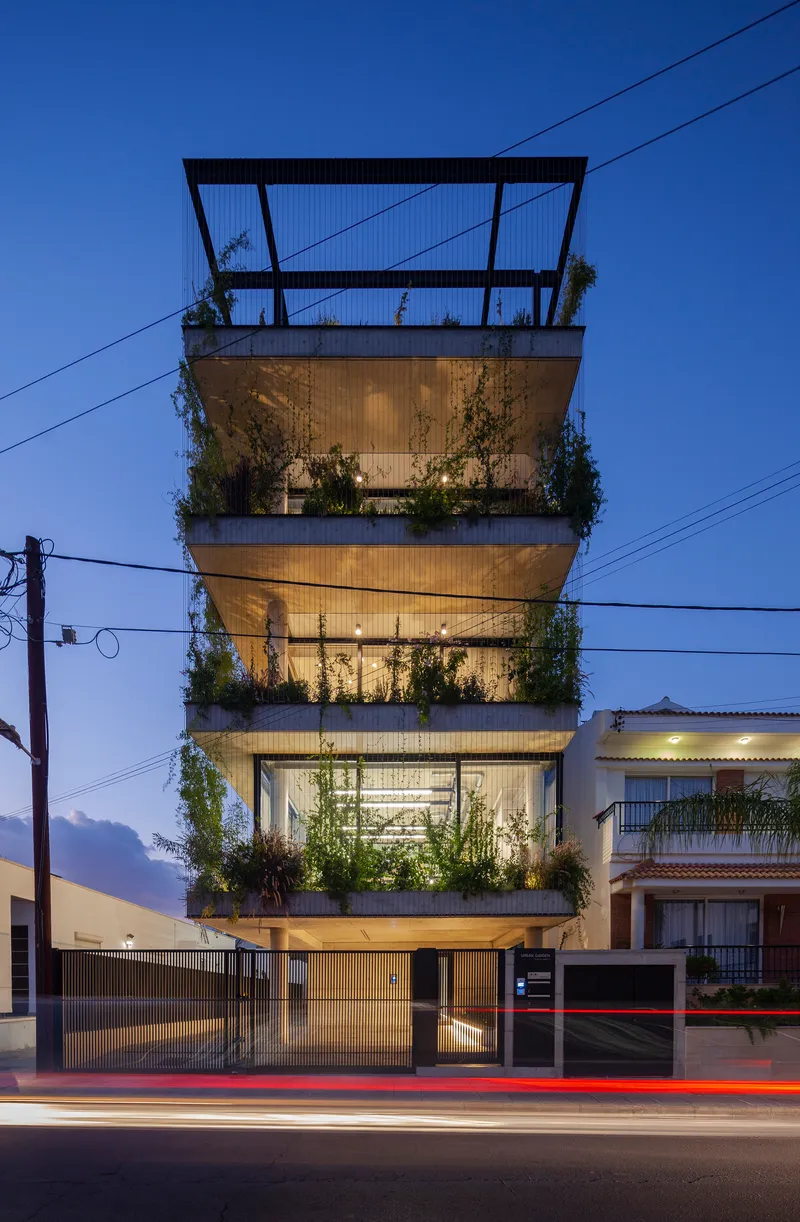
At dusk, the building reveals its second identity. The sliding thermal aluminum glazing that wraps every interior becomes luminous, and the planted terraces read as dark horizontal bands between glowing volumes. Where the daytime facade is dominated by texture and greenery, the evening condition foregrounds the transparency of the interiors and the skeletal silhouette of the rooftop pergola. Car headlights streak past on the street below, a reminder that this is no countryside retreat but a building embedded in a dense, active urban neighborhood.
The contrast between daytime and nighttime is worth noting because it suggests the architects thought carefully about how the building performs as a piece of streetscape, not just as a container for living. Too many green buildings treat their vegetation as cosmetic appliqué. Here, the planting is integral to both the thermal envelope and the urban character.
Living Between Inside and Outside

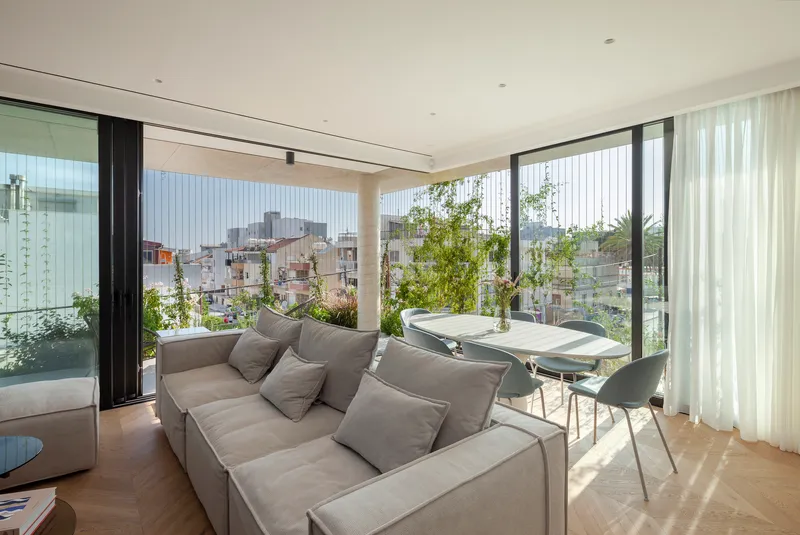
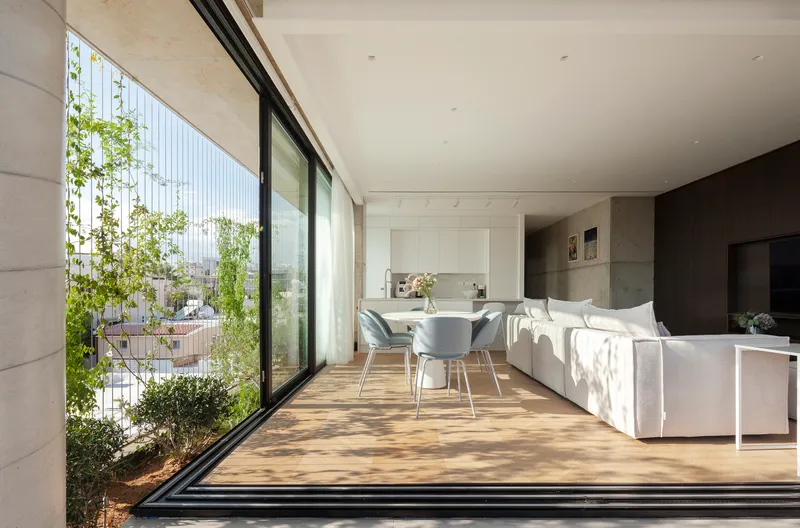
Inside the apartments, the distinction between room and terrace dissolves. Floor-to-ceiling sliding glass doors open living spaces directly onto planted balconies where cable trellises carry climbing vines up toward the next level. The effect is something closer to inhabiting a garden than looking out at one. Dining tables sit steps away from foliage. Living rooms are framed by greenery rather than curtains. The thermal aluminum glazing keeps the envelope airtight when closed, but the spatial invitation is always toward openness.
The planting serves a privacy function too. In a dense neighborhood where buildings are close together, the vine screens filter sightlines from adjacent rooftops without resorting to frosted glass or heavy blinds. It is a softer, more generous way of managing the tension between exposure and enclosure that characterizes apartment living.
Workspace Behind the Green Screen
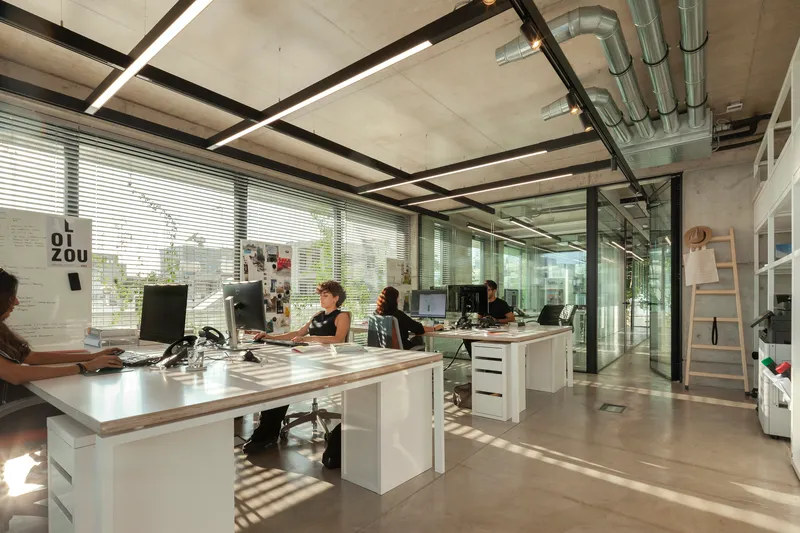
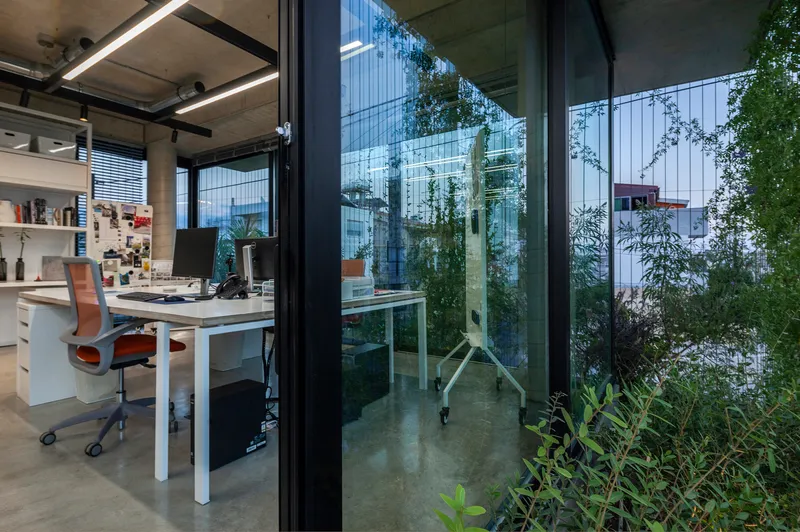
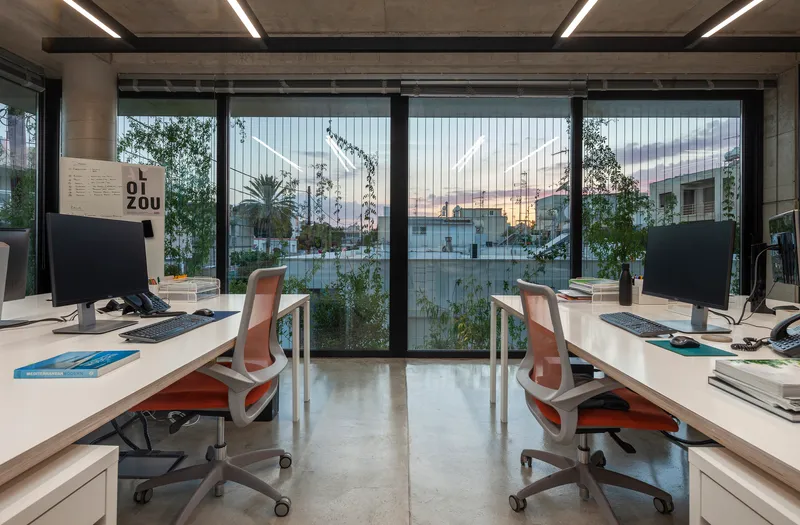
The mixed-use program places office space within the same green envelope. Exposed concrete ceilings and steel beams establish an industrial, unfinished aesthetic, while the full-height glazing brings the planted terraces into constant view. Workers at white desks sit beside cable-mounted vines, an arrangement that collapses the usual sterility of office interiors. At dusk, the workstations face the softened glow of the terrace planting, turning late hours into something more bearable than the fluorescent norm.
The glass corridor with black steel frames that overlooks an interior courtyard with hanging plants is a particularly well-resolved moment. It functions as a transition space, but its generosity with natural light and greenery makes it feel like a destination rather than a threshold.
The Rooftop as Community Room
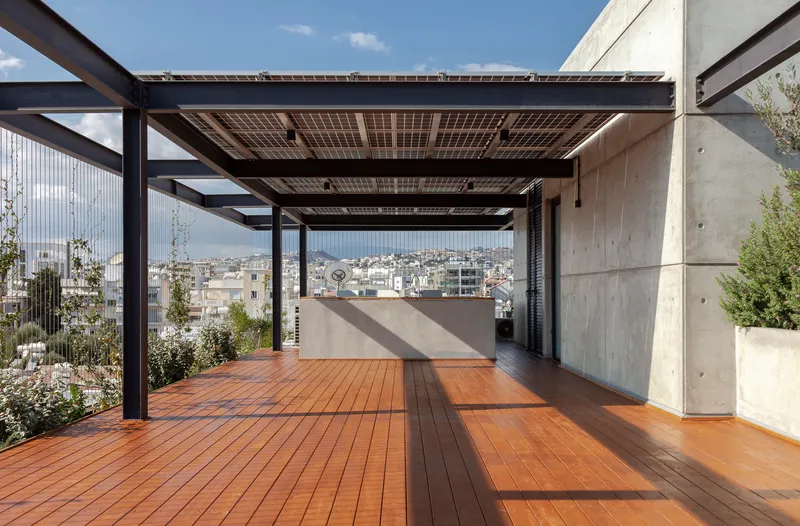


The rooftop is crowned by a full-coverage metal pergola that does double duty. Its upper surface carries double-sided photovoltaic panels, generating energy while casting shade across the terrace below. The combination of timber decking, terracotta tile, potted plants, and vertical screens creates a layered outdoor living room with dining, lounging, and barbecue zones. Views across the low-rise neighborhood extend to the horizon, but the pergola frame keeps the space grounded rather than exposed.
The decision to integrate solar panels into a shade structure rather than bolt them onto a flat roof is a small but meaningful detail. It treats energy generation as part of the architectural experience rather than an afterthought, and it demonstrates that passive and active strategies can reinforce each other spatially.
Street Presence and Ground Condition
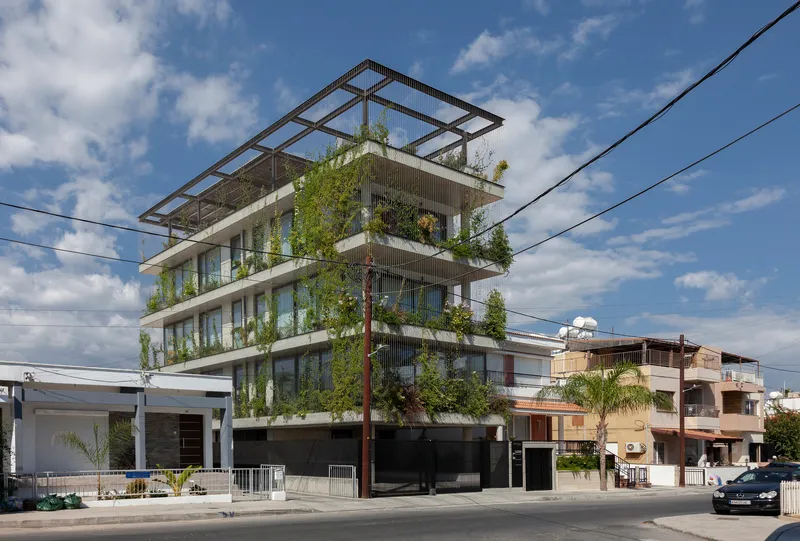

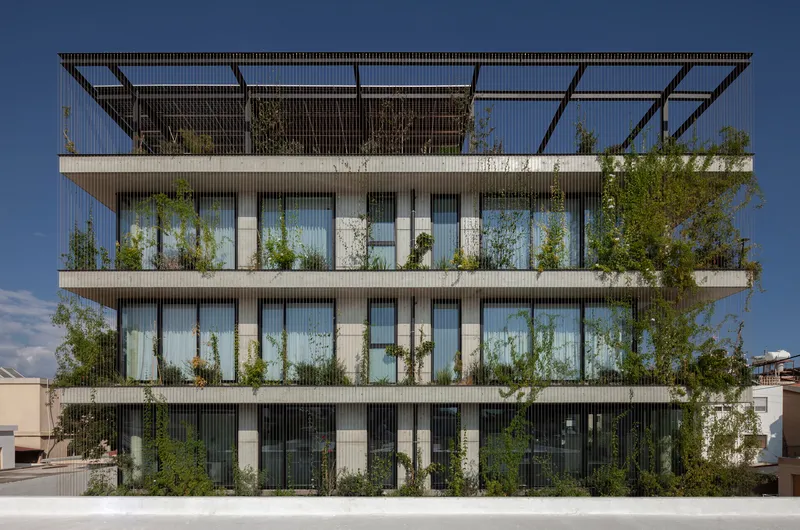
From the street, Urban Garden reads as a stack of inhabited terraces behind a curtain of vegetation and vertical fins. The ground-level entrance is marked by a corrugated metal gate, a deliberately industrial gesture that contrasts with the organic softness above. A pedestrian passes casually on the sidewalk, untroubled by the building's presence. That ordinariness is the point. The project does not announce itself with a grand lobby or a plaza; it meets the neighborhood at the scale and rhythm of its existing streetscape.
The stepped concrete terraces with planted beds behind steel fins give the building a geological quality, as if the vegetation is colonizing a cliff face rather than decorating a balcony. This reading strengthens over time as the plants mature and the boundary between architecture and landscape becomes genuinely ambiguous.
Interior Details
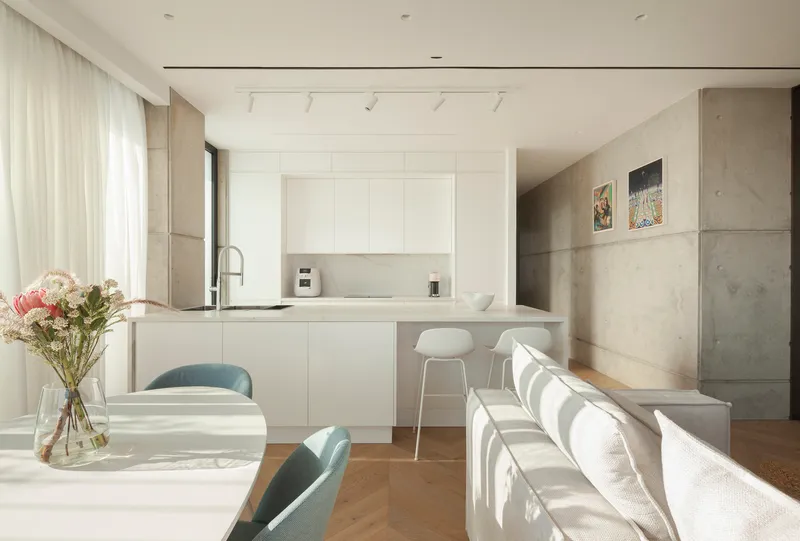
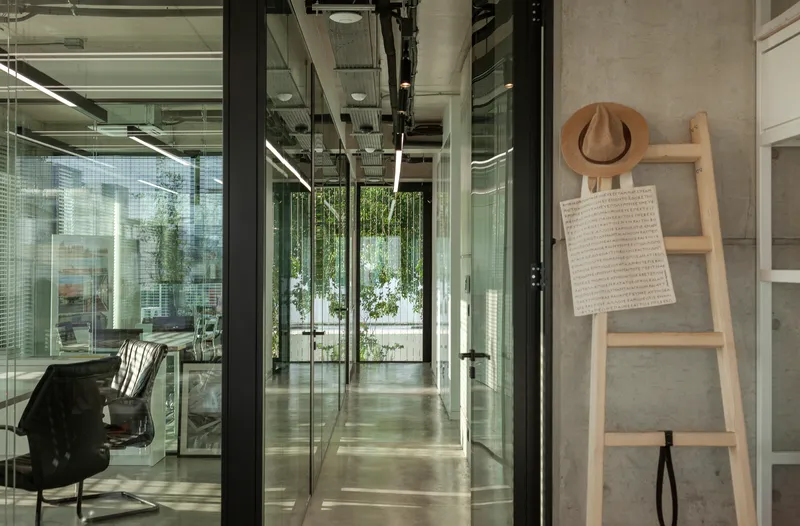
The interior material palette is deliberately restrained: white cabinetry, concrete wall panels, soft daylight. The architects clearly decided that the plant life would provide all the visual richness the spaces needed, and they were right. The kitchen and dining areas are clean, almost minimal, but the adjacent terrace gardens fill every sightline with color and texture. The glass corridor with its black steel frames and hanging plants brings a moment of controlled drama into what could otherwise be a neutral interior.
Plans and Drawings


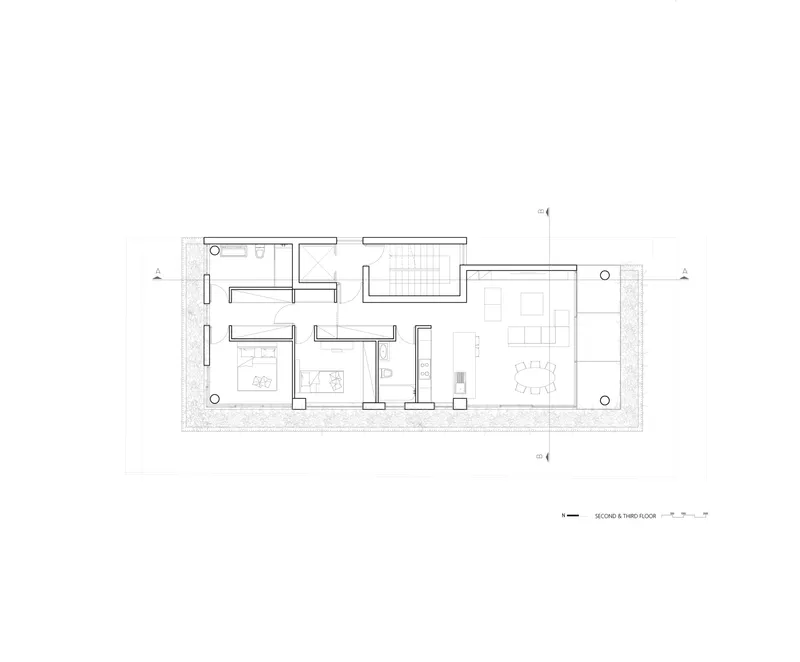
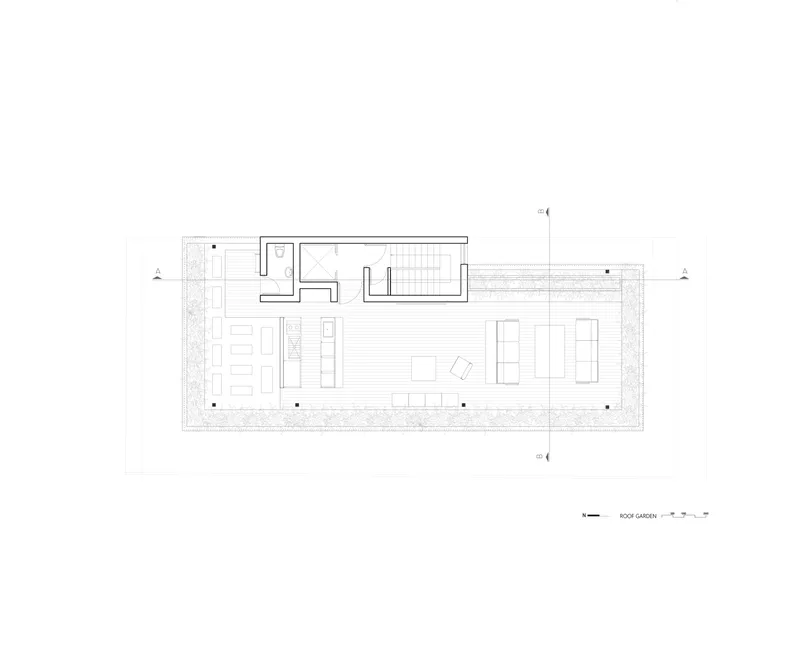
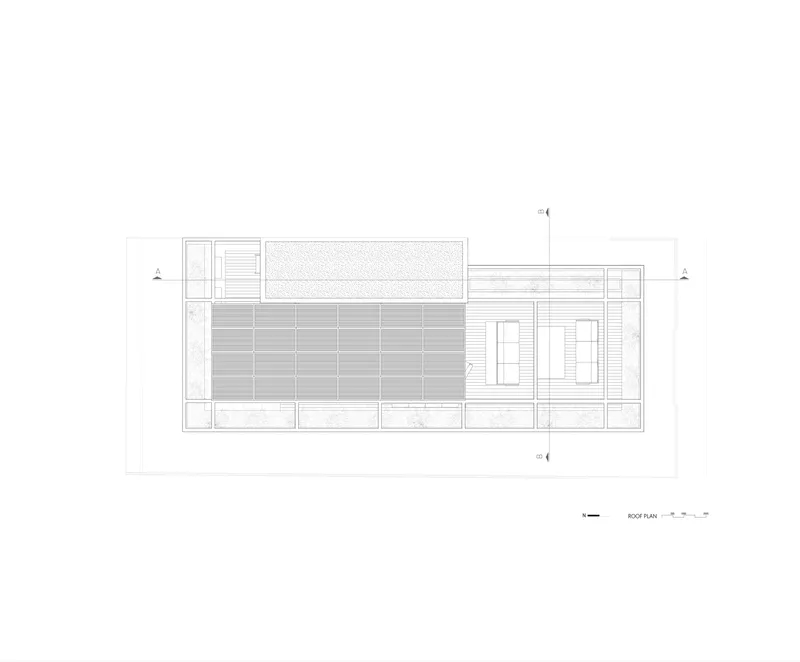
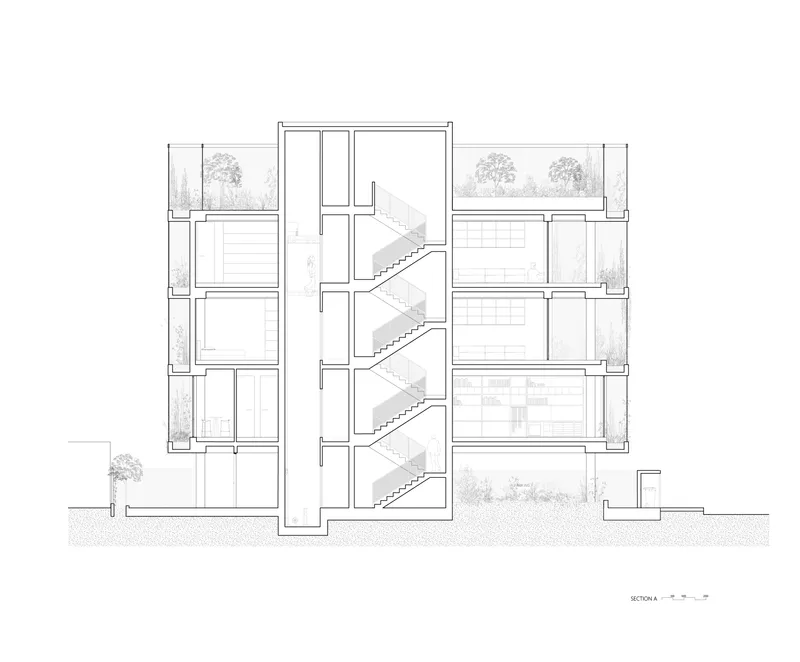
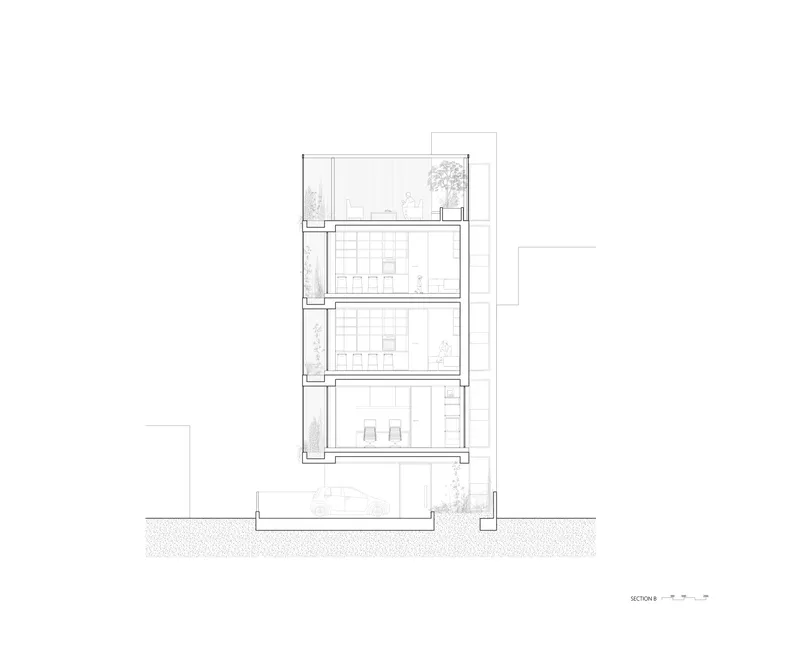
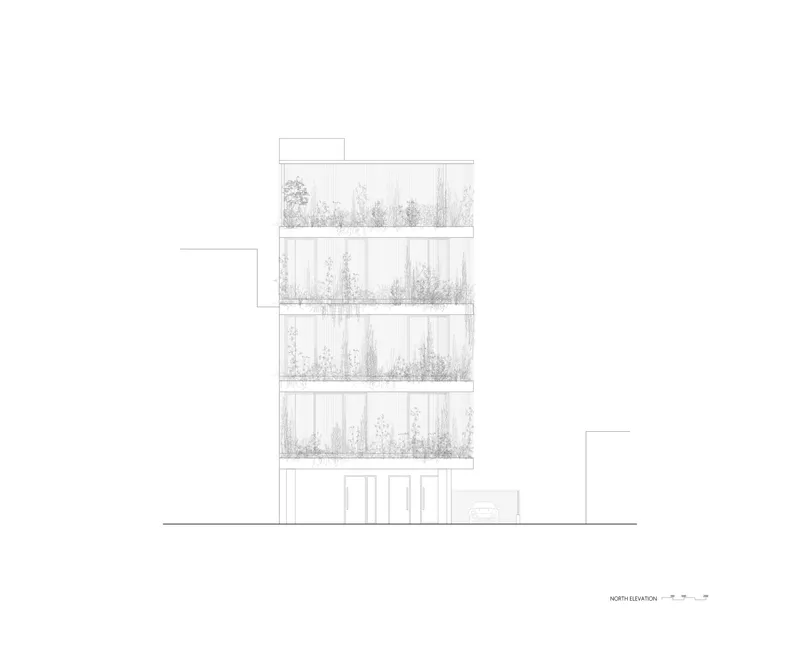
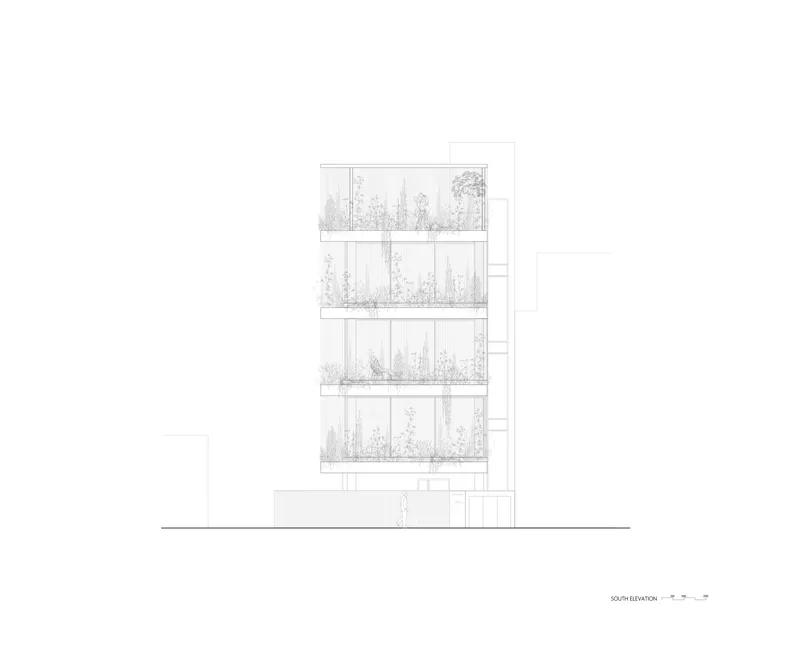
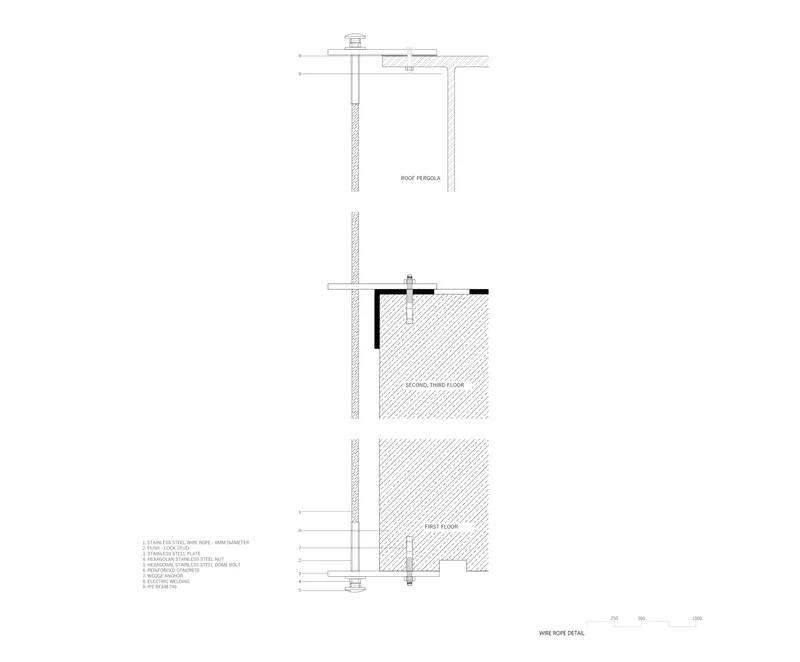
The floor plans reveal a compact, efficient organization. The ground level accommodates parking and a paved courtyard. The first floor plan shows an open layout with a pool, dining, and living areas. Upper floors contain bedroom suites with generous terraces. The roof garden plan confirms the planted perimeter strategy, with a central outdoor living zone. The sections are particularly revealing: they show how the vertical garden system runs uninterrupted from ground to roof, with the cable-mounted planting creating a continuous green envelope. The wire rope detail section illustrates the pragmatic engineering behind the poetic concept, showing precisely how floor slabs connect to the cable trellis system and how the roof pergola is assembled.
The elevation drawings, both north and south, confirm that planted balconies appear on every level, ensuring the green shell is not a partial gesture but a total commitment. The sections also make clear the relationship between the central staircase and the surrounding trees, establishing the building as a kind of inhabited trellis.
Why This Project Matters
Urban Garden matters because it refuses to treat sustainability as a technical problem solved behind the scenes. The passive strategies here are visible, tactile, and central to the spatial experience: shading from climbing vines, evaporative cooling from planted beds, energy generation from a pergola that also defines the rooftop terrace. The building integrates these moves so thoroughly that removing any one of them would change not just the performance metrics but the architecture itself.
More broadly, the project offers a model for how apartment buildings can operate in rapidly densifying neighborhoods without severing their relationship to the street and to their neighbors. By replacing the conventional facade with a living envelope, Loizou Architects and Associates created a building that gives something back to Ayios Nikolaos rather than simply extracting value from it. The green shell is not decoration. It is the architecture.
Urban Garden by Loizou Architects and Associates. Limassol, Cyprus. 360 m². Completed 2022. Photography by Maria Efthymiou.
About the Studio
Share Your Own Work on uni.xyz
If projects like this are the kind of work you want to make, uni.xyz is a place to publish your own, find collaborators, and enter design competitions.


Popular Articles
Popular articles from the community


Singing Woman: An Opera House That Performs Before the Curtain Rises
Ovidiu Cristian Pavel's conceptual opera house translates Estonia's choral identity into a sculpted waterfront landmark facing the Baltic Sea.

Aquadapt: An Underwater Habitat That Rewrites Its Rooms by the Hour
Curved modules ring the seabed while one shell shifts from breakfast room to cinema, farm and football pitch as residents' needs change.


David Ortega Stacks a Two-Story Mexico City Penthouse Around a Steel Stair and a Pergola-Shaded Roof Terrace
In Colonia Roma, a 300 m² penthouse uses oak joinery, a planted steel stair and a slatted roof pergola to make a new-build apartment feel like a house.

ETEH Reworks the Shared Spaces of São Domingos School in Brazil Around Timber, Color and Hanging Plants
At São Domingos School in Brazil, 436 m² of hall, refectory and library are recast with timber joinery, a yellow and blue code and trailing greenery.

Similar Reads
You might also enjoy these articles

LAVA Architecten Gives Vocational Education a Sawtooth-Roofed Face on a Mechelen School Campus
In Mechelen, Belgium, a 2,053 m² STEM school on a 6×6 m grid turns workshops and classrooms into rooms that can be rearranged as teaching changes.

KEMA Studio Turns a Derelict Marvila Attic into a 60 m² Lighthouse Apartment Above Lisbon
In Lisbon's Marvila district, a rebuilt roof, four skylights and two plywood volumes turn an unlivable attic into a bright home facing the Tagus.

Pixel Gardens: One Repeated Module Stacked Into a Terraced Social Housing Tower for Famagusta
Salem Bader's shortlisted housing tower builds a vertical neighbourhood from one repeated module, offsetting units to carve terraces, light and air.

Bao Huynh Watercolor Atelier: A Serene Art Retreat in Hội An
Bao Huynh Watercolor Atelier in Hội An blends multifunctional art spaces, sustainable design, local materials, and family-friendly living in a serene environment.

Comments (0)
Please login or sign up to add comments
No comments yet. Be the first to comment!