

Longbranch Residence by mwworks
Longbranch Residence by mwworks is a forest-integrated home featuring green roofs, timber structure, and landscape-driven architecture on Washington’s Key Peninsula.


A Forest-Integrated Home Rooted in Landscape, Craft, and Quiet Presence
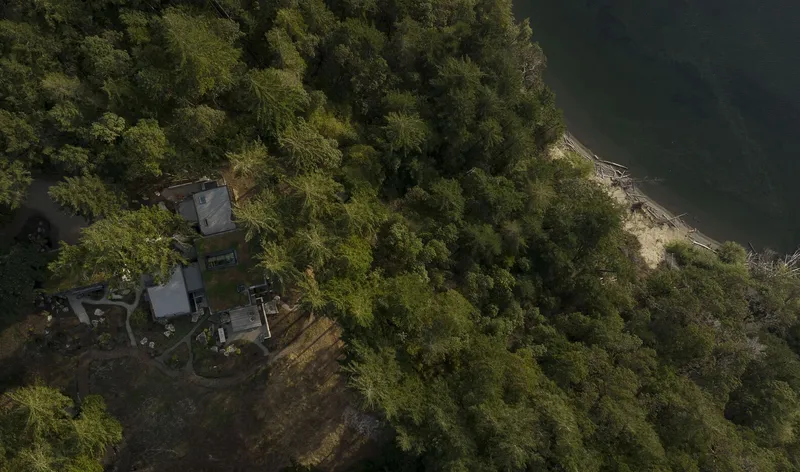
Nestled within the sloping terrain of the Key Peninsula in Washington State, the Longbranch Residence, designed by mwworks, is a refined example of contemporary residential architecture that prioritizes landscape continuity, ecological sensitivity, and timeless material expression. Completed in 2023, the 3,900-square-foot single-family home reclaims a once-fragmented site, reintegrating forest and meadow into a unified living environment.
Reclaiming a Disturbed Landscape
Over decades, the rural site had been compromised by retaining walls that carved into its natural slope, leaving an aging suburban house precariously positioned at the promontory. With deep personal ties to the Key Peninsula: developed over 35 years of visits to a nearby beach cabin: the clients envisioned a new home that could support multigenerational living, accommodate foster dogs and horses, and welcome visiting family and friends, all while restoring the land’s original character.
mwworks approached the project with a clear intent: to design a house that could be overlooked. Rather than asserting itself visually, the residence recedes into the landscape, allowing nature to remain dominant.
An Architecture That Disappears
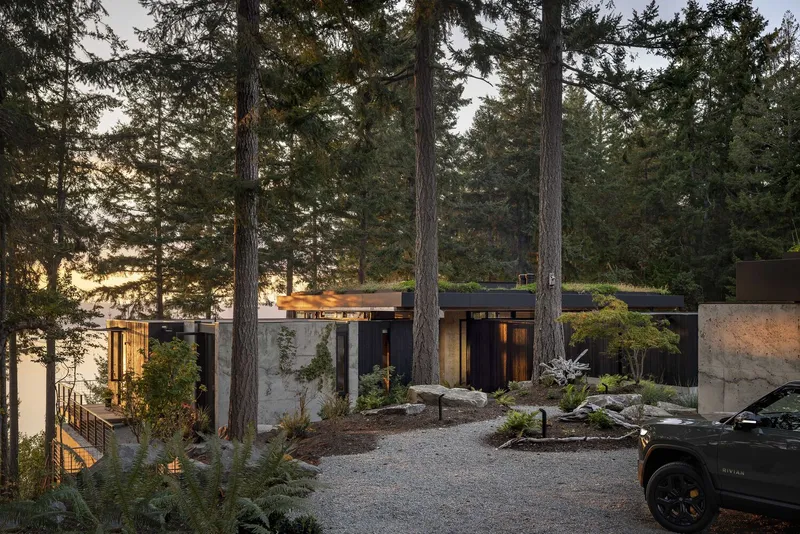
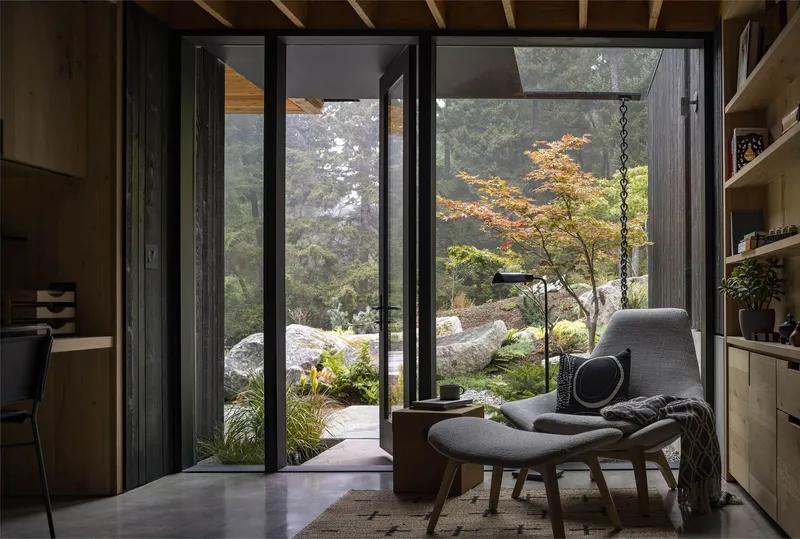
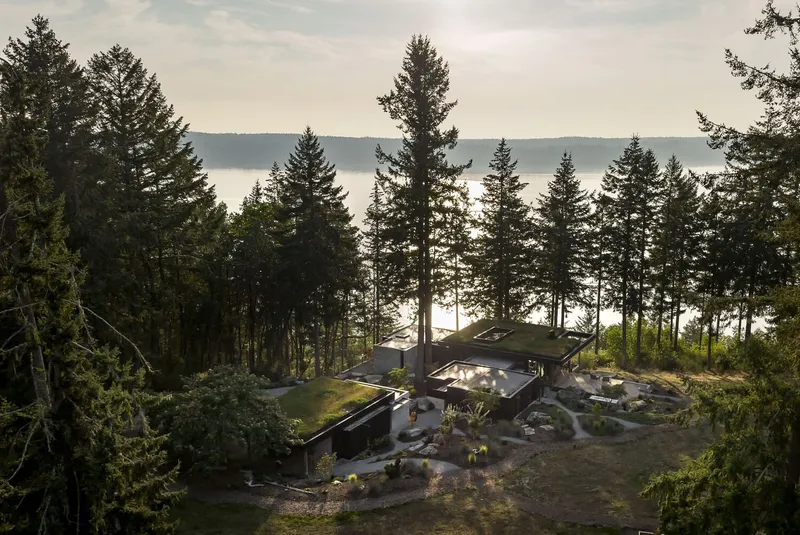
From the country road, a winding gravel drive passes an understated barn before revealing only fleeting glimpses of the house beyond. As the terrain drops away, the home gradually emerges, its planted green roof reading as a seamless extension of the meadow. This living roof has already become a micro-ecosystem, supporting frogs, birds, and native grasses, reinforcing the project’s commitment to sustainable residential design.
Like stones settled into a streambed, the house subtly redirects the flow of land through and around it without interrupting the site’s natural rhythms. Towering fir trees act as monumental columns at the entry, while pin piles and grade beams carefully span above existing tree roots, allowing the structure and forest to coexist without compromise.
A narrow bridge leads into the house, crossing an ambiguous zone that feels equally architectural and natural, an intentional threshold that highlights the project’s central theme: continuity between the built and natural environments.
Living Within the Forest
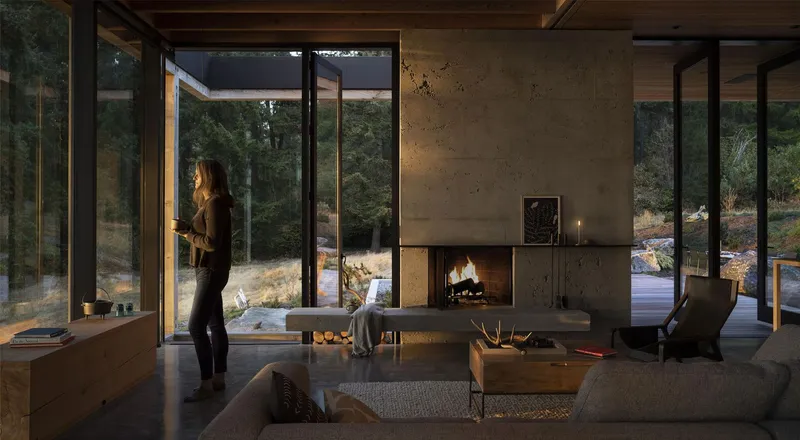
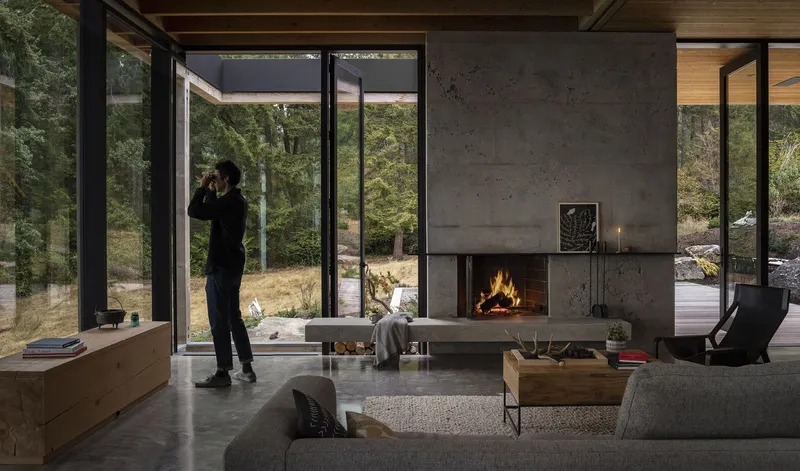
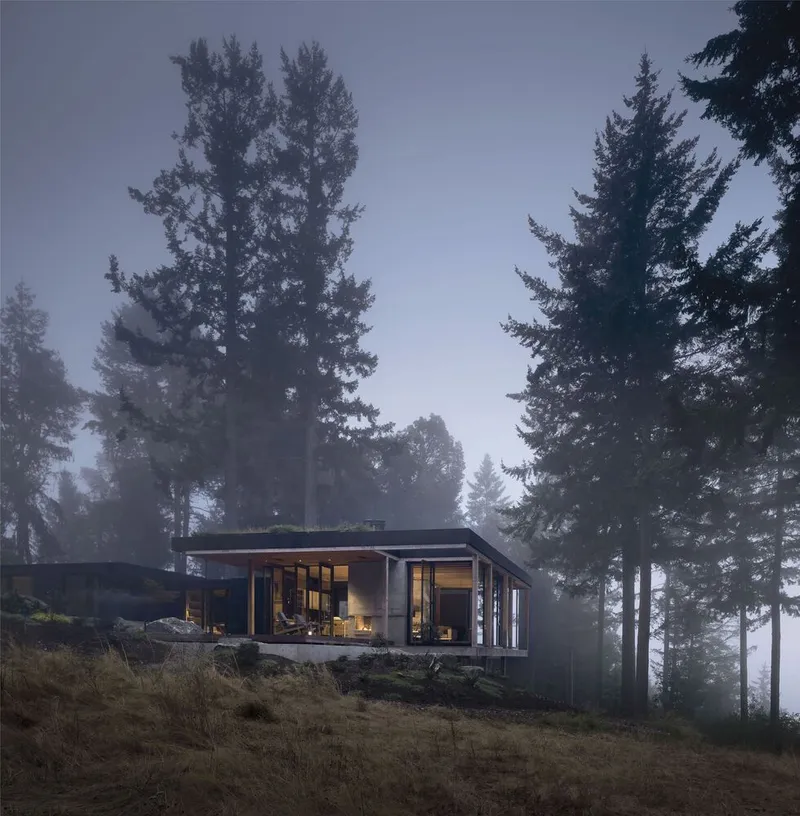
Upon entering the home, the architecture opens immediately to the landscape. Sightlines extend through the interior toward Case Inlet, revealing both the structure’s material logic and its relationship to the surrounding terrain. Each room establishes a unique connection to nature: some intimate and framed, others expansive and panoramic: offering a constantly shifting experience of forest, meadow, and water.
The spatial organization balances openness and privacy, supporting daily life while maintaining a strong dialogue with the outdoors. The result is a family home defined by serenity, warmth, and restraint, where architectural presence never overshadows the land itself.
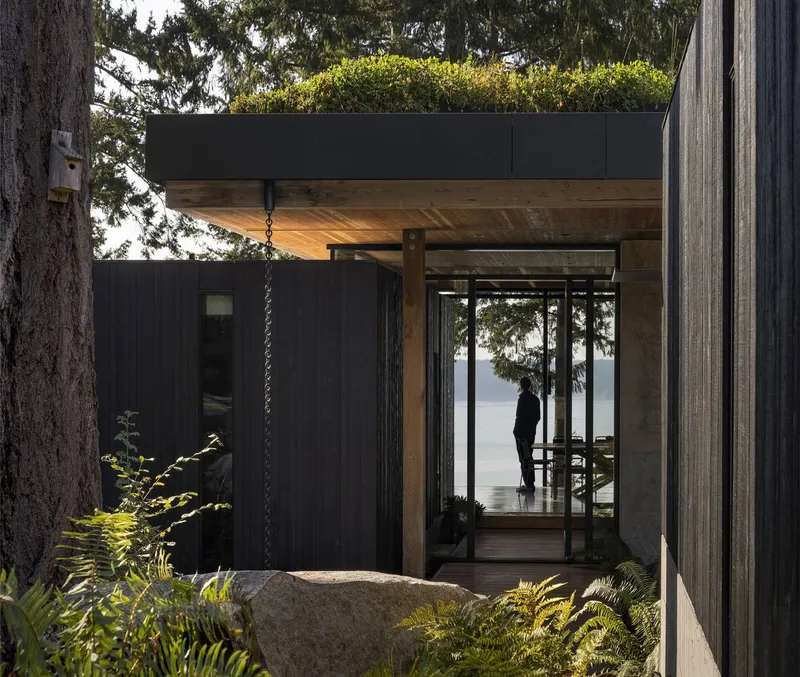
Materiality and Structural Expression
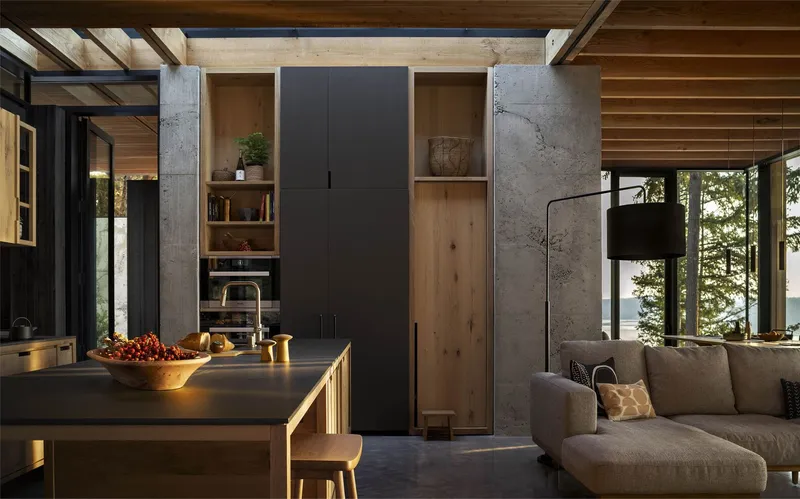
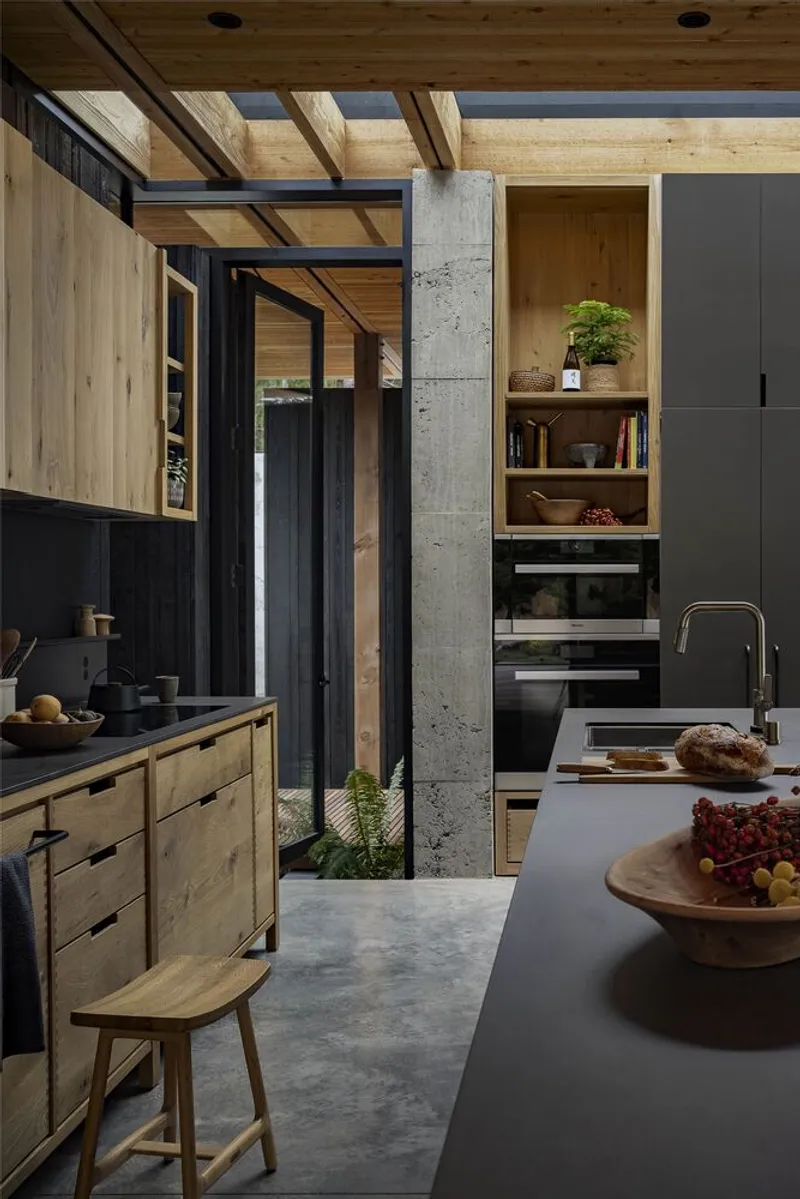
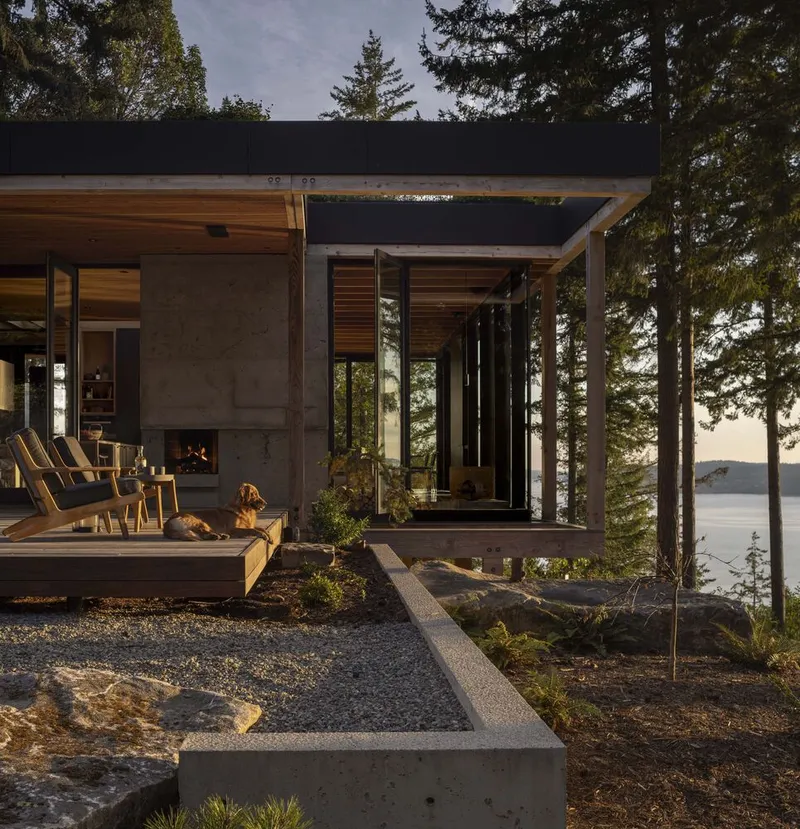
The form of the Longbranch Residence mirrors the logic of the landscape through a composition of masses and voids, clearings and columns. Primary structural volumes are cast in loosely mixed concrete, revealing the fluid nature of the material and contrasting with the rough aggregate texture. These solid elements anchor the home to the earth.
Private spaces are wrapped in dark-stained cedar, while a central timber pavilion, constructed from locally sourced Douglas fir beams, appears to float between the heavier concrete forms. This timber frame living pavilion is lightly enclosed with minimal glazing, deliberately separated from the structure to express the independence of each assembly and enhance transparency.
Through this layered material palette, mwworks achieves a balance of tectonic clarity, craftsmanship, and environmental responsiveness, reinforcing the home’s timeless architectural character.
A Home Reintegrated with Nature
Today, the forest and meadow once again function as a continuous ecosystem, embracing the Longbranch Residence as if it has always belonged there. Rather than dominating its site, the house participates in it: quietly, respectfully, and enduringly, offering a powerful model for site-sensitive, sustainable residential architecture rooted in place.
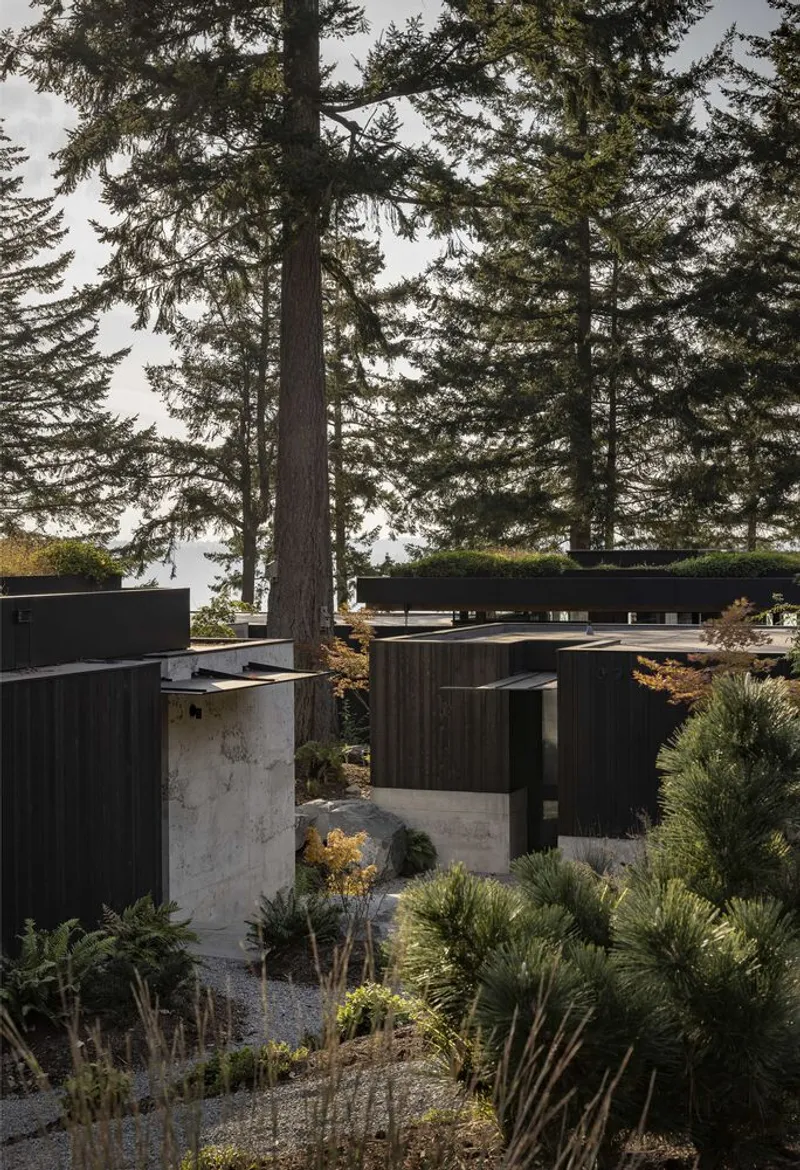
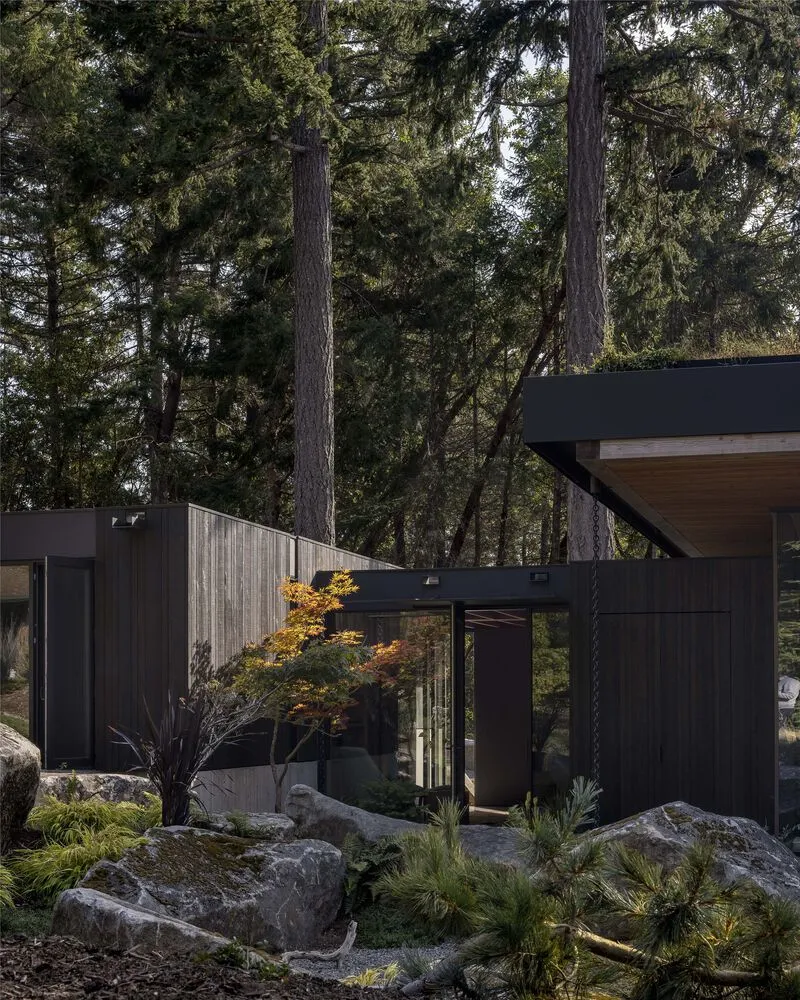
All photographs are works of Andrew Pogue


Popular Articles
Popular articles from the community


Jaramillo Van Sluys Arquitectura and Urbanismo Turn a Demolished Registry Lot in Quito into an Orchard Plaza
In Quito's Centro Histórico, a 2,800 m² plaza exposes the San Agustín convent wall and redraws its lost Augustinian orchard in volcanic stone.

David Macias Steps a Doorless Stone and Plaster House Down a Tropical Colombian Hillside
In the humid hills of Colombia, Threshold House replaces the front door with an open void and terraces its 850 m² down the slope instead of fighting it.

Juan García Correa, John González and Claudia Rueda Sink a Circular Amphitheater into a Manizales Engineering Building
On the La Nubia campus in Manizales, Colombia, the S1 Building folds labs and offices into a hillside of ramped lawns that double as a campus route.

GROUP A Strips a 1969 Rotterdam Harbor Headquarters to Its Frame and Wraps It in Timber Louvers
In Rotterdam's M4H harbor district, Ferro Offices reuses a 1969 frame, adds one timber storey and reaches BREEAM-NL Outstanding.

Similar Reads
You might also enjoy these articles


Hodi-Mandai Geram
Project Function: Preservation and revitalization of the Intangible heritage and socio-spatial identity of the Hodi by Housing, Cultural Memory Center, Sacred Grove, landscape, local tourism economy


Olio Towers: A Mid-Rise for Performers That Fuses Housing, Rehearsal, and Stage
Located blocks from Houston's Theater District, this modular tower stacks living units around a central performance atrium.

Oasis: Modular Green Housing Carved into Dhaka's Urban Fabric
A shortlisted Plugin Housing entry reclaims unauthorized settlements in Dhaka with stepped concrete volumes, green roofs, and ventilation-driven design.

Black Hole: A Floating Megastructure for the Post-Physical Era
Emiliano Mazzarotto envisions a spherical, self-scaling arena where e-sports, digital hotels, and holographic stadiums replace traditional public space.

Explore Residential Building Competitions
Discover active competitions in this discipline

Challenge to design mud housing for contemporary communities

Challenge to reimagine the Iron Throne

Photograph architecture without architects

Illustrate the lost glory of Angkor Wat - Render Challenge
Comments (0)
Please login or sign up to add comments
No comments yet. Be the first to comment!