

Louise Michel School Complex: A Sustainable and Community-Centered Educational Hub in Bordeaux
The Louise Michel School Complex in Bordeaux blends sustainability, biophilic design, and modular architecture, creating a vibrant, eco-friendly educational space.


The Louise Michel School Complex, designed by Marjan Hessamfar & Joe Vérons architectes associés, is a landmark project within the urban renewal of the Aubiers district in Bordeaux, France. This educational facility, spanning 4,178 m², integrates sustainable architecture, biophilic design, and urban connectivity, redefining the neighborhood’s image while enhancing the community’s quality of life.
An Innovative Approach to Educational Architecture
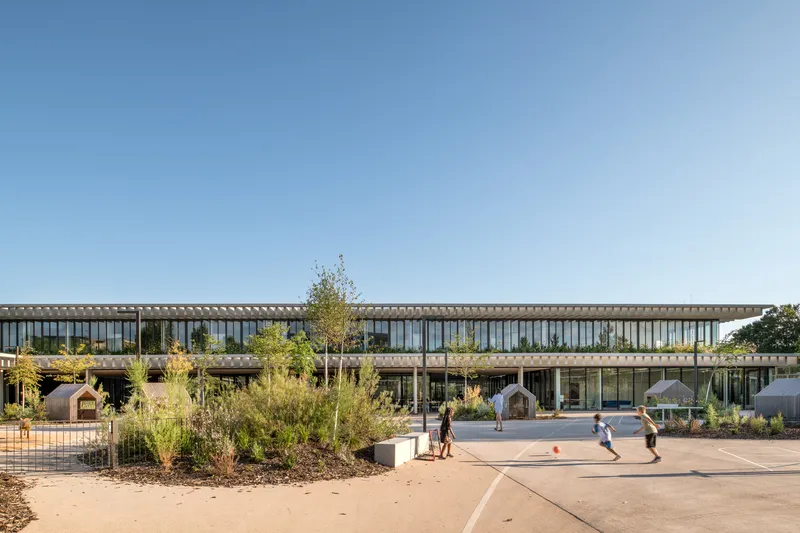
Situated in a district dominated by 1970s apartment blocks, the project plays a pivotal role in revitalizing the area. Designed as a "school-park," the layout seamlessly merges indoor and outdoor spaces, making greenery a fundamental architectural element. The L-shaped building strategically aligns with the northern and western plot boundaries, optimizing natural light penetration into playgrounds and classrooms.
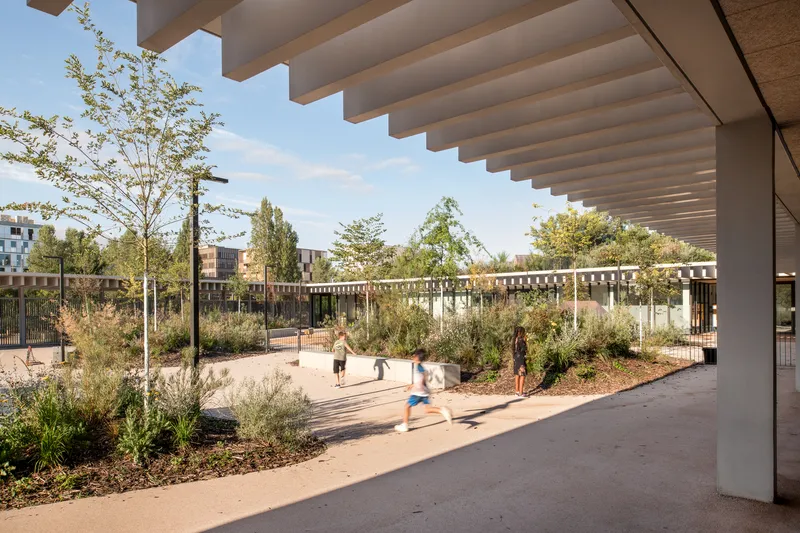
The school’s landscape-driven design fosters a dialogue between architecture and nature. Green embankments surround the site, providing a natural buffer between public and private areas. This topography-integrated design creates a visual and ecological continuity, extending green elements from the façades to the rooftop, transforming it into a 'fifth facade.'

Sustainability and Energy Efficiency at the Core
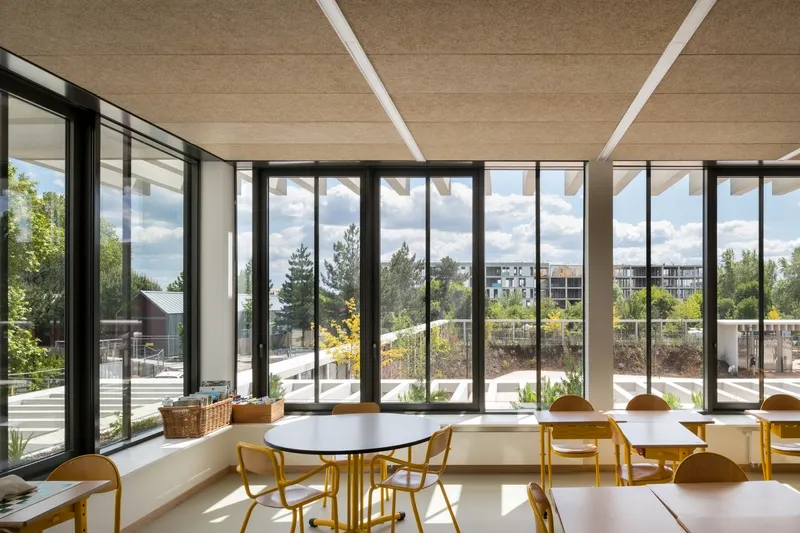
Designed with carbon neutrality and energy efficiency in mind, the Louise Michel School Complex is certified E+C- (level E3C1) and meets level 1 of the French Biosourced Building label. The architects prioritized bio-based materials, including:
- Wood fiber ceilings
- Wood wool insulation
- Linoleum flooring
- Cork play areas
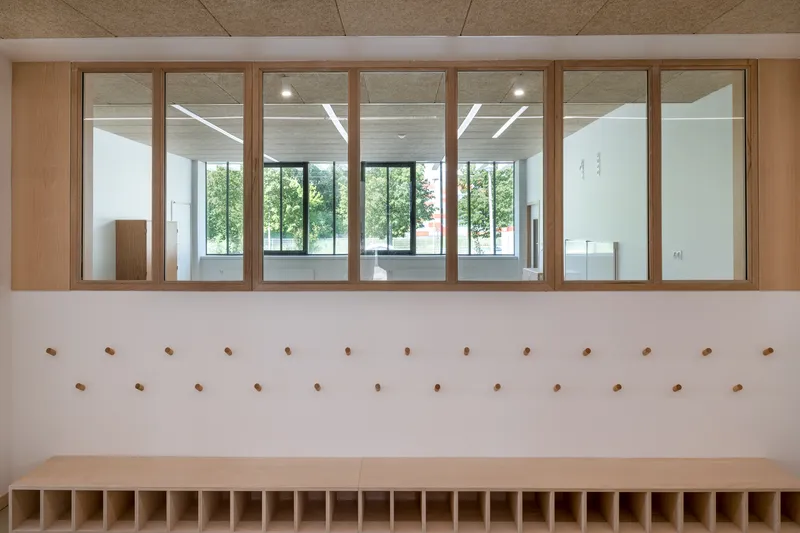
- Sustainably sourced wooden furniture and interior doors
To support renewable energy production, 230 solar panels are installed on the roof, significantly reducing the building’s carbon footprint.

Flexible and Future-Proof Design
Beyond sustainability, the school complex embraces flexibility and modularity to accommodate future educational needs. A concrete post-and-beam structural system enables open-plan, adaptable interiors, ensuring long-term scalability. Two interconnected wings define the spatial organization:
- West Wing: Dedicated to the nursery school, featuring a playful, landscaped rooftop garden.
- North Wing: A two-level structure housing the canteen, administration offices, multipurpose areas, and primary school classrooms.
A Harmonious Learning Environment
Each school level has its own playground, designed with:
- Cork-floored play areas
- Planted mounds for noise reduction
- Shaded seating spaces
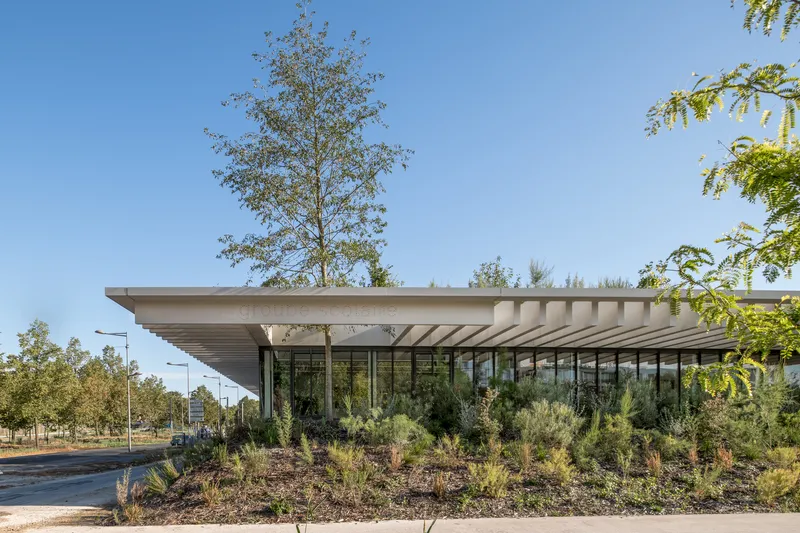
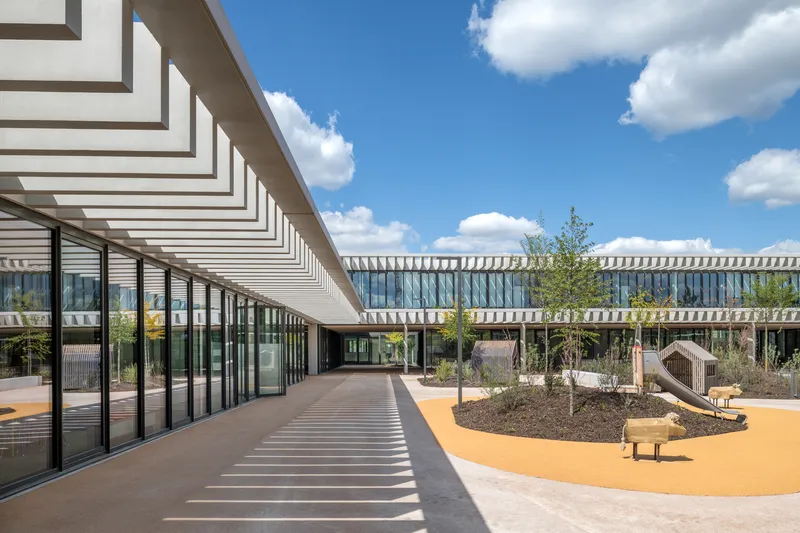
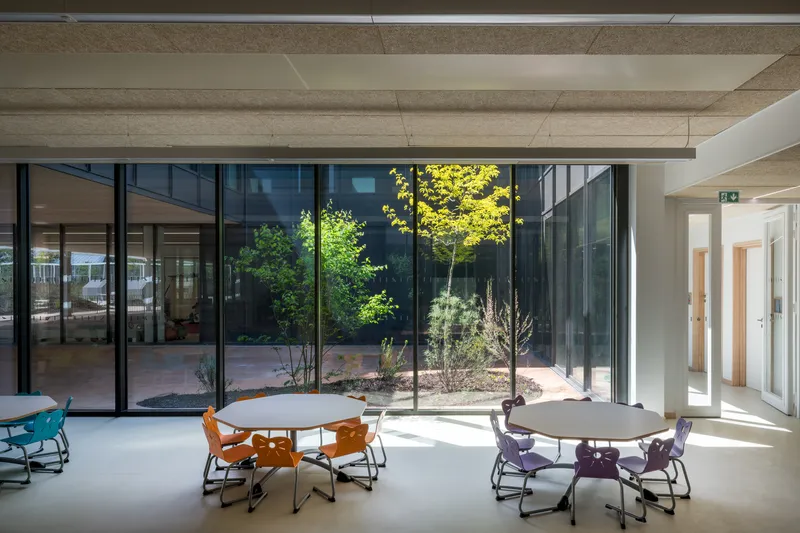
The architectural language of the complex is minimalist yet expressive, with horizontal lines, wide roof overhangs for sun protection, and a transparent glass façade. The use of vertical structural elements ensures a rhythmic, open feel, blurring the boundaries between interior and exterior spaces.
The Louise Michel School Complex is more than just a school—it’s a sustainable, community-centered space that fosters learning, social interaction, and environmental responsibility.

All Photographs are works of Jean-François Tremege


Popular Articles
Popular articles from the community


Juan García Correa, John González and Claudia Rueda Sink a Circular Amphitheater into a Manizales Engineering Building
On the La Nubia campus in Manizales, Colombia, the S1 Building folds labs and offices into a hillside of ramped lawns that double as a campus route.

David Macias Steps a Doorless Stone and Plaster House Down a Tropical Colombian Hillside
In the humid hills of Colombia, Threshold House replaces the front door with an open void and terraces its 850 m² down the slope instead of fighting it.

Architekt Andreas Gruber Scatters 23 Dark Timber Chalets Across a South Tyrolean Forest Edge
In Molini di Tures, Amonti Chalets breaks a resort into a hamlet of gabled timber houses, with parking, storage and services pushed into the slope.

longwave studio Reorganizes a 112 m² Tainan Apartment Around the Daily Routines of a Family and Two Cats
In Tainan, Taiwan, birch plywood, rust-red furniture and a freestanding plaster wall link arrival, storage, work and family life in one apartment.

Similar Reads
You might also enjoy these articles


Hodi-Mandai Geram
Project Function: Preservation and revitalization of the Intangible heritage and socio-spatial identity of the Hodi by Housing, Cultural Memory Center, Sacred Grove, landscape, local tourism economy


Olio Towers: A Mid-Rise for Performers That Fuses Housing, Rehearsal, and Stage
Located blocks from Houston's Theater District, this modular tower stacks living units around a central performance atrium.

Oasis: Modular Green Housing Carved into Dhaka's Urban Fabric
A shortlisted Plugin Housing entry reclaims unauthorized settlements in Dhaka with stepped concrete volumes, green roofs, and ventilation-driven design.

Black Hole: A Floating Megastructure for the Post-Physical Era
Emiliano Mazzarotto envisions a spherical, self-scaling arena where e-sports, digital hotels, and holographic stadiums replace traditional public space.

Explore Educational Building Competitions
Discover active competitions in this discipline

Challenge to design public laboratory

Challenge to reimagine the Iron Throne

Photograph architecture without architects

Illustrate the lost glory of Angkor Wat - Render Challenge
Comments (0)
Please login or sign up to add comments
No comments yet. Be the first to comment!