
LRS Architectes Sets Three Pentagonal Towers in a Cologny Garden to Rethink Dense Living
An award-winning residential trio in Geneva's Cologny commune treats landscape as shared infrastructure rather than leftover space.

Cologny is a commune where 77 percent of the housing stock consists of standalone houses. Inserting density into that context is a political act as much as an architectural one. With Jardins de la Gradelle, LRS Architectes chose not to mimic the surrounding villas or echo the blunt ten-story slabs to the southeast. Instead, the firm placed three pentagonal towers of varying heights at the center of a generous garden, treating the open ground as collective territory rather than decorative buffer. The project won the 2021 Tribune de Genève architecture award and took both the best housing and jury's favorite prizes at the Romandie real-estate awards from BILAN magazine, recognition that suggests the profession sees something genuinely useful here.
What makes the scheme worth studying is its refusal to separate the questions of form, material system, and landscape into independent design tracks. The pentagonal plan is not a sculptural gesture for its own sake: it generates corner loggias that pull light and garden views into every apartment while pushing private rooms toward the core. The whitewashed prefabricated concrete slabs that define the facade are both structure and expression. And the park, designed by Studio Vulkan through a competition process, is not an afterthought but a full partner in the composition, with a peripheral loop promenade linking playgrounds, bicycle storage, and visitor parking into a single circulatory system.
A Geometry That Earns Its Complexity
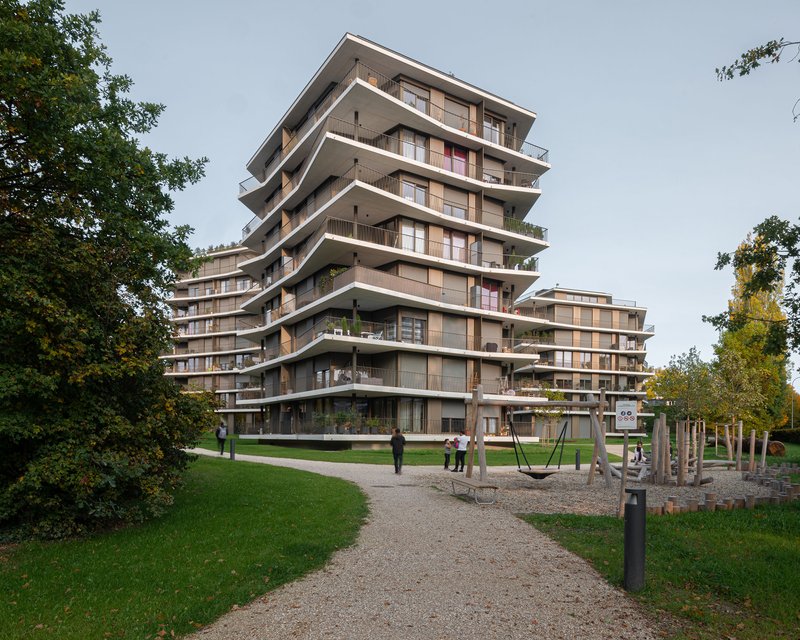
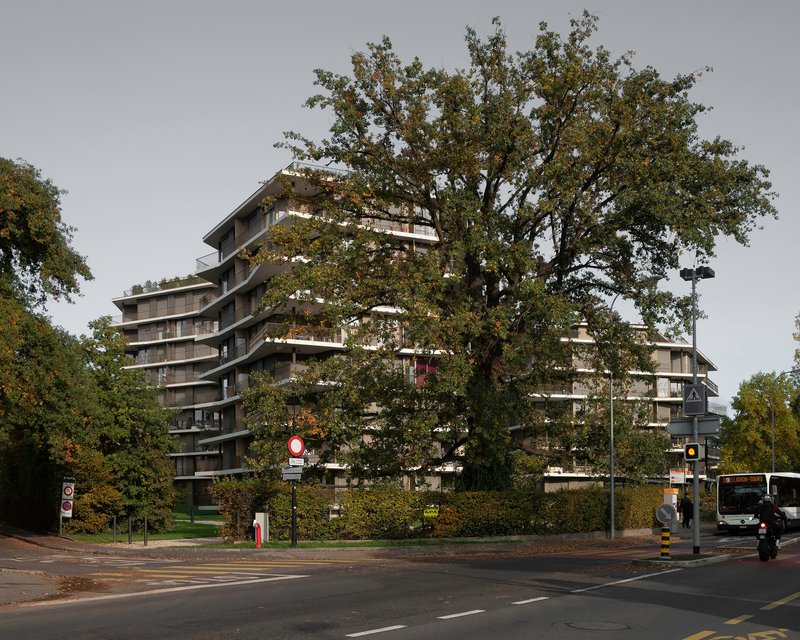
Pentagonal plans are rare in residential architecture for good reason: they complicate everything from furniture layout to structural grids. LRS Architectes justifies the geometry by turning each of the five corners into a loggia, a recessed outdoor room that belongs to a specific apartment rather than to a corridor or a void. The result is a tower silhouette that shifts dramatically depending on where you stand. From the park pathway the stepped massing reads as a gentle cascade of planted terraces. From the street intersection the volume twists, partially obscured by mature trees, its corners creating a faceted profile against the sky.
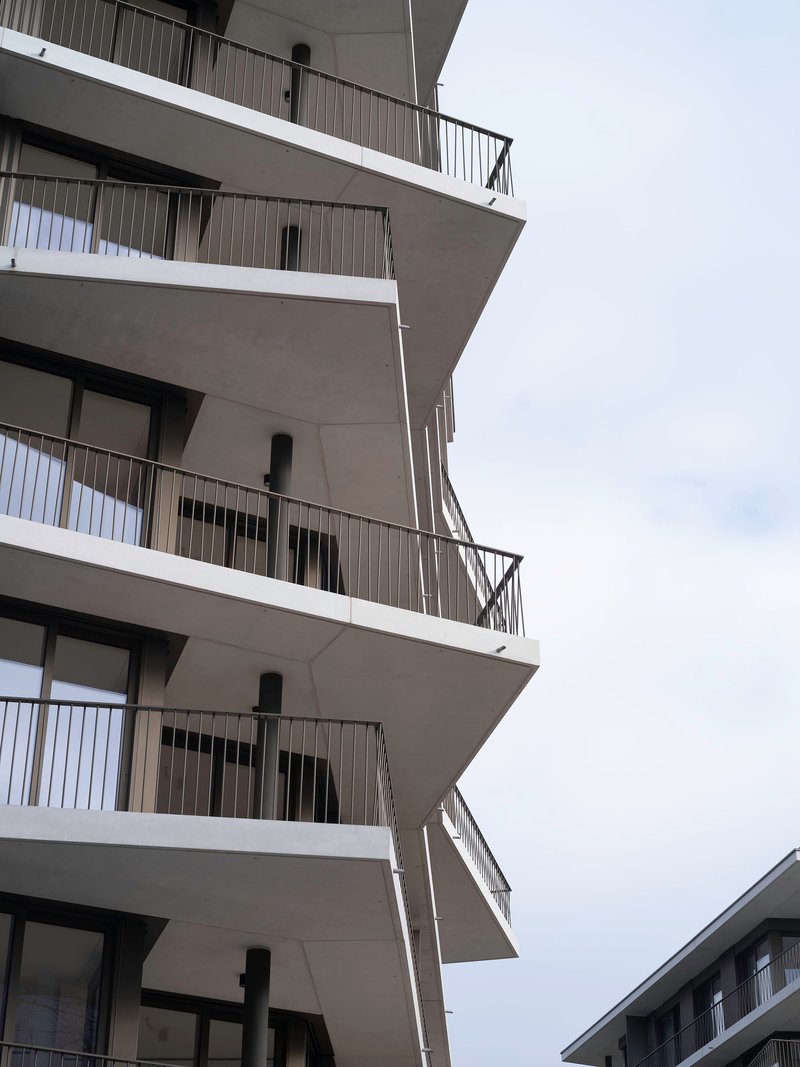
The staggered floor plates reinforce this effect. Each level cantilevers at a slightly different depth, so the building never presents a flat face. Viewed from below against an overcast sky, the protruding concrete slabs and metal railings stack into a rhythm that is ordered without being repetitive. It is density that avoids monotony, which is harder than it sounds at 17,000 square meters.
Prefabricated Concrete as Both Skin and Skeleton
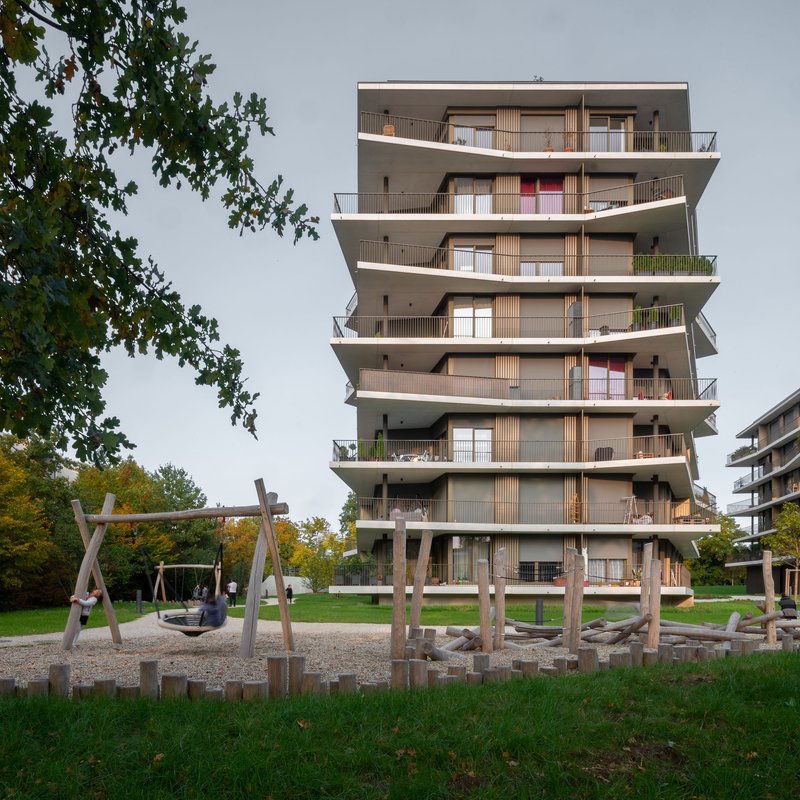
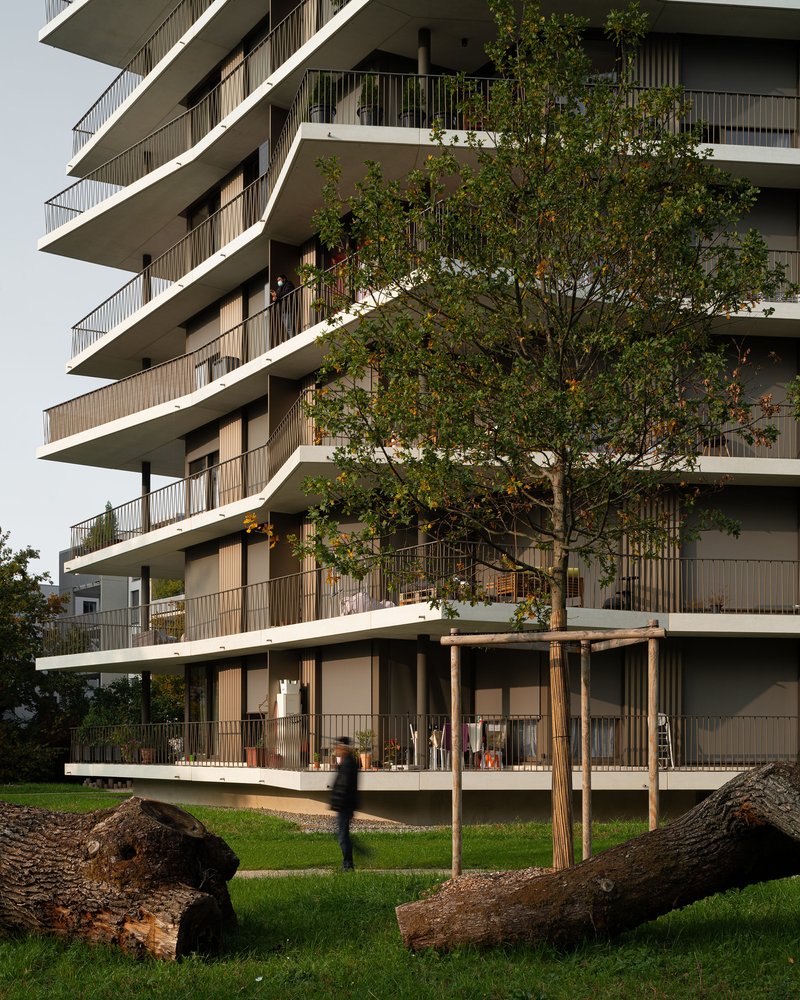
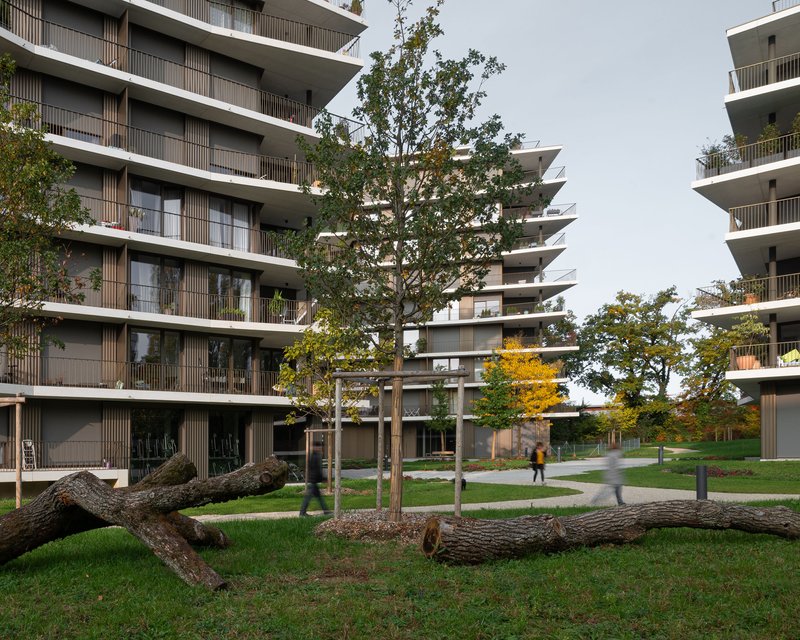
The material palette is deliberately restrained: whitewashed prefabricated concrete slabs for the primary facade, a darker anodized aluminum layer set further back, and timber screens that mediate between the two. The prefab system is not hidden. Floor plates project as thick horizontal bands, and the slabs' edges are left legible, giving the towers a tectonic honesty that distinguishes them from rendered plaster blocks. Crossed balustrade rails run along every balcony, and their geometry creates changing light patterns depending on the time of day and the viewer's angle.
Timber appears throughout: as balustrade infill panels, as screens between adjacent loggias, and as cladding on interior stair landings. Against the cool concrete it introduces warmth and a domestic grain that keeps the buildings from reading as institutional. The fallen tree trunks placed across the lawn below are a landscape echo of this timber vocabulary, blurring the line between built and natural material.
Living at the Corner
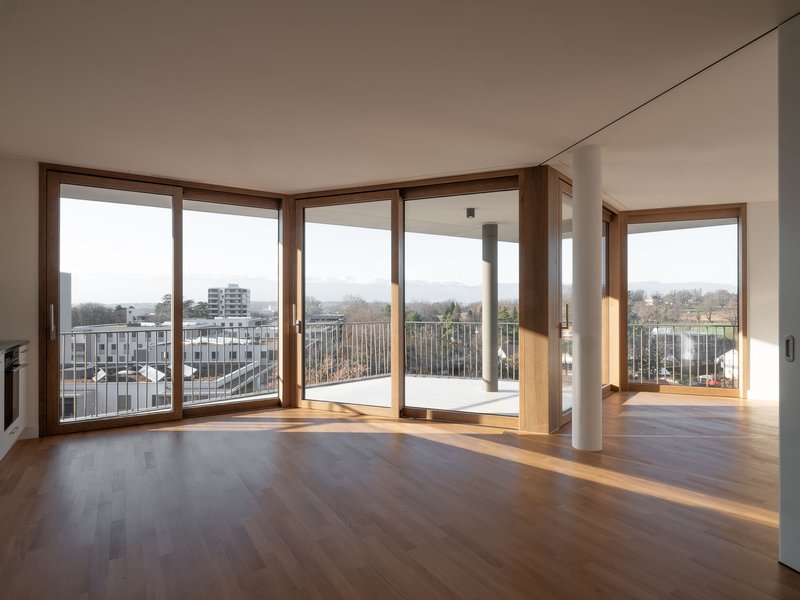
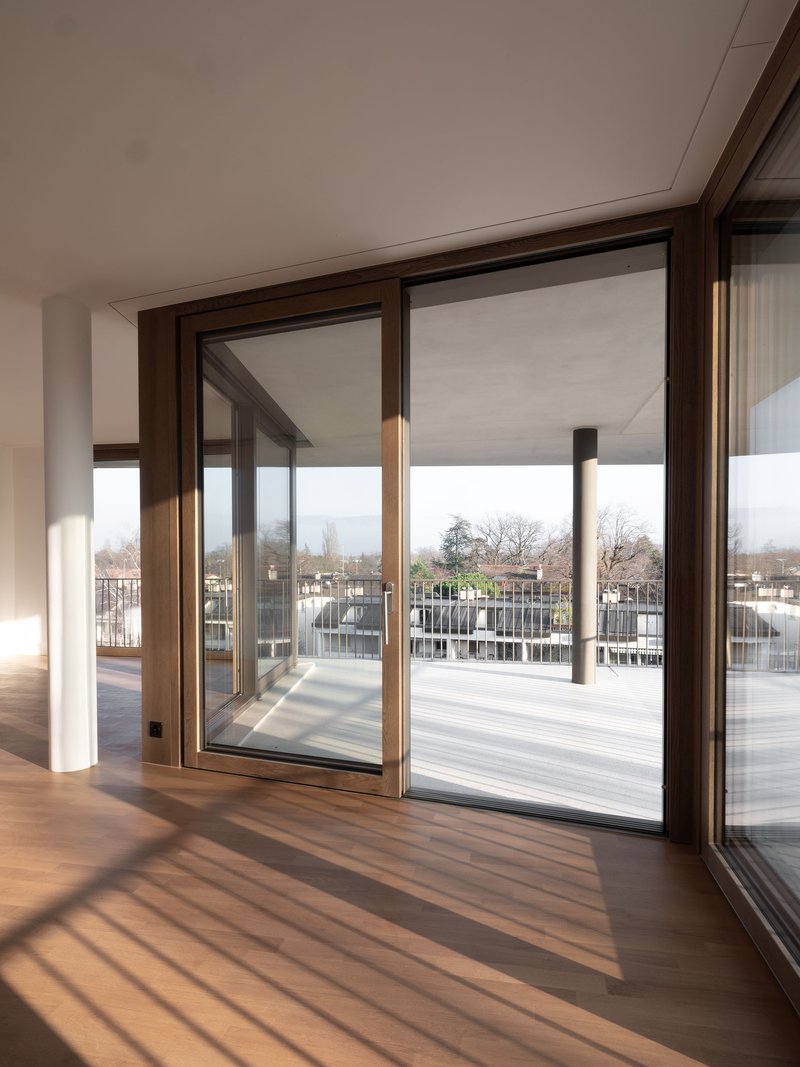
The apartment interiors are organized around the corner loggia. Living spaces open onto it through large bronze-framed sliding doors, and the terrace floor is finished in oak, extending the domestic surface outdoors. A cylindrical column at the corner marks the structural logic without pretending to disappear. Strong diagonal shadows cast by the balustrade rails stripe the timber flooring, turning the loggia into a sundial of sorts. Private bedrooms and service rooms are pushed toward the center of the plan, shielded from direct views while the social rooms claim the panoramic edges.
The interior view through the sliding doors is one of the project's most telling images. You see the garden, the sky, and the depth of the loggia all at once, and the layered framing makes even a modest terrace feel generous. It is a spatial trick that depends entirely on the pentagonal plan: a rectangular building could not deliver this kind of oblique outlook from a corner condition.
Ground Plane and Entry Sequence
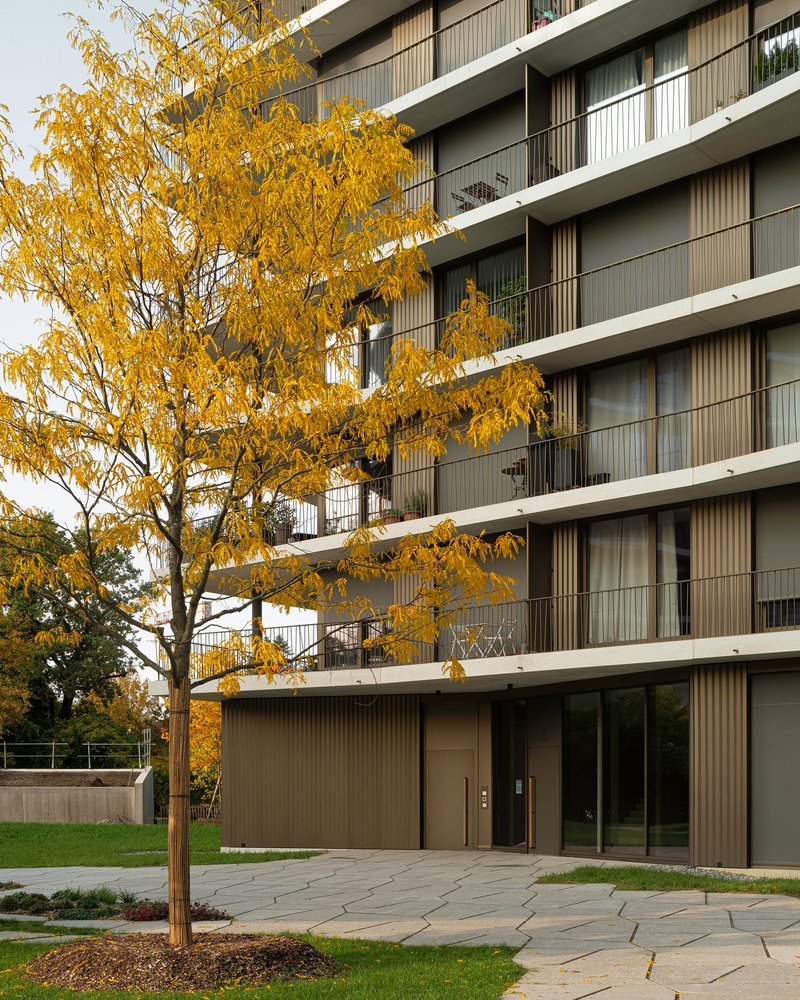
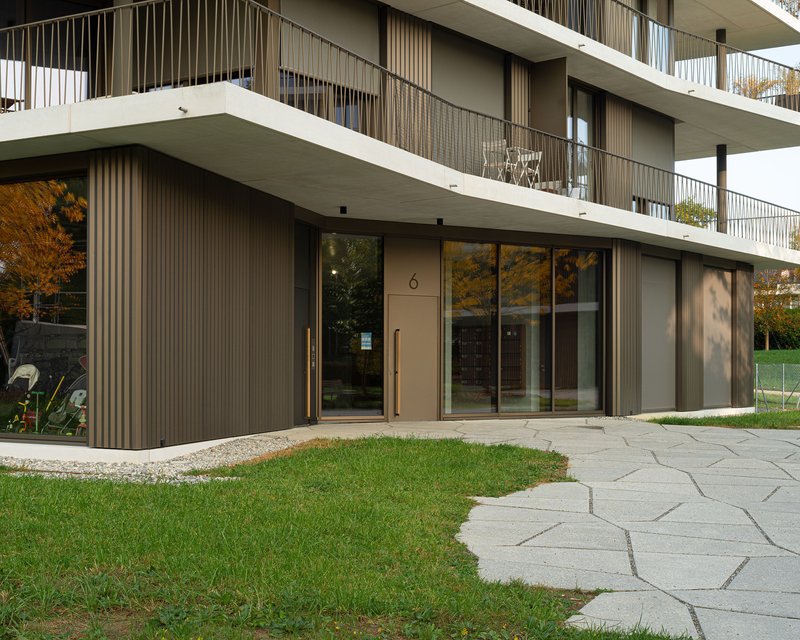
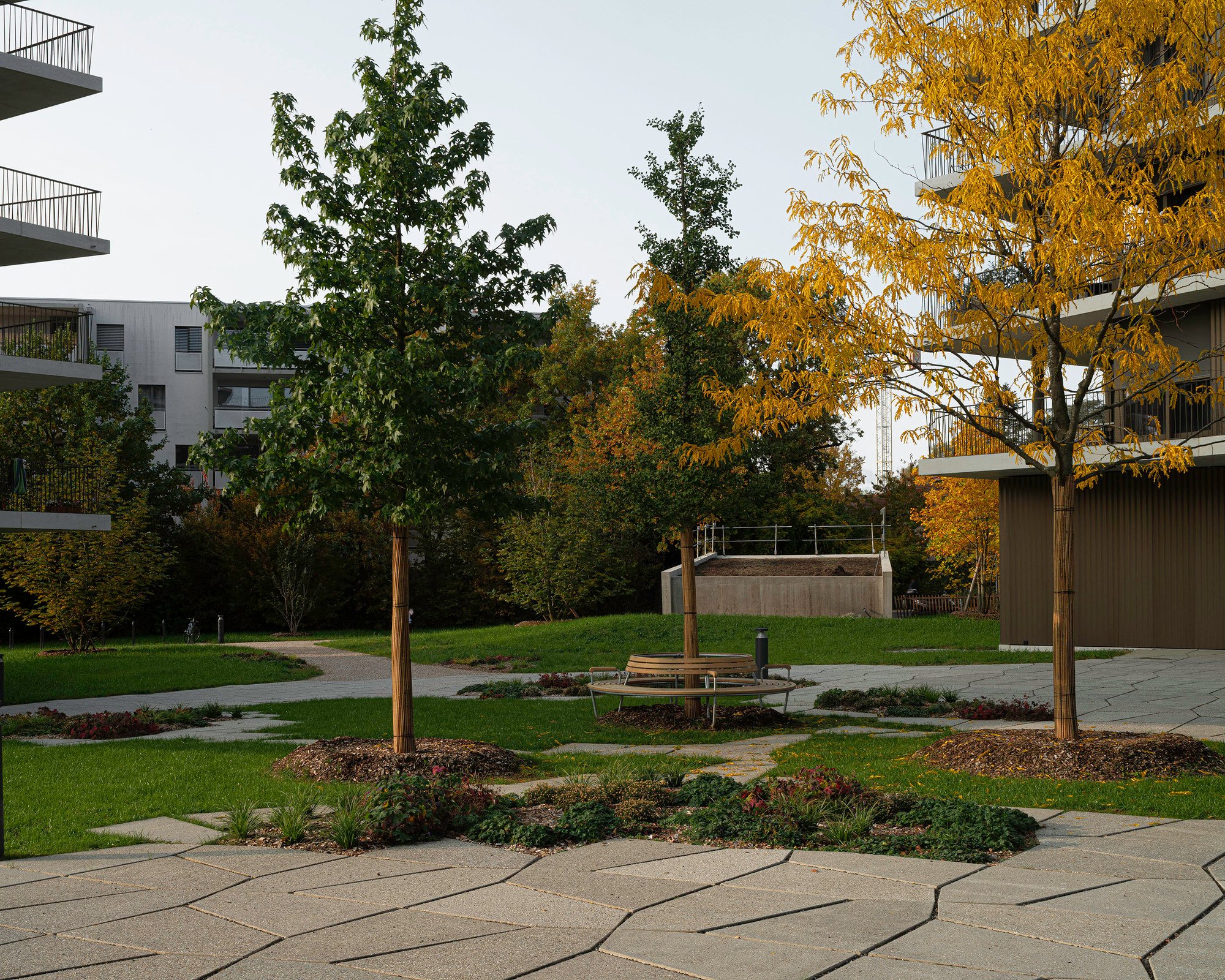
At ground level the towers meet the garden through a podium finished in ribbed metal cladding, darker and more industrial than the white concrete above. Glass entry doors are set within this metallic base, and the transition from landscape to lobby is handled with irregularly jointed stone paving that gives way to the geometric pattern of the park. The autumnal photographs reveal how the yellowing tree canopy mediates between the hard surfaces and the towers, softening the scale at the pedestrian level.
The large custom concrete slabs used in the landscape paving deserve mention. They establish a material continuity between building and ground, reinforcing the idea that architecture and landscape were designed as a single system rather than two parallel commissions.
The Garden as Infrastructure
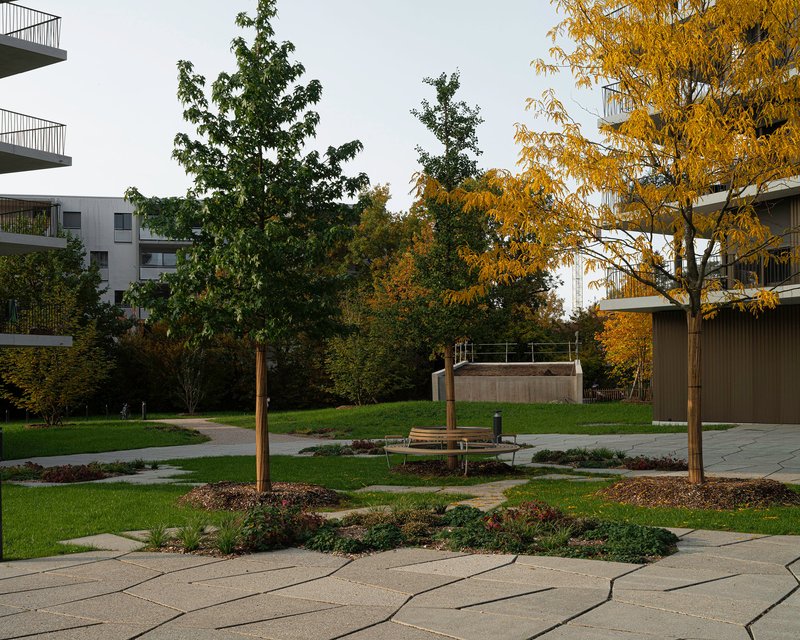
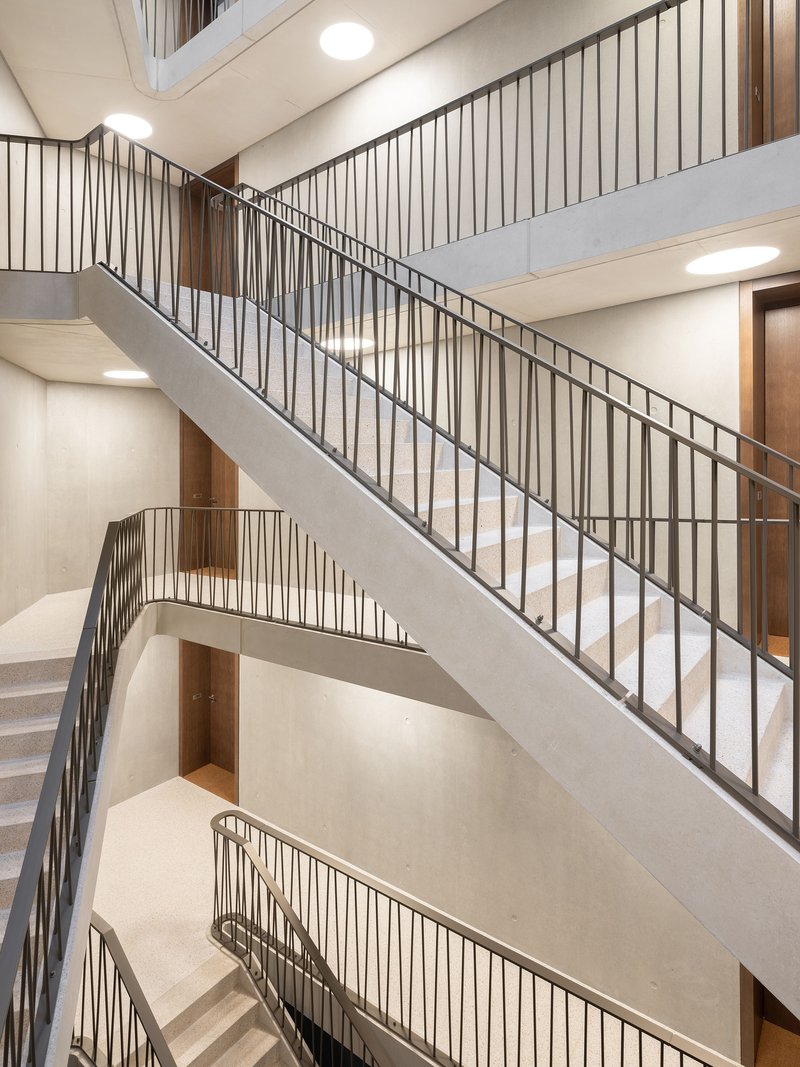
Studio Vulkan's park project wraps a peripheral loop promenade around the entire plot, connecting playgrounds, bicycle parking, and visitor access into a single path. Within the loop, a courtyard garden features a circular timber pergola, planted beds of perennials and hydrangeas designed by Approches Paysage, and generous lawns that function as a shared living room for all three buildings. Subirrigation techniques water the roof gardens above, a detail that keeps maintenance loads and visible hardware to a minimum.
The dusk photograph of the courtyard is the project's most atmospheric image. The pergola glows under low light, the planted beds frame the view between the two volumes, and the towers recede into silhouettes. It captures the proposition clearly: the landscape is not a setting for the architecture; it is the primary amenity that justifies the density.
Plans and Drawings
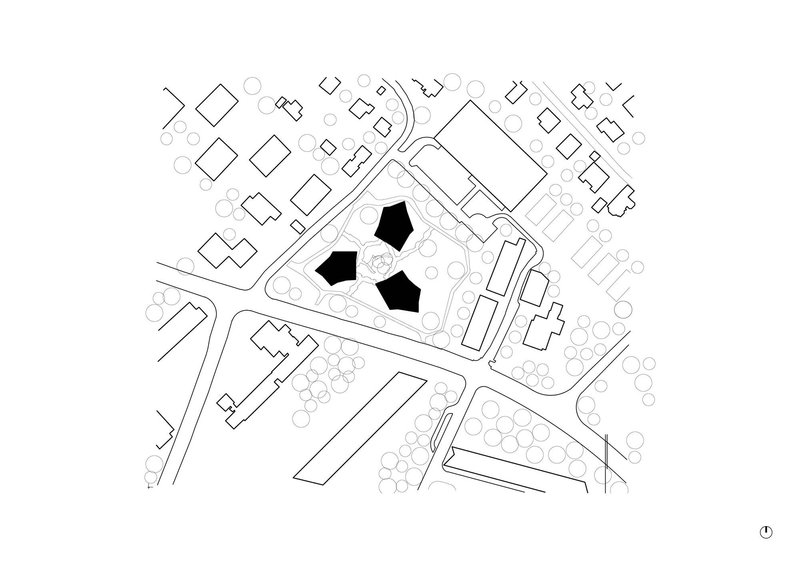
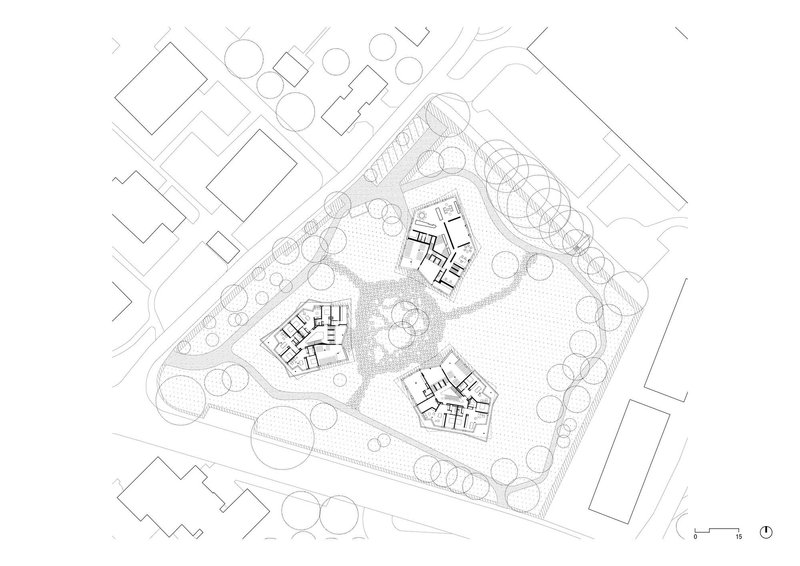
The site plan reveals the strategic placement of the three pentagonal volumes within the urban block. They occupy the center of the parcel, pulling away from the property edges to create the continuous perimeter promenade. The ground floor plan shows how the landscaped courtyards flow between the buildings, with tree planting concentrating at the edges to screen the towers from the street.
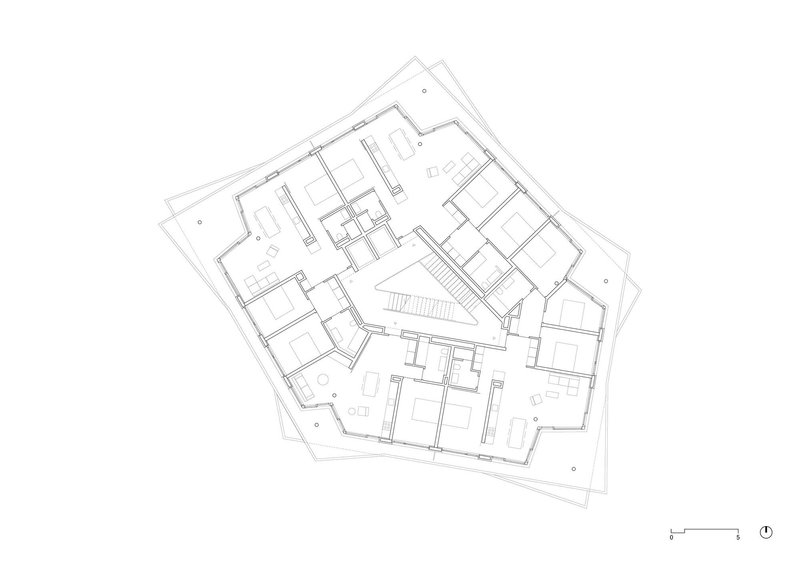
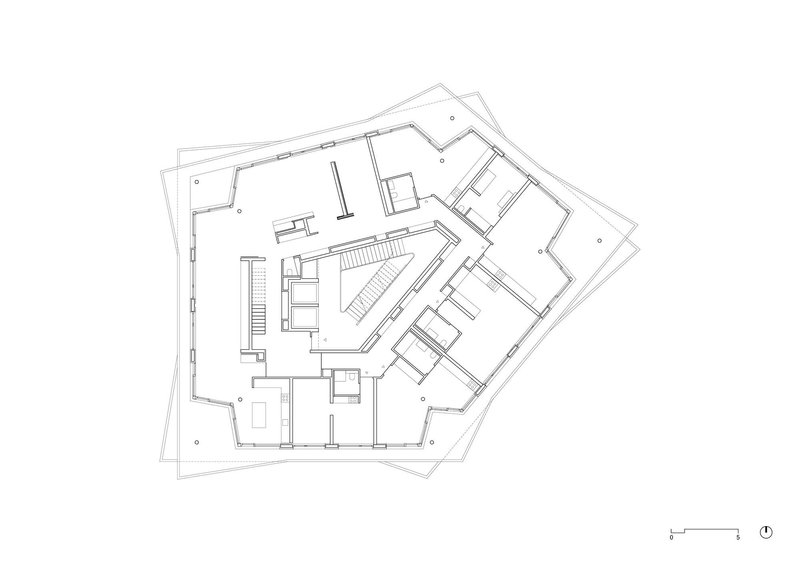
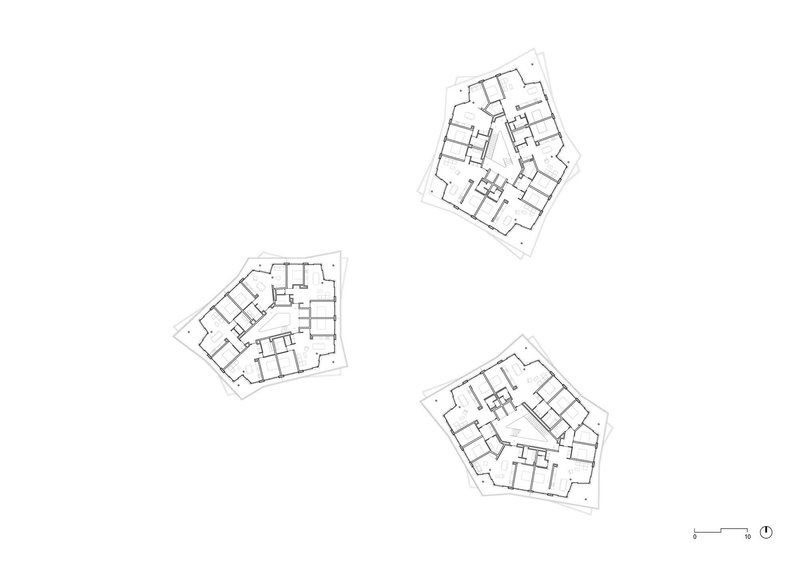
Individual floor plans confirm the pentagonal logic. The central staircase and core anchor each tower, and residential units radiate outward to the five corners, each terminating in a loggia. The variety of apartment sizes is legible in the plan: some units occupy a single facet, others wrap two. Angular partition walls follow the pentagon's geometry rather than defaulting to orthogonal grids, which must complicate fit-out but creates the oblique views that define the living experience.
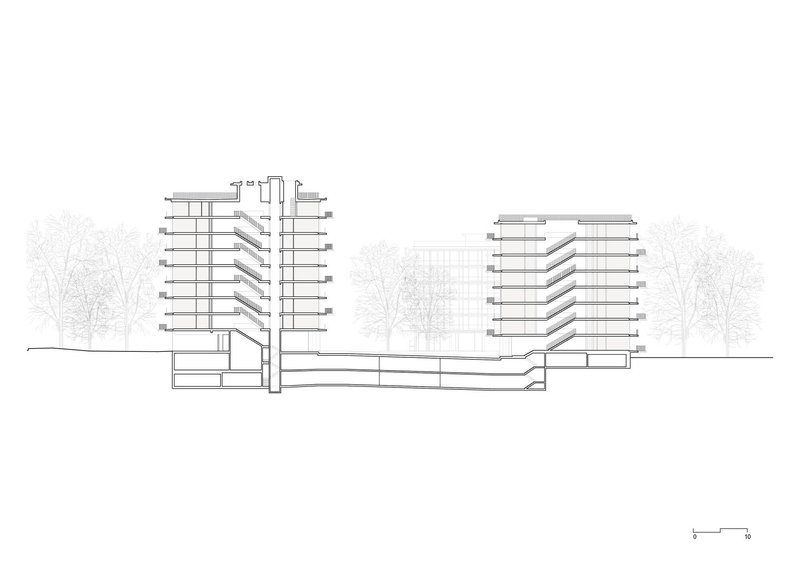
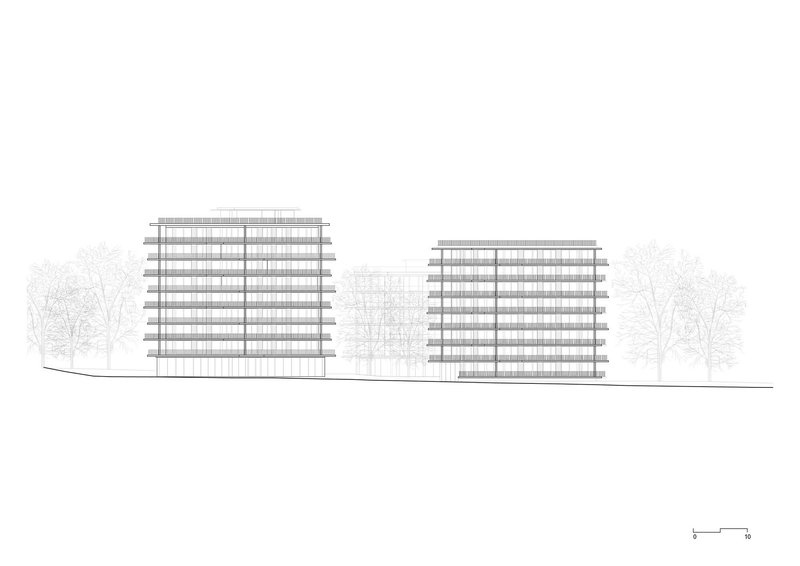
The section drawing makes the staggered floor plates explicit. The two towers step down in height, and a connecting podium base ties them together at ground level while keeping the park visible through the gap. The elevation drawing reads the towers as horizontal banded volumes, their concrete slabs registering as thick lines against the sloped ground. Mature trees flanking both sides reinforce the ambition to embed the buildings within a continuous landscape canopy.
Why This Project Matters
Jardins de la Gradelle succeeds because it treats every constraint as a design generator. The pentagonal plan is not a formal caprice; it is a machine for producing corner loggias. The prefabricated concrete system is not merely efficient; its exposed slabs give the towers a legible structure that ages well. The garden is not a marketing amenity; its peripheral loop promenade turns infrastructure (parking, access, play) into a coherent landscape experience. Each decision reinforces the others, and the result is a housing project that feels integrated rather than assembled from independent consultants' outputs.
For a commune dominated by standalone houses, the project demonstrates that density can coexist with a domestic scale if the landscape is given equal standing. The awards it has received suggest the Swiss profession agrees. What remains to be seen is whether this model, three towers in a garden, with a serious landscape partner and a prefabricated system that delivers material quality at speed, can be repeated in less privileged settings than Cologny. The principles are transferable. The budget, perhaps less so. But as a proof of concept for what mid-rise collective housing can offer when every discipline pulls in the same direction, this is one of the more convincing examples completed in recent years.
Jardins de la Gradelle Apartments by LRS Architectes, Cologny, Switzerland. 17,000 m². Completed 2020. Landscape by Studio Vulkan Landschaftsarchitektur. Civil engineering by Moser Ingénierie SA. Client: Real Investissement Immobilier SA. Images by LRS Architectes.
About the Studio
Share Your Own Work on uni.xyz
If projects like this are the kind of work you want to make, uni.xyz is a place to publish your own, find collaborators, and enter design competitions.




Popular Articles
Popular articles from the community

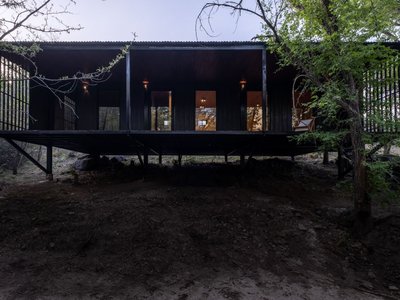
Pablo Senmartin Suspends a Steel-and-Timber Refuge Above a River Forest in Córdoba
An 80-square-meter dwelling on pilotis camouflages itself among the trees of Mayu Sumaj, designed to be dismantled without waste.
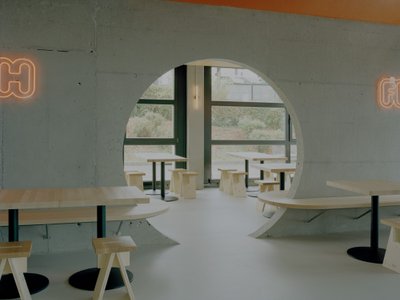
Noue Studio Organizes a Swiss Restaurant Around a Single Concrete Wall
In Granges-Paccot, Switzerland, a 216-square-meter renovation turns raw materials and a central spine into a legible dining experience.
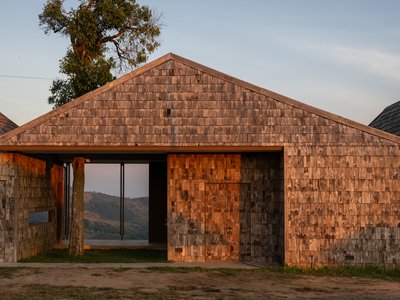
S.O.S Architects Scatters a Cluster of Timber Pavilions Across a Chiang Rai Hillside
The Wood Cabin arranges shingled gabled volumes along the slopes of Doi Chang, framing mountain vistas from every room and courtyard.
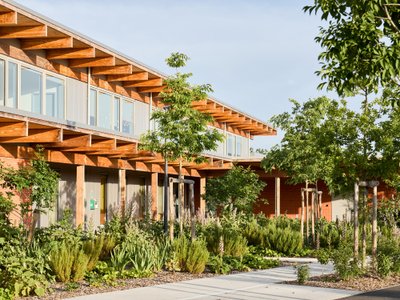
GGR Architectes Anchors a New Neighborhood in Frouzins with a Brick and Timber School Complex
A cruciform plan of terracotta brick and exposed wood frames four courtyards for 140 students outside Toulouse, France.


Similar Reads
You might also enjoy these articles

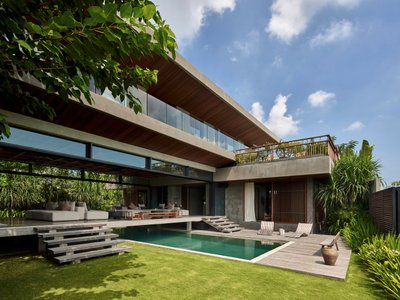
Freebird Residence by Alexis Dornier: A Tropical Modernist Sanctuary in Bali
Floating living pavilion above pool anchors H-shaped tropical villa, blending Japanese minimalism, sustainable strategies, lush landscape, and sculptural interiors.
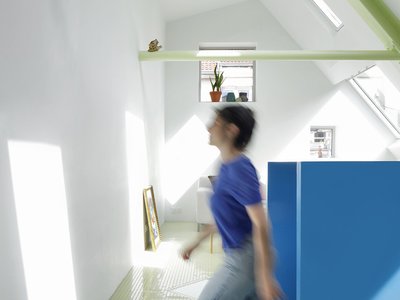
127af Flips a Tiny Bagnolet Rowhouse Upside Down with a Handcrafted Roof Extension
A 55-square-meter terraced house on the edge of Paris gains a luminous upper living floor through lightweight timber and steel.
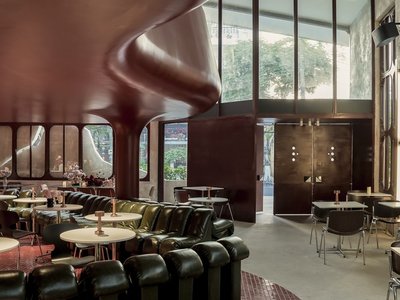
1.61 Design Workshop Wraps a 600-Square-Meter Café in Vietnam in Sculptural Burgundy Drama
Reden Café & Bistro pairs a helical staircase, mosaic floors, and deep red interiors to rethink Vietnamese hospitality space.

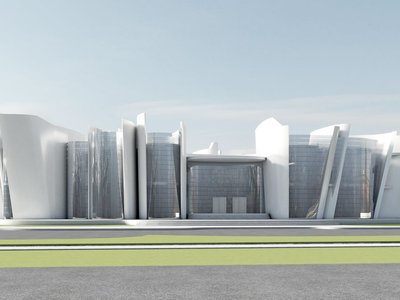
The Unbound Brain: A School Shaped by Cognitive Architecture
Cylindrical learning pods radiate like neurons from a central cortex, turning the floor plan into a spatial model of human thought.





Comments (0)
Please login or sign up to add comments
No comments yet. Be the first to comment!