
Lucky Club Bar in Camden Town by vPPR: A Contemporary Hospitality Space Inspired by Historic Stables
Elevated rooftop bar in Camden by vPPR, referencing historic horse stables with steel frames, curved roof, terraces, and vibrant nightlife views.


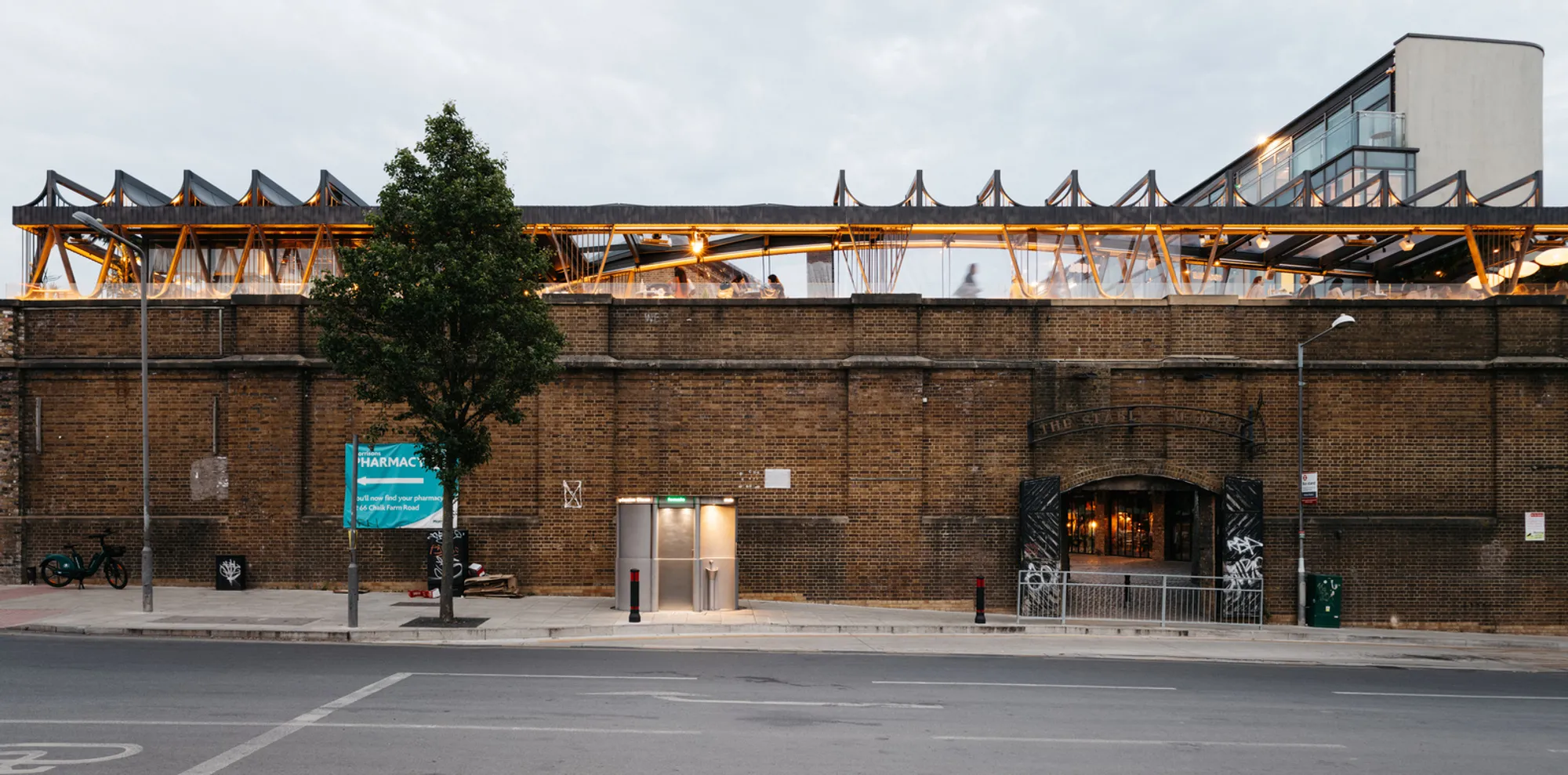
The Lucky Club, designed by the London-based architecture studio vPPR Architects, is a striking new hospitality venue located in the vibrant neighborhood of Camden Town. Positioned adjacent to the historic Camden Horse Hospital within the well-known Stables Market, the project carefully balances contemporary architectural expression with historical sensitivity.
Completed in 2023, this 485-square-meter bar and social venue demonstrates how modern hospitality architecture can respectfully integrate with heritage contexts. Commissioned by LabTech, Lucky Club has quickly become one of North London’s newest nightlife destinations, blending architectural storytelling, industrial materiality, and urban culture.
The Lucky Club, designed by the London-based architecture studio vPPR Architects, is a striking new hospitality venue located in the vibrant neighborhood of Camden Town. Positioned adjacent to the historic Camden Horse Hospital within the well-known Stables Market, the project carefully balances contemporary architectural expression with historical sensitivity.
Completed in 2023, this 485-square-meter bar and social venue demonstrates how modern hospitality architecture can respectfully integrate with heritage contexts. Commissioned by LabTech, Lucky Club has quickly become one of North London’s newest nightlife destinations, blending architectural storytelling, industrial materiality, and urban culture.
Photographed by architectural photographer Lewis Ronald, the project captures the dynamic energy of Camden while referencing its industrial railway heritage and equestrian past.
Architectural Context: Reviving Camden’s Industrial Heritage
Camden’s Stables Market district has a rich historical background tied to London’s nineteenth-century railway expansion. During the Victorian era, Camden functioned as a crucial transportation hub for goods moving across the city. Hundreds of horses were required to transport freight between railway yards and urban markets.
To support this bustling network, a complex of brick stables and service buildings emerged, including the historic Horse Hospital. Over time, the district evolved from a working industrial area into a vibrant cultural and commercial hub, famous today for its markets, music venues, and nightlife.
The design of Lucky Club acknowledges this history by drawing inspiration from stable architecture, railway structures, and industrial materials, transforming these influences into a contemporary hospitality environment.
Elevated Design: A Lightweight Structure Above Historic Fabric
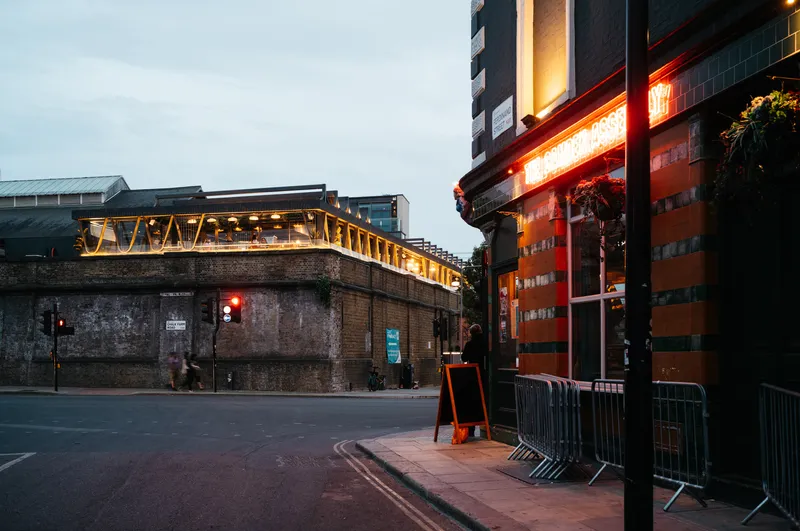
One of the defining characteristics of Lucky Club is its elevated architectural form. Instead of altering the historic structures below, the architects positioned a lightweight steel structure above the existing built fabric.
This sensitive approach allows the new bar to hover above the historic market buildings, minimizing impact on the protected heritage structures while still creating a visually striking addition to the urban landscape.
The building wraps around the corner facing Chalk Farm Road, forming a curved rooftop venue that commands views across Camden’s bustling streets. The structure acts almost like an architectural crown, marking the venue as a distinctive destination within North London’s nightlife scene.
Structural Expression: Steel Geometry Inspired by Stable Openings
The architecture of Lucky Club incorporates expressive metalwork that directly references historical stable design. The roof structure is supported by V-shaped steel frames, which subtly reinterpret the triangular openings traditionally found in horse stables.
Historically, these triangular apertures allowed horses to extend their heads outside for feeding and ventilation. At Lucky Club, the architects reinterpret this detail to create framed openings that overlook the lively streets below.
These apertures provide visual connections between the bar and Camden’s nightlife, turning the architecture itself into a dynamic viewing platform for urban activity.
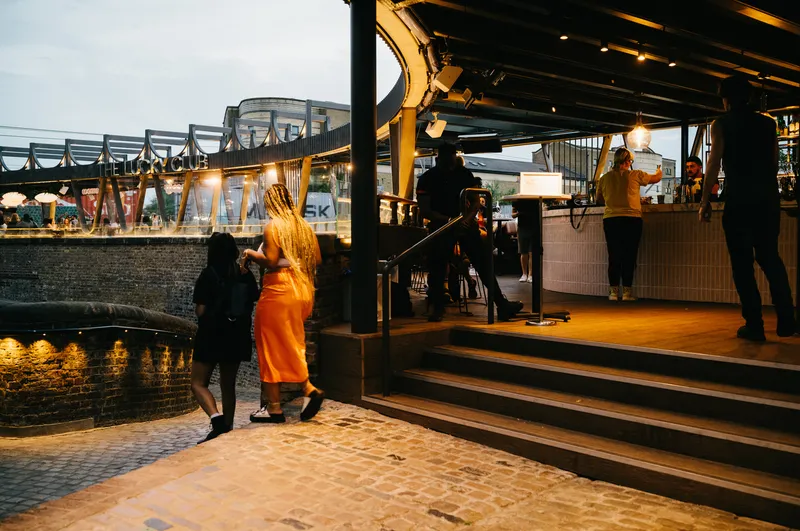
Façade Design and Transparency
Between the triangular openings, a sequence of vertical metal grills creates a rhythmic façade pattern. This design element references similar devices used in the nearby Horse Hospital, where vertical divisions helped organize stable spaces while maintaining airflow and visibility.
In the new bar, these grills maintain openness and transparency, allowing the venue to feel visually connected to its surroundings while still establishing a clear architectural identity.
The result is a façade that is simultaneously contemporary and historically informed, blending industrial steel elements with contextual references.
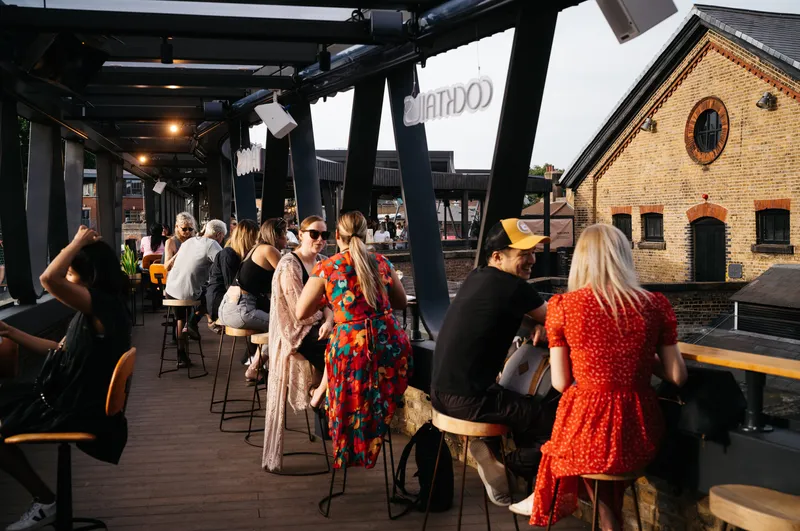
Sculptural Roof Design and Spatial Variety
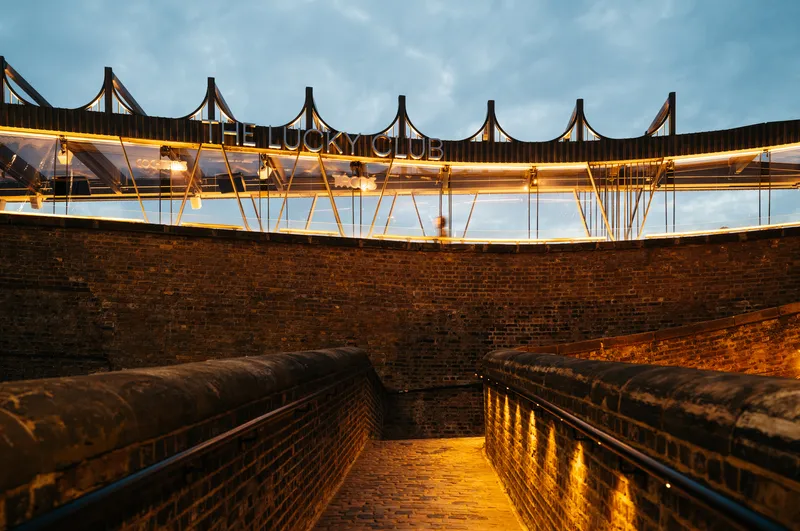
The roofscape of Lucky Club introduces another distinctive design gesture. Along the top of the structure, semi-circular sculptural peaks rise above the metal roofline. These forms are inspired by the circular porthole window located in the gable end of the historic Horse Hospital.
By abstracting this architectural detail, the designers create a playful yet meaningful connection between old and new structures.
The curved layout of the bar generates a variety of spatial experiences, including:
- Narrow transitional pathways
- Wider social gathering areas
- Covered seating zones
- Open-air terraces
- Landscaped areas with planting
- Sections with solid metal roofing
- Areas with transparent roofing for daylight
This sequence of spaces guides visitors naturally toward the open terrace overlooking the railway, creating a layered hospitality experience.
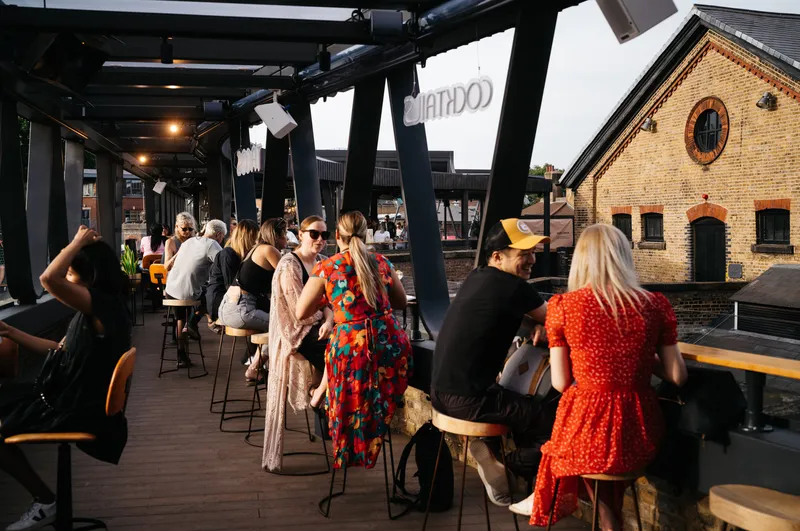
Arrival Experience and Circulation
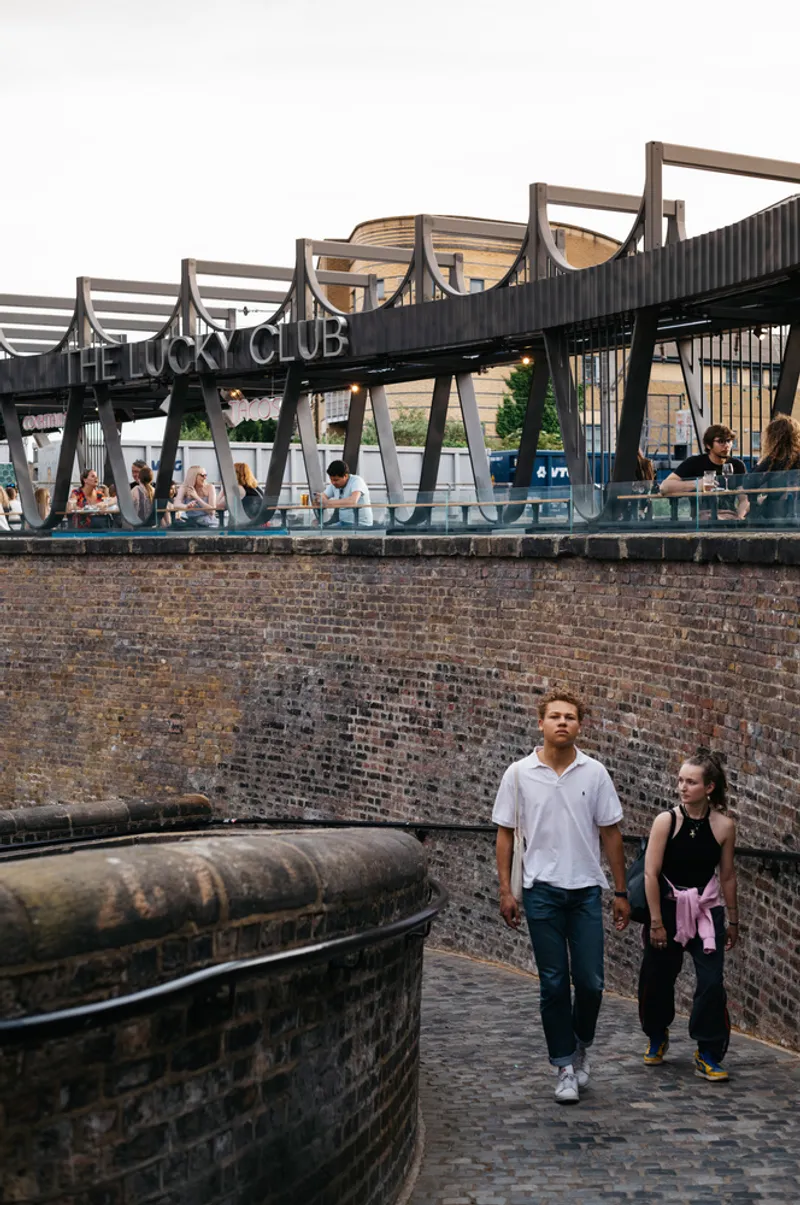
Visitors access the Lucky Club via the historic Horse Ramp, an original circulation route once used for moving horses between stable levels.
This approach reinforces the project’s historical narrative. As guests ascend the ramp, the bar gradually comes into view, creating a dramatic arrival sequence that celebrates the site's heritage.
The elevated terrace then opens toward the railway lines, offering a unique vantage point over Camden’s urban landscape.
Interior Atmosphere and Hospitality Experience
Inside the venue, the architectural language continues to emphasize industrial materials, transparency, and open spatial relationships. Steel structures, exposed detailing, and carefully designed lighting contribute to a contemporary bar atmosphere that remains connected to the building’s historical references.
The design also integrates contributions from several specialist collaborators, including:
- Light Bureau for atmospheric lighting design
- Big Sky Acoustics to optimize sound performance
- MJ Associates for mechanical and electrical systems
These elements ensure that the space functions efficiently as a high-energy nightlife venue while maintaining comfort and acoustic quality.
Contemporary Hospitality Architecture in Historic Urban Settings
Lucky Club demonstrates how contemporary hospitality architecture can successfully engage with historical contexts without resorting to imitation. Instead of copying historic forms, the design interprets architectural elements from the past: such as stable openings, grills, and porthole windows, into modern structural expressions.
This strategy allows the project to remain authentically contemporary while deeply rooted in Camden’s cultural memory.
The result is a vibrant rooftop bar that reflects the neighborhood’s industrial heritage, creative spirit, and evolving urban identity.
Conclusion
The Lucky Club by vPPR Architects represents a thoughtful example of adaptive contextual architecture in one of London’s most dynamic districts. By combining a lightweight elevated structure with references to historic stable architecture, the project successfully merges heritage preservation with contemporary hospitality design.
As Camden continues to evolve as a cultural and nightlife destination, Lucky Club stands as a bold architectural landmark, celebrating both the past and the future of this iconic London neighborhood.
SEO Keywords
Lucky Club Camden, vPPR Architects, Camden nightlife architecture, hospitality architecture London, rooftop bar Camden, adaptive reuse architecture, contemporary bar design, Stables Market Camden architecture, London bar architecture.
Photographed by architectural photographer Lewis Ronald, the project captures the dynamic energy of Camden while referencing its industrial railway heritage and equestrian past.
Architectural Context: Reviving Camden’s Industrial Heritage
Camden’s Stables Market district has a rich historical background tied to London’s nineteenth-century railway expansion. During the Victorian era, Camden functioned as a crucial transportation hub for goods moving across the city. Hundreds of horses were required to transport freight between railway yards and urban markets.
To support this bustling network, a complex of brick stables and service buildings emerged, including the historic Horse Hospital. Over time, the district evolved from a working industrial area into a vibrant cultural and commercial hub, famous today for its markets, music venues, and nightlife.
The design of Lucky Club acknowledges this history by drawing inspiration from stable architecture, railway structures, and industrial materials, transforming these influences into a contemporary hospitality environment.
Elevated Design: A Lightweight Structure Above Historic Fabric
One of the defining characteristics of Lucky Club is its elevated architectural form. Instead of altering the historic structures below, the architects positioned a lightweight steel structure above the existing built fabric.
This sensitive approach allows the new bar to hover above the historic market buildings, minimizing impact on the protected heritage structures while still creating a visually striking addition to the urban landscape.
The building wraps around the corner facing Chalk Farm Road, forming a curved rooftop venue that commands views across Camden’s bustling streets. The structure acts almost like an architectural crown, marking the venue as a distinctive destination within North London’s nightlife scene.
Structural Expression: Steel Geometry Inspired by Stable Openings
The architecture of Lucky Club incorporates expressive metalwork that directly references historical stable design. The roof structure is supported by V-shaped steel frames, which subtly reinterpret the triangular openings traditionally found in horse stables.
Historically, these triangular apertures allowed horses to extend their heads outside for feeding and ventilation. At Lucky Club, the architects reinterpret this detail to create framed openings that overlook the lively streets below.
These apertures provide visual connections between the bar and Camden’s nightlife, turning the architecture itself into a dynamic viewing platform for urban activity.
Façade Design and Transparency
Between the triangular openings, a sequence of vertical metal grills creates a rhythmic façade pattern. This design element references similar devices used in the nearby Horse Hospital, where vertical divisions helped organize stable spaces while maintaining airflow and visibility.
In the new bar, these grills maintain openness and transparency, allowing the venue to feel visually connected to its surroundings while still establishing a clear architectural identity.
The result is a façade that is simultaneously contemporary and historically informed, blending industrial steel elements with contextual references.
Sculptural Roof Design and Spatial Variety
The roofscape of Lucky Club introduces another distinctive design gesture. Along the top of the structure, semi-circular sculptural peaks rise above the metal roofline. These forms are inspired by the circular porthole window located in the gable end of the historic Horse Hospital.
By abstracting this architectural detail, the designers create a playful yet meaningful connection between old and new structures.
The curved layout of the bar generates a variety of spatial experiences, including:
- Narrow transitional pathways
- Wider social gathering areas
- Covered seating zones
- Open-air terraces
- Landscaped areas with planting
- Sections with solid metal roofing
- Areas with transparent roofing for daylight
This sequence of spaces guides visitors naturally toward the open terrace overlooking the railway, creating a layered hospitality experience.
Arrival Experience and Circulation
Visitors access the Lucky Club via the historic Horse Ramp, an original circulation route once used for moving horses between stable levels.
This approach reinforces the project’s historical narrative. As guests ascend the ramp, the bar gradually comes into view, creating a dramatic arrival sequence that celebrates the site's heritage.
The elevated terrace then opens toward the railway lines, offering a unique vantage point over Camden’s urban landscape.
Interior Atmosphere and Hospitality Experience
Inside the venue, the architectural language continues to emphasize industrial materials, transparency, and open spatial relationships. Steel structures, exposed detailing, and carefully designed lighting contribute to a contemporary bar atmosphere that remains connected to the building’s historical references.
The design also integrates contributions from several specialist collaborators, including:
- Light Bureau for atmospheric lighting design
- Big Sky Acoustics to optimize sound performance
- MJ Associates for mechanical and electrical systems
These elements ensure that the space functions efficiently as a high-energy nightlife venue while maintaining comfort and acoustic quality.Contemporary Hospitality Architecture in Historic Urban Settings
Lucky Club demonstrates how contemporary hospitality architecture can successfully engage with historical contexts without resorting to imitation. Instead of copying historic forms, the design interprets architectural elements from the past: such as stable openings, grills, and porthole windows, into modern structural expressions.
This strategy allows the project to remain authentically contemporary while deeply rooted in Camden’s cultural memory.
The result is a vibrant rooftop bar that reflects the neighborhood’s industrial heritage, creative spirit, and evolving urban identity.
The Lucky Club by vPPR Architects represents a thoughtful example of adaptive contextual architecture in one of London’s most dynamic districts. By combining a lightweight elevated structure with references to historic stable architecture, the project successfully merges heritage preservation with contemporary hospitality design.
As Camden continues to evolve as a cultural and nightlife destination, Lucky Club stands as a bold architectural landmark, celebrating both the past and the future of this iconic London neighborhood.
All photographs are works of
Lewis Ronald




Popular Articles
Popular articles from the community


Hill & Cross Opera: Sculptural Opera House Architecture Shaped by Tallinn’s Landscape and Identity
Hill & Cross Opera reimagines opera house architecture in Tallinn through its sculptural hill, civic plaza, glass wave and a luminous cross.

Riyadh For All: Intergenerational Urban Design for Active Aging in Rabat
Riyadh For All reimagines urban design in Rabat with intergenerational co-living, adaptive courtyards, and Moroccan cultural exchange today.

Conexión: Biophilic Design Reimagines High-Rise Living in Hong Kong
Conexión reimagines high-rise living in Hong Kong through biophilic design, green facades, shared spaces, daylight, water and nature within.

Co-Life: Senior Housing Design That Reconnects Older Adults With the City
Co-Life reimagines senior housing design through healing gardens, shared streets, workshops, and a sustainable community across generations.
Similar Reads
You might also enjoy these articles


FAMM Arquitectura Organizes Ten Villas Around Courtyards and Jungle in Nosara, Costa Rica
El Molino pairs two elongated volumes with deep overhangs and timber louvers to build a compact coastal community five minutes from the beach.
Oscar Niemeyer's Ibirapuera Park Pavilions Define São Paulo's Cultural Identity in Concrete and Curve
A constellation of modernist volumes set within São Paulo's most important urban park, conceived for the city's 400th anniversary in 1954.
How Henri Picq's 1889 Paris Pavilion Traveled 11,000 Kilometers to Become Santiago's Artequín Museum
A prefabricated iron and glass pavilion built for the Paris Universal Exposition found a second life as a children's art museum in Chile.
Sanjay Puri Architects Wraps a Jaipur Office Tower in Capsule-Shaped Green Buffers
A nine-level climate-responsive workplace near Jaipur Airport uses stacked planter terraces and aluminium screens to fight 40°C heat.

Explore Hospitality Building Competitions
Discover active competitions in this discipline



Challenge to reimagine the Iron Throne


Photograph architecture without architects


Illustrate the lost glory of Angkor Wat - Render Challenge


Design challenge to reuse E-waste
Comments (0)
Please login or sign up to add comments
No comments yet. Be the first to comment!