

Lumber 4 Building by Oslotre Architects: A Pioneering Timber Office Landmark in Norway
Lumber 4 is a sustainable mass timber office building by Oslotre Architects, combining innovative structure, natural materials, and biophilic design.


Location: Kristiansand, Norway Architects: Oslotre Architects Lead Architects: Christoffer Imislund, Jørgen Tycho Year of Completion: 2023 Total Area: 3,106 m² Photography: Kyrre Sundal Manufacturer: Splitkon
A New Standard for Timber Office Architecture
Rising six stories above the streets of Kristiansand, Lumber 4 stands as a landmark of sustainable commercial architecture. Designed by Oslotre Architects, this hybrid commercial and office building represents a forward-thinking approach to mass timber construction, setting a new precedent for environmentally conscious and technically advanced office design in Norway.
Program and Spatial Strategy
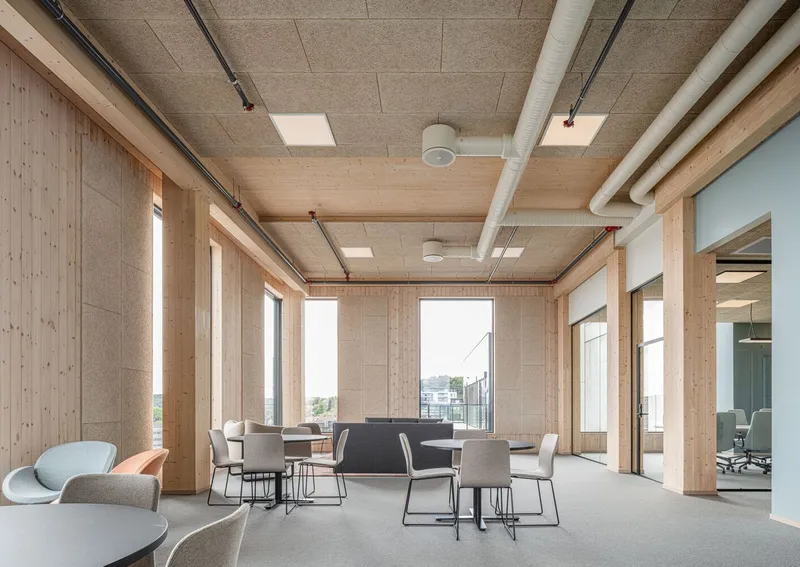
The architectural program for Lumber 4 is clearly defined. The recessed ground floor houses commercial spaces that promote urban interaction and pedestrian accessibility. Above it, five upper floors are devoted to flexible office layouts, creating a dynamic workspace environment.
At the heart of the structure is a mass timber construction, with all columns and beams crafted from glued laminated timber (glulam), offering both structural strength and visual warmth. Floors are constructed from a composite system combining cross-laminated timber (CLT) and concrete, ensuring long-span capabilities while meeting rigorous fire safety and acoustic performance requirements.
Structural and Functional Innovations
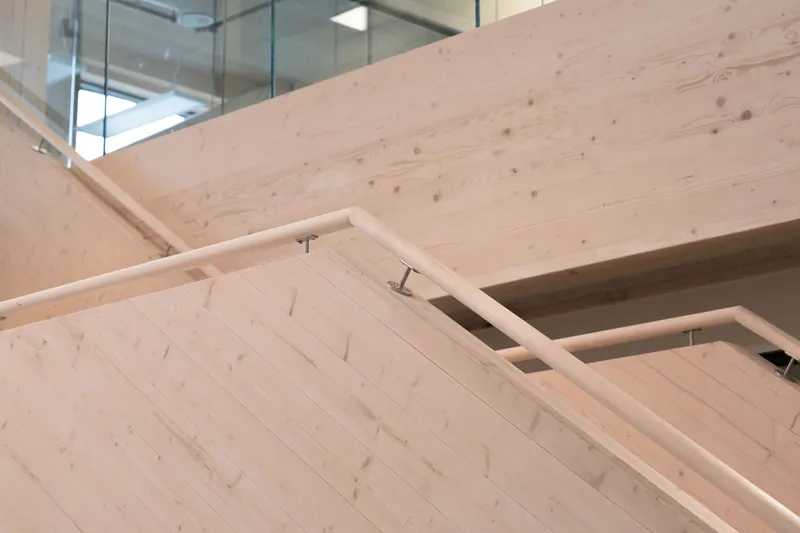
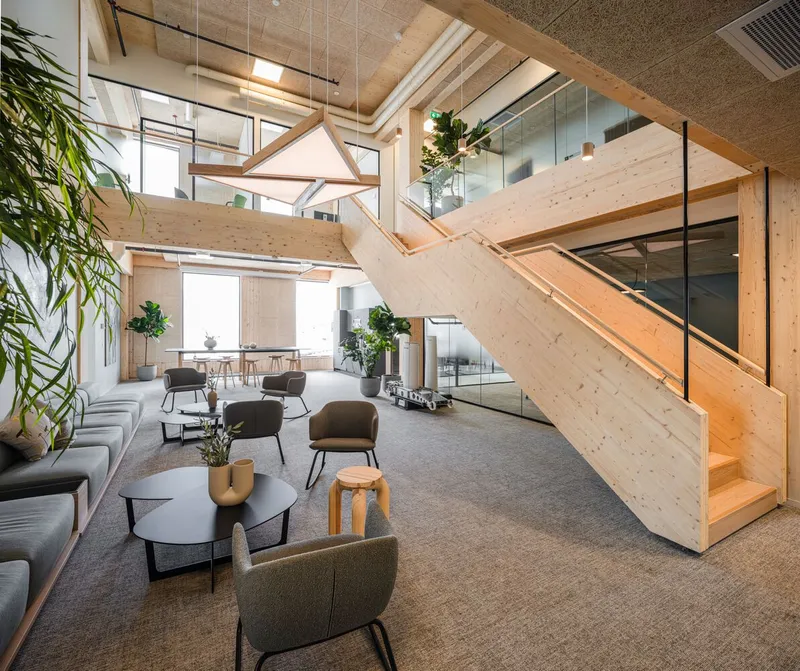
A standout feature of the building is its internal communication core, which connects Lumber 4 with adjacent buildings. This element provides essential lateral stability while also enhancing access between floors. On the third and fourth levels, the architects have inserted a stunning atrium with a mass timber staircase, becoming a central social space filled with natural light and wood textures.
On the ground level, the inclusion of angled supports and diagonals facilitates better vehicular circulation around the perimeter—reflecting a high level of functional and spatial planning.
Sustainable Materials and Climate Response
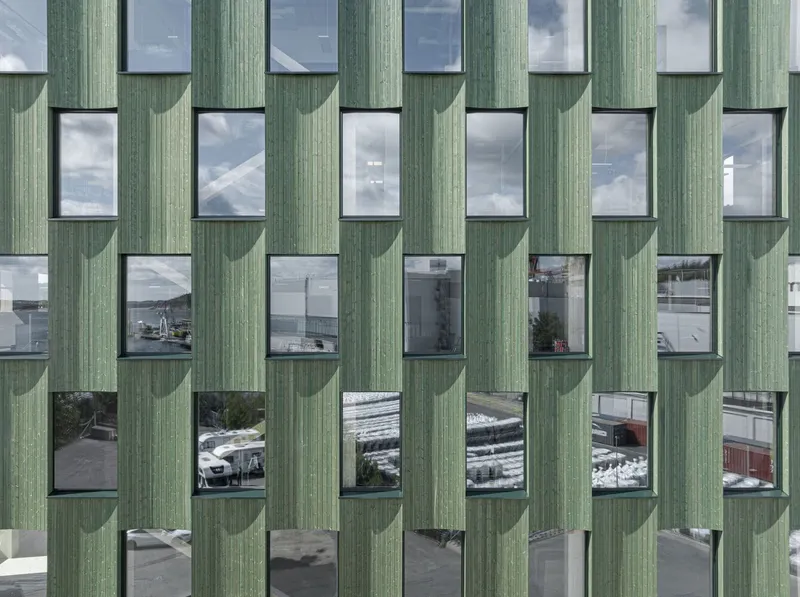
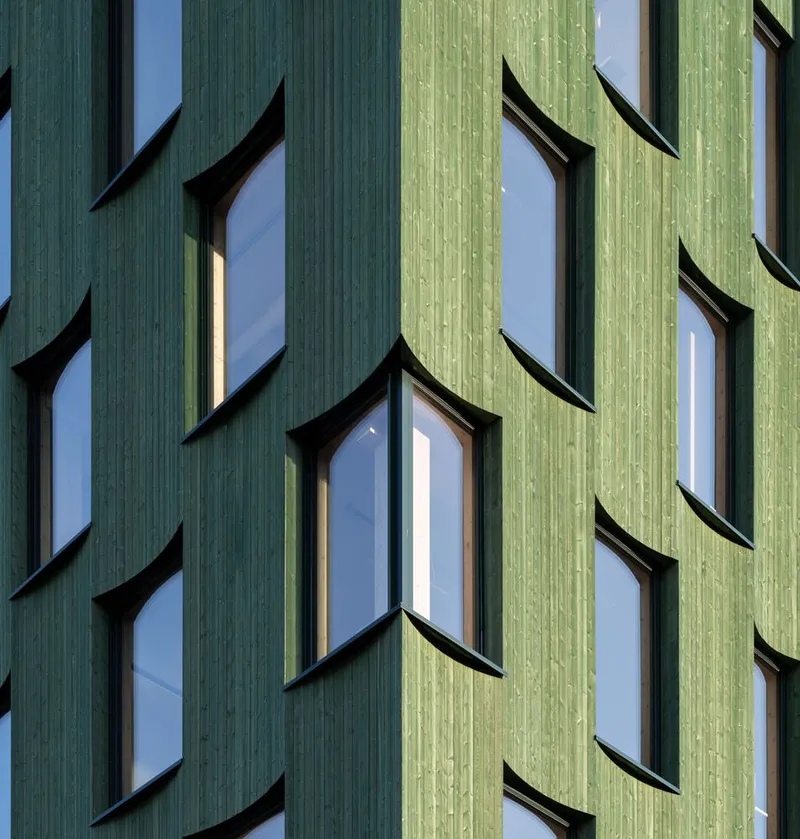
One of Lumber 4’s most notable innovations lies in its sustainable material palette. The entire facade is composed of prefabricated curved pine elements, painted green and treated for durability. These curved modules are paired with straight eaves, casting dynamic shadows that gradually alter the building’s appearance over time. As the paint naturally weathers, the facade evolves—creating a living architectural skin with organic visual transformation.
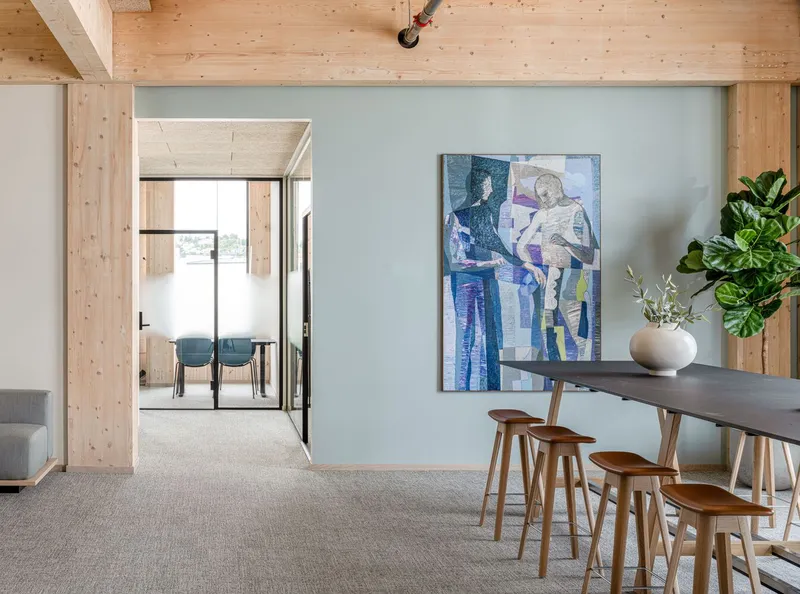
The insulation throughout the building is made of wood fiber, while the exterior is clad in fire-treated pine. Exposed structural elements dominate both the exterior and interior, emphasizing the natural quality of the materials and ensuring transparency in construction. Inside, white-pigmented spruce panels and wood wool acoustic panels balance aesthetics and performance. Light beige-painted conduits remain visible, blending into the design while maintaining easy access.
Interior Design and Environmental Comfort
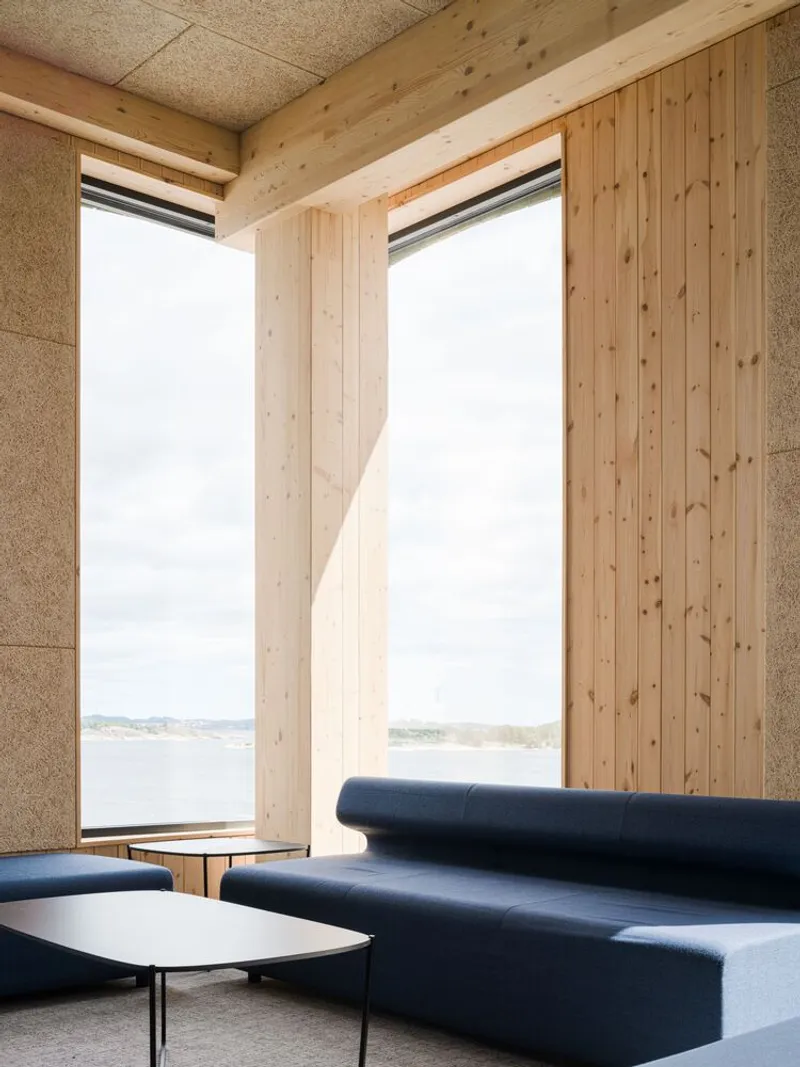
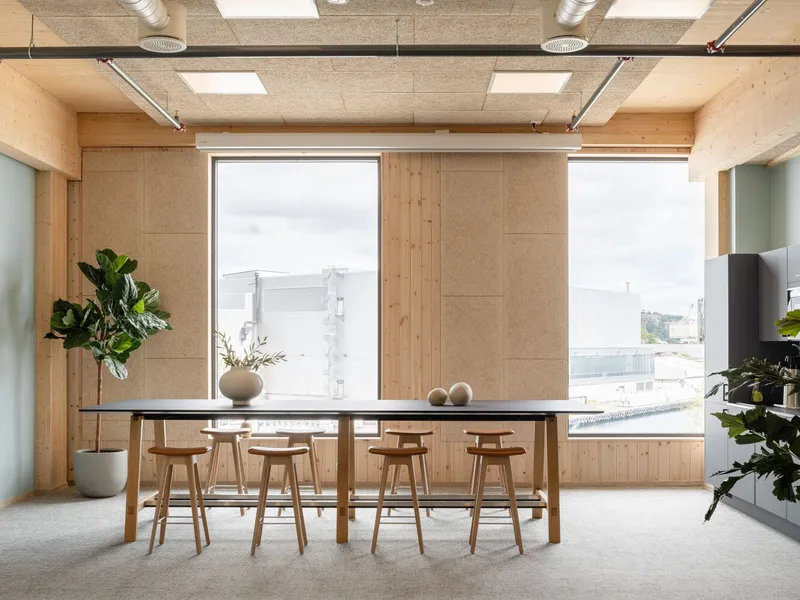
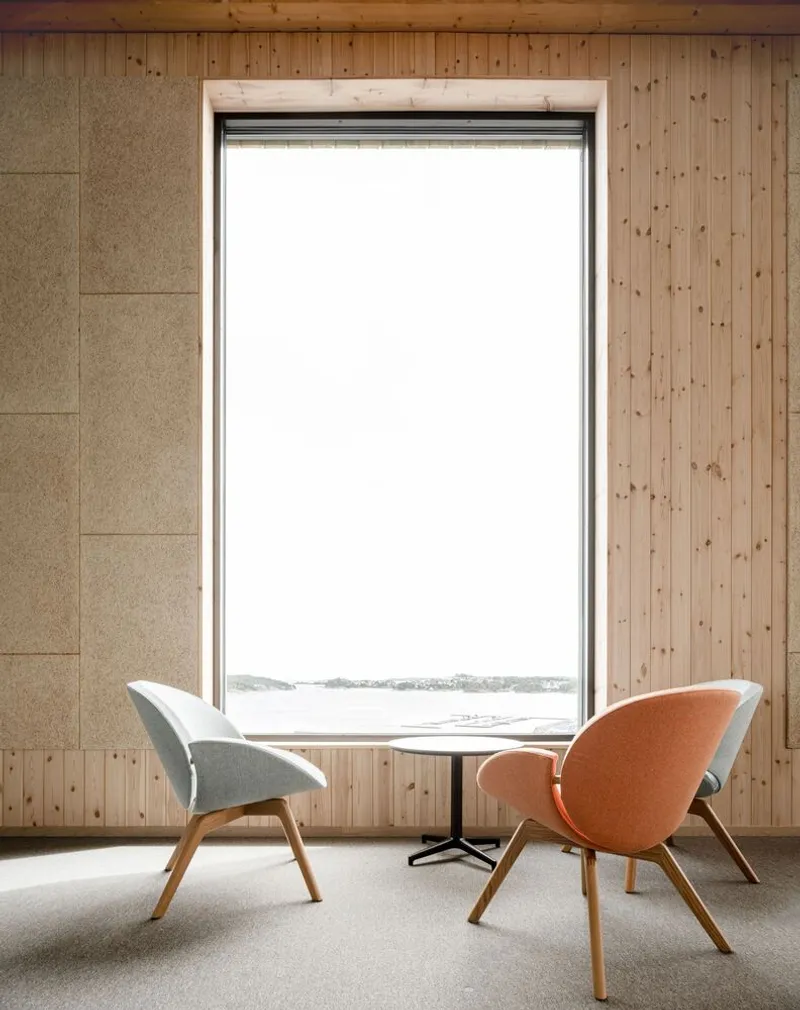
Beyond its structural and ecological merits, Lumber 4 is a warm, welcoming space for its users. Large floor-to-ceiling windows frame views of the surrounding landscape while drawing in generous daylight. Exposed wood surfaces regulate temperature naturally—providing thermal comfort in both summer and winter without relying heavily on mechanical systems.
Meeting rooms and service areas are acoustically optimized using natural materials, while open-plan office floors remain flexible for diverse tenant needs. The combination of biophilic design, natural ventilation, and material honesty creates a work environment that prioritizes well-being and productivity.
Efficiency and Market Impact
Despite its complexity, the entire project—from planning to completion—was realized in just 12 months. This rapid execution showcases how timber buildings can not only rival traditional concrete and steel structures in performance but also outpace them in efficiency and environmental impact.
By the time construction wrapped, 90% of the office spaces were already leased, underlining the growing demand for sustainable and design-forward commercial environments. Oslotre Architects served not only as the lead designers but also as interior architects and timber structural engineers, demonstrating a comprehensive and integrated design approach.
A Future-Facing Timber Typology
Lumber 4 by Oslotre Architects is more than a building—it’s a bold architectural statement on the potential of mass timber construction in the commercial sector. By harmonizing technical innovation, sustainable materials, and human-centered design, this project reflects the future of green urban development.


Popular Articles
Popular articles from the community


Cloaked Colonization: A Mobile Underwater Habitat That Moves Like a Fish
Micah Abaya's shortlisted EHC Pacific entry reimagines ocean settlement as a dispersed network of self-sustaining architectural organisms.

Tsunami Convergenics: Turning Catastrophic Ocean Forces into Underwater Housing Infrastructure
A speculative underwater settlement off the coast of Onagawa, Japan, treats tsunamis and typhoons as energy sources rather than threats.

Singing Woman: Contemporary Architecture Inspired by Estonia’s Voice and the Sea
Singing Woman turns Estonia’s song culture into flowing opera house architecture, blending public life, landscape, sea, and national memory.

Manzana Morphosis: Stretching Barcelona's Grid into a Living Landscape for 2050
A radical reworking of the Eixample manzana turns density into a tool for generous public space, vertical ecology, and environmental performance.

Similar Reads
You might also enjoy these articles


Hodi-Mandai Geram
Project Function: Preservation and revitalization of the Intangible heritage and socio-spatial identity of the Hodi by Housing, Cultural Memory Center, Sacred Grove, landscape, local tourism economy


Olio Towers: A Mid-Rise for Performers That Fuses Housing, Rehearsal, and Stage
Located blocks from Houston's Theater District, this modular tower stacks living units around a central performance atrium.

Oasis: Modular Green Housing Carved into Dhaka's Urban Fabric
A shortlisted Plugin Housing entry reclaims unauthorized settlements in Dhaka with stepped concrete volumes, green roofs, and ventilation-driven design.

Black Hole: A Floating Megastructure for the Post-Physical Era
Emiliano Mazzarotto envisions a spherical, self-scaling arena where e-sports, digital hotels, and holographic stadiums replace traditional public space.

Explore Wood Construction Competitions
Discover active competitions in this discipline

Challenge to reimagine the Iron Throne

Photograph architecture without architects

Illustrate the lost glory of Angkor Wat - Render Challenge

Design challenge to reuse E-waste
Comments (0)
Please login or sign up to add comments
No comments yet. Be the first to comment!