
Luna House by Pezo von Ellrichshausen – Monumental Architecture at the Foot of the Andes
Luna House by Pezo von Ellrichshausen redefines monumental living in Chile, blending concrete forms, courtyards, and Andes landscapes into architecture.


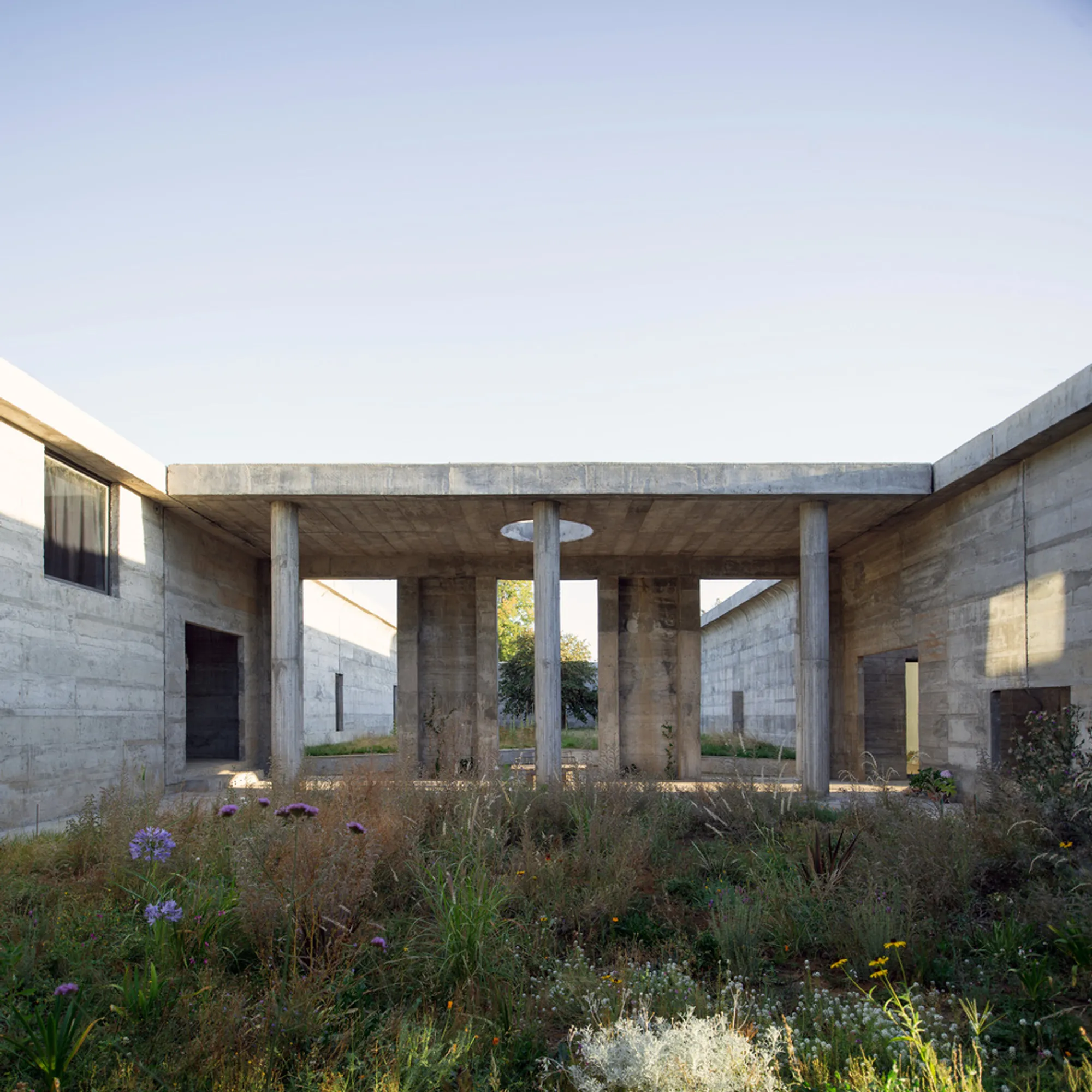
Nestled in the landscapes of Yungay, Chile, the Luna House by Pezo von Ellrichshausen is a striking architectural landmark completed in 2022. Spanning 2,400 m², the project transcends the conventional definition of a house, blending qualities of a residence, museum, and cloister into one monumental spatial experience.
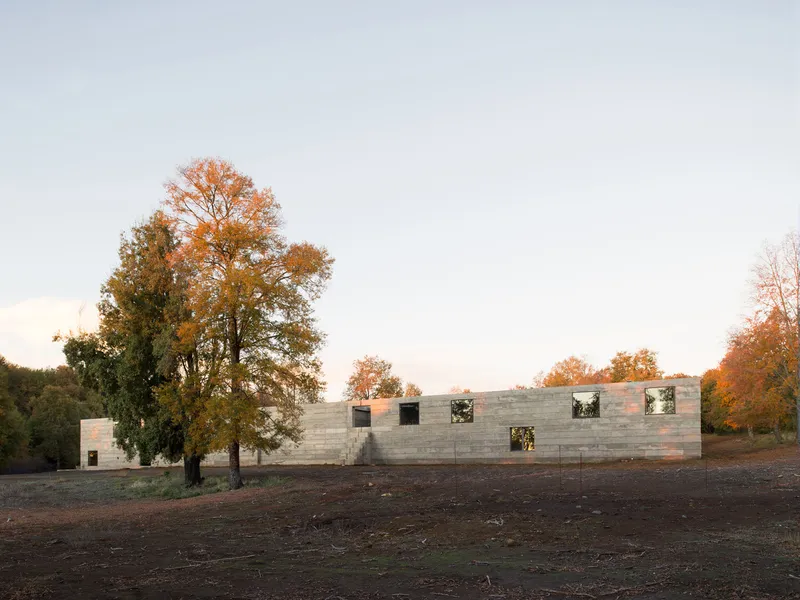
Positioned at the foot of the Andes mountain range, Luna House is conceived as a collection of twelve interconnected buildings, separated by visible seismic joints. This unique structural composition transforms the project into a series of massive concrete blocks, creating both unity and fragmentation. The architects deliberately blur the line between domesticity and monumentality, suggesting that to call it simply a “house” is too limiting, while calling it a “museum” would be too modest.

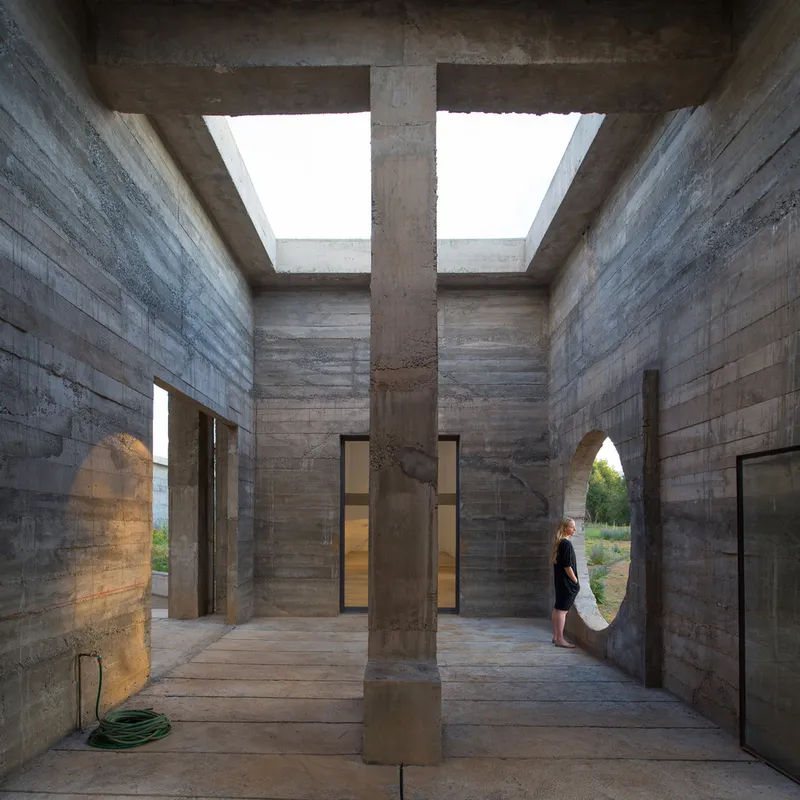
The building’s plan follows a square footprint divided by an asymmetrical cross, organizing a sequence of rooms arranged around four distinct courtyards. Each courtyard presents a unique spatial and natural relationship:
- A long courtyard aligned with the rising and setting sun, following the natural slope of the land.
- A flat northern courtyard marked by a water stream, connecting a solitary hazelnut tree with two triangular edges.
- A circular courtyard featuring a vibrant flower garden, emphasizing directionless serenity.
- A vast courtyard, nearly the size of a traditional Chilean medialuna bullring, with a pond and mature trees, from which the house derives its name.
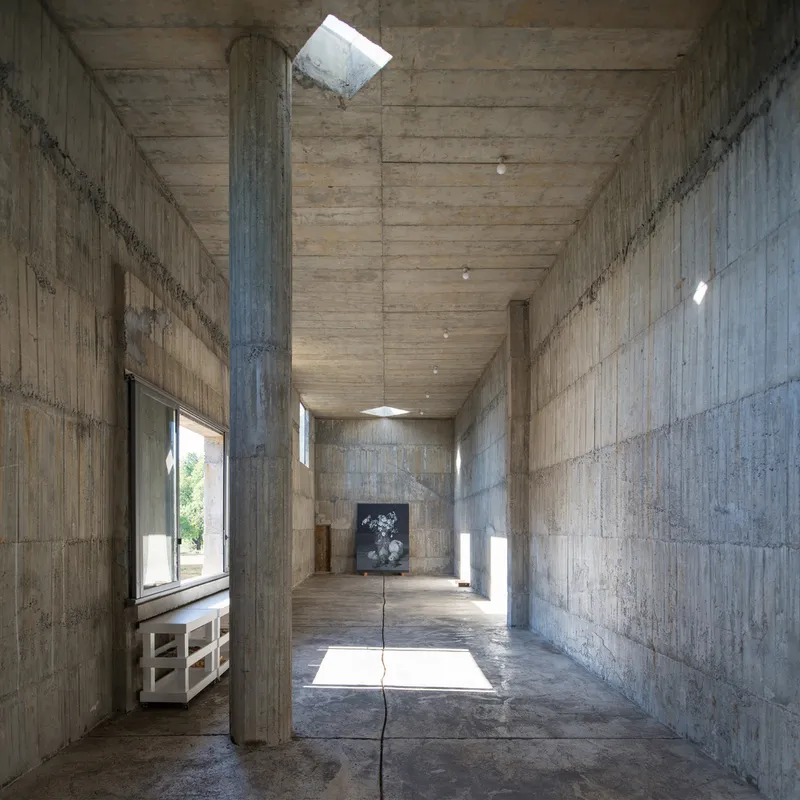
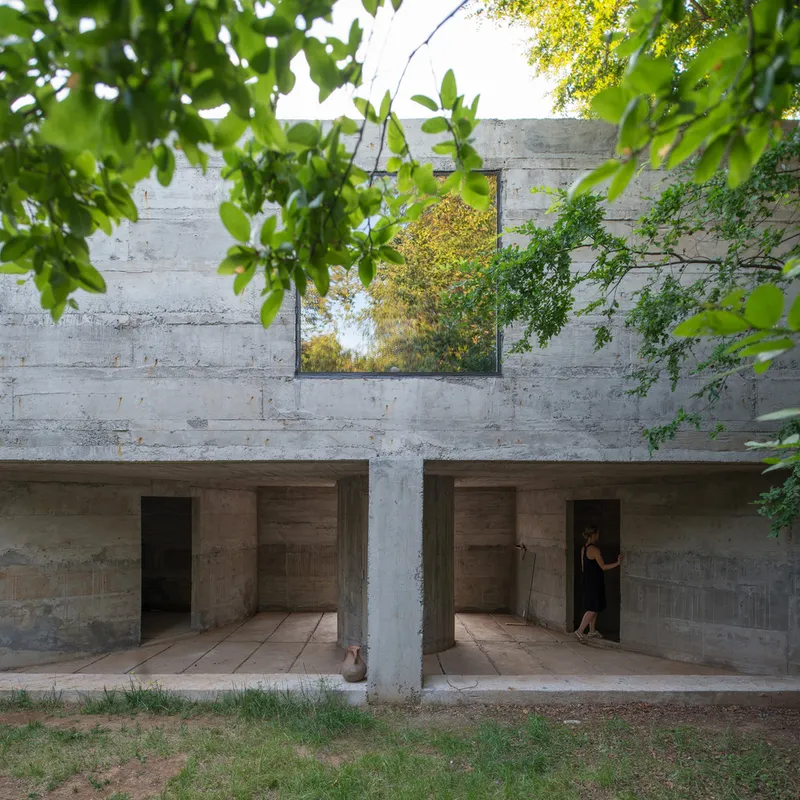
This careful choreography of interior and exterior spaces blurs distinctions between living, working, and contemplation, allowing areas for painting, writing, or gardening to coexist seamlessly with residential functions. Openings in multiple directions provide shifting atmospheres of intimacy, weight, emptiness, and monumental presence.
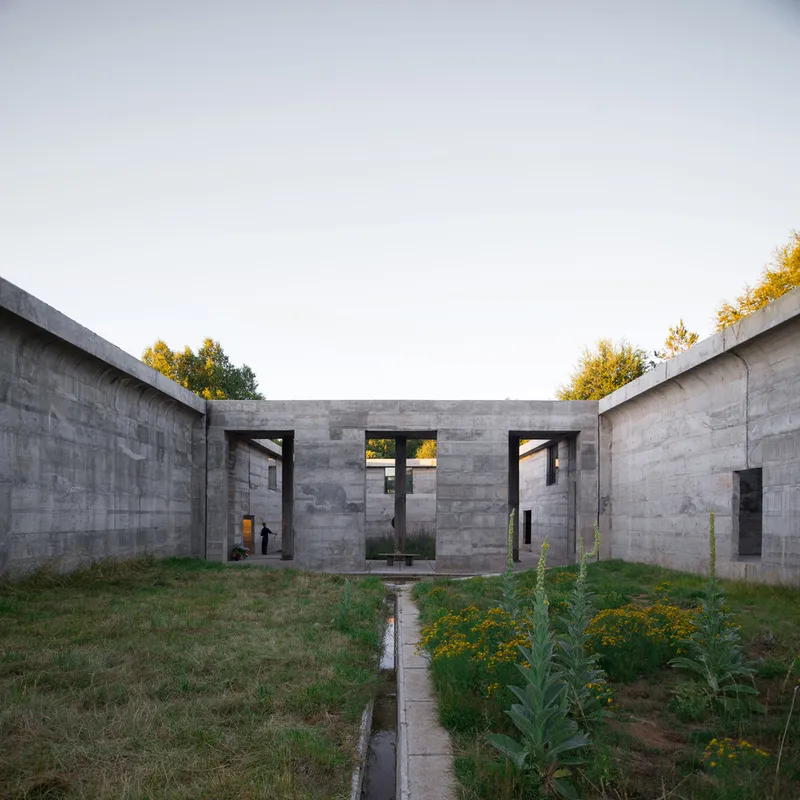
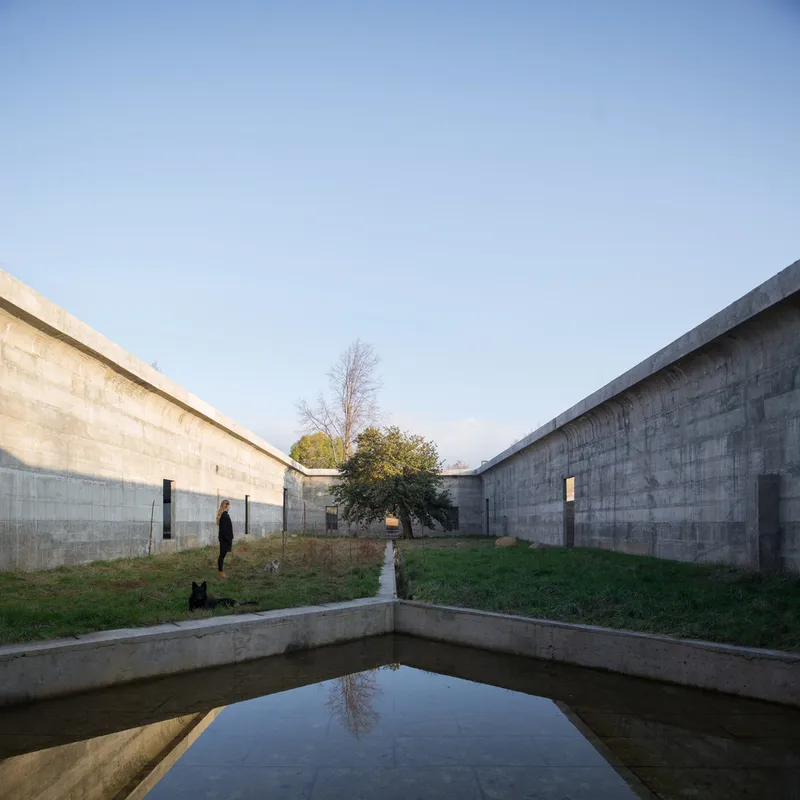
The architecture emphasizes horizontality through its extended rooflines and subtle transitions from one to two levels. Despite its handcrafted concrete walls being relatively thin, the structure conveys a fortified and monumental character, softened by details such as cornices, eaves, and rounded courtyard edges. The resulting design balances brutal materiality with poetic spatial sequences, offering a powerful meditation on architecture, landscape, and human experience.



Popular Articles
Popular articles from the community


AL-JANNAH: Sustainable Architecture and Permaculture for Afghan Widows
AL-JANNAH uses sustainable architecture and permaculture to create resilient oasis of housing, learning, work and renewal for Afghan widows.

Riyadh For All: Intergenerational Urban Design for Active Aging in Rabat
Riyadh For All reimagines urban design in Rabat with intergenerational co-living, adaptive courtyards, and Moroccan cultural exchange today.

The Earth Pod: 3D Printed Homes for Resilient Refugee Communities
The Earth Pod reimagines refugee housing through 3D printed homes made from clay, combining resilience, self-sufficiency, and rapid shelter.

Hill & Cross Opera: Sculptural Opera House Architecture Shaped by Tallinn’s Landscape and Identity
Hill & Cross Opera reimagines opera house architecture in Tallinn through its sculptural hill, civic plaza, glass wave and a luminous cross.


Similar Reads
You might also enjoy these articles


Hodi-Mandai Geram
Project Function: Preservation and revitalization of the Intangible heritage and socio-spatial identity of the Hodi by Housing, Cultural Memory Center, Sacred Grove, landscape, local tourism economy


Olio Towers: A Mid-Rise for Performers That Fuses Housing, Rehearsal, and Stage
Located blocks from Houston's Theater District, this modular tower stacks living units around a central performance atrium.

Oasis: Modular Green Housing Carved into Dhaka's Urban Fabric
A shortlisted Plugin Housing entry reclaims unauthorized settlements in Dhaka with stepped concrete volumes, green roofs, and ventilation-driven design.

Black Hole: A Floating Megastructure for the Post-Physical Era
Emiliano Mazzarotto envisions a spherical, self-scaling arena where e-sports, digital hotels, and holographic stadiums replace traditional public space.


Explore Architecture Competitions
Discover active competitions in this discipline



Challenge to reimagine the Iron Throne


Photograph architecture without architects


Illustrate the lost glory of Angkor Wat - Render Challenge


Design challenge to reuse E-waste
Comments (0)
Please login or sign up to add comments
No comments yet. Be the first to comment!