

Macieiras House by Mateus Castilho and Patricia Bueno: Nature-Integrated Residential Design in Nova Lima
Casa Macieiras integrates wood and concrete, blending intimate and social spaces with nature, preserving privacy, light, and thermal comfort.


Located in the serene Ouro Velho Mansões neighborhood of Nova Lima, Brazil, Macieiras House was designed by architects Mateus Castilho and Patricia Bueno in 2021. Covering 280 m², this private residence offers a cozy, practical, and nature-integrated living environment while maintaining proximity to the vibrant center of Belo Horizonte.
Contextual Design in Nova Lima’s Southern Sector
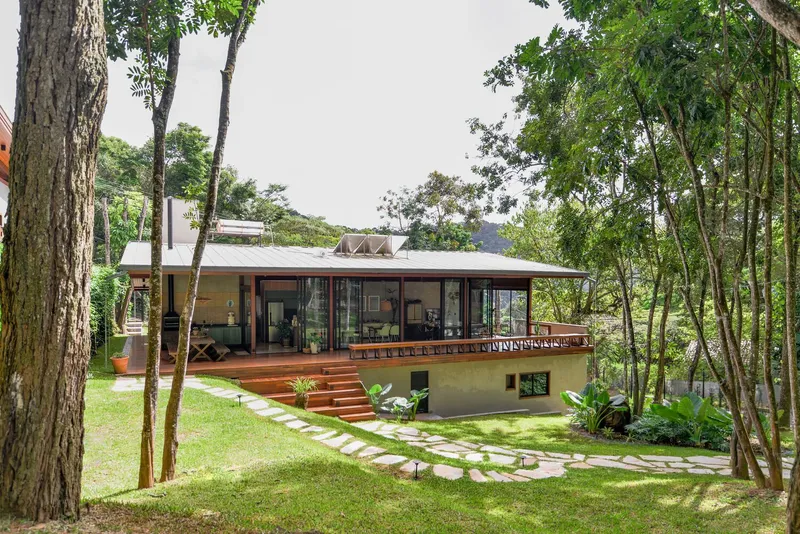
The house responds to the rapid urban growth of Belo Horizonte’s southern sector, which intersects various upscale condominiums in Nova Lima. The family sought a home that combines tranquil living with urban convenience, surrounded by lush landscapes. The site’s location near the preserved Mata do Jambreiro, encompassing both cerrado and Atlantic Forest biomes, provides direct access to 912 hectares of rich vegetation, ensuring seamless integration with local fauna and flora.
Site Constraints and Legal Considerations
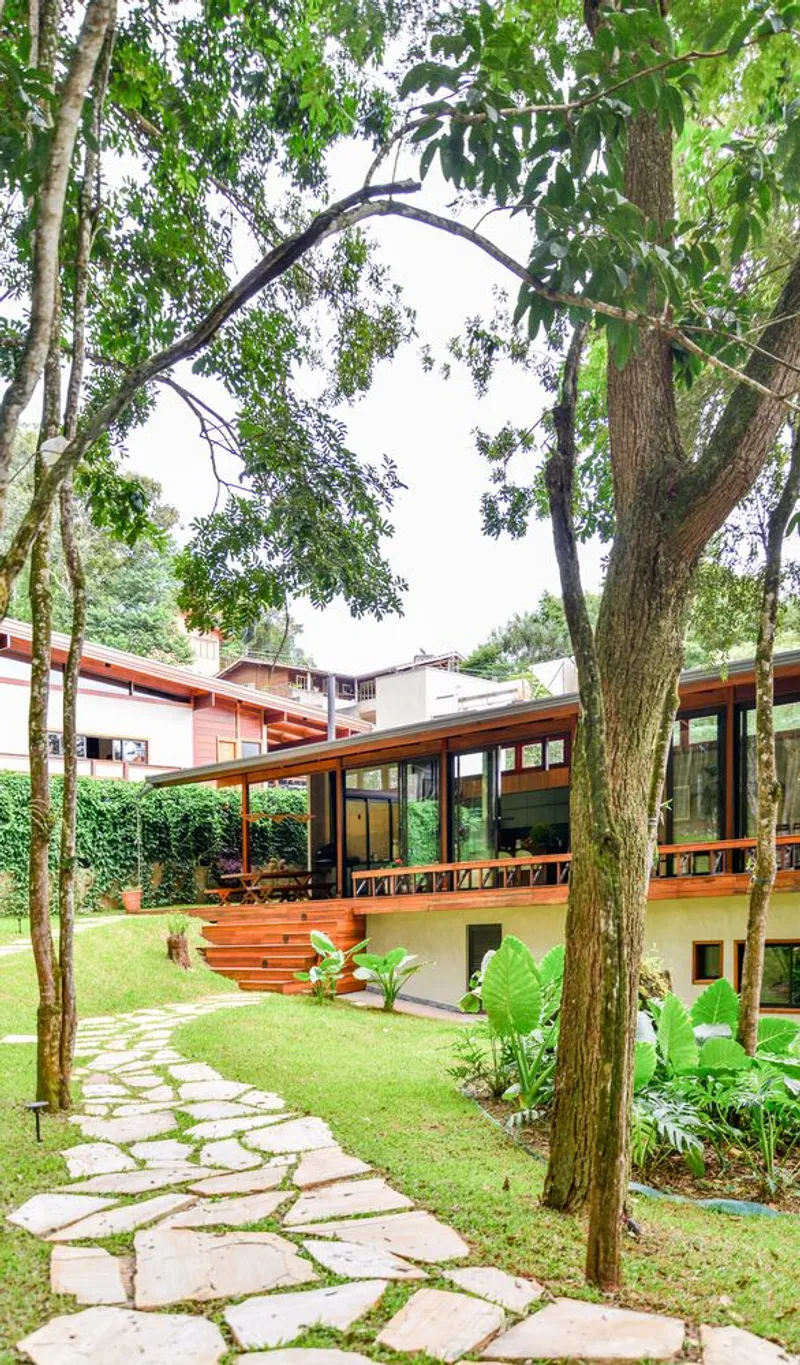
Two legal restrictions shaped the design. Firstly, a servitude area for a high-voltage Cemig line limited the buildable area to 21 meters from the sidewalk to the start of the non-building strip. Secondly, tree species preservation requirements mandated by the State Environmental Secretariat of Minas Gerais influenced construction zones. These constraints guided the careful placement of the house while prioritizing environmental sensitivity.
Innovative Materiality and Prefabrication
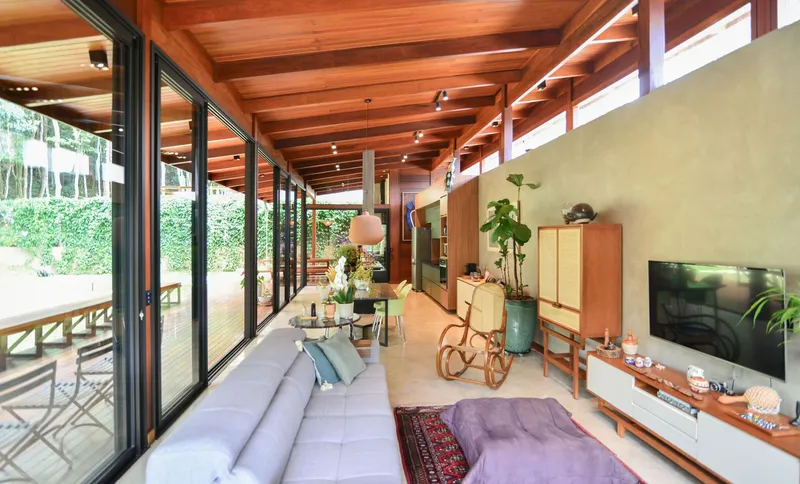
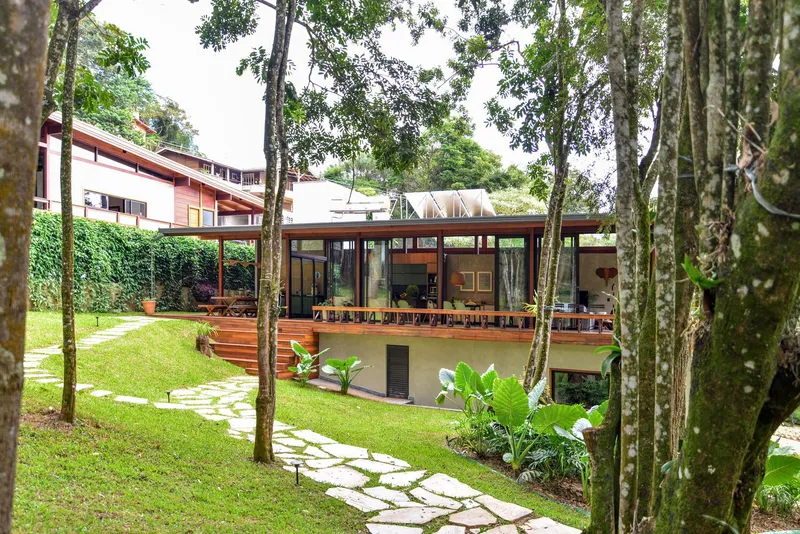
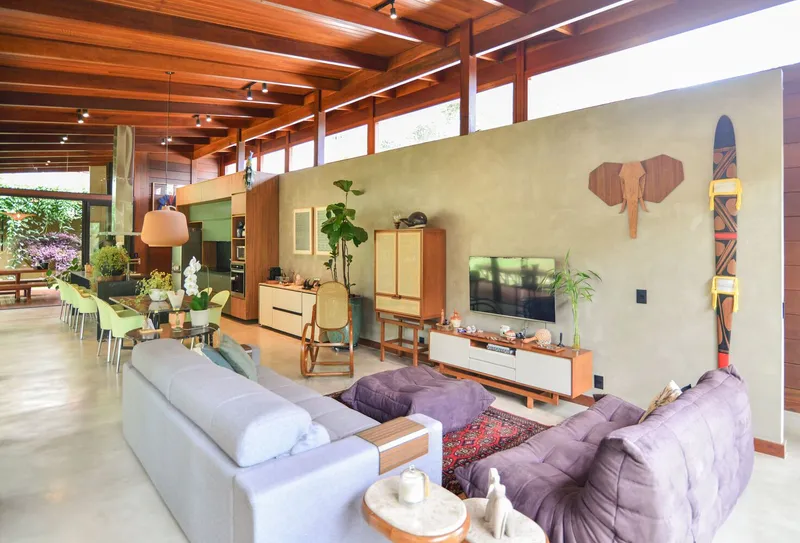
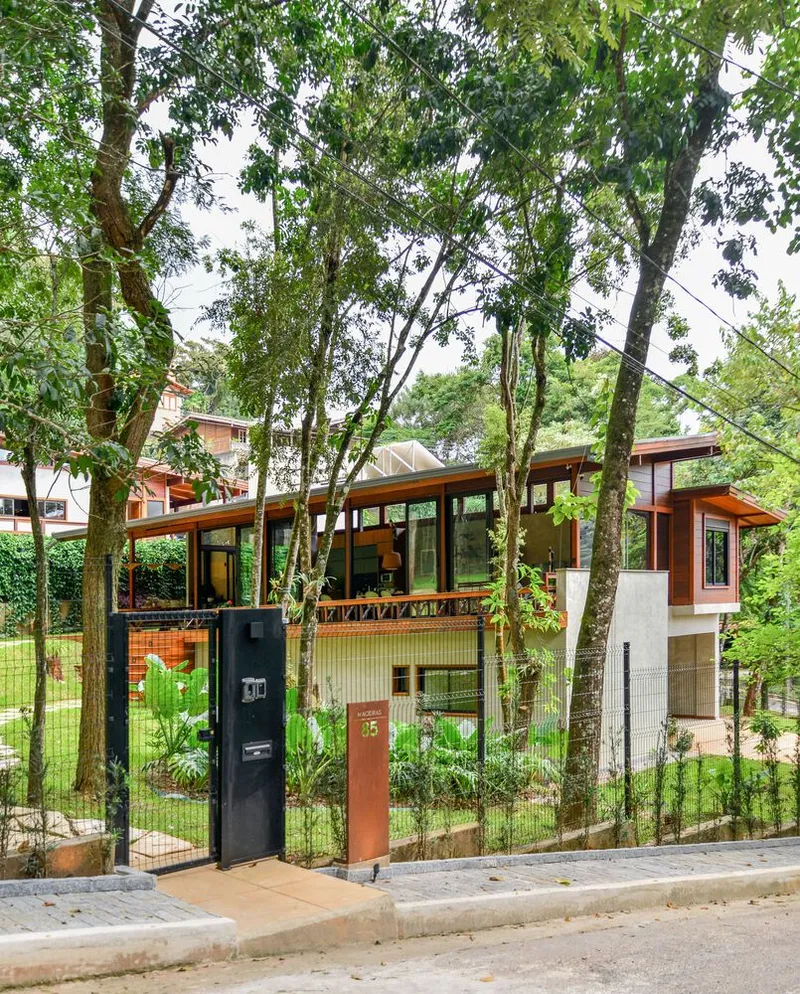
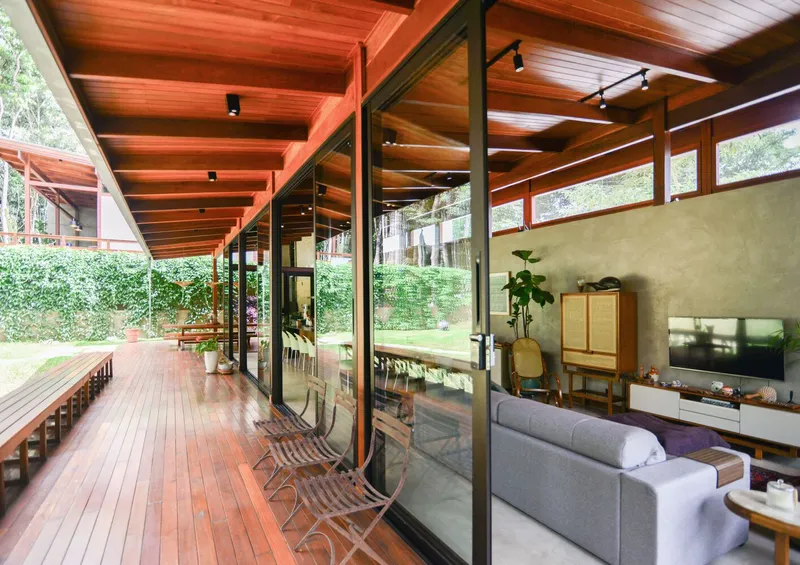
Wood emerged as the primary construction material, balancing construction agility with aesthetic warmth. The second floor uses prefabricated wooden elements, while wooden beams define roof openings, providing rhythm and visual continuity. Beyond its visual appeal, wood acts as a natural thermal insulator, maintaining ideal indoor temperatures throughout the year.
The first floor was constructed in reinforced concrete, while wet areas and the water tank tower combined concrete with masonry block sealing. The main slab employs a precast reinforced concrete system with expanded polystyrene fillings, accelerating construction while minimizing waste.
Architectural Composition and Spatial Planning
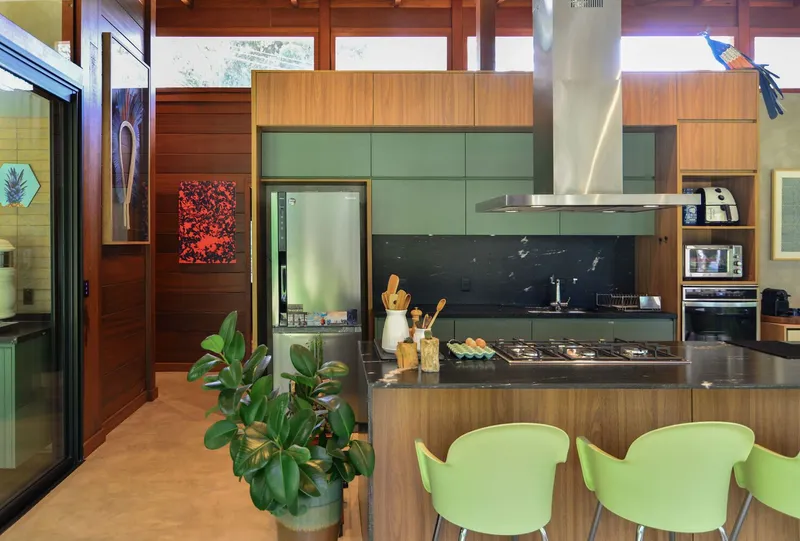
The roof design features two large, inclined planes with differing slopes, finished with thermoacoustic trapezoidal tiles. This configuration elevates the social area above the intimate zones, allowing zenithal lighting to illuminate circulation spaces naturally. As a result, the home is consistently well-lit with daylight, enhancing energy efficiency and indoor comfort.
Intimate vs. Social Spaces
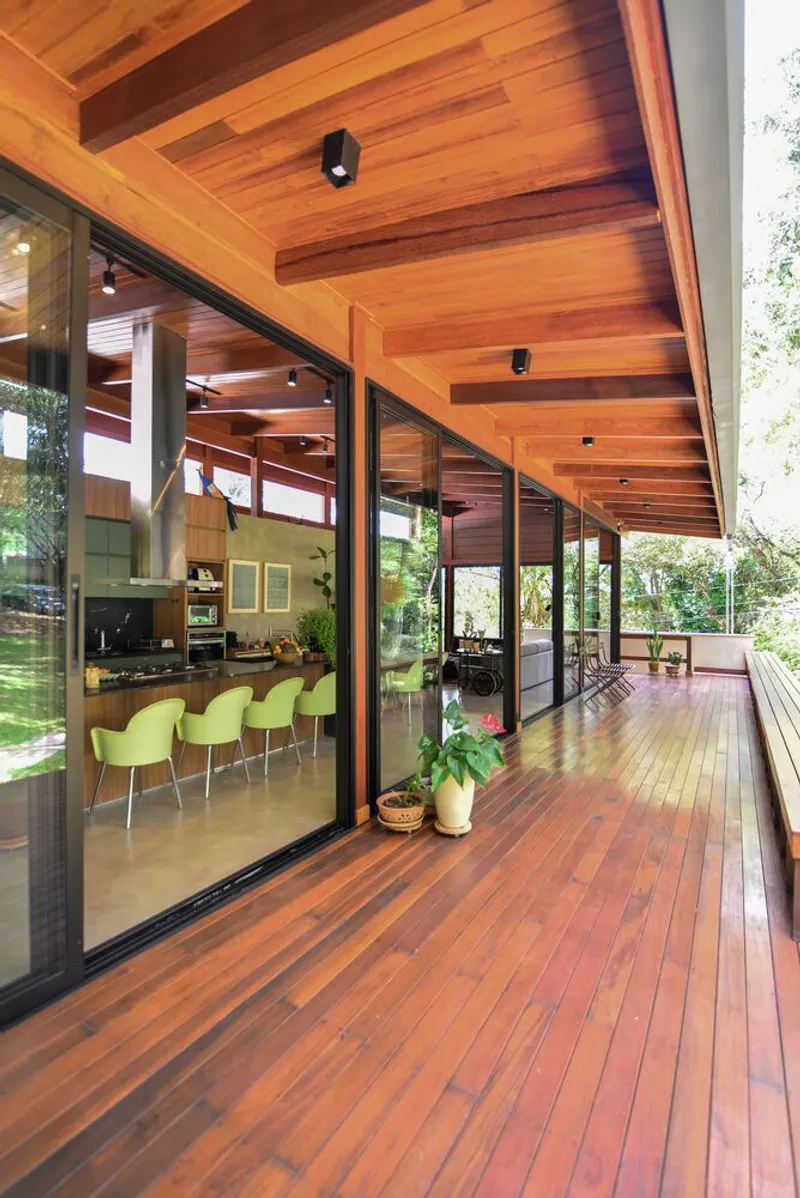
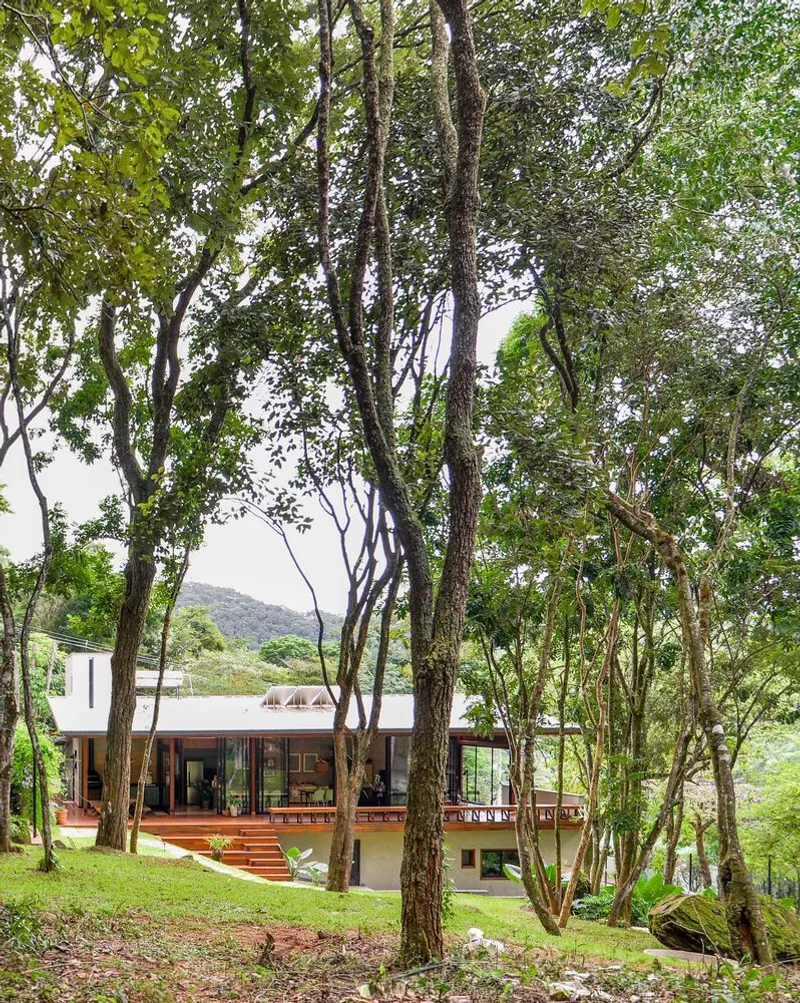
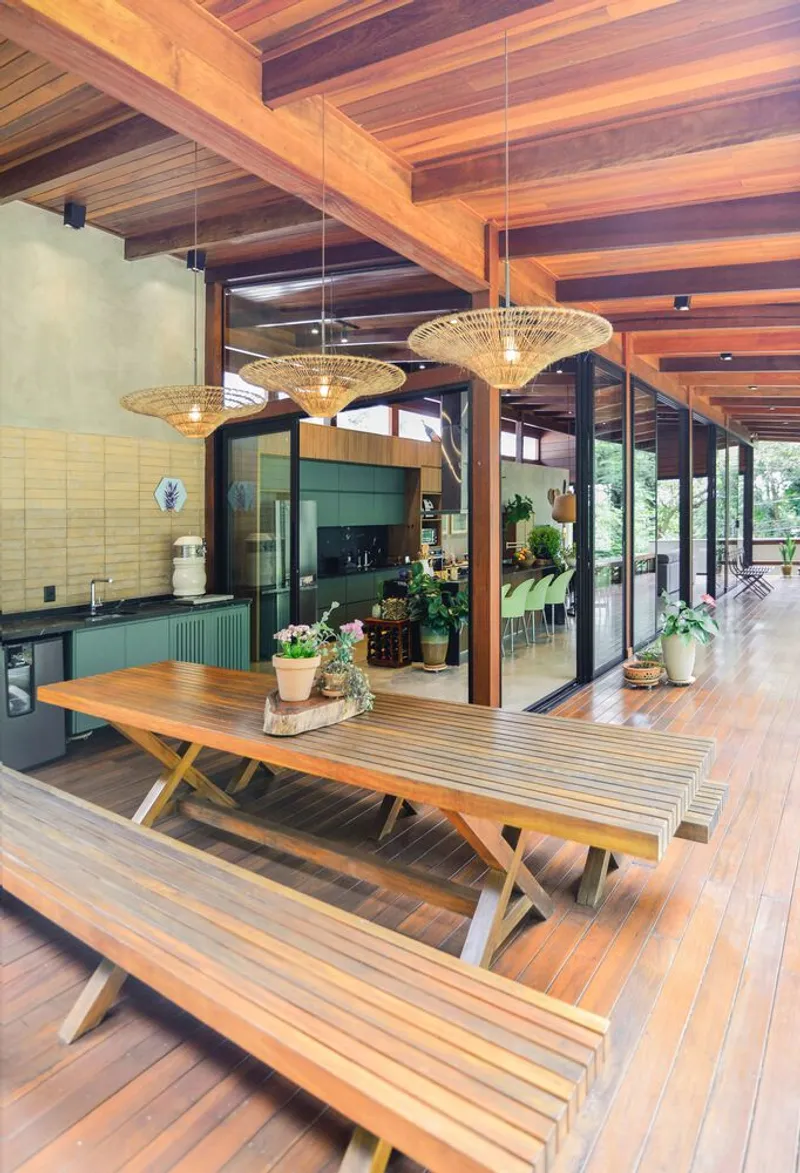
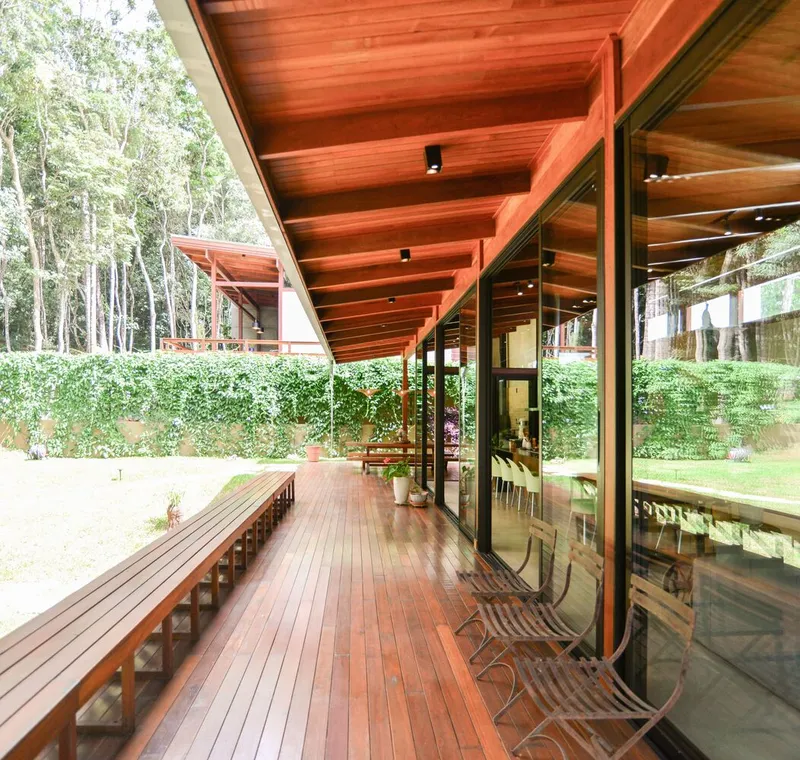
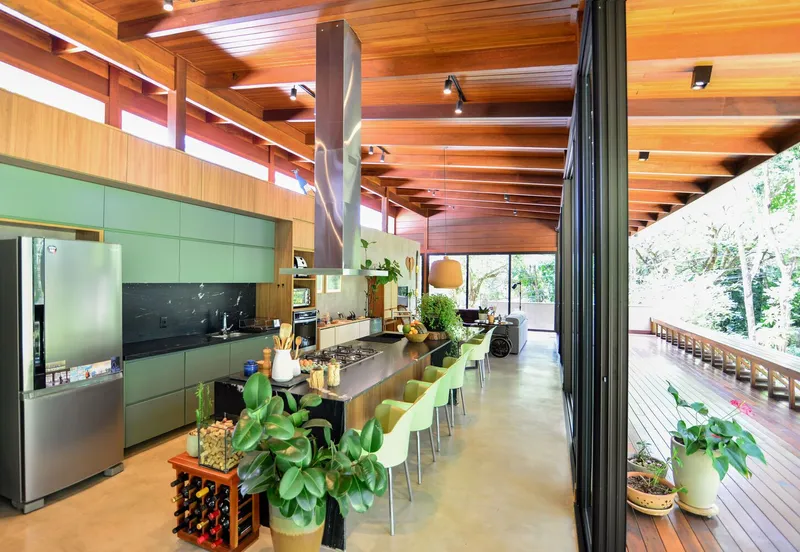
The house’s design differentiates private and public zones through materiality and facade articulation. Bedrooms and wet areas are strategically enclosed for privacy, while the social area opens fully to the southern portion of the lot. Expansive glazing ensures seamless interaction with the surrounding garden and preserved Atlantic Forest. A 2-meter deep eave shelters a veranda, offering a family gathering space immersed in nature while maintaining solar protection.
Connection to Nature and Surroundings
Macieiras House emphasizes indoor-outdoor integration, maximizing views of native vegetation and providing a calm, restorative environment. Its careful siting respects existing trees and local ecology, reinforcing the architects’ commitment to sustainability and environmental harmony.
Macieiras House exemplifies a thoughtful balance between modern architecture, sustainable design, and nature integration. By combining wood and concrete, differentiating private and social areas, and responding to legal and environmental site constraints, the residence provides a serene, comfortable, and visually engaging living experience close to Belo Horizonte.
All photographs are works of
Ronaldo Melo


Popular Articles
Popular articles from the community


Manzana Morphosis: Stretching Barcelona's Grid into a Living Landscape for 2050
A radical reworking of the Eixample manzana turns density into a tool for generous public space, vertical ecology, and environmental performance.

Aquadapt: An Underwater Habitat That Rewrites Its Rooms by the Hour
Curved modules ring the seabed while one shell shifts from breakfast room to cinema, farm and football pitch as residents' needs change.

Opera on the Sea: Driftwood Logic Shapes a Timber Opera House on Estonia's Coast
Trevor Orgill's opera house translates the entangled drift of floating timber into a civic building where wood, water, and music converge.


ETEH Reworks the Shared Spaces of São Domingos School in Brazil Around Timber, Color and Hanging Plants
At São Domingos School in Brazil, 436 m² of hall, refectory and library are recast with timber joinery, a yellow and blue code and trailing greenery.

Similar Reads
You might also enjoy these articles

Bamboo Housing Challenge 2026: Design Affordable, Sustainable Homes Using Bamboo
An international design competition by Bamboo U and IBUKU inviting architects and designers to reimagine affordable housing using bamboo — with the winning design built full-scale in Bali.

Computational Design & Education: Beegraphy Design Awards Introduces 7th Category (Featuring Jiyun's Innovative Approach)
Dive into Beegraphy’s 7th Design Awards category, where computational design meets education to create immersive, interactive learning tools, inspired by Jiyun’s work.

From Parametric Lighting to Urban Furniture: Join the 2nd Workshop in Beegraphy’s Computational Design Series
Dive into Cutting-Edge Design Techniques and Practical Applications with Industry Experts

Last Call: Unleash Your Architectural Genius in SHAK's Kindergarten Design Competition
Urgent call for architects to join SHAK's kindergarten design competition before the looming deadline

Explore Housing Competitions
Discover active competitions in this discipline

Challenge to reimagine the Iron Throne

Photograph architecture without architects

Illustrate the lost glory of Angkor Wat - Render Challenge

Design challenge to reuse E-waste
Comments (0)
Please login or sign up to add comments
No comments yet. Be the first to comment!