
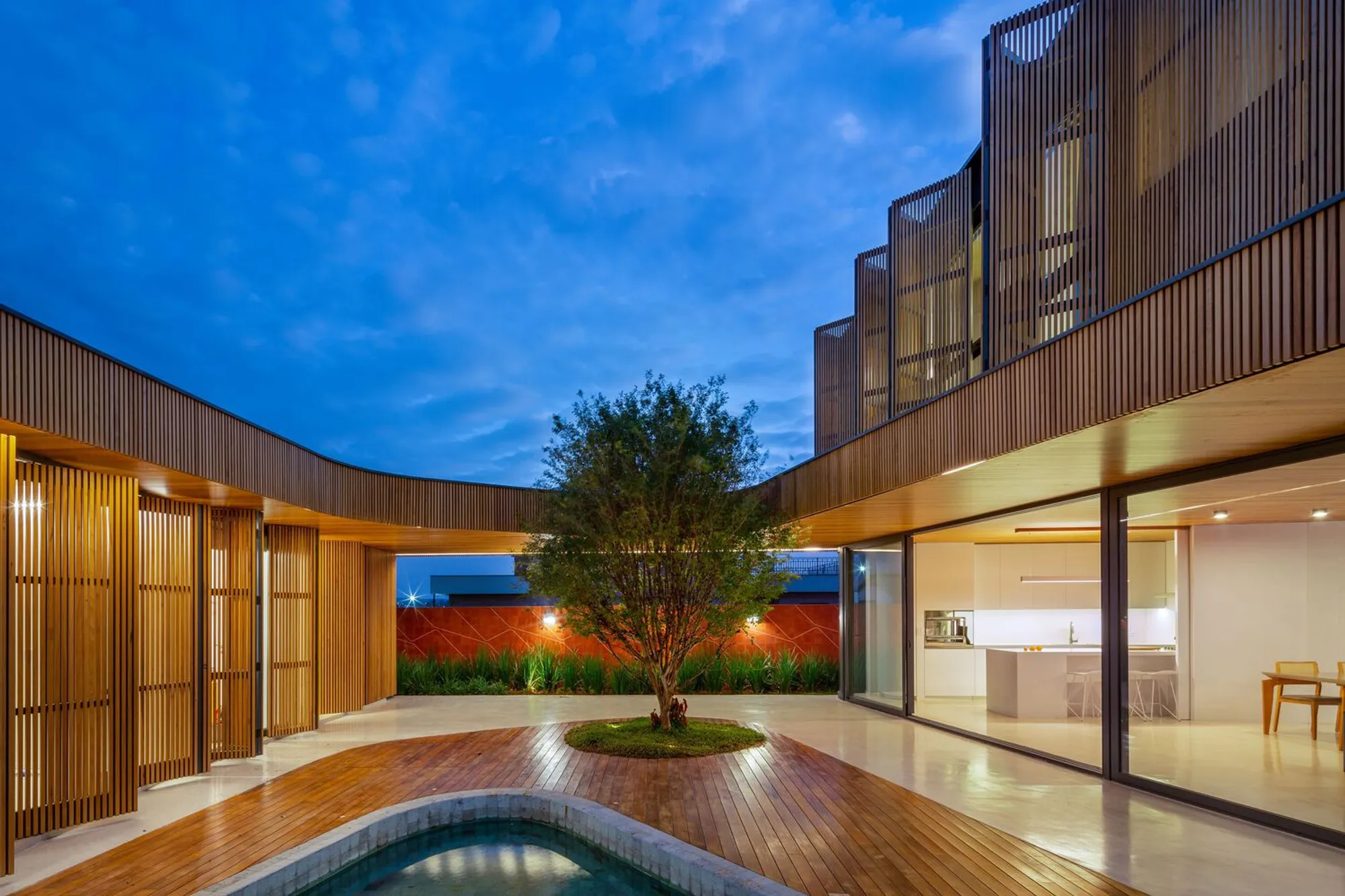
Mandacaru House by Arquitetura Nacional: A Courtyard Oasis of Family, Form, and Function
Mandacaru House blends nature, privacy, and family living with modern Brazilian architecture, featuring a central courtyard and natural materials.


A Home Designed for Family, Gatherings, and Connection to Nature
Named after the resilient Mandacaru cactus, symbolizing joy and family unity in Brazilian culture, the Mandacaru House is a project that balances intimacy and openness, tailored for a family of four that frequently hosts extended family and friends. Designed by Arquitetura Nacional, the residence reflects a commitment to warmth, social interaction, and architectural clarity.
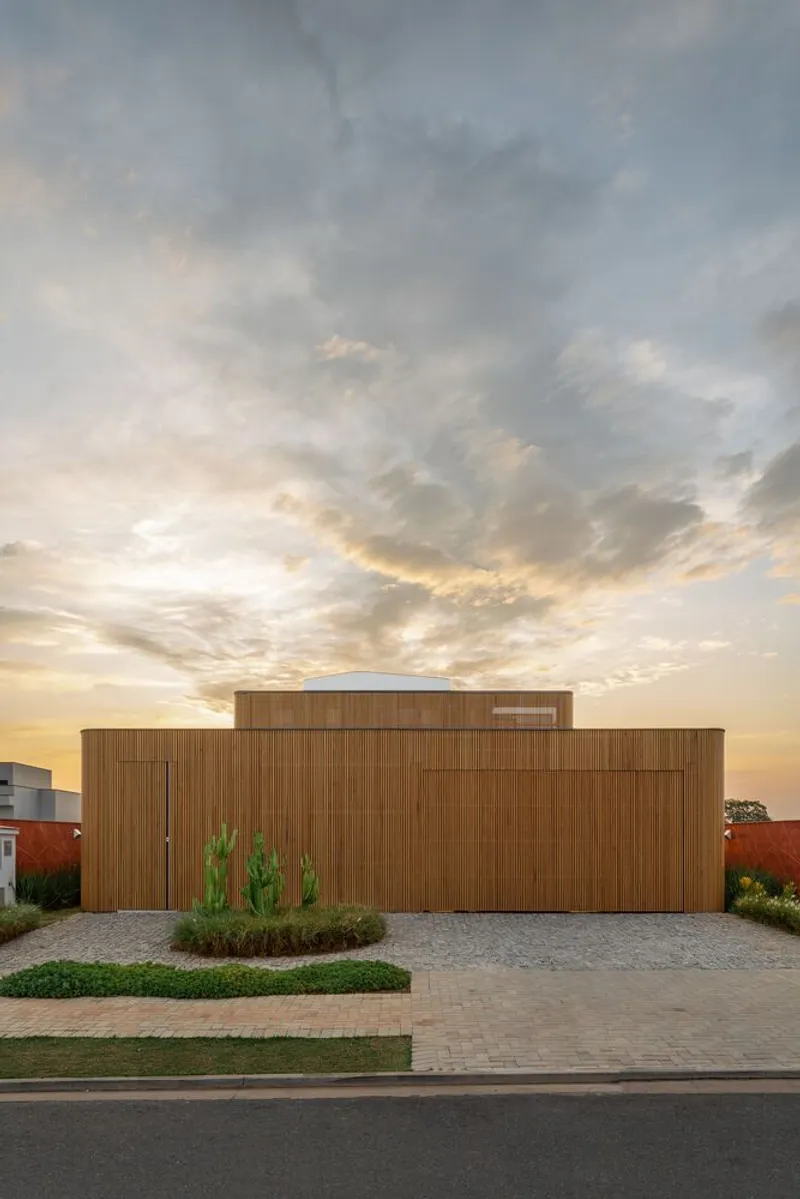
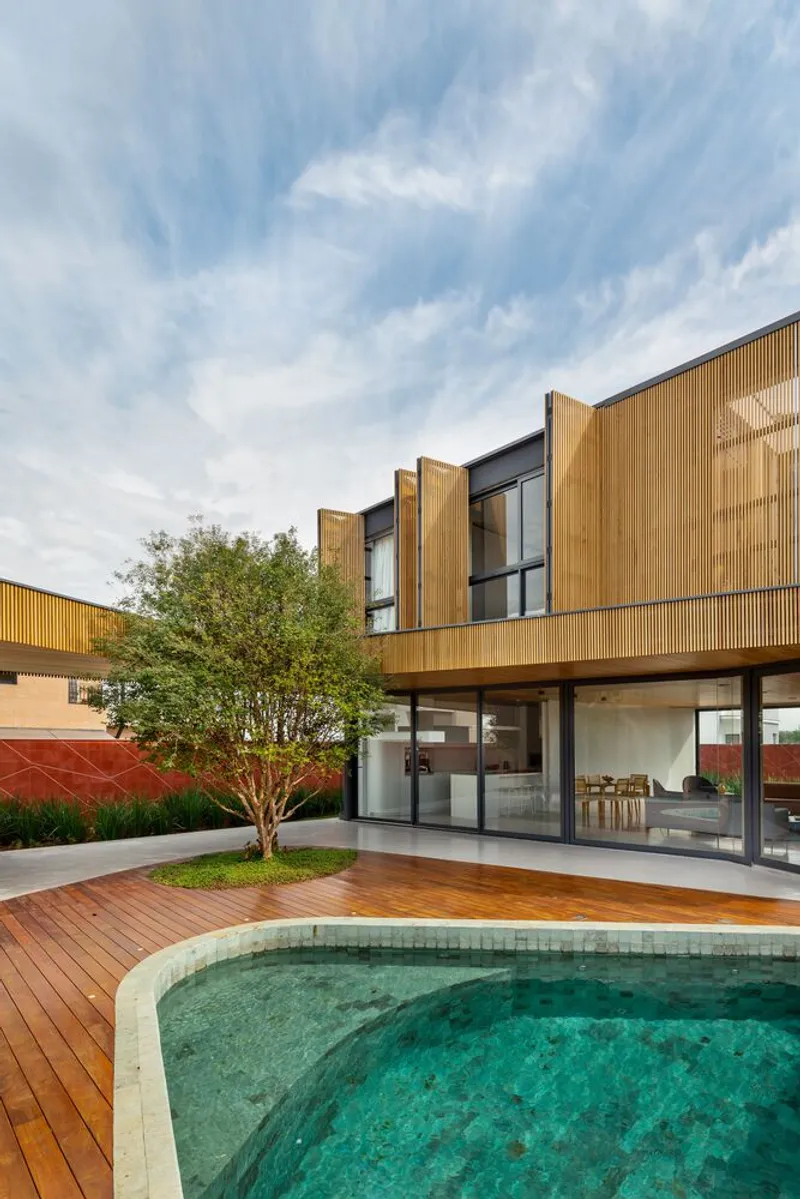
Located in a gated community in Votorantim, Brazil, the site allowed for a rare architectural opportunity—walls between lots, which the architects transformed into a core design feature. Instead of isolating the home, the wall becomes a unifying element, defining volumes and expanding spatial possibilities.
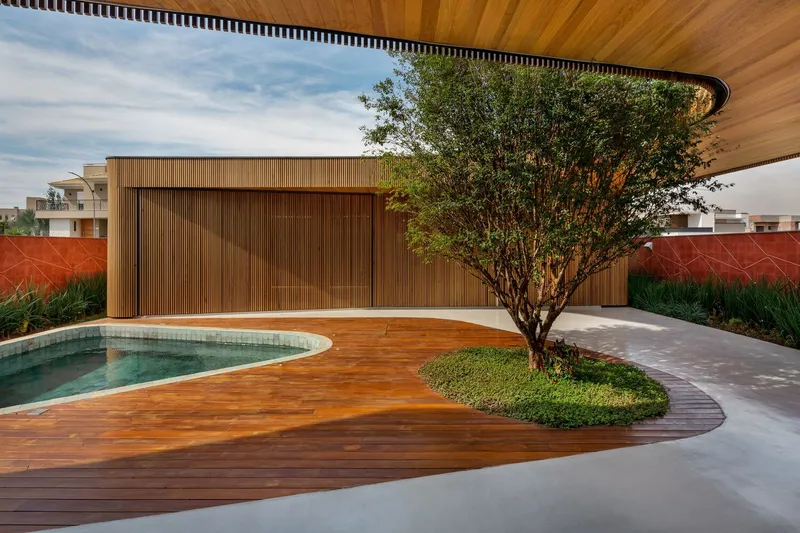
Design Concept: Embracing the Courtyard House Typology
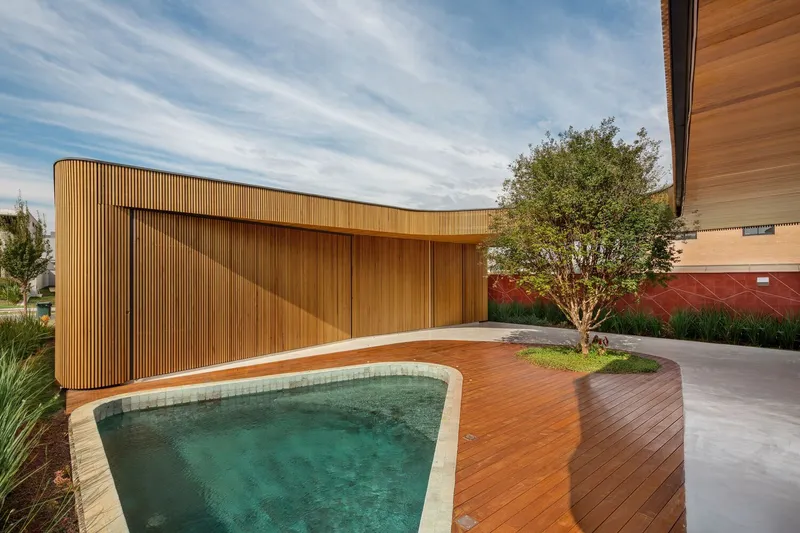
The architectural solution centers around the courtyard house concept, where the structure opens inward instead of outward. The plan is divided into two distinct volumes embraced by a defining curved wall and marquee:
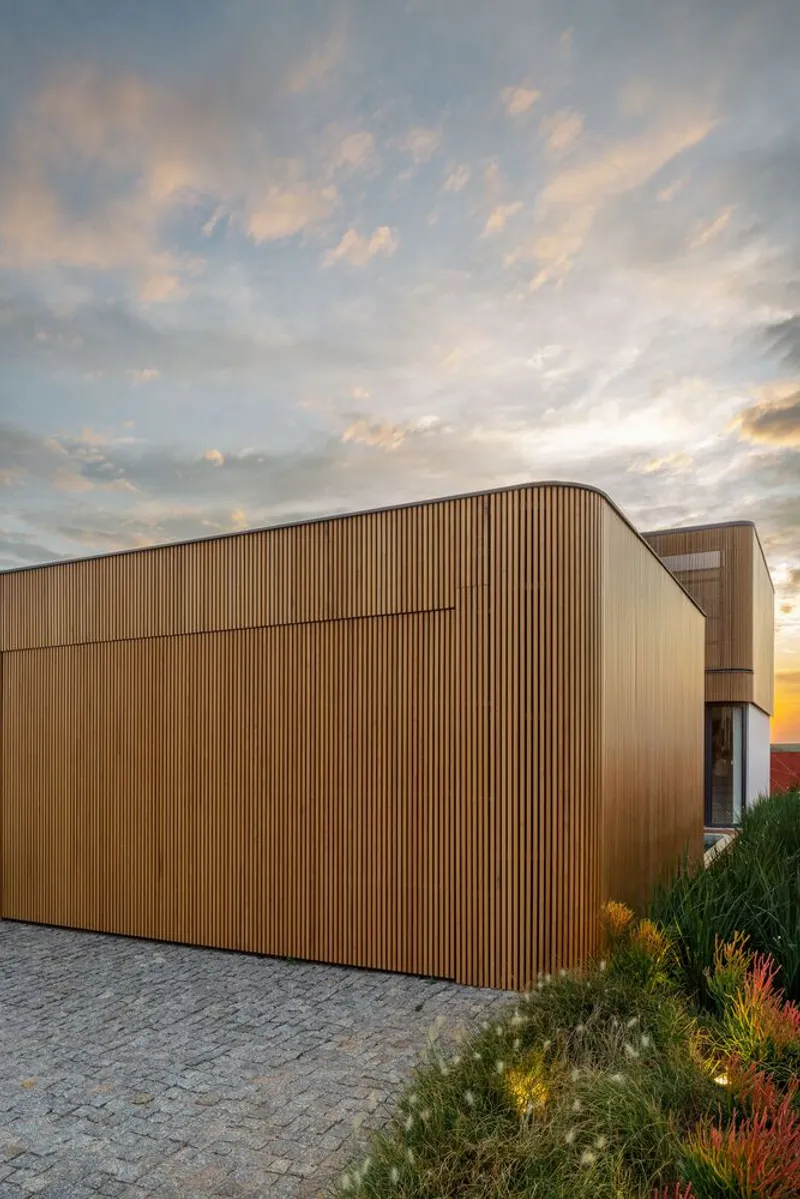
- Front Volume (Single-Story): Contains the pedestrian entrance, garage, and a multi-functional guest suite/home office.
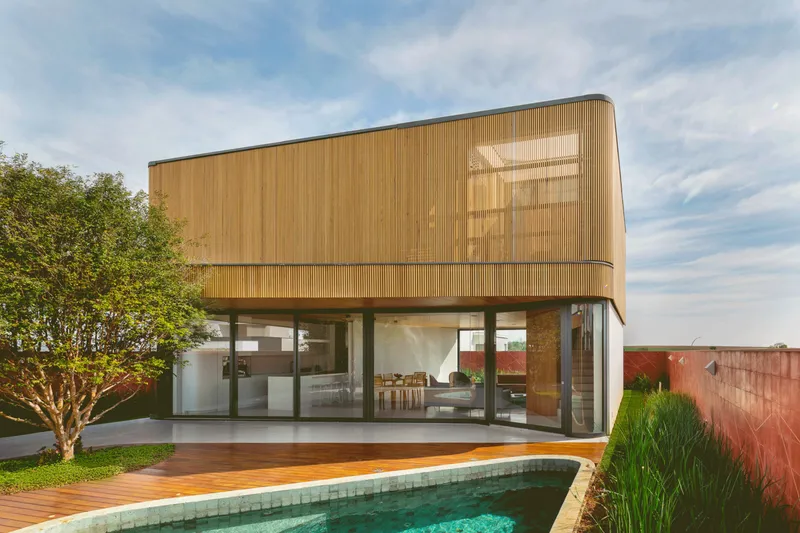
- Rear Volume (Two-Story): Houses the main social living spaces on the ground floor, and three private suites with a laundry area on the upper floor.
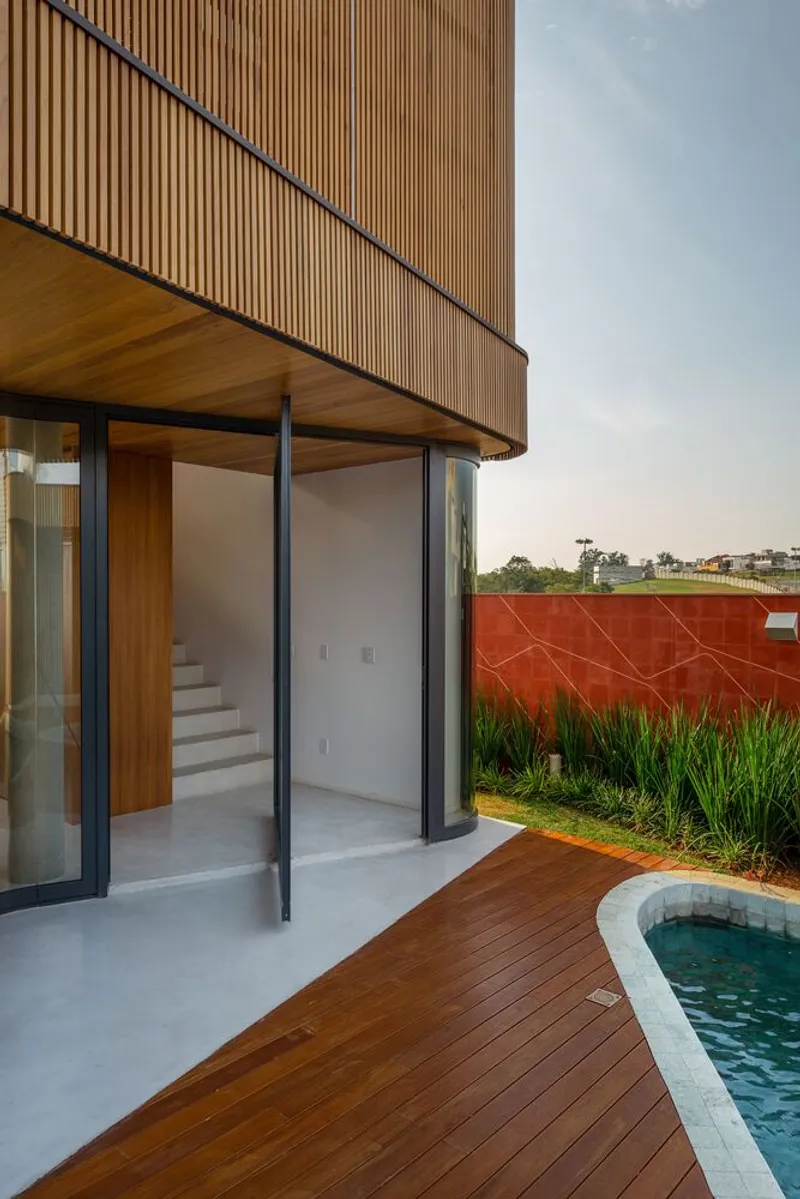
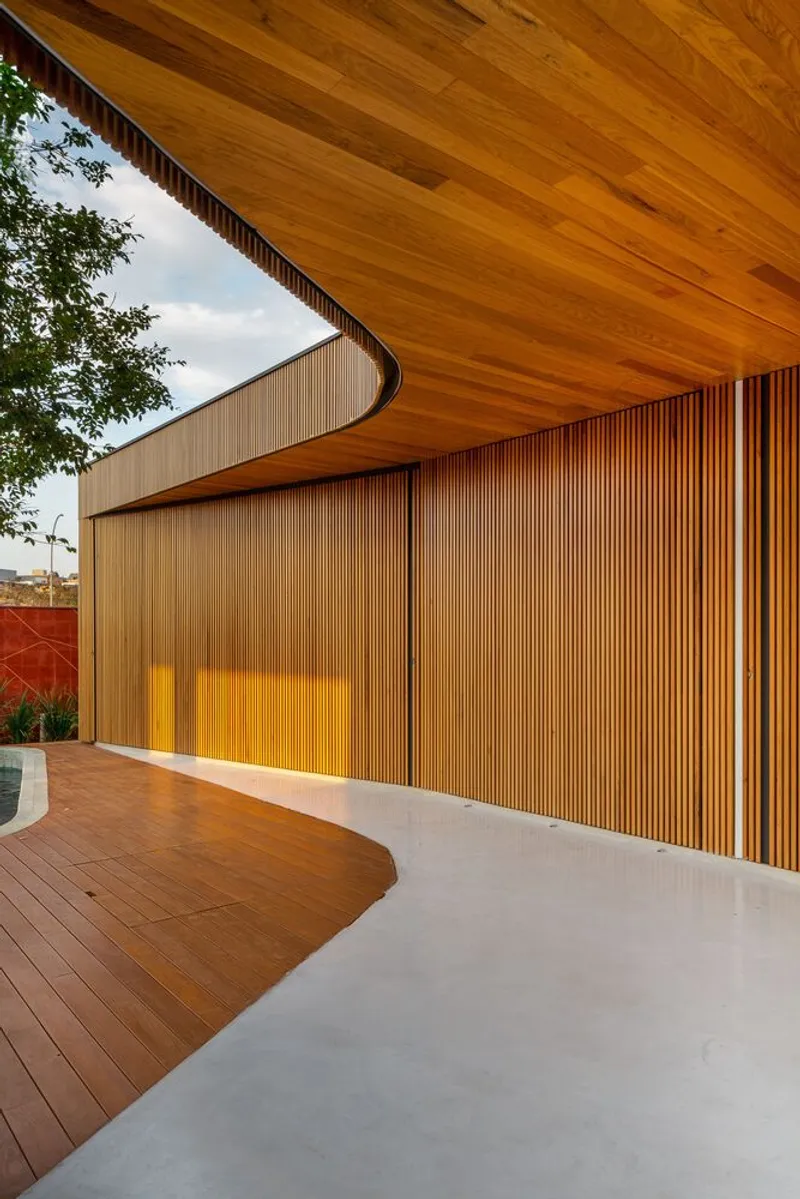
These volumes are connected by a sweeping curved canopy that creates a semi-covered patio—the heart of the home. This central space features a swimming pool and a mature jabuticaba tree, forming a tranquil outdoor living area that blurs the boundary between indoor and outdoor life.
Materials and Atmosphere: Earthy, Warm, and Elegant
Materiality plays a central role in shaping the home’s atmosphere. The palette is both functional and expressive:
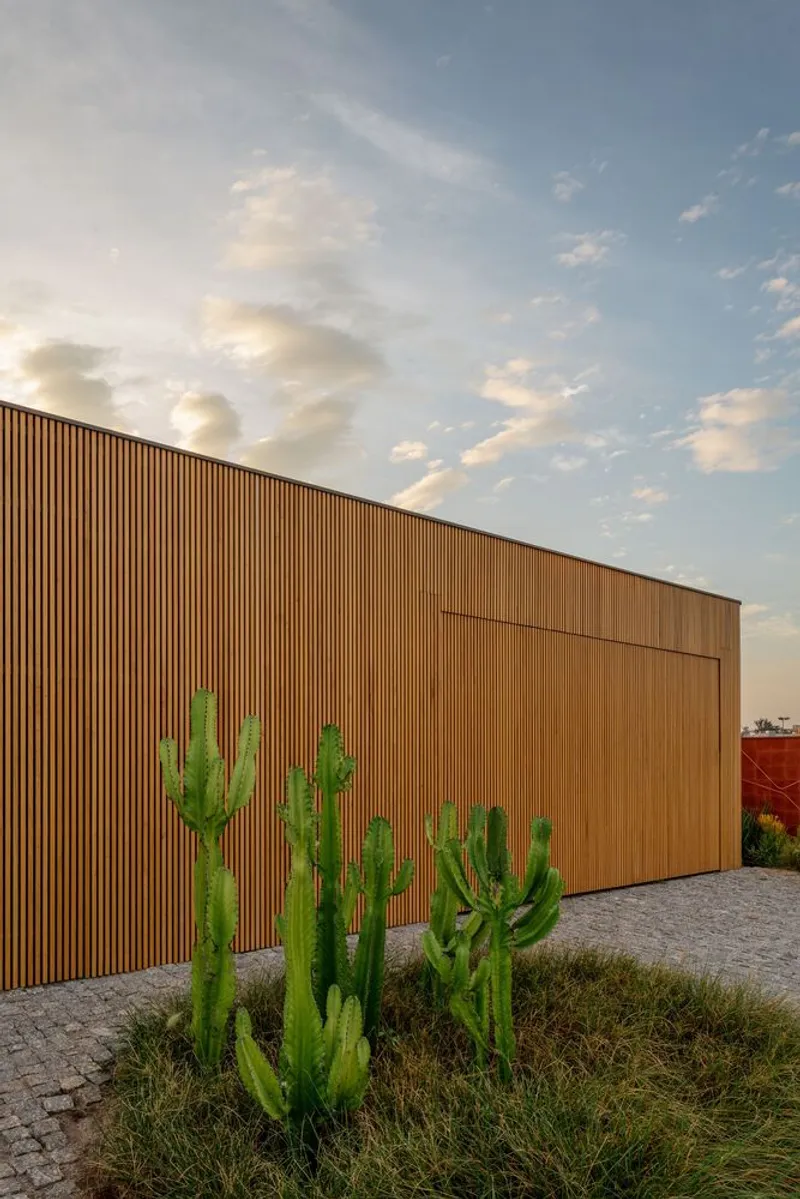
- Wooden brise-soleil: Screens the upper floor and front volume, ensuring privacy and effective solar control while adding rich texture to the façade.
- Glass panels: Frame the social spaces on the ground level, inviting natural light and creating seamless transitions to the lush garden.
- Custom red hydraulic tiles: Designed by the architects, these tiles line the entire perimeter wall, infusing color and a tactile identity to the home’s architectural language.
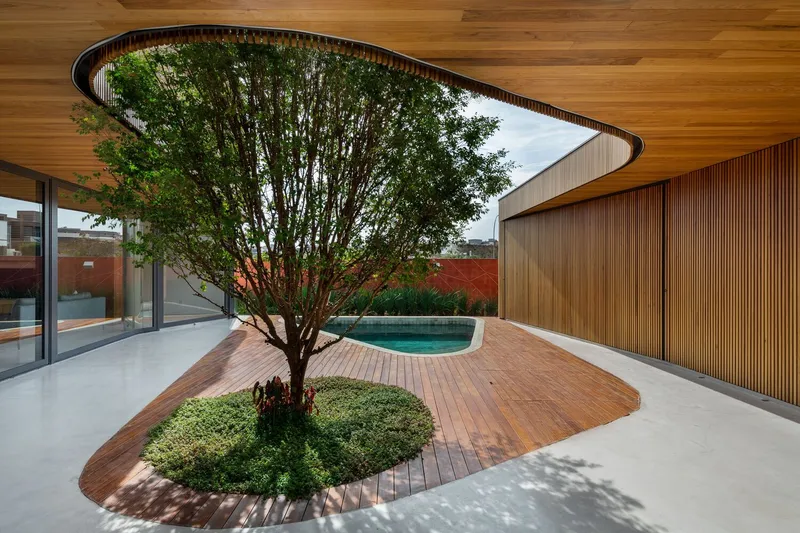
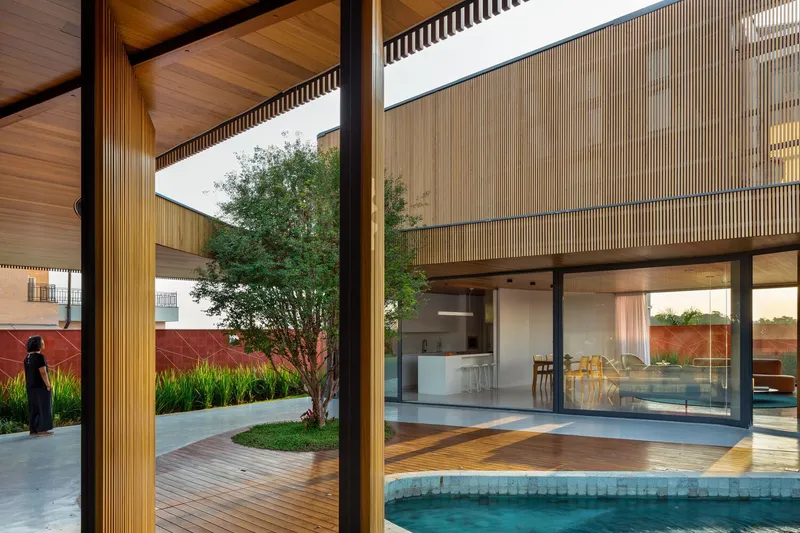
This blend of materials not only emphasizes passive design principles—like natural ventilation and shading—but also reinforces the house’s connection to Brazilian design heritage.
Form Follows Family
Every element of the Mandacaru House was conceived to support family life and togetherness. The open-plan design and integration of communal spaces, such as the interior garden, covered patio, and flexible living areas, ensure that the home functions as a welcoming gathering space while preserving everyday comfort.
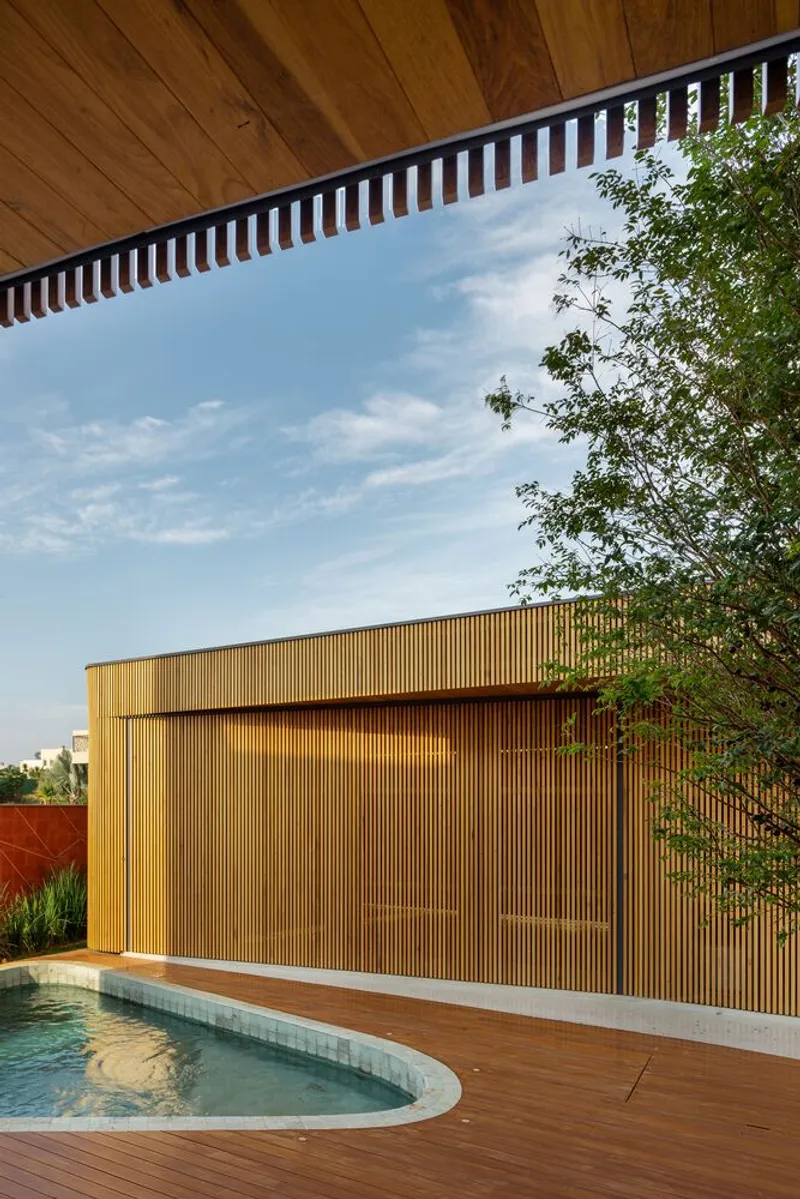
From birthday parties to quiet evenings under the canopy, the architecture accommodates a range of experiences without compromising on elegance or performance.
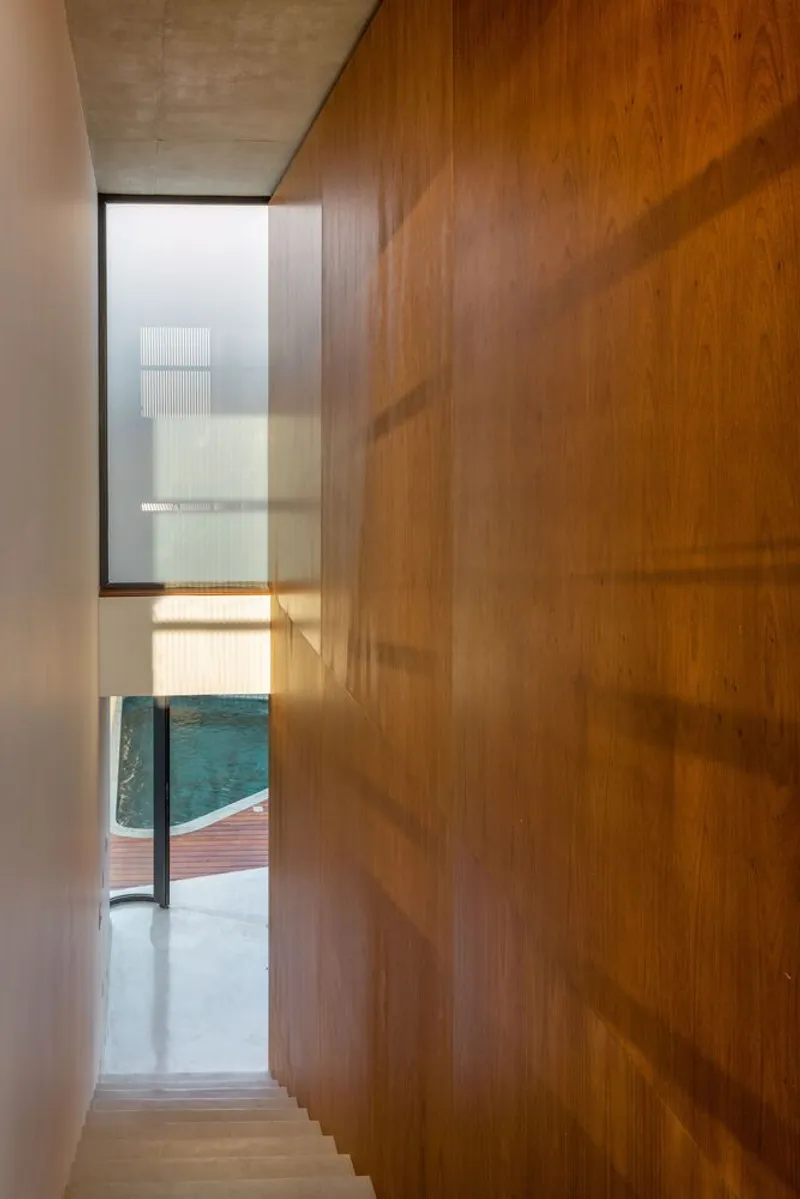
The Mandacaru House by Arquitetura Nacional is a modern interpretation of the traditional courtyard home—intimate, expansive, and rooted in Brazilian culture. Designed with natural materials, passive strategies, and family connectivity in mind, it offers a sustainable and timeless living experience that gracefully balances privacy, openness, and social interaction.
All the photographs are works of André Scarpa




Popular Articles
Popular articles from the community


Riyadh For All: Intergenerational Urban Design for Active Aging in Rabat
Riyadh For All reimagines urban design in Rabat with intergenerational co-living, adaptive courtyards, and Moroccan cultural exchange today.

The Musturak Paradise: Senior Living Architecture for a Connected Future in Temara, Morocco
The Musturak Paradise reimagines senior living architecture in Temara via private homes, social spaces, culture, community, and shared care.

Co-Life: Senior Housing Design That Reconnects Older Adults With the City
Co-Life reimagines senior housing design through healing gardens, shared streets, workshops, and a sustainable community across generations.

Conexión: Biophilic Design Reimagines High-Rise Living in Hong Kong
Conexión reimagines high-rise living in Hong Kong through biophilic design, green facades, shared spaces, daylight, water and nature within.


Similar Reads
You might also enjoy these articles


Hodi-Mandai Geram
Project Function: Preservation and revitalization of the Intangible heritage and socio-spatial identity of the Hodi by Housing, Cultural Memory Center, Sacred Grove, landscape, local tourism economy


Olio Towers: A Mid-Rise for Performers That Fuses Housing, Rehearsal, and Stage
Located blocks from Houston's Theater District, this modular tower stacks living units around a central performance atrium.

Oasis: Modular Green Housing Carved into Dhaka's Urban Fabric
A shortlisted Plugin Housing entry reclaims unauthorized settlements in Dhaka with stepped concrete volumes, green roofs, and ventilation-driven design.

Black Hole: A Floating Megastructure for the Post-Physical Era
Emiliano Mazzarotto envisions a spherical, self-scaling arena where e-sports, digital hotels, and holographic stadiums replace traditional public space.


Explore Brazilian Architecture Competitions
Discover active competitions in this discipline



Challenge to reimagine the Iron Throne


Photograph architecture without architects


Illustrate the lost glory of Angkor Wat - Render Challenge


Design challenge to reuse E-waste
Comments (0)
Please login or sign up to add comments
No comments yet. Be the first to comment!