
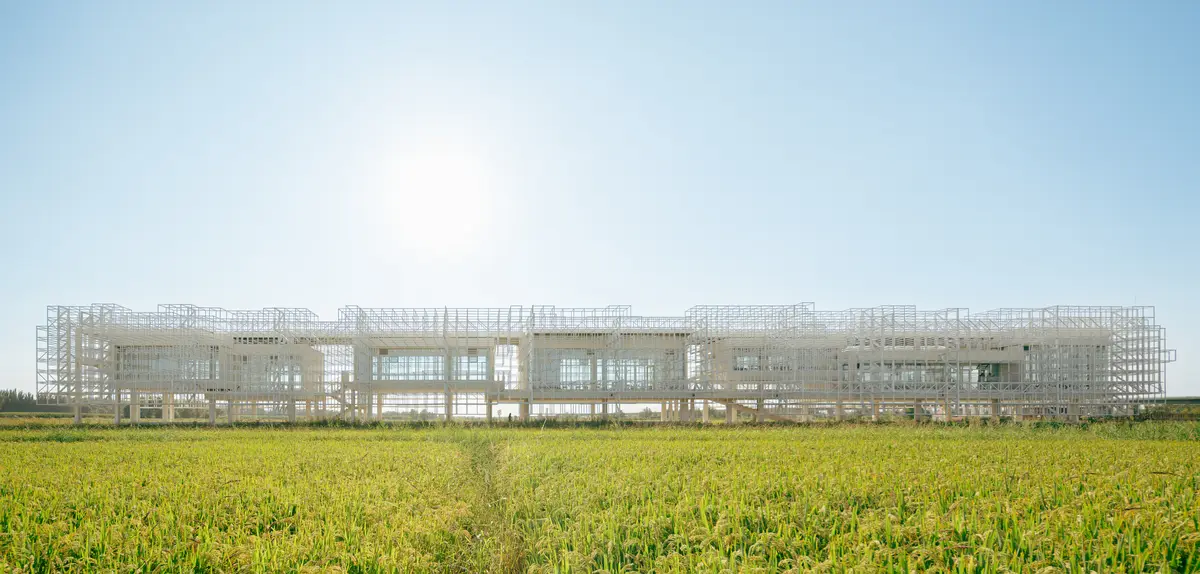
Manor Mirage by BUZZ By Büro Ziyu Zhuang — A Floating Landscape Installation Reviving an Abandoned Bridge in Zhangjiakou
Manor Mirage blends lightweight architecture with grassland culture, transforming an abandoned bridge into a floating, immersive, nature-integrated experiential space.


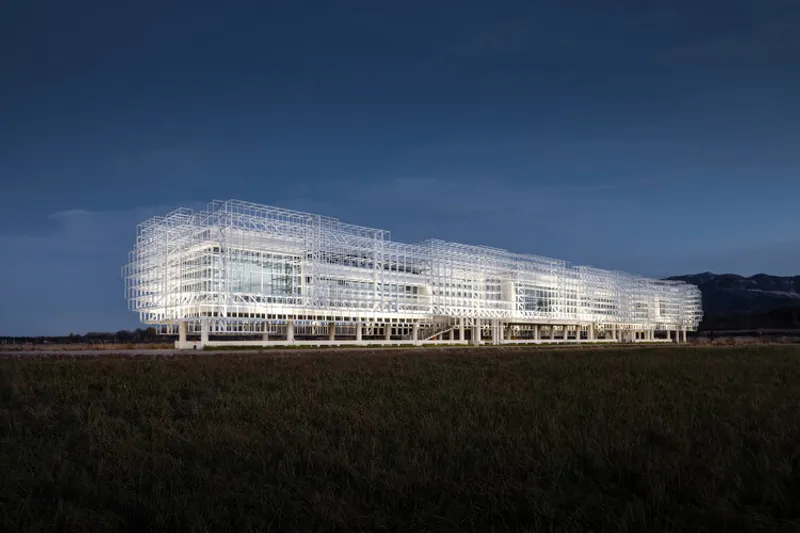
Manor Mirage, designed by BUZZ / Büro Ziyu Zhuang, is a boundary-blurring landscape renovation project located in the vast wilderness of Huai’an County, Zhangjiakou, Hebei Province, near the Zhangbei Grassland. Completed in 2024 and spanning 400 m², the project transforms an abandoned concrete bridge into a poetic, lightweight architectural installation that coexists with nature, culture, and memory.
Inspired by the idea of a “mirage”—something both present and fleeting—the design embraces low-intervention strategies, respecting local traditions, rural site memory, and the nomadic heritage of the grassland. The result is an architectural form that appears and disappears with shifting light, wind, and wheat fields, creating a spatial experience suspended between transience and permanence.
A Floating Architecture That Repairs the Landscape
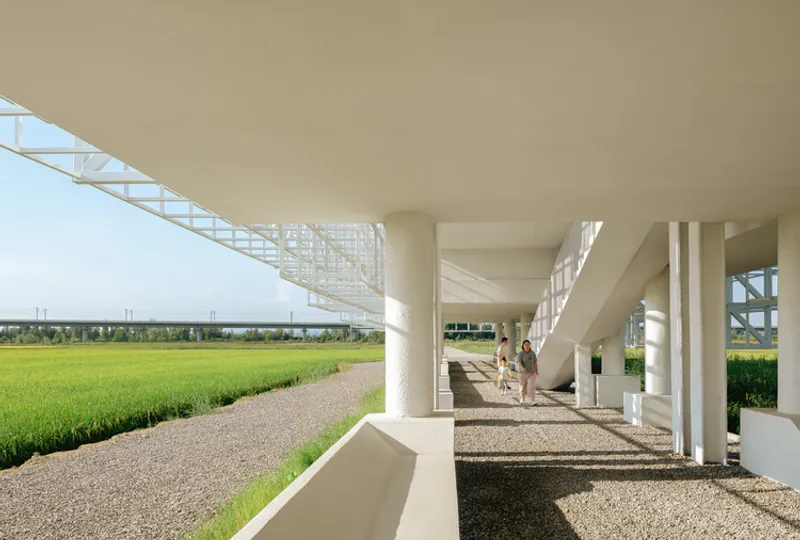
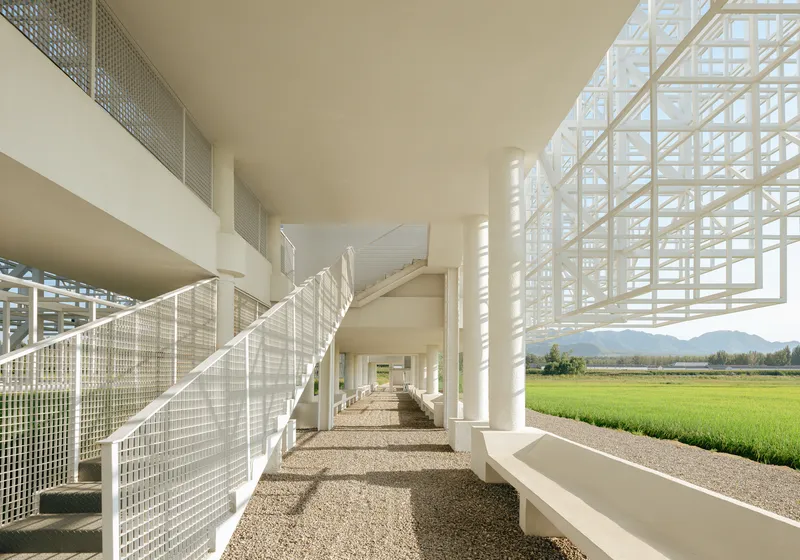
The original concrete bridge cut visually across the natural horizon. To heal this divide, the architects introduced a ground-elevated structure with a lightweight floating roof, reducing visual oppression and reconnecting sky and earth.
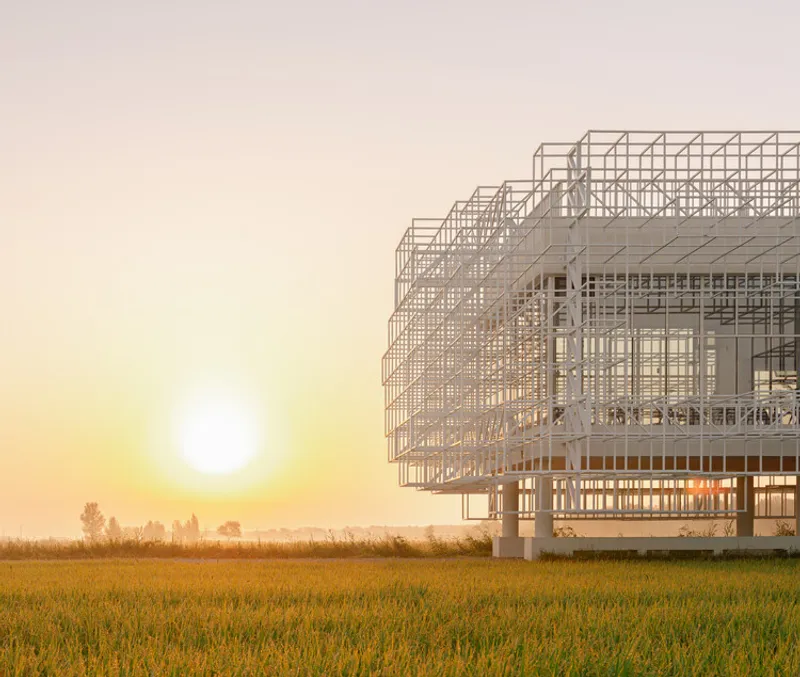
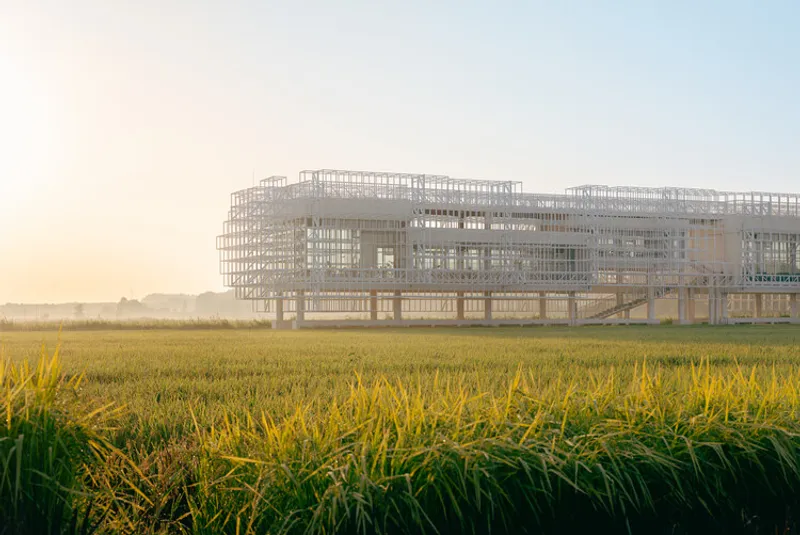
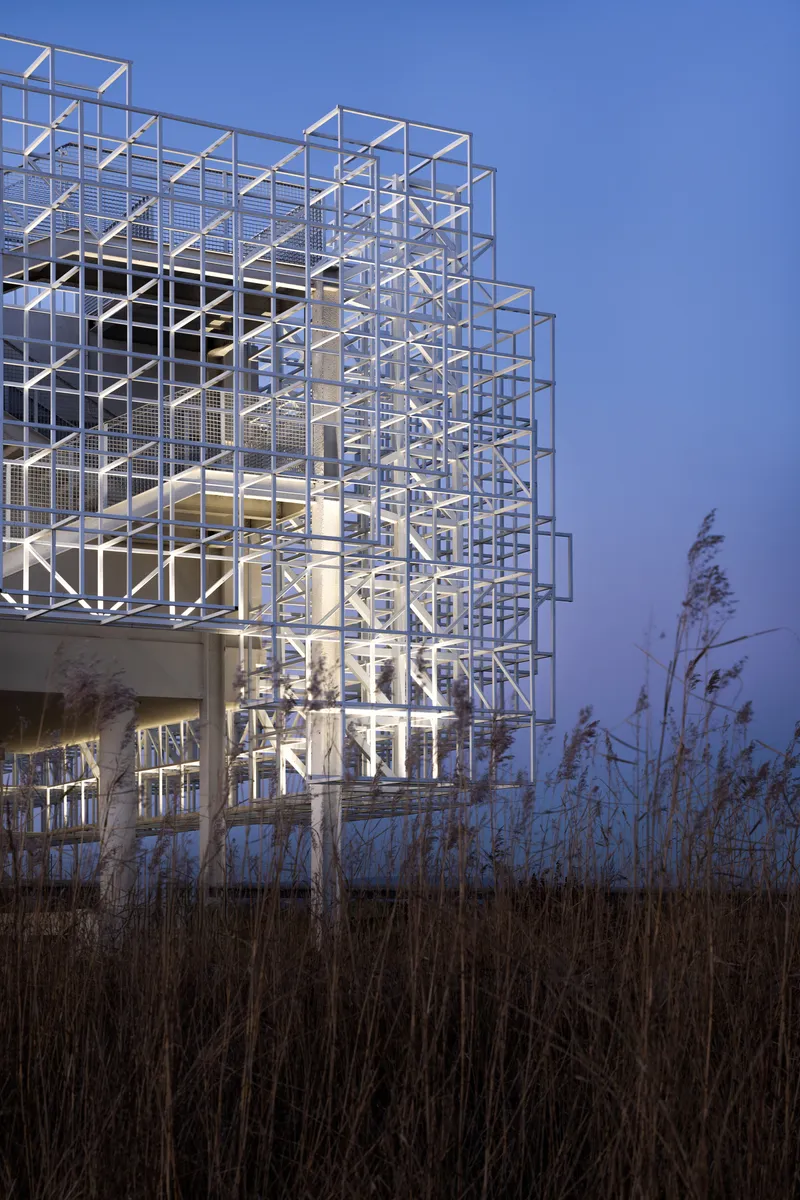
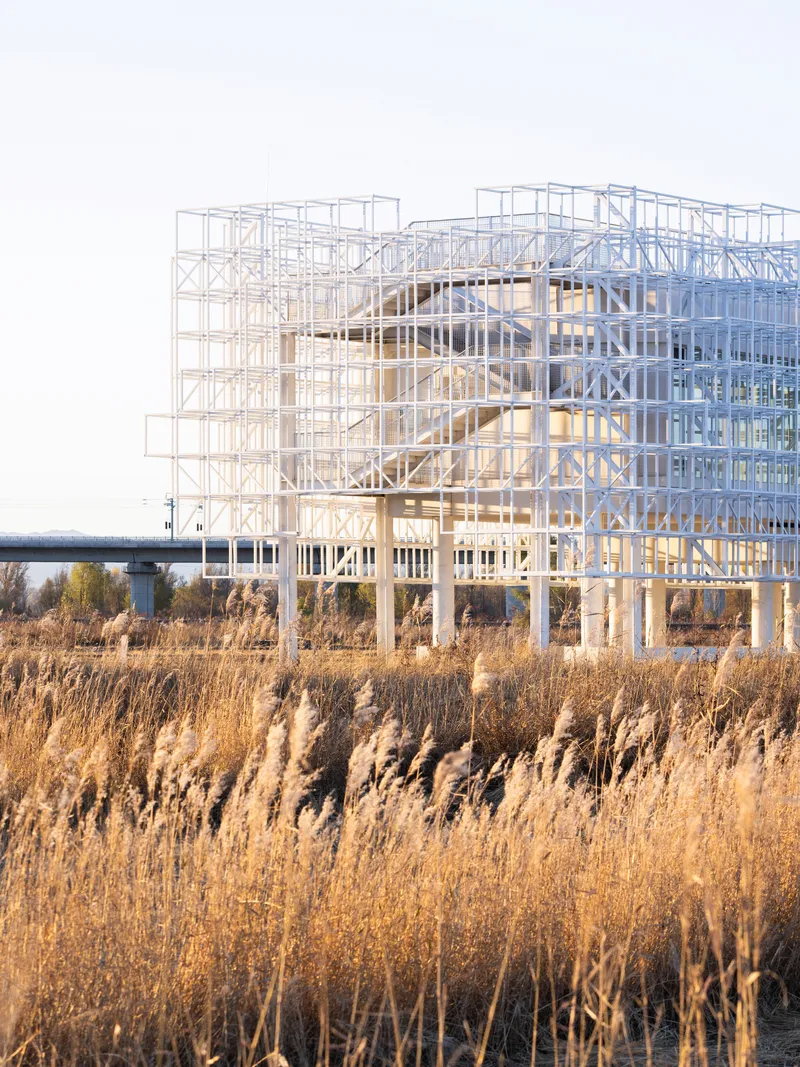
The building stretches along the rolling wheat fields, adopting a posture that feels weightless and dissolving. Its glass curtain wall reflects the surrounding landscape, while the outer layer of white metal frames vibrates with light and wind, softening the geometry into a shimmering, flickering presence.
This subtle visual play creates the feeling that the building is a mirage in the grassland—sometimes clearly defined, sometimes nearly invisible.
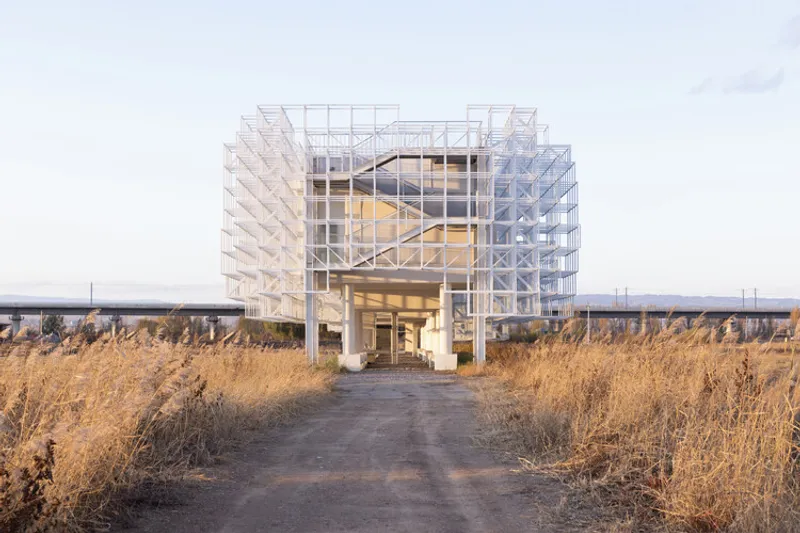
Pixelated Facade: Translating Landscape Texture Into Architecture
A key design strategy is the pixelated outer skin, composed of multilayered, slender white metal frames. These frames break down the building’s volume into lightweight lines, echoing the delicate textures of:
- wheat awns
- grassland buds
- nomadic woven patterns
This “pixelation” connects macro and micro perspectives of the wilderness, transforming the facade into a giant viewfinder that frames changing scenes of the grassland.
At night, when the linear LED lights softly illuminate the frames, the building becomes a cluster of subtle points of light lying on the horizon—integrated rather than intrusive, ensuring the integrity of the wild nighttime landscape.
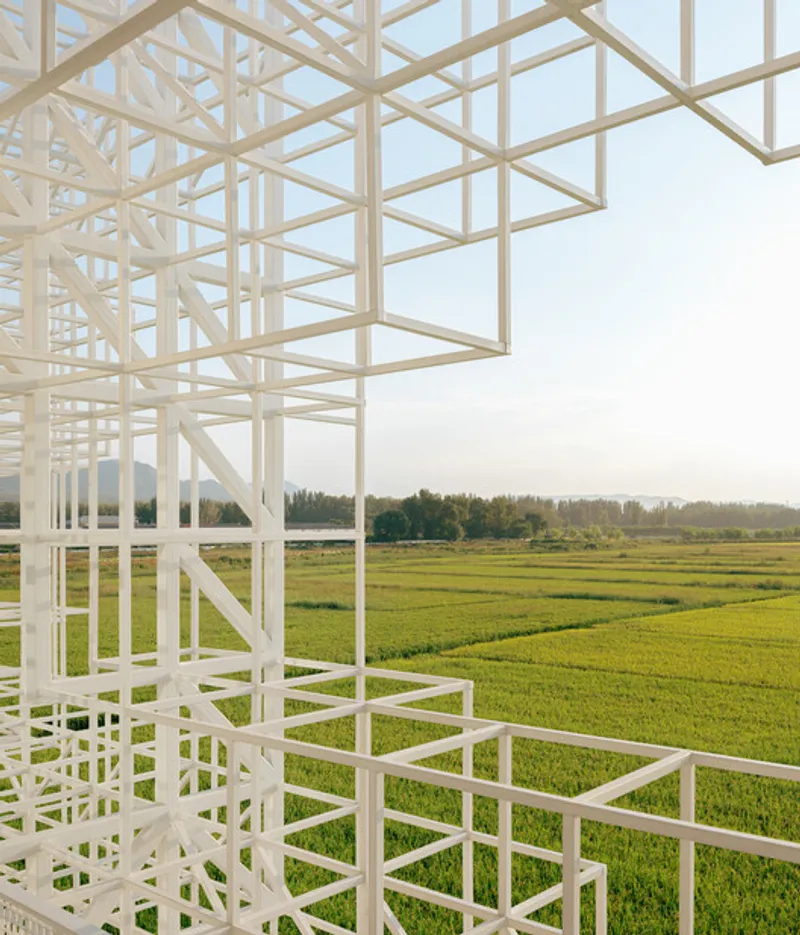
Respecting Rural Memory Through Low Intervention
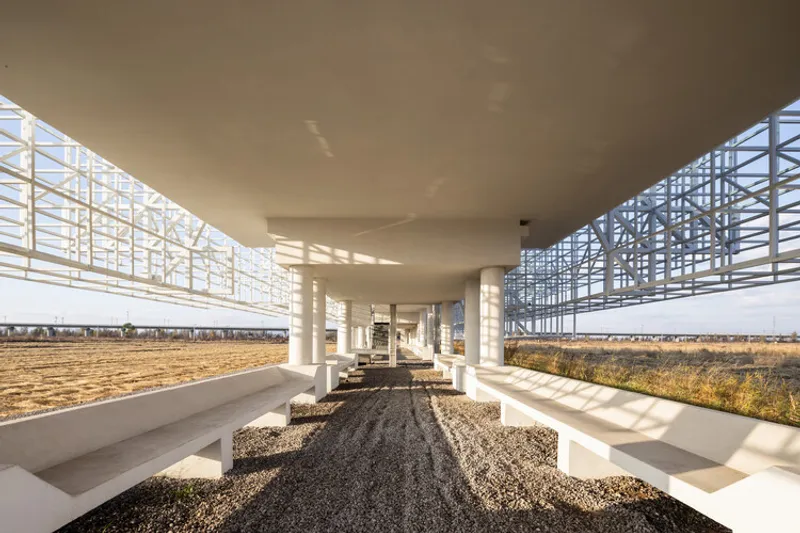
The renovation preserves the original road beneath the bridge, allowing villagers to continue their traditional pathways and maintaining the tactile memory of rural life. This preservation honors the lived history of the community.
The floor slab elevation subtly adapts to the natural terrain of the wheat fields. This gradient creates diverse spatial experiences:
- large open areas for gatherings and viewing the expansive wilderness
- gentle slopes for intimate contact with the wheat and casual activities like resting or sipping coffee
This gentle intervention awakens emotional memory, giving visitors a soothing familiarity rooted in the land.
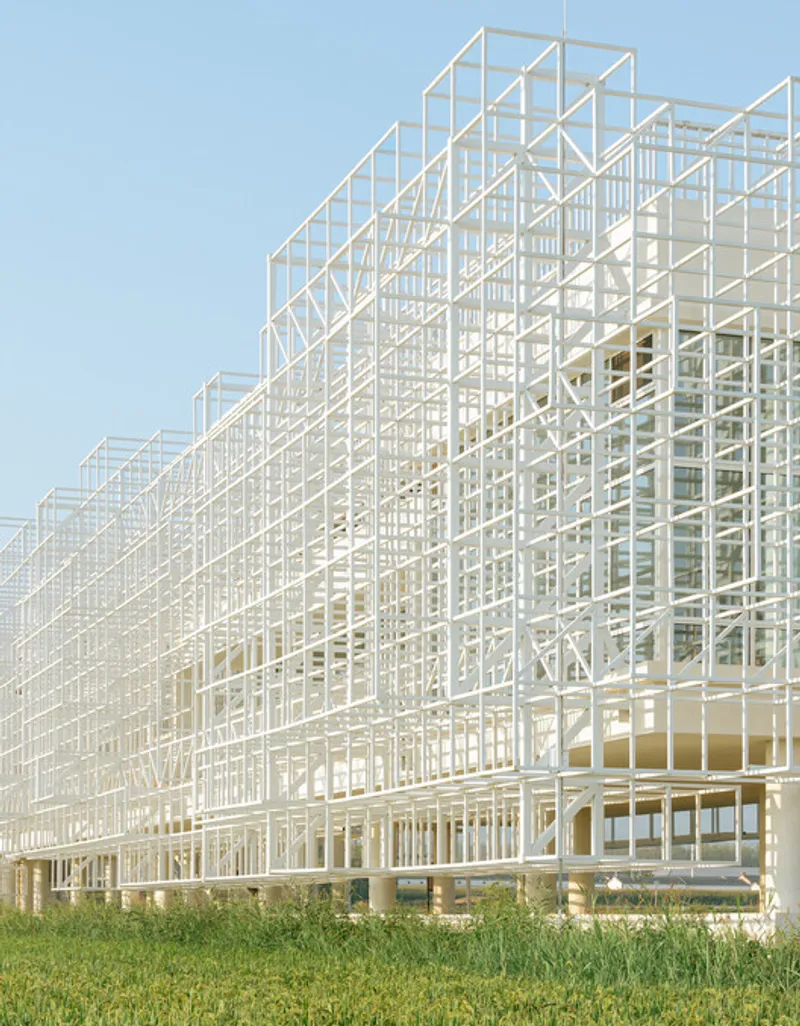
A Flexible Cultural Space Reflecting Grassland Nomadic Spirit
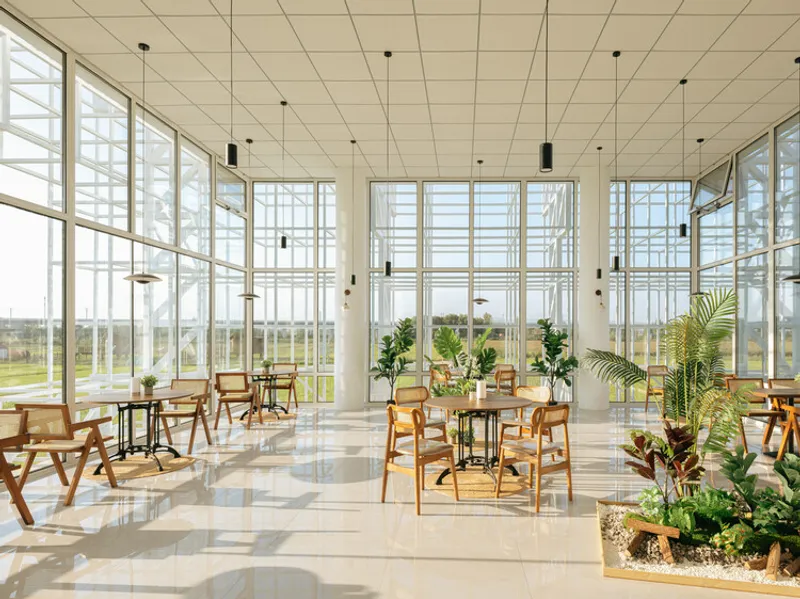
Drawing from Zhangbei Grassland’s nomadic traditions, the building is designed as a flexible, mobile, and adaptable space. Its interior accommodates:
- cultural and creative exhibitions
- workshops
- coffee and light dining
- rooftop terraces
- temporary art events
- pop-up field markets on weekends
After these lively activities, the architecture returns to a calm, minimal baseline, ready for the next gathering. This cyclical alternation between activity and stillness transforms Manor Mirage into a living container of grassland culture.
Architecture Between Transience and Eternity
With lightweight construction, layered spatial narratives, and sensitive translation of landscape textures, Manor Mirage revitalizes an abandoned site without erasing its past. It becomes a contemporary interpretation of grassland identity, embracing:
- ephemeral beauty
- deep cultural roots
- architectural restraint
- natural coexistence
Manor Mirage stands as a poetic reminder that architecture can be both temporary and timeless—an installation that emerges gently from the wilderness before dissolving back into it.
All the photographs are works of Yumeng Zhu, Archi-Translator


Popular Articles
Popular articles from the community


Conexión: Biophilic Design Reimagines High-Rise Living in Hong Kong
Conexión reimagines high-rise living in Hong Kong through biophilic design, green facades, shared spaces, daylight, water and nature within.

Hill & Cross Opera: Sculptural Opera House Architecture Shaped by Tallinn’s Landscape and Identity
Hill & Cross Opera reimagines opera house architecture in Tallinn through its sculptural hill, civic plaza, glass wave and a luminous cross.

Play: Fragments of Their World
Familiar architecture becomes modular playground design, creating safe spaces where displaced children can learn, connect, imagine and play.

The Ocean Hive: Sustainable Architecture for a Self-Sufficient Civilization at Sea
The Ocean Hive imagines sustainable architecture at sea, where modular habitats, algae, wave power and ocean waste sustain a growing colony.

Similar Reads
You might also enjoy these articles


Hodi-Mandai Geram
Project Function: Preservation and revitalization of the Intangible heritage and socio-spatial identity of the Hodi by Housing, Cultural Memory Center, Sacred Grove, landscape, local tourism economy


Olio Towers: A Mid-Rise for Performers That Fuses Housing, Rehearsal, and Stage
Located blocks from Houston's Theater District, this modular tower stacks living units around a central performance atrium.

Oasis: Modular Green Housing Carved into Dhaka's Urban Fabric
A shortlisted Plugin Housing entry reclaims unauthorized settlements in Dhaka with stepped concrete volumes, green roofs, and ventilation-driven design.

Black Hole: A Floating Megastructure for the Post-Physical Era
Emiliano Mazzarotto envisions a spherical, self-scaling arena where e-sports, digital hotels, and holographic stadiums replace traditional public space.

Explore Imaginary Landscape Competitions
Discover active competitions in this discipline

Challenge to design a portable theatre

Challenge to design a portable music platform

Challenge to design an open learning module for the elderly

Challenge to reimagine the Iron Throne
Comments (0)
Please login or sign up to add comments
No comments yet. Be the first to comment!