

Mathäser Exchange Hub by Goldbrunner Architektur: A Modern Market Hub Bridging Heritage and Community
A vibrant market hub blending old and new, featuring flexible halls, open-air terraces, riverside walkways, and dynamic dining spaces.


Located in Ruhstorf an der Rott, Germany, the Mathäser Exchange Hub by Goldbrunner Architektur is a thoughtfully designed public and hospitality space that blends the charm of historic architecture with modern, flexible functionality. Completed in 2024 and spanning 1,350 m², the project transforms the Mathäser site into a central market hub, creating a vibrant place of exchange, interaction, and social gathering.
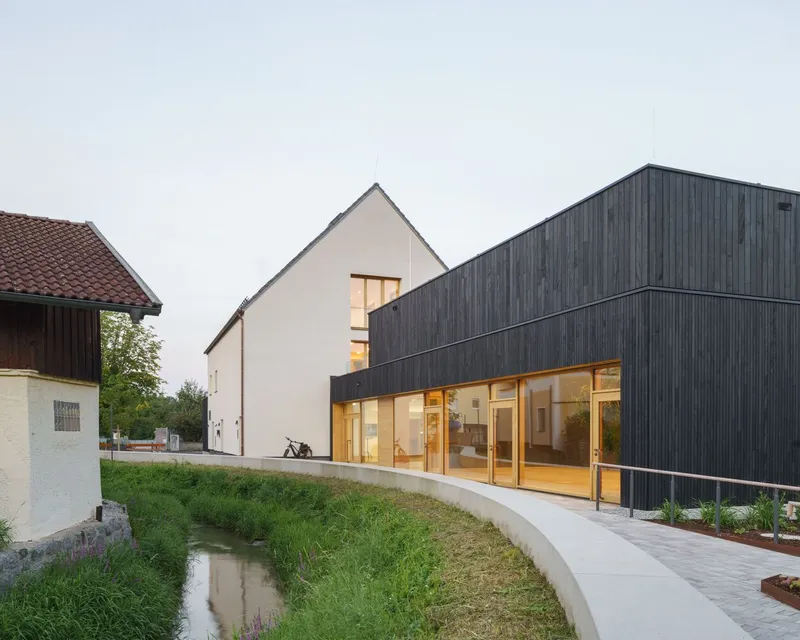
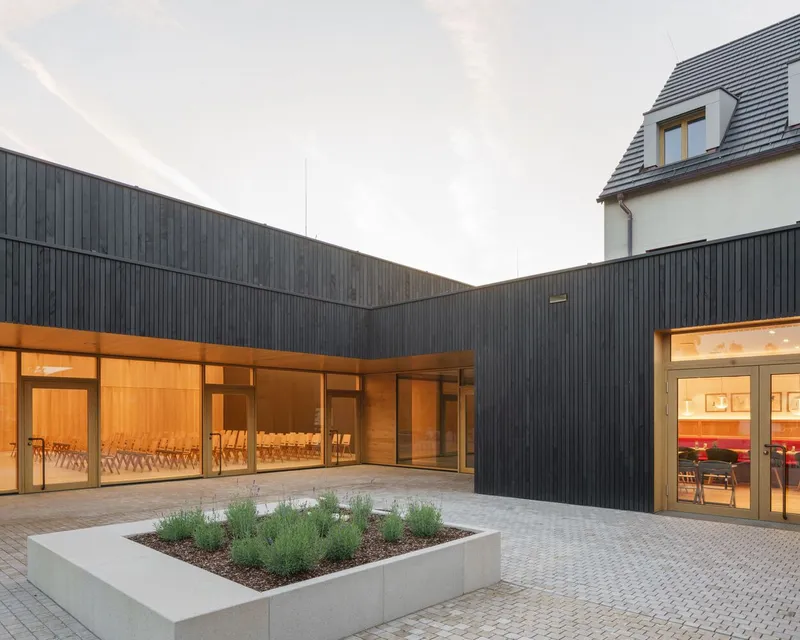
The architectural strategy carefully balances the new construction with the existing historic building, establishing a harmonious old-and-new symbiosis. The building’s urban position, with the auditorium integrated into the existing structure, defines a southern forecourt and a northern riverside passage, enhancing connectivity and pedestrian flow.
Flexible Interior Spaces for Community Engagement
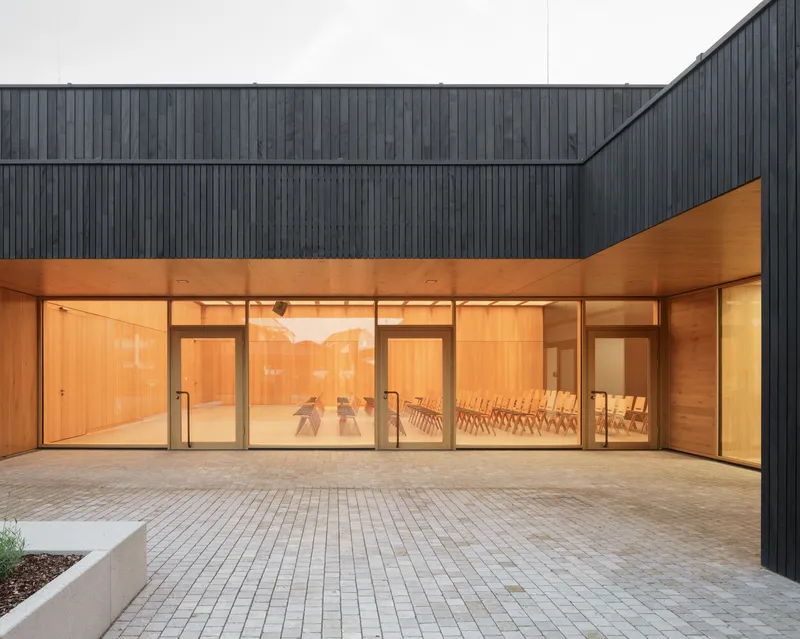
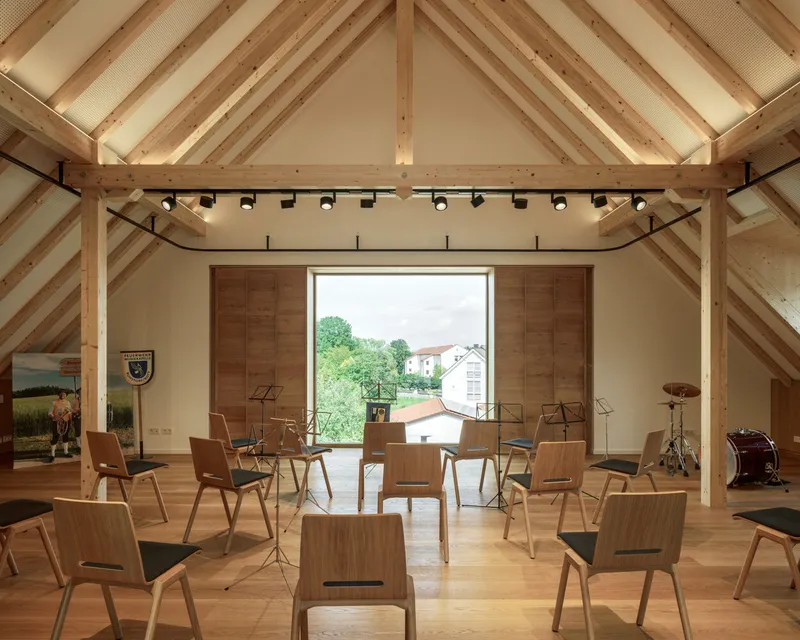
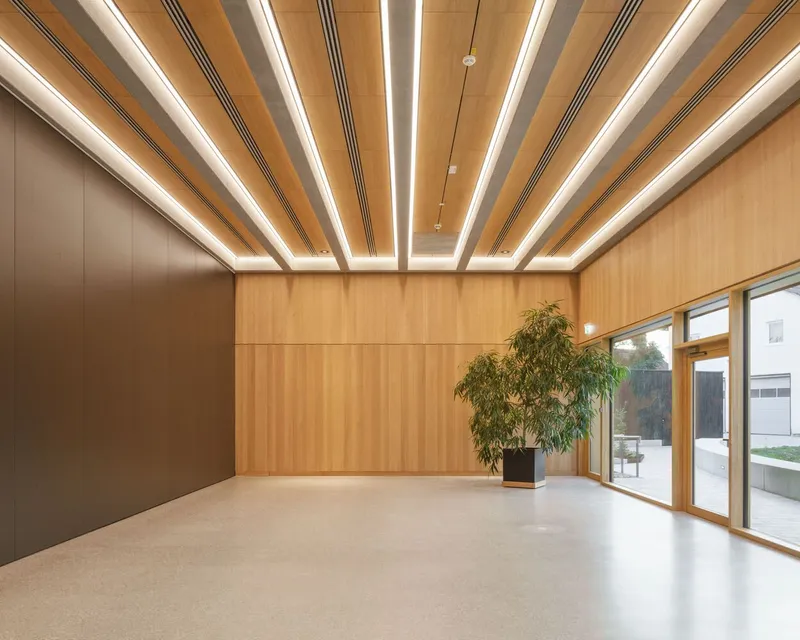
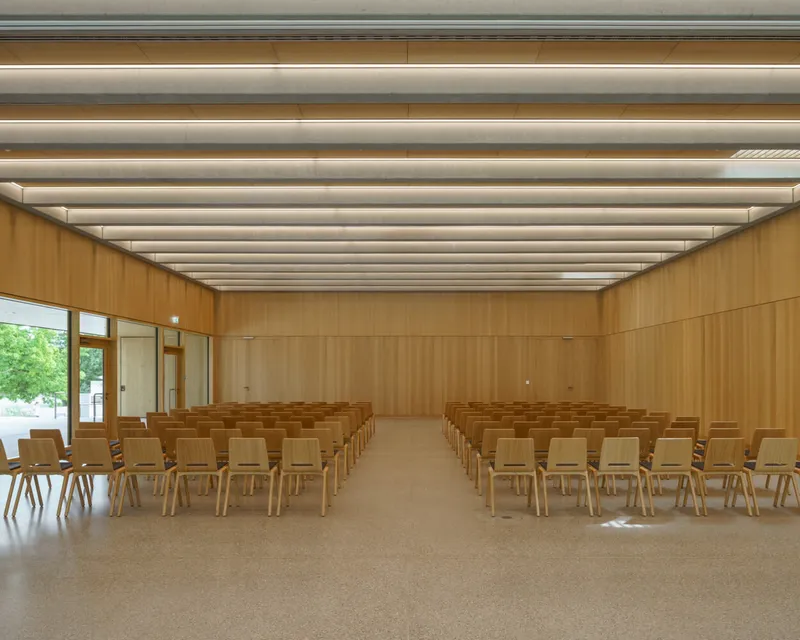
The foyer serves as the central hub, linking the hall, restaurant, and vertical circulation to the upper-floor club rooms and concert hall. Designed for maximum versatility, the main hall features a mobile partition wall, enabling it to be divided into north and south zones to accommodate diverse event sizes, from intimate gatherings to large celebrations.
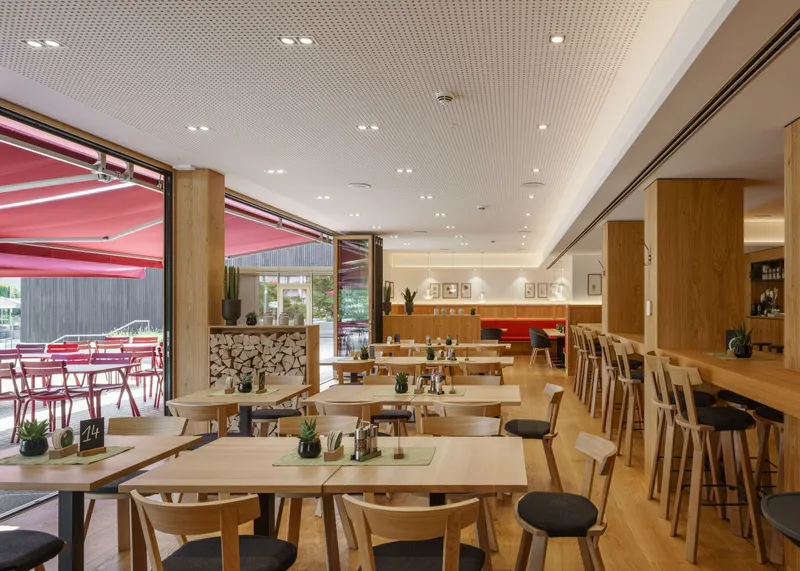
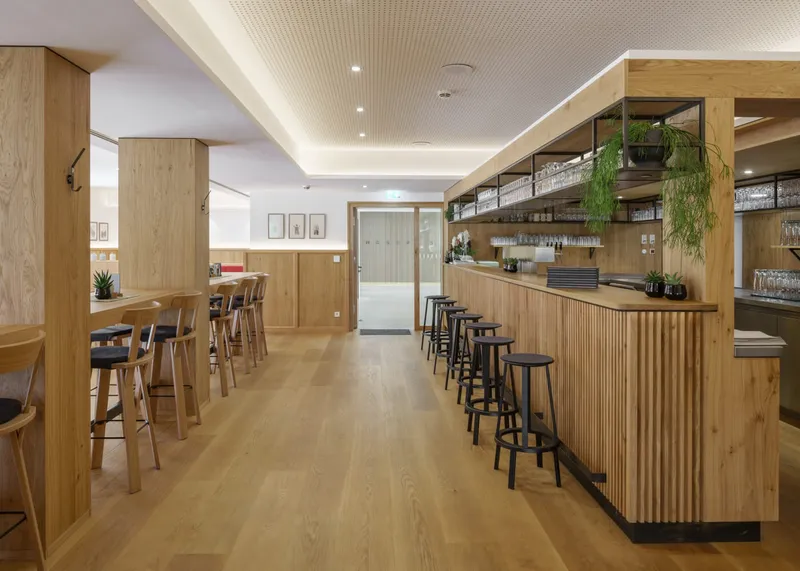
The restaurant emphasizes indoor-outdoor connectivity with its south-facing folding windows, opening fully to the terrace during warmer months. Multiple dining areas, including the main dining room, adjoining rooms, and a separable ‘parlour’, offer a variety of seating arrangements that cater to different social and culinary experiences.
Outdoor Spaces: From Market Square to Riverside Retreats
The project creates a spectrum of public and semi-public spaces designed for lingering and social interaction. The market square to the south hosts markets, concerts, and performances, with seating steps and terraces that encourage casual gathering and event participation. The restaurant terrace extends the indoor dining experience into the outdoors, promoting flexible, alfresco hospitality.
To the north, the renovation reactivates and expands the existing beer garden, enhancing its cozy ambiance with the shade of trees and the calming presence of the Kleeberg stream. A newly created riverside walkway with seating and a quay wall transforms the stream bank into a functional and inviting urban edge, connecting the hall and foyer with this refreshing northern outdoor area.
Materials, Sustainability, and Engineering
The design incorporates high-quality materials and sustainable solutions from manufacturers such as KEIM, Solarlux, Habisreutinger, and Hussl. The project was realized with the expertise of lead architect Martin Goldbrunner, landscape architects Stautner Schäf, and the engineering team including Jodlbauer and Forstner Elektroplanung, ensuring a balance of aesthetic elegance, functional performance, and environmental sensitivity.
The Mathäser Exchange Hub is a prime example of contemporary hospitality and public architecture that merges adaptive reuse with innovative new design. By connecting indoor and outdoor spaces, blending heritage with modernity, and offering flexible event and dining environments, the project redefines how communities interact within urban cultural hubs.
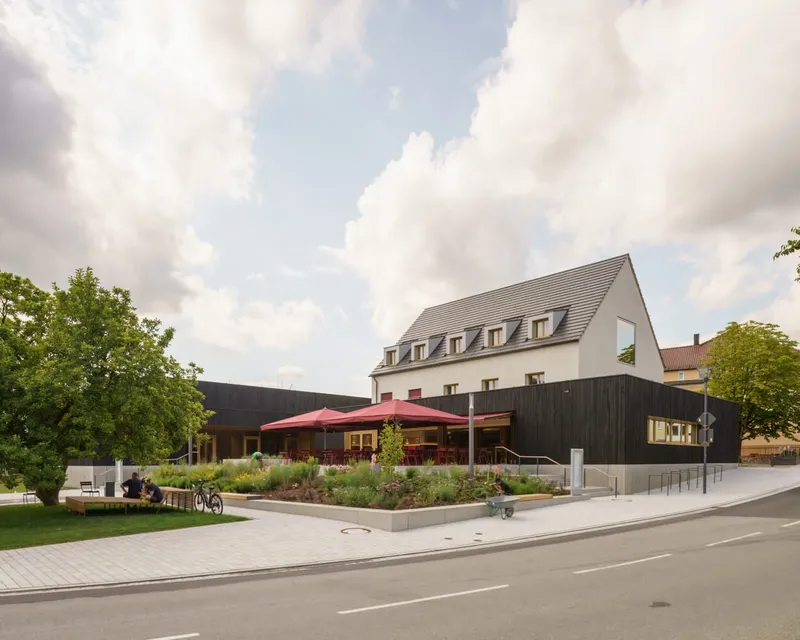
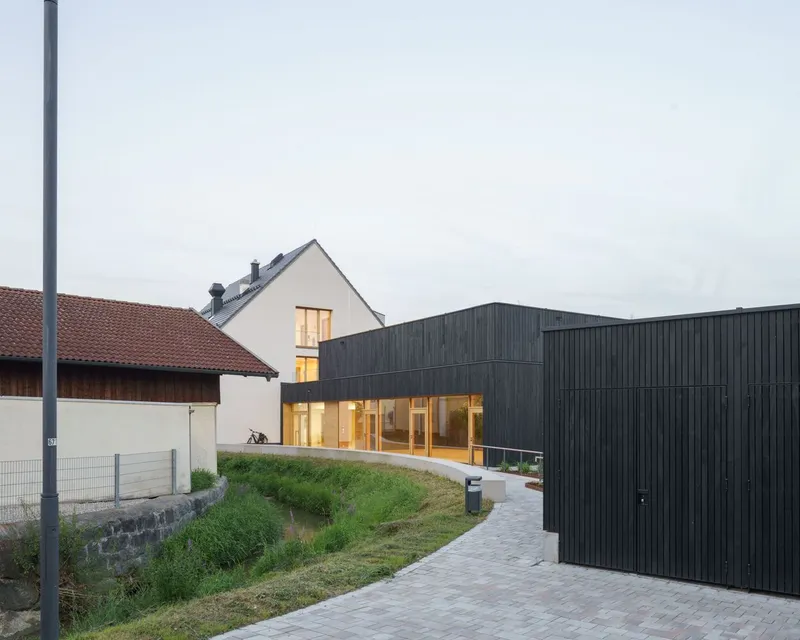
All photographs are works of Sebastian Schels Fotografie


Popular Articles
Popular articles from the community


Tsunami Convergenics: Turning Catastrophic Ocean Forces into Underwater Housing Infrastructure
A speculative underwater settlement off the coast of Onagawa, Japan, treats tsunamis and typhoons as energy sources rather than threats.

Cloaked Colonization: A Mobile Underwater Habitat That Moves Like a Fish
Micah Abaya's shortlisted EHC Pacific entry reimagines ocean settlement as a dispersed network of self-sustaining architectural organisms.
Opera by the Sea Estonia: Three Shells Dissolving Architecture into Tallinn's Coastline
A winning opera house proposal replaces monumental form with interconnected shells that blur the boundary between building, park and Baltic Sea.

Extended Shell: Retrofitting Kolkata's Balconies as Living Urban Thresholds
A modular retrofit system recovers the social and environmental intelligence of Kolkata's historic verandas for contemporary Park Street residents.

Similar Reads
You might also enjoy these articles


Hodi-Mandai Geram
Project Function: Preservation and revitalization of the Intangible heritage and socio-spatial identity of the Hodi by Housing, Cultural Memory Center, Sacred Grove, landscape, local tourism economy


Olio Towers: A Mid-Rise for Performers That Fuses Housing, Rehearsal, and Stage
Located blocks from Houston's Theater District, this modular tower stacks living units around a central performance atrium.

Oasis: Modular Green Housing Carved into Dhaka's Urban Fabric
A shortlisted Plugin Housing entry reclaims unauthorized settlements in Dhaka with stepped concrete volumes, green roofs, and ventilation-driven design.

Black Hole: A Floating Megastructure for the Post-Physical Era
Emiliano Mazzarotto envisions a spherical, self-scaling arena where e-sports, digital hotels, and holographic stadiums replace traditional public space.

Explore Social Hub Competitions
Discover active competitions in this discipline

Challenge to reimagine the Iron Throne

Photograph architecture without architects

Illustrate the lost glory of Angkor Wat - Render Challenge

Design challenge to reuse E-waste
Comments (0)
Please login or sign up to add comments
No comments yet. Be the first to comment!