
MCH Arquitecto and Echeri Bioconstrucción Build Adobe Vacation Houses in a Michoacán Magic Town
Two handcrafted lodging pavilions in Tacámbaro honor the artisanal building traditions of Mexico's Pátzcuaro lake region.

In Tacámbaro, a small pueblo mágico perched near the Pátzcuaro lake area of Michoacán, a local family approached MCH Arquitecto Interiorista and Echeri Bioconstrucción with a simple brief: create two small vacation houses inside the grounds of an existing rustic villa. The result, Corsal House, is a 266-square-meter project that takes this modest program and turns it into a quiet manifesto for regional construction. Adobe walls, handcrafted brick vaults, clay-straw plaster, and furniture made by local artisans compose a world that feels continuous with the narrow streets outside rather than imported from somewhere else.
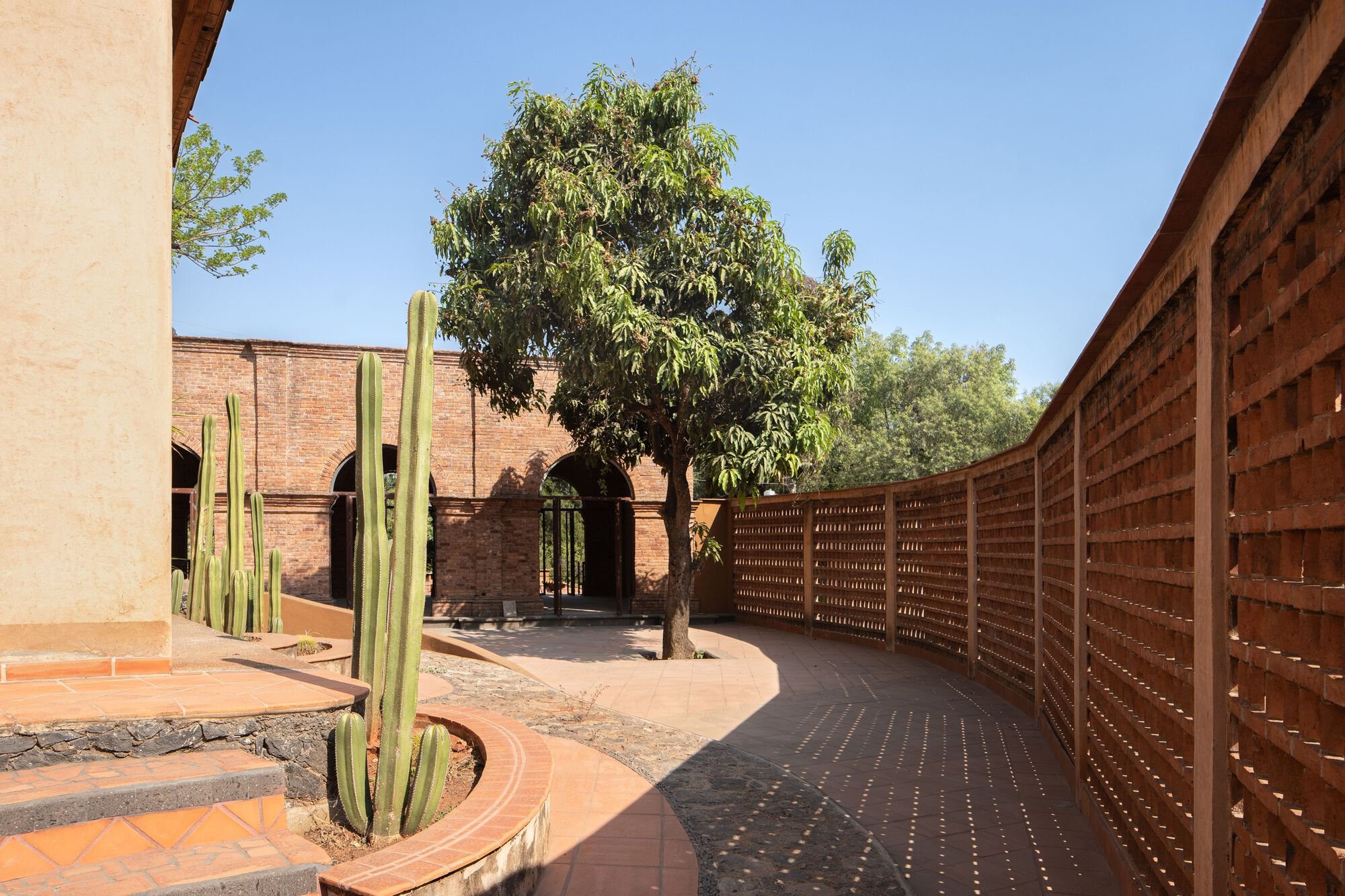
What makes the project genuinely interesting is its method of engagement with a trapezoidal site that slopes and is populated by mature trees and rock outcroppings. Lead architect Eréndira Soto and the team chose not to excavate. Instead, terraces and walkways step with the existing topography, and the organic geometry of curved walls wraps around trees rather than replacing them. The building does not announce itself with a grand facade. A narrow door and corridor lead visitors into a central courtyard that distributes the entire program, revealing the landscape in fragments rather than panoramas.
An Adobe Wall and a Brick Lattice
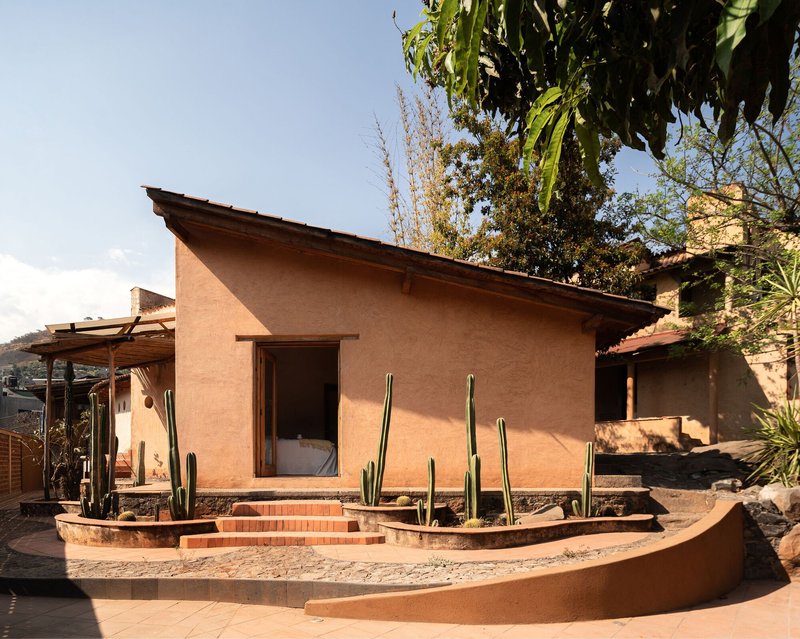
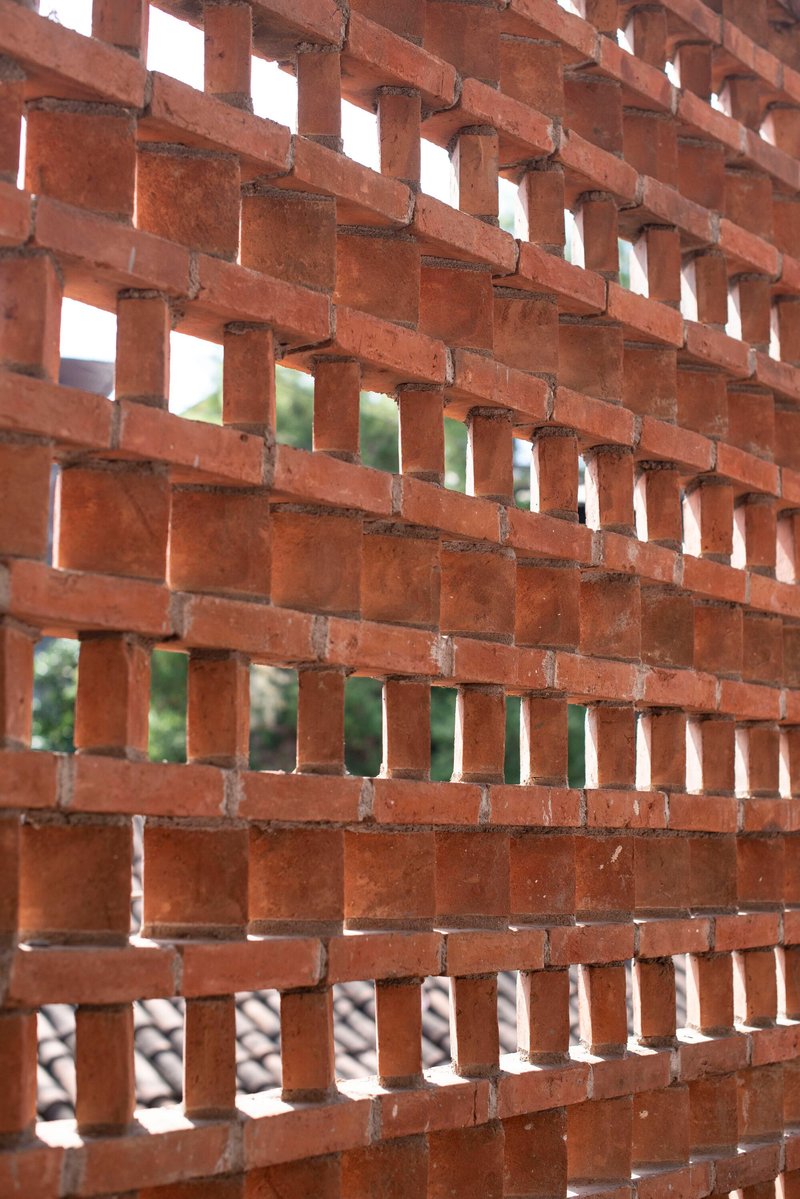
The primary gesture facing the town is a large adobe wall covered in clay-straw plaster, its surface catching afternoon light with a texture that reads as both primitive and deliberate. Topped with a perforated brick lattice in running bond, the wall simultaneously closes the compound for privacy and opens a dialogue with the surrounding neighborhood of informal housing. Light and greenery filter through the lattice, dissolving the boundary between inside and out without resorting to glass curtain walls or any other imported device.
The effect is generous. Rather than presenting a blank barrier to the street, the lattice gives something back: shadow, pattern, a suggestion of life behind the wall. It is a strategy rooted in the vernacular architecture of the region, but applied here with enough care that it reads as architecture rather than imitation.
Handcrafted Vaults and the Red-Brick Pavilion
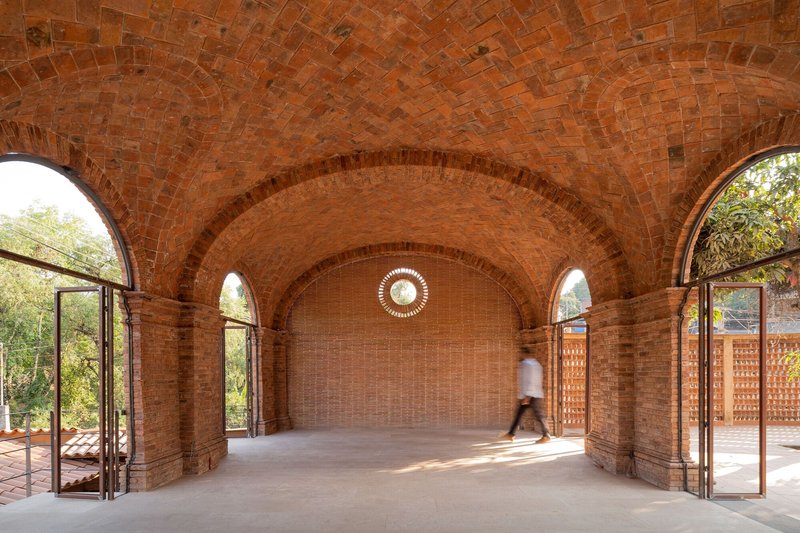
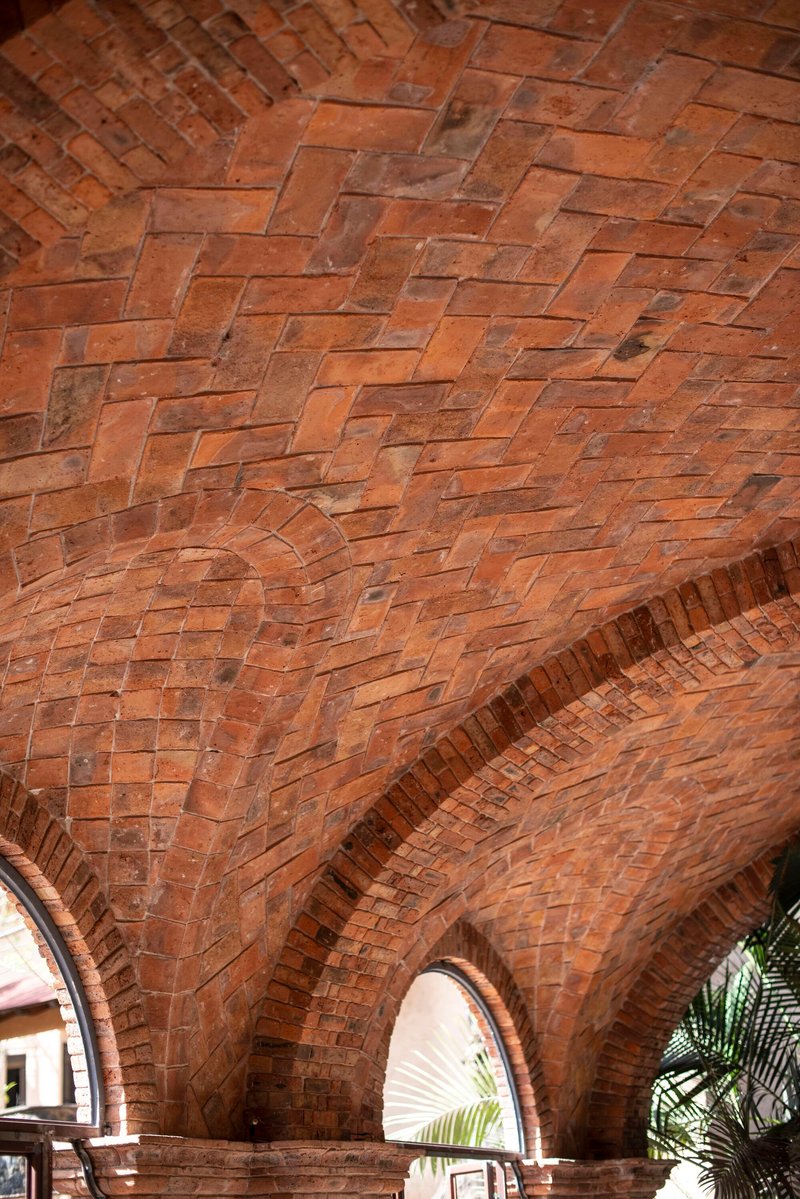
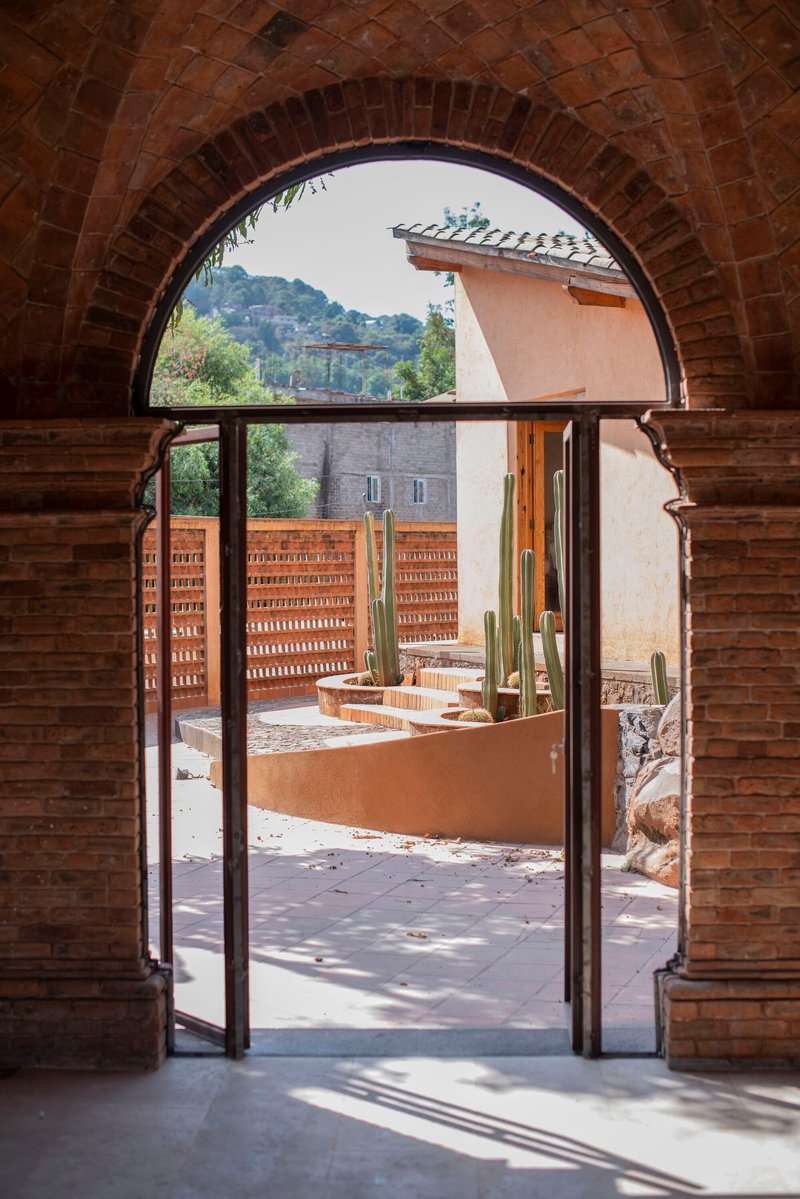
The most visually arresting interior space belongs to the red-brick pavilion, where handcrafted vaults in herringbone pattern spring from arched openings. Dappled sunlight falls through these arches onto the floor, and the quality of the brickwork is worth pausing over: each vault is built without centering in the traditional manner, a technique that demands skill and patience from the masons. The result carries an honesty that no poured-concrete shell can replicate.
Arched doorways frame views outward to the courtyard and the hills beyond Tacámbaro, establishing a rhythm of compression and release as you move through the sequence of rooms. The vaults manage height differences between the sloping roofs, creating visual amplitude in spaces that are, by the numbers, quite compact.
The Courtyard as Organizing Principle
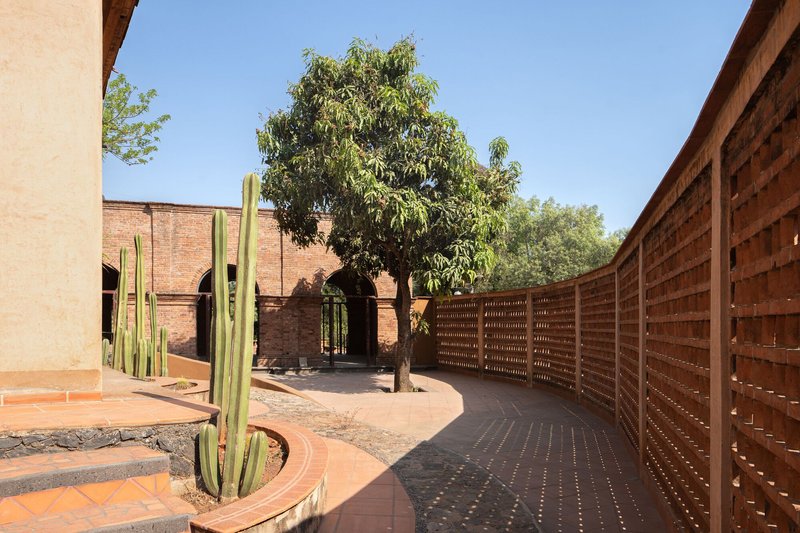
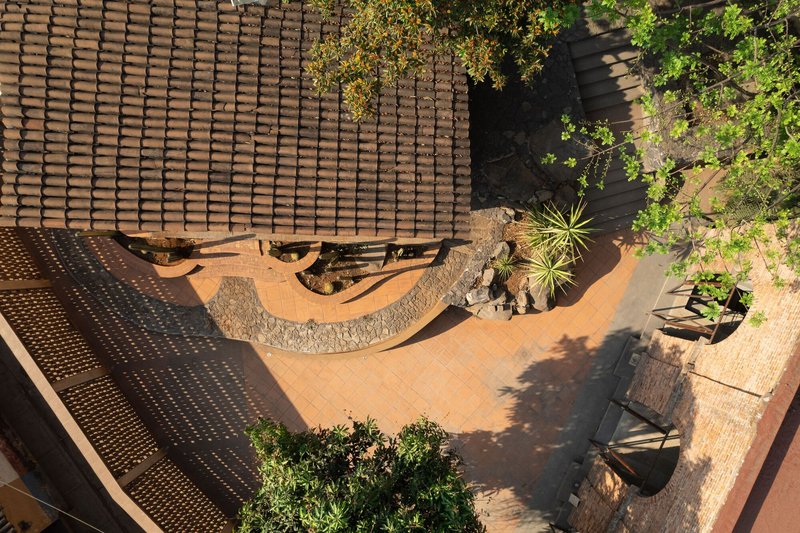
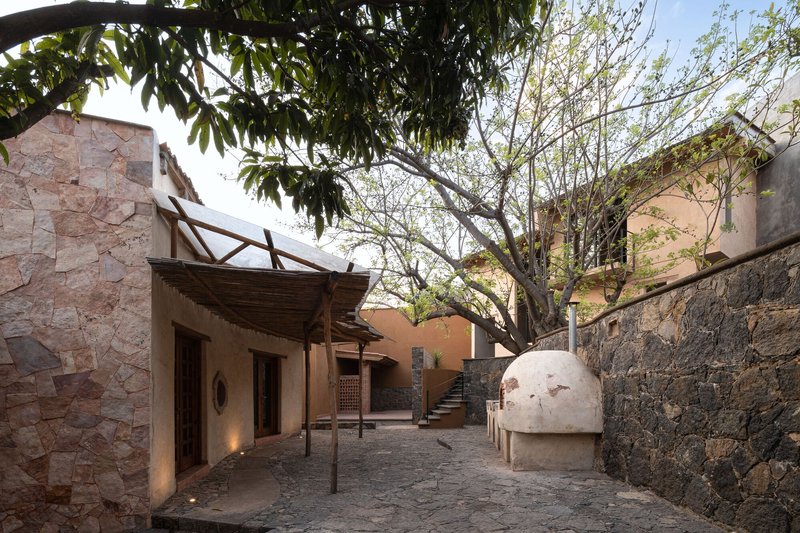
Seen from above, the plan reveals curving stone walls that radiate from a central courtyard planted with cacti, native species, and at least one significant existing tree. The organic geometry is not arbitrary; it responds to the trapezoidal plot and to the need to preserve natural elements on site. Pathways of dark paving tile follow the curves, and a domed outdoor oven anchors one corner of the courtyard, reinforcing the project's commitment to communal gathering and handmade culture.
The courtyard is the single move that makes the project legible. Without it, the two vacation houses would be isolated objects. With it, they become rooms around a shared landscape, a configuration as old as the region's colonial architecture but deployed here with a looser, more topographic sensibility.
Artisanal Interiors and the Materiality of Silence
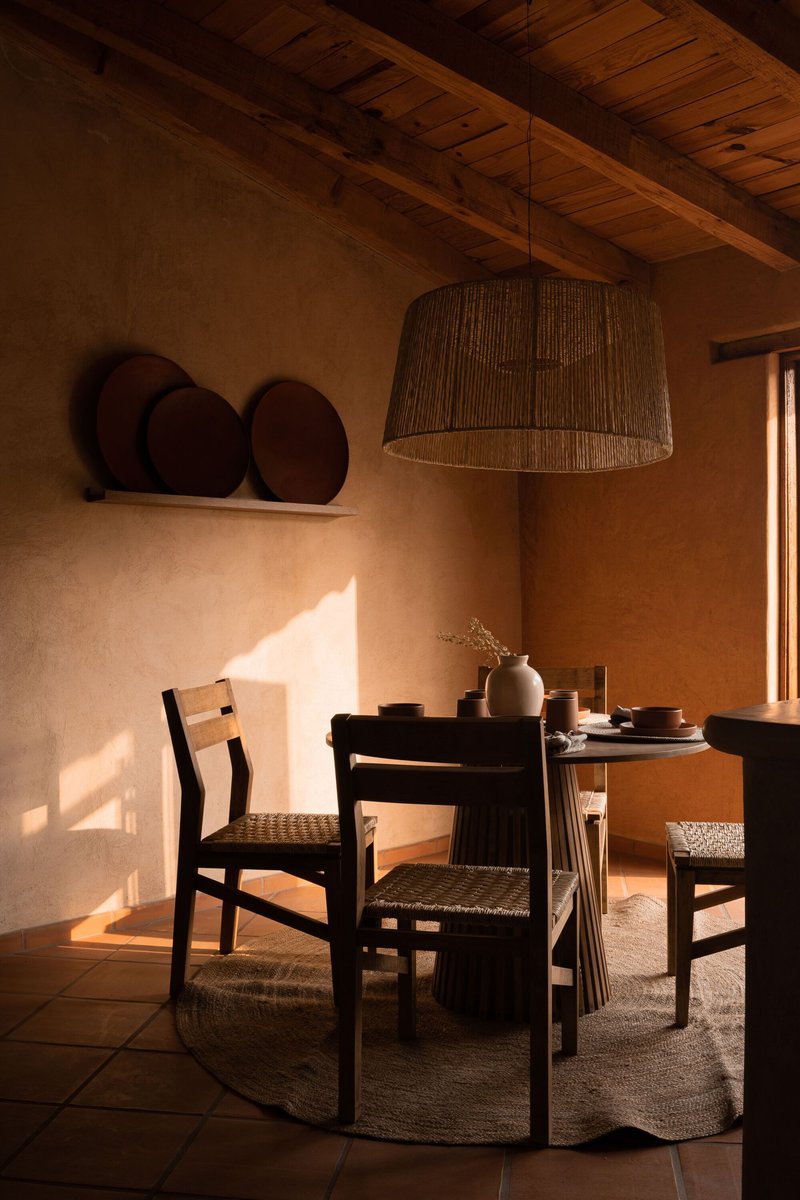
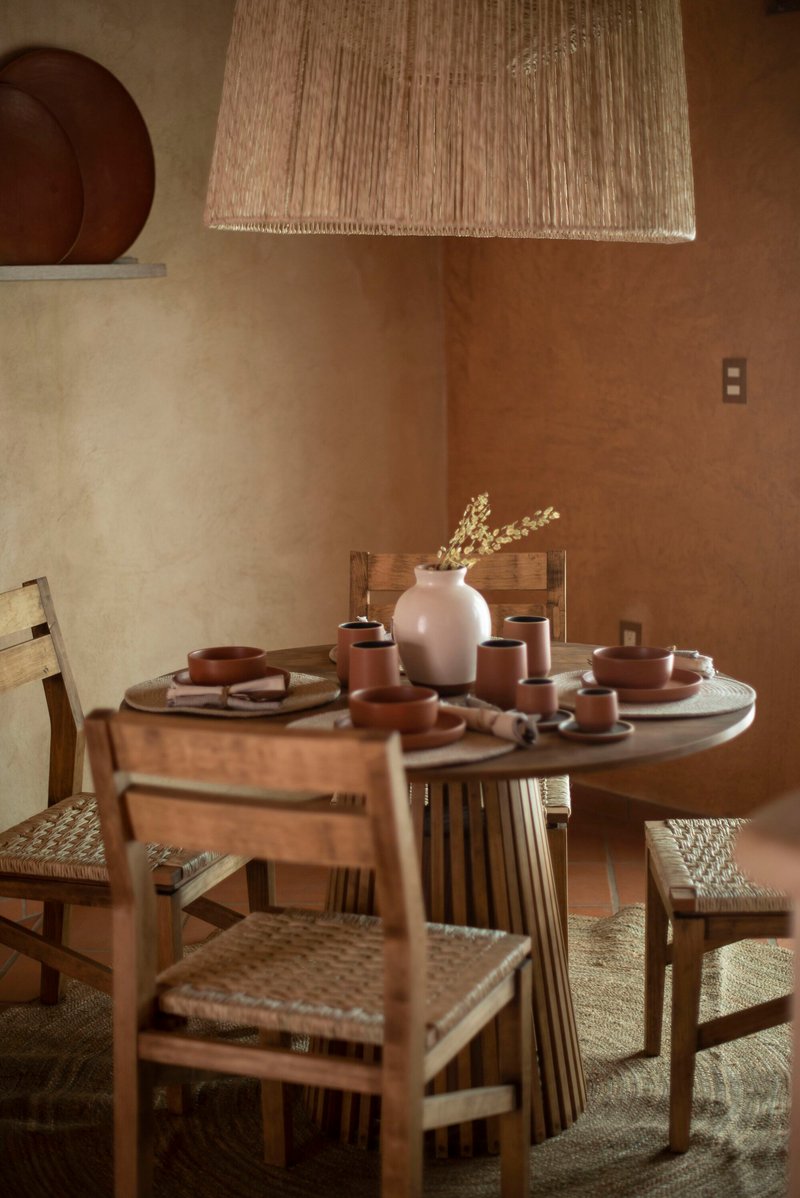
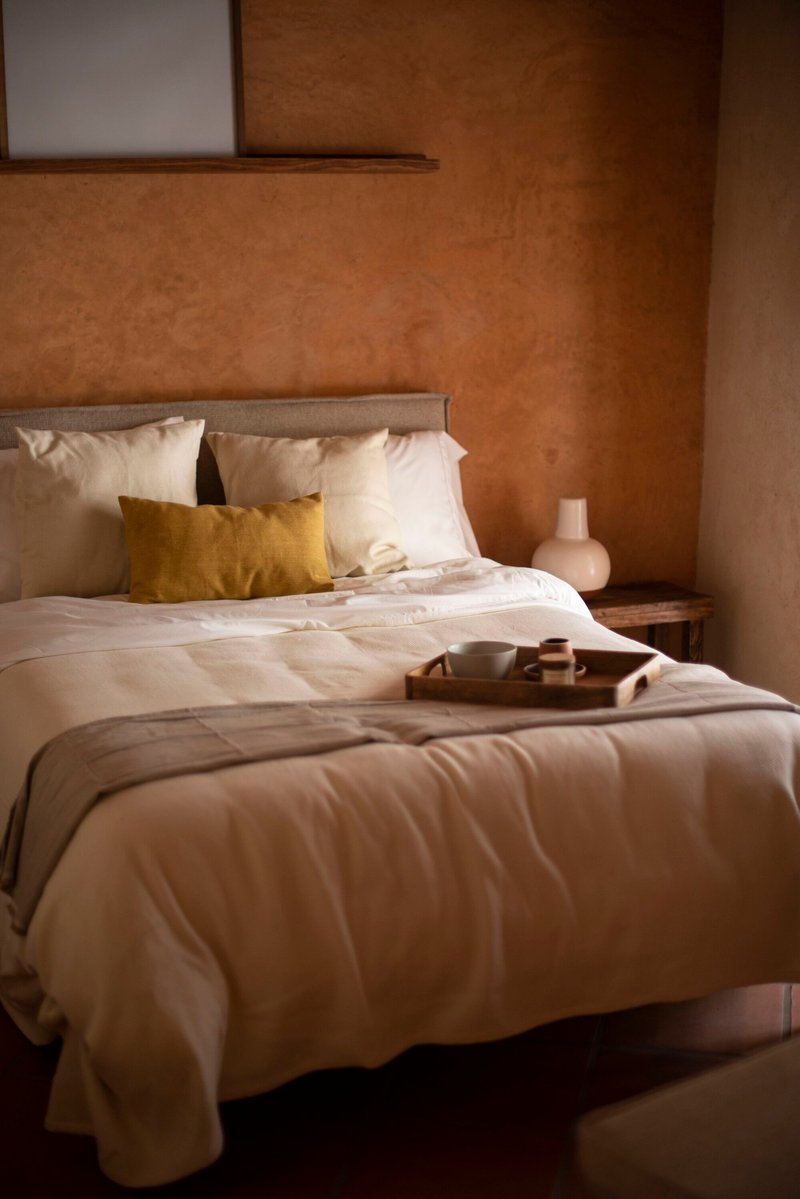
Inside, the reduced surface area of the rooms is compensated by a richness of surface and object. Woven pendant lamps typical of Michoacán hang over timber dining tables. Earthenware vessels sit on shelves against textured plaster walls. Timber-framed clerestory windows wash bedrooms with indirect light. The palette is earth tones throughout: terracotta floor tiles, clay plaster, raw wood beams. Nothing screams for attention, and that restraint is the point. The architects describe the materiality as evoking silence and introspection, and the spaces deliver on that promise.
Every piece of furniture and many of the decorative objects were created in collaboration with local artisans and artists, from woven headboards to ceramic platters. The integration is seamless because the materials of the furniture and the materials of the walls come from the same soil. There is no aesthetic dissonance between architecture and furnishing.
Timber, Screen, and Filtered Light
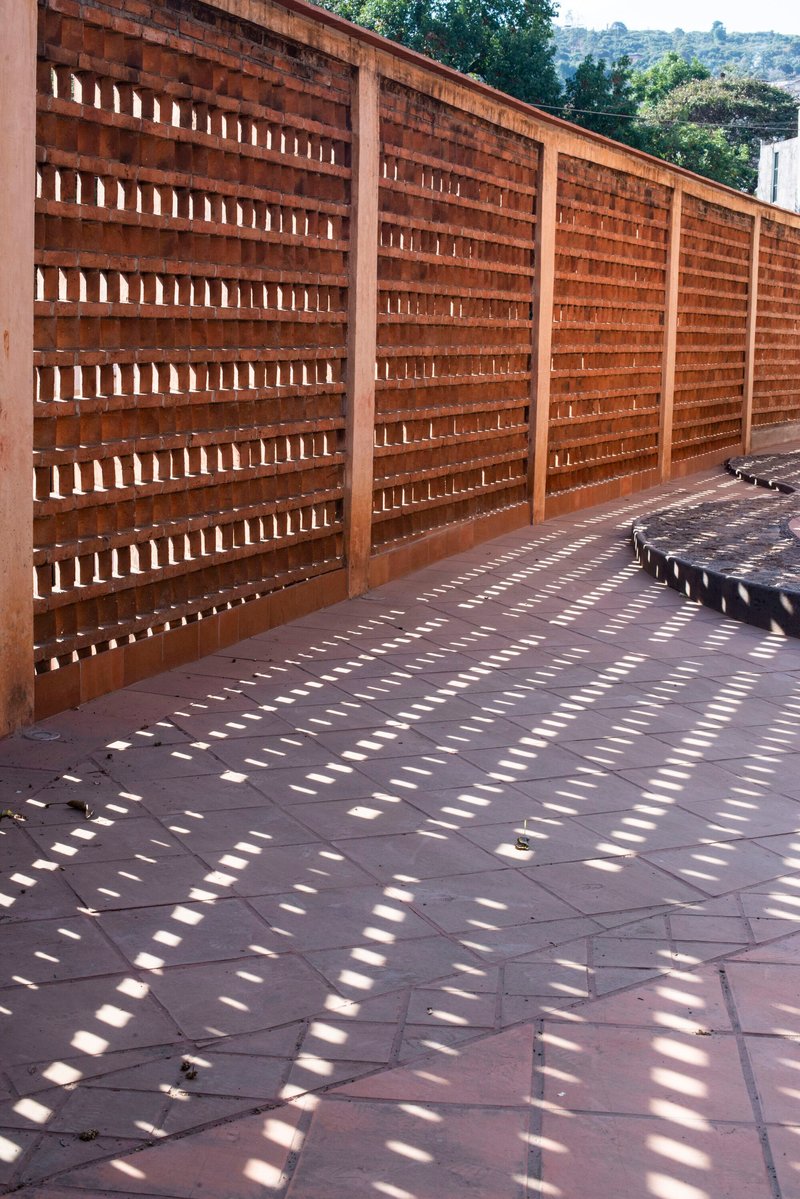
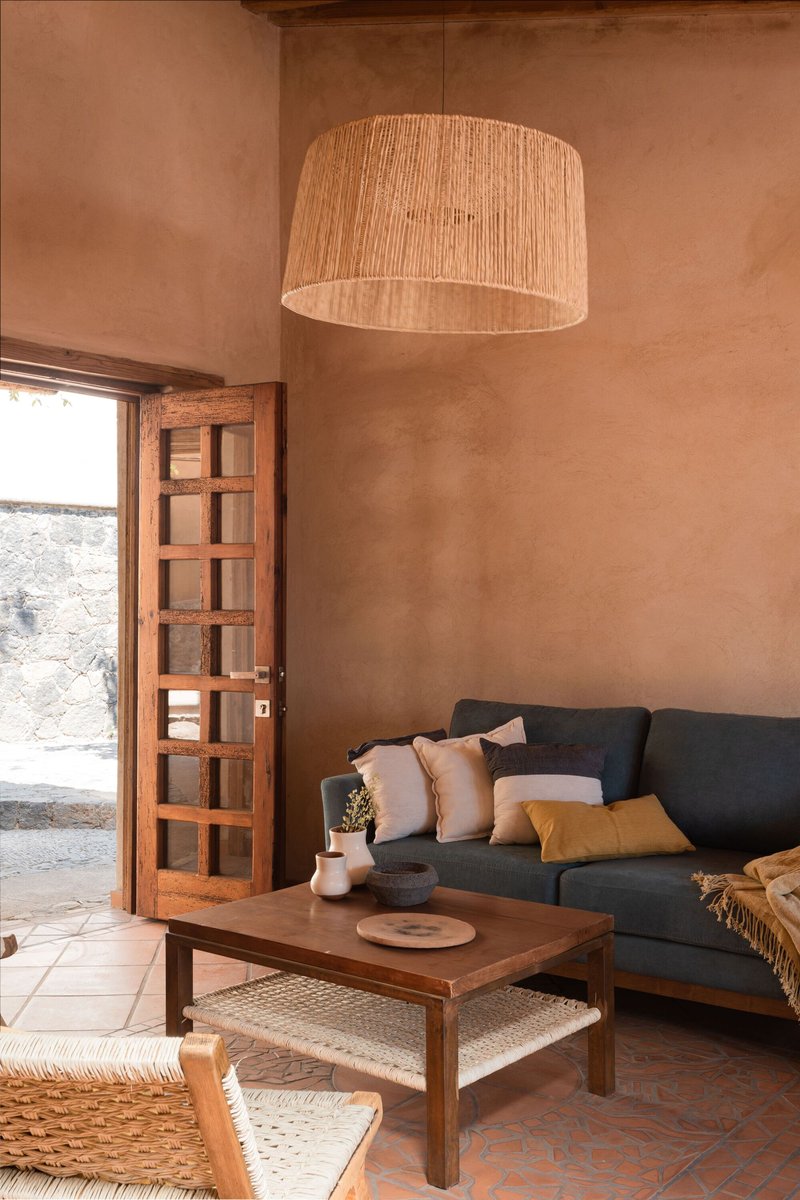
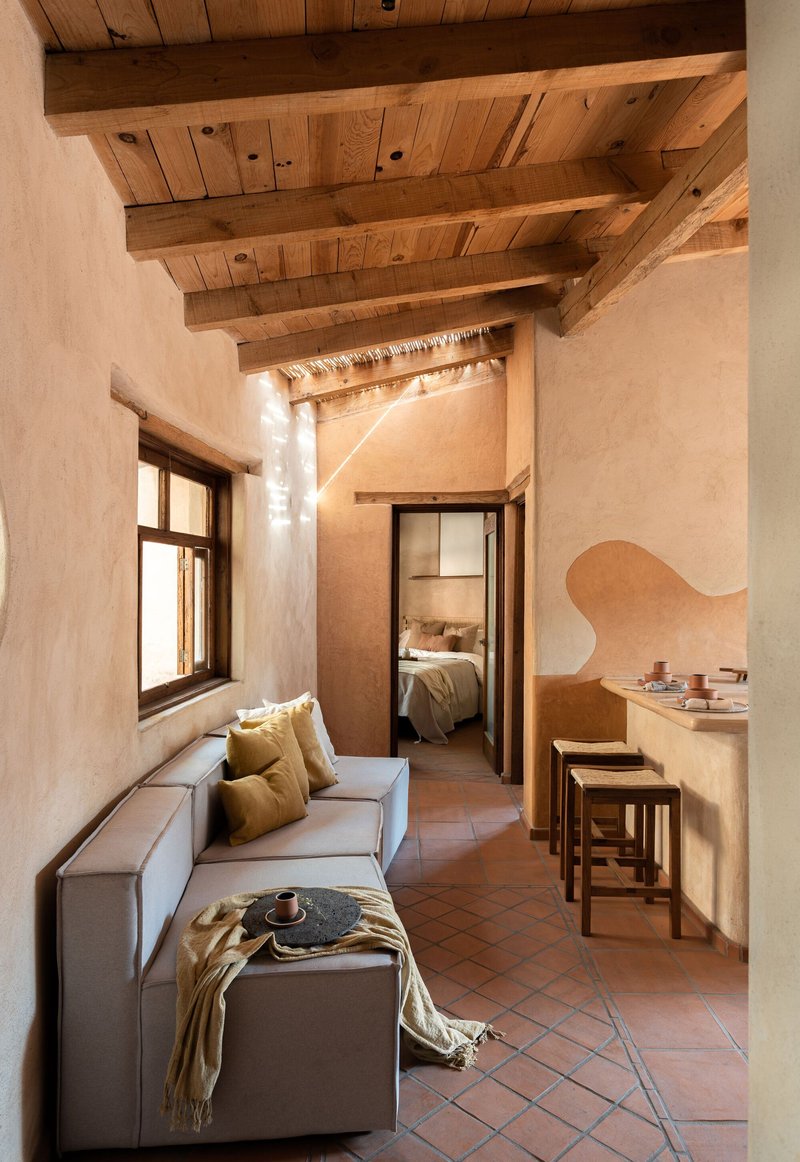
A perforated timber screen wall projects a geometric shadow pattern onto the dark paving, an effect that shifts with the sun's angle and turns a simple partition into a kinetic element. Elsewhere, gridded timber doors open directly to the courtyard, collapsing the threshold between living room and landscape. The corridors, lined with exposed timber beam ceilings and terracotta tiles, are generous enough to feel like rooms rather than passages.
The timber work is robust and unfinished, consistent with the project's larger refusal of industrial polish. Joints are visible, grain is prominent, and the wood will age alongside the adobe and clay plaster. The building is designed to weather, not to be maintained in a state of frozen perfection.
Details That Ground the Project
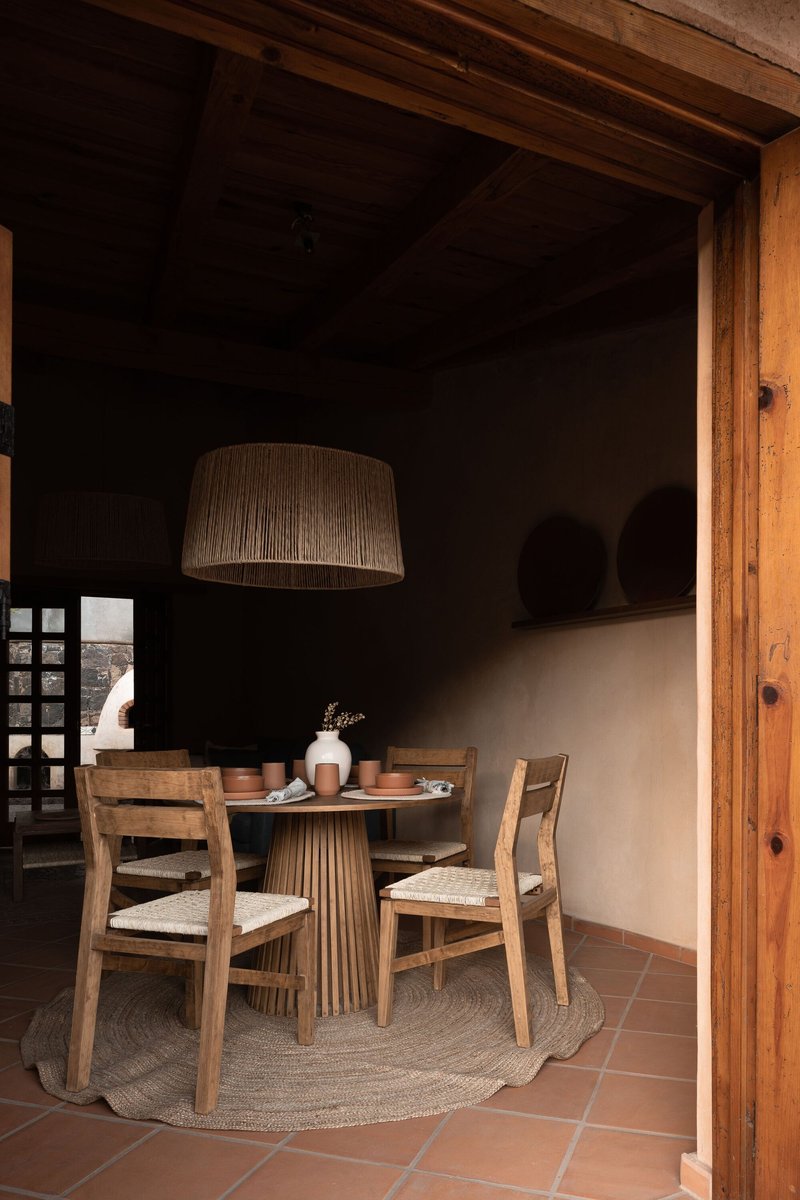
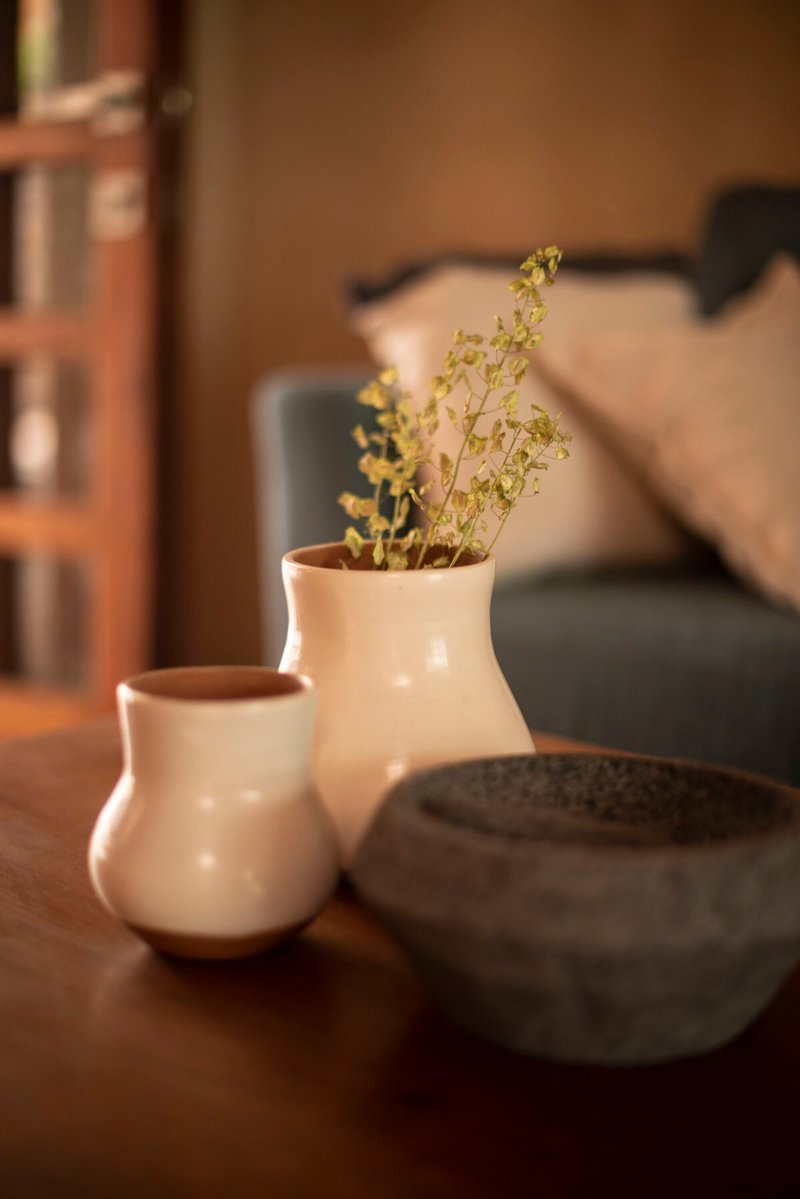
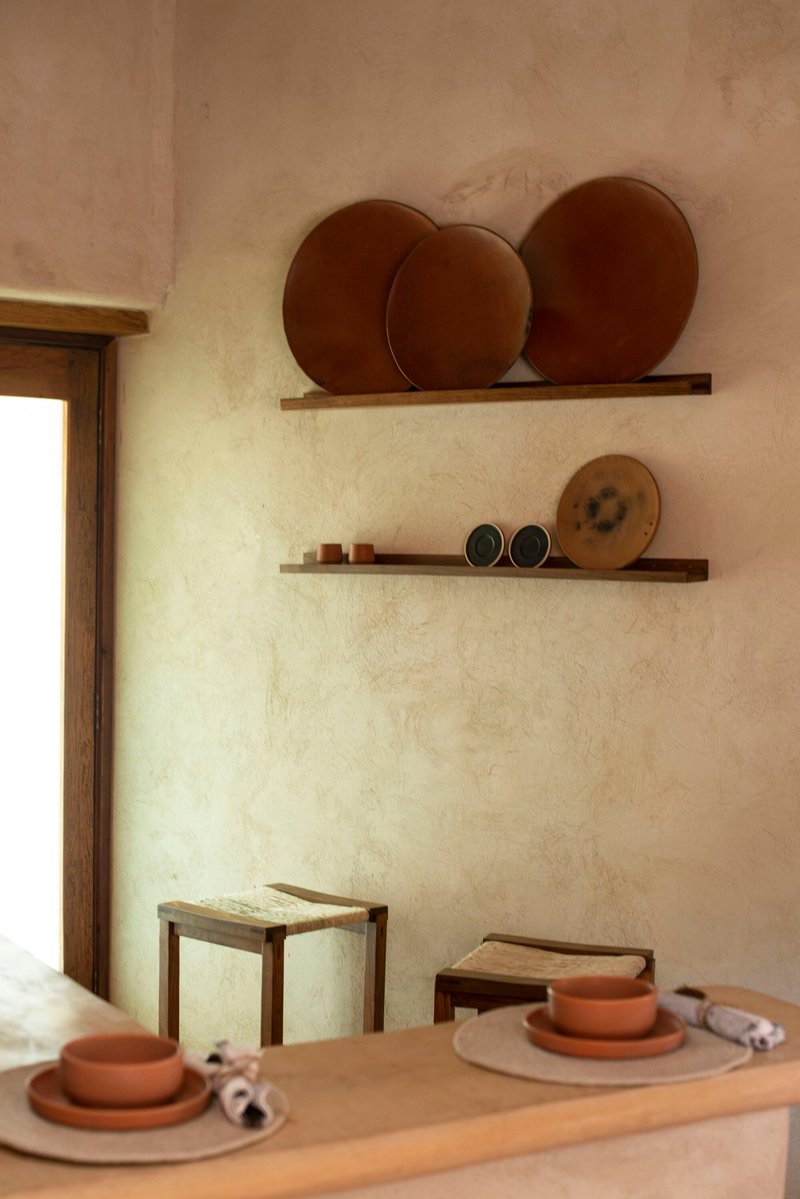
Close-up, the project reveals its commitments: ceramic vases with dried foliage arranged on a tabletop, floating timber shelves displaying handmade platters, lattice windows punched into dark earthen walls. These are not decorative afterthoughts; they are the logical conclusion of a design process that treats material culture as inseparable from spatial design. The clay griddles and woven lamps are as specific to Michoacán as the adobe walls, and placing them inside this architecture gives them a dignity that a gallery display cannot.
Living with the Hillside
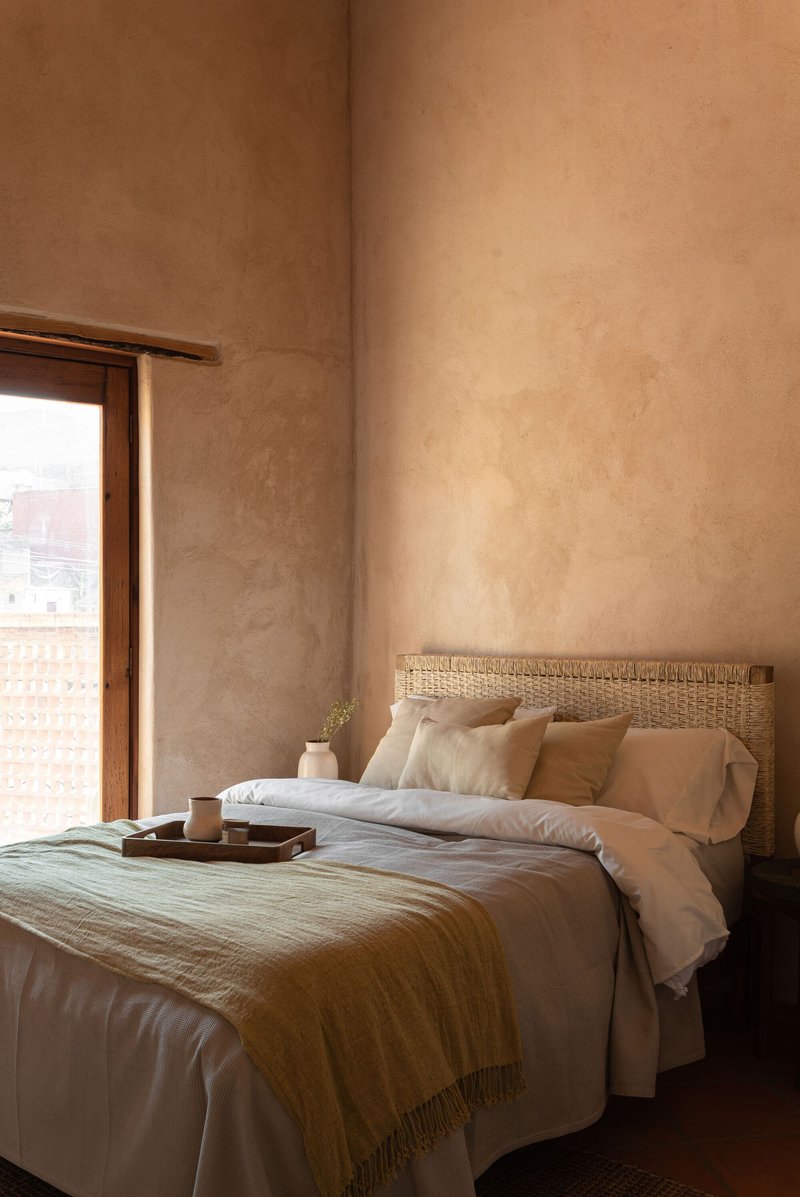
From a bedroom corner, a timber-framed window opens to a panorama of rooftops stepping down the hillside, connecting the interior to the scale of the town. Under evening light, the courtyard's stone walls and bare winter tree compose a scene that could belong to any century. The architects' decision to respect the topography, stepping the buildings rather than flattening the site, means that every room sits at a slightly different elevation, lending variety to what is essentially a very small program.
Plans and Drawings
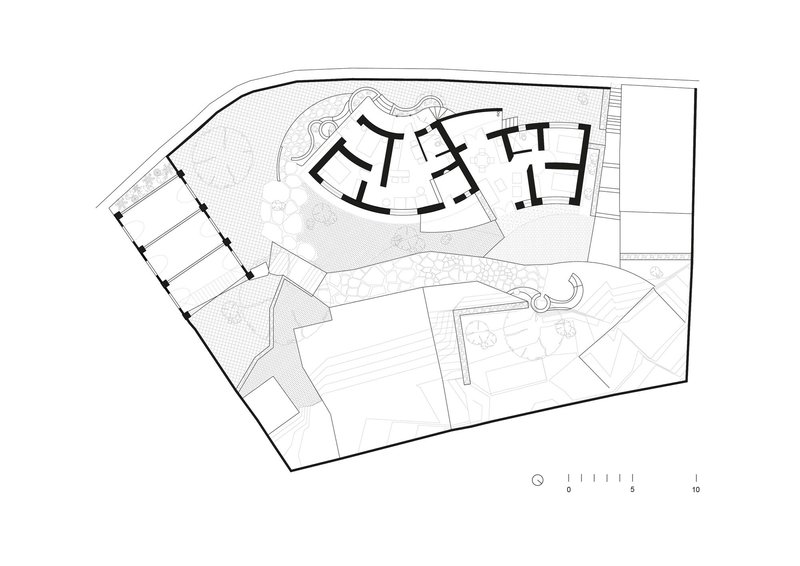
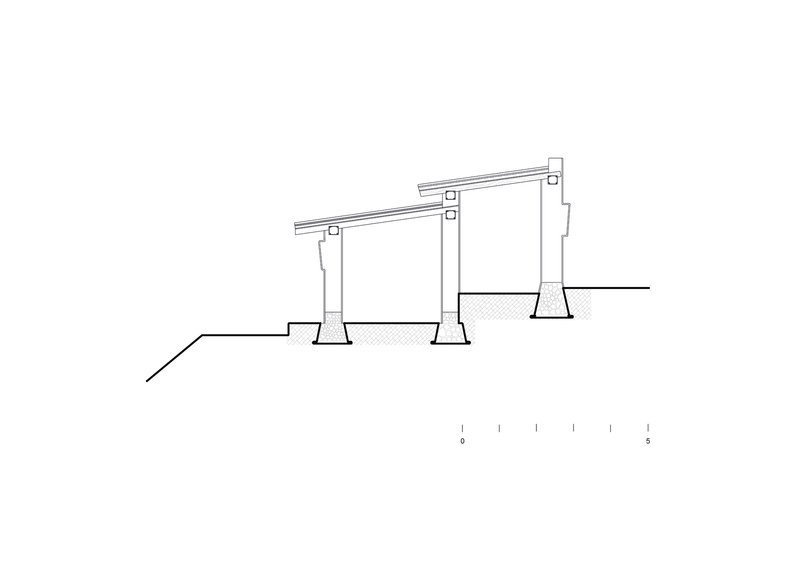
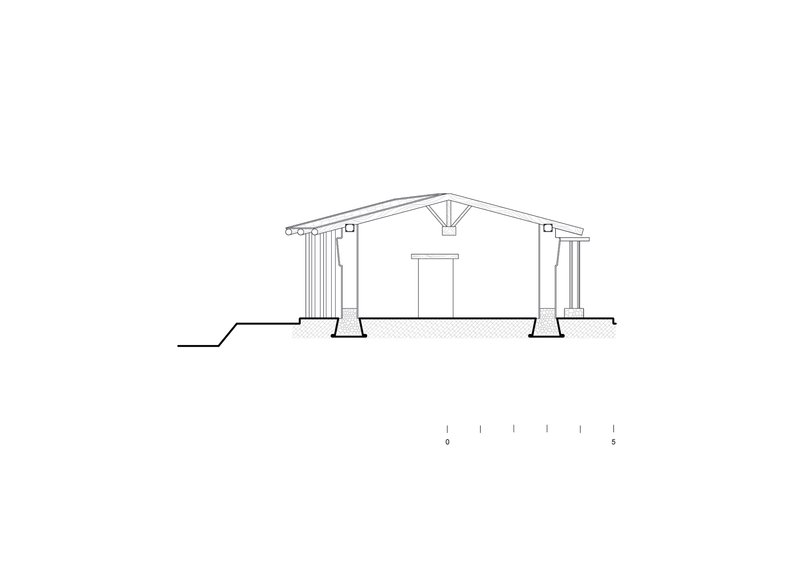
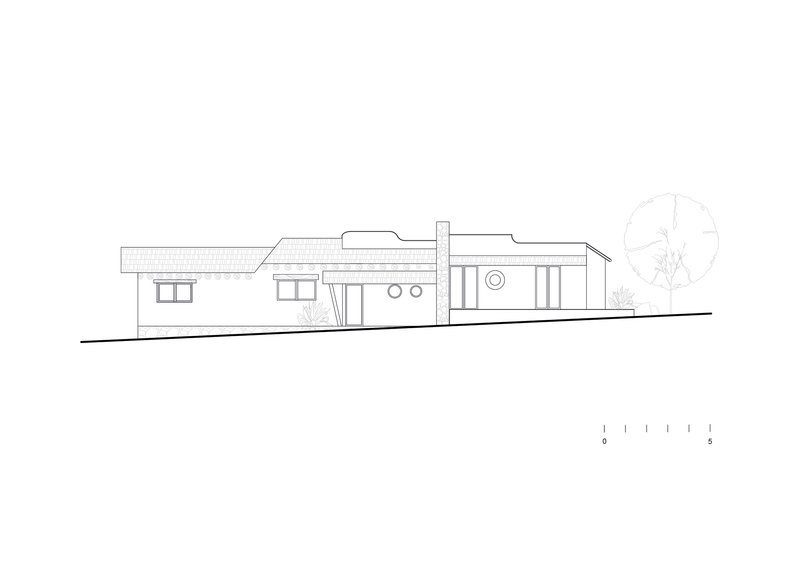
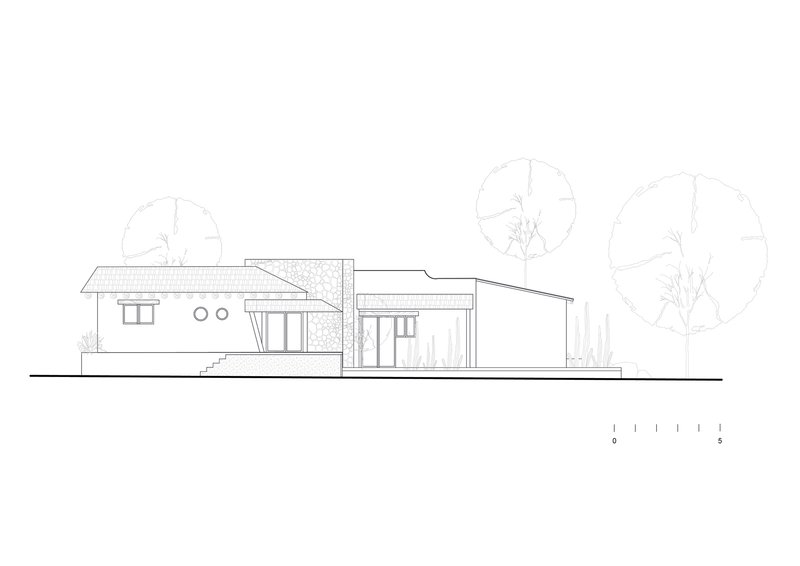
The site plan confirms the organic geometry visible in the aerial photographs: curved building volumes wrap a central courtyard with planted areas and a small pool, all contained within the trapezoidal lot. Sections reveal sloped roofs supported by tapered columns on stepped terrain, illustrating how the architects used roof pitch to manage the grade changes and create spatial height where it counts. The elevations are understated, low-pitched volumes punctuated by circular and rectangular windows, presenting a modest face to the surrounding neighborhood.
Why This Project Matters
Corsal House matters because it demonstrates that bioconstruction is not an aesthetic concession. The adobe, the handcrafted vaults, the clay plaster are not cheaper substitutes for concrete and steel. They are more labor-intensive, demand greater skill, and produce spaces with a sensory depth that industrial materials cannot match. In a market where vacation rentals tend toward generic minimalism or overwrought rusticity, this project occupies a rare middle ground: it is specific to its place, rigorous in its construction, and unpretentious in its ambitions.
The collaboration between MCH Arquitecto Interiorista and Echeri Bioconstrucción is itself instructive. One studio brings interior design precision; the other brings expertise in earth-based construction systems. The result is neither pure craft exhibition nor polished lifestyle product. It is a working building that houses guests, supports local artisans, and keeps alive a set of construction traditions that are genuinely at risk of disappearing. For a project of just 266 square meters, that is a significant return.
Corsal House by MCH Arquitecto Interiorista and Echeri Bioconstrucción, led by architect Eréndira Soto. Tacámbaro, Michoacán, Mexico. 266 square meters. Completed 2022. Photography by César Belio.
About the Studio
Share Your Own Work on uni.xyz
If projects like this are the kind of work you want to make, uni.xyz is a place to publish your own, find collaborators, and enter design competitions.




Popular Articles
Popular articles from the community

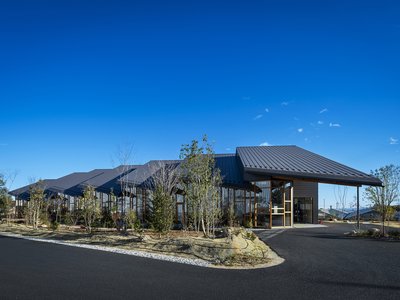
20 Most Popular Office Building Projects of 2025
From biophilic workspaces in India to net-positive energy offices in New Delhi, 20 office building projects that defined architecture in 2025.

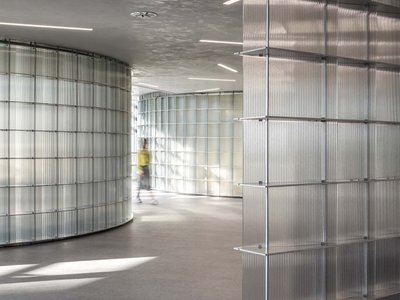
HCCH Studio Wraps a Shanghai High-Rise Office in Curved Walls of Translucent Glass
A 1,000 square meter fit-out in Lujiazui replaces the typical tech-office palette with layered glass, micro-cement, and quiet rigor.
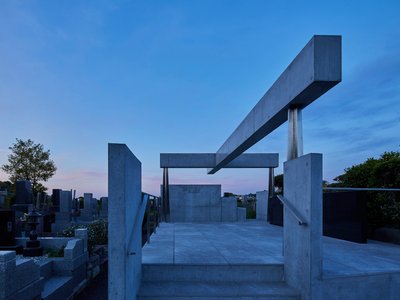
Takeshi Hosaka Architects Suspends a Concrete Cross Above a Yokohama Cemetery
A 28-square-meter burial renovation in Yokohama lifts the symbol of resurrection into the sky so mourners see it against heaven.
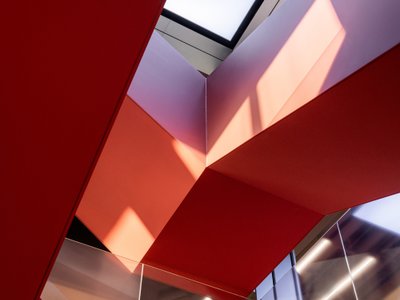
Ippolito Fleitz Group Identity Architects Turn Eight Floors in Shanghai into a Vertical Creative City
Publicis Groupe's new headquarters in Xintiandi reimagines the office as a courtyard-driven urban landscape stacked across eight floors.


Similar Reads
You might also enjoy these articles

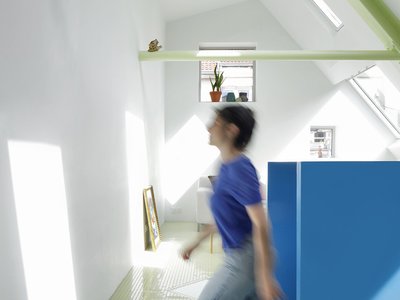
127af Flips a Tiny Bagnolet Rowhouse Upside Down with a Handcrafted Roof Extension
A 55-square-meter terraced house on the edge of Paris gains a luminous upper living floor through lightweight timber and steel.
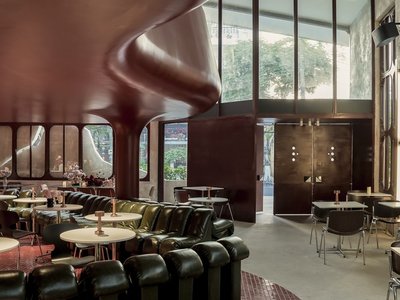
1.61 Design Workshop Wraps a 600-Square-Meter Café in Vietnam in Sculptural Burgundy Drama
Reden Café & Bistro pairs a helical staircase, mosaic floors, and deep red interiors to rethink Vietnamese hospitality space.
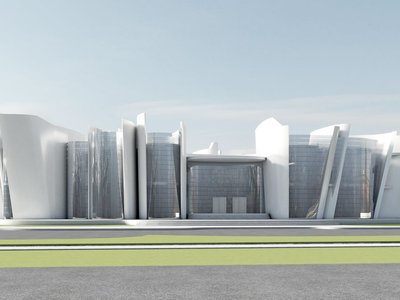
The Unbound Brain: A School Shaped by Cognitive Architecture
Cylindrical learning pods radiate like neurons from a central cortex, turning the floor plan into a spatial model of human thought.
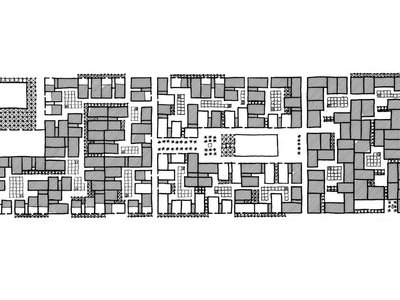
Revival Vernacular Architecture: Rammed Earth Settlements for the Sahara
A modular desert community in Mauritania that fuses passive cooling techniques with earthen construction and local craftsmanship.


Explore Residential Building Competitions
Discover active competitions in this discipline




The Global Benchmark for Architecture Dissertation Awards


Challenge to design a portable theatre


Challenge to design a portable music platform


Challenge to design an open learning module for the elderly
Comments (0)
Please login or sign up to add comments
No comments yet. Be the first to comment!