
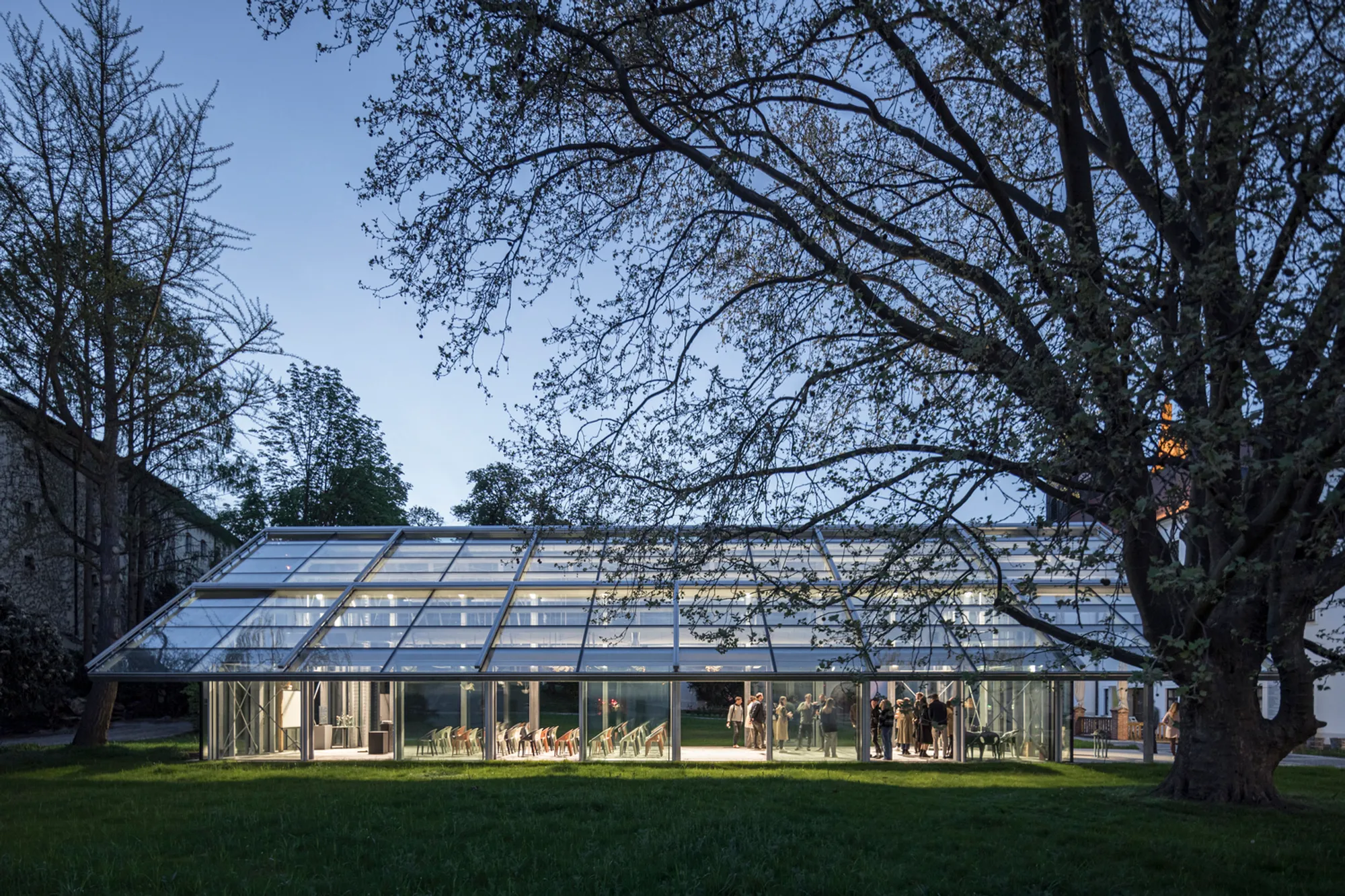
Mendel’s Greenhouse by CHYBIK + KRISTOF: A Transparent Pavilion Bridging Genetics, Heritage, and Innovation in Brno
ransparent pavilion in Brno honoring Gregor Mendel, blending genetics, heritage, and sustainability through CHYBIK + KRISTOF’s contemporary design.


Honoring a Scientific Legacy through Architecture
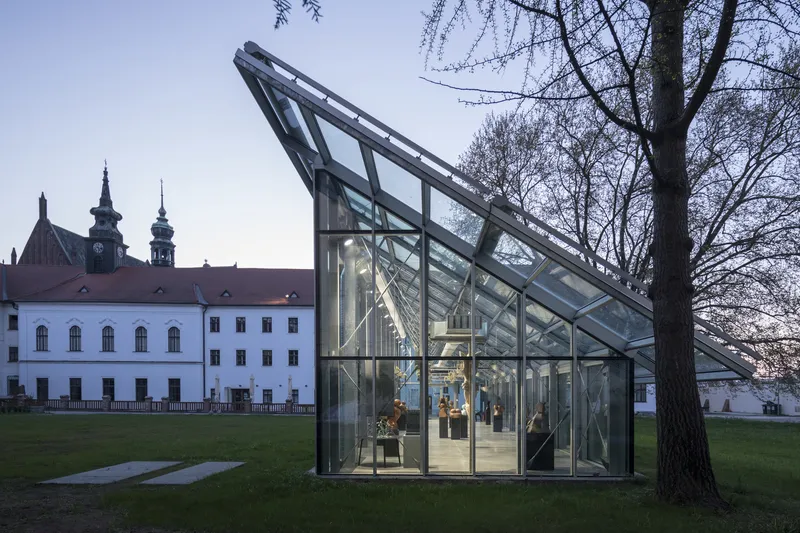
Mendel’s Greenhouse, designed by renowned architecture firm CHYBIK + KRISTOF, is a contemporary tribute to the 19th-century greenhouse at the Augustinian Abbey in Brno, where Gregor Mendel—father of modern genetics—conducted his groundbreaking experiments. This new structure stands on the original site, destroyed by a storm in the late 1800s, and commemorates the bicentenary of Mendel's birth with a visionary architectural response that merges science, sustainability, and memory.
Bridging Past and Present
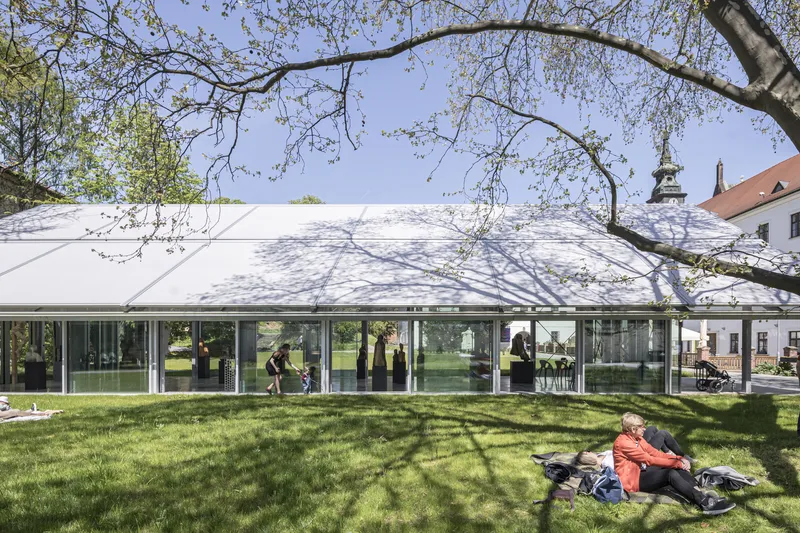
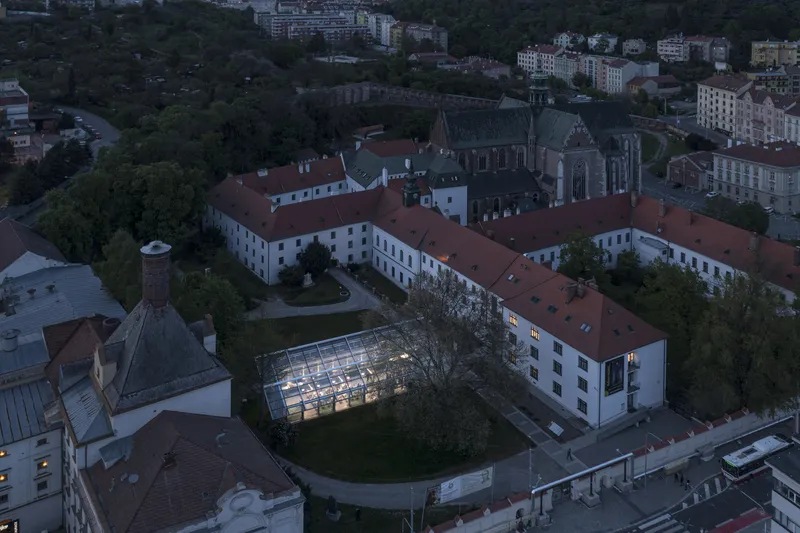
Set against the backdrop of the historic Abbey, the transparent pavilion is more than a scientific homage—it is a functional, public space that revives the role of the original greenhouse as a center for experimentation and knowledge. CHK’s design revives the spirit of Mendel’s work while redefining it within a modern, community-oriented context.
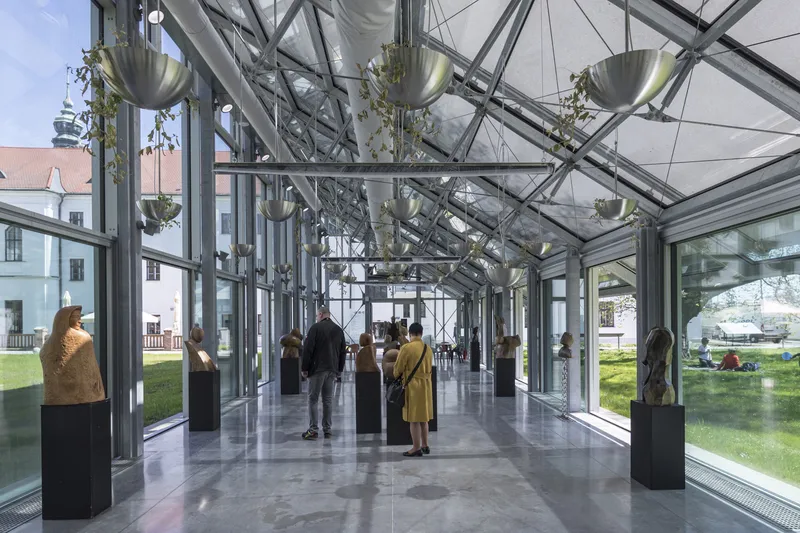
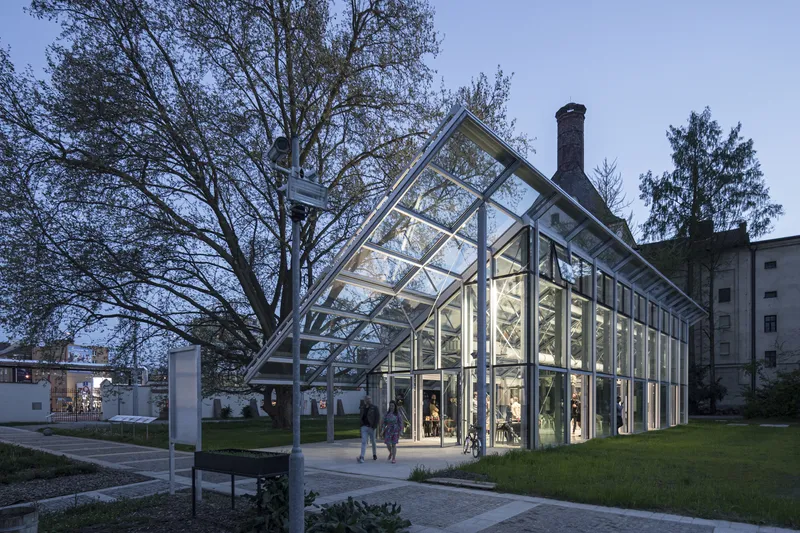
This glass-enclosed pavilion engages in open dialogue with its lush surroundings, allowing unobstructed visual access to the monastery gardens. It functions as a hybrid space—housing permanent exhibitions on Mendel's legacy, and hosting international conferences, cultural programs, and public lectures—becoming an integral part of Brno’s cultural and intellectual landscape.
Architectural Concept and Material Narrative
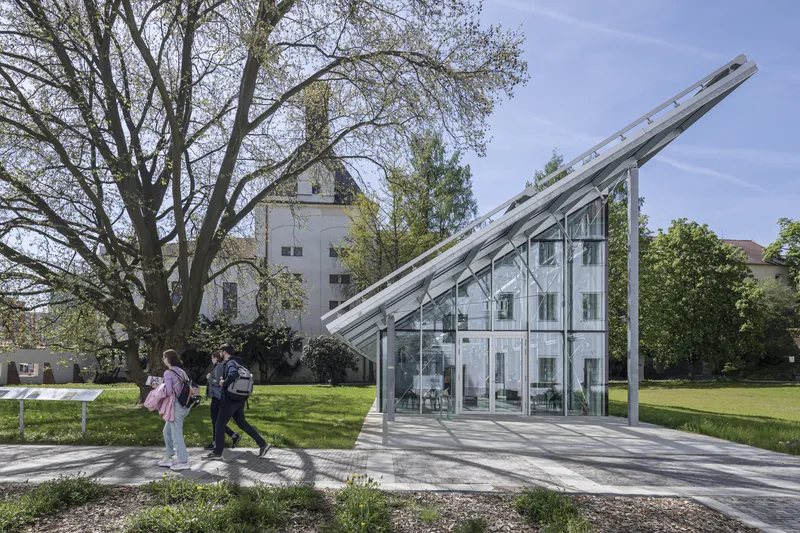
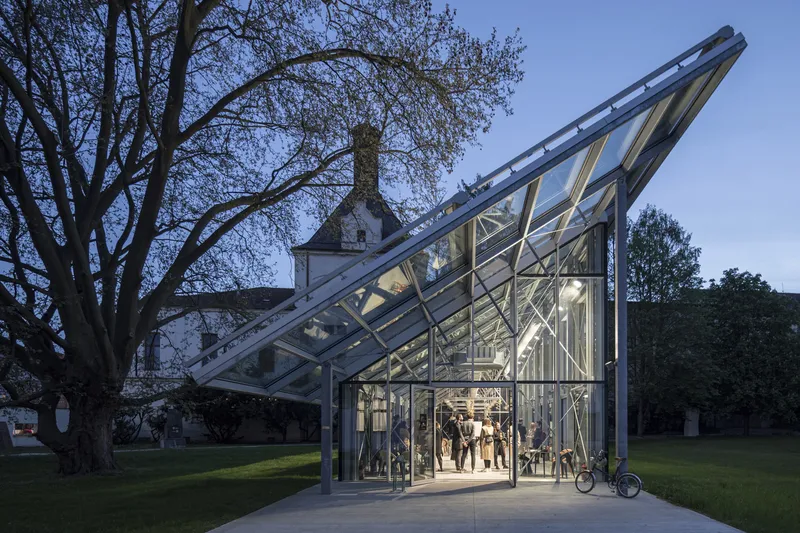
The architectural language draws directly from historical documentation, faithfully echoing the original footprint, orientation, and pitched roof of the former greenhouse. However, the contemporary design takes a conceptual leap with its structural expression. The steel roof truss, inspired by Mendel’s Laws of Inheritance, embodies the principles of genetic segregation. Nodes and branches in the steel framework symbolically interpret the laws of heredity, visible through the fully glazed roof and walls.
The building’s open structure becomes an educational and experiential journey through genetics, as the architecture itself visualizes Mendel's scientific concepts in three-dimensional form.
Sustainable Innovation Rooted in Simplicity
In keeping with CHK’s sustainability ethos, the greenhouse employs a palette of recyclable, cost-effective materials such as steel and glass. Beneath its refined appearance lies a technically advanced environmental system. Underground heat pumps provide year-round climate control, while operable shading devices and embedded blinds modulate interior conditions naturally. This passive environmental strategy reflects the very nature of a greenhouse—regulation and adaptability through design.
By minimizing carbon emissions and maximizing material efficiency, the project serves as a model for sustainable public architecture that is both technologically intelligent and symbolically rich.
A Cultural and Scientific Catalyst for Brno
Situated in the historic Stare Brno district, Mendel’s Greenhouse acts as a living monument that intertwines science, architecture, and faith. It reactivates the legacy of Gregor Mendel not as static memory, but as a vibrant, evolving story that continues to inform science, architecture, and community values.
CHYBIK + KRISTOF have not only rebuilt a historical structure—they’ve created a new spatial narrative that enhances the urban fabric of Brno, offering an inclusive public space that celebrates innovation, accessibility, and the cultural heritage of one of science’s most important figures.



Popular Articles
Popular articles from the community


Co-Life: Senior Housing Design That Reconnects Older Adults With the City
Co-Life reimagines senior housing design through healing gardens, shared streets, workshops, and a sustainable community across generations.

Riyadh For All: Intergenerational Urban Design for Active Aging in Rabat
Riyadh For All reimagines urban design in Rabat with intergenerational co-living, adaptive courtyards, and Moroccan cultural exchange today.

Play: Fragments of Their World
Familiar architecture becomes modular playground design, creating safe spaces where displaced children can learn, connect, imagine and play.

The Ocean Hive: Sustainable Architecture for a Self-Sufficient Civilization at Sea
The Ocean Hive imagines sustainable architecture at sea, where modular habitats, algae, wave power and ocean waste sustain a growing colony.

Similar Reads
You might also enjoy these articles


Hodi-Mandai Geram
Project Function: Preservation and revitalization of the Intangible heritage and socio-spatial identity of the Hodi by Housing, Cultural Memory Center, Sacred Grove, landscape, local tourism economy


Olio Towers: A Mid-Rise for Performers That Fuses Housing, Rehearsal, and Stage
Located blocks from Houston's Theater District, this modular tower stacks living units around a central performance atrium.

Oasis: Modular Green Housing Carved into Dhaka's Urban Fabric
A shortlisted Plugin Housing entry reclaims unauthorized settlements in Dhaka with stepped concrete volumes, green roofs, and ventilation-driven design.

Black Hole: A Floating Megastructure for the Post-Physical Era
Emiliano Mazzarotto envisions a spherical, self-scaling arena where e-sports, digital hotels, and holographic stadiums replace traditional public space.


Explore Architecture Competitions
Discover active competitions in this discipline



Challenge to reimagine the Iron Throne


Photograph architecture without architects


Illustrate the lost glory of Angkor Wat - Render Challenge


Design challenge to reuse E-waste
Comments (0)
Please login or sign up to add comments
No comments yet. Be the first to comment!