

Meta - Bin
The city and its associated infrastructure are not static, they are a dynamic process like biological metabolism.

Rubbish bins are found in every corner of our lives, in homes, communities, shopping streets, parks, and so on. As a carrier of the waste produced by human beings in society, it is closely related to the social life of human beings. However, as the existing paradigm of the public litter bin is too rigid to adapt to the diversity of complex urban scenarios, we seek to create a prototype of a universal public rubbish bin that would facilitate people's lives, reduce waste of resources and improve the urban landscape.
The design of the bins is based on research, questionnaires, and site visits. Through these methods, we analyze the use of current bin materials, the problems with the specification and use of rubbish bins in each environment, and user satisfaction. The conclusion shows that the current bins are difficult to meet the needs of the people and are not conducive to social development.
Our design concept is based on the Japanese metabolism system, with a modular design, prefabricated in the factory and assembled to meet the needs of the site. The transportation of prefabricated components from the factory and the citizen participation in the assembly process, the replacement of damaged single components, all reduce the waste of resources. At the same time, when the rubbish bin is created by the citizens, it essentially optimizes the way the waste is dumped and becomes part of the citizens' lives, thus solving the waste problem.
Four iterations of the design process were carried out, from the initial surfaces(boards) assembly to a convenient, removable assembly of points(joints), lines(sticks), and surfaces(boards). At the beginning of the design process, we considered the absolute homogeneity of the factory prefabricated parts, i.e. only the surfaces would be used for splicing. However, because the inconvenience of the actual operation is not conducive to the free splicing of the bins in the field, we change the splicing method, the line and the surface for splicing, but this way the combination of line and surface is more difficult, the assembly requirements are too high, we decided to add a new element: point. This deepened the project into a combination of points, lines, and surfaces. The design of it was again developed to create a new plug-in structure, resulting in a portable and removable modular assembly system that is expected to meet the possible change of the site and social needs of the bin.
We respond to three site issues: residential areas, commercial areas, and urban green spaces. Several options are created in terms of functional efficiency, convenience, and other considerations. The residential area is designed to minimize the disturbance of the bin to the environment by adding some areas of vegetation and planting to weaken the existence of the bin. In the commercial area, the advantages of the frame are given full play, with some blocks used as display cabinets and additional seating functions. In the urban green area, the whole bin is made into a climbing device, so that it can be better integrated with the environment as a whole, creating a play function for the citizens. Amongst these three considerations is the fact that the bin itself can grow freely according to the needs of the environment, a form of bin that goes from 0 to 1 and from 1 to infinity, thus making it a part of the ever-changing society.
There are still many shortcomings in this project. The selection of materials is based on a lack of a practical, physical selection process and the design is considered more from the existing knowledge base than by comparison. There is no theoretical basis for the size and height of the bins, and the project is limited in depth to the design part due to the lack of collaboration with relevant disciplines. It only provides a way of thinking about the design, but it is still a long way from the implementation of the project. These are the limitations of our learning phase and we hope to have a fuller and more reasonable answer to these questions in the future.
In the future, the intelligent bin module can be combined with big data and other technologies to monitor the use of the bin in real-time and to change the shape of the rubbish bin in the context of the situation. Functions, materials, and production processes will be used to meet the needs of a more efficient, environmentally friendly, and citizen-friendly installation.

Popular Articles
Popular articles from the community


The Amber Palace Opera: A Geological Fiction Surfaces on Tallinn's Baltic Waterfront
Pierre Brillard reimagines a Baltic legend as a public landscape, opera house, and waterfront promenade rooted in Tallinn's coastal identity.

Manzana Morphosis: Stretching Barcelona's Grid into a Living Landscape for 2050
A radical reworking of the Eixample manzana turns density into a tool for generous public space, vertical ecology, and environmental performance.

Tsunami Convergenics: Turning Catastrophic Ocean Forces into Underwater Housing Infrastructure
A speculative underwater settlement off the coast of Onagawa, Japan, treats tsunamis and typhoons as energy sources rather than threats.

Singing Woman: An Opera House That Performs Before the Curtain Rises
Ovidiu Cristian Pavel's conceptual opera house translates Estonia's choral identity into a sculpted waterfront landmark facing the Baltic Sea.

Similar Reads
You might also enjoy these articles

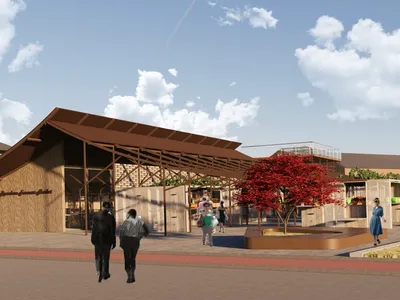
The Rhythm of Seasons
A Farmers' Market Connecting Nature and the City
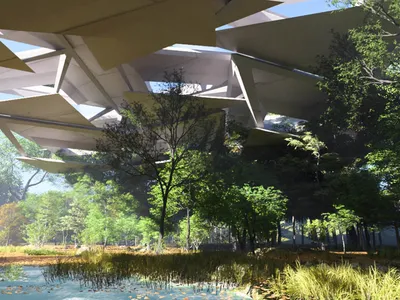

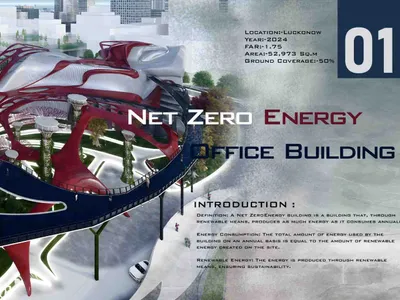
More Than a Building-Designing a Living System
More Than a Building-Designing a Living System
Base Beyond
DESERT COMPOUND ARID: TOURISM OF ABSENCE AND ABUNDANCE

Explore Kinetic Architecture Competitions
Discover active competitions in this discipline


Challenge to reimagine the Iron Throne

Photograph architecture without architects

Illustrate the lost glory of Angkor Wat - Render Challenge

Design challenge to reuse E-waste
Comments (0)
Please login or sign up to add comments
No comments yet. Be the first to comment!