

Mireia and Toni's House: Innovative Narrow-Plot Residential Design in Badalona
Mireia and Toni's House in Badalona features a narrow, light-filled layout with a central courtyard, double-height spaces, modern materials, and sustainable design.


Located in the urban fabric of Badalona, Spain, Mireia and Toni's House, designed by Vora Arquitectura, is a striking example of intelligent design on a narrow, deep plot. Completed in 2023 and covering 165 m², this home demonstrates how thoughtful spatial planning and material choices can transform constraints into architectural opportunities. Photography is by Adrià Goula, and the project was led by architects Pere Buil and Toni Riba.
Maximizing Light and Space on a Narrow Site
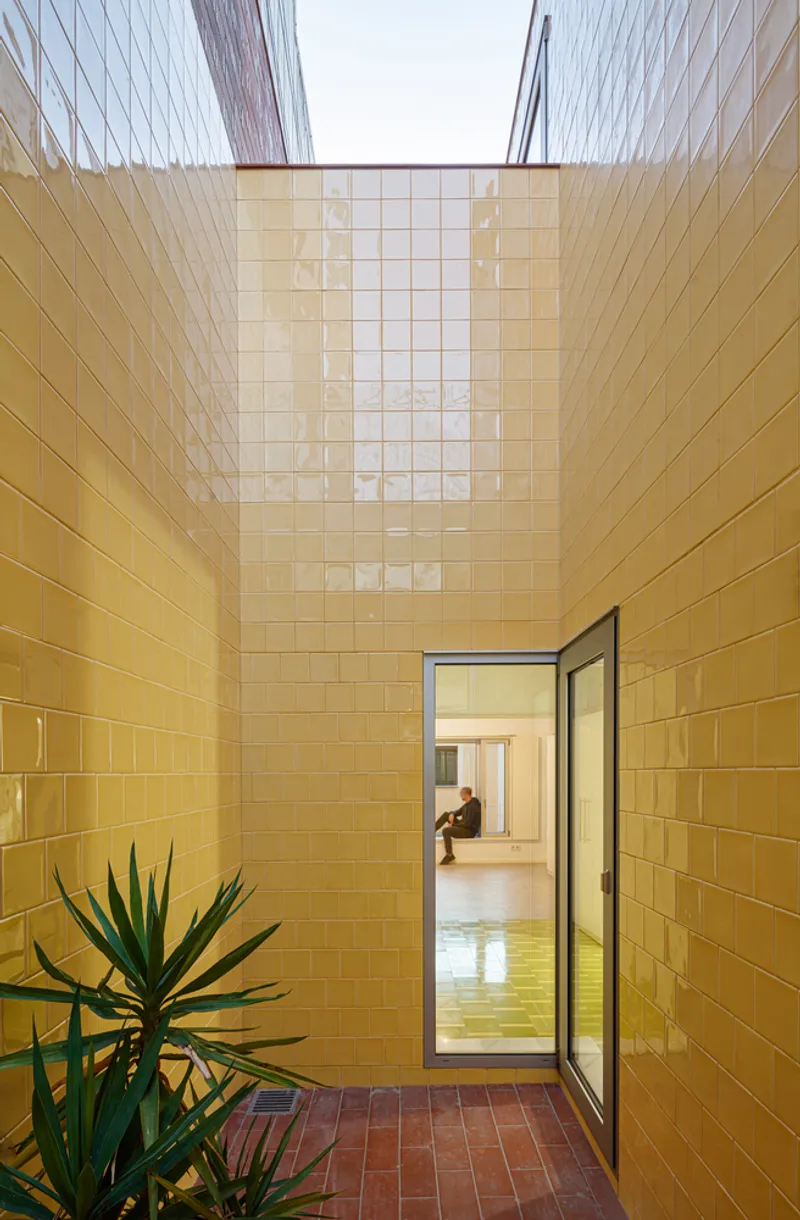
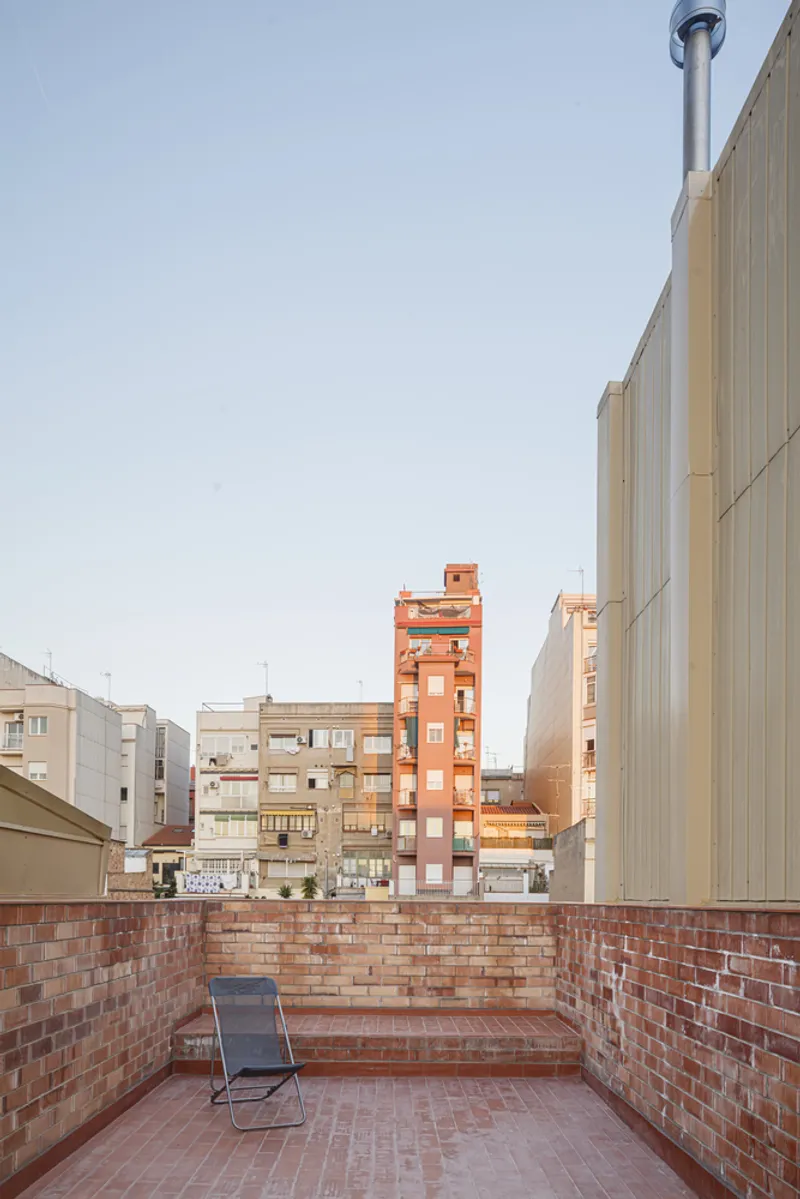
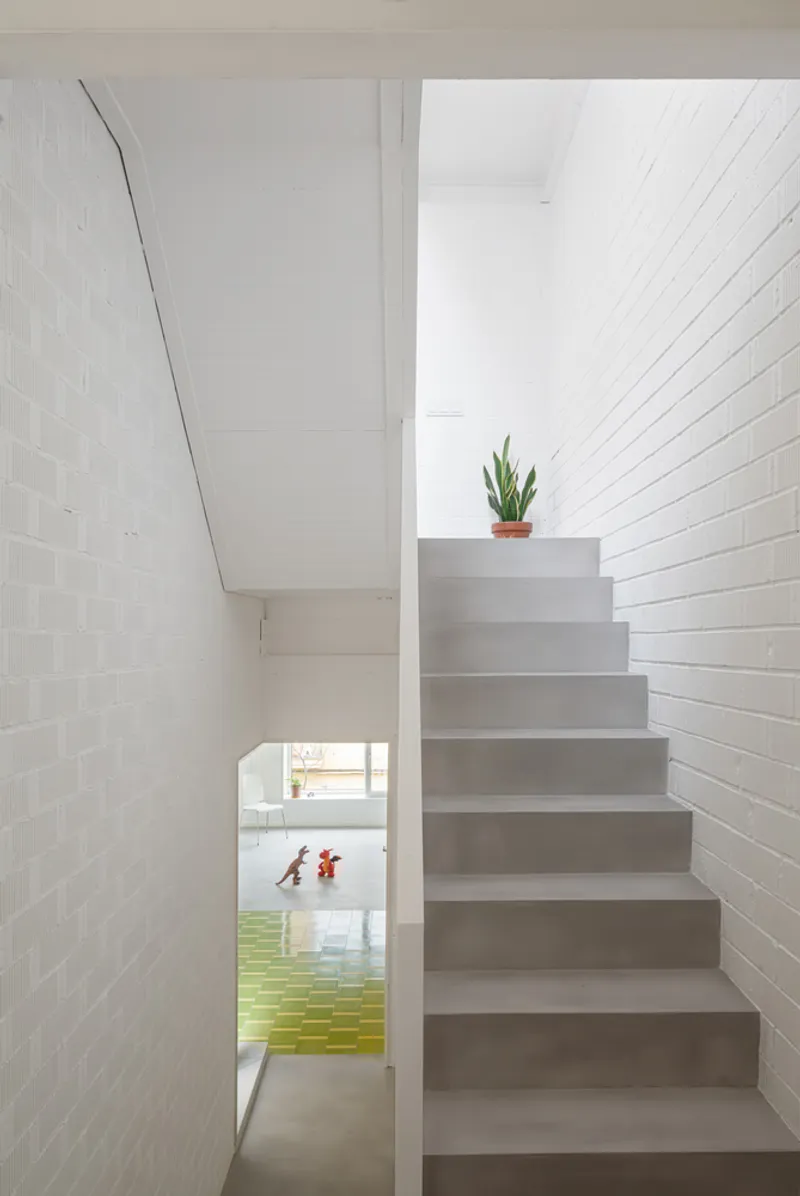
The house is only 3.6 meters wide and sandwiched between party walls, presenting a unique challenge for natural light and spatial distribution. To address this, the design incorporates a central courtyard and a double-height space, flooding the ground floor with daylight. The staircase runs longitudinally along the center, directly connecting the mid-height landings between levels and eliminating the need for corridors. This results in dynamic interior volumes, with a standard ceiling height on the street side and a one-and-a-half-level high space opening onto the garden at the rear.
Thoughtful Spatial Organization
The home’s interior layout is arranged in series, guided by structural frames that define circulation and connectivity. Entry is through a garage, followed by a transitional threshold leading to the centrally located kitchen, which opens onto the staircase. Clever storage solutions, including pantries and appliances, are tucked beneath the first landing, optimizing efficiency. At the rear, the living room features a lofty ceiling and opens seamlessly to the private garden, enhancing the connection between indoor and outdoor spaces.
The first staircase landing doubles as a balcony, designed for occasional reading or work while maintaining visual connection with family life below. The first floor follows a stepped layout with symmetrical distribution: two bedrooms facing the façade on each side, connected by a play or work area with a semi-level bathroom that accommodates the staircase’s narrow width.
Innovative Window Design and Outdoor Connection
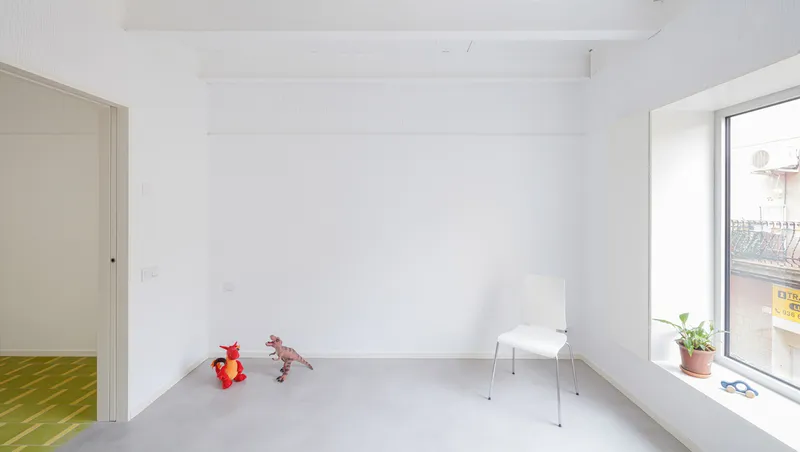
The ground floor opens generously to the outside, while the first floor features deep “nest windows” that exploit the thickness of the façades. Each window comprises a narrow ventilated section leading to a balcony within the façade and a wider fixed glass panel functioning as a cozy window seat, providing natural light, ventilation, and framed views of the surroundings.
Materiality and Structural Innovation
Materials are kept simple, consistent, and tactile. Walls and roofs use faced ceramics with plastered lower sections, painted white for a clean, bright interior. Flooring combines micro-cement surfaces with selected two-tone mosaic tiles in certain rooms. The street-facing and courtyard façades are clad in glazed ceramic tiles, which continue indoors at the courtyard, reflecting sunlight into the kitchen and living areas.
Structurally, the home employs a hybrid system: a two-way frame with four transverse porticoes, supported centrally by brick buttresses and steel columns at the ends, opening the entire width. Lightweight floor slabs, composed of steel joists and ceramic board modules with a concrete compression layer, define the spatial rhythm. In the courtyard and staircase area, H-shaped beams support the upper structures, integrating the double-height space seamlessly.
Sustainability and Comfort
Party walls, though brick, are non-load-bearing, allowing installations to remain hidden and interiors to feel uncluttered. One preexisting stone party wall remains visible inside, seamlessly integrated with ceramic bricks above. Main façades are thick, composed of two layers of ceramic bricks separated by insulation and an air chamber, resulting in deep, thermally efficient windows. The inner courtyard walls use single ceramic sheets with external insulation (SATE).
Mechanical systems are discreetly embedded in floors and walls. Underfloor heating ensures winter comfort, while ceiling fans provide natural summer ventilation, eliminating the need for air conditioning and reinforcing the home’s energy-efficient design.
Mireia and Toni's House exemplifies how intelligent architecture can transform narrow urban plots into functional, light-filled, and aesthetically engaging homes. With its double-height living spaces, central courtyard, deep façade windows, and thoughtful materiality, this residence is a masterclass in spatial innovation, sustainability, and contemporary residential design.
All photographs are works of Adrià Goula


Popular Articles
Popular articles from the community


Jaramillo Van Sluys Arquitectura and Urbanismo Turn a Demolished Registry Lot in Quito into an Orchard Plaza
In Quito's Centro Histórico, a 2,800 m² plaza exposes the San Agustín convent wall and redraws its lost Augustinian orchard in volcanic stone.

Architekt Andreas Gruber Scatters 23 Dark Timber Chalets Across a South Tyrolean Forest Edge
In Molini di Tures, Amonti Chalets breaks a resort into a hamlet of gabled timber houses, with parking, storage and services pushed into the slope.

David Macias Steps a Doorless Stone and Plaster House Down a Tropical Colombian Hillside
In the humid hills of Colombia, Threshold House replaces the front door with an open void and terraces its 850 m² down the slope instead of fighting it.

David Ortega Stacks a Two-Story Mexico City Penthouse Around a Steel Stair and a Pergola-Shaded Roof Terrace
In Colonia Roma, a 300 m² penthouse uses oak joinery, a planted steel stair and a slatted roof pergola to make a new-build apartment feel like a house.

Similar Reads
You might also enjoy these articles


Hodi-Mandai Geram
Project Function: Preservation and revitalization of the Intangible heritage and socio-spatial identity of the Hodi by Housing, Cultural Memory Center, Sacred Grove, landscape, local tourism economy


Olio Towers: A Mid-Rise for Performers That Fuses Housing, Rehearsal, and Stage
Located blocks from Houston's Theater District, this modular tower stacks living units around a central performance atrium.

Oasis: Modular Green Housing Carved into Dhaka's Urban Fabric
A shortlisted Plugin Housing entry reclaims unauthorized settlements in Dhaka with stepped concrete volumes, green roofs, and ventilation-driven design.

Black Hole: A Floating Megastructure for the Post-Physical Era
Emiliano Mazzarotto envisions a spherical, self-scaling arena where e-sports, digital hotels, and holographic stadiums replace traditional public space.

Explore Architecture Competitions
Discover active competitions in this discipline

Challenge to reimagine the Iron Throne

Photograph architecture without architects

Illustrate the lost glory of Angkor Wat - Render Challenge

Design challenge to reuse E-waste
Comments (0)
Please login or sign up to add comments
No comments yet. Be the first to comment!