
Mirrors Plaza: A Dynamic Urban Intervention by Bla! Estudio Creativo & Abarca Palma Arquitectos
Mirrors Plaza revitalizes an urban void with colorful murals, modular furniture, and a reflective canopy, fostering community interaction and sustainability.

Revitalizing Residual Urban Space
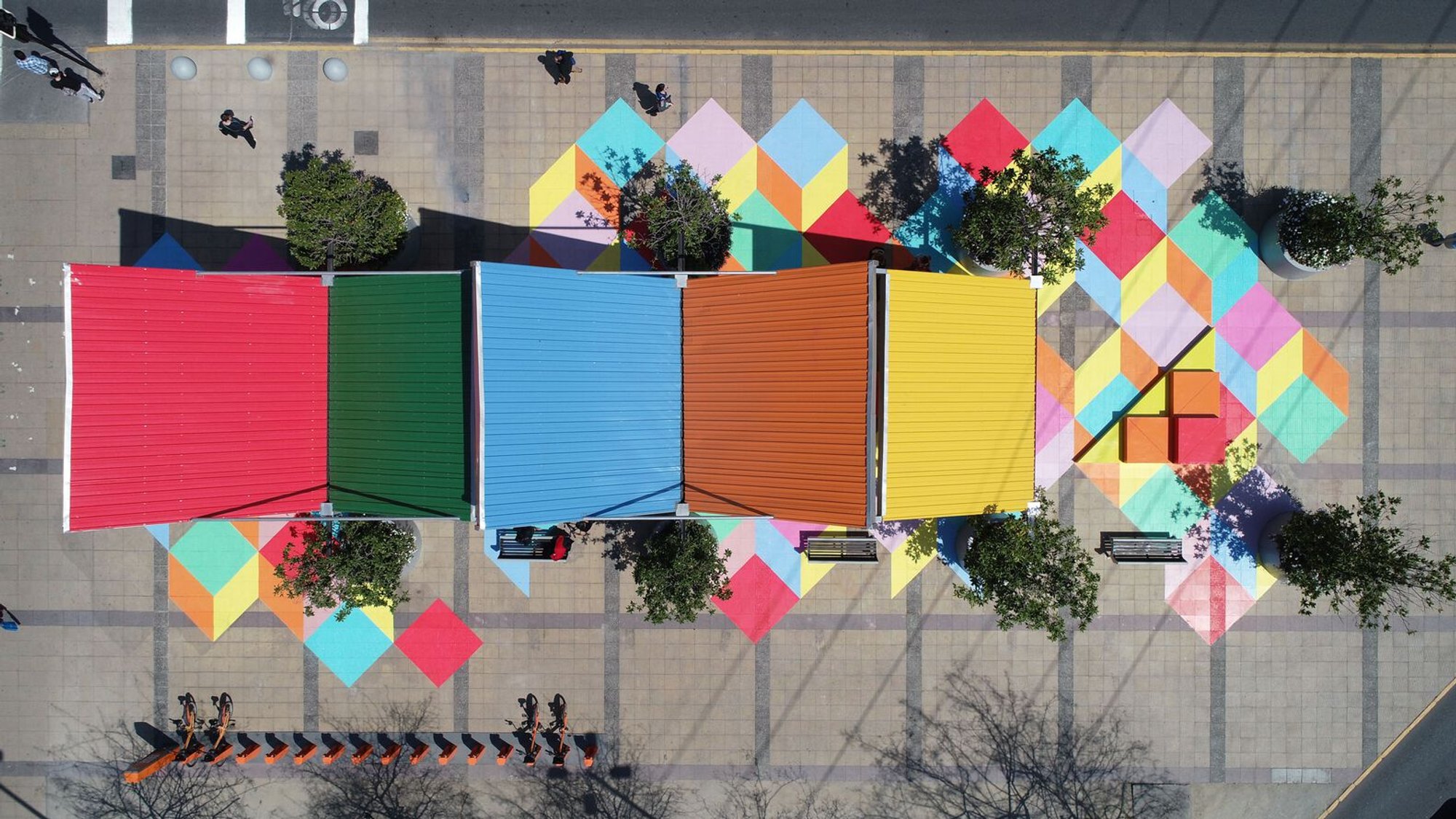
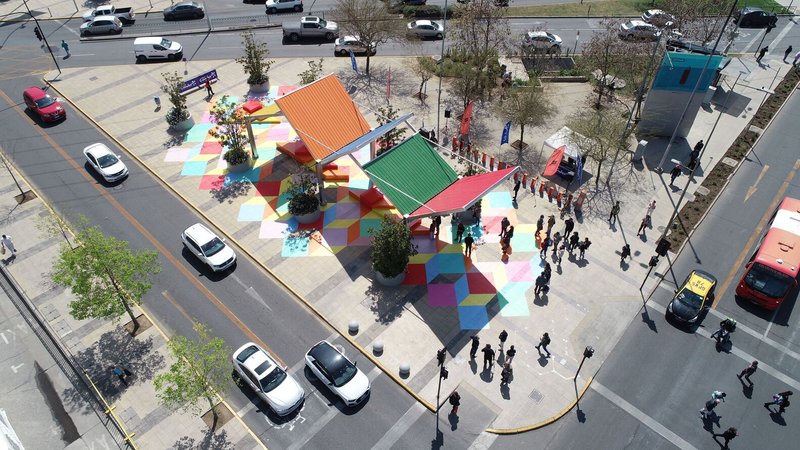
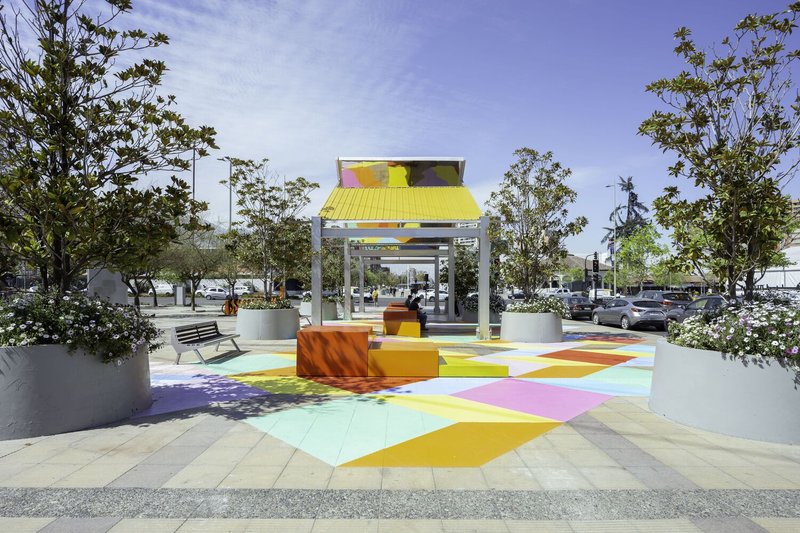
Mirrors Plaza, designed by Bla! Estudio Creativo and Abarca Palma Arquitectos, is a visionary urban intervention transforming a forgotten public space into a vibrant, interactive environment. Situated in Las Condes, Santiago, the plaza was once an isolated urban island, a triangular space left over from the underground construction of Manquehue Avenue. The project reimagines this underutilized area by integrating colorful floor murals, modular urban furniture, and a reflective canopy, fostering new possibilities for community engagement and public interaction.
Design Elements: A Multi-Sensory Experience
1. Geometric Floor Mural
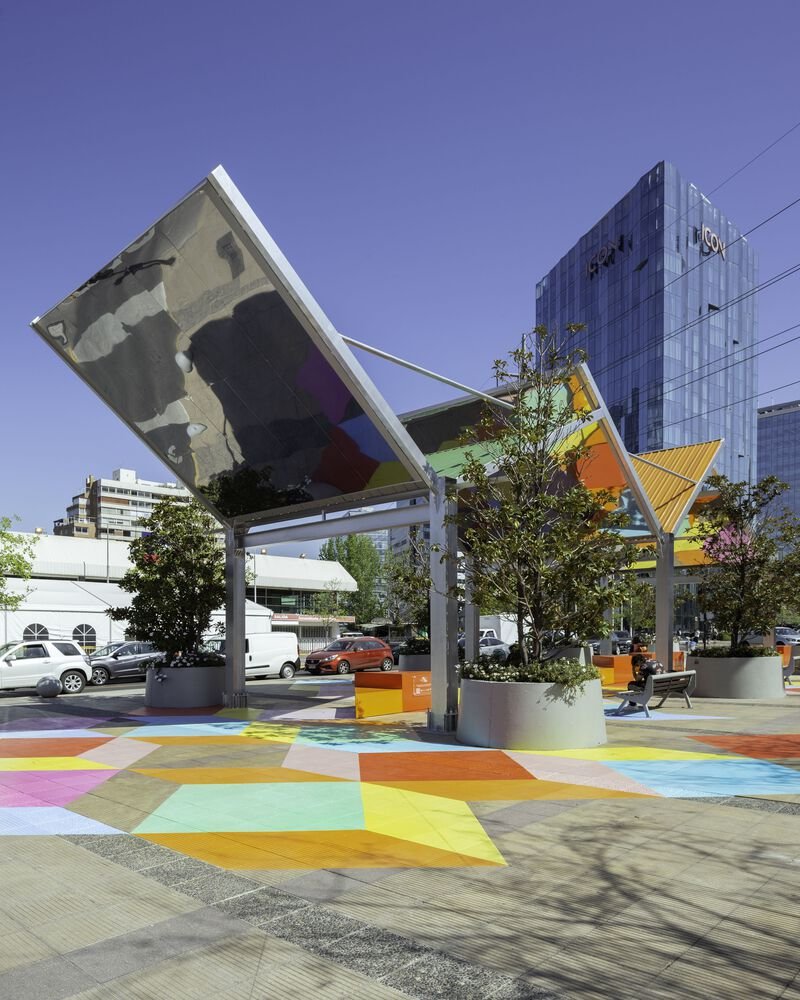
The design introduces a striking triangular and trapezoidal floor painting, inspired by Pantone color palettes from the automotive brand SEAT, which reflect the hues of the Barcelona skyline. This dynamic mural creates a visual identity for the space while guiding movement and interaction.
2. Modular Urban Furniture
A series of plywood-built seating structures extend from the floor mural’s geometric patterns, offering multi-level seating arrangements that encourage spontaneous activities like social gatherings, performances, play, and relaxation. The structures feature bold red, orange, and yellow hues, reinforcing the plaza’s energetic aesthetic.
3. Reflective Steel Canopy
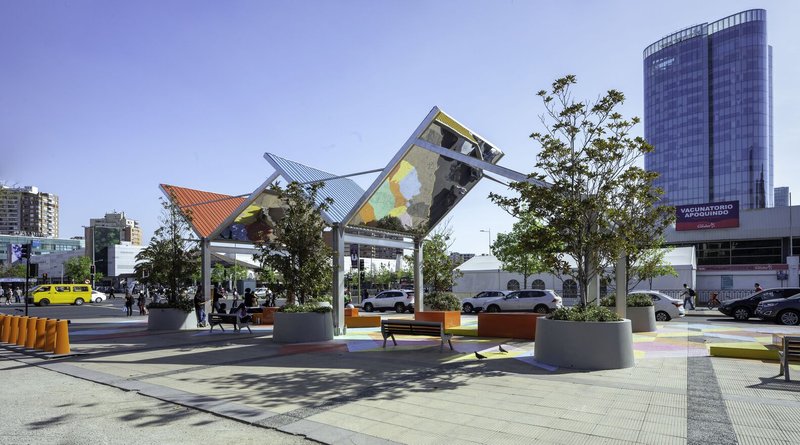
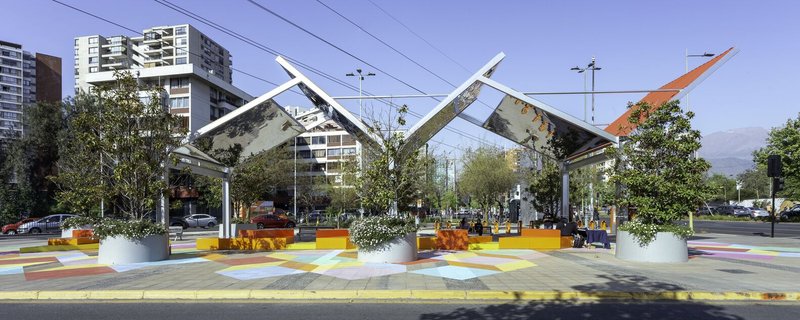
A stainless steel-covered roof structure defines the plaza, supported by six steel pillars aligned with existing planters. This canopy not only provides shade and weather protection but also integrates a mirrored surface, creating a captivating interplay between the built environment and human activity. The design references Norman Foster’s Vieux Port Pavilion in Marseille and Fermín Vázquez’s Mercat dels Encants in Barcelona, both known for their innovative use of reflective surfaces in urban spaces.
4. Sustainable Water Management
The roof design incorporates an eco-friendly water drainage system, directing rainwater to nourish the surrounding trees. This strategy enhances the plaza’s sustainability, aligning with contemporary green urban planning principles.
A Model for Urban Activation
Mirrors Plaza exemplifies the potential of adaptive reuse in urban design, transforming neglected spaces into interactive and multi-functional public areas. By incorporating bold visuals, interactive elements, and sustainable strategies, the project fosters community engagement and cultural expression.
All Photographs are works of Gonzalo Zuñiga, Felipe Ugalde




Popular Articles
Popular articles from the community

Eco Chapel: A Green Architecture Pavilion Designed in Symbiosis with the Forest
Eco Chapel uses green architecture to weave prayer, learning and reuse into a forest pavilion shaped by modular hexagonal canopies for life.
Kerry Kounnapis Packs 800 Daily Coffees into a 43-Square-Metre Melbourne Laneway Bar
Palace Coffee channels Pellegrini's and European standing bars through oxide-red steel and spotted gum timber in a Ridgway Place sliver.

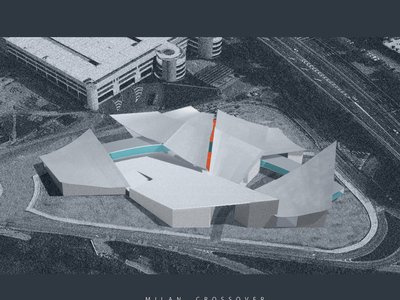
Milan Crossover: Sustainable Architecture for a New Fashion Culture in Milan
Milan Crossover transforms fashion culture through sustainable architecture, linking material libraries, remake studios, and public runways.
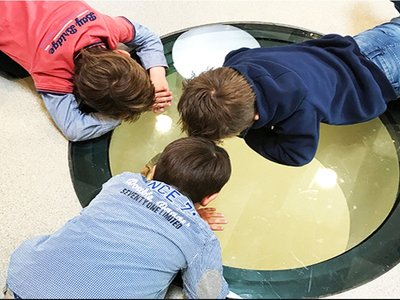
IKC de Geluksvogel: Sustainable School Architecture Designed for Free Movement and Digital Learning
IKC de Geluksvogel turns sustainable school architecture into a flexible Maastricht campus for digital learning, nature, and free movement.


Similar Reads
You might also enjoy these articles

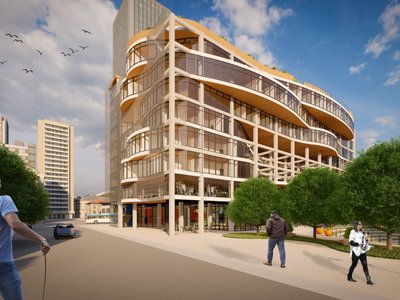
Olio Towers: A Mid-Rise for Performers That Fuses Housing, Rehearsal, and Stage
Located blocks from Houston's Theater District, this modular tower stacks living units around a central performance atrium.

Oasis: Modular Green Housing Carved into Dhaka's Urban Fabric
A shortlisted Plugin Housing entry reclaims unauthorized settlements in Dhaka with stepped concrete volumes, green roofs, and ventilation-driven design.

Black Hole: A Floating Megastructure for the Post-Physical Era
Emiliano Mazzarotto envisions a spherical, self-scaling arena where e-sports, digital hotels, and holographic stadiums replace traditional public space.
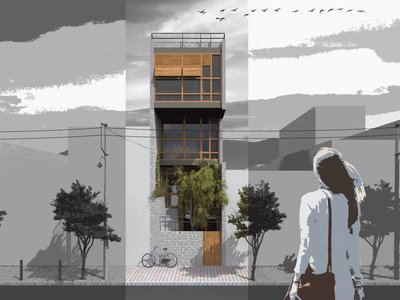
Compact & Sustainable Living in Piraeus: A Four-Level Family Home Built Around Light and Air
A narrow townhouse in one of Greece's densest port cities uses a central atrium and passive strategies to house three generations under one roof.


Explore Installations Competitions
Discover active competitions in this discipline




The International Standard for Design Portfolios


The Global Benchmark for Architecture Dissertation Awards


The Global Benchmark for Graduation Excellence


Challenge to design a portable theatre
Comments (0)
Please login or sign up to add comments
No comments yet. Be the first to comment!