

MODEL Carves a Scarpa-Inspired Concrete Core Through a Maltese Period House for Two Sisters
In Senglea's historic Grand Harbor district, a shared family home pairs restored limestone rooms with a sculptural concrete extension.


Two sisters, both Maltese expatriates, share a single ambition: a home back on the island that neither one owns alone. The premise sounds domestic, almost sentimental. But the house that MODEL delivered in 2022, tucked into the dense limestone fabric of Senglea on the Grand Harbor, is anything but soft. It is a 325 m² act of architectural negotiation between a crumbling period house and a raw concrete extension that threads through it like a new vertebral column.
What makes the project genuinely compelling is how the architects resolved the tension between shared and private life within a single vertical stack. The program splits horizontally: a communal basement playroom and entrance, children's quarters on the ground floor, separate sleeping suites on the upper levels, and a new living and kitchen volume that opens onto a rooftop pool. Binding all of it together is a sculptural concrete staircase explicitly informed by Carlo Scarpa, a piece of circulation so deliberate in its detailing that it functions as the building's spatial thesis.
The Concrete Spine
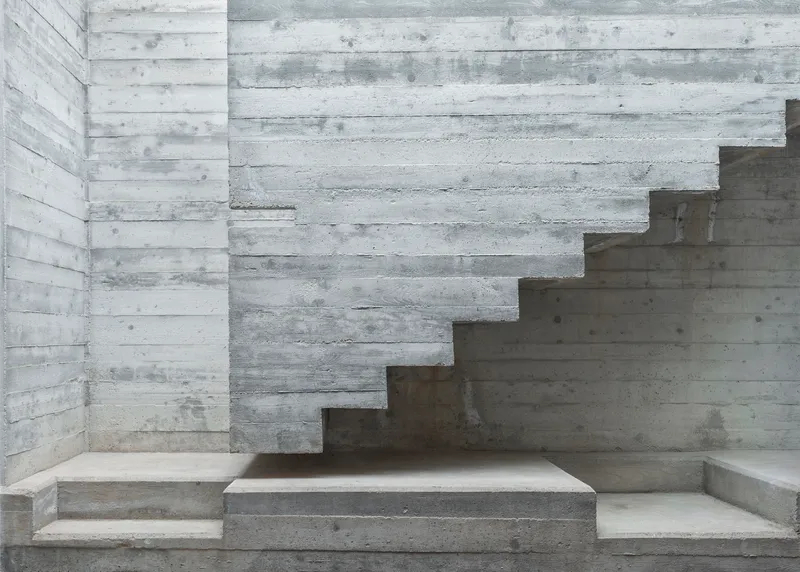
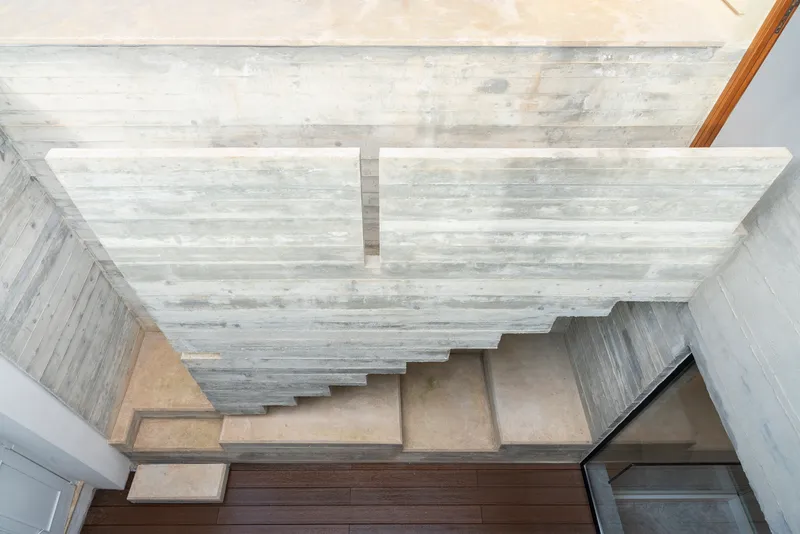
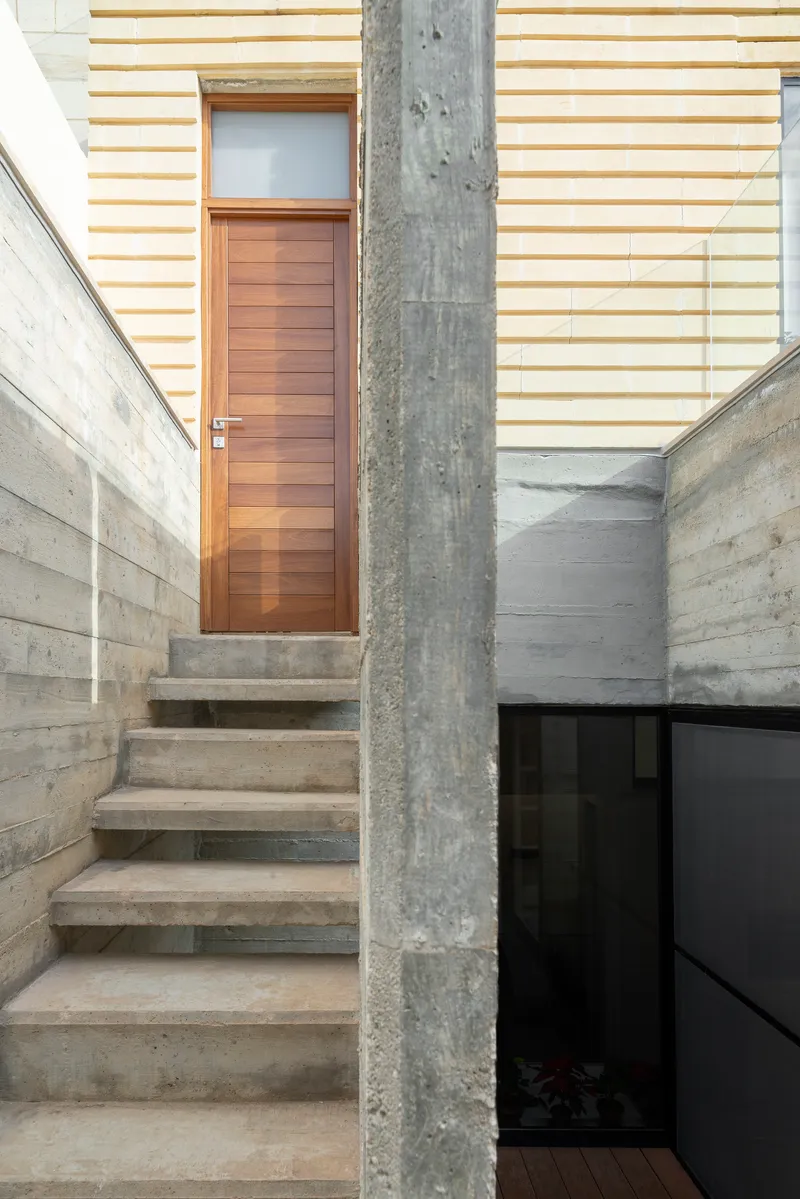
The board-formed concrete staircase is the project's centerpiece, and MODEL treats it with the seriousness that claim warrants. Treads shift in depth and direction as they climb through the house, creating intersecting volumes that feel more like inhabitable sculpture than corridor infrastructure. The timber formwork leaves a pronounced grain across every surface, giving the concrete a warmth and tactility that raw grey mix rarely achieves. Natural light enters from above, washing down through the stair well and catching the texture at oblique angles.
The Scarpa reference is evident but not slavish. Where Scarpa often isolated stair elements as precious objects within larger rooms, MODEL makes the stair the connective tissue of the entire section. It mediates between the restored limestone walls of the old house and the new extension, shifting materiality as it goes: from carved stone balustrades to poured concrete, from decorative tile floors to raw timber treads. The transition is abrupt by design. It tells you exactly when you have crossed from old to new.
Old Stone, Restored
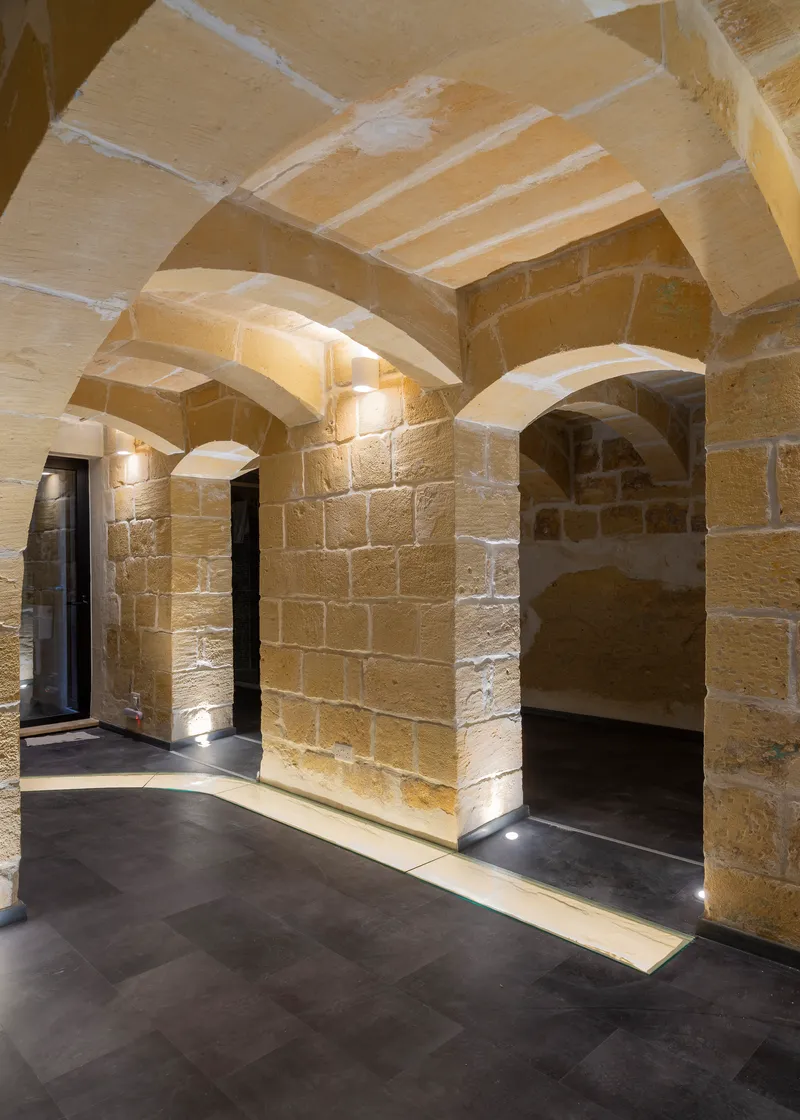
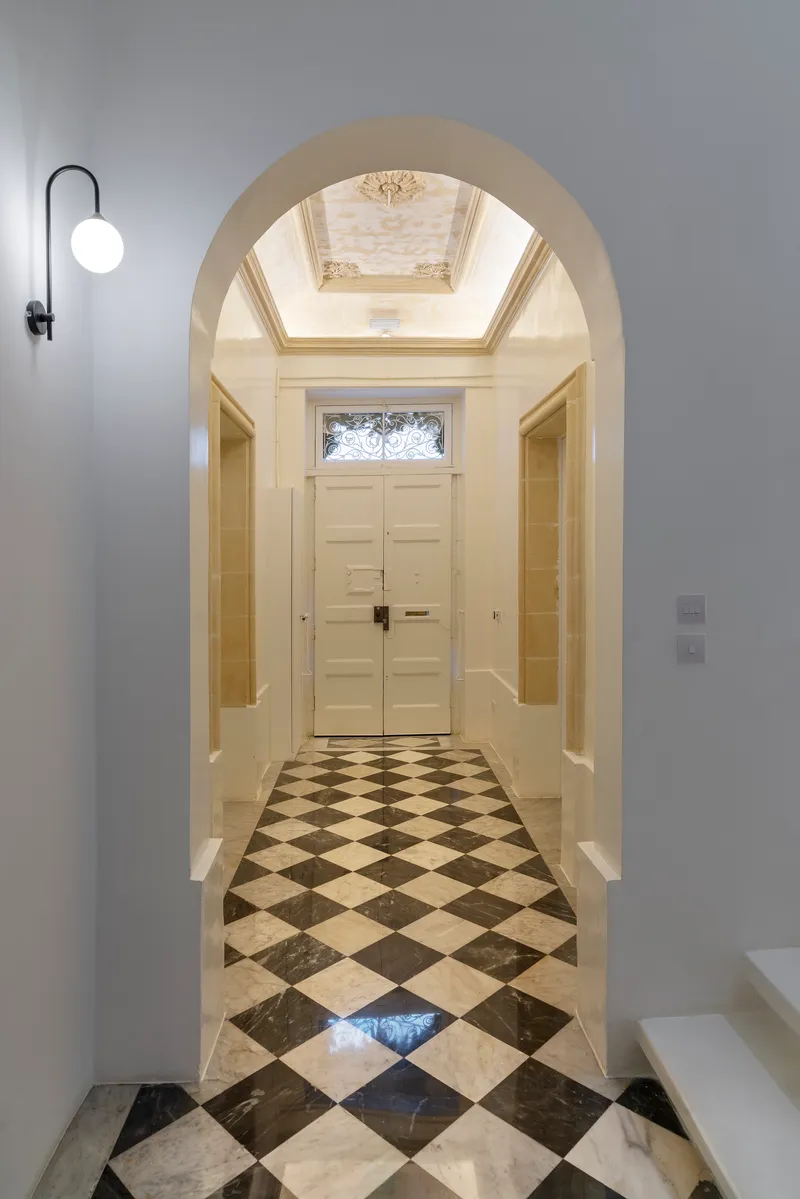
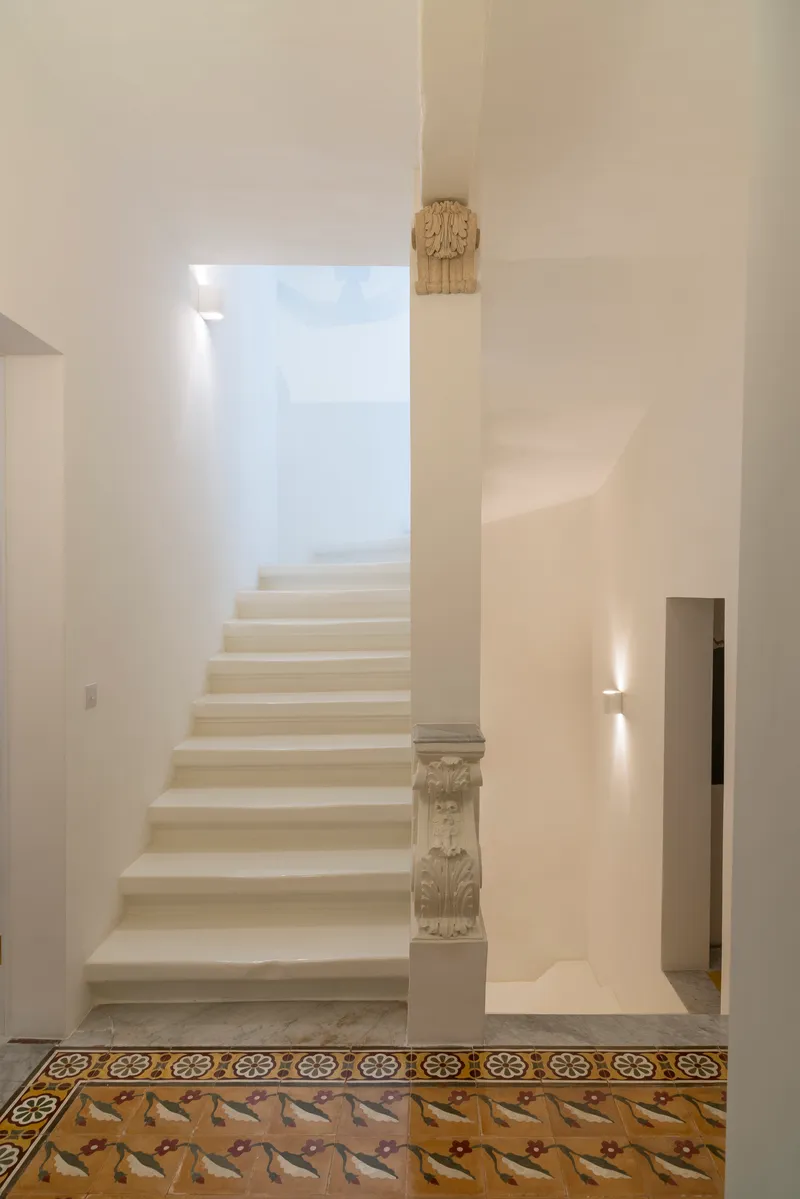
The original period house was abandoned, and MODEL chose to restore rather than gut it. Vaulted sandstone corridors, exposed masonry walls, and checkerboard marble floors survive intact, lit by recessed floor fixtures that emphasize the arched profiles without overwhelming them. A white plastered staircase with a carved stone balustrade sits in a room floored with patterned ceramic tiles, a composition so traditionally Maltese it could belong to a museum.
The decision to preserve this material palette intact, and then place aggressive board-formed concrete directly adjacent to it, is the project's riskiest move. It works because the contrast is honest. There is no transitional material, no gradient of aged-looking plaster bridging the two worlds. You step from arched limestone into a concrete stair void, and the juxtaposition sharpens both readings.
The Courtyard and the New Extension
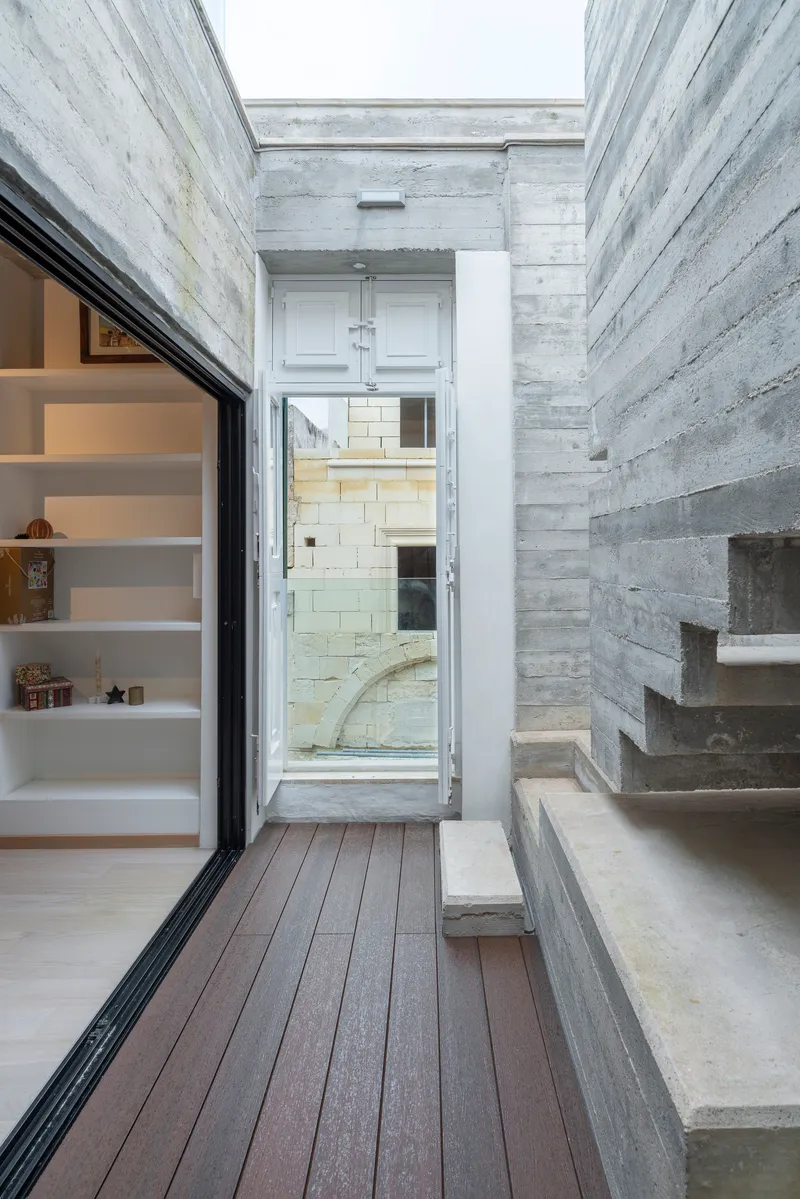
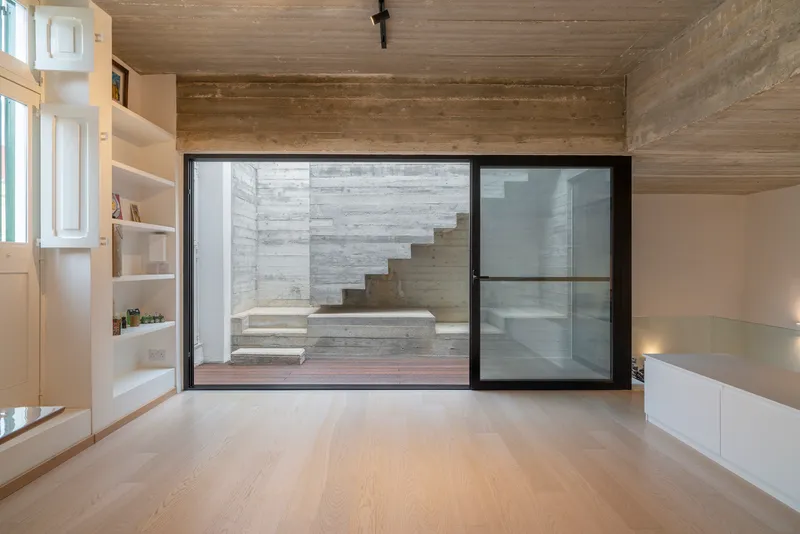
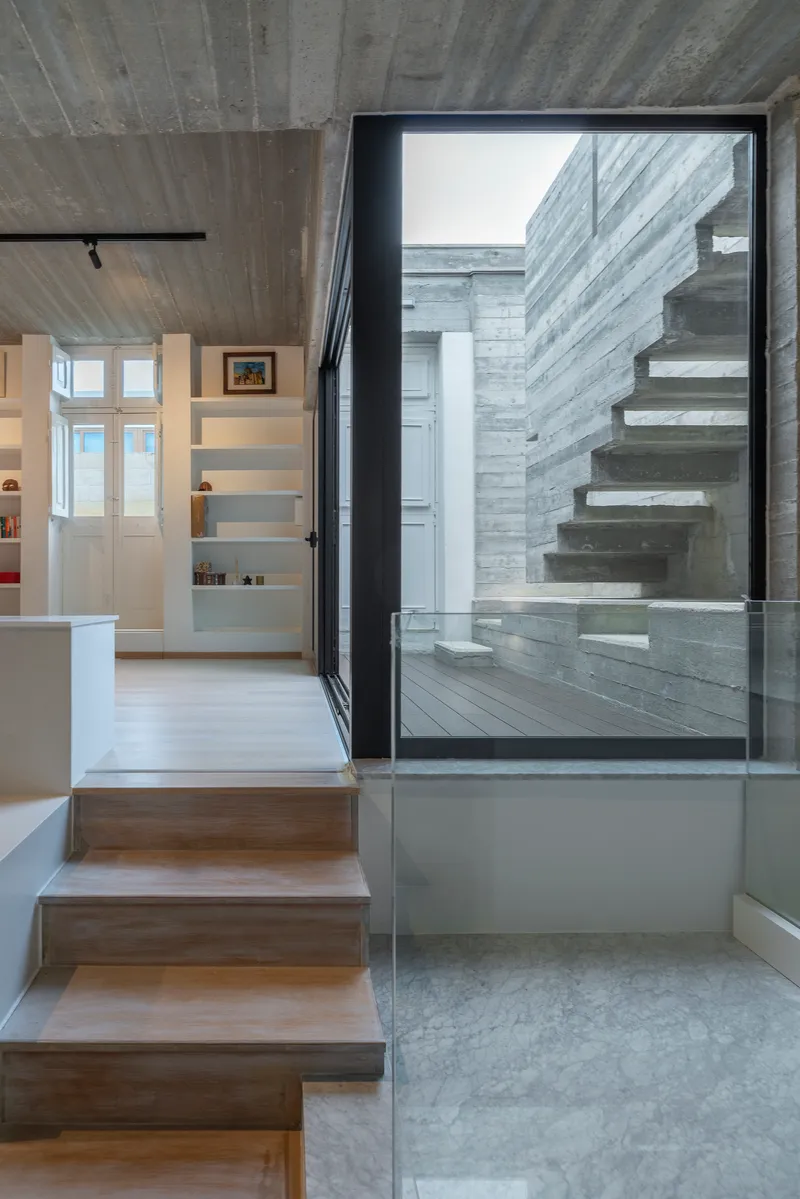
The new extension creates a small courtyard that functions as the hinge between interior and exterior life. Board-formed concrete walls rise on two sides, while timber decking underfoot softens the ground plane. A cantilevered concrete stair ascends from this courtyard toward the upper terrace, its underside visible through a skylight that pulls daylight deep into the plan. The courtyard is compact, barely more than a light well in plan, but in section it performs critical work: ventilating the lower levels and creating a visual link from the basement playroom all the way up to the sky.
Glazed black-framed doors separate the courtyard from the interior living spaces, allowing the sisters to open the ground floor completely to the outside air. In a Mediterranean climate, this kind of permeability is not decorative. It is the building's primary cooling strategy, working in concert with the well-ventilated basement that was part of the original structure.
Living at the Top
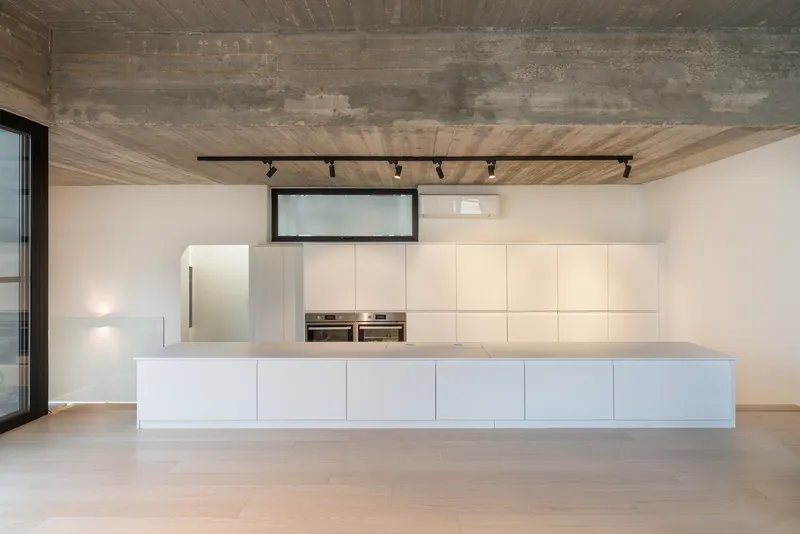
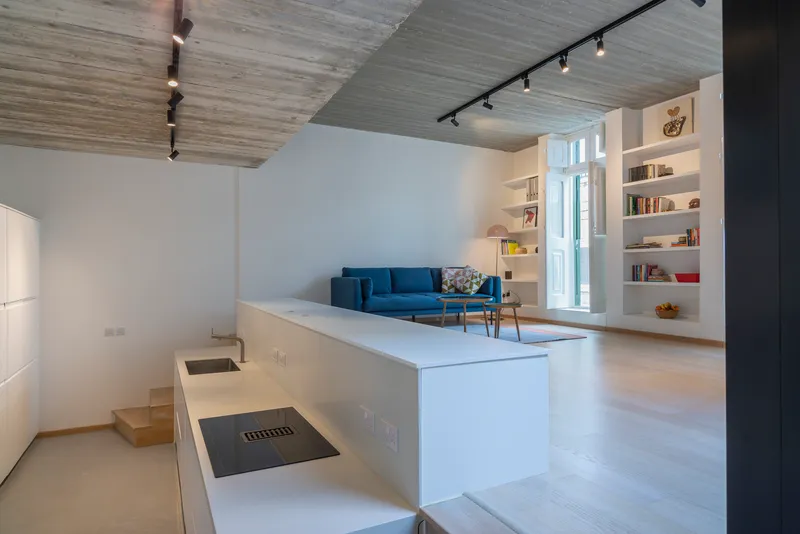
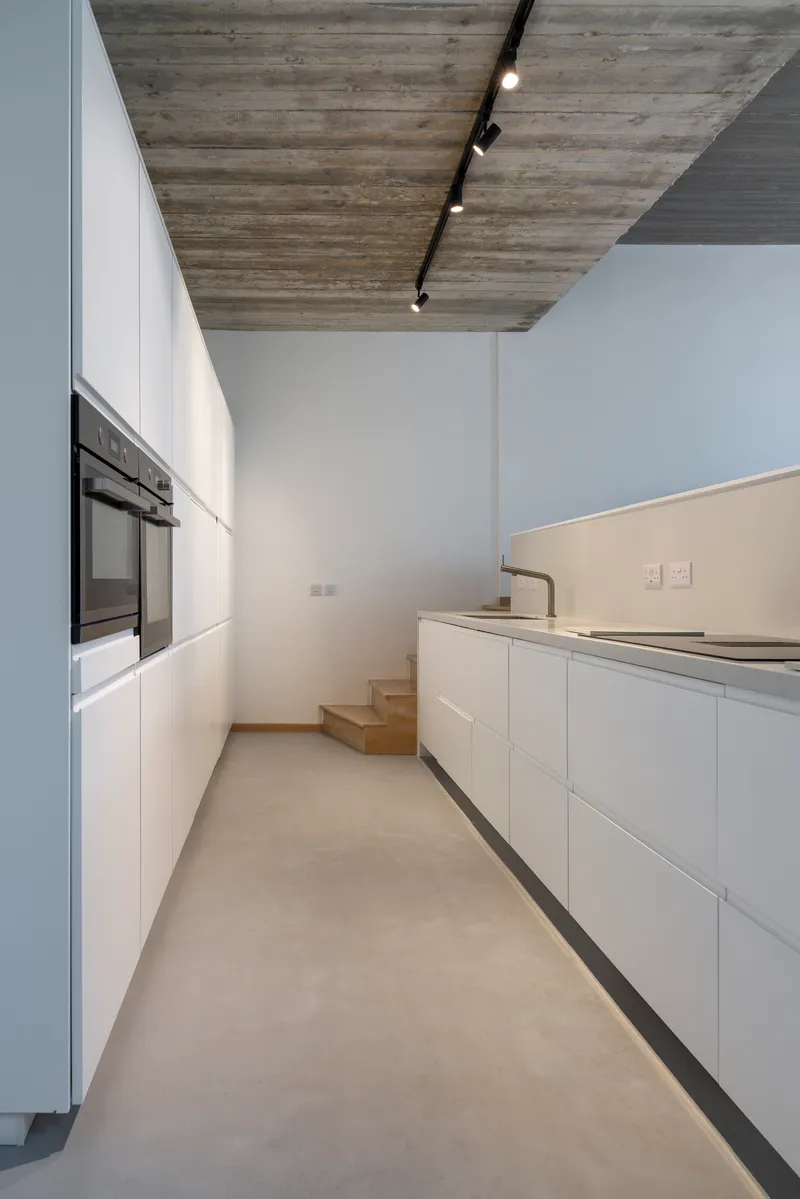
The shared living, kitchen, and dining spaces occupy the new extension at the upper levels, where the board-formed concrete ceiling becomes a unifying element across an open plan. The kitchen pairs a white island with minimal wall cabinetry, its proportions generous but unfussy. Black track lighting runs along the concrete soffit, the only visible services in an otherwise clean overhead plane. A galley kitchen connects via timber steps to a slightly elevated dining zone, maintaining the section's logic of incremental level changes.
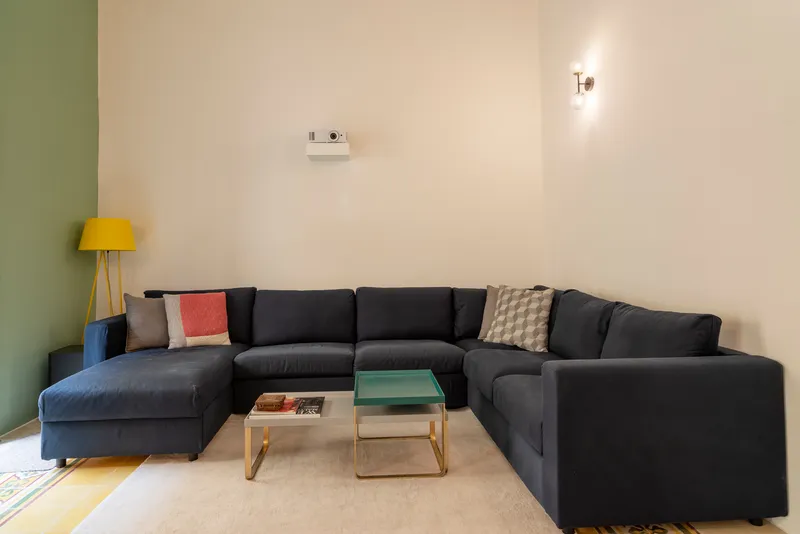
The living area is furnished with restraint: a blue sectional sofa, built-in shelving, and little else. The concrete ceiling does the heavy lifting, its formwork pattern lending rhythm to a room that might otherwise read as a generic open plan. By keeping the palette limited to concrete, white surfaces, and timber, MODEL ensures the material language of the extension remains legible against the ornamental complexity of the historic rooms below.
Private Quarters
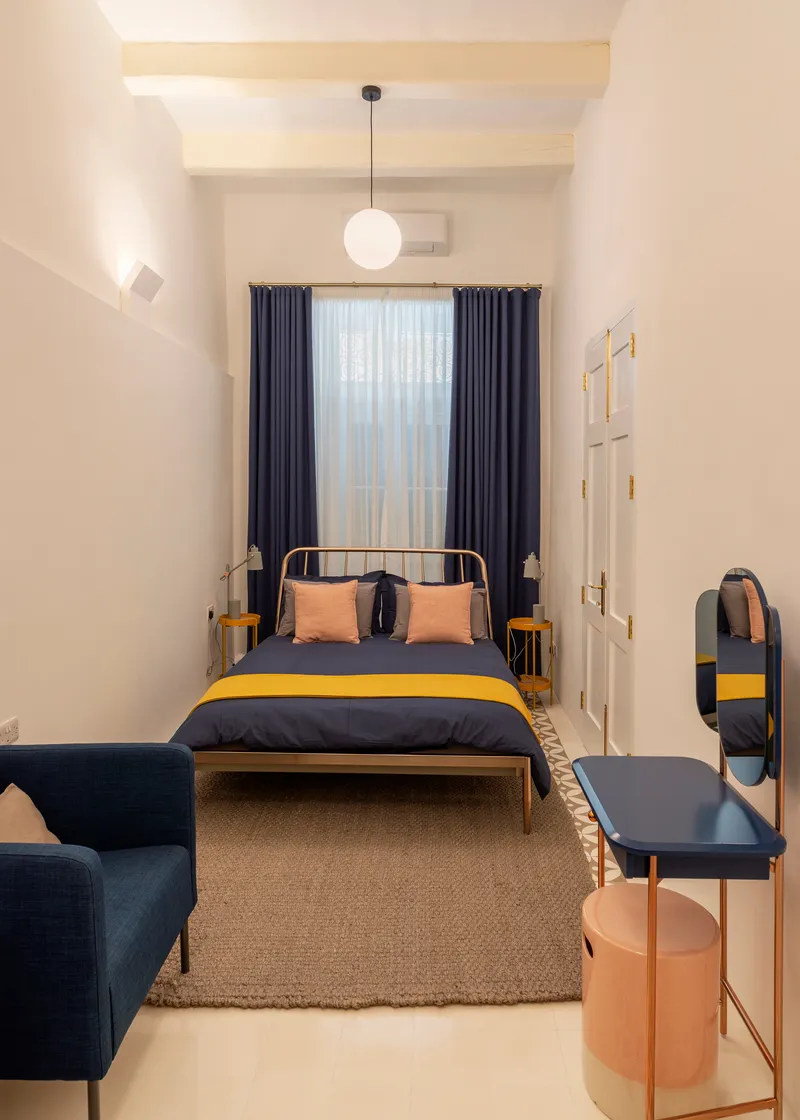
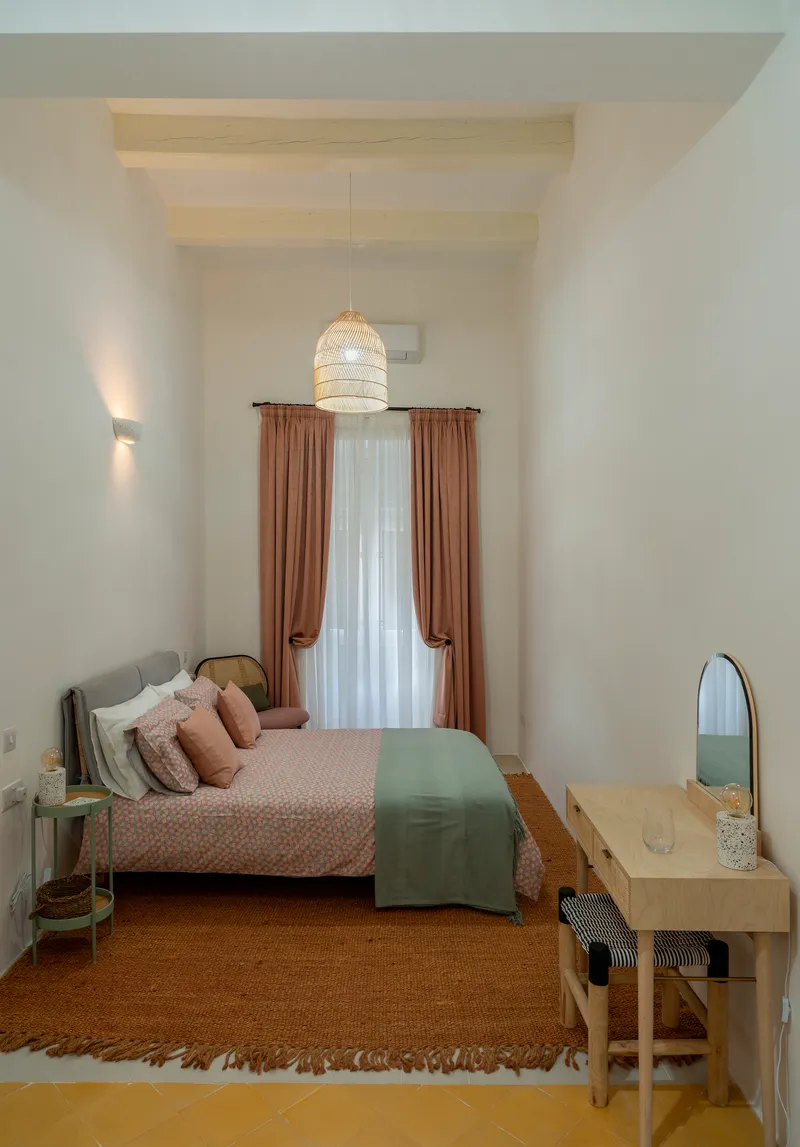
The bedrooms belong to the original house, and MODEL leans into that distinction. Exposed timber ceiling beams, layered curtains, woven pendant lights, and brass bed frames create interiors that feel deliberately warm and textile-rich, a clear counterpoint to the concrete severity elsewhere. Each sister's sleeping quarter occupies a separate floor, giving genuine spatial autonomy within a shared building. The children's quarters sit between them on the ground floor, a diplomatic arrangement embedded in the section itself.
The olive green and cream walls of one living room suggest a palette chosen with specificity, not drawn from a mood board. These are rooms that feel lived in, or at least ready to be, which is no small achievement for a holiday home used intermittently by two families based abroad.
Rooftop and Street
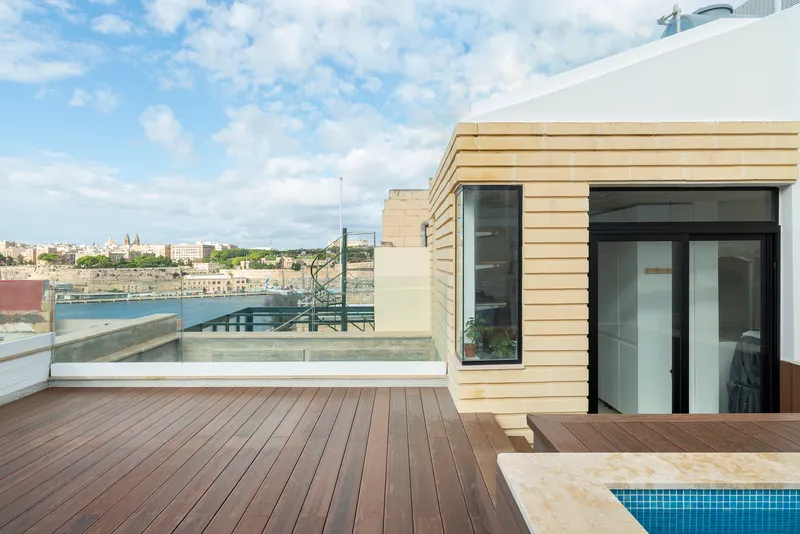
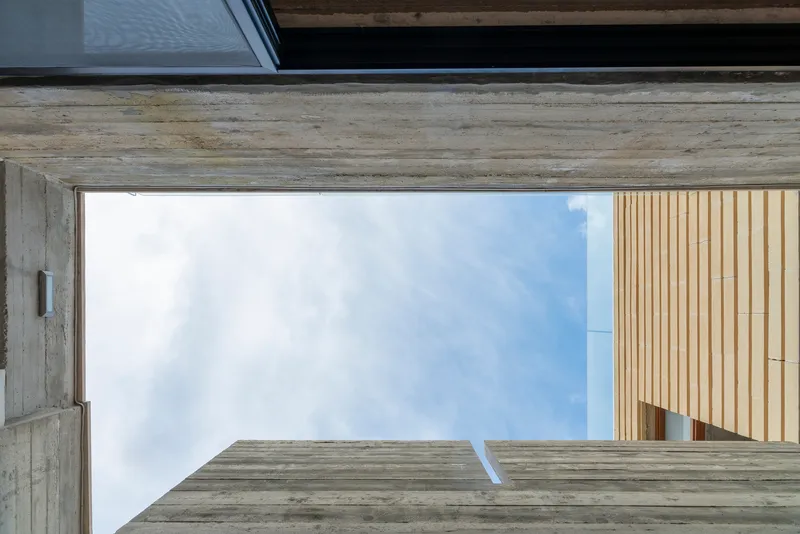
The rooftop terrace follows the stepped profile of the original roof, integrating a small pool, timber decking, and an outdoor dining area. Horizontal wood cladding wraps the parapet, providing privacy from neighbors while maintaining a visual warmth that distinguishes the roof level from the exposed concrete below. The pool is modest, appropriately scaled to a 325 m² house in a dense urban context. It reads as a luxury, but a considered one.
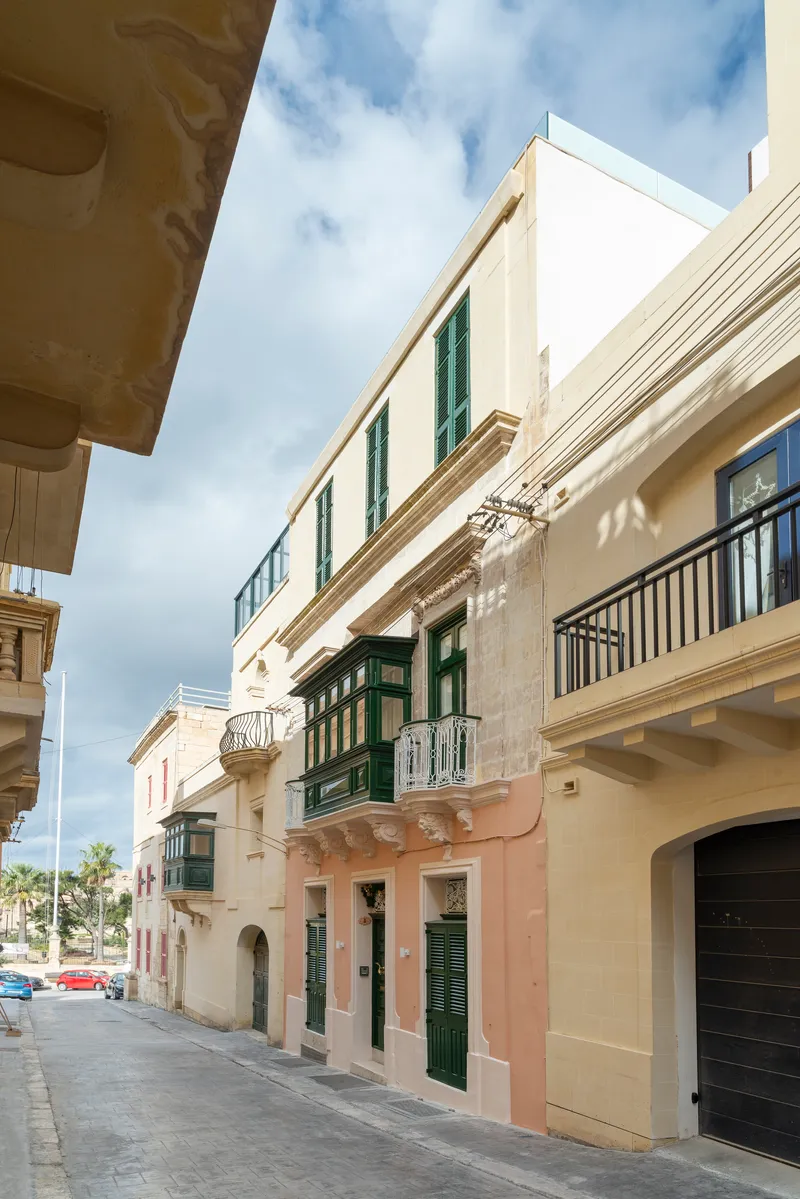
From the street, the house presents its traditional limestone facade: green shuttered windows, wrought iron balconies, and the narrow proportions typical of the Three Cities. MODEL made no attempt to signal the intervention from the exterior, a decision that respects Senglea's streetscape and saves the architectural drama for the interior. The contrast between that composed facade and the raw concrete stair core behind it is part of the project's narrative power.
Plans and Drawings
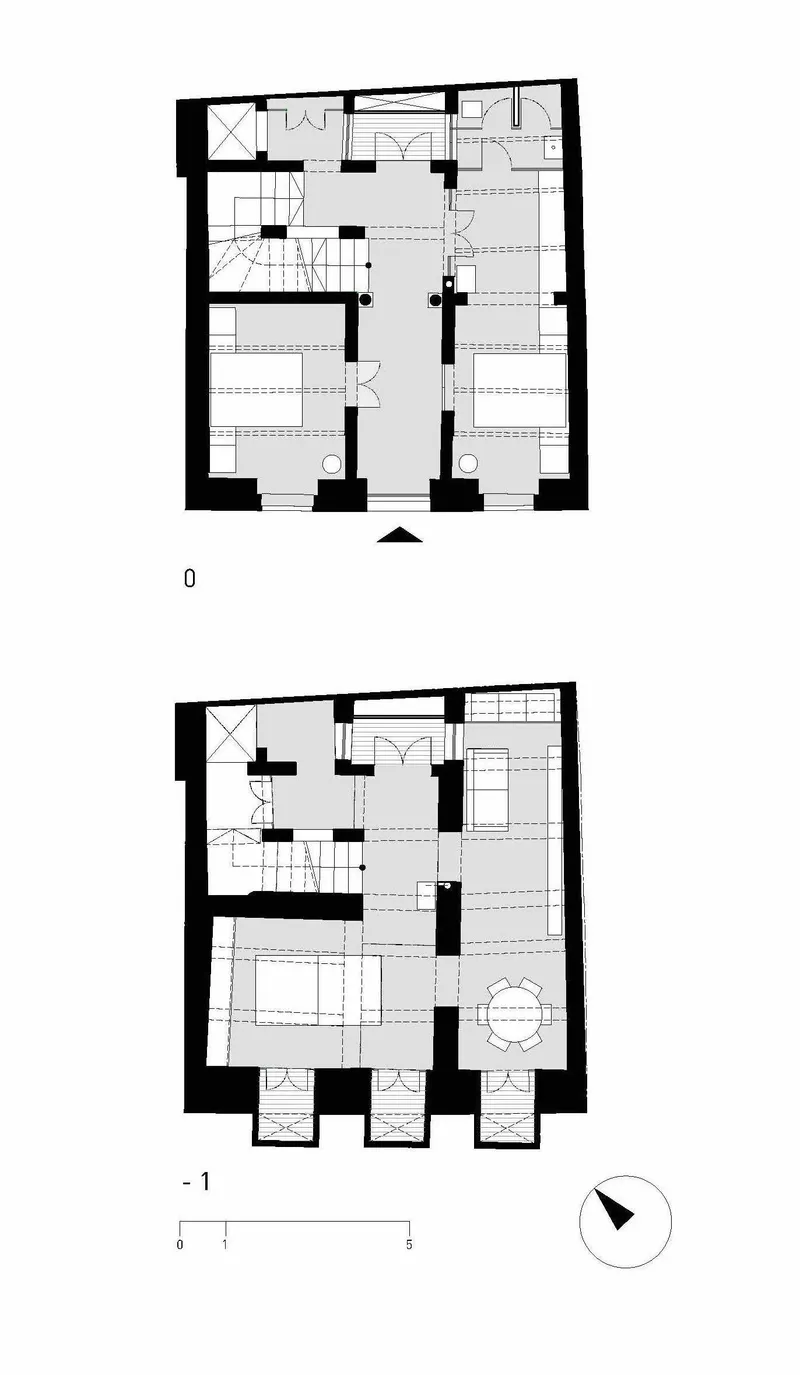
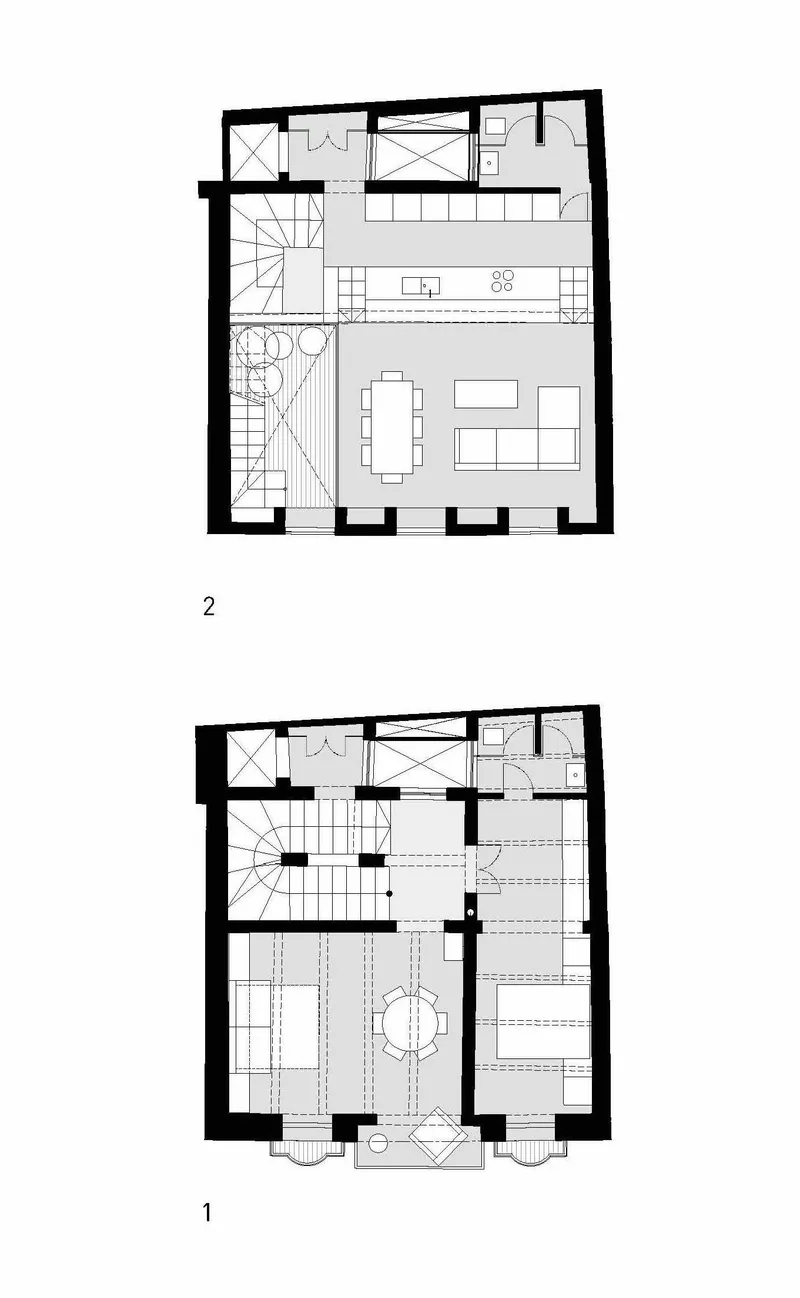
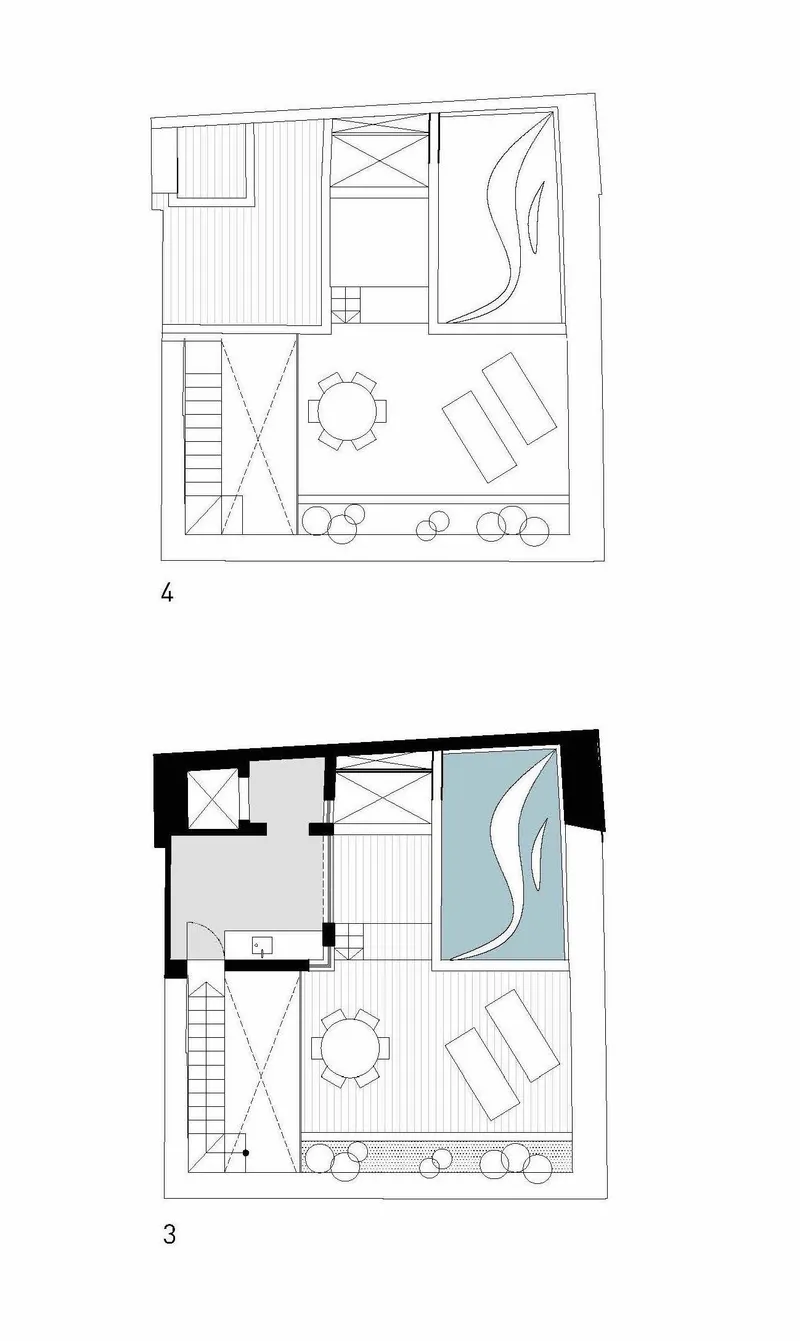
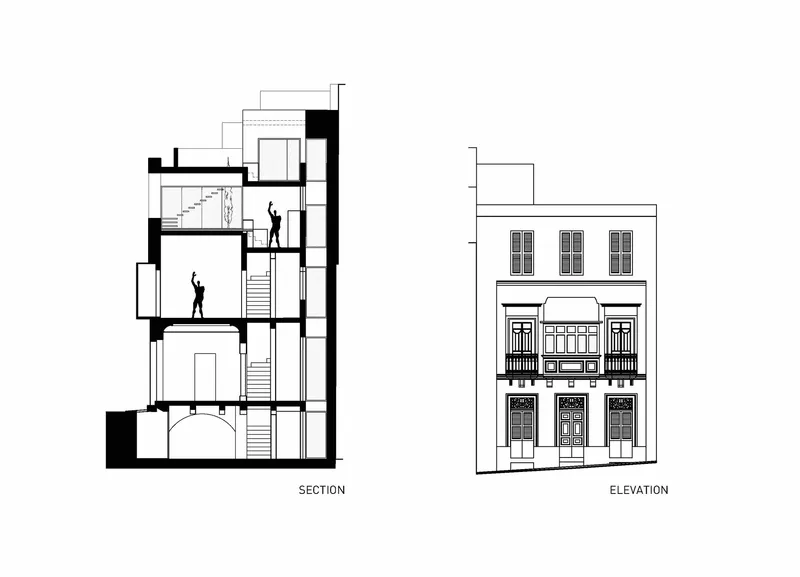
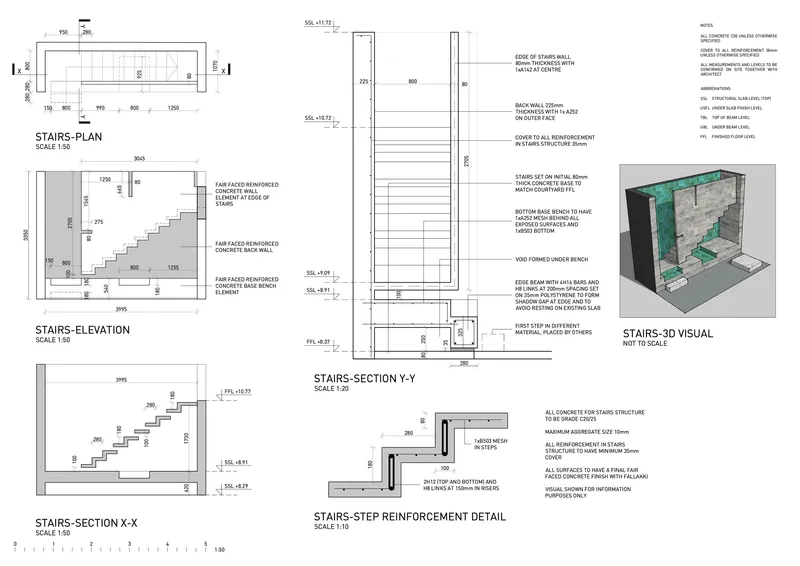
The plan drawings reveal the thick masonry walls of the original structure and the relatively thin footprint of the new extension. Reading across the levels, you can trace the staircase as it migrates from the center of the old house into the courtyard void and up to the terrace. The section drawing is the most telling: it shows a four-story interior where the concrete stair passes through every level, binding old and new into a single continuous vertical experience. Construction details for the stair confirm the reinforced concrete structure and the precision of the cantilevered treads, explaining how MODEL achieved the floating geometry visible in the photographs.
Why This Project Matters
Renovation projects in historic Mediterranean contexts tend to fall into two camps: either the new defers entirely to the old, producing interiors that feel like stage sets, or the old is hollowed out and replaced with a contemporary shell wearing a heritage mask. MODEL's House for Two Sisters does neither. It keeps the historic rooms intact, with their ornamental floors and vaulted corridors, and sets a deliberately muscular concrete intervention alongside them. The result is a building that respects its context without apologizing for its ambition.
The shared ownership model adds another layer of interest. Designing a house for two families who need both common ground and personal territory is a genuinely difficult brief. MODEL solved it in section, not in plan, stacking autonomy vertically and using the sculptural staircase to make the act of moving between private and communal space feel intentional, even ceremonial. The project received a special commendation at the MASP Awards, and rightly so. It is a small building that thinks in big architectural terms.
House for Two Sisters by MODEL. Located in Senglea, Malta. 325 m². Completed in 2022. Photography by Alex Attard.
About the Studio
Share Your Own Work on uni.xyz
If projects like this are the kind of work you want to make, uni.xyz is a place to publish your own, find collaborators, and enter design competitions.


Popular Articles
Popular articles from the community


Extended Shell: Retrofitting Kolkata's Balconies as Living Urban Thresholds
A modular retrofit system recovers the social and environmental intelligence of Kolkata's historic verandas for contemporary Park Street residents.

Temporary Home for Dogs: A Reversed Zoo Rethinks Animal Shelter Architecture
In Bucharest, a sinuous corridor and freed landscape flip the logic of containment, designing a shelter that works to make itself unnecessary.

Opera by the Sea Estonia: Three Shells Dissolving Architecture into Tallinn's Coastline
A winning opera house proposal replaces monumental form with interconnected shells that blur the boundary between building, park and Baltic Sea.

The Amber Palace Opera: A Geological Fiction Surfaces on Tallinn's Baltic Waterfront
Pierre Brillard reimagines a Baltic legend as a public landscape, opera house, and waterfront promenade rooted in Tallinn's coastal identity.

Similar Reads
You might also enjoy these articles

Bao Huynh Watercolor Atelier: A Serene Art Retreat in Hội An
Bao Huynh Watercolor Atelier in Hội An blends multifunctional art spaces, sustainable design, local materials, and family-friendly living in a serene environment.

Atelier Macri Concept Store Interior Design by CASE-REAL
Atelier Macri store features a "ko" counter, walnut wood details, cork displays, blending retail, gallery, and seamless customer experiences.

Manuel Vargas Izquierdo Stadium and High-Performance Sports Center: Architectural Excellence in Jalpa de Méndez
The Manuel Vargas Izquierdo Stadium blends sustainable design, inclusive sports facilities, and cultural-inspired architecture, revitalizing Jalpa de Méndez’s public spaces.

KAKR Buluh Awar Hall: Revitalizing Community and Ecology Through Bamboo Architecture
Community built bamboo hall revitalizes Buluh Awar village, empowering youth, restoring ecology, celebrating vernacular craftsmanship through sustainable architecture and culture.


Comments (0)
Please login or sign up to add comments
No comments yet. Be the first to comment!