
Modern Chinese Architecture Design: A Fusion of Tradition and Innovation
Explore how the IFF Convention Center redefines modern Chinese architecture design by blending tradition, innovation, and cultural heritage.


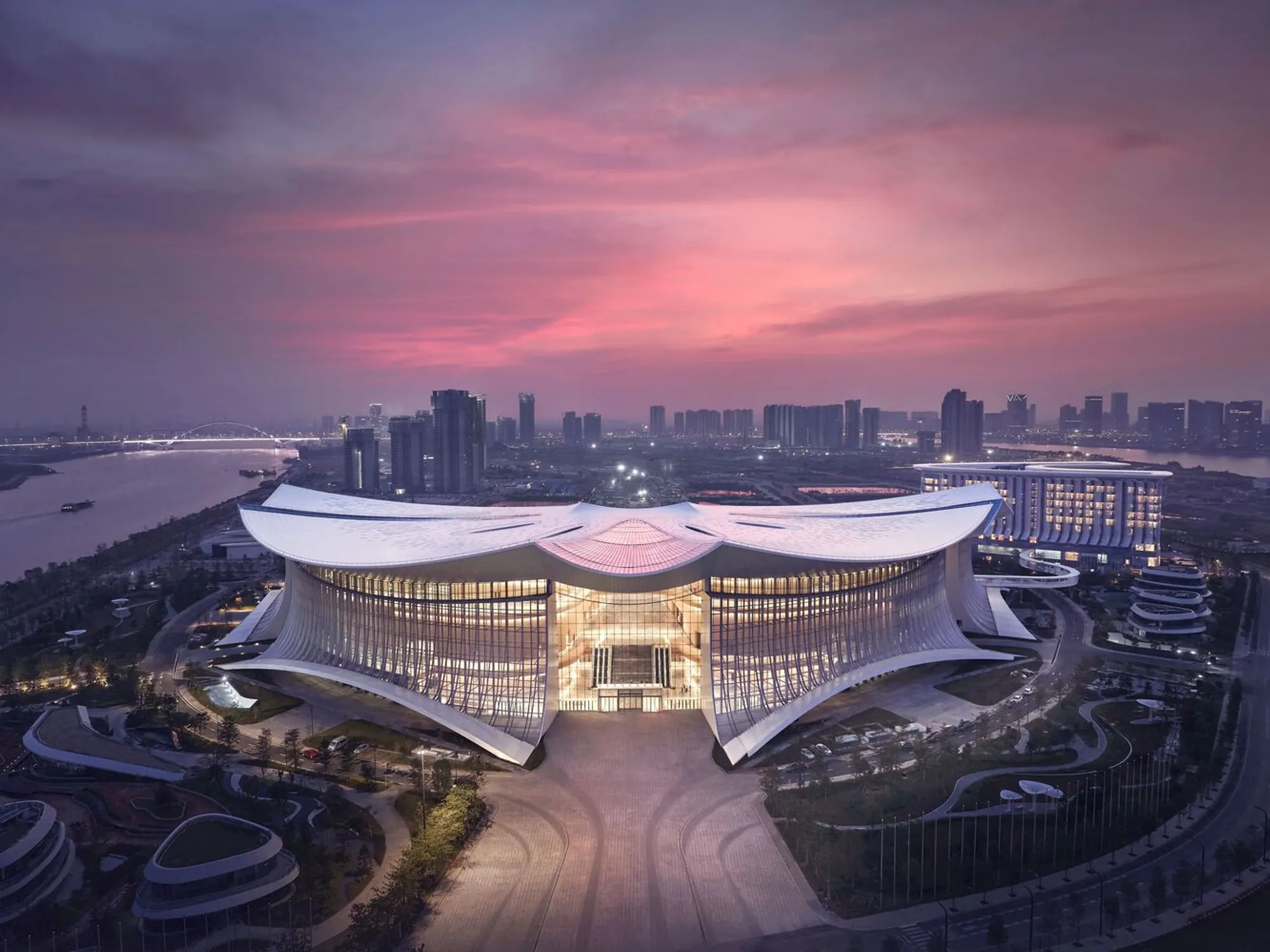
Modern architecture in China has undergone a remarkable transformation, blending traditional aesthetics with cutting-edge technology to create structures that are both functional and symbolic. A shining example of this is the IFF Convention Center in Nansha, Guangzhou, designed collaboratively by BIAD, AAUPC, and TJAD. Completed in 2023, this architectural masterpiece redefines modern Chinese architecture design by combining cultural heritage with contemporary engineering.
Location and Purpose
Situated on Hengli Island in the Pearl Bay Area, the IFF Convention Center spans approximately 257,197 square meters and serves as the permanent venue for the International Financial Forum (IFF). Its strategic location in the Guangdong-Hong Kong-Macao Greater Bay Area makes it a hub for international events, conferences, and cultural exchanges. In October 2023, the center hosted the 20th Anniversary of the IFF Annual Meeting, marking its debut as a global landmark.

Architectural Highlights
1. The Kapok-Inspired Design
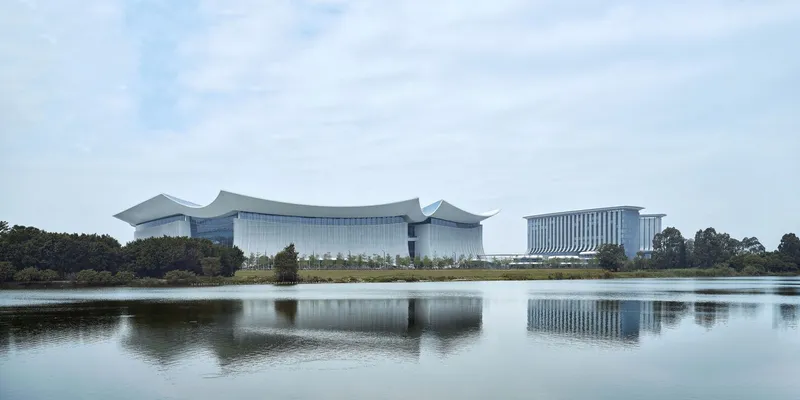
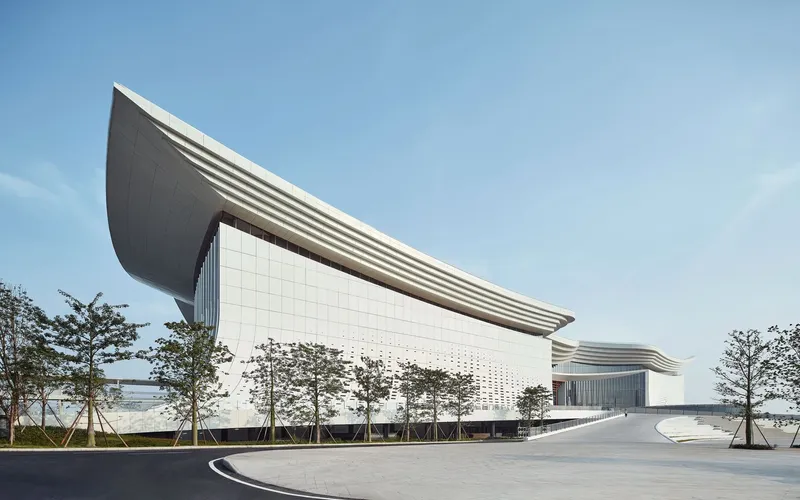
The centerpiece of the IFF Convention Center is its kapok flower-inspired architecture, a symbol of the region's identity. The building's wings radiate outward like petals, creating a dynamic form that appears to bloom from the waterfront. This organic design balances elegance and modernity, paying homage to traditional Chinese motifs while showcasing futuristic architectural language.
2. Integration of Traditional Chinese Elements
The design incorporates classic Chinese architectural features, including:
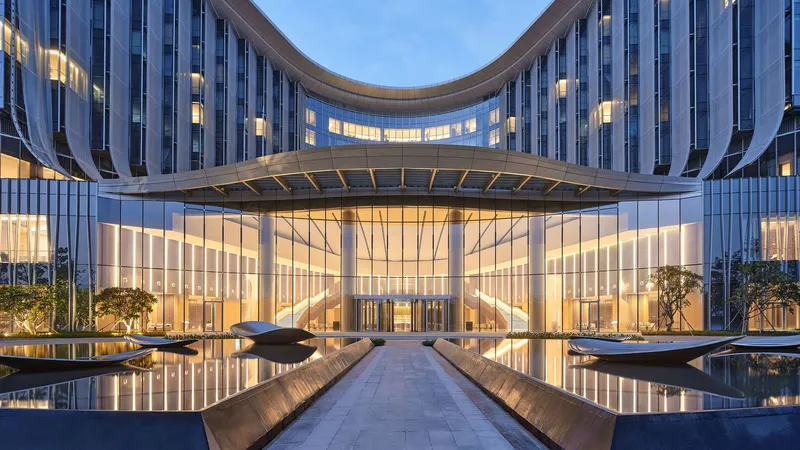
- Flying Cornices: Abstract interpretations of traditional rooflines.
- Bucket Arches: Modernized structural elements that evoke the grandeur of ancient Chinese buildings.
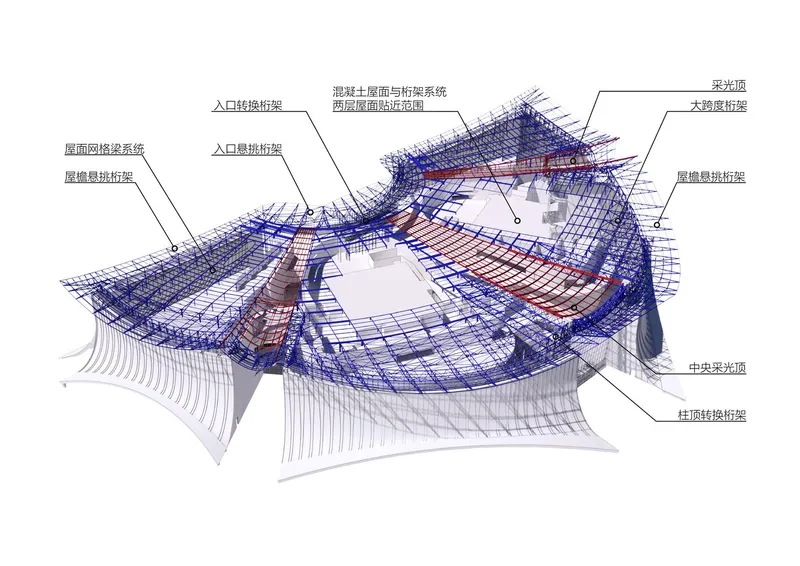
These elements are seamlessly merged with three-dimensional digital modeling, ensuring precise spatial alignment of the steel structures and building envelope systems.
Functional Excellence
3. Multi-Functional Spaces
The convention center is designed to accommodate a wide variety of events:
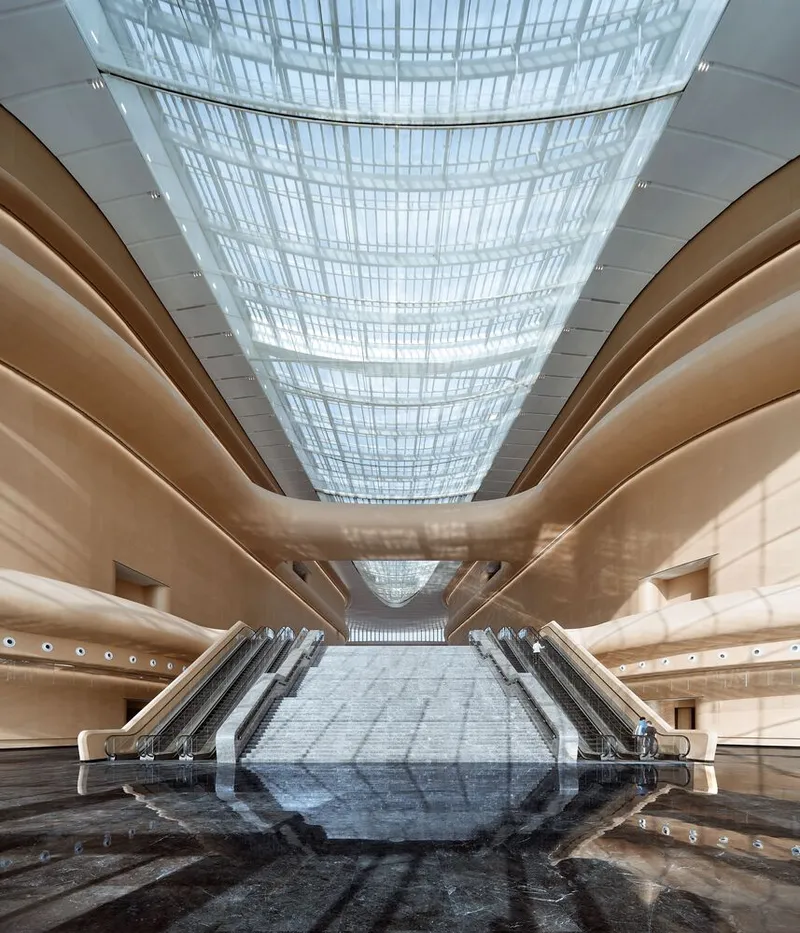
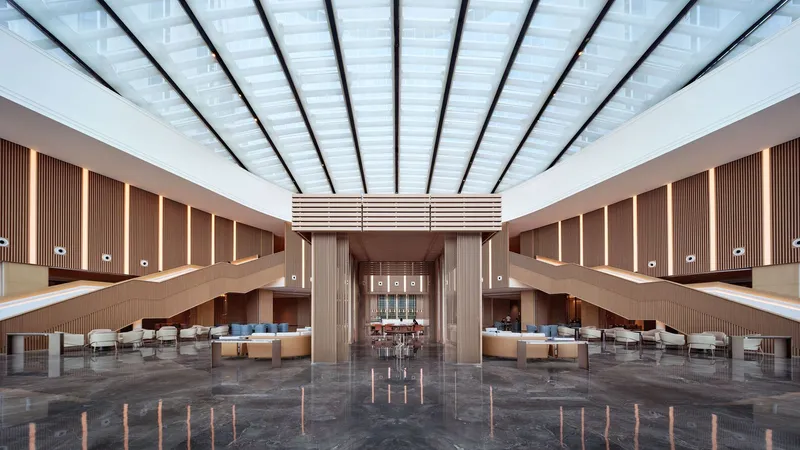
- Meeting Hall and Banquet Hall: Spanning 3,000 m² each, these spaces can host up to 3,000 attendees.
- Council Hall and Multi-Functional Hall: Measuring 1,800 m², ideal for high-level government and international meetings.
- Flexible Conference Rooms: Over 40 rooms distributed across the second to fourth floors, adaptable for parallel forums and breakout sessions.

4. Advanced Construction Materials
The structure employs state-of-the-art materials to achieve durability and aesthetic appeal:
- 14,000 tons of steel for structural integrity.
- 40,000 m² of metal facades for a sleek exterior.
- 7,000 m² of ultra-high-performance concrete (UHPC) for durability.
- 20,000 m² of PTFE material, which enhances light diffusion and climate adaptability.

Cultural and Regional Significance
5. Lingnan Architecture Charm
The IFF Convention Center draws inspiration from the Lingnan architectural style, known for its adaptability to South China's subtropical climate. Key design features include:
- Semi-Outdoor Spaces: Elevated arcades create natural ventilation and shading.
- Cooling Allies: Traditional methods integrated into modern layouts for thermal comfort.
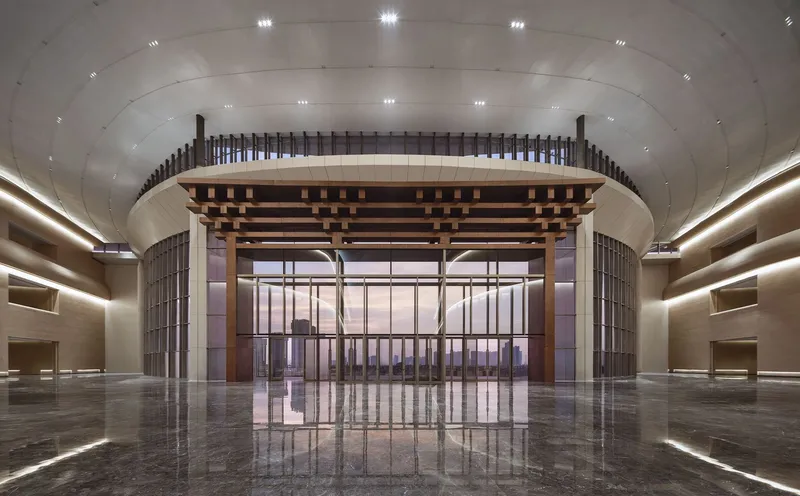
- Cable-Net Glass Curtain Walls: Four-story-high facades that connect the interior to picturesque views of the sea and sky.


6. Symbolic Connection
The design reflects the cultural essence of Lingnan while bridging traditional and modern values. Decorative details, including ship-shaped halls and delicate finishes, evoke the region's historical charm in a contemporary format.
Sustainability and Innovation
7. Digital-Driven Construction
The use of digital visualization technology throughout the project ensured:
- Accurate spatial positioning of components.
- Dynamic monitoring of structural integrity.
- Streamlined collaboration between teams.

8. Energy Efficiency
The building features eco-friendly systems, such as:
- Daylighting solutions through skylights and PTFE curtains.
- Natural ventilation channels.
- Energy-efficient facades and roofing materials.

A Landmark for Modern Chinese Architecture Design
The IFF Convention Center in Nansha is a testament to the evolution of modern Chinese architecture design. It successfully combines traditional cultural elements with innovative technologies, creating a space that is not only functional but also symbolic of China's architectural ingenuity. With its iconic design and global appeal, the IFF Convention Center stands as a beacon of China's rich heritage and forward-thinking vision.
Whether viewed as a hub for international gatherings or a masterpiece of architectural fusion, the IFF Convention Center exemplifies the best of what modern Chinese architecture design has to offer.

All Photographs are work of ZY Architecture Photography, Heng Liu




Popular Articles
Popular articles from the community


Riyadh For All: Intergenerational Urban Design for Active Aging in Rabat
Riyadh For All reimagines urban design in Rabat with intergenerational co-living, adaptive courtyards, and Moroccan cultural exchange today.

Lunar Spiral: Space Architecture Shaped by the Mathematics of the Universe
Lunar Spiral reimagines space architecture through Fibonacci geometry, lunar regolith, levitating habitats, and self-sustaining Moon living.

Hill & Cross Opera: Sculptural Opera House Architecture Shaped by Tallinn’s Landscape and Identity
Hill & Cross Opera reimagines opera house architecture in Tallinn through its sculptural hill, civic plaza, glass wave and a luminous cross.

The Musturak Paradise: Senior Living Architecture for a Connected Future in Temara, Morocco
The Musturak Paradise reimagines senior living architecture in Temara via private homes, social spaces, culture, community, and shared care.

Similar Reads
You might also enjoy these articles


Hodi-Mandai Geram
Project Function: Preservation and revitalization of the Intangible heritage and socio-spatial identity of the Hodi by Housing, Cultural Memory Center, Sacred Grove, landscape, local tourism economy


Olio Towers: A Mid-Rise for Performers That Fuses Housing, Rehearsal, and Stage
Located blocks from Houston's Theater District, this modular tower stacks living units around a central performance atrium.

Oasis: Modular Green Housing Carved into Dhaka's Urban Fabric
A shortlisted Plugin Housing entry reclaims unauthorized settlements in Dhaka with stepped concrete volumes, green roofs, and ventilation-driven design.

Black Hole: A Floating Megastructure for the Post-Physical Era
Emiliano Mazzarotto envisions a spherical, self-scaling arena where e-sports, digital hotels, and holographic stadiums replace traditional public space.


Explore Public Building Competitions
Discover active competitions in this discipline



Challenge to design locus for the upliftment of human rights


Challenge to reimagine the Iron Throne


Photograph architecture without architects


Illustrate the lost glory of Angkor Wat - Render Challenge
Comments (0)
Please login or sign up to add comments
No comments yet. Be the first to comment!