
Modern Concrete House Design: The V174 House by LE Arquitectura
the V174 House's innovative modern concrete house design, blending aesthetics, functionality, privacy, and natural light in architecture.


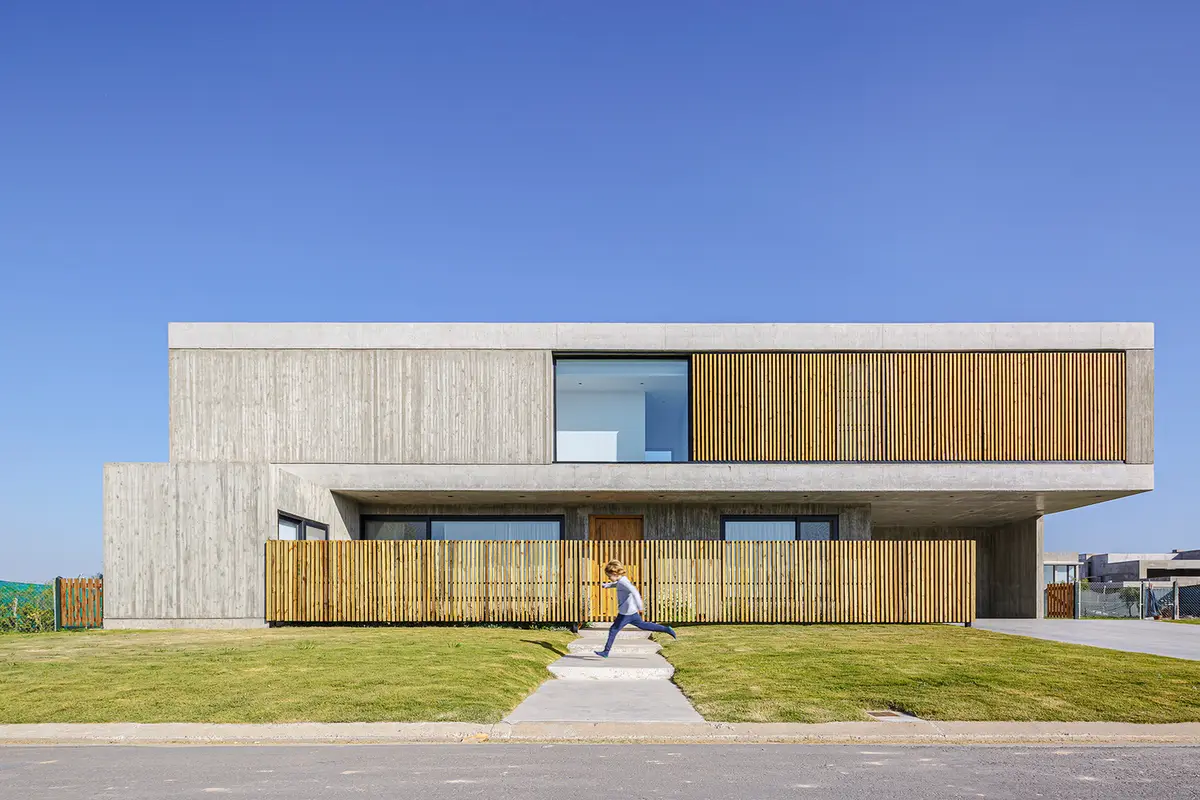
In the world of contemporary architecture, the modern concrete house design stands out for its striking aesthetic, structural integrity, and sustainable potential. One such example is the V174 House, designed by the renowned Argentine firm LE Arquitectura. Located in the city of Funes, Argentina, this 388 m² house takes full advantage of modern design principles, integrating concrete volumes with natural light and privacy considerations to create an architectural masterpiece. Let’s explore the key features of this modern concrete house design and understand why it’s an exemplary case of contemporary architectural thinking.
The Concept Behind the V174 House
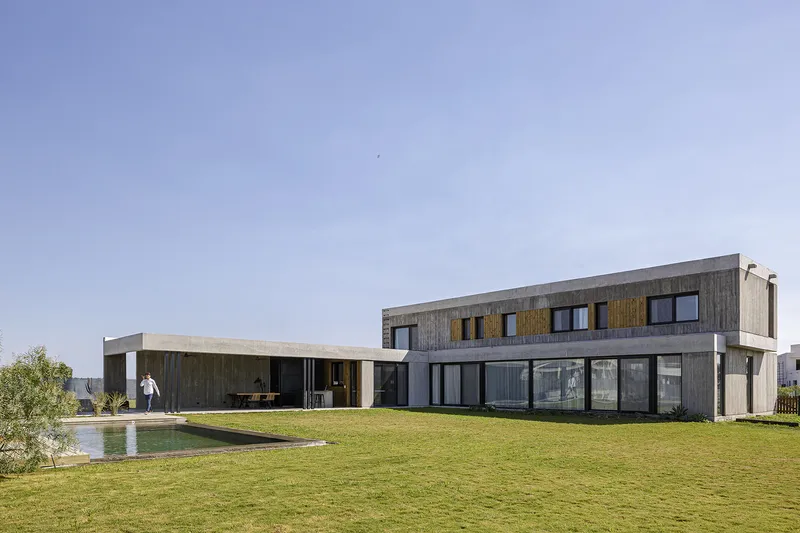
The V174 House responds to the specific challenges posed by its location in a gated community, with a lot that offers an abundant north-facing frontage. In order to balance the benefits of natural light with the need for privacy, the architects used a creative approach, setting back the ground floor to create a courtyard that serves as a buffer. This design choice allows the house to capitalize on the natural light from the north-facing windows without compromising the residents’ privacy.
A Harmonious Blend of Function and Form
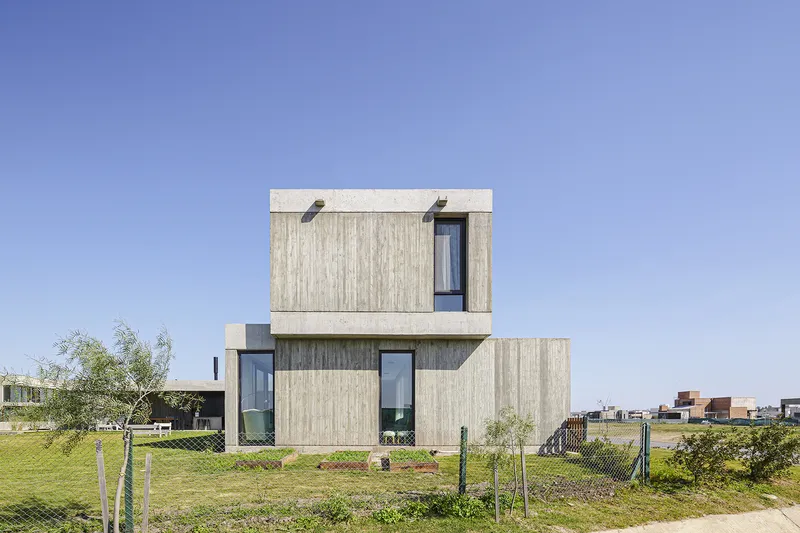
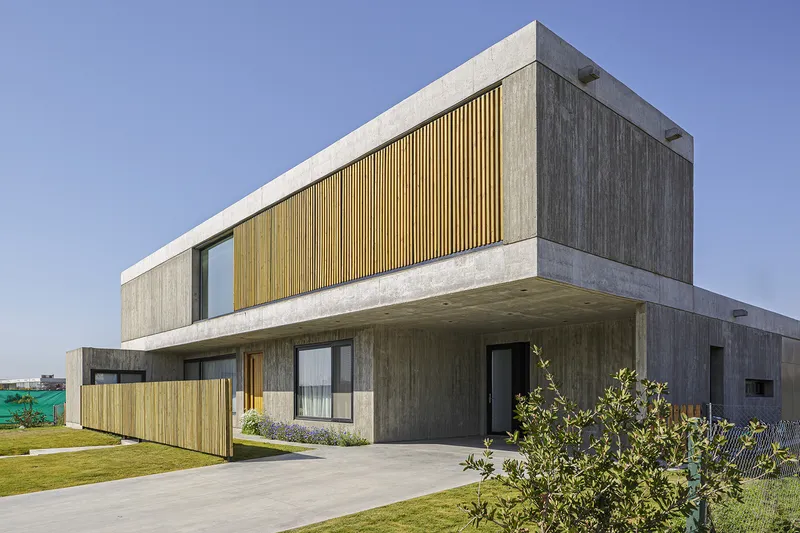
The layout of the V174 House is composed of three main concrete volumes. The lower level features two intertwining volumes that house the social areas of the home, while the upper level contains the more private bedrooms and spaces. By displacing the upper volume forward, the architects were able to create an overhang that not only protects the entrance porch but also improves the sunlight penetration into the ground floor’s north-facing windows.
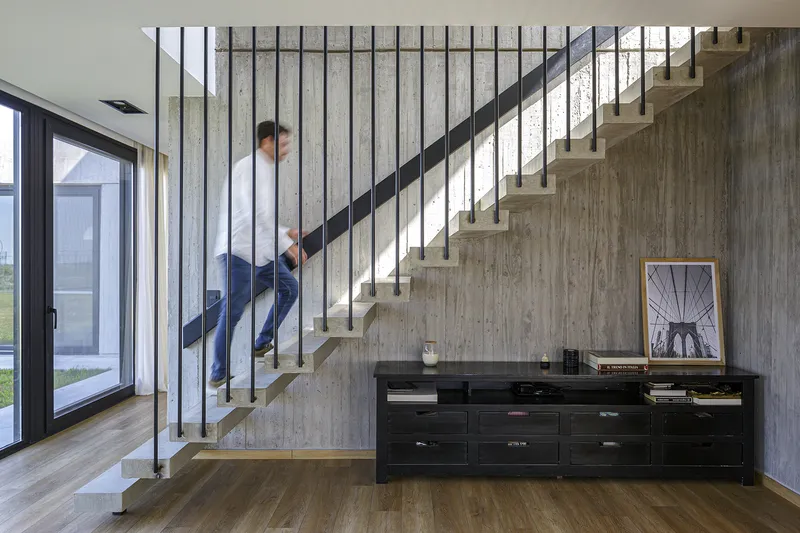
This innovative approach ensures that the house maintains its sleek, modern aesthetic while enhancing its functionality. The strategic use of concrete cantilevers and varying textures—smooth concrete, chamfered edges, and wood-textured panels—helps achieve a dynamic play of solids and voids. The result is a sense of floating volumes, visually balanced and supported by cantilevered structures that seem to defy gravity.
Maximizing Privacy and Natural Light
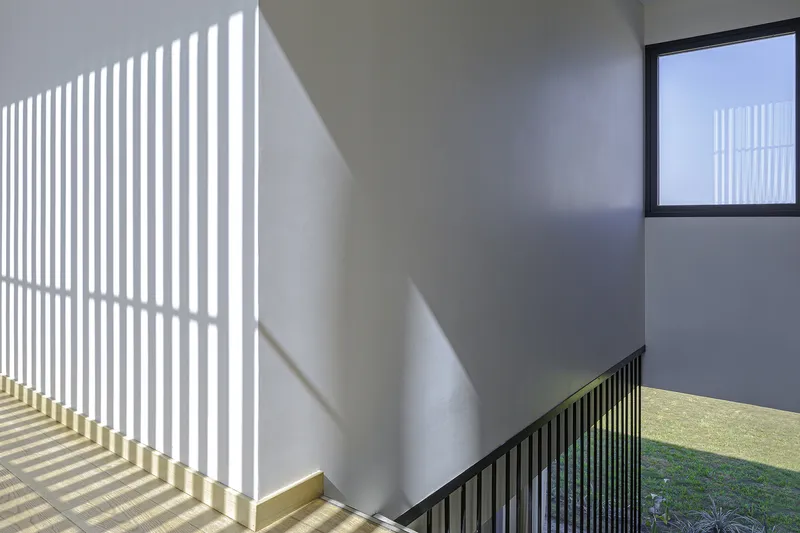
One of the main challenges in modern concrete house design is balancing the influx of natural light with the need for privacy. The V174 House solves this issue with its creative use of form and space. By setting back the ground floor, the house features an open courtyard that invites natural light into the central living areas. The cantilevered upper volume shields the private areas, reducing the risk of overlooking from neighbors and maintaining the overall privacy of the residents.
This thoughtful design ensures that the home enjoys an abundance of daylight, particularly from the north-facing facade, without compromising on security or seclusion. The forward displacement of the upper volume also reduces the shadow cast by the structure, ensuring that the house’s southern garden receives plenty of sunlight throughout the day.
Architectural Details and Material Selection
A major aspect of modern concrete house design is the careful selection of materials that highlight the inherent beauty of the structure. In the V174 House, the architects chose concrete for its durability and versatility. The raw, industrial nature of concrete is softened by the addition of wood-textured panels, which introduce warmth and contrast to the otherwise minimalist design. The interplay of smooth, chamfered edges and the textured middle surfaces of the concrete volumes creates a sophisticated yet grounded aesthetic.
Cantilevered elements further enhance the visual appeal of the house, giving the impression that the upper volumes are hovering above the ground. This combination of texture, form, and function is a hallmark of modern concrete house design, showcasing how concrete can be both robust and refined.
Sustainable Design Choices
The V174 House is not just about aesthetics; it also embraces sustainability. The north-facing orientation maximizes passive solar heating, reducing the need for artificial lighting and heating during the day. The use of concrete helps regulate the indoor temperature, providing thermal mass that stores heat in the cooler months and keeps the house cool during the summer. By using materials and design principles that reduce energy consumption, the V174 House offers an eco-conscious living environment without sacrificing style or comfort.
Interior Spaces: Modern Minimalism Meets Functionality
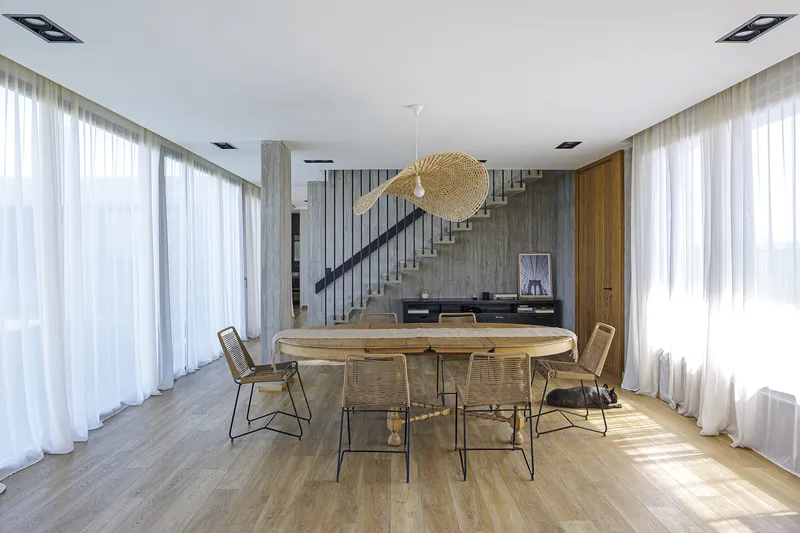
The interior design of the V174 House reflects the same modern principles applied to its exterior. The open-plan kitchen, dining, and living areas are filled with natural light, thanks to the expansive windows and the strategically placed courtyard. The materials used inside, such as smooth concrete finishes, warm wooden accents, and minimalist furniture, continue the modern aesthetic, creating a cohesive look that flows seamlessly from the exterior to the interior.
Upstairs, the private areas of the house offer a serene and private retreat. The forward displacement of the upper volume creates a sense of separation between the public and private areas of the home, ensuring that the bedrooms remain quiet and secluded from the activity in the social spaces below.


Popular Articles
Popular articles from the community


Lunar Spiral: Space Architecture Shaped by the Mathematics of the Universe
Lunar Spiral reimagines space architecture through Fibonacci geometry, lunar regolith, levitating habitats, and self-sustaining Moon living.

ALGAL REALM: A Bio-Integrated Lunar Habitat Design for Life Beyond Earth
ALGAL REALM reimagines lunar habitat design with algae-powered life support, 3D-printed regolith, and vertical living for a lunar future.

Play: Fragments of Their World
Familiar architecture becomes modular playground design, creating safe spaces where displaced children can learn, connect, imagine and play.

Conexión: Biophilic Design Reimagines High-Rise Living in Hong Kong
Conexión reimagines high-rise living in Hong Kong through biophilic design, green facades, shared spaces, daylight, water and nature within.

Similar Reads
You might also enjoy these articles


Hodi-Mandai Geram
Project Function: Preservation and revitalization of the Intangible heritage and socio-spatial identity of the Hodi by Housing, Cultural Memory Center, Sacred Grove, landscape, local tourism economy


Olio Towers: A Mid-Rise for Performers That Fuses Housing, Rehearsal, and Stage
Located blocks from Houston's Theater District, this modular tower stacks living units around a central performance atrium.

Oasis: Modular Green Housing Carved into Dhaka's Urban Fabric
A shortlisted Plugin Housing entry reclaims unauthorized settlements in Dhaka with stepped concrete volumes, green roofs, and ventilation-driven design.

Black Hole: A Floating Megastructure for the Post-Physical Era
Emiliano Mazzarotto envisions a spherical, self-scaling arena where e-sports, digital hotels, and holographic stadiums replace traditional public space.

Explore Architecture Competitions
Discover active competitions in this discipline

Challenge to reimagine the Iron Throne

Photograph architecture without architects

Illustrate the lost glory of Angkor Wat - Render Challenge

Design challenge to reuse E-waste
Comments (0)
Please login or sign up to add comments
No comments yet. Be the first to comment!