

Molde House by Federico Marinaro Arquitecto – A Contemporary Concrete Residence in Funes, Argentina
Molde House by Federico Marinaro Arquitecto blends raw concrete, precise geometry, and natural light to create a sustainable modern Argentine residence.


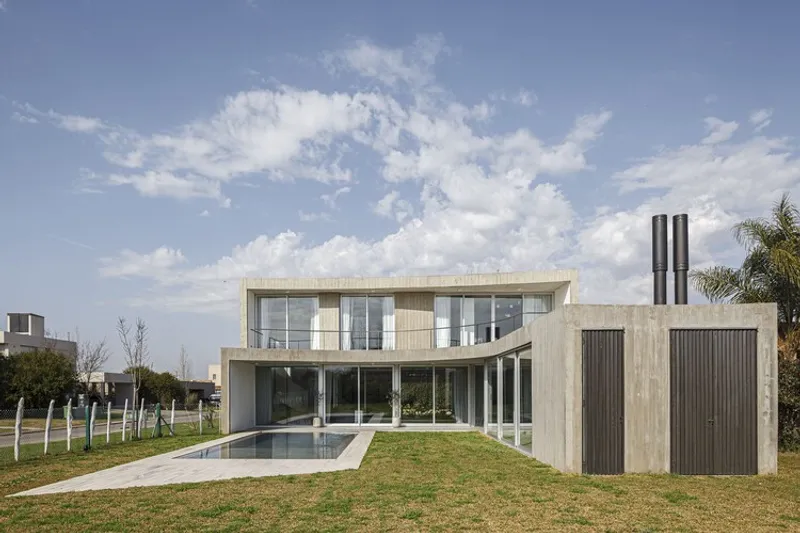
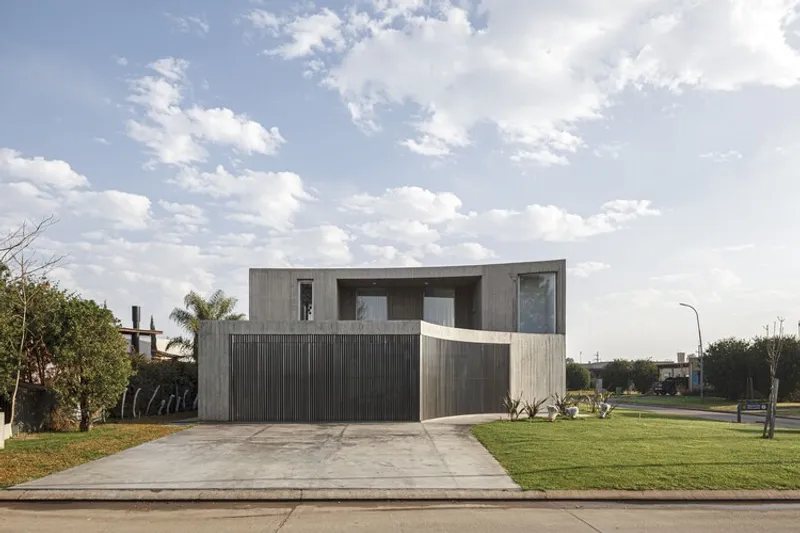
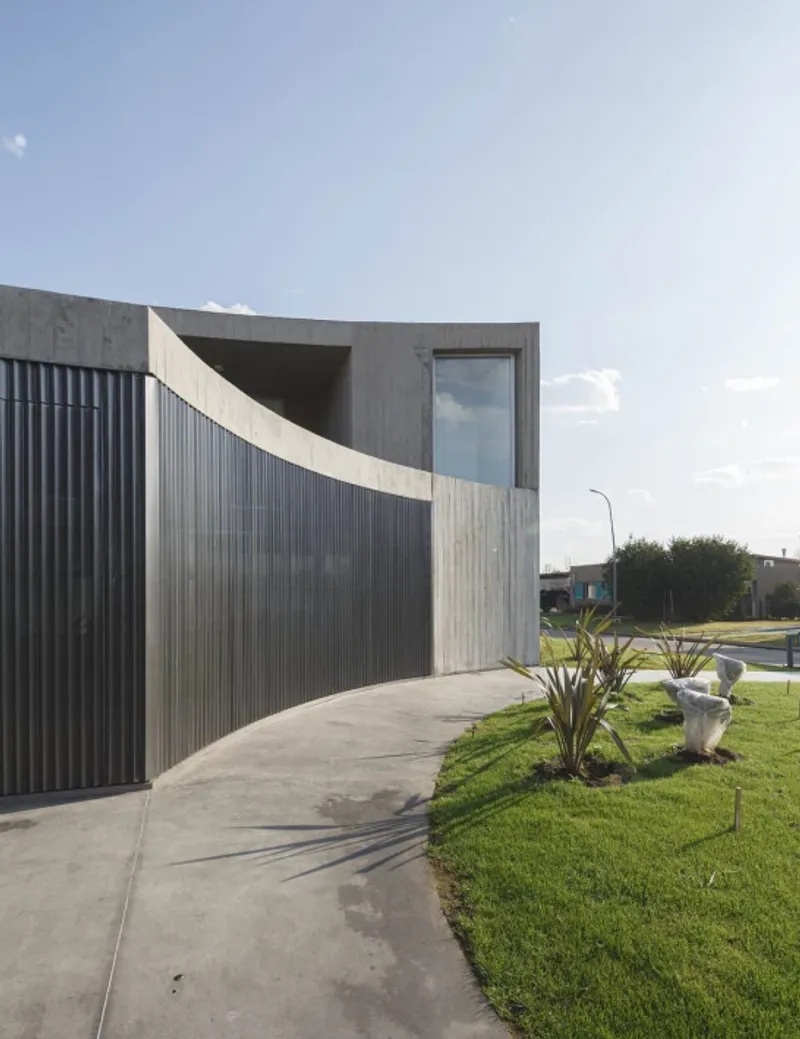
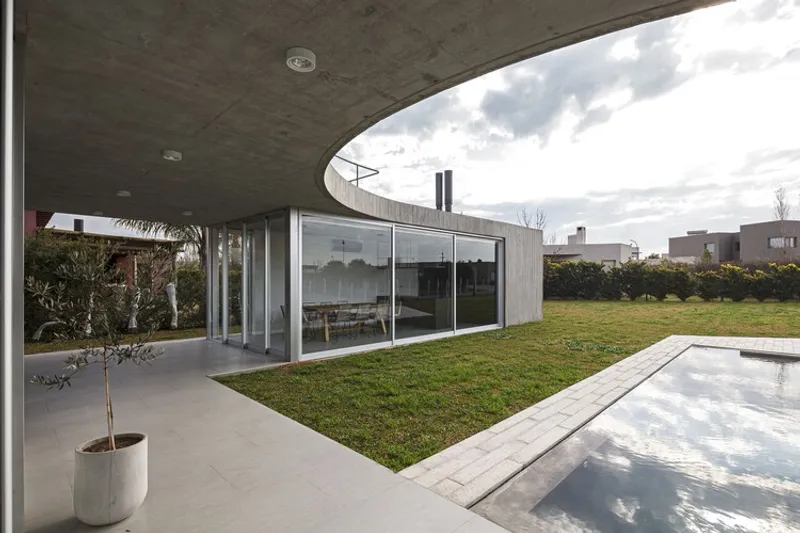
Molde House, designed by Federico Marinaro Arquitecto, is a striking example of contemporary residential architecture located in the private neighborhood of San Sebastián in Funes, Santa Fe, Argentina. Completed in 2021, the 348 m² residence embraces raw concrete construction, geometric precision, and thoughtful integration with its corner site to create a refined yet expressive family home.
Site & Context
The residence occupies a southeast-facing corner lot with no pre-existing vegetation. This condition allowed the architects to fully experiment with geometry and orientation. The lot’s angular positioning became the basis for the home’s 9.50 x 9.50 m initial floor plan, strategically placed along the southern edge to maximize privacy while benefiting from natural light.
The surrounding neighborhood is relatively consolidated but lacks strong forestry or green cover. Thus, the house itself becomes a statement of modern concrete architecture while introducing its own microclimate and functional order.

Design Strategy
The design approach was shaped not only by architectural logic but also by the unique collaboration with the client, Mauricio—himself an architect. While Federico Marinaro Arquitecto developed the overall design, Mauricio supervised and executed the project, adding layers of expertise in concrete construction.
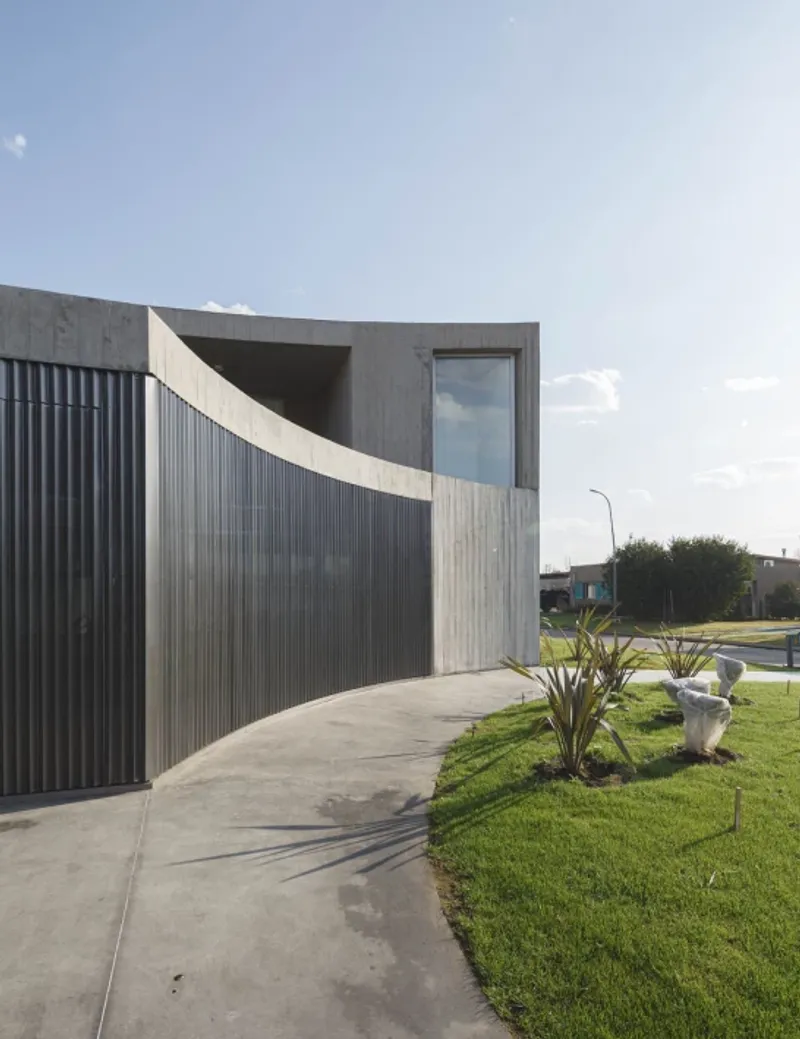
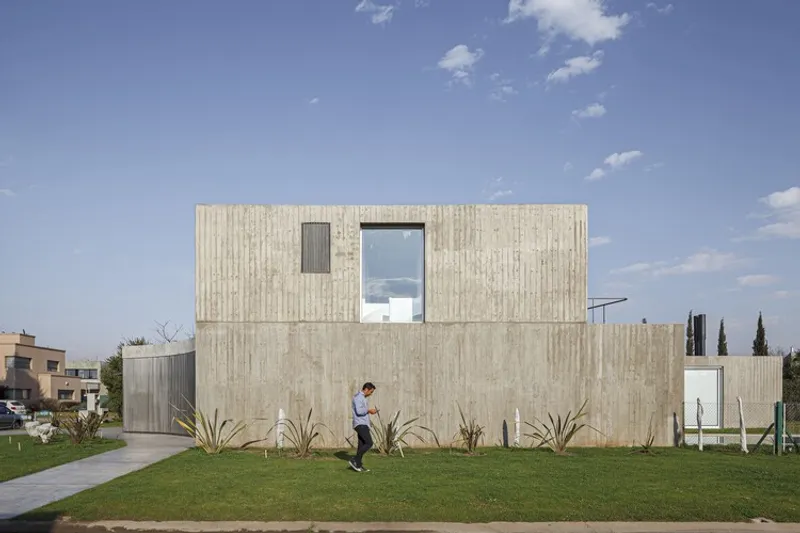
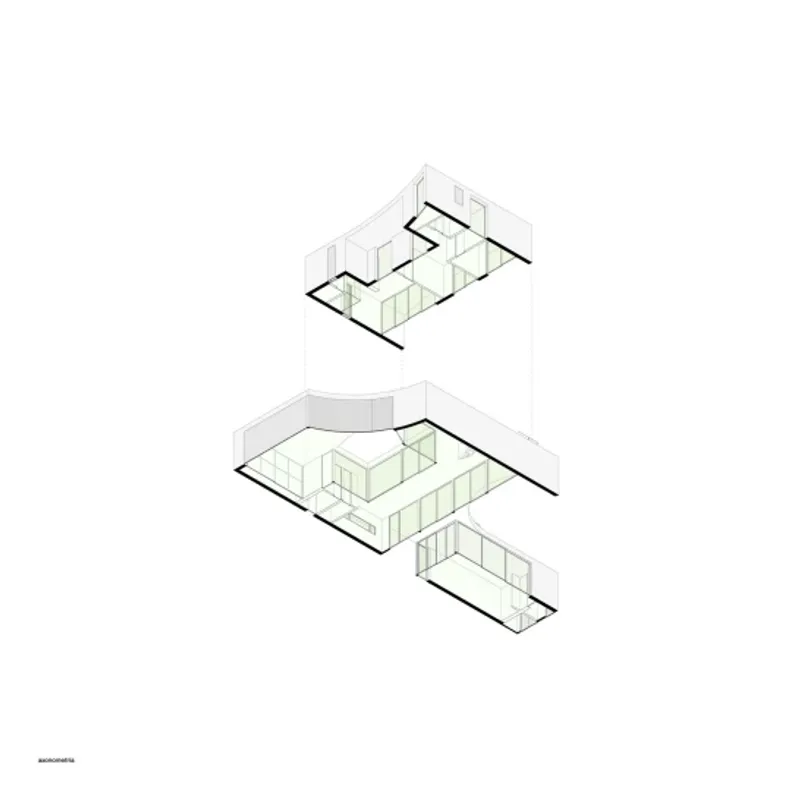
The project began with a strong geometric pivot: the square grid. From this base, additional programmatic volumes were added as the design evolved, responding to functional needs and solar orientation. This resulted in a highly precise, angular geometry that balances openness with protection.
In winter, the home welcomes direct sunlight, while in summer, carefully designed shading provides natural cooling—demonstrating a thoughtful approach to climatic responsiveness.

Spatial Organization
The residence is clearly divided into two distinct programmatic levels:
- Ground Floor (Public & Semi-Private) – The lower level accommodates shared functions, including social areas, circulation, and spaces that blend indoor and outdoor experiences. Privacy gradients are embedded, allowing smooth transitions between open living spaces and more intimate corners.
- Upper Floor (Private) – Reserved for the family, this level contains strictly private spaces, including bedrooms and intimate living zones, shielded from direct street visibility while still connected to natural light and views.
Materiality & Construction
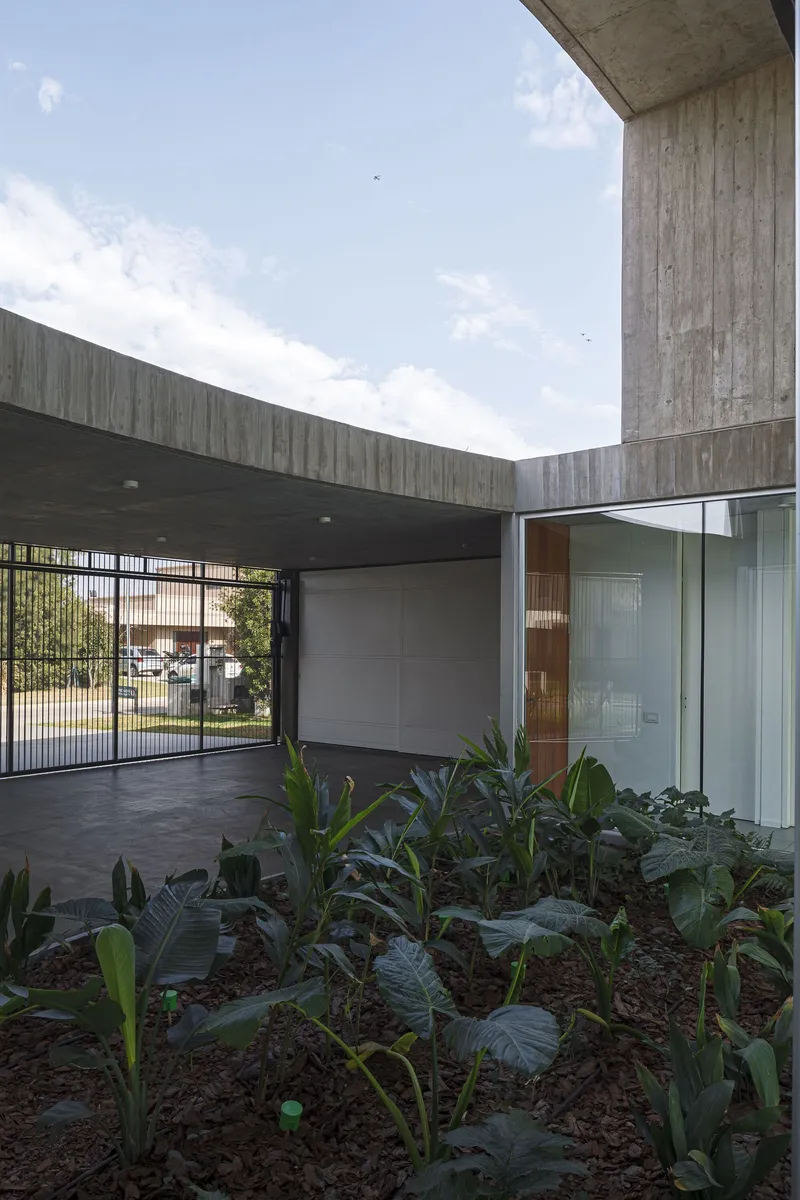
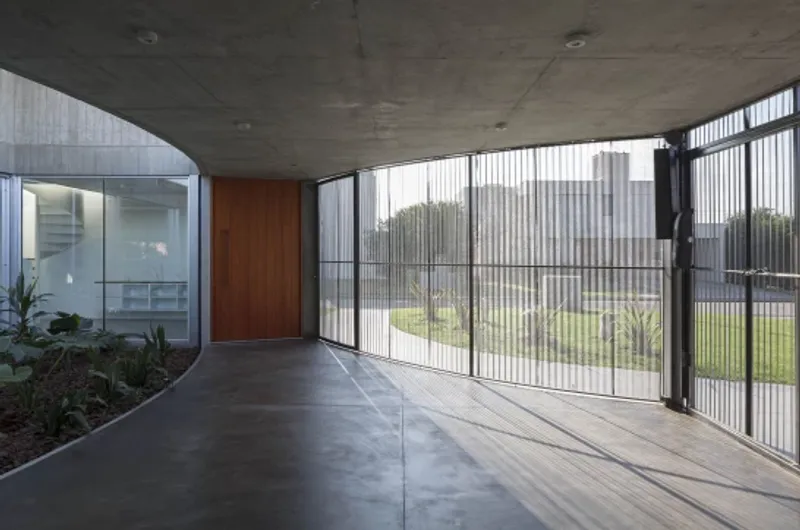
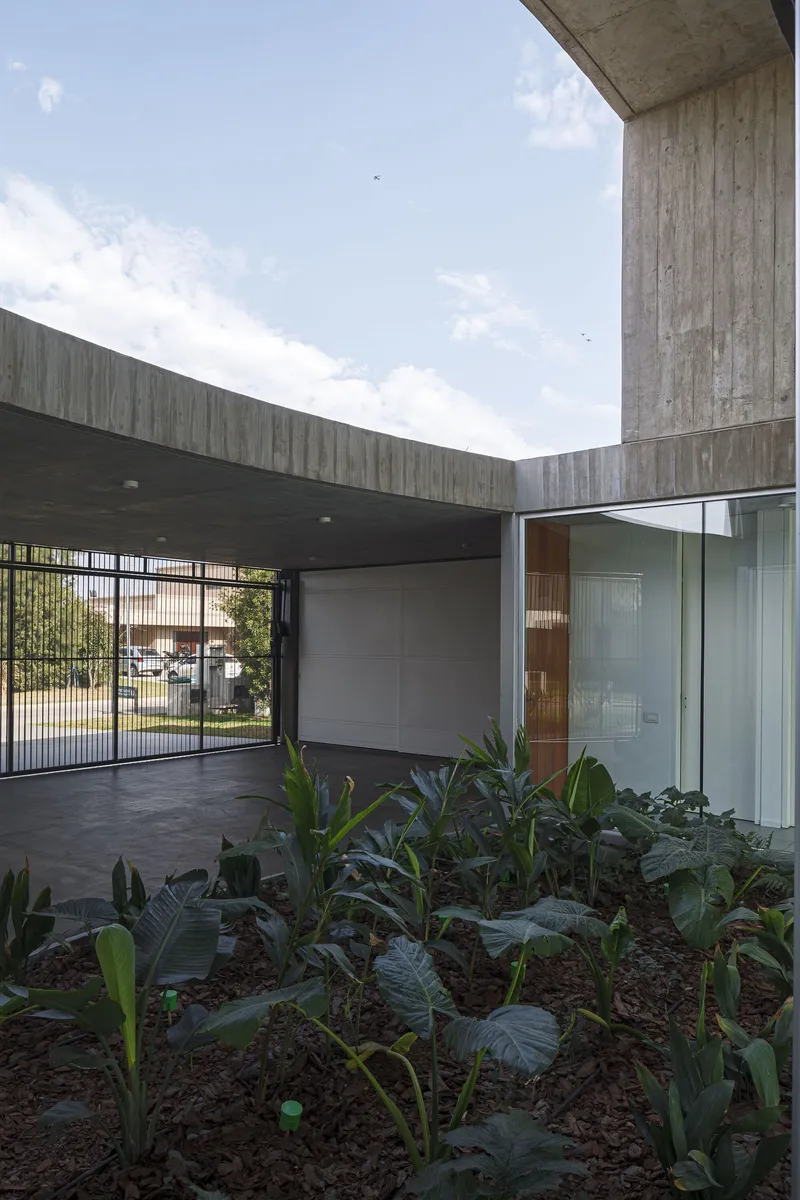
Concrete plays a central role, both structurally and aesthetically. The use of reinforced concrete was not only a design choice but also a reflection of the client’s professional expertise. Exposed concrete surfaces lend the home a raw, sculptural character, contrasting with the refined white plaster interiors.
The interior treatment enhances the perception of the house as a protective shell: rugged on the outside, soft and minimal inside. White walls and clean finishes highlight the play of light, shadows, and reflections.
Light, Views & Transparency
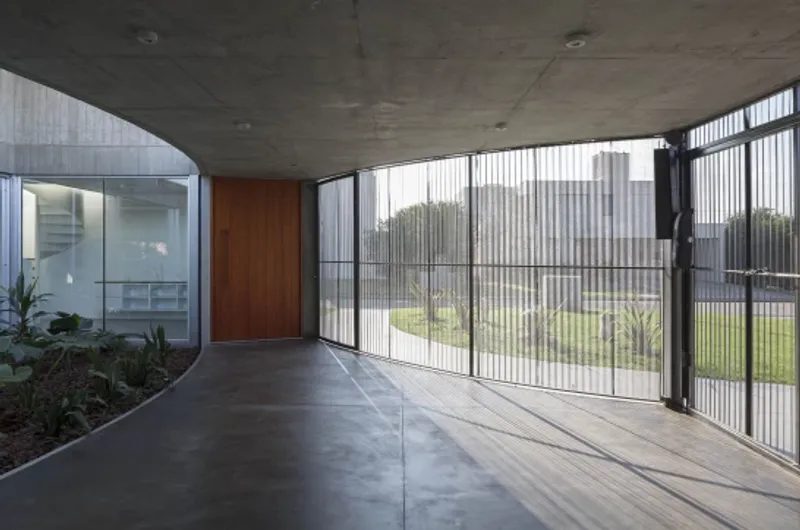
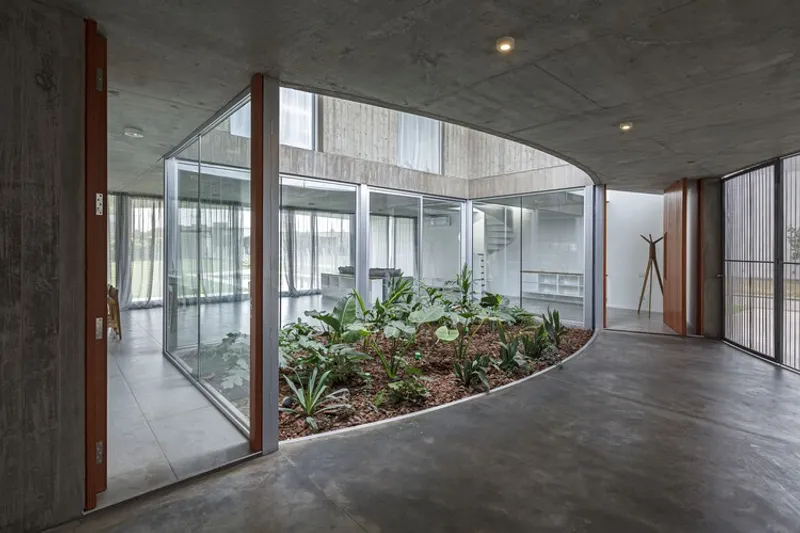
One of the most striking features of Molde House is the interplay of overlapping views and glazing sequences. The architecture frames alternating perspectives—interior to exterior, exterior to interior—creating constant visual movement. Reflections, oblique perspectives, and layered glass panels generate a dynamic experience as one moves through the house.
These spatial tricks produce unexpected visual depth, allowing residents to simultaneously perceive distant views of the outside and immediate mirrored reflections inside. This effect enriches daily living with variety and discovery.
Molde House is more than a residence—it is an architectural dialogue between precision and emotion, materiality and light, client and architect. Its strong geometry, climatic intelligence, and material honesty make it a standout example of modern Argentine residential architecture.
By embracing the rawness of concrete while refining interior living, Federico Marinaro Arquitecto has crafted a house that is at once robust, minimal, and deeply experiential.
All the photographs are works of Walter Salcedo


Popular Articles
Popular articles from the community


David Macias Steps a Doorless Stone and Plaster House Down a Tropical Colombian Hillside
In the humid hills of Colombia, Threshold House replaces the front door with an open void and terraces its 850 m² down the slope instead of fighting it.

David Ortega Stacks a Two-Story Mexico City Penthouse Around a Steel Stair and a Pergola-Shaded Roof Terrace
In Colonia Roma, a 300 m² penthouse uses oak joinery, a planted steel stair and a slatted roof pergola to make a new-build apartment feel like a house.

GROUP A Strips a 1969 Rotterdam Harbor Headquarters to Its Frame and Wraps It in Timber Louvers
In Rotterdam's M4H harbor district, Ferro Offices reuses a 1969 frame, adds one timber storey and reaches BREEAM-NL Outstanding.

U.GA Architects Wraps an Oval Rooftop Pool in Curved Board-Formed Concrete on Busan's Jeollidan-gil
In Busan's Jeonpo-dong, a 454 m² mixed-use block stacks a neighborhood facility, guest rooms and an oval rooftop pool inside spiraling concrete walls.

Similar Reads
You might also enjoy these articles


Hodi-Mandai Geram
Project Function: Preservation and revitalization of the Intangible heritage and socio-spatial identity of the Hodi by Housing, Cultural Memory Center, Sacred Grove, landscape, local tourism economy


Olio Towers: A Mid-Rise for Performers That Fuses Housing, Rehearsal, and Stage
Located blocks from Houston's Theater District, this modular tower stacks living units around a central performance atrium.

Oasis: Modular Green Housing Carved into Dhaka's Urban Fabric
A shortlisted Plugin Housing entry reclaims unauthorized settlements in Dhaka with stepped concrete volumes, green roofs, and ventilation-driven design.

Black Hole: A Floating Megastructure for the Post-Physical Era
Emiliano Mazzarotto envisions a spherical, self-scaling arena where e-sports, digital hotels, and holographic stadiums replace traditional public space.

Explore Housing Competitions
Discover active competitions in this discipline

Challenge to reimagine the Iron Throne

Photograph architecture without architects

Illustrate the lost glory of Angkor Wat - Render Challenge

Design challenge to reuse E-waste
Comments (0)
Please login or sign up to add comments
No comments yet. Be the first to comment!