
Monreal House in Patagonia: A Sustainable Timber Retreat by SAA Arquitectura + Territorio
Elevated timber house in Patagonia, using Lenga wood, minimal foundations, passive solar design, and panoramic lake-facing facades.


Architects: SAA Arquitectura + Territorio
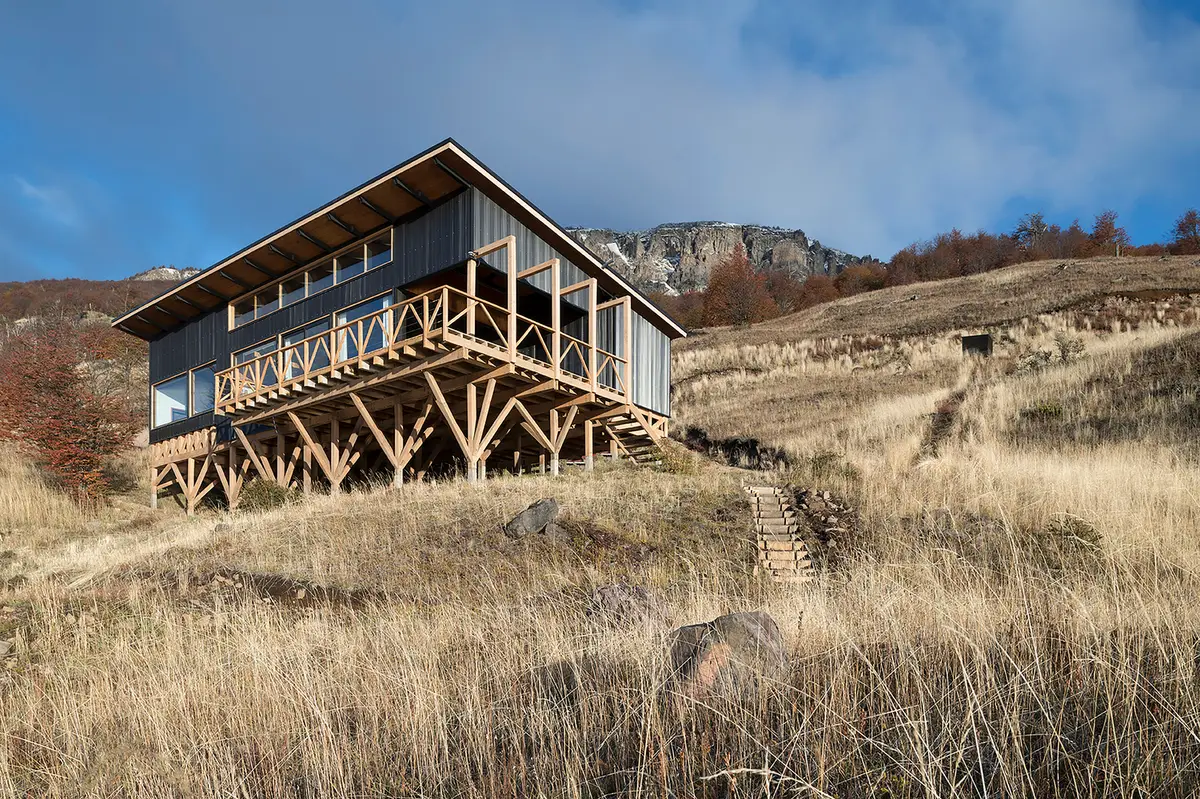
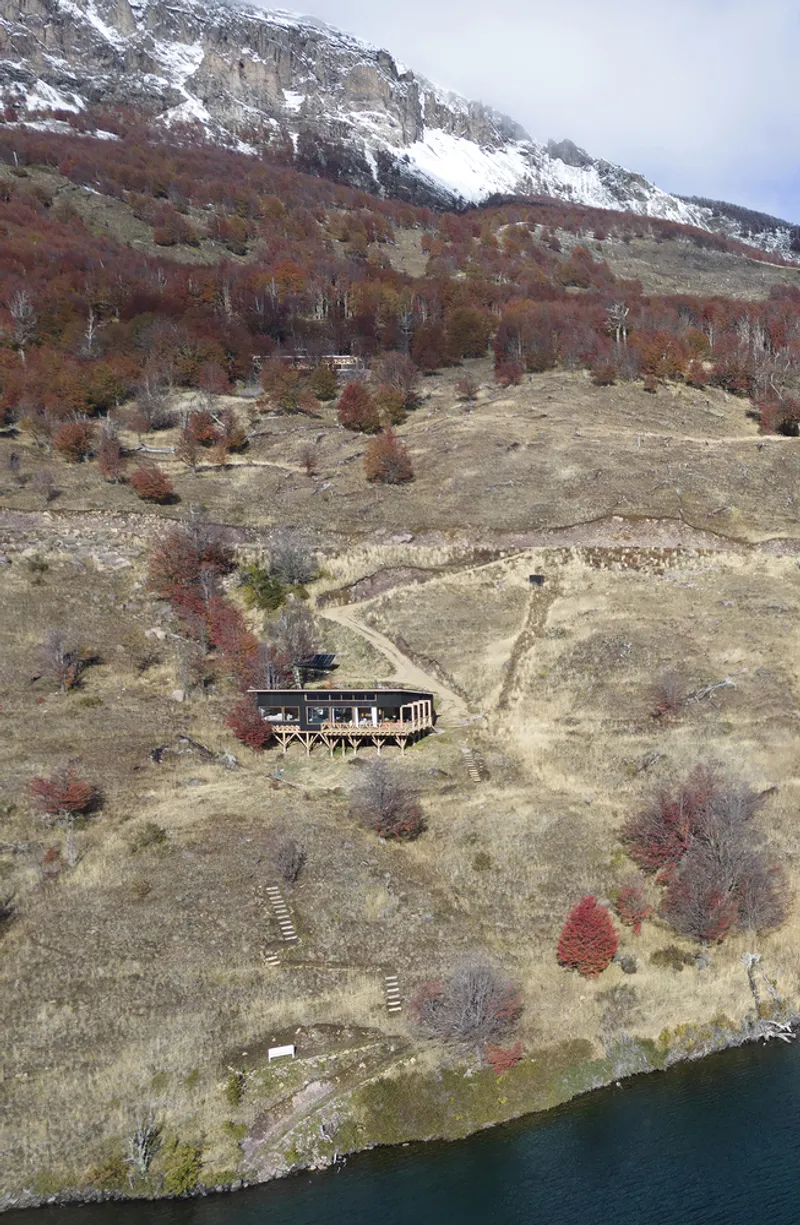
Set against the immense natural scenery of southern Chile, Monreal House emerges as a contemporary mountain refuge designed in harmony with the remote Patagonian environment. In a region where construction density is minimal and nature dominates the horizon, this 128-square-meter residence establishes a careful balance between human habitation and fragile landscape ecology.
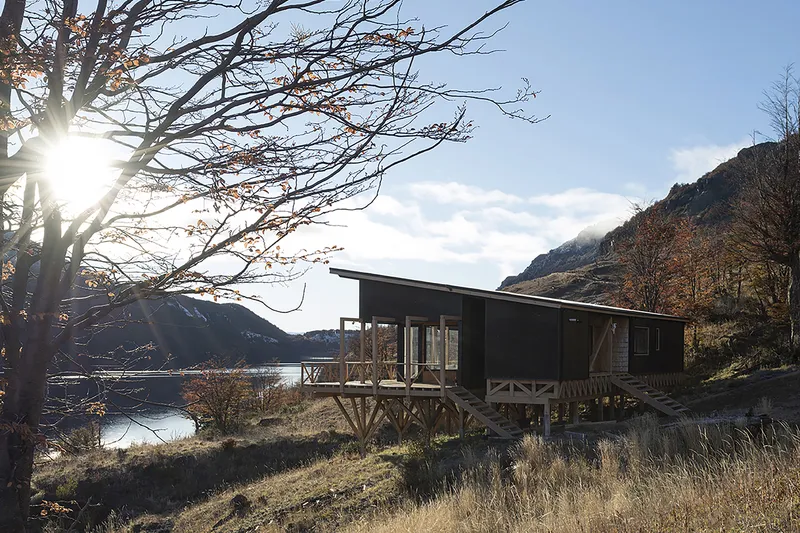
The project responds to the dramatic terrain and breathtaking views of Monreal Lake. The architectural strategy was shaped by two essential factors: the steep slope of the site and the need to preserve uninterrupted lake vistas. Rather than imposing itself upon the land, the house gently rests against it, maintaining visual continuity with the mountains and water beyond.
Designing for Remote and Harsh Conditions
Building in remote Patagonia presents complex logistical and environmental challenges. Limited access to materials, difficult transportation routes, harsh weather, and a short construction season required a rational and efficient design approach.
The house adopts a modular grid system, optimizing construction under adverse climatic conditions. By organizing the layout into two clearly defined levels, the design minimizes excavation while adapting naturally to the slope. This strategy reduces ecological impact and respects the fragile vegetal soil typical of southern latitudes.
The residence is divided into two functional zones:
- The living and communal areas positioned near the entrance
- The private wing containing bedrooms and bathrooms
This clear spatial organization enhances functionality while maintaining a compact architectural footprint.
Elevated Timber Structure with Minimal Ecological Impact
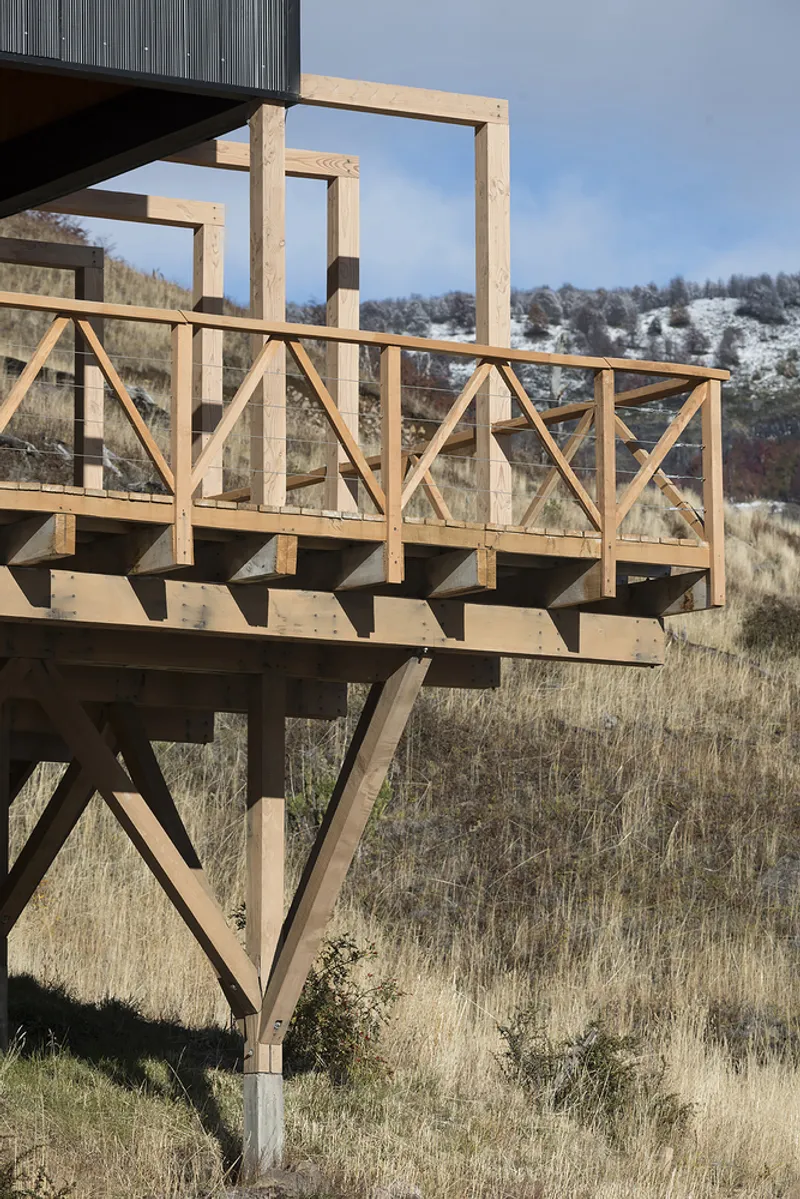
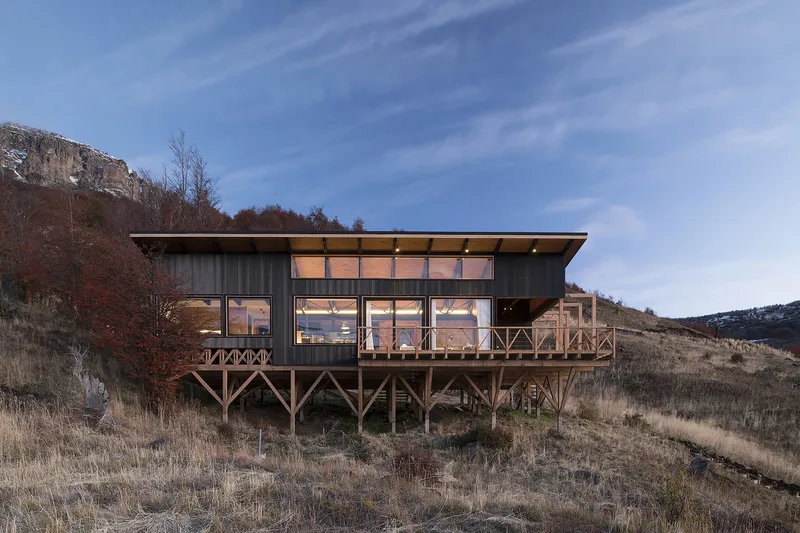
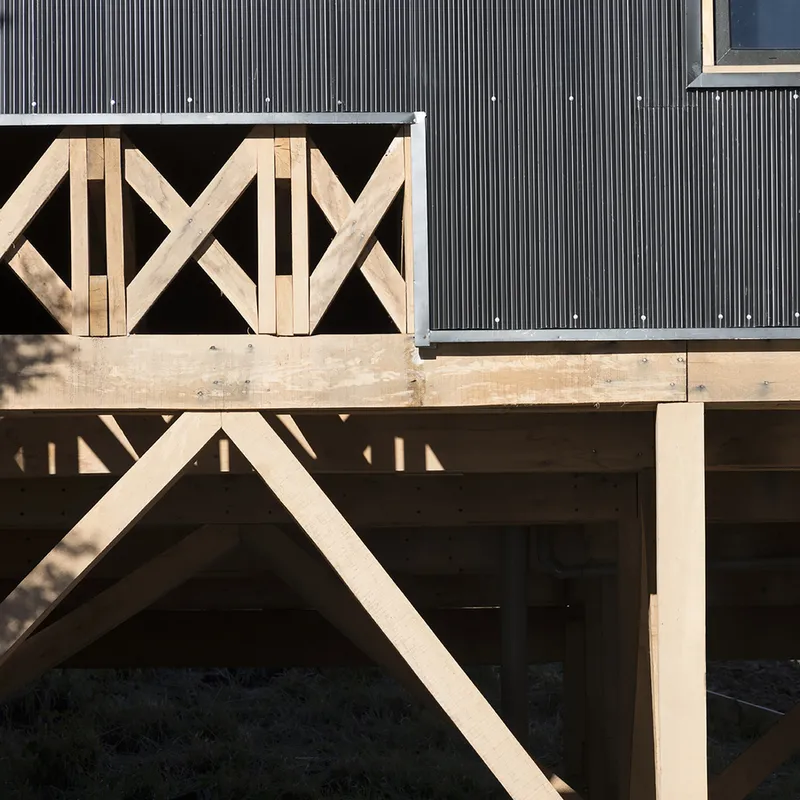
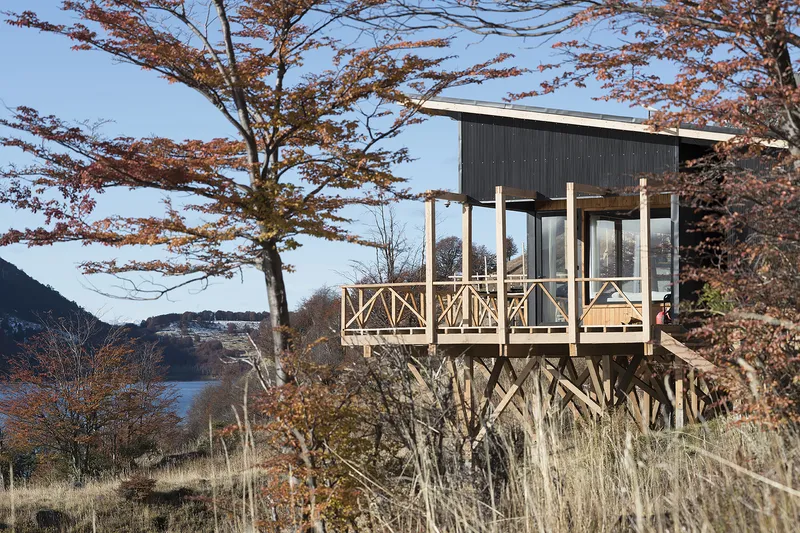
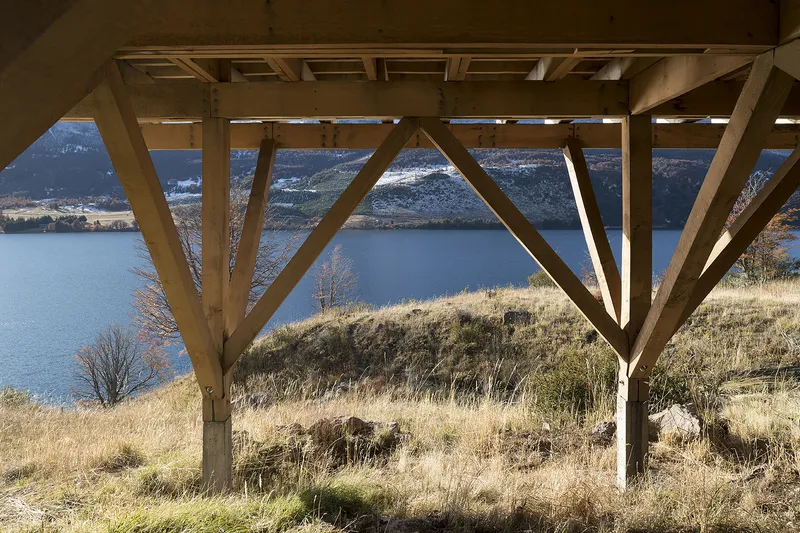
One of the defining features of Monreal House is its elevated wooden structural system. Supported by diagonal timber pillars delicately positioned on the terrain, the house touches the ground lightly, almost like an insect perched above the soil.
This structural strategy allows:
- Minimal excavation
- Preservation of natural grass beneath the house
- Continuity of fragile topsoil ecosystems
- Reduced foundation work
An 80-centimeter plinth raises the structure above natural grade, protecting it from snow accumulation and ground moisture during the intense Patagonian winters.
The result is a sustainable mountain architecture approach that prioritizes environmental sensitivity and long-term durability.
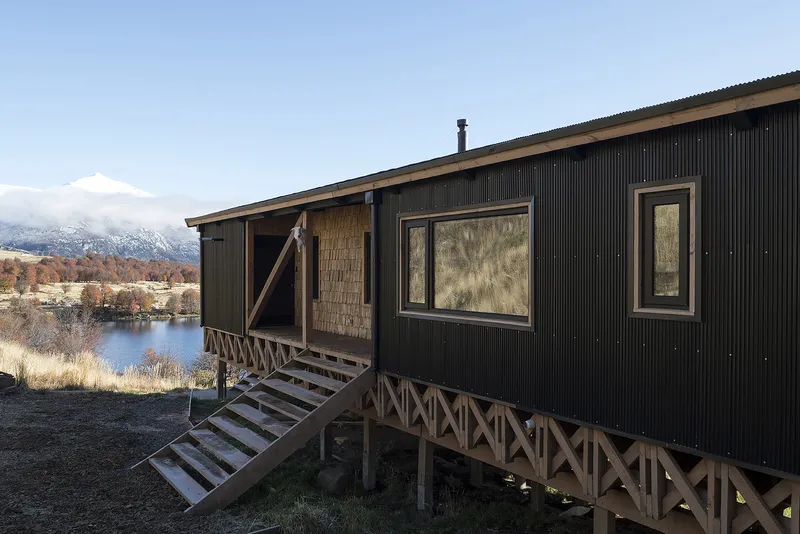
Lenga Wood: Local Material, Timeless Expression
The architectural identity of Monreal House is defined by a single primary material: locally sourced Lenga wood (a native oak species of Patagonia). By using regional timber, the project reinforces local building traditions while reducing transportation impact.
The exposed timber structure features:
- 6”x6” pillars and diagonal supports
- 2”x10” master beams (tripled)
- 2”x8” secondary beams
This layered timber framework forms a complex yet honest structural language. Thick, solid, and expressive, the wood reflects the robust nature of southern Chilean carpentry.
To ensure longevity in a demanding climate, the timber elements are:
- Treated with water-repellent protection
- Designed for natural ventilation exposure
- Positioned to receive light and wind for passive drying
This superimposed protective system enhances durability without compromising the material’s natural character.
Climate-Responsive Architecture
Monreal House demonstrates thoughtful passive design strategies tailored to Patagonia’s extreme seasonal variations.
Solar Optimization
The roof angle was carefully calculated to:
- Capture maximum sunlight during winter
- Block excessive solar radiation in summer
This simple yet precise geometric decision improves thermal performance year-round.
Facade Orientation
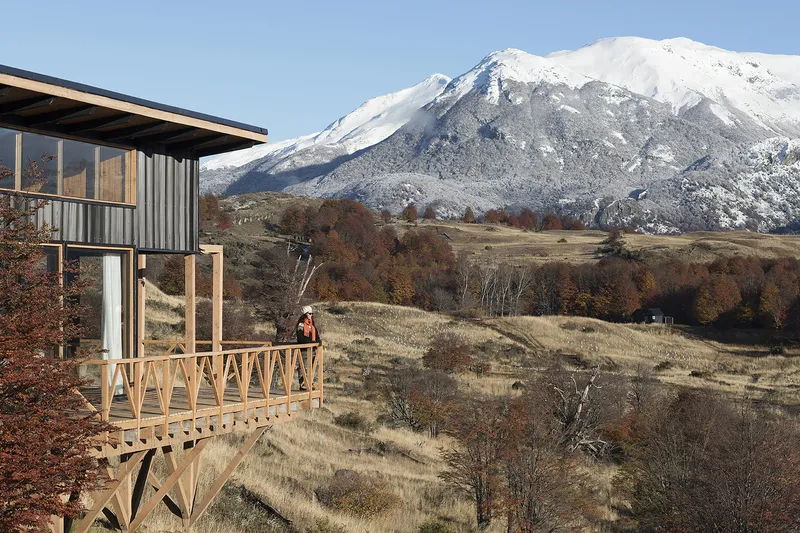
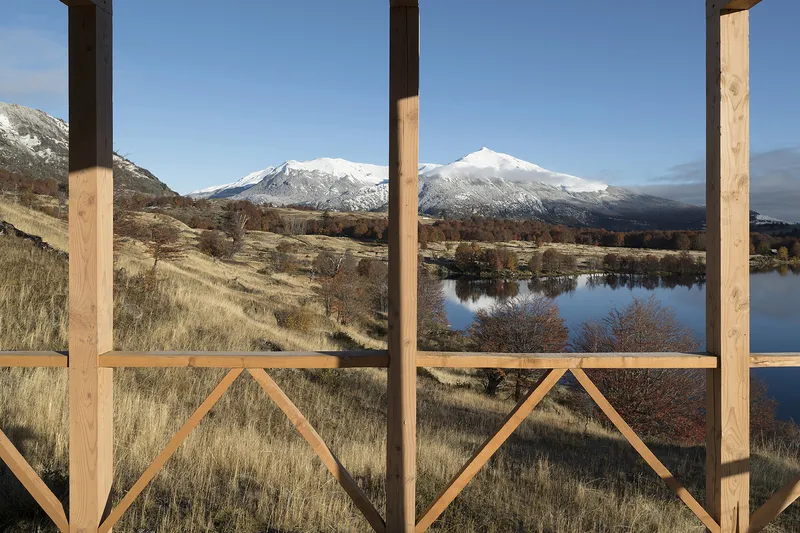
- The north and west façades open completely toward the lake, maximizing views and natural light.
- The east and south façades are more closed, ensuring privacy and protection from prevailing winds.
The prismatic black zinc exterior envelope strengthens resistance to snow and strong winds, consolidating the image of a resilient mountain shelter.
Interior Atmosphere: A Contemporary Mountain Refuge
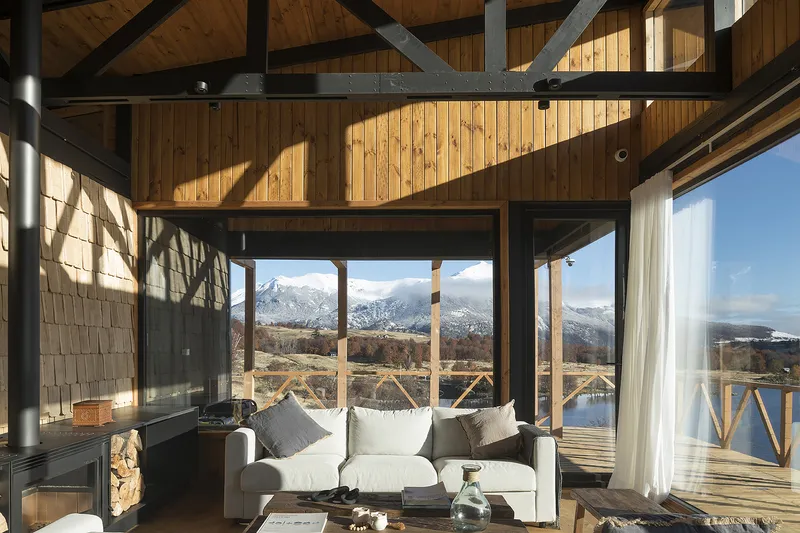
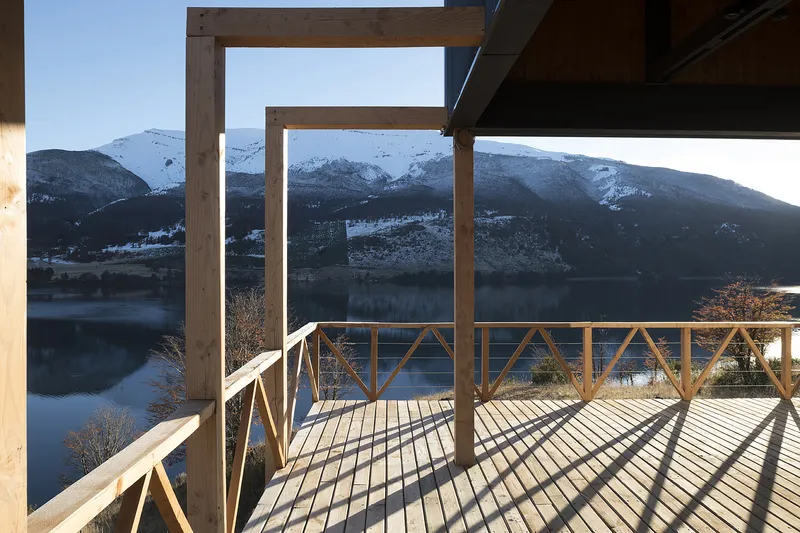
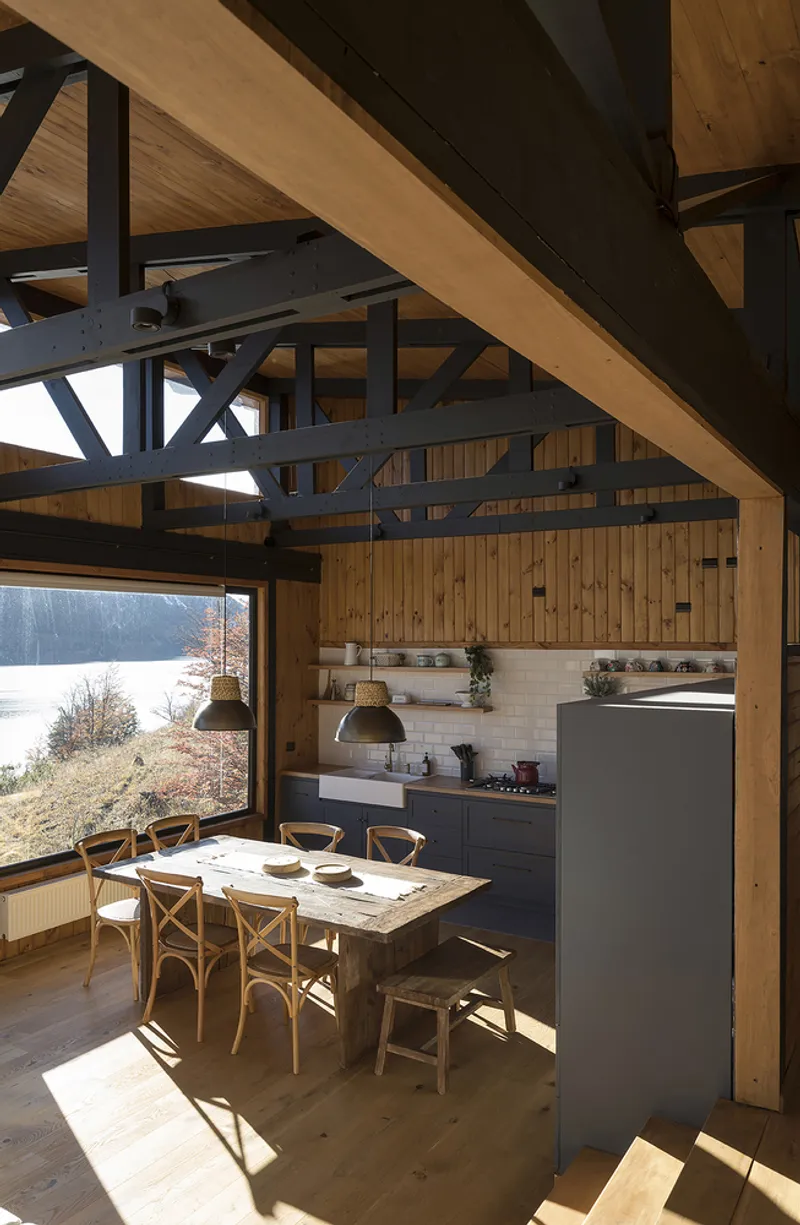
Inside, the exposed timber structure defines the spatial character. Wooden beams, diagonal braces, and structural components remain visible, reinforcing a sense of warmth and craftsmanship.
The interior architecture balances:
- Structural honesty
- Natural light integration
- Framed views of lake and mountains
- Cozy refuge-like atmosphere
Built by skilled local carpenters, the house expresses both technical precision and artisanal tradition.
Sustainable Mountain Architecture in Chile
Monreal House stands as a compelling example of sustainable residential architecture in Patagonia. Its success lies not in monumental gestures, but in intelligent restraint:
- Minimal land intervention
- Use of local materials
- Passive climate strategies
- Structural efficiency
- Respect for regional identity
The house achieves timelessness through material consistency and tectonic clarity, embodying a contemporary interpretation of the Patagonian mountain cabin.
Why Monreal House Matters
In an era where sustainable architecture and climate adaptation are central to design discourse, Monreal House offers valuable lessons:
- How to build responsibly in fragile ecosystems
- How to work with extreme climates
- How to reinterpret local traditions through modern construction
- How to minimize environmental footprint in remote territories
It is both a technical achievement and a poetic response to landscape, a refined timber retreat anchored in Patagonia’s vast horizon.
All photographs are works of
Cristóbal Correa


Popular Articles
Popular articles from the community


Cube Design Draws an Ecological Corridor Between Two Shenzhen Hills with the Nankai Building
Beside Shenzhen's container docks, the Nankai Building pairs stacked balconies with a climbing green screen to connect two hillsides across its height.

ETEH Reworks the Shared Spaces of São Domingos School in Brazil Around Timber, Color and Hanging Plants
At São Domingos School in Brazil, 436 m² of hall, refectory and library are recast with timber joinery, a yellow and blue code and trailing greenery.


Opera on the Sea: Driftwood Logic Shapes a Timber Opera House on Estonia's Coast
Trevor Orgill's opera house translates the entangled drift of floating timber into a civic building where wood, water, and music converge.

Singing Woman: An Opera House That Performs Before the Curtain Rises
Ovidiu Cristian Pavel's conceptual opera house translates Estonia's choral identity into a sculpted waterfront landmark facing the Baltic Sea.

Similar Reads
You might also enjoy these articles
Cube Design Draws an Ecological Corridor Between Two Shenzhen Hills with the Nankai Building
Beside Shenzhen's container docks, the Nankai Building pairs stacked balconies with a climbing green screen to connect two hillsides across its height.

Praksis A and Studio Sted Bend a Red Timber Cabin Across the Granite of Norway's Southern Coast
On the southern Norwegian coast, a 105 m² cabin follows the rock on slender posts, pairing red cladding outside with pine, brick and plywood within.

David Ortega Stacks a Two-Story Mexico City Penthouse Around a Steel Stair and a Pergola-Shaded Roof Terrace
In Colonia Roma, a 300 m² penthouse uses oak joinery, a planted steel stair and a slatted roof pergola to make a new-build apartment feel like a house.

PARALELA and LB2 Thread a Public Walkway Through the Base of a Las Condes Residential Tower
In Las Condes, Santiago, the Hamlet Building gives its fenceless ground floor to a 70-metre wooded passage linking two streets and the metro.

Explore Architecture Competitions
Discover active competitions in this discipline

Challenge to reimagine the Iron Throne

Photograph architecture without architects

Illustrate the lost glory of Angkor Wat - Render Challenge

Design challenge to reuse E-waste
Comments (0)
Please login or sign up to add comments
No comments yet. Be the first to comment!