
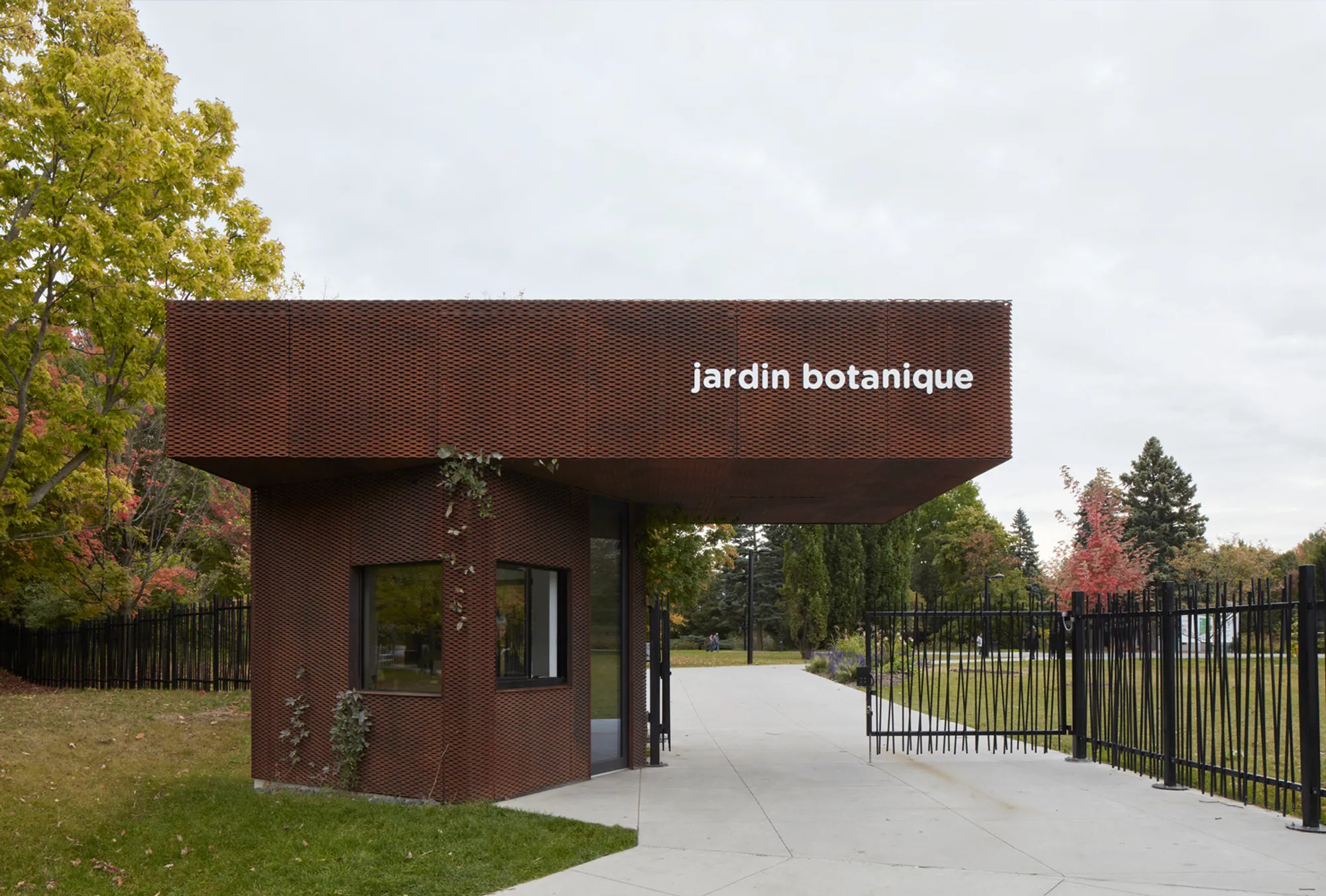
Montreal Botanical Garden Entrance Pavilion: Where Architecture Meets Nature
The Montreal Botanical Garden Entrance Pavilion by Pelletier De Fontenay blends architecture and nature, using Corten steel, vines, and bioclimatic design.


The Montreal Botanical Garden Entrance Pavilion, designed by the acclaimed Montreal-based studio Pelletier De Fontenay, redefines the gateway experience to one of Canada’s most iconic urban green spaces. Completed in 2024, this pavilion forms a modern, welcoming hub for visitors, seamlessly linking Parc Maisonneuve, the Montreal Insectarium, and the Botanical Garden itself. The project embodies a fusion of innovative architecture, landscape integration, and bioclimatic design, offering both aesthetic and functional value to the public.
A Modernized Access Hub
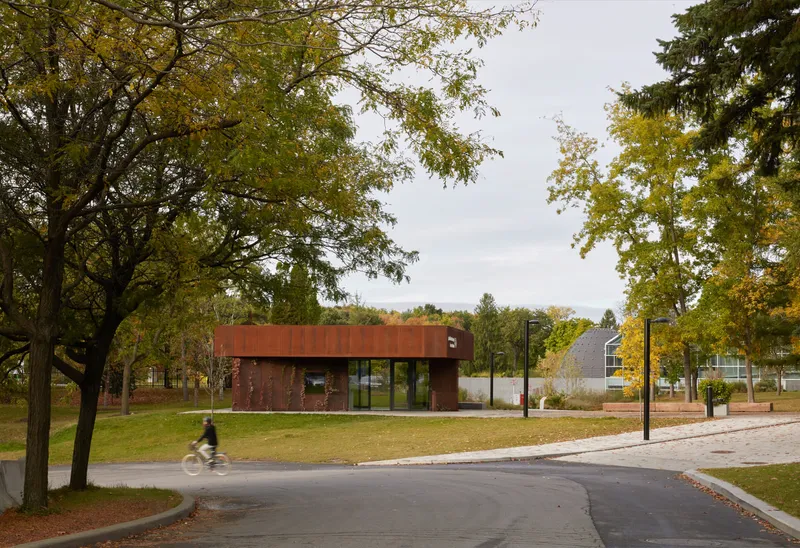
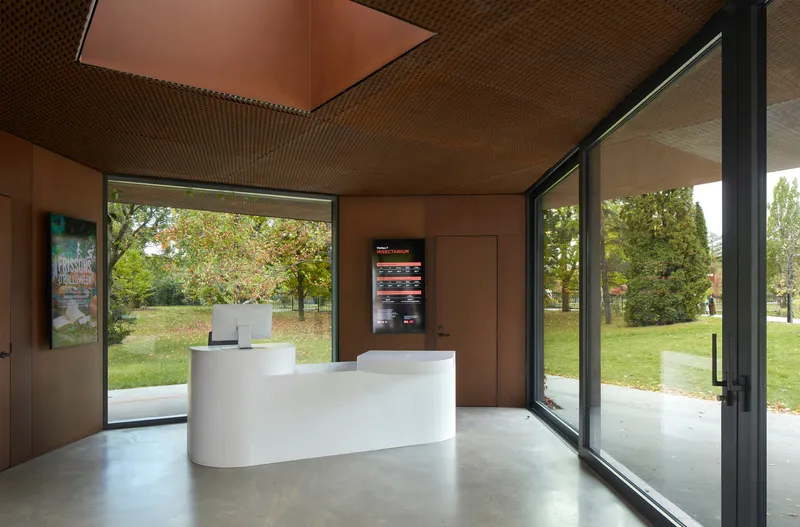
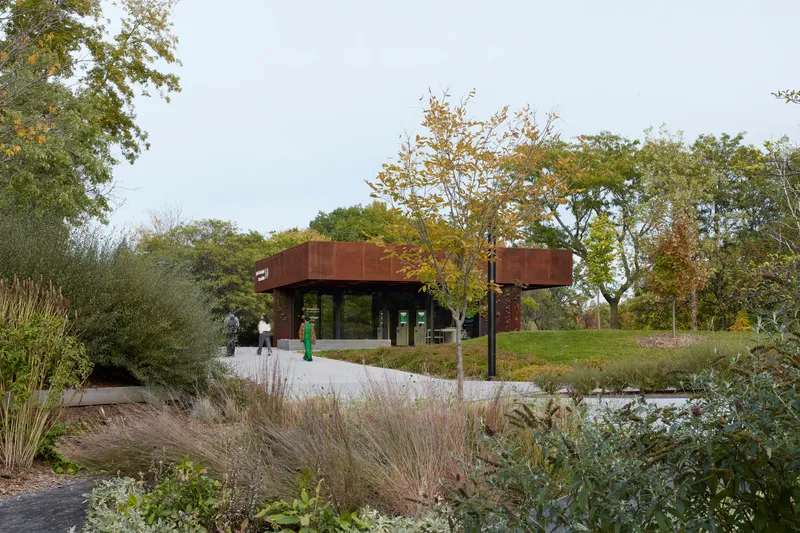
This newly designed pavilion functions as the primary entrance and reception area for the Botanical Garden and Insectarium. It includes ticketing counters, information kiosks, and a smaller check-in booth, all strategically positioned to guide visitors along a natural, flowing pathway. Collaborating with Lemay and the City of Montreal Urban Parks Division, Pelletier De Fontenay carefully considered visitor orientation and movement, ensuring the pavilion enhances circulation while respecting the site’s cultural and historical heritage.
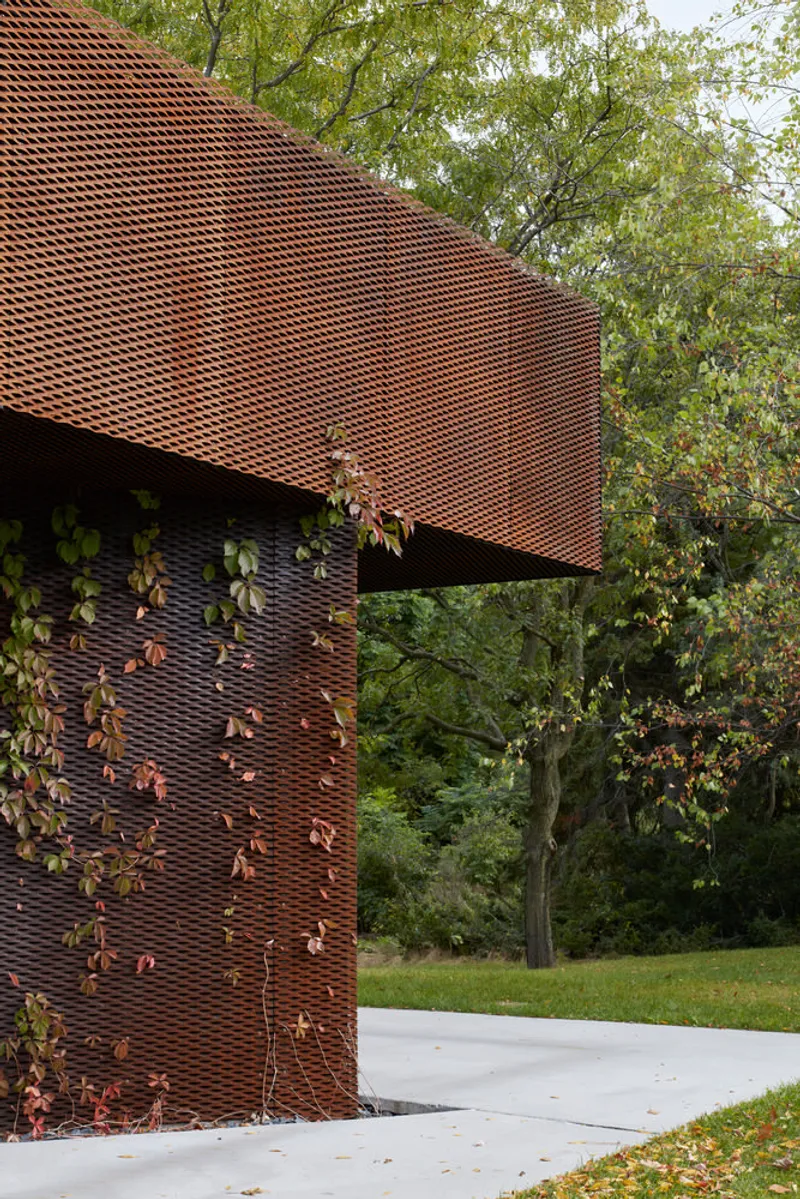
Inspired by Romantic Ruins
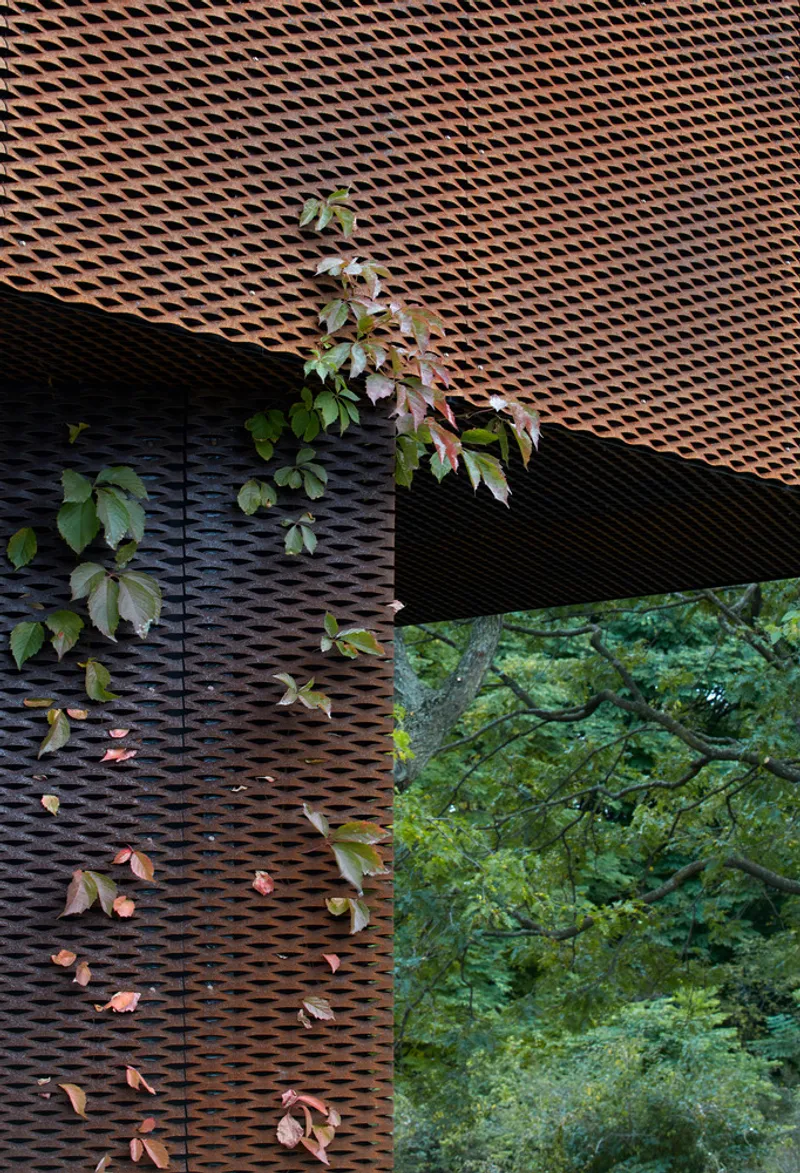
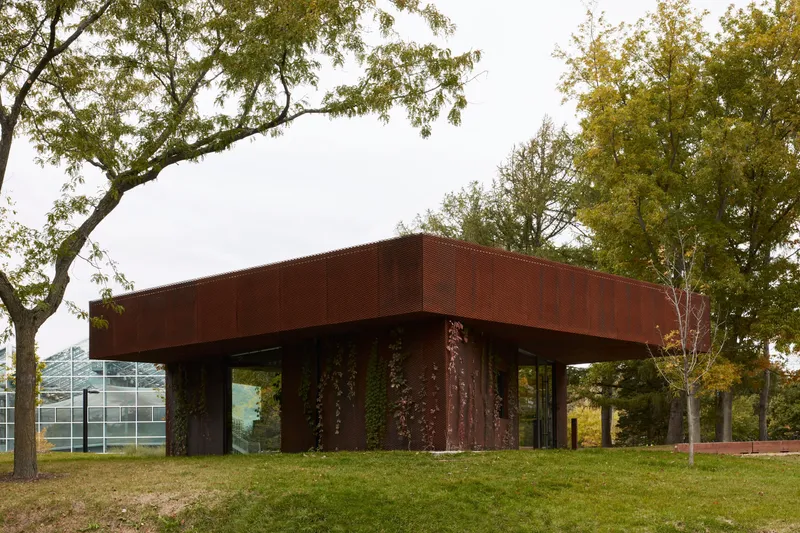
The design draws inspiration from the concept of the romantic ruin, a motif common in 18th and 19th-century English gardens. Historically, overgrown ruins symbolized the sublime, the imperfect, and nature reclaiming human-made structures. In the Montreal pavilion, architecture and ecology coexist: climbing plants, insects, birds, and small animals are welcomed, creating a living pavilion that evolves with the surrounding landscape.
Geometry and Function
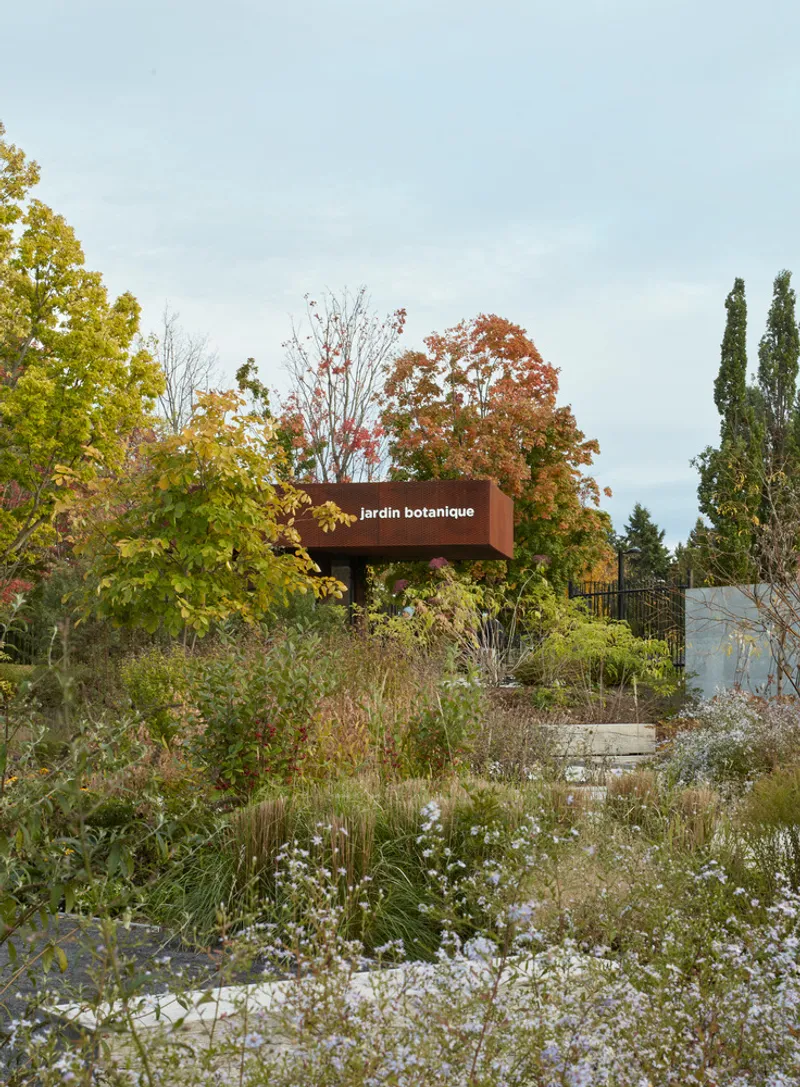
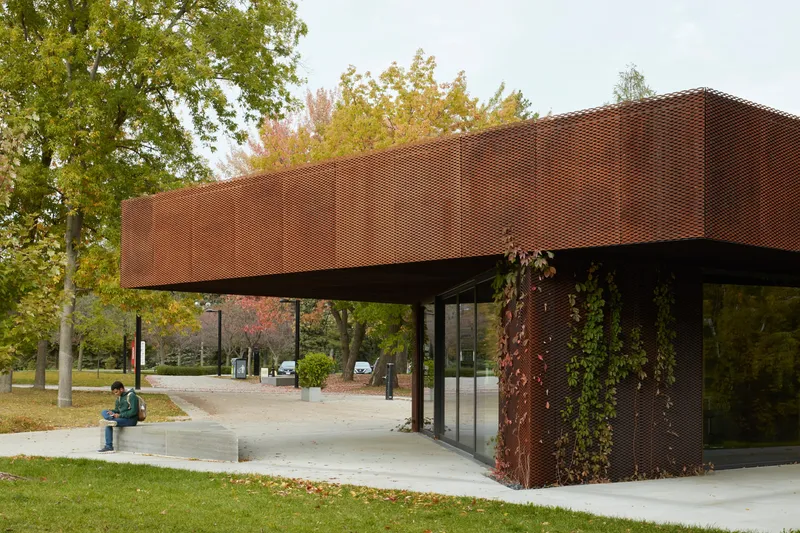
The pavilion’s triangular plan forms a focal point in the landscape while optimizing visitor flow. Corners of the triangle act as structural pillars supporting a wide, square-shaped roof, producing generous overhangs that provide shelter and meeting points. The design merges geometry and function, allowing visitors to naturally move from entrance to exit toward the Botanical Garden and Insectarium.
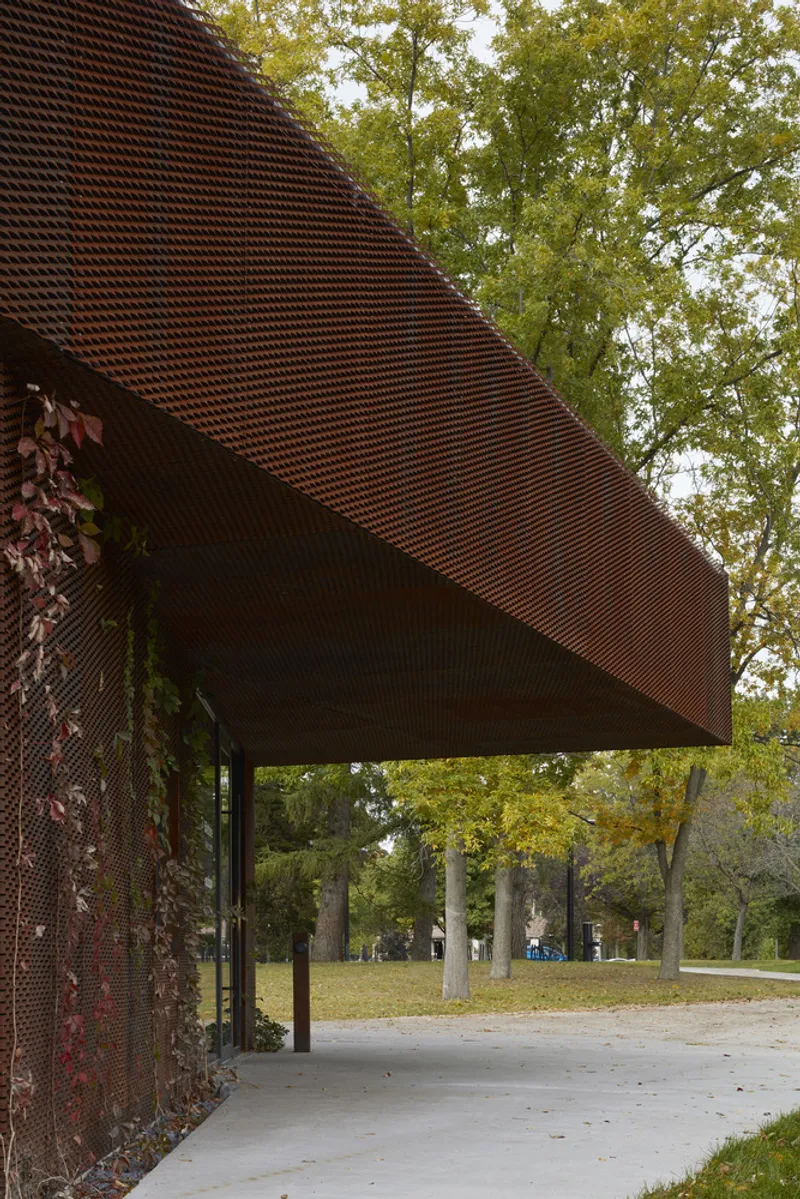
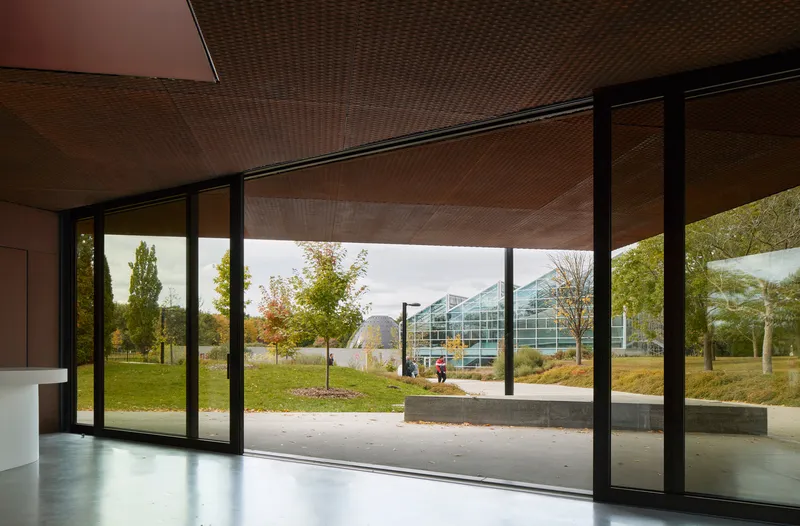
Large sliding doors open to blur the boundary between interior and exterior, fostering a direct connection with nature. Visitors experience wind, sunlight, and sounds of wildlife, all while accessing tickets and information. This bioclimatic approach reduces reliance on heating and cooling, emphasizing sustainability and harmony with seasonal weather patterns.
Materiality and Sustainability
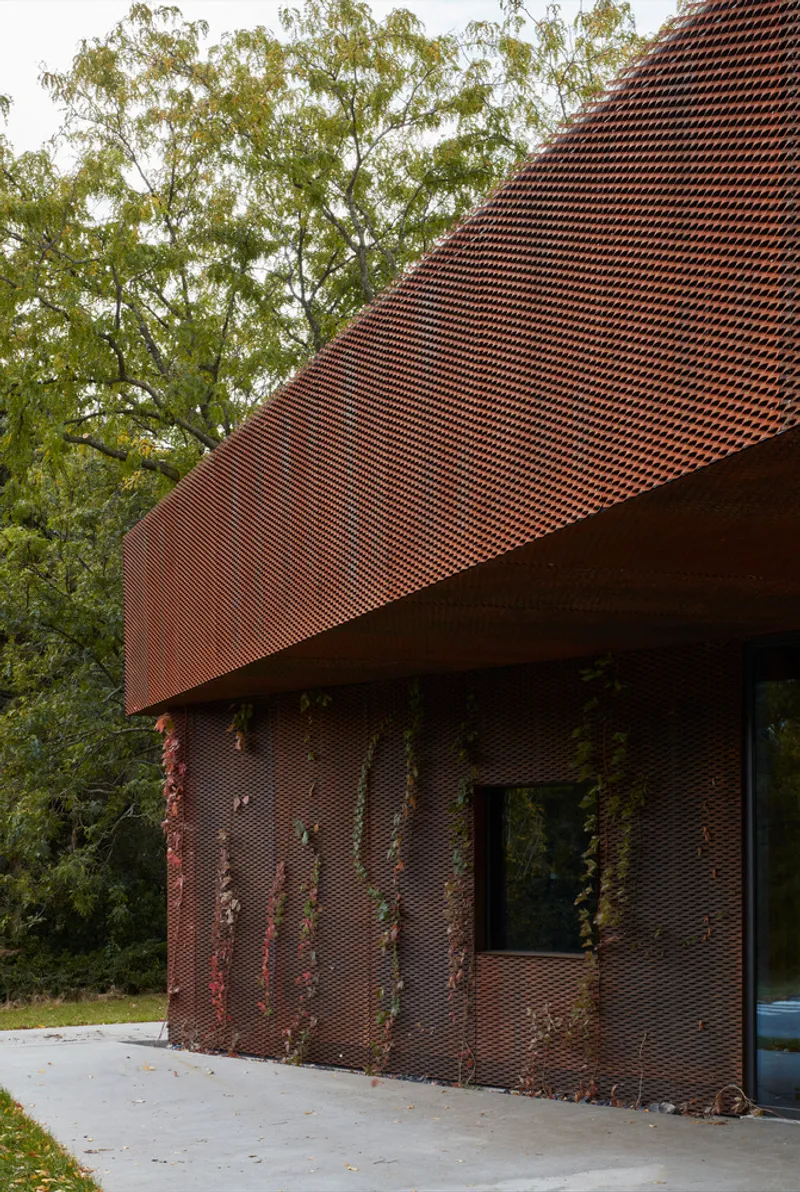
The pavilion is clad entirely in expanded Corten steel, a material that weathers over time and supports vertical planting. The oxidized steel gives the impression of an ancient, evolving ruin, gradually colonized by climbing plants, creating a dynamic and eco-integrated architectural landmark. Interior steel faces are left smooth, maintaining a monolithic, minimalist aesthetic that emphasizes form over technical assembly.
By combining a simple triangular and square geometry, a single-material skin, and a commitment to nature-first design, Pelletier De Fontenay delivers a pavilion that is both timeless and forward-looking. It celebrates the symbiotic relationship between architecture, landscape, and ecology, creating a space that is functional, visually striking, and environmentally conscious.
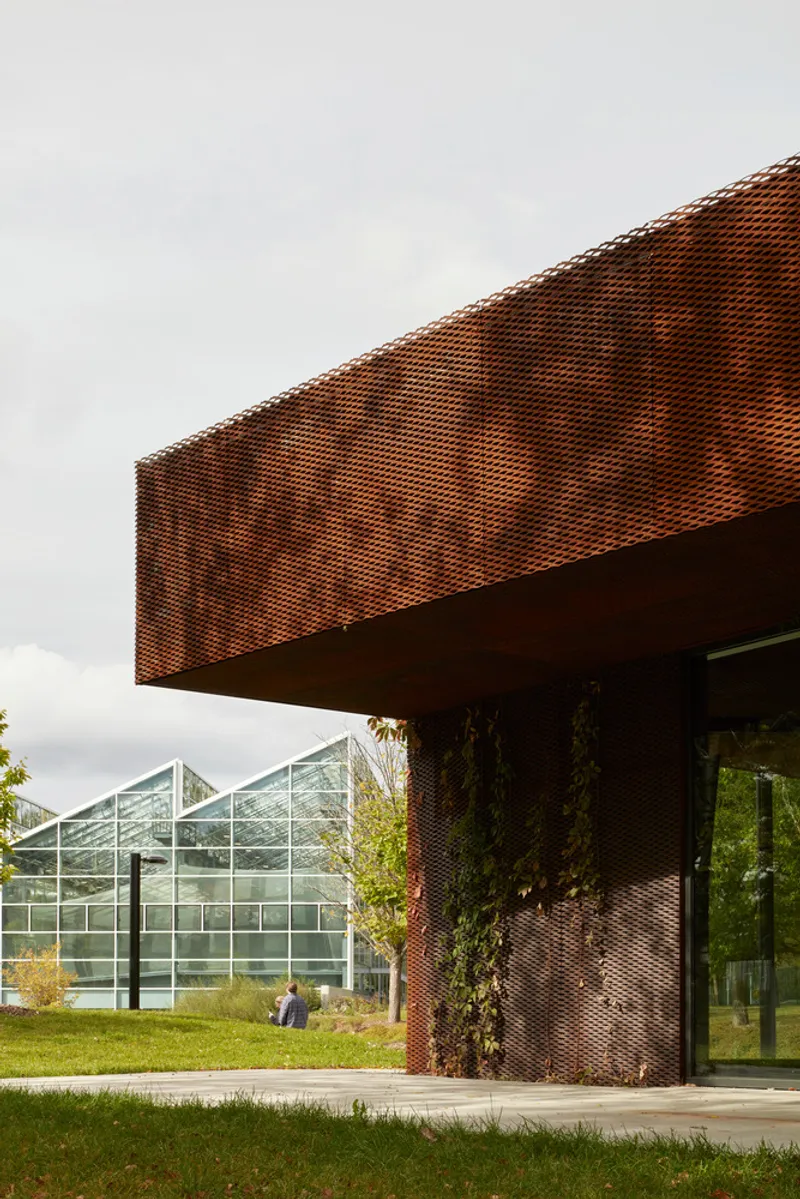
Key Project Highlights
- Location: Montreal, Canada
- Architects: Pelletier De Fontenay
- Year: 2024
- Landscape Architecture: Lemay
- Engineering: EXP (Civil, Structural, Mechanical)
- Photographer: James Brittain
- Design Features: Triangular plan, square roof, sliding doors, Corten steel façade, vine integration
- Sustainability: Bioclimatic design, natural ventilation, integration with local ecosystem
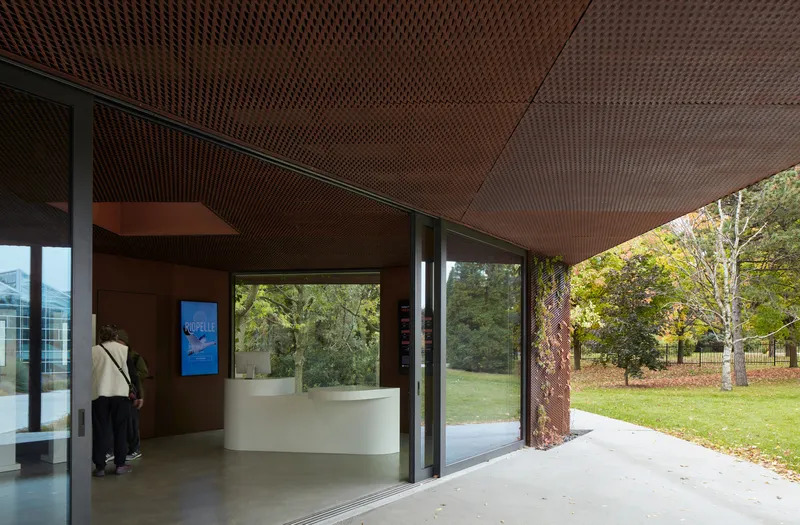
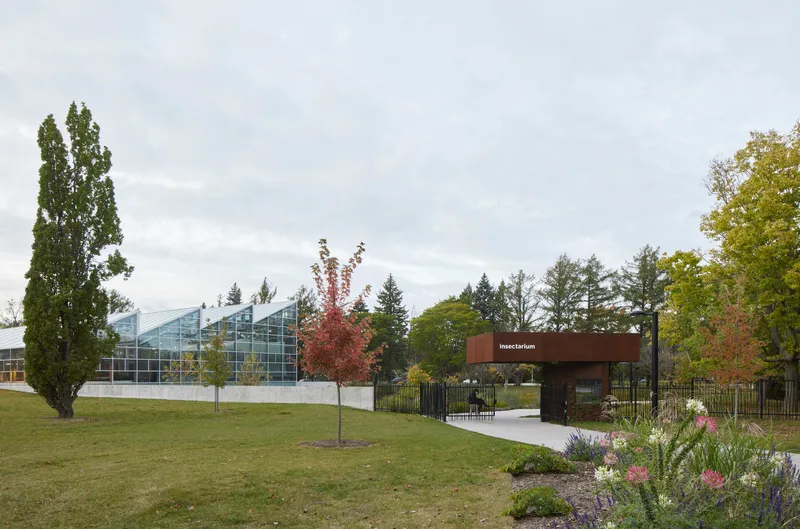
All photographs are works of
James Brittain


Popular Articles
Popular articles from the community


Co-Life: Senior Housing Design That Reconnects Older Adults With the City
Co-Life reimagines senior housing design through healing gardens, shared streets, workshops, and a sustainable community across generations.

EW PARK: Sustainable Architecture Reimagines the Future of Urban Parking
EW PARK reimagines city parking as a modular wooden tower combining automation, solar energy, electric mobility, and adaptable urban design.

The Earth Pod: 3D Printed Homes for Resilient Refugee Communities
The Earth Pod reimagines refugee housing through 3D printed homes made from clay, combining resilience, self-sufficiency, and rapid shelter.

Conexión: Biophilic Design Reimagines High-Rise Living in Hong Kong
Conexión reimagines high-rise living in Hong Kong through biophilic design, green facades, shared spaces, daylight, water and nature within.


Similar Reads
You might also enjoy these articles

FAMM Arquitectura Organizes Ten Villas Around Courtyards and Jungle in Nosara, Costa Rica
El Molino pairs two elongated volumes with deep overhangs and timber louvers to build a compact coastal community five minutes from the beach.
Oscar Niemeyer's Ibirapuera Park Pavilions Define São Paulo's Cultural Identity in Concrete and Curve
A constellation of modernist volumes set within São Paulo's most important urban park, conceived for the city's 400th anniversary in 1954.
How Henri Picq's 1889 Paris Pavilion Traveled 11,000 Kilometers to Become Santiago's Artequín Museum
A prefabricated iron and glass pavilion built for the Paris Universal Exposition found a second life as a children's art museum in Chile.
Sanjay Puri Architects Wraps a Jaipur Office Tower in Capsule-Shaped Green Buffers
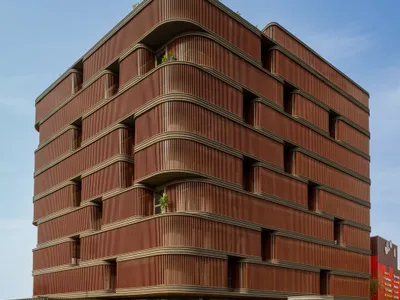
A nine-level climate-responsive workplace near Jaipur Airport uses stacked planter terraces and aluminium screens to fight 40°C heat.


Explore Architecture Competitions
Discover active competitions in this discipline



Challenge to design a portable theatre


Challenge to design a portable music platform


Challenge to design an open learning module for the elderly


Challenge to reimagine the Iron Throne
Comments (0)
Please login or sign up to add comments
No comments yet. Be the first to comment!